Connect with us

Politics

Fierce lobbying, tension as APC primaries begin

Published

on

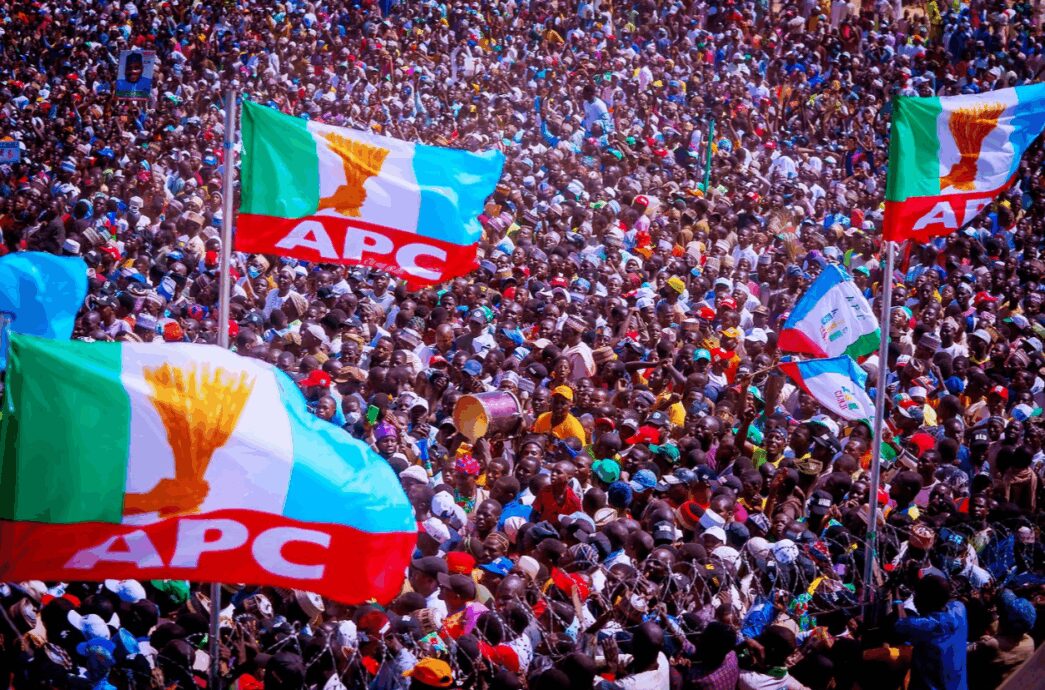
Fresh tensions have erupted across several states as the ruling All Progressives Congress commences its primaries on Friday (today) ahead of the 2027 general elections, forcing party leaders and key stakeholders loyal to President Bola Ahmed Tinubu to intensify consultations to prevent a full-blown internal crisis.

The growing unrest, which has triggered protests, collapsed consensus negotiations, and led to accusations of candidate imposition and reconciliation efforts across multiple states, comes as the APC leadership races to preserve party cohesion before the primaries gather momentum nationwide.

Concerned by the situation, President Tinubu has appealed to members, aspirants and party leaders to conduct themselves as sportsmen and women.

He warned that rancorous behaviour would only serve the opposition, and cautioned winners against gloating, while urging losers to accept defeat with grace.

In a personal statement he released on Thursday, the eve of the commencement of House of Representatives primaries, Tinubu said the exercises were not merely platforms to produce standard bearers but a referendum on the APC’s unity, resilience and strength as a party entering its fourth election cycle.

He said, “In every contest, there will be a winner and a loser. I urge the winners not to gloat in victory and the losers to show sportsmanship by taking things in their stride and preparing for another time.

“The ultimate winners are those who don’t choose to wreck the boat but rather work to prepare for another round. Our opponents are waiting for us to be against each other; we should disappoint them.”

The President made a pointed reference to a mode of political engagement he said the party had left behind, invoking it precisely to warn against its return.

“We should not play the politics of old, the do-or-die politics that we have put behind us. Politics should never be a zero-sum game. Any candidate that wins does so for all of us as a party,” he stated.

The President said wherever consensus had already been reached among aspirants, it should be maximised to reduce friction.

“I am aware that, in line with the provisions of the Electoral Act 2026 and our party’s constitution, leaders at various levels have initiated conversations to produce consensus candidates.

“It is a commendable option that would help in reducing rancour and bad blood among party members,” said Tinubu.

But where consensus fails, he said, members must conduct themselves with discipline.

“I urge us all to go into the primaries as brothers and sisters,” the President appealed.

Tinubu directed party governors and leaders to ensure a level playing field and rise above personal sentiment.

He said, “You must rise above sentiment to offer all aspirants a level playing field that guarantees participation without let or hindrance.

“While only one person will win for every seat contested, we should give eventual losers the satisfaction of a fair contest.”

He also directed that winners and party leaders at all levels reach out to those who did not succeed with olive branches, and urged aspirants who felt aggrieved to approach the party’s redress committees rather than destabilise the process.

The President called for the inclusion of women and youth, saying, “I appeal to voters in the primaries and leaders at all levels to give special consideration to our women and youth in the contest. We cannot afford to relegate the two significant demographics of our population.”

He also issued a firm directive to security agencies deployed for the primaries, urging them to limit their role strictly to maintaining peace.

According to him, “The police and other security agencies must remain professional and avoid acting as interlopers during this exercise. Your duties strictly centre on ensuring peaceful exercise. Nothing more.”

The APC primaries, kicking off with House of Representatives aspirants, are scheduled to run through to the presidential primary on May 25, 2026.

The primaries are taking place under the Electoral Act 2026, which reduced the statutory notice period for elections from 360 to 300 days, a change Speaker Tajudeen Abbas noted could allow Presidential and National Assembly elections to be held in January 2027.

Consensus talks collapse

Investigations by The PUNCH revealed that while some APC-controlled states successfully adopted consensus arrangements for the primaries, others descended into intense disputes as aspirants resisted pressure to step down for preferred candidates.

The crisis has become particularly pronounced in states such as Taraba, Kano, Kaduna, Oyo, Yobe and Abia, where disagreements over direct primaries, endorsements and alleged automatic tickets have sharply divided party stakeholders.

In Abia State, the Deputy Speaker of the House of Representatives, Benjamin Kalu, moved to calm rising tension by dismissing speculations that certain aspirants had already been handed automatic tickets ahead of the primaries.

Speaking during a pre-primary stakeholders’ meeting of the APC in Umuahia on Thursday, Kalu insisted that the party would not impose candidates on members.

According to him, every aspirant seeking elective office under the APC platform must emerge through a transparent and democratic process.

“We are not going to impose any candidate. We want to ensure that after the primaries, the party is not going to disintegrate. We have worked hard and it is now time to harvest,” Kalu declared.

See also  Ensure Jonathan’s safe return to Nigeria, Reps tell FG

He added, “There is no automatic ticket and no list by anybody. The party has given us only two democratic options — consensus or direct primaries.”

The deputy speaker stressed that the wishes of party members would ultimately determine who emerges as candidates for the 2027 elections.

Also speaking at the meeting, former Abia State governor and senator representing Abia North, Orji Uzor Kalu, said President Tinubu had specifically mandated party leaders in the state to remain united ahead of the elections.

“The President told me clearly that the only gift Abia APC can give him is to deliver the state,” Orji Kalu said.

He added, “The President also told me not to quarrel with my younger brother. I have no problems with Ben Kalu anymore. The quarrel is gone. Abia APC is now united.”

The APC disclosed during the meeting that three governorship aspirants, nine senatorial aspirants, 24 House of Representatives aspirants and 64 House of Assembly aspirants purchased nomination forms in the state.

According to the state Organising Secretary, Emeka Okoroafor, only one House of Representatives aspirant was disqualified for not being a registered party member.

Meanwhile, consensus negotiations for House of Representatives tickets remained deadlocked in Kano State as party leaders struggled to avert divisive contests across the 24 federal constituencies.

Speaking with The PUNCH on Thursday, the Kano APC Publicity Secretary, Auwal Soja, confirmed that consultations were still ongoing late into the evening.

“Consensus among the aspirants of the APC for the 24 federal constituency seats is still ongoing, which will hopefully be concluded by 10 pm today,” he said.

He, however, admitted that direct primaries would hold wherever consensus arrangements fail.

“As you know, the APC Constitution provides only for direct primaries and consensus as legitimate pathways for selecting candidates,” Soja added.

The Electoral Act 2026 permits political parties to adopt either direct primaries, where all registered party members vote, or consensus arrangements backed by written consent from cleared aspirants.

Despite the reconciliation efforts, indications emerged that consensus talks in Kano may face resistance in some constituencies, especially Kumbotso Federal Constituency, where supporters of rival aspirants have openly demanded competitive primaries.

In Taraba State, the party’s consensus initiative suffered a major setback after several aspirants refused to withdraw from contests across strategic constituencies.

The collapse of the arrangement forced the APC to prepare for direct primaries in multiple National Assembly and state assembly constituencies ahead of today’s exercise.

In a statement issued by the APC State Publicity Secretary, Aaron Artimas, the party disclosed that the State Chairman, Alhaji Abubakar Bawa, had reconstituted another committee to continue negotiations with aggrieved aspirants.

According to the statement, “The committees achieved a tremendous amount of success, as many aspirants have already agreed to step down in the interest of party unity.”

The statement added that the fresh committee would continue engaging aspirants “who may still be holding out for one reason or another.”

However, reports submitted by zonal committees showed that consensus collapsed in constituencies such as Takum, Donga, Ussa, Kurmi, Nguroje and Wukari, where aspirants insisted on testing their popularity through direct primaries.

Former lawmaker, Tukur El-Sudi, who chaired one of the reconciliation committees, disclosed that many aspirants rejected appeals to step down for incumbents.

“All aspirants in Nguroje declined to withdraw for the incumbent lawmaker because they insisted the process must remain competitive,” he said.

Similarly, Dr Philip Duwe, who chaired the Southern Zone Consensus Committee, revealed that many aspirants initially feared that the consensus arrangement was merely a strategy to impose candidates.

According to him, “Several aspirants believed the process was designed to favour certain individuals, but the consultations later became useful platforms for dialogue and reconciliation.”

He further disclosed that huge financial investments made by aspirants for mobilisation and consultations also contributed to the breakdown of consensus talks.

The APC state chairman, Bawa, however, defended the process, insisting that disagreements should not be viewed as failure.

“The inability to achieve consensus everywhere is not a failure. It simply reflects internal democracy because aspirants are expressing themselves freely,” he stated.

In Yobe State, the APC is equally preparing for the House of Representatives primaries following the failure of party stakeholders to settle disagreements through consensus.

A senior party source disclosed that Governor Mai Mala Buni had returned to the state to personally supervise reconciliation meetings aimed at salvaging consensus talks before the primaries.

“The governor has arrived in the state and is expected to meet with party stakeholders to decide whether consensus can still be achieved or whether the primaries will proceed,” the source said.

The source added, “The party is fully prepared for the primaries on Friday, but consultations are still ongoing.”

The development followed earlier intervention by Vice-President Kashim Shettima in the Yobe governorship succession battle after intense disagreements among aspirants over alleged endorsement moves.

See also  Petrol may hit N1,000/litre as Dangote hikes price

One of the governorship aspirants, Senator Ibrahim  Bomai, had openly condemned attempts to impose candidates.

“No individual, regardless of influence or past office, has the moral authority to determine the leadership of millions behind closed doors,” Bomai had declared.

“Yobe State is not a private estate. Leadership must emerge through the free and transparent choice of the people.”

In Kaduna State, the government confirmed that Governor Uba Sani had constituted a high-powered reconciliation committee to address grievances arising from the primaries.

The Kaduna State Commissioner for Information and Culture, Ahmed Maiyaki, said the committee was established to prevent internal divisions and sustain party unity.

“The initiative is designed to deepen mediation and constructive engagement among aspirants across the state while fostering political stability and consensus-building within the party,” Maiyaki said.

According to him, the committee would engage aggrieved aspirants and stakeholders in constituencies where competing political interests had generated tension.

Political observers believe the intervention may be linked to rising complaints from aspirants who felt sidelined during recent party activities.

In Kwara State, uncertainty persisted over whether the APC would eventually adopt direct primaries or consensus arrangements.

Speaking with The PUNCH, the state APC chairman, Sunday Fagbemi, said the state chapter was awaiting directives from the party’s national leadership.

“I am not in a position to say whether the party will adopt consensus or direct primaries. We are still waiting for directives from Abuja,” he stated.

The uncertainty comes amid fierce political calculations in the state where about 16 governorship aspirants are reportedly seeking the APC ticket.

However, the Amalgamated APC Elders and Stakeholders Forum in the state declared support for any consensus arrangement approved by President Tinubu and Governor AbdulRahman AbdulRazaq.

“With the Otoge Revolution of 2019, Kwara State was liberated from godfatherism and underdevelopment. We cannot afford to go backwards,” the forum declared.

Tension also boiled over in Oyo State as angry APC members staged a protest at the party secretariat in Ibadan over alleged attempts to impose candidates.

The protesters accused party leaders of allowing money and influence to determine the selection process.

They warned that repeating the mistakes of the 2023 elections could further weaken the APC in the state.

Confirming the incident, the state APC Publicity Secretary, Olawale Sadare, alleged that hoodlums invaded the secretariat and attacked party officials.

“The hoodlums reportedly unleashed terror on members of the state executive committee and damaged vehicles, windows, tyres and office property,” Sadare said.

He added, “It was clearly a sponsored attack by disgruntled elements, but we are grateful no life was lost.”

Attempts by Edo State Governor, Monday Okpebholo, to ensure the emergence of consensus candidates ahead of today’s House of Representatives party primaries have hit a roadblock.

Sources said the governor asked those who refused to accept his preferred candidates to go to the field.

In Oredo federal constituency, the preferred aspirant is Dr Paddy Iyamu, but his opponent, Osaro Obazee, has refused to step down.

Omosede Igbinedion is the only aspirant for Ovia Federal Constituency, and she has been reportedly tipped to emerge as the candidate.

In Uhunmwode/Orhionmwon constituency, incumbent Billy Osawaru was picked ahead of his opponent, Washington Osifo, while the leaders of the APC in Ikpoba-Okha/Egor federal constituency opted for Igbinovia Osaze.

In Edo Central, the battle for Esan West/Igueben/Esan Central is between Joseph Eseigbe, who was picked as the preferred candidate over a former Speaker of the Edo State House of Assembly, Marcus Onobun.  Onobun, according to APC sources, refused to step down.

Odianosen Okojie, husband of Nollywood actress Mercy Johnson, has been endorsed for a second term ticket for Esan North East/Esan South East.

But no consensus arrangement was reached for the House of Representatives seats in Edo North. For the Owan Federal Constituency, Julius Ihonvbere is up against Abdul Oroh and  Andrew Ijegbai.

Ihonvbere hails from Owan West Local Government, while other aspirants hail from the Owan East LGA. Ihonvbere was accused of breaching an agreement that each local government should spend two terms.

A former Chairman of the Edo Internal Revenue Services, Otunba Bamidele Bankole-Balogun, the preferred candidate for Akoko-Edo Federal Constituency, has been endorsed by APC leaders.

Sources said incumbent lawmaker representing Estako Federal Constituency, Sunday Dekeri, failed to get the endorsement of party leaders for another term in office and was replaced by Blessing Agbomhere.

In contrast, Sokoto and Borno States appeared to have recorded smoother consensus arrangements.

In Sokoto, party leaders confirmed that affirmation exercises for consensus candidates would begin across federal constituencies.

“We have agreed on consensus for all elective positions in Sokoto and preparations for affirmation have been concluded,” a party chieftain disclosed.

Similarly, in Borno State, the APC officially adopted former Commissioner for Works, Mustapha Gubio, as consensus governorship candidate after consultations led by Governor Babagana Zulum.

See also  ASUU suspends two-week warning strike

The decision followed the withdrawal of Senator Kakashehu Lawan from the race in the interest of party unity.

Party stakeholders in the state have largely endorsed the arrangement, with no major opposition recorded so far.

Governor Zulum also called on aspirants vying for seats in the state and federal level to support a consensus decision, announcing that any aspirant who voluntarily withdrew would be considered for appointments.

The governor’s spokesman, Dauda Illiya, in a statement on Thursday, said Zulum stated this during a critical stakeholders’ meeting at the Multipurpose Hall of the Government House in Maiduguri, the state capital.

Illiya stated, “Governor Zulum also announced that aspirants who voluntarily withdrew from contests would be considered for appointments and other opportunities at both the federal and state levels.”

The governor further emphasised his commitment to democratic principles, assuring stakeholders that no candidate would be imposed on any constituency.

“As a democrat, I will not force any candidate on a particular constituency, but rather encourage us to continue consultations with stakeholders for consensus candidates to emerge,” Zulum stated.

To facilitate consultations across the state, Illiya said the governor constituted zonal consultative committees headed by the Deputy Governor, Umar Usman Kadafur for the Southern Zone; APC Deputy National Chairman (North), Ali Bukar Dalori, for the Central Zone; and Senator Mohammed Tahir Monguno for the Northern Zone.

According to him, the governor formally presented the APC consensus governorship candidate, Mustapha Gubio, to stakeholders, fulfilling the promise he made during the high-level stakeholders’ meeting held on 25 April.

“APC Deputy National Chairman, Ali Bukar Dalori, and state chairman of the party, Bello Ayuba, all re-echoed the need for consensus as the means of primary election in the stated,” he said.

The meeting was attended by prominent personalities, including Deputy Governor Umar Usman Kadafur, Gubio, APC Deputy National Chairman (North), Ali Bukar Dalori, former Governor, Senator Maina Ma’aji Lawan; Senators Mohammed Tahir Monguno, Mohammed Ali Ndume, and Kaka Shehu Lawan SAN, serving and former members of the House of Representatives, APC state chairman, former Nigerian Ambassador to China, Amb. Baba Ahmed Jidda, Speaker, Borno State House of Assembly, and other members of the House.

Gbajabiamila, Elliot issue
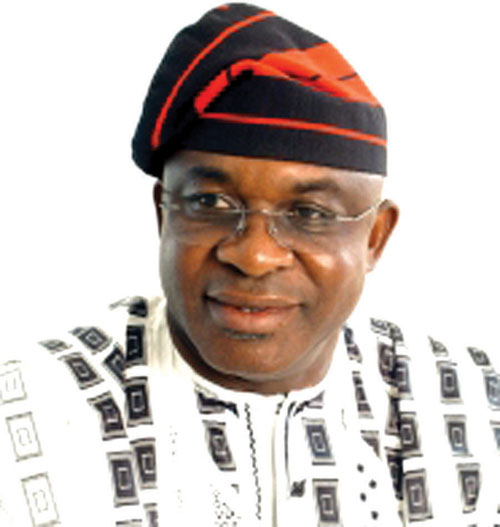
On Thursday, a video went viral online, where the Chief of Staff to the President, Femi Gbajabiamila, narrated how the role played by the lawmaker representing Surulere 1 constituency, Desmond Elliot, in the botched impeachment saga of Mudasiru Obasa as state House of Assembly speaker, almost cost him his job.

Gbajabiamila made the revelation while reacting to Elliot’s reported insistence on returning to the Lagos Assembly for a fourth term.

Speaking at a meeting ahead of the party’s primaries in Lagos, Gbajabiamila said, “I almost lost my job as Chief of Staff last year because of Desmond Elliot. Mr President called me to his house in Abuja during the Lagos Speaker Obasa saga. He said, ‘I hear this Desmond is your boy, the one we gave you,’ and I said, ‘Yes, sir.’ He is one of the people causing problems in the Lagos House of Assembly.”

The former Speaker of the House of Representatives said he immediately defended Elliot, insisting he was not involved in the alleged plot to destabilise the Assembly.
However, he said the President maintained that intelligence reports implicated the lawmaker and directed him to warn Elliot to “retrace his steps.”

Gbajabiamila said he subsequently contacted Elliot and relayed the President’s warning, urging him to distance himself from the crisis if he was involved.
He further disclosed that days later, the Director-General of the Department of State Security Service allegedly informed him that his own name was being mentioned as one of those backing Elliot in the matter.

According to him, the situation became so serious that there were assumptions within political circles that Elliot could not have acted without his knowledge or support.

“I called him again and told him to go and make a public statement that he was not part of it,” Gbajabiamila said.
He, however, said that up to date, Elliot had not made any public statement denouncing his role in the saga.

The former Speaker added that his longstanding relationship with Tinubu ultimately saved him from losing his office.
Gbajabiamila also accused Elliot of attempting to introduce religious division into Surulere politics, alleging that the lawmaker had written official complaints accusing him of creating tensions between Muslims and Christians in the constituency.

He maintained that throughout his political career, he had resisted attempts to divide constituents along religious lines.
Elliot’s seat in the Assembly is being contested by Barakat Odunuga-Bakare, who has the backing of Gbajabiamila and other stakeholders from Surulere constituency..

Additional reporting: Isah Ojo, Animasahun Salman, Ademola Adegbite, Toheeb Omotayo, Godwin Isenyo, Umar Sani, Justin Tyopuusu, Tukur Muntari and Ogbonnaya Ikokwu and Adeyinka Adedipe


Continue Reading
Click to comment

Leave a Reply

Your email address will not be published. Required fields are marked *

Politics

Peter Obi demands N5bn, apology from Okonkwo over defamation allegation; read details

Published

on

The presidential candidate of the Nigeria Democratic Congress, Peter Obi, has demanded N5 billion in damages and a public apology from actor-turned-politician Kenneth Okonkwo over alleged defamatory statements made during a television interview.

The former Anambra State governor also threatened legal action against Okonkwo and indicated that he could seek higher damages if the demands are not met.

In a letter dated June 9, 2026, Obi’s lawyers, led by Alex Ejesieme (SAN), accused Okonkwo of making false, malicious and defamatory allegations against their client during an appearance on Channels Television’s Sunrise Daily programme on Monday, June 8.

The legal team said the remarks were subsequently published and circulated by several media organisations and online platforms.

According to the letter, Okonkwo allegedly claimed that “Obi, together with the leaders of the Nigeria Democratic Congress (NDC) in the South-East, informed the party’s aspirants that any person seeking to contest as a member of the House of Representatives must, after paying the prescribed expression of interest fee, pay a bribe of Ten Million Naira (N10,000,000.00) to the NDC and to the Caucus leaders.”

The lawyers also alleged that Okonkwo claimed there was documentary evidence of the payments, that Obi personally compiled the party’s list of candidates from a hotel room, warned aspirants that Obi would “scam” them, collected money from people abroad and was involved in criminal activities alongside other party leaders.

The letter stated that the allegations portrayed Obi as a person engaged in bribery, extortion, fraud, financial dishonesty and criminal conduct.

“The above statements, in their natural and ordinary meaning, and by necessary implication, falsely and maliciously represent our Client as a person who demands, solicits, organises and collects bribes; who extorts, defrauds and swindles political aspirants of their money; who is a fraudster, a scammer and a dishonest political actor; and who, in concert with others, is engaged in criminal conspiracy and is actively perpetuating criminality,” the letter read.

See also  Aisha Yesufu says Obi committed to one-term presidency

Obi’s legal team described the allegations as “false, baseless, malicious, reckless, defamatory and wholly unsupported by any fact.”

They argued that the statements went beyond political commentary and amounted to a direct attack on Obi’s integrity and public reputation.

The lawyers demanded that Okonkwo, within seven days of receiving the letter, withdraw the statements, publish an “unequivocal and unreserved” apology, and ensure the apology receives the same or greater prominence as the original publication.

The demand added: “Pay to our Client, through our Chambers, the sum of Five Billion Naira (N5,000,000,000.00) only, as general, aggravated and exemplary damages for the grave injury occasioned to his hard-earned reputation, character and public standing by the said false, malicious and defamatory statements; and

“Deliver to us a written undertaking that you shall cease and desist from making, publishing, circulating or causing to be published any further false, malicious or defamatory statement concerning our Client.”

The letter warned that failure to comply with the demands within the stipulated period would leave Obi with no option but to seek legal redress, including claims for damages, injunctive reliefs, public retraction and legal costs.


“Take notice that should you fail, refuse or neglect to comply with the above demands within the stipulated period, our Client shall be left with no option but to seek legal redress against you without further recourse to you,” the letter stated.

Responding in a statement posted on his X handle on Tuesday, Okonkwo dismissed the demand and said he had yet to read the letter.

See also  2027 Presidency: Makinde, others to fight for PDP ticket
Kenneth Okonkwo. Photo: Channels Television / X

“It has been brought to my notice that there is a letter circulating online from the hypocrite, Peter Obi, and his lawyers that I should pay him N5bn. Hahaha! If Peter Obi is looking for money to campaign, he should privately ask me for assistance, not come from extortion, and I will help him,” he wrote.

Okonkwo said he would respond formally after reviewing the letter.

“I will reply to the letter whenever I have the time to read it later in the day. Please send it here if you have it. It will be a shame to Peter Obi and his lawyers if they do not take this case to court. I don’t have time or patience for scammers,” he stated.

The former spokesperson also warned that any legal action could lead to the disclosure of information he acquired while serving in that role.

“Anyone who decides to sue his former spokesperson for defamation is indeed very unwise,” he added.

punch.ng


Continue Reading

Politics

Bamidele pushes six-year single term for presidents, govs

Published

on

Senate Leader, Opeyemi Bamidele, has disclosed plans to sponsor a bill seeking to introduce a single six-year tenure for presidents and governors, a move he said would allow elected leaders to focus more on governance and less on re-election politics.

Bamidele revealed the proposal during an interview with journalists in his office on Tuesday, saying the legislation would be among the first bills he intends to introduce in the next Senate after the 2027 general elections.

Nigeria currently operates a two-term system under which presidents and governors can serve a maximum of two four-year terms.

However, the Senate leader argued that the arrangement often compels elected officials to begin strategising for a second term barely midway into their first tenure, thereby diverting attention from governance.

“One of the first set of bills that I look forward to moving, by God’s grace, when we come back for the 11th Senate, God willing, is for a bill that will only make it possible for anyone who wants to be president of this country, or governor in any part of this country, to spend only one term of six years,” he said.

According to him, a single six-year tenure would remove the pressure and distractions associated with seeking re-election.

“So that you don’t even have to worry about wasting almost one and a half years of your first term thinking and struggling and looking forward to how you’ll be re-elected.

“If you know you are there for six years, only one tenure, you put in your best from day one. You know this is the only chance that you have,” Bamidele said.

See also  Nigerian economy better under Tinubu – APC chieftain, Arise

The lawmaker acknowledged that the proposal may generate debate and may not attract unanimous support, but insisted that lawmakers must continue to pursue reforms aimed at improving governance.

“That’s my opinion. It doesn’t mean everybody will agree with me. But it also does not mean that I am prevented from doing that because that has not been the law,” he said.

Bamidele further noted that laws are not static and should evolve to meet changing national realities.

“The essence of law, the essence of parliament, is that laws are like human beings; they grow,” he added.

The proposal is expected to reignite a long-running constitutional debate over the tenure of elected executives in Nigeria.

Similar suggestions for a single tenure have surfaced at different times since the return to democratic rule in 1999, with supporters arguing that it would curb the distractions of re-election campaigns and encourage long-term policy implementation.

In recent constitutional review proposals sent to the National Assembly, former Vice President and presidential candidate of the African Democratic Congress, Atiku Abubakar, advocated for a six-year single term for president and governors, with the presidency constitutionally rotated among the country’s six geopolitical zones.

He stated that he would make the constitutional amendment his top priority if elected.

Critics, however, have contended that a second-term option gives voters the opportunity to reward performance or reject underperforming leaders at the polls.

If formally introduced and passed by the National Assembly, the bill would require far-reaching amendments to the 1999 Constitution and approval by at least two-thirds of the state Houses of Assembly before it can become law.

See also  Tinubu orders FIRS, Customs to review revenue deductions

punch.ng

FOLLOW US ON:

FACEBOOK

TWITTER

PINTEREST

TIKTOK

YOUTUBE

LINKEDIN

INSTAGRAM

Continue Reading

Politics

Post-primary chaos worsens as INEC fixes candidates’ submission deadline

Published

on

Political parties are racing to resolve post-primary disputes, finalise candidate lists and conclude consultations on running mates after the Independent National Electoral Commission fixed June 26 for the release of access codes to its nomination portal and July 11 as the deadline for the submission of candidates’ particulars for the 2027 general elections.

As appeals, grievances and leadership tussles continue to trail the conclusion of party primaries, INEC has warned that unresolved internal conflicts and ongoing court challenges to its electoral timetable could complicate preparations for the polls, even as major parties intensify efforts to beat the nomination deadline and complete their presidential tickets.

The African Democratic Congress, the Young Progressives Party and the All Progressives Grand Alliance have expressed readiness to submit the names of their candidates to the Independent National Electoral Commission following the conclusion of their primary elections.

The electoral umpire announced that the  access codes would allow political parties to begin uploading candidates’ details for the 2027 general elections to its portal.

The INEC Chairman, Prof Joash Amupitan, disclosed this in Abuja on Tuesday, during the Second Quarterly Consultative Meeting with leaders of registered political parties, noting that the step follows the completion of party primaries on May 30, 2026.

According to the commission’s schedule, political parties will gain access to the dedicated nomination portal from June 27, while the deadline for submission of candidates’ details is July 11, 2026.

The portal is a critical component of the nomination process, as only candidates whose particulars are submitted within the stipulated period are eligible to contest elections under the platform of their parties.

According to Amupitan, access codes will be issued to authorised national officers of each political party, who will be responsible for uploading nominees’ biodata and other required information into the system.

He cautioned that the process must be taken seriously, urging parties to ensure their ICT personnel are fully prepared ahead of the exercise, as deadlines would be strictly enforced.

“On Friday, 26th June, 2026, the commission will issue official access codes to all political parties for the purpose of accessing the Candidate Nomination Portal.

“These access codes will enable designated national officers of political parties to upload the names, personal particulars and other required information relating to nominated candidates.

“I urge political parties to ensure that their ICT personnel and relevant officers are adequately prepared and that all submissions are completed well before the stipulated deadlines. The portal is fully automated and will close automatically at the expiration of the prescribed period,” he stated.

He also expressed concern about unresolved court cases relating to internal party leadership, describing them as unnecessary distractions that could affect electoral preparations.

He urged political actors to resolve such disputes quickly to keep the electoral timetable on track.

Reiterating the commission’s independence, Amupitan assured stakeholders that INEC would continue to discharge its duties impartially and in line with constitutional provisions.

The INEC boss further encouraged parties to intensify voter education efforts and mobilise citizens to participate in the Continuous Voter Registration exercise to obtain their Permanent Voter Cards ahead of the elections.

“The success of the 2027 general election will depend not only on the preparedness of the commission but also on the commitment of political parties to uphold democratic principles, respect the rule of law, conduct transparent primaries, discourage violence, hate speech, and vote buying, and promote issue-based campaigns,” he said.

Amupitan noted that the commission would ensure equal treatment for all parties while strictly following the Constitution, the Electoral Act, and all relevant guidelines.

Despite pending appeals against two Federal High Court judgments affecting parts of INEC’s timetable, he affirmed that preparations for the 2027 elections would continue as scheduled under lawful court directives.

The commission disclosed it has filed appeals against two recent Federal High Court rulings that questioned key components of its timetable for the 2027 general elections, warning that any attempt to dismantle parts of the schedule could disrupt the entire electoral process.

Amupitan said the commission had reviewed the two judgments and decided to approach appellate courts for clearer interpretations of its legal and constitutional mandate in organising election activities.

See also  Nigerian economy better under Tinubu – APC chieftain, Arise

The first ruling, delivered on May 20, 2026, in a case filed by the Youth Party against the electoral body, challenged certain timelines set out in INEC’s election schedule.

The second judgment, issued on May 26, 2026, in a suit instituted by the Social Democratic Party, affirmed the commission’s authority to issue an electoral timetable but struck out some timelines relating to candidate nomination and substitution procedures.

INEC maintained that the disputed timetable is built on interconnected processes that cannot be separated without affecting the integrity of the entire election planning structure.

Citing portions of the court’s own observation in the SDP ruling, Amupitan noted that “an election timetable, without a date for submission of parties’ membership register, timeframe for primaries, etc., is inchoate. Without this timetable, there would be chaos in our electoral system.”

He added that while the commission respects the judiciary and will continue to comply with lawful decisions, the cases raise fundamental questions about the scope of its powers in regulating elections.

“While the commission remains fully respectful of the decisions of the courts and of the judicial process generally, these judgments raise important legal questions concerning the extent of the commission’s constitutional and statutory powers in coordinating and regulating electoral activities,” the INEC chairman said.

According to him, the electoral timetable is not merely a list of dates but a coordinated framework that guides multiple administrative and logistical processes required for credible elections.

He stressed that although the Electoral Act provides timelines for certain activities, several critical steps in election preparation are not expressly covered by statute but must still be accommodated within the overall schedule.

Key activities listed by Amupitan include submitting and verifying political parties’ membership registers, monitoring primaries nationwide, and pre-uploading primary results on INEC’s portal. He also mentioned nomination processes, printing ballot papers and result sheets, ensuring quality control, and deploying election materials.

Additional activities are training personnel, voter education, procuring sensitive materials, and configuring the Bimodal Voter Accreditation System. Legal requirements, such as allowing parties to inspect electoral materials per Section 42 of the Electoral Act, 2026, were also noted.

Amupitan argued that these processes are interdependent and must be harmonised to ensure efficiency, transparency and fairness in the conduct of elections. He warned that isolating parts of the timetable could undermine administrative order and create uncertainty among political actors.

“The commission therefore considers it imperative that all electoral activities be harmonised within a coherent and workable framework that promotes certainty, transparency, administrative efficiency and equal treatment of all political parties,” he said.

He assured political parties and Nigerians that the legal challenge would not distract the commission from its preparations for the 2027 polls.

According to him, INEC remains committed to conducting credible elections in line with the Constitution, the Electoral Act, and binding judicial pronouncements.

Speaking with The PUNCH, the National Publicity Secretary of the ADC, Bolaji Abdullahi, said the party was taking time to conclude the resolution of disputes arising from its primary elections before forwarding the names of successful candidates to the electoral commission.

“The ADC is currently dealing with the issues arising from appeals by those who felt aggrieved at the primaries. We have time, and we will do the needful once this process is over,” he said.

His remarks indicate that the party is prioritising internal dispute resolution in order to avoid legal complications that could arise from unresolved grievances by aspirants who participated in the primaries.

Political parties often face post-primary challenges as aspirants dissatisfied with the conduct or outcome of elections seek redress through party appeal panels or the courts. Such disputes have, in previous election cycles, led to prolonged litigation and, in some cases, the disqualification of candidates.

On its part, the Young Progressives Party said it was fully prepared to comply with INEC’s guidelines once the nomination portal becomes operational.

The party’s National Publicity Secretary, Wale Egbeola-Martins, said the YPP would begin uploading the names of its candidates immediately the commission opens the portal.

“We have not submitted yet. We will commence uploading the names of our candidates as soon as the INEC portal for the upload of candidates is open,” he said.

See also  ‘Results were allocated’: How APC primaries sparked outrage in Benue

Also, the National Publicity Secretary of APGA, Ejimofor Opara, said the party is done with compiling the list of its candidates for the various elective offices in 2027, saying, “We will upload when the portal is open.”

Similarly, the Social Democratic Party revealed it is currently compiling the list of its candidates ahead of the July 11 deadline stipulated by INEC.

National Publicity Secretary of the party, Rufus Aiyenigba, explained that the party was processing all relevant documentation required for the submission of candidates.

“The SDP is currently working on all the relevant documents in relation to the uploading of all our candidates for all elective positions from all our primaries conducted—presidential, governorship, Senate, House of Representatives, and Houses of Assembly,” he said.

National Publicity Secretary of the Nigerian Democratic Congress, Osa Director, stated that the party had completed its primaries and was ready to upload the names of successful candidates to the INEC portal.

On whether the party would publish the names of successful candidates, the Director maintained that such publication was not a legal requirement.

“It is not compulsory for you to publish a list of candidates. What the constitution expects you to do by the guidelines of the Electoral Act is to send your list to INEC. And we have done so.

“Those who were victorious were also contacted and given nomination forms to fill. That’s all. Did you see the APC publish the names of their candidates in any major newspaper? The key thing is to send it to INEC, and candidates will be contacted, which we are already doing,” he added.

National Publicity Secretary of the Labour Party, Ken Asogwa, said the party was on course to meet the deadline, noting that its National Executive Committee would meet later this week to ratify the nomination list.

“It will be done this week. Although I need to reconfirm with the National Organising Secretary, I am certain it will be concluded this week.

“It is already ongoing. I am sure we will beat the deadline. We have an NEC meeting on Thursday where the whole nomination list will be approved by the National Executive Committee. So, once the approval is given on Thursday, the next stage will be to forward the list to INEC,” Asogwa said.

Meanwhile, the LP and SDP have said consultations are still ongoing regarding the selection of their vice-presidential candidates for the 2027 general election.

While LP presented Dr Chibuzo Okereke as its presidential candidate, the SDP stuck to its 2023 candidate, Prince Adewole Adebayo.

Speaking in an interview with The PUNCH, the party’s spokesman,Asogwa, said discussions were still underway and that the issue would be resolved shortly.

“On the issue of running mate, there are still some consultations ongoing. We are confident that it will be sorted in a few hours from now,” Asogwa said.

Asogwa’s counterpart in SDP, Aiyenigba, confirmed that Adebayo was consulting widely within the party before announcing his choice of running mate.

According to him, the process is aimed at ensuring broad acceptance of the eventual nominee across the party’s structures.

“Our SDP presidential candidate, Prince Adewole Adebayo, is currently undergoing wide consultation within the party’s national structure, with regard to his running mate for the 2027 presidential election.

“He will soon unveil his choice and will certainly be a most popular and acceptable choice to all, and most value-adding,” Aiyenigba said.

So far, only the Nigerian Democratic Congress has announced a vice-presidential candidate.

The NDC presidential candidate, Peter Obi, named former Kano State Governor Musa Kwankwaso as his running mate shortly after he was officially confirmed as the party’s presidential candidate.

The announcement followed the party’s presidential primary, where Obi secured the NDC ticket for the 2027 election.

Obi and Kwankwaso recently defected from the African Democratic Congress to the Nigerian Democratic Congress, citing internal divisions and prolonged legal disputes within their former party.

Atiku intensifies consultations

Former Vice President and presidential candidate of the African Democratic Congress in the 2027 election, Atiku Abubakar, is intensifying consultations within his political base to pick a running mate in the coming weeks.

See also  Falana, Adams predict one-candidate presidential poll in 2027

The PUNCH reports that on Monday, Atiku hosted former Rivers State governor, Rotimi Amaechi, who ran against him in the ADC presidential primaries a few weeks ago. Amaechi had expressed strong reservations about the conduct of the exercise, which saw Atiku poll 1,846,370 votes to clinch the ticket.

Atiku had visited Amaechi a fortnight ago at his Abuja residence, in what his media team tagged a meeting between two opposition figures working together to rescue Nigeria from the pangs of poor governance by the President Bola Tinubu-led government.

Our correspondent gathered that Monday’s visit by Amaechi is not unconnected with Atiku’s earlier decision to run with either Obi or the former Rivers State governor long before Amaechi picked the  nomination form to vie for the ADC presidential ticket.

A highly-placed source told The PUNCH that Atiku rates Amaechi “very highly,” noting that the ex-Vice President would only look elsewhere if the former Transportation Minister declined to run on a joint ticket with him.

The source, who declined to be named citing a lack of authorisation, said Amaechi’s impressive outing in the primaries, especially in the South-South geo-political zone, makes him the natural pick as running mate to Atiku.

He said, “These people will never come out to tell you what they discussed behind closed doors, but Atiku has identified Amaechi as a politician with the required visibility and popularity to prosecute the 2027 presidential election. The reason for this is not far-fetched. In the recently concluded ADC primaries, Atiku won in Rivers, Bayelsa, Akwa Ibom, Ebonyi and Delta States. A joint ticket featuring Atiku and Amaechi will give Tinubu sleepless nights.”

He added that a group loyal to Atiku have also identified journalist-turned politician, Mr Dele Momodu, as a potential running mate to the Wazirin Adamawa. According to him, this group sees Momodu as a man of unquestionable loyalty who is unlikely to rock the boat in the event of Atiku’s victory at the polls.

“This may come as a bit of a surprise to many, but this group sees Amaechi as a strong-headed person capable of causing problems in the future. In Momodu, they believe Atiku will have a reliable, loyal and committed ally whose job will be to work for the nation and his principal. This group does not see Momodu as a core politician but as a man who will stop at nothing to work in the furtherance of the agenda of his principal and of the country at large,” he added.

Although the Ovation publisher has yet to confirm this development, a statement posted on his Facebook wall on Monday has gotten many Nigerians talking.

He wrote, “The 2027 presidential election is expected to be a major fight between President Bola Tinubu and his biggest challenger, Alhaji Atiku Abubakar. It promises to be the battle of the titans. A third force, hopefully, may show up, as it did in 2023, but not with enough firepower and tenacity to upstage and obliterate the two elder statesmen.

“This is why it has become pertinent and urgent for our dear party ADC to change the traditional way of playing politics by becoming a link between the old and modern, conservative and cosmopolitan tendencies, veteran politicians and technocrats in government. There’s no better combination than this duo, assuring a colourful blend. The North and the South will reunite in a game of ethnic and religious rivalries,” the statement read in part.

Meanwhile, the Senior Special Assistant to Atiku on Public Communications, Mr Phrank Shaibu, has described the meeting between the two ADC chieftains as part of ongoing consultations in building a virile and prosperous Nigeria.

In an interview with The PUNCH, Shaibu said, “His Excellency, Atiku Abubakar, regularly engages with political leaders, stakeholders, and eminent Nigerians on issues concerning the future of our country. As you are aware, Rt Hon Rotimi Amaechi remains a respected political figure and a key stakeholder in the national conversation.

“The meeting forms part of the ongoing consultations among patriotic Nigerians committed to rescuing the country from its current challenges and building a stronger democratic alternative ahead of 2027.”

punch.ng

FOLLOW US ON:

FACEBOOK

TWITTER

PINTEREST

TIKTOK

YOUTUBE

LINKEDIN

INSTAGRAM

Continue Reading

Trending