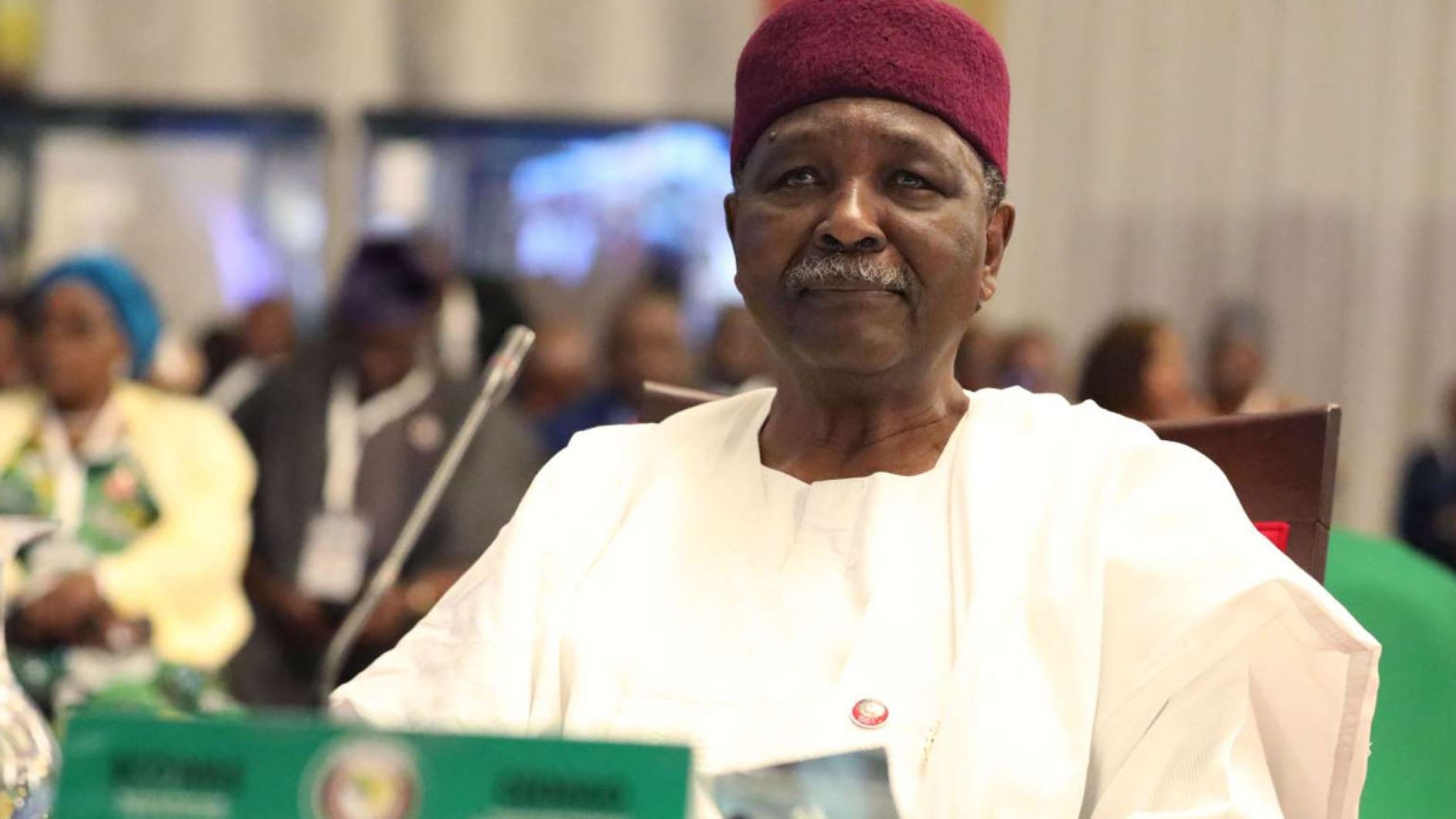
Former Head of State, Gen Yakubu Gowon (retd.), has blamed the late Biafran leader, Lt Col Odumegwu Ojukwu, for the failure of the landmark Aburi accord of January 1967.
He accused the secessionist leader of attending the peace meeting in Ghana with pre-prepared positions and misrepresenting the outcome of the discussions to the people of the Eastern Region.
Gowon also said Ojukwu had been secretly building up arms while mocking him as a “Bible-carrying” officer who would never fight.
The revelations are contained in Chapter Nine of Gowon’s 859-page autobiography, ‘My Life of Duty and Allegiance,’ titled ‘Aburi and Our Road to Nowhere,’ obtained by our correspondent at the book’s launch in Abuja on Tuesday.
In the 37-page chapter, which was both his historical account and a personal reckoning of the meeting, Gowon blamed Ojukwu’s conduct in the months before the Aburi meeting.
He said, “Ojukwu deliberately and effectively thwarted every effort we made to amicably resolve all vexing national issues. He refused to meet with other members of the SMC (Supreme Military Council) in Benin, the capital of the Mid-West Region, which we all knew was neutral in the brewing crisis.
“He was not favourably disposed to any proposed meeting, whether in the air aboard a BOAC aircraft, the Royal Navy Cruiser, or any neutral carrier.
“He declined about every proposition and dismissed invitations to meet with me and other members of the Supreme Military Council ‘anywhere in Nigeria where there are Northern troops.’”
Gowon wrote that at a purely personal level, he was certain Ojukwu was playing a mind game with him, driven not by genuine regional grievances but by personal ambition, an ambition for which, he said, the crisis had become a convenient justification.
He recalled being told by the Attorney-General of Nigeria, Dr Taslim Elias, that Ojukwu had, while at Oxford, authored a paper strongly arguing that future power in Africa lay with the military.
Gowon also recounted how Ojukwu privately dismissed him to his subordinates in the lead-up to the Aburi meeting.
“He only saw me as a Bible-thumping ‘Jack’ who, before anything else, would pick up his Bible and pray rather than stand up to fight.
“He liked to say, more or less: ‘Oh, Jack Gowon! He’s only a staff officer who never commanded troops; he’s no threat; he’ll never fight. Do you know what he carries first in his suitcase? It is only the Bible!” he wrote.
The Aburi meeting, Gowon wrote, was brokered after Ojukwu eventually softened his stance following entreaties by the United Nations, the Commonwealth and several friendly countries.
Both sides had agreed that participants would be only the principal military officers in government, with no set positions to constrain the discussions.
The objective was purely exploratory, to break the ice, remove the veil of suspicion and engender trust, he noted.
But according to Gowon, the first signs of trouble became visible shortly after the Nigerian delegation arrived in Accra.
He writes, “I was reliably informed that a phalanx of civil servants from the Eastern Region had accompanied Ojukwu to Aburi.
“This certainly was against the spirit of our prior agreement that the meeting be made a strictly military affair. I was not perturbed by the blatant breach of our gentleman’s agreement.
“I told the officials who accompanied us not to worry because we would stick to what I had agreed with Ojukwu to make Aburi happen.”
He said the breaches continued inside the meeting room itself, as barely had the session been called to order when Ojukwu produced a fundamental aide memoire that had been purposely prepared in utter disregard of their said initial agreement.
“To avoid causing the meeting to be deadlocked before it got off the ground, I decided against insisting on the agreement or reminding him of our word against set positions.
“Doing either would have brought all our efforts over the past few months to nought. Instead, I made a joke that he had brought his ‘Pink Papers,’” he narrated.
Gowon wrote that even as Ojukwu moved the motion that all parties renounce the use of force, a motion the SMC was happy to endorse, he and his colleagues were well aware it was a delaying tactic designed to buy time for a secret arms build-up that had already suffered a setback.
“We were also mindful that he had cleverly planned to apply the brakes on our ability to deploy the numerical advantage of the existing firepower of the Nigerian Army in the event of an immediate outbreak of hostilities.
“We knew he was compelled to buy time because his surreptitious arms build-up had suffered a serious setback in October 1966 with the crash in the hills of Northern Cameroons of the DC-4 aircraft with which he had hoped to smuggle in a cache of arms,” said Gowon.
By May 1967, at a meeting in Enugu with a National Conciliation Committee delegation comprising Obafemi Awolowo, Prof Samuel Aluko, Jereton Mariere and J.I.C. Onyia, Ojukwu, he stated, dropped all pretence, declaring that the East had attained equality of arms.
Gowon quoted him directly, stating, “‘Quietly I built up. If you do not know it, I am proud, and my officers are proud, that here in the East we possess the biggest army in Black Africa. I am no longer speaking as an underdog; I am speaking from a position of power.’”
“I did not believe Ojukwu’s play to the gallery; I only said to myself that we would see about that,” Gowon added.
The morning of January 6, 1967, the day after the delegation returned to Nigeria, Gowon said he was roused from a sick bed by a call from Mid-West Governor David Ejoor, who asked if he had listened to Ojukwu’s broadcast on the outcome of their meeting.
The former Head of State argued that what Ojukwu told the people of the Eastern Region bore no resemblance to what had been agreed in Ghana.
Among other things, he told them that the SMC had agreed to partition Nigeria so that each region could, from that point, go its separate way.
He quoted Ojukwu as declaring in the broadcast, “Politically, it was unanimously agreed that it was in the interest of the safety of this nation that the regions should move slightly further apart than before.”
Gowon further explained, “First, it should be remembered that Gen Ironsi had, by the Unification Decree No. 34 of 1966, decreed Nigeria a unified country and government. That Decree created a lot of fears everywhere in Nigeria.
“The Midwest may have found it a bit non-threatening because the Region had always believed in one Nigeria. In the Eastern Region, everyone appeared to have warmly received it.
“This may have been because people from the region were the ones who advised Ironsi to carry through his programme and, consequently, were the ones in charge.”
According to him, the implementation of the Decree encouraged the posting of people from one part of the country to assume superior offices in other parts.
In the North, the Midwest and the West, the implementation of the decree further fuelled the fear of Eastern domination, Gowon said.
“On coming to power, I restored the federal system of government by abrogating the Unification Decree,” Gowon affirmed.
He noted that all other governors and SMC members present at Aburi, when asked whether Ojukwu’s statement reflected what was agreed, answered in the negative.
The Eastern governor, he writes, had merely amplified his own personal contribution at the meeting to the effect that “It is better that we move slightly apart and survive; it is much worse that we move closer and perish in the collision,” a position, Gowon argues, that was never the collective agreement.
“What Ojukwu said, therefore, merely conformed to his own personal agenda, not the agreed position at Aburi and not what the generality of Nigerians wanted.
“Records of the meeting did not support his stance either. If anything, the Governor of the Eastern Region had merely amplified his personal contribution at the meeting,” he stated.
Gowon said his incapacitation from illness meant he could not immediately make a counter-statement as they had agreed before leaving Aburi, allowing Ojukwu to set the narrative unchallenged.
According to the book, despite giving Ojukwu most of what he demanded through Decree No. 8 of March 17, 1967, which, Gowon writes, “completely decentralised the government of this country and even went further than the Republican Constitution as it existed before 15th January, 1966,” Ojukwu rejected the decree outright when he discovered it contained a no-secession clause.
“Although I had been advised to act quickly to consolidate our position, I chose to tread carefully so that it would not be seen or said that I goaded Ojukwu into taking a precipitate action.
“Already, our government had been accused of harassing the Igbo, so I did not want us to be further accused of stampeding them into believing that they had no home of their own in Nigeria.
“Ojukwu’s shock further betrayed his ambition and gave birth to further defiance that was captured by his new slogan: ‘On Aburi We Stand!’ On my part, I harboured no illusions, so I responded: ‘And from Aburi you will fall,’” he said on page 270.
Gowon argued that what followed confirmed, in his view, that Ojukwu’s real objective had never been the implementation of Aburi but the achievement of a breakaway state.
He said Ojukwu recalled all federal civil servants from the Eastern Region, hijacked a Nigeria Airways commercial aircraft and converted it to bomb Lagos, Benin, Ibadan, Lokoja, Kaduna and Kano, stopped the Nigerian Railway from moving rolling stock from Port Harcourt, withheld all federal revenues, seized control of the police in the region, and ordered the detention of Shell Petroleum’s Managing Director, Mr Stanley Gray.
Gowon said about the Aburi meeting: “It is presumptuous to continue to believe that Aburi was a meeting of one genius with a league of dunderheads, as some historians have persistently struggled to present the conference.”
The book, running to 859 pages across 36 chapters, covers Gowon’s full life from his Angas origins in Plateau State through his military career, the Civil War, his ouster in 1975 and his years of exile abroad.
punch.ng
FOLLOW US ON: