Connect with us

Lifestyle

Legal advice deepens Mary Habila, Umahi’s death mystery

Published

on

The mystery surrounding the death of Mary Habila, a nurse attached to the office of the Minister of Works, David Umahi, deepened on Friday as legal advice revealed that authorities were still seeking answers to the circumstances surrounding her sudden demise.

While Habila’s family intensified its demand for the release of her remains for burial, the Ebonyi State Ministry of Justice advised that a post-mortem examination was necessary to determine the cause of death.

The ministry stated that available evidence did not indicate that she was suffering from any health challenge before the incident.

The development came as the police began inviting persons considered relevant to the investigation, including those who may have information about the circumstances surrounding Habila’s death.

However, the family has continued to oppose an autopsy, citing cultural and personal reasons and insisting that their immediate concern is to recover her remains and perform her burial rites.

The disagreement between the family and investigators has now placed the case at a critical point, with the Inspector-General of Police, Tunji Disu, expected to intervene following a formal petition submitted by the family on Friday.

Habila, a staff member of the David Umahi Federal University of Health Sciences, Uburu, Ebonyi State, died on June 27, 2026, at a private residence linked to the minister.

Her death generated public interest after reports emerged about the circumstances under which she was found, prompting police investigations and the detention of her remains.

Family petitions IG

The family, through its lawyer, K.A. Yusuf, on Friday petitioned the IG, accusing the Ebonyi State Police Command of unlawfully withholding Habila’s corpse weeks after her death.

The petition, titled, “Complaint Against the Commissioner of Police, Ebonyi State, for the Unlawful Refusal to Release the Corpse of Late Mary Habila for Burial,” was submitted at the Force Headquarters, Abuja.

The family argued that it had fulfilled all requirements demanded by the police and had repeatedly requested the release of the body but was unsuccessful.

Yusuf said the continued custody of the remains had caused emotional and psychological distress to the family and prevented them from carrying out traditional and religious burial obligations.

“The prolonged withholding of our client’s daughter’s remains has caused our client and his family immense emotional, psychological, financial and cultural hardship.

“Our client’s family has been denied the opportunity to perform the customary and religious burial rites to which every deceased person is entitled,” the petition stated.

The lawyer urged the IG to take over the matter from the Ebonyi State Police Command, direct the immediate release of the corpse and investigate any officer found to have acted unlawfully.

See also  Nigercem: Nigeria’s First Indigenous Cement Company (PHOTOS)

Speaking after submitting the petition, Habila’s father, Wisdom, said the family’s position remained unchanged.

He said his only request was to take his daughter home and bury her.

“All that I want is the body of my daughter. We don’t keep the body of a little child for this long just like this.

“That is why I am here to say it once again and for all. I need the corpse of my daughter to take her for burial. That is what I am standing on,” Wisdom said.

Asked why the family was against an autopsy despite the police insisting that it would help unravel the circumstances surrounding her death, the grieving father said they had made their decision.

“I don’t want the autopsy. That is why I am demanding the release of the corpse of my daughter to go and bury her now,” he stated.

However, the father clarified that the family was not accusing anyone of causing Habila’s death.

“I am not suspecting anybody because death can occur. Even as we are standing here, one can fall here now and die. It has happened. So, we are not suspecting anybody,” he added.

Habila healthy before death – DPP

The family’s demand came against the backdrop of a legal opinion from the Ebonyi State Ministry of Justice, which raised questions about the circumstances surrounding the nurse’s death.

The document, obtained by Saturday PUNCH, stated that Habila was healthy before she arrived in Uburu on June 26.

The legal advice, dated July 15, 2026, was signed by the Director of Public Prosecutions, J.U. Chukwu, and addressed to the Deputy Commissioner of Police, State Criminal Investigation Department, Ebonyi State.

Titled, ‘The DPP’s Legal Advice in Re: Case of Sudden Death and Unnatural Death of Mary Habila with case file no. Cr: 578/2026,” the document supported the police recommendation for a post-mortem examination.

According to the DPP, establishing the immediate and remote causes of Habila’s death was essential to the investigation.

The advice stated, “There was no evidence that the deceased was sick or unstable health-wise prior to her sudden death, as she was full of life at the time she returned to Uburu in the company of her team.”

The document further stated that available evidence showed that Habila was alone in her apartment when she was found lifeless.

It added that she was found unclothed, with bloodstains around her nose and mouth.

The DPP noted that the circumstances surrounding the discovery of her body created the need for further investigation.

See also  Couples May Fight, But Do Not Transfer Your Anger to Your Children

“From the foregoing, the question that would readily come to mind is what exactly caused the deceased’s sudden death? This curiosity under the law can only be resolved through a post-mortem examination, so as to provide a clue to the police as to the direction of their investigation,” the advice stated.

The ministry, however, acknowledged that the police had the discretion to either respect the family’s request or proceed with an autopsy.

“It is therefore the view of this office that the police invoke their discretionary power to either respect the request of the deceased’s family or proceed with the post-mortem examination,” it added.

Police invite suspects

Saturday PUNCH gathered on Friday that the police had commenced interviews with persons considered relevant to the investigation.

A senior police source confirmed that individuals connected to the incident had been invited to provide statements.

“They have been invited by the police to make statements. That’s how it’s done, and we can’t do otherwise here.

“If you call it an arrest, fine; if you call it an invitation, that’s also fine. But we invited all of them, and they have all made their statements,” the source said.

The source declined to provide details of the statements obtained, saying investigators were still working on the matter.

A senior official of the Ebonyi State Ministry of Justice, who spoke on condition of anonymity, said the government was committed to ensuring a transparent investigation.

The official said the process would be allowed to run its course without interference.

However, the minister’s media aide, Nwaeze Francis, said he was not aware that Umahi had received any invitation from the police.

“As I speak with you, I have no information about any invitation or letter from the police to the minister. I have no information at all,” he said.

Umahi denies wrongdoing

The minister, who broke his silence on the matter on Thursday, said he suspected no foul play and described attempts to link him to the incident as “politics taken too far.”

Umahi said Habila was like a daughter to him and had worked closely with him for several years.

He disclosed that the deceased had a history of medical challenges and that he personally supported her treatment.

The minister also revealed that Habila complained of bleeding from her nose during a telephone conversation with her boyfriend shortly before she was found dead.

He maintained that there was no evidence of foul play.

Family defends Habila’s identity

Meanwhile, the family’s lawyer moved to correct what he described as misinformation about Habila’s identity and professional background.

Yusuf said the deceased was a nurse and not a physiotherapist.

See also  Vintage Nestlé Cerelac Tin from the 1960s: A Glimpse into Infant Nutrition History

“It is important to clear some grey areas, especially areas where false allegations have been propagated about her person and character.

“Late Mary Habila was not a physiotherapist. She was a nurse and was employed by the David Umahi Federal University of Health Sciences, Uburu, before she was seconded to the office of the minister,” he said.

According to him, Habila had worked in the minister’s office for about three years and remained a civil servant.

He said the family had documents, including her appointment letter and payslips, to establish her employment status.

The lawyer also criticised what he described as attempts to damage the reputation of the deceased after her death.

He said Habila deserved dignity and respect.

A colleague of the deceased, Anita Baaki, who attended the family’s briefing, equally dismissed reports suggesting that she and Habila were newly recruited into the minister’s office.

“We were not transported in any vehicle. We were colleagues and I have been working for a very long time. We have been working under the minister for about three years,” she said.

Baaki clarified that Habila was the nurse while she was the physiotherapist.

“She is a nurse. I am the physiotherapist here. The reports that she was a physiotherapist are not correct,” she added.

Calls for probe, resignation

The incident has attracted political reactions, with former Vice-President Atiku Abubakar calling on President Bola Tinubu to suspend Umahi pending a transparent investigation.

Atiku argued that the investigation should not be handled solely by authorities in Ebonyi State because of the minister’s political influence.

Several groups have also called for a thorough investigation.

However, a faction of Ohanaeze Ndigbo opposed calls for Umahi’s resignation, describing them as premature.

In a statement signed by its Deputy President, Mazi Okechukwu Isiguzoro, the group said no person should be punished before investigations were concluded.

It described the calls as politically motivated and urged that due process be respected.

The group also criticised what it called selective outrage, referring to previous cases of killings, questioning why political leaders who did not demand similar actions in those instances were now calling for sanctions.

According to the group, investigations should be allowed to proceed without political interference.

Similarly, the minister’s kinsmen under the Rulers Council warned against politicising the incident.

In a statement signed by their spokesperson, Nicholas Odi, they urged investigators to conduct an impartial inquiry based on evidence, professionalism and the outcome of any independent examination.

punch.ng

FOLLOW US ON:

FACEBOOK

TWITTER

PINTEREST

TIKTOK

YOUTUBE

LINKEDIN

Continue Reading
Click to comment

Leave a Reply

Your email address will not be published. Required fields are marked *

Lifestyle

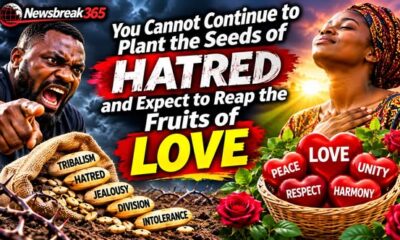
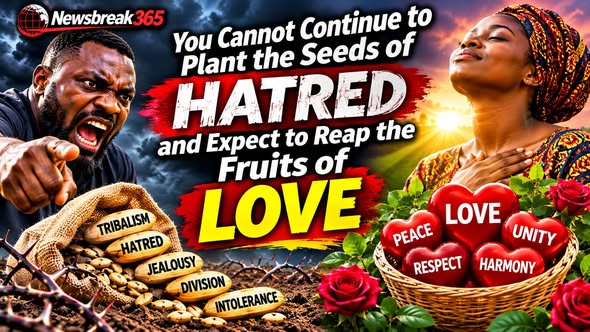
You Cannot Plant the Seeds of Hatred and Expect to Reap the Fruits of Love: The Dangerous Culture of Division in Our Society

Published

on

Hatred does not suddenly appear in society. It is planted, nurtured, encouraged and passed from one generation to another. Yet, some people who spend their lives spreading hatred are often the first to demand peace, love and unity. Isn’t that hypocrisy?**

There is something deeply troubling about a society that constantly talks about love but continues to practise hatred.

People preach peace while promoting division. They speak about unity while encouraging tribalism. They demand respect while showing intolerance towards people who think differently, worship differently or come from different backgrounds.

The question is simple: How can we expect a better society when so many people are actively contributing to the problems destroying it?

## The Seeds of Hatred Are Being Planted Everywhere

Hatred does not always begin with violence. Sometimes, it starts with words, attitudes, prejudices and the deliberate spreading of negative ideas.

It begins when parents teach their children to look down on people from other ethnic groups.

It grows when religious followers are encouraged to see everyone outside their faith as enemies.

It becomes dangerous when politicians manipulate ethnic and religious differences to gain power.

It spreads when people celebrate the suffering of others simply because they belong to a different community.

And it becomes even more destructive when social media turns intolerance, insults and hatred into entertainment.

These may appear to be ordinary disagreements, but when hatred becomes normalised, society begins to lose its sense of humanity.

## You Cannot Preach Love While Practising Hatred

One of the greatest contradictions in modern society is the gap between what people preach and how they behave.

See also  Jonathan considers comeback for 2027 as court hears eligibility suit today

Some people speak passionately about love, forgiveness and compassion but cannot tolerate anyone who disagrees with their opinions.

Others preach religious morality but celebrate the misfortune of those who follow different beliefs.

Some demand justice for themselves but remain silent when innocent people from other communities are mistreated.

Others preach unity but promote tribal superiority whenever it serves their interests.

What exactly are we teaching the next generation?

That love is something we should show only to people who agree with us?

That respect should be reserved for people who look like us?

That humanity should be divided according to religion, ethnicity, political affiliation or social status?

If that is what we are teaching, we should not be surprised when the next generation inherits the same divisions.

## Tribalism, Religious Intolerance and Political Manipulation: A Recipe for Disaster

Across many societies, particularly in Africa, tribal and religious divisions have become powerful tools for manipulation.

Instead of encouraging people to question poor leadership, some individuals redirect their attention towards ethnic and religious differences.

Instead of demanding accountability, citizens are encouraged to defend politicians simply because they share the same tribe or religious identity.

Instead of standing together against injustice, people sometimes choose sides based on identity rather than truth.

This mentality benefits those who exploit division, not ordinary citizens who suffer its consequences.

A society cannot develop properly when people value tribal loyalty above competence, religious identity above humanity and political allegiance above accountability.

We must learn to disagree without becoming enemies.

We must learn to defend our beliefs without dehumanising those who hold different opinions.

See also  Couples May Fight, But Do Not Transfer Your Anger to Your Children

And we must understand that nobody has to hate another person to prove loyalty to their own community.

## The Children Are Watching and Learning

Perhaps the most dangerous consequence of spreading hatred is the damage it does to future generations.

Children observe how adults speak about other people. They listen to conversations at home, watch political arguments, follow religious debates and absorb attitudes from social media.

When children repeatedly hear that another tribe is inferior, another religion is evil or another community cannot be trusted, those ideas can become part of their worldview.

Tomorrow, those same children may become leaders, parents, teachers, politicians and decision-makers.

What kind of society will they build if hatred is the foundation of their upbringing?

We cannot keep planting division in young minds and expect them to create a peaceful world when they grow up.

The responsibility to change this culture begins with adults.

## What You Plant Today Is What You May Harvest Tomorrow

Life is not always predictable, and nobody can guarantee that kindness will always be returned with kindness. However, the values we promote have consequences for our relationships, communities and society.

If you encourage hatred, you contribute to an environment where hatred becomes easier to spread.

If you promote intolerance, you make peaceful coexistence more difficult.

If you celebrate injustice against others, you weaken the principles that protect everyone.

But if you promote understanding, fairness, compassion and mutual respect, you help create an environment where people can live together despite their differences.

The choice is ours.

We cannot continue to destroy the bridges connecting humanity and complain that society is becoming divided.

See also  See why Obafemi Awolowo’s leadership model is difficult to recreate

We cannot encourage bitterness and expect everyone to embrace us with love.

We cannot plant thorns and complain that the garden produces no roses.

## The Question We Must All Answer

Before you accuse another person of spreading hatred, examine your own words and actions.

Before you demand tolerance, ask yourself whether you tolerate people who disagree with you.

Before you preach unity, ask yourself whether you treat people from other communities with dignity.

Before you speak about love, ask yourself whether your behaviour reflects the message you are preaching.

**The world does not need more people who simply talk about love. It needs people who are willing to practise it.**

Hatred may bring temporary satisfaction to those who spread it, but its consequences can outlive the people who started it.

If we genuinely want a better society, we must stop glorifying division and start nurturing the values that bring humanity together.

**You cannot continue to plant the seeds of hatred and expect to reap the fruits of love. What you plant in society today may become the reality of tomorrow.**

—

### WHAT DO YOU THINK?

Can people who constantly promote tribalism, religious intolerance, racism and hatred genuinely claim to be advocates of peace and unity?

Or have we become a society that preaches love with our mouths while spreading hatred through our actions?

**Share your thoughts. Let’s have an honest conversation.**

FOLLOW US ON:

FACEBOOK

WHATSAPP CHANNEL

TWITTER

PINTEREST

TIKTOK

YOUTUBE

LINKEDIN

INSTAGRAM

Continue Reading

Lifestyle

Osun puts Oluwo under watch over inflammatory remarks

Published

on

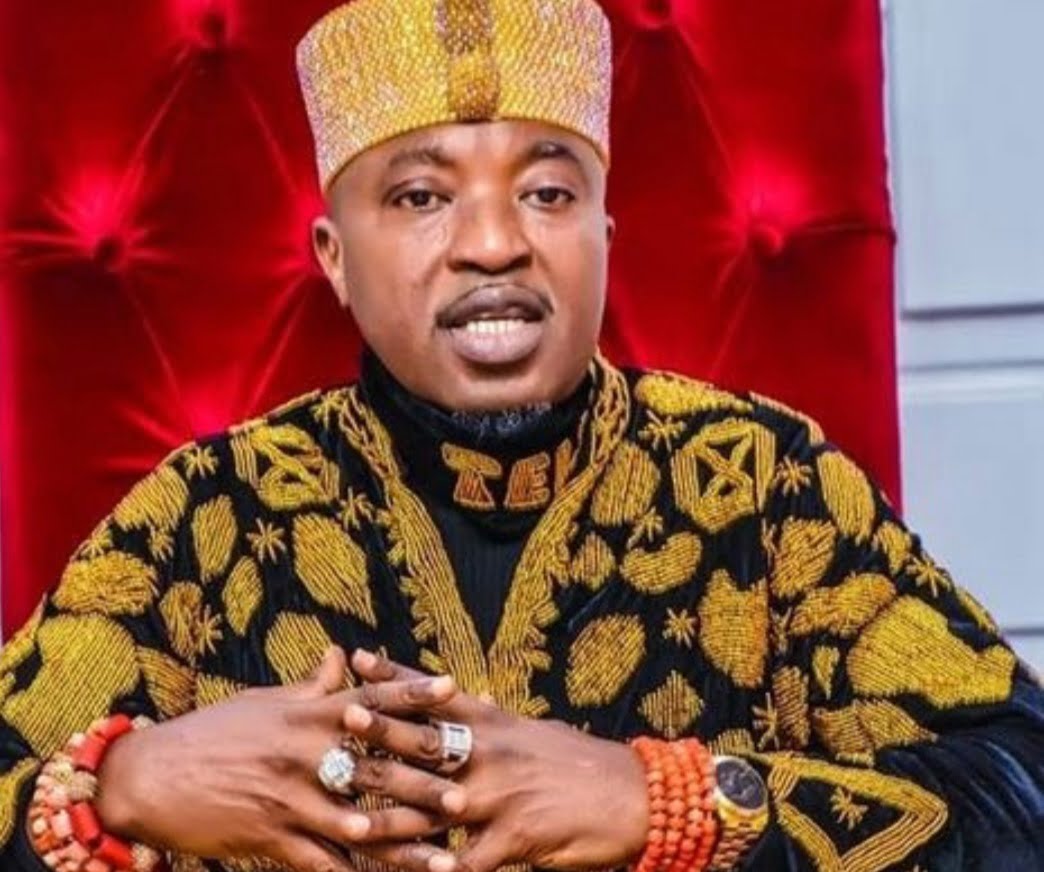
The Osun State Government has placed the Oluwo of Iwo, Oba Abdulrasheed Akanbi, under watch over what it described as inflammatory remarks capable of triggering religious and inter-town conflicts.

It directed the monarch to stop attacking people of other faiths and fellow traditional rulers.

The cautions were contained in a letter from the Ministry of Local Government and Chieftaincy Affairs, Office of the Permanent Secretary, with reference number CD.17/1/VOL.VIII/377, dated November 2026, and signed by Wale Alliyu on behalf of the Permanent Secretary.

A copy of the letter, obtained by The PUNCH in Osogbo on Wednesday, was also sent to the Ooni of Ife, Oba Adeyeye Ogunwusi, in his capacity as Chairman, Osun State Council of Obas.

The government cautioned the Oluwo, saying his activities were raising communal tension, sowing seeds of communal and religious discord, and increasingly discrediting the traditional values of his people and the Yoruba race.

In the letter addressed to the Oluwo and received by the secretary to the monarch on Tuesday, the government stated that it had observed recent well-publicised statements and pronouncements from Oba Akanbi that could ignite religious confrontation, inter-town conflicts and disruption of communal peace.

It said the persistence of such crisis-inciting activities and disruptive conduct capable of breaching public peace had reached a level the administration could no longer ignore.

It also told the monarch that, within the context of the Constitution, every citizen has a right to freedom of religious association, adding that as a traditional ruler, the Oluwo is bound by law to respect the rights of his people to hold religious beliefs as guaranteed by the Constitution.

See also  Couples May Fight, But Do Not Transfer Your Anger to Your Children

It further stated that the Oluwo’s role as a traditional ruler is essentially the preservation of the cultural values and traditions of the people, warning that pursuing any reform with the potential to create community violence and conflict would not be tolerated by the administration.

The letter read, “You cannot, and you must not, conduct yourself in any way that can foment religious crisis through serial attacks on people of other faiths. Your Royal Majesty is also invited to note that just as the traditional stool should not be used to incite religious war, its occupants should also be mindful not to erode the traditional values, culture and tradition of the society over which they preside.

“The government notes with shock and disbelief several statements and public utterances credited to Your Royal Majesty without denial.

“Your activities are raising communal tension, sowing seeds of communal and religious discord and increasingly discrediting the traditional values of your people and Yoruba society, of which your domain is a major part.

“These developments constitute serious threats to the peace, unity and stability of Osun State and your immediate domain.

“It is in view of the above observations that the state government issues the following cautionary notes to nip in the bud any likely outbreak of religious and inter-town conflict: (i) That Your Royal Majesty should stop any further attacks on the people of other faiths forthwith. All citizens have the right to religious freedom of their choice; (ii) That Your Royal Majesty should refrain from further attacks on fellow traditional rulers to forestall likely inter-town confrontation; (iii) That Your Royal Majesty should work to preserve the culture and tradition of the people which the traditional stool you occupy symbolises;

See also  Fubara cancels N134b secretariat contract awarded by Ibas, orders refund

“(iv) That Your Royal Majesty should be guided by the norms and regulations of behaviour as spelt out in the Chieftaincy Laws and resolutions of the State Council of Obas; (v) That the Ministry of Local Government and Chieftaincy Affairs will be monitoring compliance by Your Royal Majesty with the above notes of caution; and (vi) That the State Council of Obas is equally directed to watch and act on recent developments within Iwo land.”

Although the letter did not specify the Oluwo’s utterances or activities to which the government referred, the royal father has, through his social media pages, often accused other Yoruba monarchs of engaging in idolatry.

On July 1, Oba Akanbi, in a video shared on his Facebook page, said that traditional rites and seclusion for new royal fathers were not a good practice, declaring it an avenue to enslave and lure them into idolatry.

Also on October 10, the monarch, in another video on the page, said the idea of an ancient crown was a ruse, stating that crowns are made by monarchs wearing them.

When contacted for a reaction, the Press Secretary to the Oluwo, Alli Ibraheem, said in a telephone interview that the monarch did not receive any letter from the state government.

Source: punchng.com

FOLLOW US ON:

FACEBOOK

WHATSAPP CHANNEL

TWITTER

PINTEREST

TIKTOK

YOUTUBE

LINKEDIN

INSTAGRAM

Continue Reading

Lifestyle

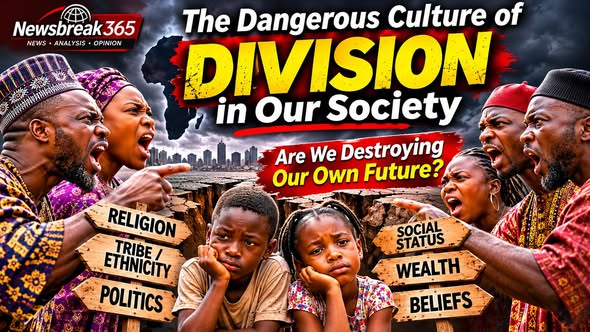
THE DANGEROUS CULTURE OF DIVISION IN OUR SOCIETY: ARE WE DESTROYING OUR OWN FUTURE?

Published

on

A society that allows religion, ethnicity, politics, wealth and social differences to turn its people against one another is slowly destroying itself. But who really benefits from our division?**

There is something deeply disturbing about the direction in which our society is heading. People who should be working together for a better future are increasingly becoming enemies because of differences they should have learned to respect.

Religion has become a battlefield. Ethnicity has become a weapon. Politics has become an excuse for hatred. Wealth has become a measure of human worth. Social status has become a reason to look down on others.

We are gradually creating a society where people are judged not by their character, honesty, intelligence or contribution to humanity, but by where they come from, what they believe, who they support and how much money they possess.

The question we must ask ourselves is this: **When did our differences become more important than our shared humanity?**

## THE DIVISION THAT IS TEARING OUR SOCIETY APART

Division does not always begin with violence. Sometimes, it begins with words, prejudice, stereotypes, manipulation and the refusal to accept that other people have the right to think differently.

It grows when people are taught to hate those who belong to different communities. It becomes dangerous when disagreements turn into hostility and when loyalty to a particular group becomes more important than justice and truth.

Consider some of the most damaging forms of division in our society.

### 1. Religious Division: When Faith Becomes a Weapon

Religion should encourage compassion, humility, kindness and peaceful coexistence. Yet, in many communities, religious differences have become reasons for discrimination, hostility and even violence.

Some people have become so attached to defending their religious identity that they forget the basic principles of humanity.

They condemn people who worship differently, insult those who question their beliefs and sometimes celebrate the suffering of people outside their religious communities.

But what is the value of religious devotion if it cannot teach people to respect one another?

Must someone follow your religion before you recognise their humanity?

### 2. Ethnic and Tribal Division: The Enemy Within

One of the most destructive attitudes in society is the belief that people from one ethnic group are naturally superior to others.

People are stereotyped, marginalised and discriminated against because of their ancestry, language, culture or geographical origin.

In Africa, where cultural diversity should be a source of strength, ethnic suspicion and tribal loyalty have repeatedly undermined social cooperation and national development.

See also  Nigercem: Nigeria’s First Indigenous Cement Company (PHOTOS)

We celebrate our ethnic identities, which is perfectly reasonable. But celebrating your culture should never require insulting another person’s culture.

**Your tribe is part of your identity, not proof that you are better than another human being.**

### 3. Political Division: Fighting for Politicians Who Do Not Fight for Us

Perhaps one of the most embarrassing spectacles in modern society is watching ordinary citizens fight bitterly over politicians.

People destroy friendships, insult family members and spread hatred because they support different political parties.

Meanwhile, the politicians they defend may be enjoying privileges, travelling comfortably and pursuing their personal interests.

When election campaigns end, political opponents can sometimes sit together, negotiate and share political interests. Yet ordinary supporters remain enemies long after the elections.

Why should citizens fight one another over political personalities who may not even remember their sacrifices?

Political loyalty should never be stronger than loyalty to truth, accountability and the welfare of society.

### 4. Wealth and Social Status: When Money Determines Human Worth

Another dangerous form of division is the growing obsession with wealth and social status.

People are increasingly judged by the cars they drive, the houses they own, their professional positions, their clothing and their financial influence.

The wealthy are celebrated regardless of how they acquired their money, while the poor are sometimes treated as though they have failed as human beings.

This culture encourages arrogance, envy, exploitation and unhealthy competition.

But when did money become the measurement of human dignity?

A person’s financial situation does not determine their intelligence, character or value to society.

### 5. Division Through Personal Beliefs and Ideologies

A healthy society should allow people to express different opinions without fear of intimidation or persecution.

Unfortunately, disagreement is increasingly interpreted as betrayal.

Question someone’s argument, and you become an enemy. Challenge a popular opinion, and you are labelled. Refuse to follow the crowd, and suddenly you become a problem.

A society that punishes independent thinking cannot expect to make meaningful progress.

We must learn that disagreement is not hatred, criticism is not necessarily disrespect, and asking questions is not a crime.

## WHO REALLY BENEFITS FROM OUR DIVISION?

This is perhaps the most important question of all.

Who benefits when neighbours become enemies?

Who benefits when citizens are too busy fighting over religion and ethnicity to demand good leadership?

Who benefits when poor people attack one another while powerful individuals continue exploiting their differences?

Who benefits when communities refuse to cooperate because of historical grievances and political manipulation?

See also  Fubara cancels N134b secretariat contract awarded by Ibas, orders refund

Division creates opportunities for manipulation.

When people are emotionally consumed by hatred, they become less willing to question those who exploit their loyalty.

They defend individuals and institutions even when their actions contradict the values they claim to represent.

They spend more energy attacking one another than confronting the problems affecting their communities.

**A divided society is easier to manipulate, easier to exploit and much harder to develop.**

This does not mean every disagreement is deliberately manufactured. Genuine differences exist, and some divisions have deep historical, political and economic roots. However, those who exploit these differences for personal advantage must be held accountable.

## THE NEXT GENERATION WILL INHERIT THE CONSEQUENCES

Perhaps the most painful part of this culture of division is the future we are creating for our children.

Children observe how adults behave. They listen to the insults, witness the hostility and absorb the prejudices around them.

When parents teach children to hate people from other ethnic groups, they are passing hatred from one generation to another.

When communities teach young people that members of another religion are enemies, they are creating barriers that may take decades to dismantle.

When political differences become family conflicts, children grow up believing that disagreement must end in hostility.

What kind of future are we preparing for them?

Do we want a generation that values intelligence, innovation, education, cooperation and human dignity, or one that inherits the bitterness and prejudices of previous generations?

Our children deserve better than a society where their opportunities are determined by their surname, religion, ethnicity or political connections.

## UNITY DOES NOT MEAN WE MUST THINK ALIKE

It is important to understand that unity does not require everyone to share the same religion, ethnicity, political ideology, culture or personal beliefs.

Real unity means recognising that people can be different and still coexist peacefully.

You can disagree with someone’s religious beliefs without insulting them.

You can belong to a different ethnic group without becoming an enemy.

You can support a different political party without destroying a friendship.

You can be wealthy without looking down on the poor.

You can be successful without celebrating another person’s failure.

A mature society does not demand uniformity. It demands mutual respect, fairness, accountability and equal human dignity.

## IT IS TIME TO BREAK THE CYCLE OF DIVISION

We cannot continue planting the seeds of hatred and expect to harvest peace.

We cannot continue encouraging tribalism and expect national unity.

See also  Belgium stage 3–2 comeback win over Senegal to enter World Cup last 16

We cannot continue defending corruption because of political loyalty and expect good governance.

We cannot continue treating people as inferior because of their religion, background or financial circumstances and expect a fair society.

Every individual has a responsibility to challenge prejudice, reject manipulation, encourage critical thinking and treat others with dignity.

Our leaders must also recognise that governing a diverse society requires fairness, inclusion and accountability, not the exploitation of differences for political advantage.

The future of society depends not on how successfully we defeat one another, but on how effectively we learn to live and work together.

## THE BIG QUESTION: ARE WE BUILDING A SOCIETY OR DESTROYING ONE?

Imagine a society where people are judged by their character rather than their ethnicity.

Imagine communities where religious differences do not produce hatred.

Imagine political debates where people challenge ideas without threatening one another.

Imagine a society where wealth does not give someone the right to humiliate the poor.

Is that kind of society impossible, or have we simply become too comfortable with division?

We must ask ourselves whether we are genuinely interested in progress or whether we have become addicted to fighting over differences while ignoring the problems that unite us.

The uncomfortable truth is that nobody wins when hatred becomes the foundation of society.

**A divided people may win arguments, defend their tribes, protect their political heroes and celebrate their differences, but they risk losing something far more valuable: their collective future.**

The time to rethink our priorities is now.

—

## LET’S DEBATE: YOUR OPINION MATTERS!

1. Who benefits most from the growing division in our society: ordinary citizens or the powerful?
2. Has religion become a source of division in some communities rather than a force for compassion?
3. Why do people fight and destroy relationships over politicians who may not even care about their personal struggles?
4. Is tribalism one of the biggest obstacles to African unity and development?
5. Are parents and society unconsciously raising a generation that will inherit hatred and prejudice?
6. Can genuine development happen when people cannot respect one another’s differences?

**DROP YOUR HONEST OPINION IN THE COMMENT SECTION. DON’T JUST READ AND SCROLL PAST. LET US HAVE THIS IMPORTANT CONVERSATION!**

*Newsbreak365 — Challenging Perspectives, Questioning Narratives and Encouraging Conversations That Matter.*

#Newsbreak365 #Society #Division #Unity #AfricanSociety #Tribalism #ReligiousTolerance #PoliticalDivision #Humanity #SocialAwareness

FOLLOW US ON:

FACEBOOK

WHATSAPP CHANNEL

TWITTER

PINTEREST

TIKTOK

YOUTUBE

LINKEDIN

INSTAGRAM

Continue Reading

Trending