Connect with us

Politics

Atiku, Obi, Makinde resist step-down pressure ahead of 2027 polls

Published

on

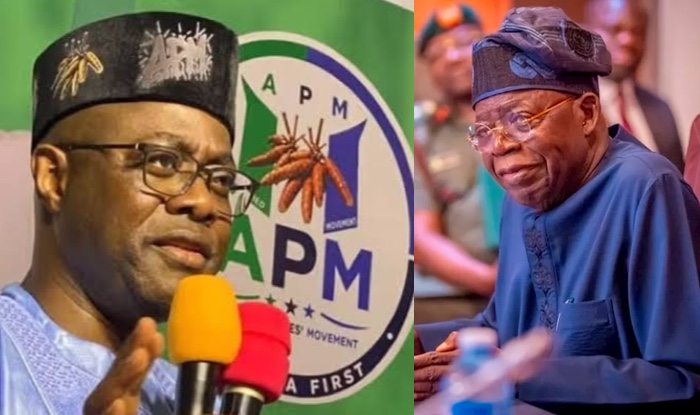
Efforts by the G-100 to produce a consensus presidential candidate ahead of the 2027 election may be facing fresh hurdles as the presidential candidates of the African Democratic Congress, former Vice-President Atiku Abubakar; the Nigeria Democratic Congress, former Anambra State Governor Peter Obi; and the Allied Peoples’ Movement, Oyo State Governor Seyi Makinde, have maintained their presidential ambitions.

A member of the G-100, a coalition of political groups and stakeholders advocating a united opposition front, Ambassador Umanu Elijah, however, expressed confidence that consultations would be concluded and an agreement reached on a consensus candidate by September 30.

The push appears to have met resistance from the camps of Atiku, Obi and Makinde, with none of the three indicating that he is prepared to withdraw from the race in favour of another aspirant. Rather, they have continued to project themselves as viable candidates, fuelling uncertainty over the possibility of a single-ticket arrangement.

Meanwhile, the African Action Congress, DLA, Allied Peoples’ Movement and Action Democratic Party, among others, have rejected suggestions that their presidential candidates would step down for another aspirant.

The development has further complicated efforts to achieve a broad opposition consensus, with the parties insisting on retaining their candidates ahead of the 2027 presidential election.

The opposition leaders, in their bid to foster unity among stakeholders ahead of the 2027 elections, recently convened at the Shehu Musa Yar’Adua Centre in Abuja for the G-100 Alliance Summit.

The meeting brought together representatives of six opposition political parties to discuss possible areas of cooperation ahead of the general elections.

The summit was part of broader efforts by opposition parties to forge a common platform for collaboration and build a formidable political force capable of mounting a strong challenge to the ruling All Progressives Congress and its candidate, President Bola Tinubu.

Elijah, in an exclusive interview with The PUNCH, said the G-100 was working towards selecting a consensus presidential candidate from among the opposition parties ahead of the 2027 election.

He said consultations were ongoing behind the scenes, expressing confidence that the group would reach an agreement before the end of September and subsequently seek the support of other candidates and political parties.

Elijah stated, “We had our first summit recently in Abuja with the opposition political parties and their presidential candidates. It is important to note that this is a gradual process. We have not adopted a single candidate yet, but that is the goal.

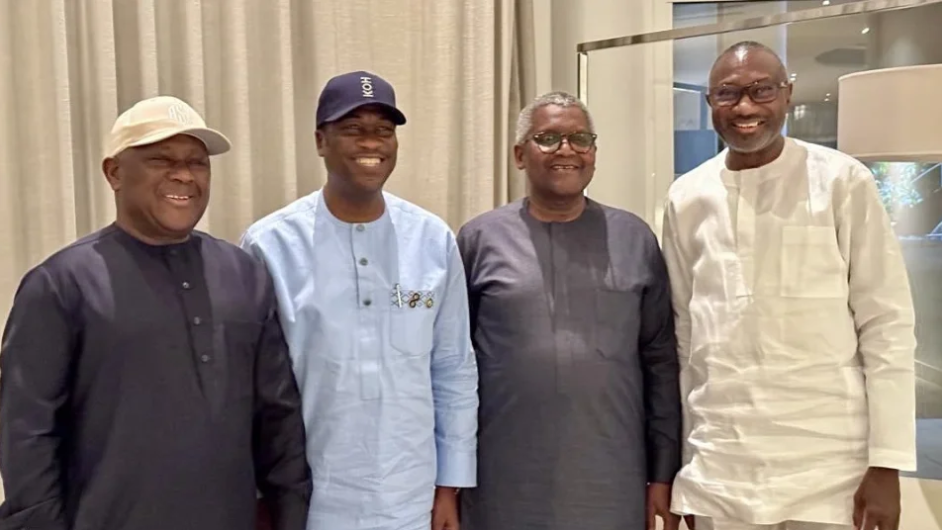
“Recall that yesterday (Monday), Mr Peter Obi visited the Allied Peoples’ Movement presidential candidate, Seyi Makinde. This is the conversation the G-100 is driving. Meetings are going on behind the scenes, and I am sure that before the end of this month, we would have settled on a consensus candidate that we will ask other candidates and parties to support. This is the situation for now.”

See also  Olawepo-Hashim urges Tinubu, INEC to shift primaries to September

The media aide to the former Vice-President, Paul Ibe, declined to comment on the matter.

However, a trusted ally of Atiku said the former Vice-President was not opposed to an alliance, arguing that the opposition coalition had given birth to the ADC.

The source stated, “Those who are now talking about coalition and alliance are only beginning to realise that Atiku is ahead of them. He thought about this quite a long time ago and came up with the idea. He did not just stop there; political stakeholders from across the country and different political parties were consulted, and that is why we have the ADC today.

“That is why leaders from different political parties came together and adopted the ADC as the platform for the opposition leaders’ coalition ahead of the 2027 election. Atiku Abubakar is now the candidate, while others are still talking about coalition, alliance and the G-100.

“Of course, as a statesman, he is open to discussions. Atiku has been engaging with any leaders who meet with him, so he remains open to dialogue. But Alhaji Atiku Abubakar is going to contest the 2027 election. Those who understand the situation in the country and believe that only Atiku has the capacity to do it will rally around him from the other political parties.”

When contacted, the APM National Publicity Secretary, Abubakar Yusuf, told The PUNCH in an exclusive interview that the party’s presidential candidate, Seyi Makinde, remained firmly in the 2027 race and was contesting to win, rather than merely to participate.

Yusuf said although discussions on a possible opposition consensus were ongoing, Makinde had not stepped down for any candidate and could still emerge as the consensus choice.

He stated, “Well, you have heard from the candidate during the commissioning of the APC presidential campaign headquarters. You heard from the candidate, the national leader of the party, the chairman of the party, and even the vice-presidential candidate.

“The Governor of Oyo State, who is the flag bearer of our party, is not in the race to take Nigerians for a ride, or for a joke, comedy or fun. He is in the race to win. He is contesting to win the 2027 election.

“Yes, we know we have stakeholders in the G-100, but of course, discussions are ongoing. What makes you think Makinde will not be adopted as the consensus candidate? For now, all I can tell you is that His Excellency, the Oyo State Governor and candidate of our party, is in the contest to win. He has not stepped down for anybody.”

See also  Tinubu lacks understanding of insecurity, says opposition

The NDC National Publicity Secretary, Osa Director, said the party was open to discussions on a consensus presidential candidate for the opposition, stressing that its candidate remained one of the strongest contenders and had a strong chance of emerging as the preferred choice.

He stated, “Our party, in line with the Nigerian Constitution, has the right to associate with any individual member, group or association in the country. It is in exercising this right that you see our candidate associating with other candidates across party lines.

“As a party, it is part of our principle that there is a need for us to come together. However, coming together does not mean that we do not have what it takes to win the election. Our presidential candidate is a popular and credible candidate.

“NDC is ready to participate in discussions about a single candidate for the opposition parties. We are ready and are already participating in discussions about the need to have a consensus candidate or a single candidate, especially because we believe that our candidate is one of the best among all the other aspirants and has a strong chance of emerging as the consensus candidate.”

On his part, the African Action Congress presidential candidate, Omoyele Sowore, rejected calls for opposition politicians to unite behind a single presidential candidate ahead of the 2027 general elections.

Sowore said a single candidate without a shared ideology, clear programme and commitment to fundamental reforms would amount to another elite arrangement that would not address Nigeria’s challenges.

He stated this while responding to questions on whether he would step down if opposition politicians reached an agreement on a consensus presidential candidate.

Sowore said, “I do not subscribe to the idea that Nigeria’s problem can be solved simply by gathering opposition politicians together and producing a so-called ‘single candidate.’ The real question is: united around what?”

He argued that political cooperation should be anchored on a common ideology and a clear development agenda, rather than merely seeking to dislodge the ruling All Progressives Congress.

“A single candidate without a common ideology, a clear programme and a commitment to fundamentally change Nigeria is merely another elite arrangement designed to change the occupants of power while preserving the system that has failed our people,” he said.

According to him, the AAC and its supporters were seeking a fundamental transformation of the country rather than simply replacing one set of politicians with another.

See also  WELCOME TO 2026!

“The African Action Congress and our movement are not in this struggle merely to remove the APC and replace it with another collection of politicians who have participated in creating the same problems,” Sowore added.

He said his movement was campaigning for economic justice, decent wages, free and quality education, universal healthcare, uninterrupted electricity, affordable housing, improved security and accountable governance.

On whether he would withdraw from the presidential race to support a consensus opposition candidate, Sowore said he would not surrender what he described as the aspirations of millions of Nigerians to an elite political arrangement.

“So, would I step down simply because some opposition politicians approached me and said they had agreed on a single candidate? No. I would not surrender the aspirations of millions of Nigerians for an elite political arrangement,” he said.

Similarly, the presidential campaign spokesperson for the Democratic Leadership Alliance, Tosin Odeyemi, said the party did not support the single-candidate arrangement.

“No. We don’t subscribe to a single presidential candidate and our candidate won’t be stepping down,” Odeyemi said.

The Young Progressives Party presidential candidate, Peter Agada, however, said he could consider such an arrangement if it was based on a clear ideology and development framework.

Agada said a consensus candidate would only be acceptable if the arrangement was designed to transfer political power to the grassroots and strengthen the economy.

“Available only if driven by ideology, a development framework and architecture that takes power to the wards, plus ramp up the micro-economy the way the macro economy is right now,” he said.

The Action Democratic Party National Chairman, Yabbagi Sani, said the party would not withdraw its presidential candidate for any other contender, arguing that reconciling the interests, policies and programmes of multiple opposition parties within a short period would be difficult.

He said the ADP would instead welcome candidates willing to step down and support its flag bearer.

Sani stated, “The ADP has its own presidential candidate. Elections are about interests, so how do you align the interests of multiple individuals and political parties within the shortest possible time? We have our policies, programmes and manifesto.

“Our candidate is not stepping down for anybody. Rather, we will appreciate and welcome those who are ready to step down and work for our candidate.”

Source: punchng.com

FOLLOW US ON:

FACEBOOK

TWITTER

PINTEREST

TIKTOK

YOUTUBE

LINKEDIN

INSTAGRAM

Continue Reading
Click to comment

Leave a Reply

Your email address will not be published. Required fields are marked *

Politics

Gombe 2027: Pantami, Mailantarki, Garry enter fresh PDP ticket battle

Published

on

CHIMA AZUBUIKE examines the political dynamics surrounding the fresh Gombe State governorship primary holding Tuesday (today), which pits former minister Isa Pantami against Khamisu Mailantarki and Usman Garry

Today, former Minister of Communications and Digital Economy, Prof. Isa Pantami; businessman and politician Khamisu Mailantarki; and Usman Garry will again hit the field to battle for the Peoples Democratic Party governorship ticket in Gombe State for the 2027 election. The fresh governorship primary election complies with an order by the Federal High Court sitting in Gombe. The court, in a judgment on September 24, nullified the May 26 primary that produced Pantami, directing the PDP to conduct another exercise within 30 days, in compliance with its Constitution, guidelines and relevant electoral laws.

The judgment delivered by Justice Amina Mohammed followed a suit filed by Usman Garry, a PDP governorship aspirant, who challenged the process through which Pantami emerged as the party’s candidate. Garry objected to the affirmation of Pantami as the standard-bearer of the Abdulrahman Mohammed-led faction and eventually filed a suit against the former minister. Garry had asked the court to set aside Pantami’s emergence because the PDP did not conduct a valid governorship primary in accordance with its rules and applicable electoral laws.

The Federal High Court nullified the process that produced Pantami and ordered the PDP to conduct a fresh primary. The court found problems with the process that produced Pantami and directed the party to repeat the exercise in accordance with its guidelines and applicable electoral laws.

Before joining the PDP, the former minister had sought the governorship ticket of the All Progressives Congress. When the APC settled on Jamilu Gwamna as its consensus candidate, Pantami withdrew from the contest and subsequently moved to the PDP. His arrival immediately altered the calculations within the opposition party.

Pantami’s impending movement to the PDP circulated while Mailantarki, Saleh Abdulkadir, Garry and Monica Kaltho were preparing for the party’s governorship contest.

Pantami will again slug it out with other aspirants, Mailantarki and Garry, who reject the former minister’s entry into the governorship ticket race.

Between Pantami, Mailantarki, and Garry

Pantami enters Tuesday’s contest as a politician whose national profile gives the primary a significance beyond the ordinary competition for a party ticket. A former Director-General of the National Information Technology Development Agency and former minister, Pantami boasts supporters who argue that his experience, networks and resources make him capable of mounting a serious challenge against the APC candidate, Gwamna.

Mohammed Kudu, a PDP chieftain, dismissed the capacity of some of the other aspirants to confront the governing party, describing Mailantarki, Saleh Abdulkadir and Garry as weak to confront the APC candidate.

Kudu said, “Who among Khamisu Mailantarki, Saleh Abdulkadir, Garry Usman has what it takes to challenge the APC? We recognise that Jamilu Gwamna is grassroots; hence, the only person that can face him, man to man, is Malam (Ali Pantami). He has made money as former Minister of Communications and Digital Economy, and as former Director-General of NITDA and as a visiting lecturer. Maybe Saleh Abdulkadir, who seems genuine, but you know he is not as wealthy as he used to be.”

He added, “He (Ali Pantami) has the capacity to defeat Gwamna of APC in a fair contest because he has international connections and he has built enough capital in both human and other resources that translate into wealth. All that will count in the build-up to the election.”

Kudu’s comments reflect one side of the political argument surrounding the PDP contest: that the party needs a candidate with sufficient political, financial and organisational resources to confront the APC.

See also  Tinubu’s New Year message (Full Text)

But that argument is contested by opponents of Pantami’s emergence.

For them, the issue is not simply whether Pantami possesses the resources or profile to contest the 2027 election. They question the circumstances surrounding his entry into the PDP and his rapid movement from APC aspirant to PDP governorship candidate.

Dr Maryam Abubakar, a policy analyst, described what she called the “unprecedented desperation” surrounding Pantami’s political journey.

She said, “How can you once say politics is dirty, only for late President Muhammadu Buhari to appoint you from NITDA to cabinet minister, and you suddenly forget your sermons where you lashed politics and politicians.”

Abubakar also questioned Pantami’s relationship with the APC before his defection.

She said the former minister, despite developing an interest in politics, failed to support the governing party sufficiently.

“Even when his interest began to manifest, he refused to empower the party members or support the party to achieve its mandate in the state. Instead, we started hearing rumours that Malam (Ali Pantami) was funding African Democratic Congress in Gombe but refused to identify with them publicly because of court cases ADC faced and alleged possible witch-hunt by the anti-graft body,” she added.

“How can you contest this week in APC and next week become a PDP candidate? It’s the height of desperation. As a technocrat and Islamic scholar, we expected a new order in the way of doing things, not doing things like regular politicians who lack ideals and purpose. What was baffling was allowing yourself to be a product of a corrupt process.”

So, the PDP held the May 26 primary amid misgivings. The decision to challenge the primary was therefore not unexpected.

Gombe’s political landscape is shaped by local structures and established political networks, while national visibility and access to influential political actors can also affect a candidate’s campaign.

The PDP’s choice will therefore be watched beyond the immediate party contest.

The Gombe PDP primary has consequently evolved from an ordinary intra-party contest into a test of how political ambition, party organisation and electoral law intersect.

Today’s exercise is, therefore, a bid to correct issues of the past. The PDP is now conducting a new nomination process, creating a fresh opportunity for all three cleared aspirants.

Although Saleh Abdulkadir was prominent in the initial contest and was mentioned among those who challenged Pantami’s emergence, the PDP’s current list of cleared aspirants for Tuesday’s primary comprises Pantami, Mailantarki and Garry.

That means the field has narrowed considerably from the wider contest that preceded the May primary.

Abdulkadir’s absence from the fresh contest further concentrates the battle among three political camps.

For the PDP, this may make the primary easier to organise, but it does not necessarily make the political dispute less complicated.

The principal disagreement remains over the process that brought Pantami into the party’s nomination race and the question of whether the fresh exercise can finally settle the matter.

For Pantami, it provides the opportunity to seek a new mandate from the party after his first nomination was nullified.

For Mailantarki and Garry, it offers the opportunity to challenge Pantami through a fresh process in which they have been cleared to participate.

And for the PDP, it presents another opportunity to conduct a process that can withstand judicial scrutiny.

Circumventing legalities

The legal questions surrounding Tuesday’s contest became complicated on September 24 when the Supreme Court restored provisions of the Electoral Act 2026 dealing with party membership registers and the nomination of candidates. The apex court upheld the validity of Sections 77(5), 77(6), 77(7) and 84(2), reversing the earlier Court of Appeal position that had voided the provisions.

See also  Bode George links PDP crisis to greed, disregard for founding fathers

Section 77(5) requires that persons eligible to vote at party primaries must have their names contained in the membership register submitted to the Independent National Electoral Commission within the prescribed period.

The controversy followed the timing of Pantami’s movement from the APC to the PDP.

According to the account supplied by Gombe public affairs commentator, Chika Udenkwo, Pantami left the APC on May 19, while the APC primary was held on May 21 and the PDP primary took place on May 26.

Udenkwo therefore argues that the key question is not simply whether Pantami defected from the APC before the PDP primary.

The more precise question, he says, is whether Pantami’s name appeared in the PDP membership register submitted to INEC within the statutory period applicable to the May 26 primary.

He said, “Pantami left the APC on May 19. The APC primary followed on May 21. And on May 26, Pantami emerged from the PDP primary.”

He added, “The question now is not simply whether he had left the APC before joining the PDP. The more precise question is this: Was Pantami’s name contained in the PDP membership register submitted to INEC within the statutory period applicable to the May 26 primary?”

According to Udenkwo, if May 26 is used as the reference date, the 21-day period would take the relevant deadline back to May 5.

“That makes the documentary evidence critical. Was Pantami already a PDP member by that date? Was his name on the register submitted to INEC? When exactly was that register submitted? And was the same register actually used for the May 26 primary?” he asked.

Those questions, however, must be distinguished from the legal effect of the September 24 Supreme Court judgment itself.

The Supreme Court’s ruling restored the provisions; it did not, by itself, pronounce on Pantami’s individual eligibility for Tuesday’s Gombe primary.

As today’s fresh primary holds, one of the questions includes whether the party has complied with the applicable requirements for the new primary, including membership records, notice, screening, participation and its own guidelines.

The membership-register question could nevertheless become significant if a litigant argues that an aspirant or delegate was not properly qualified under the restored provisions.

On the contention, Udenkwo argued, “A victory on Tuesday would give Pantami a fresh nomination, not a reliance on the May 26 exercise that has already been nullified.

“But that victory would still have to survive any subsequent legal challenge—one based on compliance with the Electoral Act, the PDP Constitution, the court’s order, and the applicable membership register.”

He added, “In other words: winning the primary and establishing the legal validity of the nomination are related—but distinct—questions. That reasoning also applies to Mailantarki and Garry.

“If either defeats Pantami, the resulting nomination would equally be subject to the statutory and party requirements governing the fresh primary.”

For Mailantarki and Garry, Tuesday’s contest is an opportunity to reset a process that both have spent months challenging.

Their opposition to Pantami’s emergence was not limited to political statements. Their objections eventually formed part of the litigation that produced the Federal High Court’s order for a fresh primary.

The two now have to shift from challenging the previous process to competing within the new one. That presents a different political calculation.

Instead of asking the court to remove Pantami from a ticket already produced by the party, they must now persuade delegates or eligible party members to choose either of them over the former minister.

See also  Tinubu lacks understanding of insecurity, says opposition

The question therefore becomes whether the legal challenge has translated into political momentum.

Mailantarki’s position has also been affected by the withdrawal of Kaltho, who had initially been part of the challenge before later aligning with Pantami.

Kaltho’s movement altered the political arithmetic around the opposition to Pantami, leaving Mailantarki, Garry and Abdulkadir among the figures challenging the earlier emergence.

Whether that change will have an effect on Tuesday’s voting remains a political question to be answered by the primary.

A primary under scrutiny

The September 29 exercise is also taking place under a level of scrutiny that the May primary did not successfully withstand.

The Supreme Court, in its judgment, restored statutory provisions concerning party membership registers and nomination procedures.

Political observers are consequently watching not only the outcome but the process.

Tuesday’s primary presents a credibility test for the PDP.

The party has already experienced the consequences of an internal nomination process that ended in litigation.

The Federal High Court’s order provides the party with an opportunity to correct the procedural issues that led to the nullification of the earlier exercise.

Udenkwo said, “The question becomes whether the PDP has complied with the requirements applicable to this fresh primary: the membership register, notice, screening, delegate participation, and the party’s own constitution and guidelines.”

He added, “And here, the Supreme Court’s ruling makes the membership register particularly significant. The law does not merely require a party to maintain a register. It requires that register to be submitted to INEC within the prescribed period—and it restricts participation in the primary to persons whose names appear in it.”

Today, the PDP will have to be able to demonstrate compliance with the court order and the applicable electoral framework.

The scrutiny will extend to the eligibility of delegates, the party’s register and the conduct of the exercise.

Udenkwo said, “The Supreme Court has now made the statutory validity of Sections 77 and 84 clear. What it has not done is determine the factual circumstances of every candidate or every primary conducted before its judgment.”

“That leaves room for litigation—where an aspirant believes a party failed to comply with the membership-register requirements or other statutory conditions,” he added.

For now, however, the PDP’s immediate responsibility is to conduct the fresh exercise ordered by the Federal High Court.

For Pantami, Tuesday offers a second opportunity to secure the party’s ticket through a fresh primary. For Mailantarki and Garry, it offers a second opportunity to challenge him directly rather than through the previous process. For the PDP, it offers the chance to close a chapter that has already generated substantial internal disagreement and legal action.

But whether Tuesday finally closes that chapter will depend not only on who wins, but on how the party conducts the exercise.

The 2027 question

Tuesday’s primary cannot be viewed entirely in isolation from the wider 2027 contest.

The APC has already positioned Jamilu Gwamna as its candidate.

The contest is therefore framed along the line of having a candidate that can challenge the APC in the general election.

For Kudu, Pantami’s national profile and network give him the capacity to confront Gwamna.

But the argument also exposes one of the central issues before PDP delegates: whether the choice of candidate should be determined primarily by political experience, organisational structure, personal resources, grassroots networks, national connections or some combination of these factors.

Source: punchng.com

FOLLOW US ON:

FACEBOOK

TWITTER

PINTEREST

TIKTOK

YOUTUBE

LINKEDIN

INSTAGRAM

Continue Reading

Politics

Atiku, ADC to amend Tinubu eligibility suit ahead of 2027 elections, read details

Published

on

Former Vice President Atiku Abubakar and the African Democratic Congress have moved to amend their suit challenging President Bola Tinubu’s eligibility to contest the 2027 presidential election, with the Federal High Court in Abuja fixing October 13, 2026, to hear the application.

The suit also joined the All Progressives Congress and the Independent National Electoral Commission.

Marked FHC/ABJ/CS/1888/2026, the suit was slated for further mention before Justice Inyang Ekwo.

When the case was called, counsel for the plaintiffs, Joseph Silas, told the court that processes had been served on all the defendants within the stipulated period, and that the plaintiffs had received and responded to their processes.

Recall that an earlier dispute over service of the processes on the first defendant had stalled proceedings in the case.

Counsel for the President, Chief Wole Olanipekun (SAN), reminded the court that at a previous hearing on September 1, 2026, counsel for the second defendant, Popoola Owosanya, had offered to receive the court processes on behalf of the first defendant.

Olanipekun told the court that the offer had been rejected by the plaintiffs’ counsel, who later approached the court for an order permitting substituted service on Tinubu, alleging that the plaintiffs subsequently attempted to “deceive this court” by claiming that they were unable to serve the first defendant.

Justice Ekwo, however, urged the lawyers to focus on the business of the day.

Silas subsequently informed the court of the plaintiffs’ application to amend their originating summons. He said counsel to the defendants had been put on notice of the application.

After confirming that the lawyers had indeed been served with the application, Justice Ekwo adjourned the case.

See also  Pastor Adeboye releases prophecies for New Year 2026
Tinubu
President Bola Tinubu. Photo: State House

“This case is hereby adjourned until the 13th of October 2026, for hearing of the motion to amend the originating summons,” the judge held.

The PUNCH reports that Atiku and the ADC instituted the suit in August, challenging Tinubu’s eligibility to contest the 2027 presidential election.

Their case centres primarily on an alleged discrepancy involving the name on a National Youth Service Corps discharge certificate submitted to INEC and the President’s official name.

The allegation forms part of the substantive issues yet to be determined by the court.

ADC

The court had on September 16 granted the plaintiffs permission to serve Tinubu through the APC after the plaintiffs told the court that efforts to effect personal service on the President had proved difficult.

The order had been challenged by the APC, which argued that Tinubu’s lawyers had already collected the originating processes and filed his defence before the application for substituted service was made.

Meanwhile, INEC has also filed a response challenging the competence of the action, including arguments relating to the plaintiffs’ locus standi and alleged abuse of court process.

Source: punchng.com

FOLLOW US ON:

FACEBOOK

TWITTER

PINTEREST

TIKTOK

YOUTUBE

LINKEDIN

INSTAGRAM

Continue Reading

Politics

PDP members decamp to APC in Kwara ahead of 2027

Published

on

No fewer than 1,500 members of the Peoples Democratic Party in Alapa/Onire/Odegiwa Ward, Asa Local Government Area of Kwara State, have defected to the ruling All Progressives Congress.

The decampees announced their decision to join the APC on Sunday during a ward meeting attended by the Chairman of the Lower Niger River Basin Development Authority, Abdullateef Alakawa; a member of the Kwara State House of Assembly, Shittu Motunrayo; and other party executives and supporters.

The new APC members said they left the PDP, led in the state by former Senate President, Bukola Saraki, due to what they described as mistreatment of members, imposition of candidates and poor reward for loyalty.

They also said they were attracted to the APC by what they described as the party’s visible achievements and opportunities for members, particularly youths.

Addressing the decampees, Alakawa welcomed them to the APC, assuring them that they would be treated as members of the same political family.

Chairman of the Lower Niger River Basin Development Authority, Abdullateef Alakawa; a member of the Kwara State House of Assembly, Shittu Motunrayo; and other party executives and supporters while receiving the decampees on Sunday.

He said, “Today, we are receiving no fewer than 1,500 members of the PDP from Alapa/Onire/Odegiwa Ward into the APC. Their decision to join us is a clear indication of their confidence in the APC and its programmes.

“There is no newcomer in the APC. Everyone is one, and we are all working towards a common goal. Those who perform well and occupy political positions are also leaders of the party.”

The LNRBDA chairman urged the new members to remain committed to the party and contribute to its growth at the grassroots.

See also  Olawepo-Hashim urges Tinubu, INEC to shift primaries to September

Alakawa also commended the Kwara State Governor, AbdulRahman AbdulRazaq, for what he described as his performance in Asa Local Government Area.

Chairman of the Lower Niger River Basin Development Authority, Abdullateef Alakawa; a member of the Kwara State House of Assembly, Shittu Motunrayo; and other party executives and supporters while receiving the decampees on Sunday.

Chairman of the Lower Niger River Basin Development Authority, Abdullateef Alakawa; a member of the Kwara State House of Assembly, Shittu Motunrayo; and other party executives and supporters while receiving the decampees on Sunday.

“Governor AbdulRazaq has done well for the people of Asa, and the best way to reward his efforts is to support and vote for him in the forthcoming Kwara Central Senatorial District election,” he stated.

The lawmaker representing the area, Shittu, also joined other party leaders in welcoming the defectors into the APC and urged them to work with existing members for the development of the party.

The reception for the decampees underscored the APC’s efforts to expand its grassroots structure in the local government, as more members of the opposition party continue to announce their defection to the ruling party.

The latest defection comes ahead of the 2027 general elections and adds to the political realignment taking place across Kwara State as the major political parties intensify efforts to consolidate their grassroots support.

Source: punchng.com

FOLLOW US ON:

FACEBOOK

TWITTER

PINTEREST

TIKTOK

YOUTUBE

LINKEDIN

INSTAGRAM

Continue Reading

Trending