Connect with us

Lifestyle

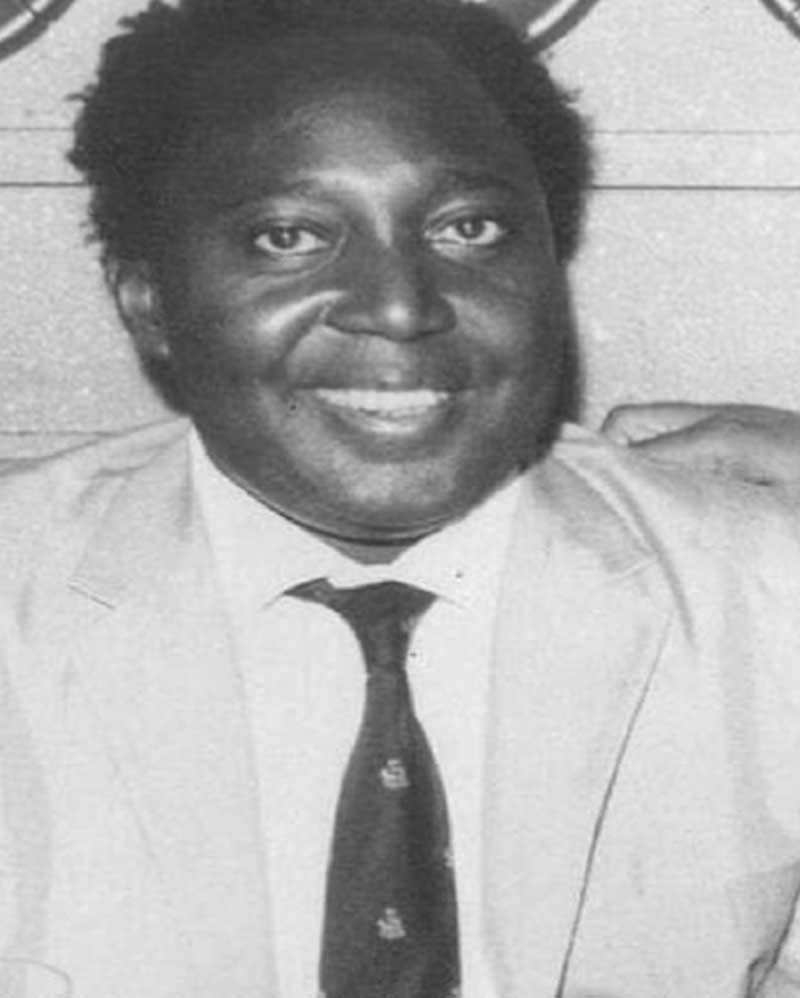
Professor Olumbe Bassir: The Life and Legacy of a Pioneer Nigerian Scientist

Published

on

A distinguished biochemist whose groundbreaking work shaped global understanding of aflatoxins and nutrition

Early Life and Background

Olumbe Bassir was born in 1919 in Senegal to Yoruba parents who later returned to Nigeria. Although he was born outside Nigeria, he identified strongly with the country and spent most of his life contributing to its scientific and academic development. His early childhood was shaped by a strong exposure to multicultural environments, which later influenced his wide intellectual interests.

Bassir grew up at a time when scientific research in West Africa was still emerging, yet he showed remarkable academic promise. His family encouraged learning and discipline and his early years laid the foundation for the brilliant career he would later pursue in biochemistry and public health.

Education and Academic Development

Olumbe Bassir received his secondary education in Nigeria before travelling abroad for university studies. He was admitted to Trinity College Dublin in Ireland where he studied medicine and later specialised in biochemistry. He completed his doctoral research in biochemical studies which positioned him as one of the first West Africans to earn advanced academic qualifications in that field.

His educational journey in Europe exposed him to international scientific methods, laboratory technologies and the rigorous research culture that later shaped his work at the University of Ibadan.

Academic Career and Scientific Contributions

After completing his studies, Bassir returned to Nigeria and joined the University of Ibadan. He became one of the earliest lecturers in the Department of Biochemistry and later rose to become a Professor of Biochemistry. His leadership helped to establish the university as one of the foremost centres of biochemical research in Africa.

See also  The Arrival of Nigerian Student Nurses in Britain (1946)

He became widely respected for his research on toxicology, nutrition and public health. His most notable scientific contributions were in the study of aflatoxins, harmful substances produced by certain moulds that contaminate stored food. His research helped African governments and international organisations understand the dangers of contamination in grains and nuts and his findings continue to influence food safety policies across the world.

Bassir also conducted extensive studies on African food composition. He worked on improving nutritional knowledge within Nigerian communities and published several books and scientific papers on food analysis. His work in peace research and human development further reflected his belief that science should serve society.

Family Life

Olumbe Bassir was married and had children who continued his tradition of academic excellence. His family supported his long academic career and he was widely remembered as a devoted husband and father who valued education and moral discipline. Although he maintained a demanding professional life, he remained deeply committed to his home and family relationships.

Age and Later Years

Bassir lived a long and productive life. He was born in 1919 and passed away in 2001 at the age of eighty two. Even in retirement he continued to write, mentor younger scientists and participate in academic discussions. His later years were marked by recognition from universities, scientific organisations and former students who regarded him as a foundational figure in modern Nigerian science.

Legacy and Impact

Olumbe Bassir’s legacy is enduring. He helped to build the early structure of biochemical research in Nigeria and trained many students who later became leading scientists. His work on aflatoxins remains a reference point in discussions on food safety across Africa.

See also  See what made Imisi win Big Brother Naija

He authored influential textbooks including Handbook of Practical Biochemistry which guided generations of Nigerian and West African students. He also founded and edited journals that promoted scientific writing and research across universities in Africa.

Bassir is remembered as a scholar of great integrity, an intellectual who combined science with a deep sense of social responsibility. His pioneering work continues to shape public health, food science and toxicology, and he remains one of the most significant scientists in Nigeria’s academic history.

References

1. University of Ibadan Archives, Department of Biochemistry historical records.

FOLLOW US ON:

FACEBOOK

TWITTER

PINTEREST

TIKTOK

YOUTUBE

LINKEDIN

TUMBLR

INSTAGRAM

Continue Reading
Click to comment

Leave a Reply

Your email address will not be published. Required fields are marked *

Lifestyle

Women Who Love and Listen to Their Pastors More Than Their Husbands Should Be the Pastor’s Second Wife

Published

on

This statement may sound funny, provocative, or even offensive, but it raises an important question about priorities in marriage and religion.

A pastor is a spiritual leader, but he is not supposed to replace a woman’s husband. If a married woman consistently values her pastor’s opinions above her husband’s, obeys her pastor while dismissing her husband, or shows greater loyalty and admiration toward her pastor than toward her spouse, then something may be seriously wrong with the balance in that marriage.

Marriage requires communication, mutual respect, trust, and understanding. A pastor can provide spiritual guidance, but that guidance should not become a reason for a husband and wife to lose respect for each other.

At the same time, husbands should not expect their wives to obey them blindly. Both husband and wife should seek God’s wisdom, communicate openly, and make decisions with love and respect.

So perhaps the real question is not whether such a woman should become the pastor’s “second wife,” but why has the pastor become more important in her marriage than her own husband?

Put God first. Respect your spouse. And never allow a spiritual leader to become a substitute for your marriage partner.

FOLLOW US ON:

FACEBOOK

TWITTER

PINTEREST

TIKTOK

YOUTUBE

LINKEDIN

INSTAGRAM

See also  The Worst Civilian Rule Is Better Than The Best Military Dictatorship"-Chief Obafemi Awolowo
Continue Reading

Lifestyle

Why is it only in Africa that we hear so much about “generational curses”?

Published

on

This is a question worth asking—not to insult African traditions or dismiss anyone’s beliefs, but to encourage honest reflection.

Across Africa, it is common to hear people explain repeated family problems as a “generational curse.” When poverty, broken relationships, addiction, failure, sickness, family conflict or misfortune appears to repeat from one generation to another, some people immediately conclude that an ancestor, spiritual force or past wrongdoing is responsible.

But is every repeated family problem truly a curse?

If a child grows up in poverty, has limited access to quality education, receives little financial support and then struggles as an adult, is that necessarily a spiritual curse—or could it be the result of circumstances that have been passed from one generation to another?

If children grow up watching violence, substance abuse, unhealthy relationships or constant conflict, they may unknowingly repeat those patterns. That does not necessarily mean they are cursed. Sometimes behaviour is inherited through environment, not through supernatural forces.

And Africa is certainly not the only place where people believe in supernatural explanations for suffering or misfortune. Different societies around the world have their own concepts of inherited wrongdoing, family misfortune, ancestral consequences, fate and spiritual punishment.

So perhaps the more important question is not:

“Who cursed my family?”

But:

“What pattern has been passed down to me, and what can I do to stop passing it to the next generation?”

We should be careful not to use the idea of a curse to discourage people from taking action. A family facing poverty may need education, opportunity and financial planning. A family experiencing repeated conflict may need healthier communication. A person struggling with addiction may need professional support and a strong recovery environment. Communities facing injustice may need better institutions, accountability and opportunity.

See also  DON’T BE AN ABUSIVE PARENT TO YOUR CHILDREN

Faith and spirituality are deeply meaningful to many people, and everyone has the right to hold their beliefs. But faith should not prevent us from examining the practical causes of our problems.

We cannot change the past, but we can change what we pass forward.

Instead of teaching our children that they are victims of an unavoidable family curse, let us also teach them knowledge, discipline, emotional strength, financial responsibility, education, healthy relationships and the courage to break destructive patterns.

Maybe the greatest “curse” is not something mysterious placed upon a family.

Maybe sometimes it is simply a problem that nobody stopped long enough to understand and change.

And the greatest inheritance we can give the next generation is not fear of a curse—but the knowledge and courage to build a better future.

FOLLOW US ON:

FACEBOOK

TWITTER

PINTEREST

TIKTOK

YOUTUBE

LINKEDIN

INSTAGRAM

Continue Reading

Lifestyle

You are very proud to speak big English, but yet you cannot speak your own language?

Published

on

There is nothing wrong with speaking English fluently. In fact, being able to communicate confidently in different languages is a valuable skill. But we should ask ourselves a deeper question: while learning to speak the language of another culture, are we slowly losing the language that connects us to our own roots?

Your mother tongue is more than just words. It carries the stories of your ancestors, the wisdom of your grandparents, the jokes that only your people understand, the traditional greetings, the names, the songs, the history and the identity of your community.

Imagine being able to speak perfect English, but struggling to have a simple conversation with your own grandmother because you do not understand the language she grew up speaking. Imagine your children knowing foreign languages but being unable to understand the language of their own heritage.

That should make us pause.

Speaking English does not make you more intelligent, and speaking your indigenous language does not make you less educated. One is a communication skill; the other can be a connection to your heritage. We should not have to choose between being educated and preserving our identity.

Learn English. Speak it confidently. Learn French, Dutch, Spanish or any other language that opens doors for you.

But don’t let the pursuit of foreign languages close the door to your own.

Teach your children your language. Speak it at home. Ask your parents and grandparents to teach you the words you never learned. If you have forgotten it, it is never too late to start again.

See also  Failed Maths exam led me to music – Zlatan

Because when a language disappears from a family, something precious disappears with it.

Be proud of your education. Be proud of your ability to speak English. But also be proud of where you come from.

Your language is not something to be ashamed of. It is a part of your story. Preserve it before the next generation only knows it as something their ancestors once spoke.

FOLLOW US ON:

FACEBOOK

TWITTER

PINTEREST

TIKTOK

YOUTUBE

LINKEDIN

INSTAGRAM
Continue Reading

Trending