Connect with us

Business

Agriculture must get ‘rightful place’ in financial system – CBN

Published

on

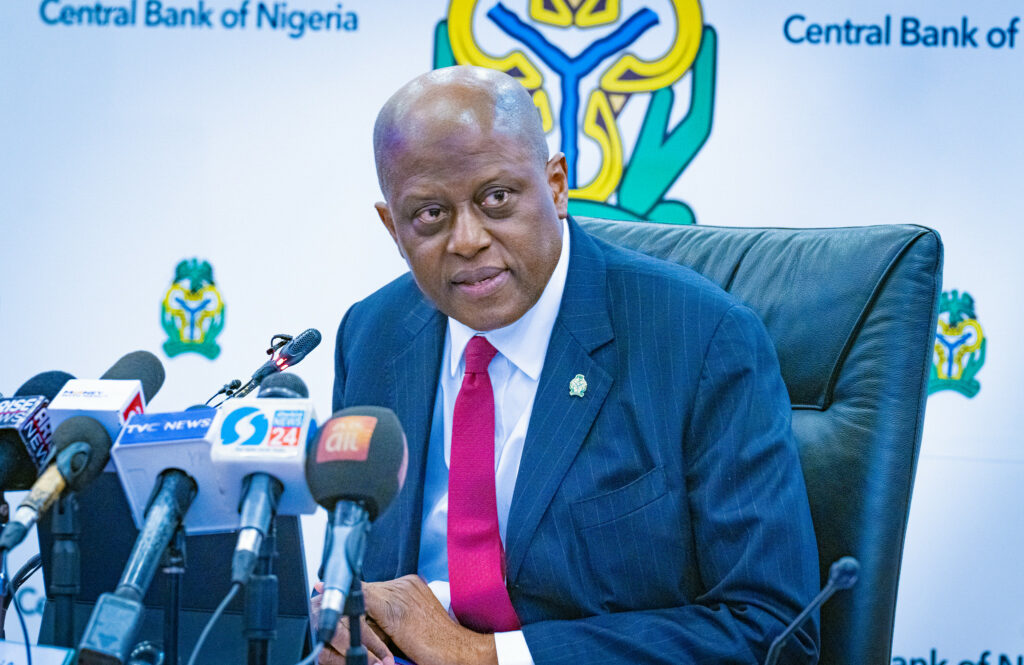
The Central Bank of Nigeria (CBN) hopes to lift agricultural lending above the current level of less than five per cent of banks’ credit, with Governor Olayemi Cardoso declaring that agriculture must receive its “rightful place in our financial system and national priorities.”

Cardoso spoke in Abuja on Tuesday at the inauguration of the newly constituted Board of the Agricultural Credit Guarantee Scheme Fund.

He told the audience that the event marked “a defining moment — a bold statement of intent that signals a new dawn for agricultural financing in Nigeria.”

He said agriculture remained the backbone of the economy, contributing more than one-fifth of GDP and employing most Nigerians, yet “it receives only a small fraction of formal credit — less than 5 per cent of banks’ lending goes to the agricultural sector.

According to him, this chronic underfunding has stifled productivity and expansion for millions of farmers.

“It is a reassessment of norms: we will no longer accept business-as-usual,” he said. “Instead, we embrace a future where agriculture is accorded its rightful place.”

Cardoso said the fund, which guarantees up to 75 per cent of the value of agricultural loans, had helped banks lend to farmers for decades, including those considered “unbankable.”

He noted that the scheme had been strengthened following a 2019 amendment that expanded its share capital from N3bn to N50bn and broadened its mandate.

He said the reform was designed to deepen inclusivity, adding that the revised Act now provides for a board composed not only of government officials but also of farmers’ representatives.

“Such inclusivity is strategic: it enshrines partnership between policymakers, financiers, and the farming community in guiding the Scheme’s activities,” he said.

Cardoso described the sector as standing at the “crossroads of unprecedented opportunity” under the Federal Government’s Renewed Hope agenda.

He said the vision was to build a resilient, technologically advanced and inclusive agricultural economy that “ensures food security, reduces poverty, and creates wealth for millions of Nigerians.”

According to him, smallholder farmers constitute 80 per cent of Nigeria’s farmers and produce about 90 per cent of food, yet they continue to face high barriers to credit.

“Many lack collateral or credit history — a situation we can no longer afford, given that these same smallholders feed our nation and drive our rural economy,” he said.

See also  Speed approvals, boost deepwater investments, NNPCL charges NUPRC

He urged the new board to focus on strategic priorities that could unlock value quickly.

He called for deeper financial inclusion to reach women and young farmers, noting that rural women were key actors in agriculture but often had less access to credit and technology.

“Studies indicate nearly 60 per cent of rural women do not use mobile internet, limiting their access to emerging digital services,” he said.

He asked the board to collaborate with microfinance banks, cooperatives, and fintech firms, and to use group lending, mobile money, and agent banking to ensure that “a lack of collateral or a remote location is no longer an insurmountable barrier to financing.”

Cardoso also tasked the board with establishing stronger oversight, monitoring, and evaluation systems using technology and data.

He said modern tools, including satellite imagery and digital dashboards, should be deployed to track loan performance, crop progress and emerging risks.

“Every naira guaranteed must deliver real value on the farm and in the marketplace,” he said.

The governor warned that the task ahead may appear daunting, given the size and complexity of agricultural value chains.

But he insisted that success depended on “innovation, integrity, and unyielding dedication.”

“With today’s inauguration, we have filled a void and renewed our commitment to a prosperous, food‑secure Nigeria,” he said. “Let us cultivate a future where every farmer can easily access the financing they need, every field yields its full potential, and every Nigerian can enjoy affordable, plentiful food on their table.”

Cardoso congratulated the newly inaugurated board and assured them of the central bank’s support.

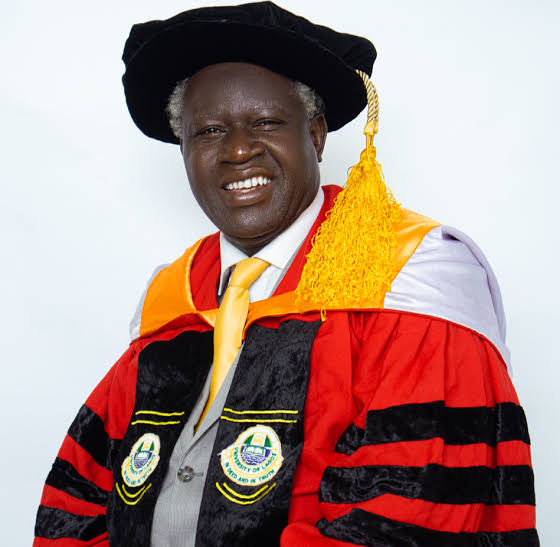
Also speaking, the chairman of the newly inaugurated board, Dr Olusegun Oshin, said the scheme must focus on the grassroots, where the majority of farmers struggle without credit or storage facilities.

He told the gathering that “those that feed us are those weak, poor farmers very far away in the villages and who don’t have access to credit,” adding that even when they manage to raise funds, “they don’t even store it properly because they don’t have the capacity for storage.”

Oshin said the board would ensure the fund was impactful at the level of peasant farmers and smallholders.

“This fund… will be focused on ensuring that it is impactful at the grassroots level, at that level where Nigeria is faced, the level of the peasant farmers,” he said.

See also  Large-scale agriculture driving Edo’s economic growth, says Okpebholo

He also welcomed the inclusion of agribusiness and allied sectors, noting that technology and accountability would be central to implementation.

Oshin noted that proper reporting must show that money given to clusters of farmers produced measurable results.

He added that detailed monitoring and evaluation would strengthen the case for more resources, while stressing that reaching more farmers efficiently would improve food supply nationwide.

Oshin thanked the apex bank for the opportunity and assured that board members would uphold ethical standards.

The PUNCH earlier reported that the agricultural sector contributed N30.5tn, in nominal terms, to the Gross Domestic Product in the third quarter of 2025.

Crop production drove the agro-sector’s growth, which stakeholders attributed to improved investor confidence.

The figure from the National Bureau of Statistics represents one of the sector’s strongest quarterly showings in recent years, with crop production alone accounting for N20.13tn or 65.99 per cent.

The sector also posted a real GDP growth rate of 3.79 per cent year-on-year, surpassing its Q3 2024 performance of 2.55 per cent by 1.24 percentage points, and outperforming its 2.82 per cent growth in Q2 2025 by 0.97 points amid poor access to bank credit.New Nigeria People’s Party, Femi Aina, has been re-elected for another term of four years.

Aina, according to a statement on Tuesday, was elected alongside other executives during the state party’s congress held at the party’s secretariat at Adatan, Abeokuta, the capital of the state.

Prof Tajudeen Gambo, Chairman of the Organising Committee of the state congress, alongside the Secretary of the committee, Abdullahi Dogonnama, as well as Alhaji Ibrahim Sai Kure, and Alhaji Hamza Masu, who are members of the committee, supervised the congress.

The congress was also monitored by INEC officials and security agents.

Aina, in his acceptance speech, said that his re-election marked a new dispensation for the state chapter of the party to begin massive mobilisation ahead of the 2027 elections.

The party chairman pledged to foster unity, bringing everyone on board irrespective of tribes, tongues and religion, with the sole aim of strengthening the party membership in the state.

Aina said, “This is no doubt a new dispensation for Ogun NNPP. We are going to ensure equal representation of various groups within the party. We are going to kick off massive mobilisation ahead of 2027 because everyone is important to our resolve to chase APC out in 2027.

See also  Petrol, diesel vessels arrive Nigeria amid price surge

“We will reach out to the Kwa Kwa Siya group, we will reach out to women, and we will make sure that women decide issues affecting women. It will be a new leadership with renewed dedication and vigour to serve and deliver Nigerians from the incompetent government of the APC.”

He thanked the delegates for the confidence reposed in him and other executive members promising to provide a leadership that will further help deepen democratic ideals of fairness, justice and good governance.

Other executive members include  Alhaja Sakirat Arowolo, the Deputy Chairman, Rasaq Segun Sofowora as Secretary, as well as Mrs Yetunde Akindele, Women Leader, among others.

Speaking earlier, Gambo commended the resilience of  NNPP members in the state despite challenges, urging the newly elected and sworn-in executives to be determined to push NNPP stronger come 2027.

He disclosed that the intention of the party to take over the leadership of Nigeria across all levels comes 2027, lamenting that the present APC administration is not mass-oriented

Gambo said, “Our strong intention is to take over Nigeria in 2027.  We are determined, and we are working very hard, because the present government is running the affairs of the country to address the needs of the masses.

“Whereas NNPP is for the masses, it is free education for everybody; everybody must be educated, so we are really confident that we are going to succeed in 2027 by the special grace of God. That’s our dream and vision, and we call on all Nigerians to team up with us on this rescue mission.”

Opposition parties have always faulted the APC-led government, accusing it of foisting hardship on Nigerians, particularly with the subsidy removal, as well as the rising wave of insecurity across the country.

They have always threatened massive mobilisation ahead of 2027, with the sole aim of getting the party out of power.

punch.ng

FOLLOW US ON:

FACEBOOK

TWITTER

PINTEREST

TIKTOK

YOUTUBE

LINKEDIN

TUMBLR

INSTAGRAM

Continue Reading
Click to comment

Leave a Reply

Your email address will not be published. Required fields are marked *

Business

Nigeria, UK seal £746m deal to redevelop Tin Can, Apapa ports

Published

on

Nigeria and the United Kingdom have signed a £746 million export finance deal to support the redevelopment of Lagos’ Apapa and Tin Can Island port complexes.

UK Prime Minister Keir Starmer stated this during a bilateral meeting with President Bola Tinubu at 10 Downing Street on the second day of the Nigerian leader’s historic state visit to Britain.

“Today is the opportunity to take that to another level with the agreements that we’ve been able to reach on exports, and I think that shows we can go even further than we’ve already gone,” he stated.

Tinubu, in his remarks, revealed that Nigeria is currently undergoing “very strong reform of the economy” and linked the terrorism challenges facing West Africa to climate change conflict.

“We need more trade agreements and economic relationships that we build between nations. Nigeria is currently going through a very strong reform of the economy,” Tinubu said.

The President described Nigeria as facing significant challenges, stating, “The largest country in West Africa, and on the continent, is challenged by terrorism coming from the conflict of climate change.”

Tinubu emphasised that both countries face global economic challenges, noting, “Currently, the entire world is challenged. Nigeria is not immune. Britain is not immune.”

He said the discussions focused on the “economic welfare of the people and how we can work together to improve livelihood” amid economic volatility.

The President affirmed that Thursday’s bilateral discussions would address what Britain can do to “accelerate the friendship, partnership and collaboration” between both nations.

See also  Large-scale agriculture driving Edo’s economic growth, says Okpebholo

On his part, Starmer described the visit as historic, noting it was the first inward state visit for 37 years by a Nigerian leader.

“The long and shared history between our countries is obvious and much valued, as is the people-to-people contact and engagement that enriches lives here in the United Kingdom,” he said.

He noted that both countries already collaborate on economy, defence, and security matters but expressed determination to deepen the partnership.

“Today is the opportunity to take that to another level with the agreements that we’ve been able to reach on exports,” he stated.

Speaking before the meeting,  Tinubu said discussions with the UK government would focus on “trade, economic cooperation, and shared challenges — including security and climate change.”


The Minister of Marine and Blue Economy, Adegboyega Oyetola, also said the port redevelopment would strengthen Nigeria’s role in regional trade.

He said, “This project will strengthen Nigeria’s position as a leading maritime hub in West and Central Africa.”

PUNCH Online reports that Tinubu’s state visit to the UK began on Wednesday, following an invitation from Their Majesties King Charles III and Queen Camilla at Windsor Castle.

The visit also includes plans to sign a Memorandum of Understanding to deepen trade and investment ties between the two countries.

Tinubu was accompanied by a high-profile delegation, including Senate President Godswill Akpabio; Attorney General and Minister of Justice, Prince Lateef Fagbemi; Minister of Solid Minerals, Dele Alake; Minister of Information and National Orientation, Idris Mohammed; and Minister of State for Foreign Affairs, Ambassador Bianca Ojukwu.

See also  Speed approvals, boost deepwater investments, NNPCL charges NUPRC

Other members of the delegation include Minister of Finance and Coordinating Minister of the Economy, Wale Edun; Minister of Industry, Trade and Investment, Dr. Jumoke Oduwole; Minister of Culture and Creative Economy, Hannatu Musawa; Minister of Communications and Digital Economy, Bosun Tijani; Minister of Defence, Gen. Christopher Musa; National Security Adviser, Malam Nuhu Ribadu; and Director-General of the National Intelligence Agency, Mohammed Mohammed.

punch.ng

FOLLOW US ON:

FACEBOOK

TWITTER

PINTEREST

TIKTOK

YOUTUBE

LINKEDIN

Continue Reading

Business

Hardship: Labour pushes N154,000 minimum wage

Published

on

The National Public Service Negotiating Council of the Organised Labour has formally demanded a N154,000 minimum wage, a 120 per cent upward review of salaries and allowances for public workers in Nigeria.

The new demand, according to the union, is to mitigate what it described as the “life of servitude” currently being experienced in the country.

The demand was contained in a letter addressed to the Office of the Head of the Civil Service of the Federation, dated March 12, 2026, with reference number JNPSNC/Gen/Cor/Vol 1/163.

The demand was titled “Urgent need for the upward review of salaries and allowances of workers in the Nigerian public service and commendation for the approval of gratuity payment to retiring workers.”

The letter was jointly signed by the National Chairman of JNPSNC, Benjamin Anthony, and the National Secretary, Olowoyo Gbenga.

The JNPSNC premised its demand on the outcome of an exhaustive meeting of the council held on Monday, March 9, 2026, at the AUPCTRE National Secretariat, Wuse Zone 4, Abuja, Federal Capital Territory.

The letter read, “The National leadership of Joint National Public Service Negotiating Council writes to respectfully but firmly call the attention of your esteemed office to the urgent necessity for an upward review of salaries and allowances of all serving Public Servants in the Nigerian Public Service.

“Despite their immense contributions, public service workers continue to face severe economic hardship due to the rising cost of living and the declining purchasing power of their earnings.”

The council noted that over the years, Nigeria has experienced unprecedented economic pressures characterised by high inflation, increased fuel prices, rising transportation costs, and escalating prices of food items, housing, healthcare, and education.

See also  The Bank of British West Africa: Pioneering Modern Banking in Nigeria

“The above realities have significantly eroded the real value of workers’ salaries and have made it increasingly difficult for many public servants to maintain a decent standard of living.

“It is important to note that the last major adjustments in workers’ remuneration have not sufficiently kept pace with the current economic realities.

“Many workers are now struggling to meet basic financial obligations, which has inevitably affected the morale, motivation, and overall productivity within the Public Service.”

The council stated that the national leadership of the Joint National Public Service Negotiating Council, therefore, strongly advocates an immediate and comprehensive review of the existing salary structure and allowances to reflect current economic conditions and ensure fairness, equity, and sustainability in workers’ remuneration.

“An upward review of workers’ salaries and allowances is a desideratum,” it stated.

It further noted that workers in the Nigerian Public Service had continued to demonstrate remarkable patience, professionalism, and commitment to their duties despite the prevailing economic difficulties.

However, it stressed that concrete steps must now be taken to safeguard their welfare and dignity.

In light of the foregoing, the council called on the office of the Head of the Civil Service of the Federation to urgently initiate the necessary processes for the upward review of salaries and allowances of public servants in Nigeria.

The council asked the Office of the Head of Service to initiate immediate negotiations and direct the National Salaries, Income and Wages Commission and relevant committees to begin immediate discussions with the Joint National Public Service Negotiating Council to negotiate for an upward review of salaries and allowances.

See also  TUC rejects health ministry ‘no work, no pay’ circular

“Consequently, new salary templates should be developed such that the minimum salary payable to an officer on Grade Level 01 Step 1 shall be N154,000 per month for Federal Public Servants (120% increase in Salaries and allowances).

“Harmonise Wages: ensure that the upward review is applied across all Ministries, Departments, and Agencies (MDAs), and strongly encourage implementation at sub-national levels to ensure equity;

“Implement Cost-of-Living Adjustments: Introduce automatic, periodic salary and allowance adjustments that align with inflation rates to prevent the recurring lag between wage review cycles; and prioritise welfare components: in addition to basic salary, implement non-monetary incentives such as subsidised transportation and affordable housing for civil servants,” the letter noted.

The council emphasised that a timely upward review of public servants’ salaries and allowances is not merely an economic imperative but a social necessity to ensure the sustenance of the workforce, maintain industrial harmony, and improve the efficiency of public service delivery.

It also reiterated its commitment to constructive dialogue with the government.

“We remain committed to constructive dialogue, resourceful engagement and collaboration with the government toward achieving a fair, sustainable, and mutually beneficial outcome for all stakeholders.

“We trust that this request will receive the prompt attention and action it deserves in the interest of workers, the Public Service as an institution and the nation at large; so as to nip in the bud possible escalation that may nosedive into spontaneous social unrest,” it added.

The national leadership of the council commended President Bola Tinubu for approving 100 per cent gratuity payment to retiring federal public servants.

See also  US now has 44% more home sellers than buyers

The commendation was conveyed through the Head of the Civil Service of the Federation, Didi Esther Walson-Jack.

According to the council, the approval represented a major step towards improving the welfare of retiring public servants.

“From the perspective of the national leadership of the Joint National Public Service Negotiating Council, the approval is not only a positive development but also a bold step towards ensuring that retiring public servants escape the life of servitude and serfdom often being experienced when out of public service which is always characterised by impoverish life after service,” it said.

punch.ng

FOLLOW US ON:

FACEBOOK

TWITTER

PINTEREST

TIKTOK

YOUTUBE

LINKEDIN

Continue Reading

Business

Refineries spend N5.7tn on foreign oil despite naira-for-crude policy

Published

on

Despite its status as Africa’s largest crude oil producer, Nigeria imported crude oil worth a staggering N5.734tn between January and December 2025 as domestic refineries grappled with persistent feedstock shortages, exposing a deepening supply paradox in the country’s oil sector, The PUNCH reports.

This comes in spite of the Federal Government’s much-publicised naira-for-crude policy designed to prioritise local supply.

Yet, even as the policy sought to channel crude to local refineries, Nigeria produced 530.41 million barrels and earned about N55.5tn from crude oil sales in 2025, highlighting a stark disconnect between robust upstream output and domestic supply shortages.

Data obtained from the National Bureau of Statistics and analysed by our correspondent on Tuesday, showed that the surge represents a dramatic shift from 2024, when no crude imports were recorded, indicating a 100 per cent increase year-on-year.

An analysis of the NBS Foreign Trade in Goods Statistics report revealed that crude oil imports, classified under “Petroleum oils and oils obtained from bituminous minerals, crude”, became one of Nigeria’s major import items in 2025, driven by supply shortages to domestic refineries.

In the first quarter alone, Nigeria imported crude worth N1.19tn, underscoring the urgency with which refinery operators turned to alternative feedstock sources.

The figure rose sharply by about 37.8 per cent to N1.64tn in the second quarter, before climbing further by 46.5 per cent to N2.403tn in the third quarter, reflecting intensifying domestic supply constraints.

However, imports dropped steeply by approximately 79.2 per cent to N499.75bn in the fourth quarter, suggesting a late-year easing in demand or improved local availability, though still indicative of a volatile and inconsistent crude supply environment throughout the year.

Although the NBS report did not name specific refineries, the pattern reflects the broader systemic failure in aligning domestic crude production with local refining demand.

A further breakdown of the figures shows wide monthly fluctuations in crude imports, reflecting unstable supply conditions in the domestic market.

Refineries imported crude worth N335.69bn in January, rising by 32.6 per cent to N445.27bn in February, before declining by 8.5 per cent to N407.29bn in March.

Imports dipped slightly to N335.31bn in April but surged dramatically by 116 per cent to N724.23bn in May, suggesting heightened supply constraints locally.

In June, imports fell by 19.5 per cent to N582.94bn, before spiking to a yearly peak of N1.28tn in July, an increase of about 120 per cent, marking the highest monthly import bill in the year.

This was followed by a 51.8 per cent drop to N619.24bn in August, and further declines to N499.41bn in September and N407.08bn in October.

Imports plunged sharply by 77.2 per cent to N92.67bn in November, before dropping to zero in December, indicating a temporary easing of demand or improved local supply towards year-end.

Overall, the trend underscores a volatile supply environment, with refineries forced to adjust sourcing strategies month by month.

Findings by The PUNCH indicate that local refineries, ranging from modular plants to mega facilities such as the Dangote Refinery, are increasingly turning to international markets due to persistent challenges in sourcing crude domestically.

The refineries cite a combination of structural and commercial factors behind the development.

This was confirmed by the Crude Oil Refinery-owners Association of Nigeria, which noted that refineries turn to imports for survival and increased production capacity.

See also  Technology key to implementing new tax laws – Adedeji

The CORAN Publicity secretary, Eche Idoko, stated in an interview that domestic refiners within the supply chain have been marginalised.

He confirmed that for several months, no allocation has been received under the Domestic Crude Oil Supply Obligation framework, naira for crude policy or through any other special arrangements.

He said, “Local refiners, especially the modular refineries, have not been getting crude, I mean zero allocation, under the DCSO or any other special arrangement.”

He said the DCSO implementation has been hampered by the ‘willing buyer, willing seller’ policy

Idoko said a modular refinery like Opac couldn’t get crude, and it stopped production for months.

According to Idoko, local refineries have the capacity to produce more than their current output, blaming the lack of enough feedstock for the current output. “We have the capacity to produce far more than what we are producing now. The challenge has always been inadequate feedstock,” he stated.

Idoko stated that some modular refineries like OPAC produce about 10 per cent of their capacities, while some shut down due to a lack of crude oil.

“A good example, the OPAC refinery has a 10,000-barrel capacity. It produces just about 1,000, and it’s not consistent. Sometimes, the refinery is shut down for months because of the unavailability of crude. The Dangote refinery was recently producing at 60 per cent of its total capacity due to the unavailability of feedstock.”

Earlier this month, Dangote Petroleum Refinery & Petrochemicals also cleared the air on the crude oil supply being received from the Nigerian National Petroleum Company under the naira-for-crude arrangement, disclosing that it receives five cargoes of crude monthly which are paid for in naira.

However, it stated that this falls significantly short of the 13 cargoes required each month to meet domestic demand.

The refinery in a statement issued further explained that the shortfall of eight cargoes is being bought from other sources outside the country.

In addition, it stated that the NNPC cargoes are priced at international market rates plus a premium.

As a result, the company said it is compelled to source additional crude from local and international traders, procuring foreign exchange at prevailing open market rates to complete the purchases.

Further investigations revealed that International Oil Companies operating in Nigeria have been reluctant to prioritise domestic crude supply, largely due to better pricing and fewer regulatory constraints in the international market.

Experts say IOCs prefer exporting crude under long-term contracts denominated in dollars, rather than selling locally under conditions that may involve pricing benchmarks, currency risks, or policy uncertainties.

They added that disputes over pricing frameworks, particularly when crude is sold at a premium and third-party influence, have further complicated domestic supply arrangements.

Similarly, an alternative solution provided by the government through the naira-for-crude policy to allow domestic refineries to purchase crude oil in local currency, reduce pressure on foreign exchange, and ensure a steady feedstock supply hasn’t met expectations.

The policy introduced in October 2024 gained prominence with the ramp-up of refining capacity, particularly from the Dangote Refinery, and was expected to mark a turning point in Nigeria’s downstream sector.

Under the arrangement, refiners would pay for crude in naira, while the government would manage foreign exchange implications through the Nigerian National Petroleum Company Limited.

See also  Trump threatens to end cooking oil purchases from China

However, the 2025 import figures suggest that the policy has not fully achieved its core objective.

This situation is driven by several structural challenges, including a mismatch between allocated crude and refinery demand, persistent pricing disagreements over benchmark terms, concerns among upstream producers about naira volatility, and existing forward sales and export commitments that limit the volume of crude available for domestic refining.

The NBS data further showed that Nigeria sourced its imported crude primarily from African countries such as Algeria, Angola while imports from the United States of America accounting for the largest share.

This trend reflects the growing integration of global crude markets, where refiners prioritise reliability and quality over geographic proximity.

Commenting, energy analysts have faulted the implementation of the Federal Government’s naira-for-crude policy, arguing that it has failed to significantly improve domestic crude supply or reduce fuel prices.

The Chief Executive Officer of Petroleumprice.ng, Jeremiah Olatide, said the policy has delivered little impact since its introduction in 2024, as most refineries continue to rely heavily on imported crude.

Speaking in a telephone interview with The PUNCH, he said, “For me, the naira-for-crude policy that was initiated in 2024 has not yielded any reasonable output because the Dangote refinery still sources about 65 to 70 per cent of its feedstock from abroad, while about 95 per cent of modular refineries also source their crude outside the naira-for-crude initiative.

“So, the initiative, for me, is not effective, and that is why we are still seeing a large inflow and importation of crude oil in 2025. In turn, prices at the depot and pump have not been different from when we were fully importing refined products.”

He noted that while the coming on stream of large-scale refining capacity has improved product availability, it has not translated into price relief for consumers.

“The only difference now is that we no longer have supply fears; there is availability of products. But in terms of pricing, I would say the naira-for-crude policy has not translated into lower prices at the depot or pump,” he added.

Jeremiah attributed this to the continued reliance on international pricing benchmarks, even for locally supplied crude.

“Dangote’s crude from the Nigerian National Petroleum Company is still priced internationally and benchmarked to Brent. So it is not as effective as the name implies. The refinery still has to pay based on international prices when converted,” he said.

He argued that to achieve meaningful price stability, the government may need to rethink its approach.

“For me, I feel that the subsidy removal in 2023 should be replaced with another form of subsidy, but this time targeted at refineries. The crude supplied to local refineries should be subsidised. That is the only way prices can be stabilised and Nigerians will feel the impact at the pump,” he stated.

He added that the current arrangement contradicts provisions of the Petroleum Industry Act, which prioritises domestic crude supply.

“The agreement should be revisited. The policy is not effective, and Nigerians are not supposed to be buying fuel at high prices, considering that we have crude and a giant refinery. Local refineries should not struggle to access crude at all,” he said.

See also  The Bank of British West Africa: Pioneering Modern Banking in Nigeria

Similarly, a Professor of Energy, Dayo Ayoade, said structural issues in Nigeria’s upstream sector have made it difficult for policies like naira-for-crude to succeed in practice.

“We have deeply unreliable supply from NNPC, largely because the company forward-sold crude oil to secure loans for the government in the past,” he said.

“Also, for over 19 years while the Petroleum Industry Bill was being delayed, there was significant underinvestment in the upstream sector. When you combine this with government’s priority of earning foreign exchange and servicing debts, you will see that, in practice, initiatives like naira-for-crude are more on paper than reality.”

He explained that Nigeria’s current production levels are insufficient to meet both export obligations and domestic refining demand.

“NNPC must have crude oil that it can supply, but it doesn’t. By the time international oil companies take their allocations under joint ventures and production sharing contracts, very little is left,” he said.

“Take the 650,000 barrels per day Dangote refinery, for instance. It would require about 650,000 barrels daily to operate at full capacity. That is not feasible at the moment. That crude simply does not exist in available volumes right now.”

Ayoade further noted that crude importation is built into the operational model of modern refineries.

“We also need to understand that the configuration of the refinery requires a blend of different crude grades. Nigeria’s light sweet crude alone is not sufficient, so some level of importation is part of the refinery’s design and business plan,” he said.

On the outlook for 2026, he warned that the trend of crude importation by domestic refineries is likely to persist.

“This pattern will likely will continue in 2026 because issues like logistics bottlenecks, pipeline vandalism, oil theft, and delayed field development cannot be solved in a short time,” he said.

“As long as crude oil accounts for over 95 per cent of our foreign exchange earnings and the government prioritises exports, we will continue to see this pattern for a few more years.”

He added, “That is why I am always cautious when people talk about new refineries coming on stream. The real question is: where will the crude oil come from? That is the fundamental issue.”

Nigeria has long relied on imported refined petroleum products due to inadequate domestic refining capacity. However, recent investments in local refineries were expected to reverse this trend by boosting in-country processing of crude oil.

The Petroleum Industry Act introduced provisions aimed at ensuring a steady supply of crude to domestic refineries, including domestic crude supply obligations.

However, implementation challenges, legacy contractual commitments, and market realities have slowed progress, leaving refiners to navigate supply gaps through imports.

The N5.734tn crude import bill in 2025 now highlights a new phase in Nigeria’s oil sector paradox, where the challenge is no longer just refining capacity, but access to crude itself.

As the country pushes to maximise value from its hydrocarbon resources, the ability to align upstream production with downstream demand will remain critical to achieving true energy independence.

punch.ng

FOLLOW US ON:

FACEBOOK

TWITTER

PINTEREST

TIKTOK

YOUTUBE

LINKEDIN

Continue Reading

Trending