Connect with us

News

Minister reveals how Benin sought Nigeria’s military help to foil coup

Published

on

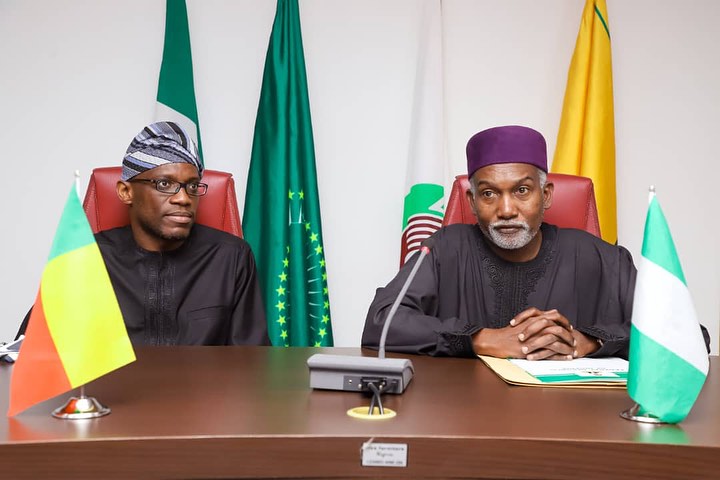
The Republic of Benin Minister of Foreign Affairs, Olushegun Bakari, in Abuja, on Thursday, gave an insight into how his country called on Nigeria for military help to foil last Sunday’s coup attempt to overthrow President Patrice Talon.

Bakari spoke to journalists on the sidelines of the ECOWAS Council of Ministers Summit which held in Abuja on Thursday.

He lauded Nigeria and ECOWAS swift intervention, saying it played a critical role in averting a potentially devastating bloodbath in his country.

Addressing the press in Abuja on Thursday, Bakari said while Benin’s military successfully confronted the insurgents, the intervention from Nigeria and other ECOWAS member states such as Ghana, Côte d’Ivoire, among others, was crucial in preventing a bloodier confrontation, particularly in the densely populated area where the rebels had fortified themselves.

He said,“We are here as part of our ordinary ministerial meeting within ECOWAS, and it is important for all of us within our community, and especially for the two leaders of Benin and Nigeria, to clearly show that the ECOWAS region is still an area where democracy prevails.

“This is very important. We show that in our region and environment, we cannot accept those who attack democracy,” Bakary said.

“We requested the intervention under the ECOWAS protocol from Nigeria and other countries like Côte d’Ivoire, Sierra Leone, and Ghana, who also offered their support, after Benin made the request. We asked for the support of our brothers and sisters, not because our army was not capable of handling it,” he added.

See also  Ogun residents protest after fatal crash kills four pupils

The minister stressed that the coup attempt was a failure, but the potential for civilian casualties remained high as the insurgents had barricaded themselves in a military barracks situated near civilian neighbourhoods.

He thanked President Tinubu of Nigeria and other ECOWAS leaders for stepping in and preventing further escalation.

“We were able to stop the rebels from taking over key installations like the airport, thanks to the support from Nigeria and other ECOWAS nations like Côte d’Ivoire, Ghana, and Sierra Leone.

“Their support was crucial to ensure that we could neutralise the threat with minimal loss of life. We did not want to engage in an all-out assault that could have led to many civilian deaths,” he explained.

He added, “Our defence forces—the Republican Guard —blocked them. They fought back and then they withdrew into a military camp. So, when we started discussions for the intervention of Nigeria and others under the ECOWAS protocol, our military had already pushed them back. The coup had already failed.”

The minister emphasised that the coup was ultimately unsuccessful but that the timely intervention prevented the situation from escalating further.

“Why did we ask for support, especially from Nigeria? It was mainly because the area where they had established themselves in a military barracks was surrounded by civilians. We didn’t want to risk significant casualties. If we let our military enter there, the casualties would have been very high.”

Bakari explained that this intervention allowed them to neutralise the rebels without causing large-scale destruction.

“That’s one of the reasons why President Talon requested support from Nigeria—to ensure that we could have a surgical impact, destroy the armoured vehicles they had in the barracks, and prevent them from taking over key locations like the airport.”

See also  FG withdraws criminal complaint against Ibom Air passenger, reduces KWAM 1’s ban

Reflecting on the situation, Bakari underscored two key lessons learned from the episode. First, he emphasised the strength and resolve of Benin’s military forces, which were able to fend off the coup despite being outnumbered.

“Our army is a republican army, one that fights for democracy, and it is capable of stopping such coups,” he said.

Second, he lauded the partnership between Benin and Nigeria, particularly under the framework of ECOWAS, for working together to preserve democracy in the region.

“We showed that together we can fight for democracy. We can stop people trying to derail our democracy in the region,” Bakari affirmed.

In his address, Nigerian Foreign Affairs Minister Yusuf Tuggar highlighted that the incident demonstrated how rapidly democratic institutions can be safeguarded when neighboring countries maintain open channels of communication.

“We are all aware of what transpired in the Republic of Benin and the fast reaction that followed.

“The coordination to ensure that democracy remains untampered in Benin was successful, and it is an exemplar of what really should obtain whenever democracy is under threat in our region,” he said.

Tuggar added that he and Bakari were “in constant contact from the very beginning,” emphasising that “the fast reaction and communication between us and several of our colleagues is what led to the thwarting of this attempt to undermine democracy by way of an unconstitutional change of government.”

He also stressed that the episode highlighted the importance of strengthening the ECOWAS Standby Force.

“First and foremost, we all have to pay up our dues. These recent events underscore the need for us to have a standby force that is well funded and effective,” he noted.

See also  Oshiomhole, Tambuwal on Senate’s high-stakes Electoral Act review panel ahead of 2027

The attempted coup in the Republic of Benin began early Sunday when armed mutineers launched an attack on the presidential residence.

Security forces repelled the assault, prompting the plotters to target the national broadcaster instead.

They briefly invaded the Office de Radiodiffusion et Télévision du Bénin in an effort to seize control of the state signal, but their attempt ultimately collapsed.

Following the incident, President Bola Tinubu announced that he had approved the deployment of Nigerian troops to help stabilise the neighbouring country.

punch.ng

FOLLOW US ON:

FACEBOOK

TWITTER

PINTEREST

TIKTOK

YOUTUBE

LINKEDIN

TUMBLR

INSTAGRAM

Continue Reading
Click to comment

Leave a Reply

Your email address will not be published. Required fields are marked *

News

Senator secures presidential approval for 5km access road in Osun

Published

on

The lawmaker representing Osun Central Senatorial District and Chairman of the Senate Committee on Environment, Olubiyi Fadeyi, on Wednesday announced that he secured presidential approval for the construction of a five-kilometre access road spanning key parts of his constituency.

The development, disclosed in a statement issued by his Special Adviser on Digital Media and Publicity, Adekanola Desmond, marks a significant infrastructure intervention expected to boost healthcare access and rural connectivity across the district.

Fadeyi explained that a major component of the project is a one-kilometre access road leading up to the Federal University of Health Sciences Teaching Hospital, Ila-Orangun.

The hospital, which serves residents across Osun and neighbouring states, has in recent times grappled with poor road access, posing serious challenges to patients, medical personnel and surrounding communities.

The senator explained that the remaining four kilometres will link other districts within Osun Central, opening up rural corridors that are vital to farmers, traders and daily commuters.

The intervention is expected to ease the movement of agricultural produce, improve emergency response times and stimulate economic activities in underserved areas.

He said, “This project will transform mobility and healthcare delivery in our region.

“We will conduct the official flag-off ceremony later this March.”

The lawmaker further revealed that preliminary site clearing has commenced at the hospital axis, signalling the imminent take-off of full-scale construction works.

The road project comes amid growing calls for improved infrastructure in Osun Central, particularly around critical public institutions.

Stakeholders have long decried the deplorable state of access routes to health facilities and rural communities, arguing that poor connectivity undermines both service delivery and economic productivity.

See also  FG withdraws criminal complaint against Ibom Air passenger, reduces KWAM 1’s ban

However, Fadeyi maintained that the initiative underscores his commitment to reversing years of infrastructural neglect in the district, especially in areas that directly impact healthcare access and grassroots development.

If completed as scheduled, the project is expected to significantly enhance transportation efficiency and strengthen the link between healthcare services and the communities they serve.

Continue Reading

News

Asylum surge: UK stops study visas for four countries

Published

on

The UK government has imposed an “emergency brake” on study visas for nationals of Afghanistan, Cameroon, Myanmar and Sudan following a sharp rise in asylum claims from individuals who initially entered the country through legal routes.

According to the UK Home Office, the unprecedented move will end sponsored study visas for all four countries and suspend skilled worker visas for Afghan nationals.

The changes will be introduced through an Immigration Rules amendment on 5 March and come into force on 26 March.

The Home Office on Wednesday said the decision followed a surge in asylum claims from people who had entered legally on visas before subsequently applying for asylum.

“An ’emergency brake’ on visas ‌has been ‌imposed for the first time on nationals from four countries following a ⁠surge in asylum claims from legal routes,” DW News reported that ‌the UK Home Office ⁠said.

Nearly 135,000 asylum claims from legal routes

In total, 133,760 people have claimed asylum after arriving legally in the past five years.

Since 2021, almost 135,000 individuals entered the UK on student or other visas before lodging asylum claims.

Home Secretary Shabana Mahmood acknowledged that asylum claims via legal entry routes now make up nearly 40 per cent of all claims.

“In 2025, they accounted for 39 per cent of the 100,000 people who applied for asylum.

“Asylum applications by students from Afghanistan, Cameroon, Myanmar and Sudan increased by more than 470 per cent between 2021 and 2025, making them among the most likely nationalities to claim.

See also  Oshiomhole, Tambuwal on Senate’s high-stakes Electoral Act review panel ahead of 2027

“Applications by students from Myanmar rose sixteen-fold during that period, while claims from Cameroon and Sudan increased by more than 330 percent.

“Between 2021 and the year ending September 2025, the proportion of Afghan asylum claims relative to study visas issued reached 95 per cent,” Essex News’ UK News and Investigation also reported on Wednesday.

Meanwhile, the number of Afghans on work visas claiming asylum is now outstripping the number of visas issued.

Although the government said it reduced student asylum claims by 20 per cent during 2025, those arriving on study visas still account for 13 percent of all claims currently in the system.

Financial pressures, accommodation costs

Many asylum seekers entering through legal routes are being housed at taxpayer expense.

The Home Secretary noted that an above-average proportion of individuals from the four countries are claiming destitution.

She was quoted as saying, “Asylum support currently costs more than £4 billion annually.

“Nearly 16,000 nationals from the four affected countries are supported at public expense, including over 6,000 accommodated in hotels.

“The government says it has reduced the asylum support bill by £1 billion since coming to office.”

A Home Office spokesperson said: “The government is clamping down on visa abuse like this so we can maintain our ability and proud tradition of helping those genuinely in need.”

Legislative changes, asylum rule tightening

The announcement coincides with broader asylum reforms that took effect this week.

Under the new rules, refugee status for adults and their accompanying children will be reviewed every 30 months.

See also  Natasha sympathises with Anthony Joshua, demands highway reforms

Previously, refugee status was granted for five years, after which individuals could apply for indefinite leave to remain and pursue citizenship.

Refugees whose countries are deemed safe will be expected to return home.

Unaccompanied children will continue to receive five years’ leave while a long-term policy is developed.

Those already in the UK will continue to be assessed under the previous framework.

The government confirmed that protection for refugees will be reduced to 30 months from 2 March in an effort to reduce pull factors driving dangerous small boat crossings.

Essex News says the reforms are modelled on Denmark’s system, widely regarded as one of the toughest in Europe.

The Home Secretary is set to introduce new legislation this week and will deliver a speech at the IPPR think tank outlining how the reforms align with British values.

She said: “Britain will always provide refuge to people fleeing war and persecution, but our visa system must not be abused.

“That is why I am taking the unprecedented decision to refuse visas for those nationals seeking to exploit our generosity.

“I will restore order and control to our borders.”

Diplomatic pressure, safe routes

The measures follow the Prime Minister’s decision to adopt what was described as a more hard-edged diplomatic approach to ensure migration rules are respected.

In November, the Home Secretary warned that visas for Angola, Namibia and the Democratic Republic of Congo could be suspended unless those governments agreed to accept the return of illegal migrants.

Four months later, cooperation was secured and return flights commenced.

See also  Ogun residents protest after fatal crash kills four pupils

The government has pledged to expand capped safe and legal routes as an alternative to small boat crossings once order is restored to the asylum system.

Since 2021, Britain has offered sanctuary to more than 37,000 Afghans through two resettlement schemes, while 190,000 visas were granted on humanitarian routes in 2025 alone.

Between 2010 and 2025, the UK resettled the sixth largest number of refugees referred by the UNHCR globally.

Migration remains a central political issue in the UK, with the anti-migration Reform UK party gaining ground in opinion polls.

punch.ng

FOLLOW US ON:
FACEBOOK

TWITTER

PINTEREST

TIKTOK

YOUTUBE

LINKEDIN

TUMBLR

INSTAGRAM

Continue Reading

News

US embassy in Abuja cancels visa appointments for March 4 over protest fears

Published

on

The United States Embassy in Nigeria has cancelled all visa appointments scheduled for Wednesday, March 4, 2026, citing a high potential for protests in Abuja amid escalating hostilities between the United States and Iran.

In a statement posted on its website on Wednesday, the Embassy warned of “Potential Demonstrations” in the Federal Capital Territory and urged American citizens to remain indoors.

“The U.S. Embassy in Abuja informs U.S. citizens that there is a high potential for protests in Abuja tomorrow, March 4, 2026, due to the current conflict with Iran.

“Previous protests by some groups have resulted in violent clashes between the groups and Nigerian security forces. The Embassy strongly recommends that all U.S. citizens in Abuja remain in their residences on Wednesday, March 4,” the notice stated.

The warning comes against the backdrop of intensifying global tensions following reports by Iranian state and local media confirming the death of Iran’s Supreme Leader, Ayatollah Ali Khamenei, after airstrikes reportedly carried out by the United States and Israel.

Several other high-ranking Iranian officials were also said to have been killed in the strikes, triggering swift retaliation from Tehran.

In response, Iran reportedly launched multiple missiles targeting U.S. bases in Gulf countries, including Saudi Arabia, vowing to avenge the death of its Supreme Leader and other regime officials. The conflict, which began with coordinated U.S. and Israeli strikes over the weekend, has shown no sign of abating as it entered its fifth day.

Earlier in the week, the US Department of State had already advised American citizens worldwide to exercise increased caution.

See also  Natasha sympathises with Anthony Joshua, demands highway reforms

“Following the launch of U.S. combat operations in Iran, Americans worldwide and especially in the Middle East should follow the guidance in the latest security alerts issued by the nearest U.S. embassy or consulate,” the advisory stated.

It also urged citizens to enrol in the Smart Traveller Enrollment Program to receive timely updates and warned that travel disruptions could occur due to periodic airspace closures linked to the unfolding crisis.

The ripple effects of the conflict have begun to surface in parts of Nigeria. On Tuesday, members of the Islamic Movement in Nigeria, popularly known as Shi’ites, staged a peaceful protest in Potiskum and Nguru Local Government Areas of Yobe State, condemning the killing of Ayatollah Khamenei, whom they described as a revered spiritual leader.

Protesters marched through the towns carrying Iranian flags and large portraits of Khamenei, chanting slogans expressing solidarity with Iran and opposition to what they termed foreign interference.

Citing concerns that similar demonstrations could occur in Abuja, the Embassy advised U.S. citizens to avoid protest areas and large gatherings, remain vigilant, and maintain a low profile.

“Due to the potential for protests in Abuja, the U.S. Embassy in Abuja has cancelled all visa appointments on Wednesday, March 4, 2026. Applicants will be contacted with information on how to reschedule. Please monitor our website and social media channels for further updates,” the statement added.

The Embassy further advised Americans to monitor local media for updates, keep mobile phones charged, carry proper identification, stay alert in public places such as shopping centres and places of worship, and familiarise themselves with emergency exits when entering buildings.

See also  World Polio Day: Sokoto, UNICEF renew push to end polio in N’West

While visa appointments in Abuja were cancelled for the day, the mission clarified that “The Consular Sections of Embassy Abuja and Consulate General Lagos remain open. Please monitor our website for updates.”

For emergency assistance, the Embassy added: “For emergency assistance, please contact the U.S. Embassy at +234 209 461 4328 or visit the website.”

punch.ng

FOLLOW US ON:

FACEBOOK

TWITTER

PINTEREST

TIKTOK

YOUTUBE

LINKEDIN

TUMBLR

INSTAGRAM

Continue Reading

Trending