Connect with us

News

Minister reveals how Benin sought Nigeria’s military help to foil coup

Published

on

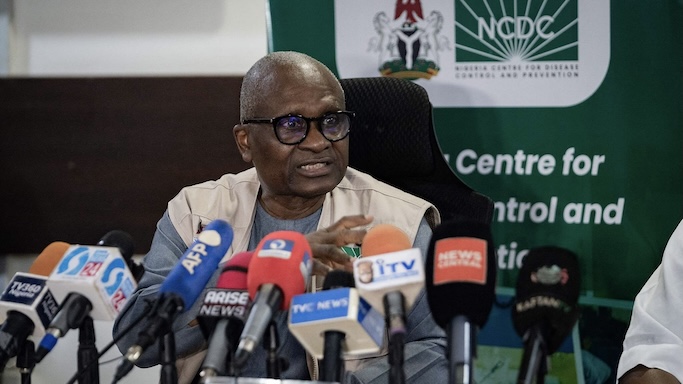
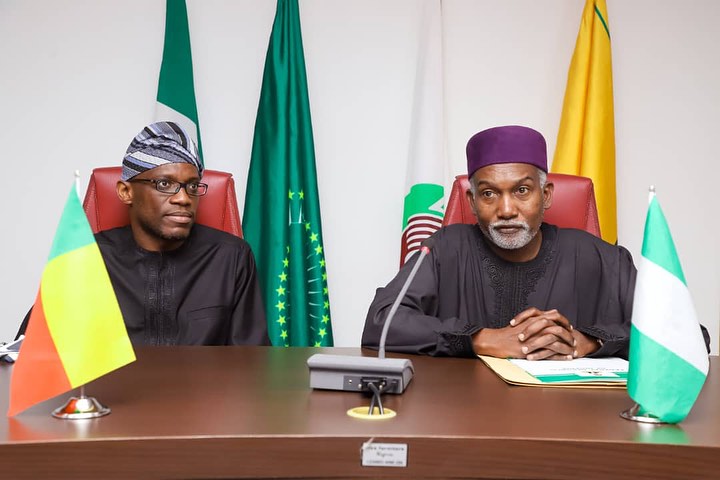
The Republic of Benin Minister of Foreign Affairs, Olushegun Bakari, in Abuja, on Thursday, gave an insight into how his country called on Nigeria for military help to foil last Sunday’s coup attempt to overthrow President Patrice Talon.

Bakari spoke to journalists on the sidelines of the ECOWAS Council of Ministers Summit which held in Abuja on Thursday.

He lauded Nigeria and ECOWAS swift intervention, saying it played a critical role in averting a potentially devastating bloodbath in his country.

Addressing the press in Abuja on Thursday, Bakari said while Benin’s military successfully confronted the insurgents, the intervention from Nigeria and other ECOWAS member states such as Ghana, Côte d’Ivoire, among others, was crucial in preventing a bloodier confrontation, particularly in the densely populated area where the rebels had fortified themselves.

He said,“We are here as part of our ordinary ministerial meeting within ECOWAS, and it is important for all of us within our community, and especially for the two leaders of Benin and Nigeria, to clearly show that the ECOWAS region is still an area where democracy prevails.

“This is very important. We show that in our region and environment, we cannot accept those who attack democracy,” Bakary said.

“We requested the intervention under the ECOWAS protocol from Nigeria and other countries like Côte d’Ivoire, Sierra Leone, and Ghana, who also offered their support, after Benin made the request. We asked for the support of our brothers and sisters, not because our army was not capable of handling it,” he added.

See also  NASS to harmonise Electoral Bill Monday

The minister stressed that the coup attempt was a failure, but the potential for civilian casualties remained high as the insurgents had barricaded themselves in a military barracks situated near civilian neighbourhoods.

He thanked President Tinubu of Nigeria and other ECOWAS leaders for stepping in and preventing further escalation.

“We were able to stop the rebels from taking over key installations like the airport, thanks to the support from Nigeria and other ECOWAS nations like Côte d’Ivoire, Ghana, and Sierra Leone.

“Their support was crucial to ensure that we could neutralise the threat with minimal loss of life. We did not want to engage in an all-out assault that could have led to many civilian deaths,” he explained.

He added, “Our defence forces—the Republican Guard —blocked them. They fought back and then they withdrew into a military camp. So, when we started discussions for the intervention of Nigeria and others under the ECOWAS protocol, our military had already pushed them back. The coup had already failed.”

The minister emphasised that the coup was ultimately unsuccessful but that the timely intervention prevented the situation from escalating further.

“Why did we ask for support, especially from Nigeria? It was mainly because the area where they had established themselves in a military barracks was surrounded by civilians. We didn’t want to risk significant casualties. If we let our military enter there, the casualties would have been very high.”

Bakari explained that this intervention allowed them to neutralise the rebels without causing large-scale destruction.

“That’s one of the reasons why President Talon requested support from Nigeria—to ensure that we could have a surgical impact, destroy the armoured vehicles they had in the barracks, and prevent them from taking over key locations like the airport.”

See also  Dr Ahmed Audi retires as NSCDC CG, marks end of tenure

Reflecting on the situation, Bakari underscored two key lessons learned from the episode. First, he emphasised the strength and resolve of Benin’s military forces, which were able to fend off the coup despite being outnumbered.

“Our army is a republican army, one that fights for democracy, and it is capable of stopping such coups,” he said.

Second, he lauded the partnership between Benin and Nigeria, particularly under the framework of ECOWAS, for working together to preserve democracy in the region.

“We showed that together we can fight for democracy. We can stop people trying to derail our democracy in the region,” Bakari affirmed.

In his address, Nigerian Foreign Affairs Minister Yusuf Tuggar highlighted that the incident demonstrated how rapidly democratic institutions can be safeguarded when neighboring countries maintain open channels of communication.

“We are all aware of what transpired in the Republic of Benin and the fast reaction that followed.

“The coordination to ensure that democracy remains untampered in Benin was successful, and it is an exemplar of what really should obtain whenever democracy is under threat in our region,” he said.

Tuggar added that he and Bakari were “in constant contact from the very beginning,” emphasising that “the fast reaction and communication between us and several of our colleagues is what led to the thwarting of this attempt to undermine democracy by way of an unconstitutional change of government.”

He also stressed that the episode highlighted the importance of strengthening the ECOWAS Standby Force.

“First and foremost, we all have to pay up our dues. These recent events underscore the need for us to have a standby force that is well funded and effective,” he noted.

See also  Terror attacks: Tinubu approves fresh military hardware after security talks

The attempted coup in the Republic of Benin began early Sunday when armed mutineers launched an attack on the presidential residence.

Security forces repelled the assault, prompting the plotters to target the national broadcaster instead.

They briefly invaded the Office de Radiodiffusion et Télévision du Bénin in an effort to seize control of the state signal, but their attempt ultimately collapsed.

Following the incident, President Bola Tinubu announced that he had approved the deployment of Nigerian troops to help stabilise the neighbouring country.

punch.ng

FOLLOW US ON:

FACEBOOK

TWITTER

PINTEREST

TIKTOK

YOUTUBE

LINKEDIN

TUMBLR

INSTAGRAM

Continue Reading
Click to comment

Leave a Reply

Your email address will not be published. Required fields are marked *

News

South Korean judge who hiked ex-first lady’s jail sentence found dead

Published

on

A South Korean judge who more than doubled the former first lady’s prison sentence last month was found dead on Wednesday, police said.

Shin Jong-o was “found unconscious around 1:00 am (1600 GMT on Tuesday)… at the Seoul High Court building”, an investigator at Seocho district police station told AFP.

Shin was taken to the hospital and pronounced dead, he said, adding: “There is no sign of foul play in the death.”

Local media reported that Shin had left a suicide note, but the investigator said there was none.

Last month, Shin presided over 53-year-old Kim Keon Hee’s appeal trial, finding her guilty of stock manipulation and bribery, and increasing her sentence to four years from 20 months.

The heavier sentence came after her acquittal by a lower court on the stock manipulation charge was overturned.

Shin said at the time that Kim had “failed to acknowledge her culpability and has instead consistently resorted to excuses”.

The police investigator said on Wednesday that the judge’s “bereaved family is stricken by the incident” and requests privacy.

AFP

See also  Wike vows to reveal details of Tinubu-brokered agreement
Continue Reading

News

Court frees ex-HOS Oyo-Ita in N570m money laundering case

Published

on

The Federal High Court in Abuja on Tuesday discharged and acquitted former Head of Service of the Federation, Winifred Oyo-Ita, of alleged N570m money laundering charges filed against her by the Economic and Financial Crimes Commission.

The trial judge, Justice James Omotosho, upheld the no-case submissions filed by Oyo-Ita and eight co-defendants, holding that the EFCC failed to establish a prima facie case against them after about six years of trial.

“The case presented by the prosecution has no weight whatsoever,” the judge ruled.

Justice Omotosho described the anti-graft agency’s case as one “built on the quicksand of speculations, suspicions and shoddy investigation.”

He added that the prosecution failed to establish the predicate offences required to prove money laundering allegations.

“Crucial elements of money laundering offences, which are the establishment of a predicate offence, were glaringly absent in this case presented by the prosecution,” he said.

The judge held that the prosecution failed to prove that funds allegedly traced to Oyo-Ita were proceeds of unlawful activities.

According to him, evidence before the court showed that contracts linked to the allegations were duly approved and executed.

He also held that estacodes, duty tour allowances and air tickets allegedly received by Oyo-Ita were properly approved.

“There is no proof before the court that estacodes or duty allowances were approved and subsequently collected without the corresponding trips being undertaken,” the judge said.

He faulted the prosecution for failing to tender travel approvals, official memos, audit queries or other documentary evidence to support its allegations.

“The prosecution has, in effect, invited the court to engage in speculation,” he added.

See also  Qatar denies visa restrictions on Nigerians

Justice Omotosho further held that Oyo-Ita was neither a director nor shareholder in the companies allegedly linked to the transactions under investigation.

“The prosecution did not provide any shred of evidence to show that the monies are tainted with illegality,” the judge ruled.

He subsequently upheld the no-case submissions filed by all the defendants and discharged and acquitted them on the 18-count charge.

The EFCC had arraigned Oyo-Ita and others in March 2020 over allegations bordering on fraud involving duty tour allowances, estacodes and contract kickbacks amounting to about N570m.

During the trial, the commission called eight witnesses and tendered documentary exhibits.

However, the defendants argued that the prosecution failed to establish any ingredient of the offences to warrant them entering a defence.

Justice Omotosho also rejected confessional statements allegedly obtained from Oyo-Ita and some co-defendants, ruling that they were not obtained in compliance with provisions of the Administration of Criminal Justice Act.

He held that the prosecution failed to produce video recordings of the statement-taking sessions as required by law and consequently expunged the statements from evidence.

Oyo-Ita was removed from office by the administration of the late President Muhammadu Buhari in September 2019, amid corruption allegations.

Continue Reading

News

Missing Ebonyi engineers’ families demand fresh probe

Published

on

Wives of five engineers linked to NELAN Consulting have rejected recent comments by the Minister of Works, David Umahi, accusing him of attempting to “sweep the truth under the carpet” over the disappearance and presumed killing of their husbands in 2021.

In a strongly worded rejoinder signed by the wives of the engineers, namely Mrs Patricia Onyemeh, Mrs Lovette Edeani, Mrs Ifeoma Ejiofor, Mrs Esther Aneke, and Mrs Nwazulum, the women said Umahi’s response failed to address “grave factual and moral concerns that have persisted for nearly five years.”

The statement follows Umahi’s March 16, 2026, response in which he reportedly linked the engineers’ disappearance to communal unrest.

But the families disputed this, insisting that “the characterisation of the disappearance of the five engineers… as a general consequence of communal crisis is completely outrageous, misconceived, misrepresented, and flawed.”

The engineers, who were supervising an African Development Bank-backed ring road project in Ebonyi State, went missing on November 3, 2021, during Umahi’s tenure as governor.

According to the families, their husbands had travelled for an official meeting arranged by the state government, and were last seen in connection with the project.

“Credible accounts indicate that the victims were last seen in connection with official engagements linked to the Ebonyi Ring Road project,” the statement read, raising “legitimate questions” about attempts to attribute the incident to communal violence.

The wives alleged irregularities in the handling of the case by security agencies, particularly the Department of State Services and the Nigeria Police Force.

See also  State police: IG sets up panel to propose framework

They questioned why a DSS investigator, identified as Victor Chijioke Onyesom, was “suddenly sacked at the peak of his investigation,” alleging that he had been tracking communications linked to the case.

“Who influenced the conspiracy to terminate the investigation at DSS?” they asked.

The families also faulted the police for presenting skeletal remains without conducting DNA verification.

“The police presented them to the family as remains of the victims, but refused to do a DNA test.

“The test further showed that one of the five skeletal remains belonged to a female, whereas the five missing engineers are all men,” the statement said.

It further accused authorities of rushing to file charges against six suspects without concluding investigations or producing bodies.

“Without a doubt, the conspiracy in hurriedly filing the purported charge… was to tactically close the investigation… and shield the real culprits,” the wives said.

They added: “Where are the bodies of our husbands? You arrested their killers.”

The families also alleged intimidation after petitioning top government officials, including President Bola Tinubu, Senate President Godswill Akpabio, and House Speaker Tajudeen Abbas.

According to them, “an undisclosed person… threatened us not to push further for the reinvestigation of the case.”

Rejecting Umahi’s position outright, the wives said: “We totally reject David Umahi’s responses as misconceived and unfounded,” citing “interference in the investigative process, the sudden termination of the investigation, the removal of key investigators, and the suppression of critical evidence.”

They described the case as a “whitewash, cover-up, mischief, conspiracy, and plot to use the court to foreclose investigation.”

See also  Dr Ahmed Audi retires as NSCDC CG, marks end of tenure

The families called on the President, National Assembly leadership, and civil society groups to compel security agencies to reopen the case.

“We will have no option but to embark on another protest if the investigation is not reopened.

“The blood of our dear husbands will never go in vain,” the wives said.

punch.ng

FOLLOW US ON:
FACEBOOK

TWITTER

PINTEREST

TIKTOK

YOUTUBE

LINKEDIN

INSTAGRAM

Continue Reading

Trending