Connect with us

Lifestyle

10 most developed African countries in 2025

Published

on

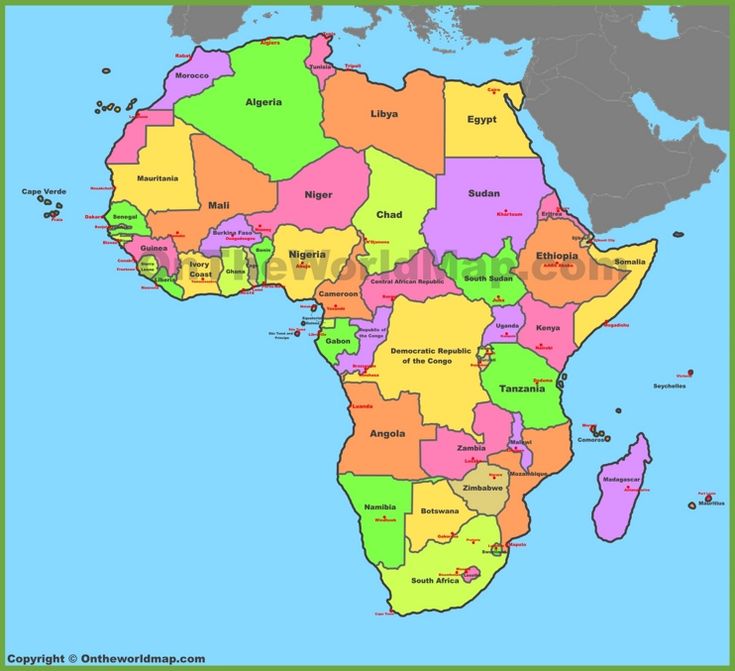
Development in Africa doesn’t move in leaps; it is a back-and-forth progress; it inches forward, sometimes slips back, then steadies again. Yet in 2025, several countries stand out for doing more things right than wrong with better healthcare access, stronger education outcomes, functional infrastructure, and relatively higher living standards.

Contents
1. Seychelles
2. Mauritius
3. Algeria
4. Tunisia
5. Egypt
6. South Africa
7. Gabon
8. Botswana
9. Libya
10. Morocco

Based on Business Insider Africa’s 2025 report, which draws heavily from the UN Human Development Index (HDI), Tribune Online takes a look at the most developed African countries this year:

1. Seychelles
Seychelles does not just lead Africa; it dominates the development conversation.

With the continent’s highest Human Development Index (HDI), the island nation benefits from long life expectancy, universal healthcare access, and strong public institutions. Tourism fuels the economy, but smart governance keeps services running smoothly.

For a country with fewer than 100,000 people, its development model punches well above its weight.

2. Mauritius
Mauritius is proof that stability compounds over time. Ensuring strong institutions, diversified income streams, and a reliable education system that keep it near the top year after year. The country balances tourism, finance, manufacturing, and ICT with relative ease. In 2025, it remains one of Africa’s clearest development success stories.

3. Algeria
Algeria’s ranking reflects scale, resources, and long-term public investment. Its oil and gas revenues continue to support education, healthcare, and infrastructure. While youth unemployment and reform pressures persist, Algeria’s HDI still places it firmly among Africa’s development leaders.

See also  Alhaja Batile Alake: Pioneer of Waka Music in Nigeria

4. Tunisia
Tunisia’s development strength lies in its people, maintaining high literacy rates, strong healthcare access, and urban infrastructure, which keep it competitive despite recent economic stress. Even through political uncertainty, past investments in human capital continue to pay dividends in 2025, and the country remains steadfast.

5. Egypt
Egypt’s presence on this list is driven by momentum and magnitude. The country has large-scale infrastructure projects, expanded healthcare coverage, and education reforms that have gradually lifted development indicators. As one of Africa’s biggest populations, even modest improvements translate into massive social impact.

6. South Africa
South Africa remains Africa’s most industrialised economy, and it shows in headlines. The country’s advanced financial markets, transport networks, and manufacturing capacity anchor its development ranking. That said, inequality and unemployment still blunt progress. In 2025, South Africa will be developed, but unevenly so.

7. Gabon
Gabon often flies under the radar, yet its numbers tell a different story: controlling high urbanisation, relatively strong healthcare access, and oil revenues support living standards above much of the continent. The challenge ahead is diversification, but in terms of development metrics, Gabon holds its ground.

8. Botswana
Botswana’s story is one of discipline and patience in Africa. With decades of political stability, prudent economic management, and steady investment in education, the country has created a solid development foundation. It is not flashy, but it works, and 2025 proves that consistency still counts.

9. Libya
Libya’s inclusion reflects recovery, not perfection. After years of conflict, rebuilding efforts in health, education, and basic services have improved its development indicators. Also, oil wealth helps, but progress remains fragile. Still, by HDI standards, Libya makes the top ten.

See also  Ibrahim Badamasi Babangida: The General Who Annulled Nigeria’s Historic Election

10. Morocco
Fortunately, Morocco rounds out the list through long-term planning. With heavy investment in transport infrastructure, renewable energy, and industrial zones, living standards in the country have gradually improved. Education and healthcare access continue to improve, placing Morocco among Africa’s development frontrunners in 2025.

Meanwhile, the most developed African countries were not ranked by chance. Each followed a different path, some through resource management, and others through institutional stability or human-capital investment.

FOLLOW US ON:

FACEBOOK

TWITTER

PINTEREST

TIKTOK

YOUTUBE

LINKEDIN

TUMBLR

INSTAGRAM

Continue Reading
Click to comment

Leave a Reply

Your email address will not be published. Required fields are marked *

Lifestyle

Nigerian priest in US dies by suicide after order to return home

Published

on

A Nigerian Catholic priest in Massachusetts has died by suicide, days after being ordered to leave the United States and return to Nigeria, where he had repeatedly said he feared for his life.

The Reverend Benjamin Okwy Madu, 54, died on July 2 at his residence in Lynnfield, Massachusetts, according to the Archdiocese of Boston, where he had served as a hospital chaplain and parish priest on Cape Ann since 2021.

His religious worker visa was due to expire on July 29.

According to Boston Globe, his home Diocese of Abakaliki had gone further, instructing him to return to Nigeria even sooner than that deadline, ahead of a new assignment scheduled to begin on August 4.

Madu had reportedly made clear he did not want to go.

In remarks to parishioners the previous month, and in a farewell message posted to his parish’s website days before his death, he said returning home was not his wish, “but circumstances beyond my control have warranted that my time in the United States come to an end.”

The Sunday before he died, Madu suffered a panic attack while driving to Mass and was treated at a hospital emergency room, a parishioner told the Boston Globe.

Boston Archbishop Richard Henning told fellow priests in an internal email that Madu had “tragically took his own life,” according to a copy of the message seen by the National Catholic Register and reported on Monday.

The Archdiocese’s public statement on his death did not describe it as a suicide.

Essex County District Attorney Paul Tucker’s office confirmed Madu’s death was under investigation by the Massachusetts State Police, though a spokesperson said foul play was not suspected.

See also  Navy Commodore Anthony Emeluwa Oguguo

However, the US-Nigeria Civil Society Coalition, in a statement sent to PUNCH Online and other newsrooms this week, said Madu “suffered acute emotional distress and panic over the prospect of returning to a region where Catholic clergy are actively targeted for kidnapping and assassination,” pointing to the frozen visa renewal process under current US immigration restrictions as a factor in his death.

“The terrifying reality of these rigid restrictions was made plain on July 2, 2026, when Father Benjamin Okwy Madu, a beloved 54-year-old Nigerian Catholic priest serving the North Shore of Massachusetts, tragically took his own life,” the coalition said.

Madu, who was born in Nigeria on May 15, 1972, and ordained at St Theresa Cathedral, Abakaliki, in Ebonyi State, would have marked his 25th anniversary in the priesthood on July 7, five days after his death.

He had worked in the Archdiocese of Boston for nearly six years under consecutive R-1 religious worker visas, with his most recent visa due to expire on July 29.

Boston Globe reports that Archdiocese spokesperson Terrence Donilon said there was no path to extending Madu’s visa again, citing current US immigration policy affecting Nigeria.

Madu had spoken publicly about his fear of returning to Nigeria, where priests have faced kidnappings and killings in recent years.

Arlene Lesch, a parishioner at Holy Family Church, told Boston Globe she was among those who contacted political leaders pleading for a way for Madu to remain in the US.

Flyer shared by the U.S.-Nigeria Civil Society Coalition

In a joint statement issued this week, the coalition of Nigerian diaspora and Christian advocacy organisations called on US authorities to halt deportations of Nigerians and grant Temporary Protected Status to Nigerian nationals in the country.

See also  T. M. Aluko: The Nigerian Engineer–Novelist Who Bridged Tradition and Modernity

punch.ng

FOLLOW US ON:

FACEBOOK

TWITTER

PINTEREST

TIKTOK

YOUTUBE

LINKEDIN

Continue Reading

Lifestyle

Sultan declares Thursday first day of Safar 1448AH

Published

on

The Sultan of Sokoto and President-General of the Nigerian Supreme Council for Islamic Affairs, His Eminence Alhaji Muhammad Sa’ad Abubakar III, has declared Thursday, July 16, 2026, as the first day of Safar 1448AH following the non-sighting of the new crescent moon across Nigeria.

The announcement was contained in a statement issued on Wednesday by the Sultanate Council Advisory Committee on Religious Affairs and signed by its Chairman, Prof. Sambo Wali Junaidu, the Waziri of Sokoto.

According to the statement, the National Moonsighting Committee, in collaboration with various moonsighting committees across the country, did not receive any authenticated report confirming the sighting of the Safar crescent on Tuesday, July 14, corresponding to the 29th of Muharram 1448AH.

“The Sultanate Council Advisory Committee on Religious Affairs, in conjunction with the National Moonsighting Committee, did not receive any report from various moonsighting committees across the country confirming the sighting of the crescent of Safar 1448AH on Tuesday, 14th July, 2026, equivalent to 29th Muharram 1448AH,” the statement said.

It added that, “Therefore, Wednesday, 15th July, 2026, will be the 30th of Muharram 1448AH.”

Based on the report, the Sultan approved the completion of the current Islamic month and declared the commencement of the new month on Thursday.

“His Eminence, Alhaji Muhammad Sa’ad Abubakar, CFR, mni, the Sultan of Sokoto and President-General, Nigeria Supreme Council for Islamic Affairs (NSCIA), has accepted the report and accordingly declared Thursday, 16th July, 2026, as the first day of Safar 1448AH,” the statement added.

See also  I’m the highest-ranked Christian in govt – Akpabio boasts

The declaration marks the beginning of the second month of the Islamic calendar. It serves as the official guide for Muslims across Nigeria in observing religious activities tied to the Hijri calendar.

punch.ng

FOLLOW US ON:

FACEBOOK

TWITTER

PINTEREST

TIKTOK

YOUTUBE

LINKEDIN

Continue Reading

Lifestyle

UK-based Nigerian, Beatrice Solomon mum dies by suicide after mental health struggle

Published

on

A coroner’s court in the United Kingdom has ruled that a 27-year-old Nigerian woman, Beatrice Solomon, died by suicide after battling mental health challenges linked to personal difficulties.

Beatrice, who relocated from Nigeria to the UK on a skilled worker visa in November 2023, was found unresponsive in her home on Norris Road, Stanfield.

According to Stokesentintel UK on Sunday, the inquest heard that her husband, Damian Butler, had left home for his delivery job at about 4:30 pm on the day of the incident before returning approximately two hours later to use the toilet, where he discovered his wife unresponsive.

A police officer, PC Hinchliffe, told the court that emergency responders arrived shortly afterwards, but Beatrice was pronounced dead at the scene at 6:21 pm.

Investigators ruled out any third-party involvement in her death.

Beatrice Solomon, 27, was found dead in her home by her husband, Damian Butler (pictured), on Wednesday March 4.(Image: Damian Butler)

During the hearing, Butler told the court that his wife had struggled with her mental health over the past year, which he attributed to ongoing issues involving Stoke-on-Trent City Council.

He also disclosed that he later became aware that Beatrice had made two previous attempts to take her own life.

A post-mortem examination conducted by pathologist Dr Jones found that she died from oxygen deprivation.

Delivering her conclusion, Coroner Li Hammond-Naylor ruled that Beatrice died by suicide.

“It is clear to me that Beatrice had researched and planned how to take her own life. I can only extend my sincere condolences to Beatrice’s family and friends,” the coroner said.

Beatrice, who worked as a caregiver in the UK, is survived by her husband, a son and her siblings.

See also  Alhaja Batile Alake: Pioneer of Waka Music in Nigeria

punch.ng

FOLLOW US ON:

FACEBOOK

TWITTER

PINTEREST

TIKTOK

YOUTUBE

LINKEDIN

Continue Reading

Trending