Connect with us

Business

Petrol battlefield: Dangote, importers locked in brutal price war

Published

on

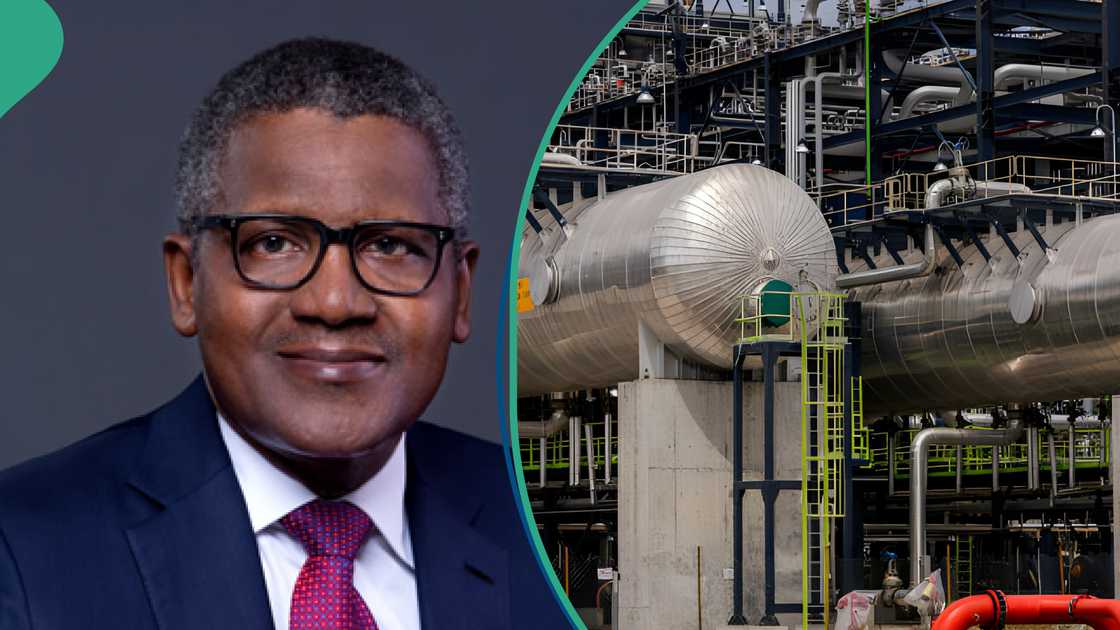
Nigeria’s downstream petroleum sector has descended into what industry players describe as a full-blown price war following the decision by the Dangote Petroleum Refinery to slash the gantry price of Premium Motor Spirit (petrol).

The move has triggered massive losses for fuel importers, depot owners, and retail marketers, even as the refinery itself admits it is bleeding financially.

Findings by The PUNCH show that petrol importers are on the verge of losing as much as N102.48bn monthly after the Dangote refinery reduced its gantry price from N828 per litre to N699.

At the same time, the refinery is also projected to lose about N91bn in a month as a direct consequence of the price cut, underscoring the intensity of the competition currently reshaping Nigeria’s downstream oil market.

While many Nigerians have welcomed the price reduction as a major relief, especially during the Yuletide season, fuel marketers running filling stations across the country say they are counting heavy losses, as they would be forced to sell existing stocks purchased at higher prices below cost.

The development has exposed deep fault lines in the deregulated petroleum market, with winners and losers emerging almost simultaneously.

The PUNCH reports that the Dangote refinery announced the N129 per litre reduction in petrol gantry price on Friday, cutting the ex-depot rate from N828 to N699 per litre.

This came just days after the refinery assured Nigerians of sufficient fuel supply to avoid queues at filling stations during the festive period. The company also announced a 10-day credit facility for marketers, stating that the new price regime took effect from December 12.

At a press briefing on Sunday, President of the Dangote Group, Aliko Dangote, vowed to enforce the new pricing regime, insisting that filling stations must sell petrol at N739 per litre nationwide from today (Tuesday). He disclosed that MRS filling stations would begin implementation immediately, with other partner stations expected to follow.

Depots cut prices

To remain competitive, importers and private depot owners have been compelled to slash prices to align with Dangote refinery’s rates, triggering sharp losses across the supply chain.

Market checks conducted by The PUNCH using data from Petroleumprice.ng revealed that private petroleum depots in Lagos had slashed PMS prices by about 14 per cent within days of Dangote’s announcement.

Several major depots in Lagos were found to be selling PMS at N710 per litre, down from an average of N828 per litre barely a week earlier. Dangote-linked marketers were selling PMS around N703 per litre, forcing nearby depots to recalibrate their prices to avoid weak sales and stock overhang.

At MENJ private depots, the price of PMS dropped from N828 per litre on December 8 to N710 per litre on December 15, representing a reduction of N118. Integrated and Bovas depots also reduced PMS prices from N826 per litre to N710, a N116 drop. A.A. Rano Depot recorded the steepest cut, with prices falling from N829 to N710 per litre, amounting to a N119 reduction.

See also  Here Are Top Companies That Sustain Lagos Economy.

At Dangote Depot, PMS was selling at N702.5 per litre, while Automotive Gas Oil sold at N916 and Liquefied Petroleum Gas at N815 per litre. Pinnacle Depot offered PMS at N710 per litre and AGO at N941.

Menu and Bovas depots aligned their PMS prices at N710 per litre, while Matrix Depot sold PMS at N800 per litre. Rainoil had PMS priced at N803 per litre, with other depots focusing largely on AGO and LPG supplies.

In the AGO segment, NIPCO sold at N930 per litre, Duport at N944, Ibachem at N930, while African Terminal and Gulf Treasure depots sold at N944 per litre. Bono Depot recorded the highest AGO price at N945 per litre.

Overall, the adjustments reflected an average 14 per cent reduction across Lagos depots, driven largely by competitive pressure from Dangote refinery’s aggressive pricing.

The losses

According to data from the Nigerian Midstream and Downstream Petroleum Regulatory Authority, Nigeria consumes an average of 50 million litres of petrol daily, translating to about 1.5 billion litres monthly.

The data showed that the Dangote refinery supplies about 23.52 million litres per day, equivalent to 705.6 million litres monthly, while fuel importers supply the remaining 26.48 million litres daily, amounting to 794.4 million litres monthly.

A report by the Major Energies Marketers Association of Nigeria indicated that the landing cost of petrol stood at N828 per litre as of December 12, meaning that importers’ ex-depot prices were about N129 higher than Dangote’s price. Market pressure, analysts say, could force depot owners to sell petrol at the same rate as Dangote, resulting in losses of about N129 on each litre sold.

Based on consumption figures, this would translate to losses of about N3.41bn daily and N102.48bn monthly for importers. Similarly, if the 705.6 million litres supplied monthly by Dangote refinery is multiplied by the N129 reduction, it means the refinery itself would lose up to N91.02bn in one month.

Speaking with The PUNCH, the spokesman of the Independent Petroleum Marketers Association of Nigeria, Chinedu Ukadike, painted a grim picture for fuel importers, particularly those whose cargoes were still on the waterways.

“For importers, I will wish them good luck because most of them who have imported petrol and whose cargoes are still on the waterways have not been discharged. I don’t know how they are going to manage it this time around. But I wish them good luck, and I will also recommend high blood pressure medicines for them,” Ukadike said.

Ukadike disclosed that filling stations could lose over N80bn as they would be compelled to sell existing stocks below cost once cheaper products flood the market. While commending Dangote for slashing petrol prices and congratulating Nigerians for enjoying the benefits of local refining and deregulation, he said marketers had begun counting their losses.

See also  Ex-soldiers resume protest over unpaid benefits

“It is a welcome development. We marketers have since been anticipating that since crude prices and the exchange rate are stabilising, we should also gain meaningfully from the Dangote refinery as the largest producer of petroleum products in Nigeria, and it has come to pass,” he said.

On the downside, Ukadike said marketers who bought petrol at about N828 per litre would “continue to lick our wounds” as soon as the new product starts circulating in the market.

“Marketers will lose over N80bn on this reduction. We will lose more than N80bn. And now that this reduction is there, you will see that the pump price will start dropping gradually from N900 towards N750 per litre,” he said, adding that consumers would naturally flock to stations selling cheaper fuel.

Ukadike urged Dangote refinery to consider compensating marketers who bought petrol at the old rate, suggesting discounts on future purchases as a way of cushioning losses.

Dangote, however, insisted that the refinery was also losing heavily each time it reduced prices. During the Sunday briefing, he disclosed that the refinery lost about N60bn in November alone after reducing gantry prices by N49.

“For the marketers, I pray, and I wish they would even lose more because I’m not printing money. I’m also losing money; it’s not that I’m making money,” Dangote said.

He added, “They want imports to continue. I don’t think it is right. They want to continue to dump imported petrol, so I must have a strategy of how to survive because N20bn of investment is too big to fail. We are in a situation where we will continue to play cat and mouse, and at the end of the day, somebody will give up. It is either we give up, or they will give up, and I don’t think I will give up.”

The President of the Petroleum Products Retail Outlet Owners Association of Nigeria, Billy Gillis-Harry, also expressed concern over the impact of the sudden price cut on retailers holding existing stocks. He described the N129 reduction as a “big shock” to filling stations with substantial PMS volumes in their tanks.

“Dangote has announced it, and we commend him for making Nigerians happy. The only concern we have is that we have members who have stocks of their last purchases that are not within that bracket. What are they going to do? How are they going to cope?” Gillis-Harry asked.

He said abrupt price changes without adequate information flow create serious difficulties across the supply chain, noting that refining, transportation, and retailing are interconnected activities that require better coordination.

See also  CBN - Lending rates may fall as inflation eases

“This is a big shock now in the system, but we congratulate him for being focused on making Nigerians happier,” he added.

Energy security threat

The Chief Executive Officer of Petroleumprice.ng, Jeremiah Olatide, warned that rising tension between regulators and industry players could undermine energy security and destabilise the downstream sector.

He described the Dangote refinery as a “big blessing” to Nigeria’s economy, noting that its operations helped reduce PMS prices to N739 per litre during the festive period.

“For me, I don’t think this is the right time for a blame game or rancour between NMDPRA and Dangote Refinery, because the regulators and those being regulated need a cordial and working relationship to achieve energy security,” Olatide said.

He acknowledged the regulator’s role in ensuring a balanced energy mix, stressing that Nigeria should not rely on a single refinery despite Dangote’s scale. He warned that continued rancour would not help the downstream sector or the wider economy.

Reps intervene

The crisis took a political turn on Sunday when Dangote accused the Chief Executive of the Nigerian Midstream and Downstream Petroleum Regulatory Authority, Farouk Ahmed, of sabotaging the economy by granting import licences “despite enough local production.”

He also challenged Ahmed to explain how he allegedly paid $5m for his four children’s secondary school education in Switzerland.

Following the allegations, the House of Representatives Committee on Petroleum Resources (Downstream) intervened, summoning both Dangote and the NMDPRA leadership. Committee Chairman, Ikenga Ugochinyere, said the move was necessary to address what he described as “growing tension” threatening the stability recently achieved in the downstream sector.

“We can only find sustainable solutions when we identify the critical issues leading to this tension,” Ugochinyere said. “By the time Alhaji Aliko Dangote, the NMDPRA, and other stakeholders meet with the committee, we will get the real gist of what is happening.”

Despite the escalating conflict, Dangote reiterated his resolve to crash petrol prices further, insisting that transportation costs from the refinery do not exceed N15 per litre. He questioned why pump prices should rise as high as N900 per litre and accused the regulator of issuing 47 import licences to bring in more than seven billion litres of petrol in the first quarter of 2026.

For now, as MRS filling stations begin selling petrol at N739 per litre and private depots continue to slash prices, Nigerians may enjoy temporary relief at the pumps. However, beneath the celebrations lies a brutal price war that has left importers, depot owners, and marketers bleeding financially, with no clear resolution in sight.


Continue Reading
Click to comment

Leave a Reply

Your email address will not be published. Required fields are marked *

Business

Nigeria’s inflation eased to 14.45% in November, says NBS

Published

on

Nigeria’s headline inflation rate eased further in November 2025 as consumer price pressures moderated under the new base year, according to the latest Consumer Price Index report released by the National Bureau of Statistics.

In the report published on its website on Monday, NBS said the Consumer Price Index rose to 130.5 points in November 2025 from 128.9 points in October, reflecting a 1.6-point increase month on month, but the headline inflation rate declined to 14.45 per cent year on year, compared with 16.05 per cent recorded in October 2025.

“The Consumer Price Index rose to 130.5 in November 2025, reflecting a 1.6-point increase from the preceding month (128.9).

“In November 2025, the Headline inflation rate eased to 14.45 per cent relative to the October 2025 headline inflation rate of 16.05 per cent.

“Looking at the movement, the November 2025 Headline inflation rate showed a decrease of 1.6 per cent compared to the October 2025 Headline inflation rate,” the NBS report read.

On a month-on-month basis, headline inflation stood at 1.22 per cent in November, higher than the 0.93 per cent recorded in October, indicating that average prices still increased at a faster pace during the month despite the moderation in annual inflation.

The statistical agency noted that on a year-on-year basis, headline inflation in November 2025 was 20.15 percentage points lower than the 34.60 per cent recorded in November 2024, largely reflecting the effect of the rebasing exercise, with the new base year set at 2024 instead of 2009.

See also  CBN - Lending rates may fall as inflation eases

Data from the report showed that the average CPI for the twelve months ending November 2025 increased by 20.41 per cent compared with the average of the preceding twelve months, representing a sharp slowdown from the 32.77 per cent recorded in November 2024.

Food and non-alcoholic beverages remained the largest contributor to headline inflation on a year-on-year basis, accounting for 5.78 percentage points, followed by restaurants and accommodation services at 1.87 percentage points and transport at 1.54 percentage points.

Housing, water, electricity, gas and other fuels contributed 1.22 percentage points, while education services and health accounted for 0.90 and 0.88 percentage points, respectively.

At the month-on-month level, food and non-alcoholic beverages also drove price increases, contributing 0.49 percentage points, followed by restaurants and accommodation services at 0.16 percentage points and transport at 0.13 percentage points.

A breakdown of inflation across locations showed that urban inflation stood at 13.61 per cent year on year in November 2025, representing a steep decline of 23.49 percentage points from the 37.10 per cent recorded in November 2024.

On a month-on-month basis, urban inflation slowed to 0.95 per cent from 1.14 per cent in October, while the twelve-month average urban inflation rate eased to 20.80 per cent.

In contrast, rural inflation was higher at 15.15 per cent year on year in November, although this was still 17.12 percentage points lower than the 32.27 per cent recorded in the corresponding period of 2024.

Month-on-month rural inflation accelerated sharply to 1.88 per cent from 0.45 per cent in October, reflecting stronger price pressures in rural areas during the month.

See also  Why cooking gas prices are rising – Marketers

Food inflation also moderated significantly on an annual basis. The NBS reported that food inflation stood at 11.08 per cent year on year in November 2025, down by 28.85 percentage points from 39.93 per cent recorded in November 2024.

However, month-on-month food inflation rose to 1.13 per cent from a contraction of 0.37 per cent in October, driven by price increases in items such as dried tomatoes, cassava tubers, shelled periwinkle, ground pepper, eggs, crayfish, egusi, oxtail, and fresh onions.

The average annual food inflation rate for the twelve months ending November 2025 was 19.68 per cent, compared with 38.67 per cent in the corresponding period of 2024.

Core inflation, which excludes volatile agricultural produce and energy prices, stood at 18.04 per cent year on year in November 2025, down from 28.75 per cent in November 2024.

On a month-on-month basis, core inflation eased slightly to 1.28 per cent from 1.42 per cent in October, while the twelve-month average core inflation rate fell to 20.76 per cent.

Other sub-indices showed that farm produce inflation stood at 0.79 per cent in November, compared with zero per cent in October, while energy inflation rose to 1.08 per cent from 0.50 per cent.

Services inflation increased to 1.82 per cent from 1.54 per cent, and goods inflation rose to 0.79 per cent from 0.63 per cent in the previous month.

At the state level, Rivers recorded the highest year-on-year all-items inflation rate at 17.78 per cent, followed by Ogun at 17.65 per cent and Ekiti at 16.77 per cent.

See also  Corruption goes beyond stealing money – ICPC boss

Plateau recorded the lowest year-on-year inflation at 9.13 per cent, alongside Kebbi at 10.32 per cent and Katsina at 10.60 per cent.

On a month-on-month basis, Bayelsa recorded the highest increase at 6.58 per cent, followed by Gombe at 5.11 per cent and Edo at 4.45 per cent, while Plateau, Delta, and Kaduna recorded declines.

Food inflation at the state level showed that Kogi recorded the highest year-on-year increase at 17.83 per cent, followed by Ogun at 16.52 per cent and Rivers at 16.11 per cent.

Imo, Katsina, and Akwa Ibom recorded the slowest rise in food prices on a year-on-year basis. Month-on-month food inflation was highest in Yobe at 9.52 per cent, Katsina at 6.61 per cent, and Ondo at 6.04 per cent, while Imo, Nasarawa, and Enugu recorded declines.

The NBS cautioned that interstate comparisons should be interpreted carefully, noting that CPI weights vary across states based on consumption patterns, which can make direct comparisons of inflation baskets misleading.

punch.ng

FOLLOW US ON:

FACEBOOK

TWITTER

PINTEREST

TIKTOK

YOUTUBE

LINKEDIN

TUMBLR

INSTAGRAM

Continue Reading

Business

Cars import rebound, hit N1tn in nine months

Published

on

Nigeria’s importation of passenger motor cars rebounded strongly in 2025 as relative stability in the foreign exchange market eased pressure on dealers and buyers, according to foreign trade statistics from the National Bureau of Statistics.

Data from the NBS showed that the value of passenger motor car imports rose to N1.01tn in the first nine months of 2025, compared with N894.09bn recorded in the corresponding period of 2024.

This represents an increase of N113.15bn or 12.66 per cent year on year, signalling a clear turnaround after months of weak demand driven by currency volatility and rising landing costs. A closer examination of the quarterly figures shows that the recovery gathered momentum only in the second half of the year.

In the first quarter of 2025, passenger motor car imports were valued at N224.58bn, down from N238.73bn in the same period of 2024. This reflected a decline of N14.15bn or about 5.9 per cent, indicating that importers were still grappling with the impact of earlier exchange rate instability.

The second quarter followed a similar trajectory. Imports stood at N254.67bn between April and June 2025, compared with N291.93bn in the corresponding quarter of 2024. The difference of N37.26bn translated to a contraction of roughly 12.8 per cent, suggesting that caution persisted despite gradual improvements in FX liquidity.

The trend reversed sharply in the third quarter. Between July and September 2025, the value of passenger motor car imports jumped to N527.98bn, from N363.42bn in the same period of the previous year. This represented an increase of N164.56bn or about 45.3 per cent, more than offsetting the declines recorded in the first half of the year and driving the overall nine-month growth.

Country-level data shows the scale of the rebound. In the first quarter of 2025, imports of used vehicles with diesel or semi-diesel engines and a cylinder capacity above 2,500cc from the United States were valued at N93.51bn, making the United States Nigeria’s largest source of passenger vehicles in that period.

South Africa followed with N25.84bn worth of vehicles for goods transport, while imports from Angola and Liberia were marginal. In the second quarter, imports from the United States remained elevated at N99.18bn, while South Africa accounted for N21.43bn.

Liberia and Equatorial Guinea contributed smaller values, reflecting limited volumes in those categories. The surge became more pronounced in the third quarter. Used diesel vehicles above 2,500cc imported from the United States alone were valued at N184.21bn, nearly double the level recorded in the first quarter.

See also  CBN delists non-compliant BDCs

Additional imports included N38.15bn worth of used vehicles with engine capacity between 1,500cc and 2,500cc from the US market. The United Arab Emirates also emerged as a key source, with imports valued at N13.67bn, alongside N12.68bn worth of petrol engine vehicles imported in completely knocked down form.

The PUNCH further observed that vehicles traced to the US were valued at about N415.05bn in the first nine months of 2025, which means that the US accounted for 41.21 per cent of Nigeria’s total passenger motor car imports during the period under review.

South Africa followed at a distant level, with total imports valued at N47.27bn, representing 4.69 per cent of total imports for the period. The United Arab Emirates featured prominently in the third quarter, with imports totalling about N26.35bn, which was 2.62 per cent of the nine-month import value.

Overall, the data shows that while passenger motor car imports in the first half of 2025 were N51.41bn lower than the same period of 2024, the third quarter alone exceeded its 2024 equivalent by N164.56bn. This swing explains why the nine-month import value closed higher by more than N113bn.

Analysts speak

Analysts say the figures reflect renewed confidence among importers as exchange rate volatility eased and access to foreign exchange improved, even though vehicle prices remain high. The rebound in vehicle imports was consistent with developments in the foreign exchange market in the third quarter of 2025.

According to an economic and financial markets review by FCSL Research, the naira maintained a strong and stable performance in Q3 2025, appreciating by 3.2 per cent to N1,480.66 to the dollar as improved dollar inflows, sustained interventions by the Central Bank of Nigeria, and a $2.87bn increase in external reserves to $42.23bn helped anchor market confidence.

“Naira maintained a strong and stable performance in Q3 2025, appreciating by 3.2 per cent to N1,480.66/$ as improved dollar inflows, consistent CBN interventions, and a $2.87bn rise in external reserves to $42.23bn anchored market confidence,” the analysts at FCSL Research stated.

The report noted that FX trading remained within a narrow N1,480 to N1,540 per dollar band during the quarter, supported by robust oil receipts, the clearance of FX forwards, and renewed foreign portfolio inflows, creating what it described as one of the most orderly quarters for the naira since FX market reforms began.

See also  2027 Presidency: PDP unveils zoning panel, dispels Jonathan, Obi talks

Looking ahead, the analysts said the naira’s stability was expected to hold into the fourth quarter on the back of sustained portfolio inflows, steady oil earnings, and better coordination between monetary and fiscal policies, although they warned that mild volatility could still emerge around import cycles or swings in global oil prices.

“The naira’s stability is expected to hold into Q4, supported by sustained portfolio inflows, steady oil earnings, and coordinated monetary-fiscal policy execution. However, mild volatility may surface around import cycles or global oil price swings,” the report read.

Analysts have projected that the naira would close the year within the 1,400.00-1,450.00/$ band on the back of moderating inflation. In a macroeconomic update titled ‘Moderating inflation bodes well for Nigeria’s currency valuation’, the analysts at CardinalStone Research anticipate that the deceleration in inflation will strengthen the national currency.

CardinalStone said, “The ongoing disinflationary trends bode well for currency valuation. Combined with a sustained current account surplus and a steady build-up in FX reserves, this is expected to underpin further naira appreciation. We project FX to close the year within the range of N1,400.00/$ – N1,450.00/$.

In September 2025, The PUNCH reported that the naira appreciated and stayed below the 1,500/$ threshold for 10 consecutive trading sessions at the official market, according to data from the Central Bank of Nigeria.

The domestic currency had traded below the N1,500/$ threshold for the first time in over six months on September 15, when it closed trading at 1,497/$. Since then, the naira has strengthened and closed Friday’s trading at 1,480/$. At the parallel market, the currency had recorded some positive sentiments too, as it appreciated 0.13 per cent to an average of 1,510/$.

Reviewing the performance of the naira in the past week, AIICO Capital highlighted improved liquidity from local participants, oil inflows, and offshore portfolio investors as providing the base for the continued rally of the currency.

It maintained that the recent stability in the FX market will be sustained in the near term, as the CBN continues to fine-tune its policies alongside fiscal measures by the FGN aimed at supporting liquidity.

See also  Unusual cough, fever stir panic in Lagos

Cowry Asset Management Limited echoed similar sentiments, saying, “Looking ahead, the naira is expected to stay relatively stable across markets, supported by stronger FX inflows, reserve build-up, and sustained Central Bank of Nigeria interventions.”

Earlier, dealers and economists noted that the previous decline in car imports was not only a reflection of weak demand but a sign of deeper structural challenges in Nigeria’s economy, high inflation, rising taxes, and limited credit access.

However, as foreign exchange conditions become more predictable, there appears to be renewed demand for foreign cars. Speaking earlier with The PUNCH, an official at Ports & Terminal Multipurpose Limited, one of the country’s busiest car-importing terminals, attributed this surge in car imports to exchange rate stability, which has enabled importers to plan more effectively.

“Unlike before, the exchange rate is now more predictable. Importers can plan ahead, inflation is slowing, and businesses are finding room to expand. This has encouraged more vehicle importation compared to the uncertainty that plagued the market in 2023 and 2024,” the source said in confidence due to a lack of authorisation to speak on the matter.

The PTML Chapter Chairman of the National Association of Government Approved Freight Forwarders, Mr Thomas Alor, also confirmed the increase. “There is a clear rise in vehicle importation this year compared to last year. While I cannot give an exact percentage, the volume of vehicles arriving at the ports has significantly grown,” he said.

Similarly, the Apapa Chapter Chairman of the National Council of Managing Directors of Licensed Customs Agents, Mr Abayomi Duyile, earlier said that the surge is noticeable. He attributed part of the growth to changes in the assessment of customs duties on vehicles.

“Last year, car clearance was slowed because duties were extremely high. The imputed values in the Customs system inflated costs. But with the introduction of the 846 valuation method, duties were reviewed downward. This has provided some relief for importers,” Duyile explained.

He further noted that customs now factor in depreciation, mileage, and wear-and-tear in valuing used vehicles, which has brought duties more in line with market realities.

punch.ng

FOLLOW US ON:

FACEBOOK

TWITTER

PINTEREST

TIKTOK

YOUTUBE

LINKEDIN

TUMBLR

INSTAGRAM

Continue Reading

Business

Dangote names N739 as new petrol pump price

Published

on

Barring any last-minute change, MRS and other partners of the Dangote Petroleum Refinery are set to begin selling petrol at N739 per litre.

This comes two days after the refinery slashed its petrol gantry price from N828 to N699 per litre. Speaking at a press briefing at the Lekki refinery on Sunday, the President of the Dangote Group, Alhaji Aliko Dangote, said he was aware that despite lower gantry prices, some filling stations often choose to keep pump prices high, thereby sabotaging his efforts.

According to him, MRS would commence the sale of petrol at N739 per litre from Tuesday, while other partners would follow. Dangote alleged that some officials had met with certain marketers and encouraged them to keep prices high in order to frustrate the price reduction, stressing that he would fight to enforce the new price regime.

“I was told that the marketers have met with (some officials) and were told to make sure that the price is maintained high. But this price we are going to introduce, we are going to start with MRS stations most likely on Tuesday in Lagos; that N970 per litre, you won’t see it again. We have also asked members of IPMAN to come now.

We have asked anybody who can buy 10 trucks to come and buy 10 trucks at N699.

“We are going to use whatever resources that we have to make sure that we crash the price down. We will get these sales; maybe it will take us a week to 10 days. But first of all, within a week to 10 days, we will be able to deliver. For this December and January, we don’t want people to sell petrol for more than N740 nationwide. Those who want to keep the price to sabotage the government, we will fight as much as we can to make sure that these prices are down. That’s not the price. If you have money to come and buy, you can pick up petrol at N699,” he said.

See also  Oil, gas operators urged to adopt ADR

Dangote said transporting petrol from the refinery costs no more than N15 per litre, questioning why pump prices would rise as high as N900 per litre. He also accused the Nigerian Midstream and Downstream Petroleum Regulatory Authority of issuing 47 import licences to bring in more than seven billion litres of petrol in the first quarter of 2026, a move he said was killing local investments.

“Freight within Lagos is N10 or N15, maximum. So if it’s N10 to N15, everything is going to cost you N715. Why do you want to sell at N900? People should get the real price. I cannot come now and take the hit. Did we make money? No, we didn’t make money. But as we speak now, even our tanks are full because the NMDPRA has issued reckless licences. And we have to now go and complain to the government.

“They normally issue licences in the middle of the month. So, they are now ready to issue licences for about 7.5 billion litres for the first quarter of 2026, despite the fact that we have guaranteed to supply enough quantity.

“If you are talking about monopoly, did we stop anybody? They issued 47 licences. Let those people come and put up a refinery here, or let them go and buy even NNPC’s and operate them. If it’s profitable, they should go and do that now. NNPC was the only business that was bringing in fuel before.

“Now, we are the only one and one of the few modular refineries that are producing. Those modular refineries, I can tell you for nothing that they are almost on the verge of collapse. None of them is making a dime,” he added.

See also  Natasha resumes Senate plenary session today after six-month suspension

The billionaire businessman assured Nigerians that the N739 per litre price would be enforced, beginning with MRS stations on Tuesday. “Starting from Tuesday, MRS will start selling petrol at N739/litre. Definitely, we will enforce that low price. We will make sure that it’s implemented. If you have your truck, you can come here and buy it. We are selling at N699. The N699 includes the percentage of NMDPRA. So what actually comes out to us is about N389 or so,” he stated.

Contacted for his reaction, the NMDPRA spokesman, George Ene-Ita, said, “For now, no comment.”

punch.ng

FOLLOW US ON:

FACEBOOK

TWITTER

PINTEREST

TIKTOK

YOUTUBE

LINKEDIN

TUMBLR

INSTAGRAM

Continue Reading

Trending