Connect with us

Business

Price war: Retailers drop petrol below Dangote’s N739/litre

Published

on

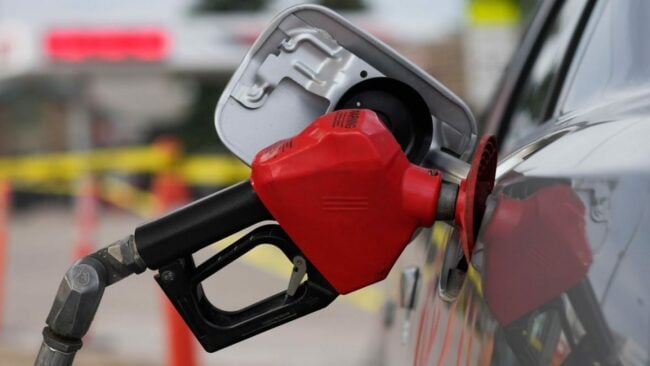
The price war in the petroleum sector has continued to deepen as some retail outlets have dropped the prices of Premium Motor Spirit (petrol) below the N739 per litre recommended by the Dangote Petroleum Refinery.

The PUNCH reports that since the Dangote refinery slashed petrol pump prices from about N900 to N739 in December, many importers and depot owners have lamented mounting losses. To remain competitive, many operators were forced to sell petrol at rates below their costs.

During a survey over the weekend, our correspondent observed that some filling stations now sell PMS cheaper than MRS Oil, the main partner endorsed by the Dangote refinery to champion the price reduction to N739 per litre.

As of Sunday, NIPCO sold PMS at N738 per litre, SAO filling stations sold it at N735, while Akiavic offered the product at N737. An AP filling station beside an MRS outlet in Mowe, Ogun State, dropped its price to N736 per litre.

It was gathered that filling stations located in the same areas now closely monitor rivals’ pump prices to avoid being undercut in the highly competitive market. Our correspondent reports that motorists troop to stations offering the lowest prices, leaving outlets selling at higher rates struggling for customers.

According to the Major Energies Marketers Association of Nigeria, the landing cost of petrol averaged N762.38 per litre, while Dangote’s ex-gantry price remained N699. But even with the difference, importers still adjusted prices to compete with the Dangote-backed MRS.

It was reported earlier that both Dangote and importers were counting losses running into billions of naira.

Operators who spoke with our correspondent said the decision to lower pump prices had nothing to do with whether imported petrol was cheaper or not. According to them, players across the market were simply striving not to be left behind.

See also  FG earmarks N1.7tn in 2026 budget for unpaid contractors

“This is not a function of whether imports are better or not, but simply a market strategy to get a good share of the market. However, it needs to be stressed that we are not at war with any marketer or depot operator nor any refinery,” an operator, who spoke in confidence due to the stiff competition in the downstream, told The PUNCH.

On December 12, the Dangote refinery surprised depot owners and marketers when it slashed the gantry price of petrol by N129, from N828 to N699 per litre.

A few days later, the President of the Dangote Group, Aliko Dangote, said he had information that some marketers planned to keep pump prices high despite the reduction. Consequently, Dangote vowed to enforce the new pricing regime, with MRS selling petrol at N739 per litre.

“We are going to use whatever resources we have to make sure that we crash the price down. For December and January, we don’t want people to sell petrol for more than N740 nationwide. Those who want to keep the price high to sabotage the government, we will fight as much as we can to make sure that these prices are down. If you have money to come and buy, you can pick up petrol at N699,” Dangote said.

The PUNCH earlier reported that as more MRS filling stations in Lagos and Ogun states began dispensing Dangote refinery petrol at N739 per litre, motorists started boycotting outlets selling at higher prices. This led to fuel queues at MRS filling stations in Lagos and other locations.

However, the tide is gradually turning as some filling stations now sell petrol at prices lower than those of MRS.

See also  Asian stocks hit by fresh tech fears as gold retreats from peak

The spokesperson for the Independent Petroleum Marketers Association of Nigeria, Chinedu Ukadike, said marketers who refused to reduce prices would lose customers as bank interest charges accumulate.

“We are in a situation where competition can be determined by price. Patronage will be determined by pricing. Nobody is against you; nobody is regulating you. You will regulate yourself. The market will regulate itself. The time has gone when people were queuing at NNPC filling stations. Wherever the fuel is cheap, that is where the marketers go. So, we are in a price war. Demand and supply determine the price,” Ukadike said.

He added that once Dangote reduced the gantry price to N699, marketers would move towards competitive pricing to retain customers; “if not, interest from banks would be ‘eating’ your capital.”

Our correspondent reports that many filling stations now sell petrol below N800 per litre as the price competition lingers.

Meanwhile, in a statement over the weekend, the Dangote refinery disclosed that supply under the marketers’ arrangement began in October 2025 with an agreed offtake volume of 600 million litres of PMS. It said this was later increased to 900 million litres in November and further expanded to 1.5 billion litres in December.

“In line with market growth and absorption capacity, volumes were scaled up accordingly. Subsequently, and in line with downstream market liberalisation, we opened PMS supply to all qualified marketers, bulk consumers, and filling station operators,” the statement signed by the Group Chief Branding and Communications Officer, Anthony Chiejina, read.

The statement added that since December 16, 2025, the refinery has consistently loaded between 31 million and 48 million litres of PMS daily from its gantry, subject to market demand. These figures, the refinery noted, are verifiable against depot and loading records maintained under routine regulatory oversight.

See also  PENGASSAN backs NUPENG, threatens shutdown of Dangote refinery

To broaden participation and improve distribution efficiency, the refinery said it introduced several measures, including reducing minimum purchase volumes from two million litres to 250,000 litres and offering a 10-day credit facility backed by bank guarantees.

According to the refinery, the initiatives aim to enhance liquidity, support small and medium-sized operators, and reduce reliance on imported fuel. The refinery added that the expanded access framework has driven higher utilisation of locally refined PMS and contributed to more competitive retail pricing, with domestic products priced significantly lower than imported alternatives.

Addressing the surge in petrol imports recorded in November, the Dangote refinery explained that the increase coincided with import licensing decisions approved by the former leadership of the Nigerian Midstream and Downstream Petroleum Regulatory Authority, “which sanctioned volumes beyond prevailing domestic demand.”

It stressed that the development was unrelated to its operational capacity or supply commitments.

The Dangote refinery reaffirmed its commitment to reliable supply, transparency and the orderly development of a competitive downstream petroleum market, pledging continued collaboration with regulators and industry stakeholders to support domestic refining, conserve foreign exchange, moderate prices, and strengthen long-term energy security.

Continue Reading
Click to comment

Leave a Reply

Your email address will not be published. Required fields are marked *

Business

Kwara strengthens partnership to boost mechanised farming

Published

on

The Kwara State Government has strengthened its partnership with the All Farmers Association of Nigeria and other agricultural stakeholders to advance mechanised farming, environmental sustainability and women inclusion across the state.

The renewed commitment was reaffirmed during a courtesy visit by the leadership of the Kwara State chapter of AFAN to the Kwara State Agro-Climatic Resilience in Semi-Arid Landscapes in Ilorin.

This was contained in a statement issued on Tuesday by the Communication Officer of KWACReSAL, Okanlawon Taiwo, a copy of which was made available to The PUNCH in Ilorin.

Speaking during the meeting, the State Project Coordinator of KWACReSAL, Shamsideen Aregbe, assured farmers of the state government’s continued support toward improving food production, mechanised agriculture and climate resilience.

He said, “Tractorisation remains a critical component of modern agriculture. Access to farming equipment is essential for increasing productivity and addressing food security challenges across the state.”

He explained that the tractor support initiative introduced last year followed a World Bank-backed intervention and presidential directive aimed at supporting farmers with mechanised farming equipment.

Aregbe acknowledged concerns raised about operational challenges affecting some tractors, assuring stakeholders that efforts were ongoing to determine the condition and operational status of the equipment to enable effective utilisation by farmers.

“We must sustain engagement with farming communities, particularly in addressing challenges relating to flooding, agricultural logistics and food security,” he added.

The project coordinator also stressed the need for gender equality and inclusion in agricultural interventions across the state.

“The inclusion of women is not negotiable. We must continue to encourage and support women to actively participate in agricultural programmes and leadership processes,” he stated.

See also  Fuel war brews as Dangote presses Tinubu to ban imports

Earlier, the Chairman of AFAN in Kwara State, Shuaib Ajibola, commended KWACReSAL for its interventions in the agricultural sector, reaffirming the association’s readiness to collaborate on programmes aimed at improving farmers’ welfare and environmental sustainability.

Ajibola disclosed that the association planned to commence an agricultural expo and stakeholder engagement programme across the state following its recent inauguration activities to reconnect with farmers and strengthen agricultural outreach.

“Previous editions of the interventions covered the 16 local government areas of the state and involved stakeholders from different agricultural sectors,” he said.

The AFAN chairman also raised concerns over land use disputes and other agrarian issues affecting farmlands, noting that the development had created anxiety among some farming communities regarding land ownership and rights.

“There is a need for sustained stakeholder dialogue and engagement to resolve disputes and ensure peaceful farming activities across communities,” Ajibola added.

Also speaking, the Project Coordinator of AFAM, AbdulRahman Babatunde, applauded KWACReSAL for its support to farmers, especially in the area of agricultural inputs and mechanised farming.

“ACReSAL provided 100 per cent agricultural inputs to participating farmers last year, and beneficiaries across communities can testify to the positive impact of the intervention,” Babatunde said.

He disclosed that farming activities for the current planting season had already commenced, with farmers actively registering, hiring tractors and preparing their farmlands.

In her remarks, the AFAM Women Leader, Sherifat Ibrahim, advocated increased empowerment and technical training for women in rural communities to enable them to actively participate in mechanised farming.

“There is a need for gender-friendly operational systems and practical training that will make tractor handling easier and more accessible for women and young learners involved in agricultural programmes,” she said.

See also  PENGASSAN backs NUPENG, threatens shutdown of Dangote refinery

Meanwhile, the Environmental Safeguards Officer of KWACReSAL, Mr Abubakar Mohammed, reaffirmed the project’s commitment to gender equality, women’s inclusion and effective grievance management across all project activities.

The renewed collaboration comes amid growing efforts by the Kwara state government to improve food production and strengthen climate-smart agriculture through partnerships with farmer associations, development agencies and international organisations.

punch.ng

FOLLOW US ON:

FACEBOOK

TWITTER

PINTEREST

TIKTOK

YOUTUBE

LINKEDIN

INSTAGRAM

Continue Reading

Business

See Full List of Top 10 World’s Largest Economies in 2026

Published

on

The United States is projected to remain the world’s largest economy in 2026 with a gross domestic product estimated at $32.1 trillion, according to new global economic forecasts obtained from Focus Economics on Wednesday.

The U.S. continues to lead global output through dominance in technology, finance, healthcare, and advanced manufacturing. Growth in artificial intelligence, healthcare innovation, and high-value industries has further widened its lead over other major economies in recent years.

The top 10 world economies ranked in numbers

1. United States — $32.1 trillion
The United States remains the world’s largest economy, accounting for over a quarter of global output in nominal terms. Its economy is highly diversified, with Silicon Valley driving global leadership in AI, biotech, and software, while Wall Street anchors the financial sector.

2. China — $20.2 trillion
China is the world’s second-largest economy, driven by manufacturing, exports, and large-scale industrial production. It remains the leading global producer of electronics, machinery, and textiles, though it faces structural challenges, including a shrinking population and high debt levels.

3. Germany — $5.4 trillion
Germany remains Europe’s largest economy, supported by a strong industrial base and the Mittelstand network of medium-sized manufacturing firms that form the backbone of its export strength.

4. India — $4.5 trillion
India continues its rapid economic rise, driven largely by services and information technology. Its economy has more than doubled over the past decade, supported by a young population and expanding domestic demand.

5. Japan — $4.4 trillion
Japan remains a global manufacturing powerhouse in robotics, automobiles, and electronics, although long-term growth is constrained by an aging population and structural economic stagnation.

See also  ECOWAS parliament adopts $26 million for 2026 budget

6. United Kingdom — $4.2 trillion
The United Kingdom is a major service-based economy, with strengths in finance, insurance, and real estate, anchored by the City of London.

7. France — $3.6 trillion
France has a diversified economy led by luxury goods, aerospace, agriculture, and manufacturing, with global brands such as Airbus and LVMH playing major roles.

8. Italy — $2.7 trillion
Italy combines a strong services sector with manufacturing strengths in fashion, machinery, and automobiles, driven largely by its industrial northern regions.

9. Russia — $2.5 trillion
Russia remains heavily dependent on oil and gas exports, with energy revenues playing a central role in its economy despite ongoing sanctions and geopolitical pressures.

10. Canada — $2.4 trillion
Canada rounds out the top 10, supported by natural resources such as oil, forestry, and mining, alongside a strong services and financial sector.

Economists say the global economy is increasingly being shaped by technology, demographics, energy transitions, and geopolitical tensions, all of which will influence how these rankings evolve in the coming years.

punch.ng

FOLLOW US ON:

FACEBOOK

TWITTER

PINTEREST

TIKTOK

YOUTUBE

LINKEDIN

INSTAGRAM

Continue Reading

Business

Nigeria misses OPEC oil production quota again

Published

on

Again, Nigeria has missed its crude oil production quota set by the Organisation of the Petroleum Exporting Countries after averaging 1.49 million barrels per day in April, below the 1.5 mbpd benchmark.

Figures from the Nigerian Upstream Petroleum Regulatory Commission showed that the country produced an average of 1,488,540 barrels of crude daily in April, representing about 99 per cent of the OPEC quota. When condensates were added, total daily production rose to 1.66mbpd

Last month, the NUPRC said oil production now averaged 1.8mbpd. However, data released on Tuesday was at variance with the report. The latest data mean Nigeria remained below its OPEC allocation for the ninth straight month since July 2025.

The NUPRC document showed that combined crude oil and condensate production peaked at 1.85 mbpd during the month, while the lowest output stood at 1.46 mbpd. The PUNCH reports that the April figures are an appreciable improvement compared to March, when oil output was 1.55mbpd.

Nigeria’s oil production has struggled for years due to crude theft, pipeline vandalism, ageing infrastructure, and underinvestment in the upstream sector. Although output improved marginally in April compared to March, it was still insufficient to meet the country’s OPEC target, underscoring persistent challenges in ramping up production despite government efforts to boost volumes.

The PUNCH reports that Nigeria’s crude production in March was 1.38 mbpd. While there was a 69,000 bpd increase from the 1.31 mbpd recorded in February, the figure is still 117,000 bpd below the OPEC quota.

The figures for February indicated a month-on-month decline of 146,000 barrels per day, widening the country’s shortfall from its OPEC production allocation. This is the eighth consecutive month the country has failed to meet the OPEC quota since July 2025.

See also  FIRS grows tax collection to N47.39tn

Recall that although Nigeria recorded a marginal improvement in January, when production rose from 1.422 mbpd in December 2025 to 1.46 mbpd, the rebound was short-lived as output fell significantly in February 2026.

Earlier data from NUPRC had also shown that crude oil production weakened at the end of 2025. Production declined from 1.436 mbpd in November 2025 to 1.422 mbpd in December, before recovering slightly in January.

In 2025, Nigeria’s crude oil production fell below its OPEC quota in nine months of the year, meeting or slightly exceeding the target only in January, June, and July.

Nigeria opened 2025 strongly, producing 1.54 mbpd in January, about 38,700 barrels per day above its OPEC allocation. However, production slipped below the quota in February at 1.47 mbpd and weakened further in March to 1.40 mbpd, marking one of the widest shortfalls during the year.

punch.ng

FOLLOW US ON:

FACEBOOK

TWITTER

PINTEREST

TIKTOK

YOUTUBE

LINKEDIN

INSTAGRAM

Continue Reading

Trending