Connect with us

News

Counter-insurgency campaigns: US votes $413m for security operations in Nigeria, others

Published

on

The United States plans to spend  N587 billion ($413.046m) on counter-insurgency operations in Nigeria and other African countries in 2026 amid worsening security conditions across West Africa.

The allocation is contained in the US National Defence Authorisation Act for Fiscal Year 2026, obtained by The PUNCH on Thursday. The funds were approved under Title XLIII – Operation and Maintenance.

The security budget for the US Africa Command comes against the backdrop of the Christmas Day attacks on terrorists’ hideouts in Sokoto State by the Donald Trump administration.

On Tuesday, AFRICOM delivered a consignment of military equipment to Nigerian security agencies as part of ongoing efforts to strengthen security operations across the country.

The NDAA 2026 is a comprehensive bill that outlines defense policy priorities and authorises $901 billion in annual military spending, with a 4 per cent pay raise for troops. AFRICOM requested $413.046m and the same amount was authorised, but the Act did not provide a breakdown of how the funds would be spent.

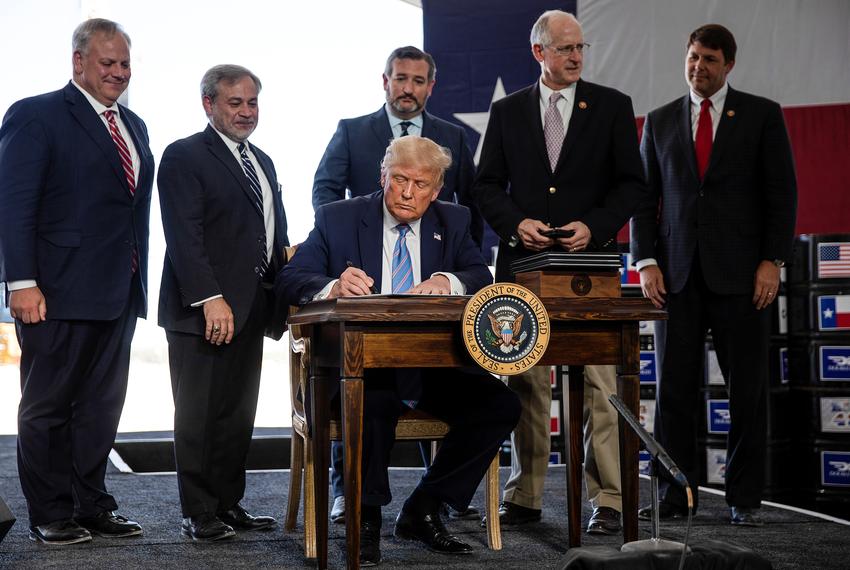
The Act was signed into law by President Trump on December 18, 2025, marking the 65th consecutive annual authorisation.

The $413m budget for security operations comes as West Africa continues to grapple with insurgency, banditry and violent extremism.

In Nigeria, insurgency in the North-East and banditry in the North-West persist, even as piracy and other maritime crimes remain concerns in the Gulf of Guinea.

Mali is under persistent attacks by jihadist groups, while northern Benin has witnessed a spillover of violence from the Sahel.

Other commands and activities listed under the operation and maintenance category of the NDAA include the United States European Command with a $385.744m budget, United States Southern Command with $224.971m, US Forces Korea with a $77.049m allocation, Cyberspace Activities (Cyberspace Operations),  $331.467m and Cyberspace Activities (Cybersecurity), $550.089m.

The subtotal for operating forces under operation and maintenance in the Act stands at $39.999b.

The Act also provides for the establishment of an Assistant Secretary for African Affairs within the US Department of State.

The office, according to the Act, will oversee matters relating to sub-Saharan Africa and coordinate the implementation of US foreign policy in the region.

In addition, the Appropriation Act establishes a Bureau of African Affairs, to be headed by the Assistant Secretary, to manage US foreign policy implementation and assistance to sub-Saharan Africa.

“(5) BUREAU OF AFRICAN AFFAIRS. (A) ESTABLISHMENT: There shall be in the Department of State a Bureau of African Affairs, which shall perform such functions related to implementation of United States foreign policy and assistance to sub-Saharan Africa as the Under Secretary for Political Affairs may prescribe.”

‘’(B) HEAD: The Assistant Secretary for African Affairs shall be the head of the Bureau of African Affairs.

‘’(9) ASSISTANT SECRETARY FOR AFRICAN AFFAIRS: (A) ESTABLISHMENT. There shall be in the Department of State an Assistant Secretary for African Affairs who shall be responsible to the Secretary of State, acting through the Under Secretary for Political Affairs, for “(i) matters relating to sub-Saharan Africa; and “(ii) such other related duties as the Secretary may from time to time designate.

“(B) Responsibilities: In addition to the responsibilities described under subparagraph (A), the Assistant Secretary for African Affairs shall maintain continuous observation and coordination of all matters pertaining to implementation of United States foreign policy in sub-Saharan Africa,” the Act partly read.

See also  177 abducted Kaduna worshippers, bandits sighted in transit — Village Head

The Act further mandates assessments of Russia’s military strategy, objectives and force posture affecting African countries.

This includes a review of Russia’s overseas military basing, logistics capabilities and infrastructure used to project power on the continent, as well as the implications for US contingency plans under AFRICOM, US Central Command and US European Command.

“An assessment of the military strategy objectives and force posture of Russia that affect countries in Africa;  A description of Russia’s overseas military basing, military logistics capabilities, and infrastructure to project power.

“An analysis of the impact of such an action on the ability of the Armed Forces to execute contingency plans of the Department of Defence, including those in the area of responsibility of United States European Command or in support of operations and crisis response in the areas of responsibility of United States Central Command and United States Africa Command.’’

“The reduction of the risk of executing contingency plans of the Department of Defence, including contingency plans conducted by United States Central Command and United States Africa Command,” the Act stated.

Commenting on the development, a security analyst and Chief Executive Officer of Beacon Consulting, Kabir Adamu, said the funding and policy moves reflected growing geopolitical rivalry in Africa, driven largely by economic interests.

Adamu said Africa, particularly West Africa and the Sahel, had become a strategic arena due to insecurity, weak state control and the presence of critical resources.

According to him, Russia and China have expanded their influence across Africa through military cooperation and economic engagement, forcing the United States to reassess its posture on the continent.

‘’First, if you look at the Monroe Doctrine, the US area of influence is its immediate neighbourhood, particularly South America and related regions.

“That is why it moved against Venezuela and also issued threats to Cuba. The other aspect relevant to this discussion is the geopolitical rivalry between the US and Russia.

“In almost all locations where the US has economic interests, Russia and China are already ahead of it. The same applies to Africa. What the US is now trying to do is to catch up.’’

“Russia and China have, in practical terms, taken over much of Africa through their economic interests. In China’s case, it uses loans and other forms of financial assistance to keep Africa within its sphere of influence. The challenge for the US is how to come in and catch up, and it is unlikely that Russia and China will remain passive while the US attempts to do so.’’

The counter-intelligence and security risk consultant predicted intense rivalry among the US, China and Russia.

“We are, therefore, going to see an intense period of geopolitical rivalry among these three countries. We do not yet know where the United States intends to establish this bureau. If I were to hazard a guess, Nigeria is a likely option, given the renewed US interest in the country.

See also  Inside dilapidated Ogun hospital where patients supply own beds

“Nigeria offers strategic advantages for the United States. Beyond its resources, Nigeria allows the US to monitor neighbouring countries, particularly Sahelian states such as Niger, especially because of uranium deposits there. Not long ago, the US had to leave Niger.

“If the US can establish a presence in Nigeria, it would still be able to keep an eye on developments in the Sahel. If not Nigeria, other possible locations are in East Africa. Congo is an example, especially given recent efforts to negotiate a peace agreement there.’’

He added, “Overall, until we know the exact location where the bureau will be established, it will be difficult to draw firm conclusions about the nature of the geopolitical rivalry that will emerge. However, wherever the US chooses to engage in Africa, China and Russia are already ahead in terms of economic interests.

“As stated in the budget, the US will also attempt to assess Russia’s current involvement. Part of that assessment will likely be to develop its own strategy to gain advantages.

“This can force countries to capitulate, but it may also trigger local pushback, and these are issues we should be watching closely. My view is that the primary interest is economic, not military.

“The rivalry is driven by economic interests, particularly access to rare earth minerals such as lithium. There may be other narratives, including claims about stopping Christian genocide in Nigeria, but the Nigerian government has been clear that such a narrative is false and that there is no Christian genocide.

“If you analyse what happened on December 25, the attacks occurred in locations without significant Christian populations. If the aim were to protect Christians, one would expect action in places like Plateau State or Benue State. In fact, officials in Benue have said that after the Sokoto attack, bandits began moving into the state as a result.

“So, the notion of intervention to end Christian genocide is flawed. The interest is economic. One key issue journalists and the National Assembly must raise when it resumes is the nature of any agreement entered into with the American government. Nigerians deserve to know the contents of such agreements.

“We need clarity. If the agreement is economic, it should be made public. If it is military, it should also be made public. “

Adamu, however, stressed that the rivalry was largely economic, noting that access to critical minerals and long-term influence, rather than direct military confrontation, remained the primary drivers of engagement by global powers in Africa.

He said, “Finally, Nigeria’s foreign policy is based on strategic autonomy. This means Nigeria keeps itself open to relations with any country that offers strategic advantages. Given the current global order and recent US policies, we should expect a rise in what I would describe as multilateral diplomacy.

“This will involve different approaches by the three global powers across different continents. The US will act as it does in its backyard and in Europe, but Russia and China will not remain silent. We are likely to see a complex geopolitical rivalry among these powers, including in Africa.”

Security analyst Chidi Omeje pointed out that the evolving relationship between Nigeria and the US should be viewed strictly through the lens of partnership and collaboration, rather than dominance or repression.

See also  Why I won’t assess Tinubu’s govt now – Soyinka

Omeje said the current engagements with the US, including through AFRICOM, reflect mutual respect and dignity, noting that this aligns with Nigeria’s long-standing demand to be treated as an equal partner in addressing security challenges.

According to him, many of Nigeria’s security threats are linked to global terrorist networks, stressing that groups operating in the Sahel and Lake Chad regions are not purely local, but part of wider international movements.

He argued that such transnational threats require international cooperation, making partnerships with global powers necessary.

“The key issue here now is that we are now on the level of partnership, not on invasion or any kind of dominance, so we are talking about partnership. The other day, AFRICOM sent some materials to the Nigerian armed forces. This is about partnership and no longer the issue of threats or repression or display of supremacy and the like, so whatever we are doing with them that is based on respect and dignity and partnership is always welcome.

“The issues we are dealing with are actually problems associated with the global terrorist network, and if it is a global terrorist network, partnership and collaboration are welcome.”

Omeje expressed reservations about Russia’s growing security engagements in Africa, saying Moscow lacks the reach and capacity to effectively address Nigeria’s security challenges, given its ongoing war in Ukraine.

Army-US cooperation

In a related development, the Chief of Army Staff, Lt. Gen. Waidi Shaibu, has called for deeper strategic cooperation between the Nigerian Army and the United States Army to effectively address Nigeria’s evolving and complex security challenges.

The COAS stated this on Wednesday when the US Defense Attaché to Nigeria, Lt. Col.  Semira Moore, paid him a courtesy visit at the Army Headquarters in Abuja.

Shaibu commended the United States Government for its enduring partnership and sustained support to the Nigerian Army, noting that the NA has benefitted significantly from American military professionalism and institutional expertise.

The COAS stressed that the Nigerian Army remains eager to leverage the extensive experience of the US Army in both kinetic and non-kinetic operations.

He, therefore, advocated the expansion of cooperation in areas aimed at enhancing operational effectiveness, institutional capacity, doctrine development, and strategic capability.

According to him, international military partnerships remain critical in complementing Nigeria’s internal security architecture and advancing sustainable peace and stability across the country.

Moore expressed appreciation for the cordial and mutually beneficial relationship between the two armies. She reaffirmed her commitment to strengthening existing ties while exploring new areas of collaboration, particularly in capacity building, intelligence sharing, and joint operational planning.

The Defense Attaché also disclosed that the United States remains committed to supporting the Nigerian Army in key non-kinetic areas, including humanitarian assistance and troop welfare initiatives, which she noted are essential for sustaining morale and operational effectiveness in the field.

punch.ng

FOLLOW US ON:

FACEBOOK

TWITTER

PINTEREST

TIKTOK

YOUTUBE

LINKEDIN

TUMBLR

INSTAGRAM

Continue Reading
Click to comment

Leave a Reply

Your email address will not be published. Required fields are marked *

News

US Justice dept releases documents, images, videos from Epstein files

Published

on

The US Justice Department began releasing millions of new pages on Friday from the Jeffrey Epstein files along with photos and videos, adding fuel to the politically explosive case that has dogged President Donald Trump.

Deputy Attorney General Todd Blanche said the White House played no role in the review of the extensive files related to the convicted sex offender, a former friend of Trump.

“They did not tell this department how to do our review, what to look for, what to redact, what to not redact,” Blanche said at a press conference.

The Justice Department said some of the documents being released contained “untrue and sensationalist claims” about the 79-year-old Trump submitted to the FBI before the 2020 presidential election.

But Blanche — who previously served as Trump’s personal lawyer — dismissed suggestions that embarrassing material about the president had been redacted from the more than three million documents, 180,000 images and 2,000 videos being released on Friday.

“We did not protect President Trump,” he said. “We didn’t protect or not protect anybody.”

Blanche said all images of girls and women were being redacted aside from those of Ghislaine Maxwell, who was convicted of trafficking underage girls for Epstein and is serving a 20-year prison sentence.

However, a statement by survivors of Epstein’s alleged abuse claimed identifying information about them still remained in the files, “while the men who abused us remain hidden and protected.”

The letter signed by 19 individuals, some using aliases or initials, demanded “the full release of the Epstein files” and that Attorney General Pam Bondi directly address the matter when she testifies before Congress next month.

See also  SEE FULL LIST: US suspends immigrant visa processing for Nigeria, Ghana, 73 other countries

A wealthy US financier, Epstein died in a New York prison cell in 2019 while awaiting trial for sex trafficking of underage girls. His death was ruled a suicide.

Previous document releases have shed light on Epstein’s ties to top business executives such as Microsoft’s Bill Gates, celebrities such as filmmaker Woody Allen, academics and politicians, including Trump and former president Bill Clinton.

In a draft email among the documents published on Friday, Epstein said Gates had engaged in extramarital affairs, a claim the Gates Foundation denied in a statement to The New York Times.

“These claims — from a proven, disgruntled liar — are absolutely absurd and completely false,” it said.

In other emails, Epstein connected Steve Tisch, 76, producer of the movies “Forrest Gump” and “Risky Business” and the co-owner of the New York Giants football team, with multiple women.

In one exchange with Tisch, Epstein describes a woman as “russian, and rarely tells the full truth, but fun.”

– Conspiracy theories –

Trump’s right-wing base has long been obsessed by the Epstein saga and conspiracy theories that the financier oversaw a sex trafficking ring for the world’s elite.

Only one person — Epstein’s former girlfriend Maxwell — has ever been charged in connection with his crimes, and Blanche appeared to play down expectations that the latest files would lead to further prosecutions.

Trump and Clinton both figure prominently in the records published so far but neither has been accused of wrongdoing.

A Republican-led House panel voted recently to launch contempt of Congress proceedings against Bill and Hillary Clinton over their refusal to testify before its probe into Epstein.

See also  MSF strengthens diphtheria intervention amid surge in suspected cases  

Trump, who used to move in the same social circles as Epstein in Florida and New York, fought for months to prevent release of the vast trove of documents about the disgraced financier.

But a rebellion inside his Republican Party forced him to sign off on a law mandating release of all the documents.

Trump has given varying accounts of why he eventually fell out with Epstein. He has criticized the file dumps, expressing concern that people who “innocently met” Epstein over the years risked having their reputations smeared.

The Epstein Files Transparency Act called for all of the documents held by the Justice Department to be published by December 19.

Blanche said Friday’s release “marks the end of a very comprehensive document identification and review process to ensure transparency to the American people.”

He blamed the delay on the need to painstakingly carry out redactions that protected the identities of Epstein’s more than 1,000 alleged victims.

AFP

punch.ng

FOLLOW US ON:
FACEBOOK

TWITTER

PINTEREST

TIKTOK

YOUTUBE

LINKEDIN

TUMBLR

INSTAGRAM

Continue Reading

News

Venezuelan interim president announces proposal for mass amnesty

Published

on

Venezuela’s acting president announced on Friday a proposal for mass amnesty in the country, in her latest major reform since the US toppling of Nicolas Maduro just weeks ago.

Delcy Rodriguez, in a speech at the Venezuelan Supreme Court attended by top government officials, said she will propose a “general amnesty law covering the entire period of political violence from 1999 to the present.”

Leftist revolutionary Hugo Chavez assumed the presidency in 1999, and was succeeded upon his death in 2013 by Maduro, who oversaw an increasingly authoritarian government and whose two re-elections were widely dismissed as fraudulent.

“This law will serve to heal the wounds left by political confrontation, fueled by violence and extremism. It will allow us to put justice back on track in our country,” Rodriguez said, also announcing a “major national consultation for a new judicial system.”

She also announced plans to close the notorious El Helicoide prison in Caracas, where rights groups say political prisoners were tortured by Maduro’s intelligence services.

The massive facility, originally built as a shopping mall, will be turned into a “sports, cultural and commercial center for police families and neighboring communities,” Rodriguez said.

A mother interviewed by AFP near El Helicoide was overjoyed that her son, imprisoned inside, may soon be released under the law.

“It’s wonderful! I haven’t heard from my son in six months, so, damn it, this is a huge joy, it’s an amnesty, my God, it’s total liberation,” said Betsy Orellana, 63.

– Wary opposition –

Formerly Maduro’s vice president, Rodriguez, 56, has quickly moved in less than four weeks in power to overhaul Venezuelan society in ways sought by the United States, earning high praise from US President Donald Trump.

See also  AI-powered cyber threats put healthcare systems at risk

Along with her brother, National Assembly President Jorge Rodriguez, she has passed a new law opening up the country’s critical oil sector to private investments — a key demand of Trump.

The move on Thursday was almost immediately followed by a rollback on US sanctions targeting Venezuela’s oil industry.

The government also agreed on January 8, five days after Maduro was seized in a deadly US military operation, to free inmates considered political prisoners by rights groups.

Families — many of whom began camping outside the prisons — and rights groups have criticized the slow pace of the releases, with the Foro Penal NGO counting less than 300 in total released since January 8.

Opposition figures in Venezuela have voiced reserved optimism at the changes taking place, wary that Maduro’s closest allies still remain in power.

Nobel Peace Prize laureate Maria Corina Machado said Friday that Rodriguez’s amnesty proposal came only after she was pushed by Washington.

“This is not a voluntary gesture by the regime, but a response to pressure from the United States government. And I hope that the prisoners will soon be able to be with their families,” she posted on social media.

Opposition lawmaker Tomas Guanipa, whose two brothers are imprisoned, said he hope the amnesty would end “an era of repression.”

“May this be the beginning of a path that leads us to freedom and democracy, definitively and forever,” he told AFP in an interview at his home in Caracas.

– Americans freed –

US authorities on Friday announced that all Americans known to be held prisoner in Venezuela had been released.

See also  MSF strengthens diphtheria intervention amid surge in suspected cases  

The announcement came hours after the release of Peruvian-American political prisoner Arturo Gallino Rullier, whom the Foro Penal group said was on his way to the United States.

For years, Venezuela has routinely arrested foreigners and domestic opposition actors on a range of charges from spying to plotting attacks — charges critics dismiss as fabricated.

In a sign of Trump’s satisfaction with the new Venezuelan authorities, his administration lifted a ban on US flights to the South American country.

And after years of the US embassy being shuttered, Washington is also preparing to re-establish its diplomatic presence in Caracas.

Seasoned diplomat Laura Dogu was recently named US charge d’affaires for Venezuela — the highest level representative below an ambassador.

Dogu is expected to arrive in Caracas on Saturday, diplomatic sources told AFP.

AFP

Continue Reading

News

Osun LG Accounts: Court issues arrest warrants against bank

Published

on

A Chief Magistrate’s Court sitting in Osogbo, the Osun State capital, has issued arrest warrants against the United Bank for Africa Plc and four of its senior officials over the alleged illegal operation and maintenance of bank accounts in the name of the 30 local government councils in the state.

The case, marked MOS/601c/2025 and filed by the Osun State Government, was heard on Friday in Osogbo.

In a Certified True Copy of the order titled “Warrant for Arrest of Defendant Who Has Disobeyed Summons (General Title – Form No. 1)”, addressed to the Osun State Commissioner of Police, the court stated in part, “Complaint has been made that the defendant(s) did allow unauthorised persons to operate and maintain 30 accounts opened in favour of the 30 Local Government Councils in Osun State with UBA Bank Plc.

“And the defendant(s) were thereupon summoned to appear before the Chief Magistrate’s Court of Osogbo. An oath has been made that the defendant(s) were duly served with the summons but did not appear, and that such complaint is true.

“You are hereby commanded to bring the defendant(s) before the Magistrate’s Court forthwith to answer to the said complaint or be further dealt with according to law.”

The matter has been adjourned to February 10, 2026, for trial.

The defendants in the suit are United Bank for Africa Plc; its Group Managing Director, Oliver Alawuba; the Company Secretary and Group Legal Adviser, Billy Odum; and the Deputy Managing Director, Chukwuma Nweke.

See also  177 abducted Kaduna worshippers, bandits sighted in transit — Village Head

According to the charge sheet, the Osun State Government filed a 31-count charge against the bank and its officials, with each count relating to alleged infractions connected to the opening and operation of bank accounts for the state’s 30 local government councils.

In count one, the prosecution alleged that the defendants, on or about December 9, 2025, and on subsequent days, at Olonkoro, Osogbo branch of the UBA, conspired to commit a felony by opening, operating, and maintaining what it described as illegal Osun State Local Government Council accounts.

The alleged offence, according to the charge is said to be contrary to and punishable under Section 516 of the Criminal Code, Cap 34, Volume 2, Laws of Osun State of Nigeria, 2002.

The defendants were further accused of allowing the opening, operation, and maintenance of local government accounts “by unknown private individuals as signatories,” despite the Local Government Service Commission having formally introduced Directors of Administration and General Services, as well as Directors of Finance of the councils, as the authorised signatories to the statutory accounts.

The prosecution said the action constituted an offence contrary to Sections 2 and 3(1) and (2), and punishable under Section 5(1) and (2) of the Osun State Local Government Accounts Administration Law, 2025.

Court documents show that the remaining counts similarly relate to the alleged unlawful opening and operation of accounts connected to all 30 local government councils in Osun State.

At the last sitting in December 2025, the Chief Magistrate, Mr A. A. Adeyeba, ordered that the defendants be served through their various email addresses and other substituted means in newspapers. He subsequently adjourned the case to yesterday, January 30, 2026, for hearing.

Continue Reading

Trending