Connect with us

News

Why Tinubu sacked service chiefs — Presidency

Published

on

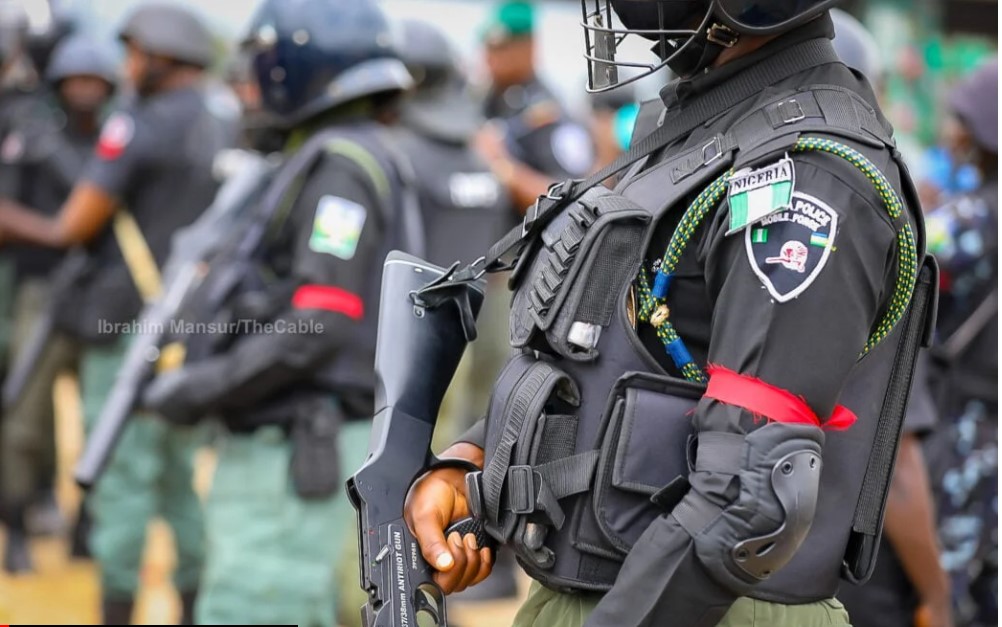
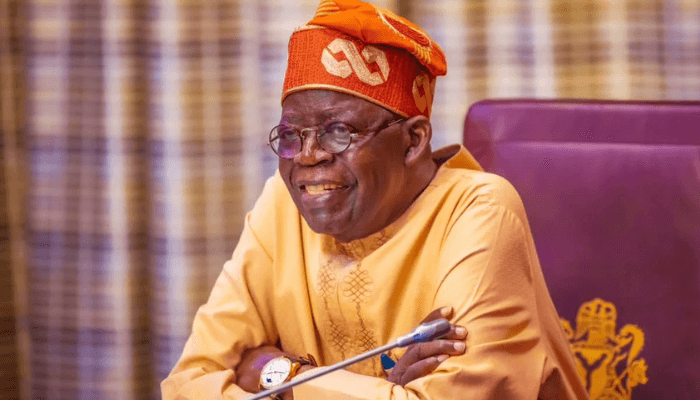
The Presidency has given further insight into the reason for the sacking and replacement of service chiefs in the country.

While denying that the military shake-up was connected to a rumored coup plot, the Presidency said it was a move to “inject new direction” into the armed forces.

The Special Adviser to the President on Information and Strategy, Bayo Onanuga, told Saturday PUNCH that Tinubu acted within his authority to make leadership changes in the military.

“Service chiefs can be hired and fired by the President. He is the Commander-in-Chief. He has the power to hire and fire,” Onanuga said.

Earlier on Friday, the President had announced sweeping changes in the military hierarchy.

A statement by the Special Adviser to the President on Media and Public Communication, Sunday Dare, named General Olufemi Oluyede as the new Chief of Defence Staff, replacing General Christopher Musa.

It added, “The new Chief of Army Staff is Major-General W. Shaibu; Air Vice Marshall S.K. Aneke is Chief of Air Staff; while Rear Admiral I. Abbas is the new Chief of Naval Staff. Chief of Defence Intelligence, Major-General E.A.P. Undiendeye, retains his position.”

Tinubu charged the new service chiefs to justify the confidence reposed in them by enhancing the professionalism, vigilance, and comradeship that define Nigeria’s Armed Forces.

The appointments, Dare said, took immediate effect.

The development came barely a week after an online media platform, Sahara Reporters, published a story alleging that some military officers plotted to remove President Tinubu.

The report, which went viral on October 19, linked the detention of 16 military officers to the purported coup and claimed that the cancellation of the Independence Day military parade was part of efforts to suppress internal unrest in the military.

However, the Defence Headquarters denied the story.

In a statement signed by the Director of Defence Information, Brig. Gen. Tukur Gusau, the military dismissed the report as “false and intended to cause unnecessary tension and distrust among the populace.”

Gusau said the cancellation of the Independence Day parade was “purely administrative” and that the detained officers were being investigated for “issues of indiscipline.”

He maintained that the armed forces remained loyal to the Constitution and to the President.

See also  JUST IN: Striking nurses suspend industrial action – Health Minister

Still, the timing of the service chiefs’ removal — barely days after the coup report — has continued to fuel public suspicion.

Why Tinubu sacked service chiefs — Presidency

Reacting to the speculation, the Senior Special Assistant to the President on Media and Publicity, Tope Ajayi, explained that the move followed two years of sustained operations under the previous chiefs.

He noted that the move reflected the President’s desire “to inject new direction, vision, vigour and energy” into the military.

“This is not a reaction to any rumour of coups. He is exercising his powers. The service chiefs have done two years,” Ajayi told Saturday PUNCH.

“We are fighting security issues — Boko Haram in the North-East, banditry in the North-West, IPOB and ESN in the South-East, kidnapping in the South-West, and other crises in the North-Central,” he added.

Ajayi emphasised that the President’s action was lawful.

He further noted that the country’s heavy security spending in recent years had drained funds from other key sectors.

“In the last 15 years, look at our national budget — security taking the largest chunk. The President wants to deal with this matter once and for all, so that the money going into defence expenditure will be better deployed to fund critical infrastructure like power, roads, broadband, education, and healthcare,” he said.

Ajayi added that the President’s decision was consistent with the constitutional provision that all appointees serve at the President’s pleasure.

“Every appointee of government, whether you are minister, head of agency, or service chief, serves at the pleasure of the President. Nobody has a secure tenure. The only two people in the Federal Government who have a guarantee of tenure are the President and the Vice President,” he explained.

Public suspicion persists

Despite the explanations, speculations linking the shake-up to the rumoured alleged coup plot have continued to grow.

A senior security operative in one of the intelligence agencies told Saturday PUNCH that people connecting the change of service chiefs to the rumored coup attempt “have a point.”

“Information about the matter is not something you can easily get. The official statement of the military is that there was nothing like a coup attempt, and we stay with that.

See also  Tinubu to Amupitan: Make 2027 polls transparent, violence-free

“However, those trying to connect the removal of the service chiefs to the denied coup plot also have a point. People will definitely add two and two together and form their opinions,” he said.

On X, Nigerians also drew connections between the timing of the announcement and the reports of arrests within the military.

Ikechukwu Ude said, “There were rumours of a military coup last week, and today some of the military service chiefs were sacked. That the rumour was debunked, but it seems to be true right now from the sack of service chiefs! No civilian with zero capacity can stop military generals if they intend to change any government.”

Another Nigerian, Muduwa Kerra, said the removal of the service chiefs signified how close the country was to a coup.

Similarly, Abraham Uyanna queried, “If there wasn’t an attempted coup, why is there a sudden change of service chiefs?”

ADC demands answers

Meanwhile, the African Democratic Congress has urged President Tinubu to explain the replacement of the nation’s military leadership.

In a statement issued on Friday by its National Publicity Secretary, Bolaji Abdullahi, the party said, “We note that nearly all the service chiefs that have been removed were appointed only 28 months ago, with the current Chief of Defence Staff himself appointed just a year ago as Chief of Army Staff.

“We also note that this kind of decision has serious and far-reaching implications for stability within the ranks and therefore could not have been taken without strong reasons. Our position remains, therefore, that the Federal Government owes Nigerians a categorical explanation about what truly happened.

“As an opposition political party, our interest remains the stability of our country and our democracy. In the light of developments in our neighbourhood of Chad and the Sahel States, we are gravely concerned.”

The ADC observed that the near-total overhaul of the nation’s military leadership was more likely to fuel rumours and conspiracy theories rather than dispel them.

Mixed reactions trail appointments

Also, security experts expressed mixed reactions to the changes.

A former Director of Legal Services at the Nigerian Army, Col. Yomi Dare (retd), described the appointment of the new service chiefs as a morale booster.

See also  Health minister, manufacturers clash over sugary drink levy

He said, “There is no security implication other than that the outgone officers have done their bit. The new service chiefs, by virtue of their appointment, must now be motivated to work effectively. They should assess what their predecessors achieved and, in unspoken words, learn from what they did and failed to do.”

Similarly, a former Director of the Department of State Services, Mike Ejiofor, noted that while the President had the constitutional power to make such changes, the real challenge remained funding and operational conditions.

“For me, changing the service chiefs might not necessarily change anything because they have all been working under very difficult situations,” he said.

“We should also not forget that they are operating under serious financial constraints. People say this year’s budget is the highest in terms of defence, but has it been implemented? The funds have not been released, so they are working in a very tough environment.”

Ejiofor urged the Federal Government to prioritise the release of funds and strengthen coordination among the agencies.

“A foundation has already been laid by the former service chiefs, so the new ones should consolidate on the gains made by their predecessors,” he advised.

On his part, security analyst Akogun-Abudu Oluwamayowa faulted the timing and necessity of the overhaul.

“What is happening in this country in terms of insecurity is not about changing the service chiefs. One of the problems we are facing is that we do not have perimeter fencing. People from other countries come into our country without barriers, wreaking havoc. The change may not be effective when major issues are not tackled,” he said.

He urged the new chiefs to prioritise the welfare of soldiers.

“The best welfare for soldiers is not training but their well-being. Their salaries are not even enough. These people are really suffering. I advise that these new service chiefs fight for the soldiers and pay attention to their welfare,” he said.


Continue Reading
Click to comment

Leave a Reply

Your email address will not be published. Required fields are marked *

News

Pentagon restores name of US Pacific Command

Published

on

The Pentagon is set to restore the name of the US Indo-Pacific Command to the US Pacific Command, it said on Tuesday, reversing a 2018 decision.

The renaming will not change the command’s area of responsibility, which stretches from the western part of India to America’s Pacific coastline, the Department of War said in a statement.

Its “fundamental mission and its unwavering commitment to maintaining a free and open theatre alongside regional allies and partners” also remain unchanged, it added.

The name change “honours the command’s deep historical roots, fostering a sense of pride and collective spirit among all who serve in the Pacific,” the department said, without giving additional details.

The US Pacific Command was established by former President Harry Truman after World War II.

It operated under that name for over 70 years before being renamed as the US Indo-Pacific Command in 2018, in a nod to the growing importance of the Indian Ocean in US strategic thinking.

The 2018 name change also came as part of broader efforts by Washington to counter China’s growing influence across the Asia-Pacific domain.

AFP

See also  177 abducted Kaduna worshippers, bandits sighted in transit — Village Head
Continue Reading

News

Labour to engage FG on minimum wage review

Published

on

The Nigeria Labour Congress and the Trade Union Congress said they will restart negotiations with the Federal Government over a new national minimum wage, warning that workers can no longer cope with rising living costs as inflation continues to erode real incomes.

The unions are pushing for what they described as a “genuine living wage” to replace the current framework, which they said no longer reflects Nigeria’s economic realities, particularly sharp increases in food, transport, housing, and healthcare costs.

The position was contained in a joint address delivered at the 114th International Labour Conference in Geneva on Monday, where the unions also rejected any proposal to tax the minimum wage or impose additional fiscal burdens on low-income earners.

Nigeria’s current minimum wage of N70,000 was signed into law on 18 July 2024, in an agreement between organised labour and the federal government. President Bola Tinubu formally announced the wage on 19 July 2024, and it took effect on 29 July 2024.

The agreement originally set a three-year review cycle, shifting from the previous five-year arrangement. However, in January 2025, the Federal Government adjusted the framework, announcing that the minimum wage would now be reviewed every two years, effectively setting 2026 as the next review point.

In light of this, labour leaders said they intend to formally open discussions with the federal government ahead of the July 2026 wage renegotiation deadline, in a bid to prevent the delays that have often hindered previous minimum wage reviews.

“The current Act expires early next year, and we have announced that renegotiation will commence by July 2026 to avoid the painful delays of the past. As soon as we leave here, we shall write again to the government demanding the commencement of the process for renegotiating the national minimum wage,” the unions said.

See also  Nigeria grants asylum to Guinea-Bissau opposition candidate

The labour leaders said workers are already under severe pressure from inflation, currency depreciation, and rising costs across essential services, arguing that official economic indicators do not reflect the daily realities of most households.

They warned that taxing the minimum wage would worsen poverty and deepen economic hardship at a time when many citizens are struggling to meet basic needs.

“We demand nothing less than a genuine living wage that reflects today’s harsh economic realities. We also demand immediate relief measures by governments at all levels until a new minimum wage is signed into law. We reject outright any attempt to tax the minimum wage or impose further burdens on the poor,” the unions said in their communiqué.

The unions stressed that the upcoming negotiations must go beyond nominal wage adjustments and instead focus on protecting real incomes, which they said have been steadily eroded by inflation.

They also urged federal and state governments to introduce short-term relief measures pending the conclusion of negotiations, warning that delays could heighten industrial tensions across the country.

Beyond wage concerns, the labour movement used the Geneva platform to highlight broader economic and social challenges, including insecurity, unemployment, and rising poverty levels.

They said insecurity in several parts of the country has made commuting increasingly dangerous for workers, with killings, abductions, and displacement affecting productivity and livelihoods.

According to the unions, nearly 2,000 people were killed in the first quarter of the year, while millions have been displaced, with entire communities and economic activities disrupted by violence.

See also  Shiites Hold Abuja Rally To Mourn Iran’s Supreme Leader

They warned that worsening insecurity could force workers to remain at home as a survival response, escalating tensions beyond traditional labour action if not urgently addressed.

The labour leaders also said about 65 per cent of Nigerians, estimated at roughly 150 million people, are currently living in multidimensional poverty, driven by inflation, job losses, and declining purchasing power.

They argued that while macroeconomic reforms are aimed at stabilisation, they have yet to translate into improved living standards for ordinary citizens.

As the 2027 general elections approach, the unions said they are developing a charter of demands to shape their engagement with political actors and inform their support for candidates, noting that  only political actors who commit to improved security, functional public services, wage reforms, and protection of labour rights would receive their backing.

The labour movement also raised concerns over alleged interference in union affairs in some states, accusing certain governments of undermining democratically elected labour leadership structures.

They emphasised that organised labour would resist any attempt to weaken union independence or impose external control on labour organisations.

As the current wage regime approaches its 2026 review window, the unions said their priority remains securing a wage structure that reflects economic realities and protects workers from further erosion of income.

They maintained that the outcome of the upcoming negotiations would determine whether Nigerian workers receive what they termed a “living wage” or continue to endure worsening economic hardship.

punch.ng

FOLLOW US ON:

FACEBOOK

TWITTER

PINTEREST

TIKTOK

YOUTUBE

LINKEDIN

INSTAGRAM

Continue Reading

News

Ribadu, Akpabio advocate tech-driven border control over Insecurity

Published

on

The National Security Adviser, Nuhu Ribadu, and President of the Senate, Godswill Akpabio, on Tuesday called for the deployment of modern technology and stronger regional cooperation to strengthen Nigeria’s border security architecture and address growing security threats across the country.

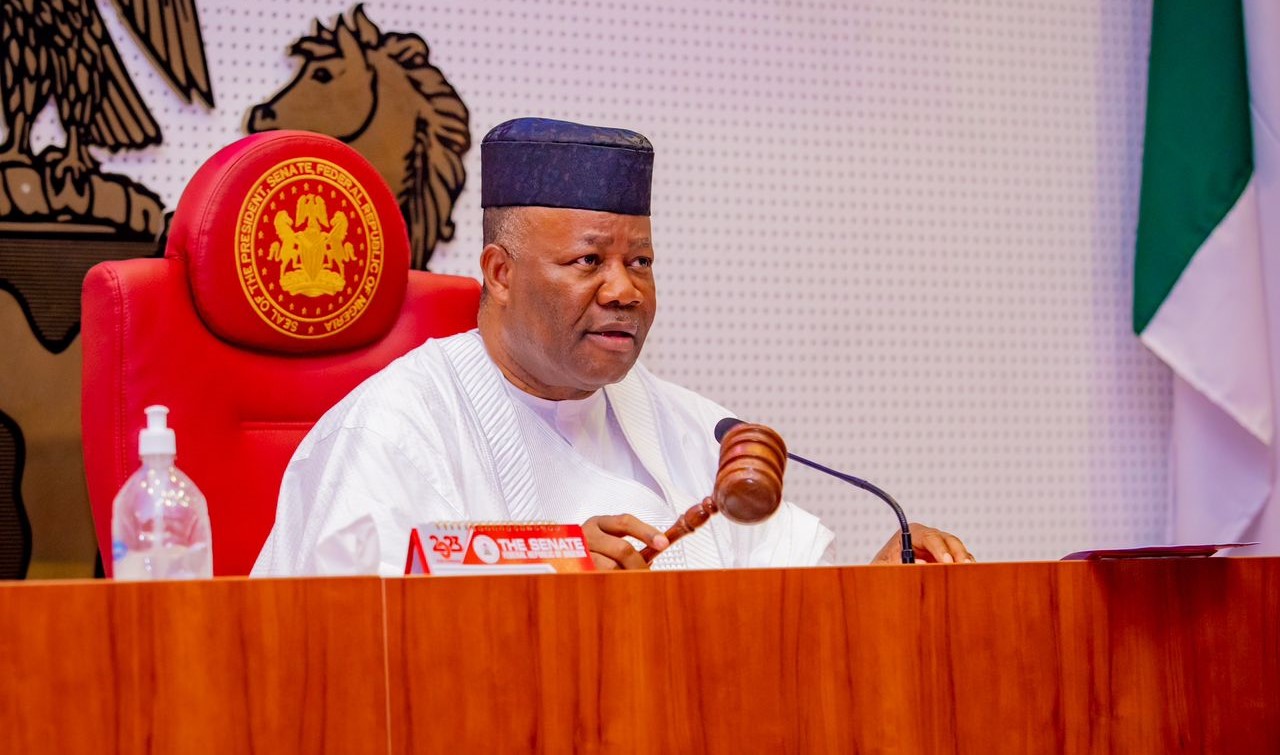
FILE: Akpabio

They made the call at the opening of the 15th National Security Seminar organised by the Alumni Association of the National Defence College in Abuja.

Represented by the Director of Policy and Strategy at the Office of the National Security Adviser, Yazid Gbemudu, the NSA said Nigeria’s territorial integrity and national stability were closely tied to the effectiveness of its border security framework.

He noted that while Nigeria’s extensive land and maritime borders facilitated trade, regional integration and socio-economic development, they also exposed the country to threats including terrorism, arms trafficking, smuggling, human trafficking, irregular migration and other forms of transnational organised crime.

According to him, weak border governance creates vulnerabilities that can be exploited by criminal and terrorist networks, thereby undermining national security and development efforts.

“A major pillar of Nigeria’s contemporary border security framework is the National Border Management Strategy, which promotes an integrated border management approach.

“The strategy seeks to enhance intelligence collaboration, strengthen border infrastructure, improve surveillance capabilities and modernise border management processes,” he said.

Ribadu said the deployment of Border Management Information Systems and other technological solutions at key entry and exit points had improved data collection, traveller screening and migration monitoring.

“These initiatives demonstrate Nigeria’s commitment to aligning its border management practices with international standards,” he added.

See also  Bandits attacked Kwara community for 10 hours before soldiers arrived – Village head

The NSA stressed the need for the full implementation of an integrated border management system to improve coordination among security, intelligence and law enforcement agencies.

“Effective intelligence sharing, joint operations and harmonised border procedures are essential for addressing contemporary security threats,” he said.
He also advocated increased investment in technology-driven border security solutions.

“Expanding surveillance systems across land, maritime and coastal borders will significantly improve monitoring capabilities and reduce illegal cross-border activities.

“Modern challenges require modern solutions, including biometric identification systems, advanced border monitoring technologies and data-driven security frameworks,” Ribadu stated.

The NSA further emphasised the importance of regional and bilateral cooperation, noting that many of the security challenges confronting Nigeria’s borders were transnational in nature and required coordinated responses among neighbouring countries.

He also called for greater investment in border communities through sustainable development, improved infrastructure and economic opportunities to reduce their vulnerability to criminal exploitation.

“Strengthening Nigeria’s border security architecture is fundamental to ensuring national stability, protecting territorial integrity and promoting socio-economic development,” he said.

Ribadu, however, acknowledged challenges such as porous borders, inadequate infrastructure, limited technological capabilities and gaps in inter-agency coordination, saying they required urgent attention.

“Border security is a shared responsibility that requires the collective efforts of security agencies, government institutions, border communities and international partners,” he added.

Speaking at the event, Akpabio, who was represented by the Chairman of the Senate Committee on Defence, Ahmad Lawan, said Nigeria’s extensive land and maritime boundaries posed significant security challenges.

“As a country with extensive land and maritime boundaries, Nigeria faces significant challenges relating to border control, illegal migration, arms trafficking, smuggling and the infiltration of criminal and extremist elements.

See also  Tinubu to Amupitan: Make 2027 polls transparent, violence-free

“It is, therefore, imperative that Nigeria prioritises the strengthening of its border security architecture through improved surveillance, enhanced infrastructure, better inter-agency coordination, technological innovation and stronger regional cooperation,” he said.
Akpabio noted that many of the security threats confronting Nigeria had transnational dimensions, making coordinated responses essential.

He stressed that peace and security remained prerequisites for meaningful national development.

“There can be no meaningful development without peace and security. Porous and poorly managed borders can become vulnerabilities that undermine national security efforts and national stability,” he said.

The Senate President also advocated a whole-of-government and whole-of-society approach to addressing insecurity.

According to him, government institutions, security agencies, civil society organisations, the private sector, traditional institutions, the media and academia all have critical roles to play in safeguarding the country.

Earlier, the Acting President of AANDEC, Commodore Amatare Kpou (retd.), described the seminar as a key platform for promoting informed discourse on national security challenges and opportunities.

Kpou said the theme of the seminar, “Strengthening Nigeria’s Border Security Architecture for National Stability,” was timely, given the growing threats of irregular migration, smuggling, trafficking and other cross-border crimes.

He expressed confidence that the deliberations would generate useful recommendations for policymakers and contribute to efforts aimed at building a safer and more secure Nigeria.

Nigeria shares over 4,000 kilometres of land borders with neighbouring countries and an extensive coastline, making border security a critical component of national security.

Authorities have repeatedly identified porous borders as channels for terrorism, arms smuggling, human trafficking and other transnational crimes.

The Federal Government has in recent years intensified efforts to strengthen border management through technology, intelligence sharing and regional cooperation.

See also  Nigeria grants asylum to Guinea-Bissau opposition candidate

punch.ng

FOLLOW US ON:

FACEBOOK

TWITTER

PINTEREST

TIKTOK

YOUTUBE

LINKEDIN

INSTAGRAM

Continue Reading

Trending