Connect with us

Politics

Kano earthquake as Yusuf dumps opposition for APC ahead of 2027 battle

Published

on

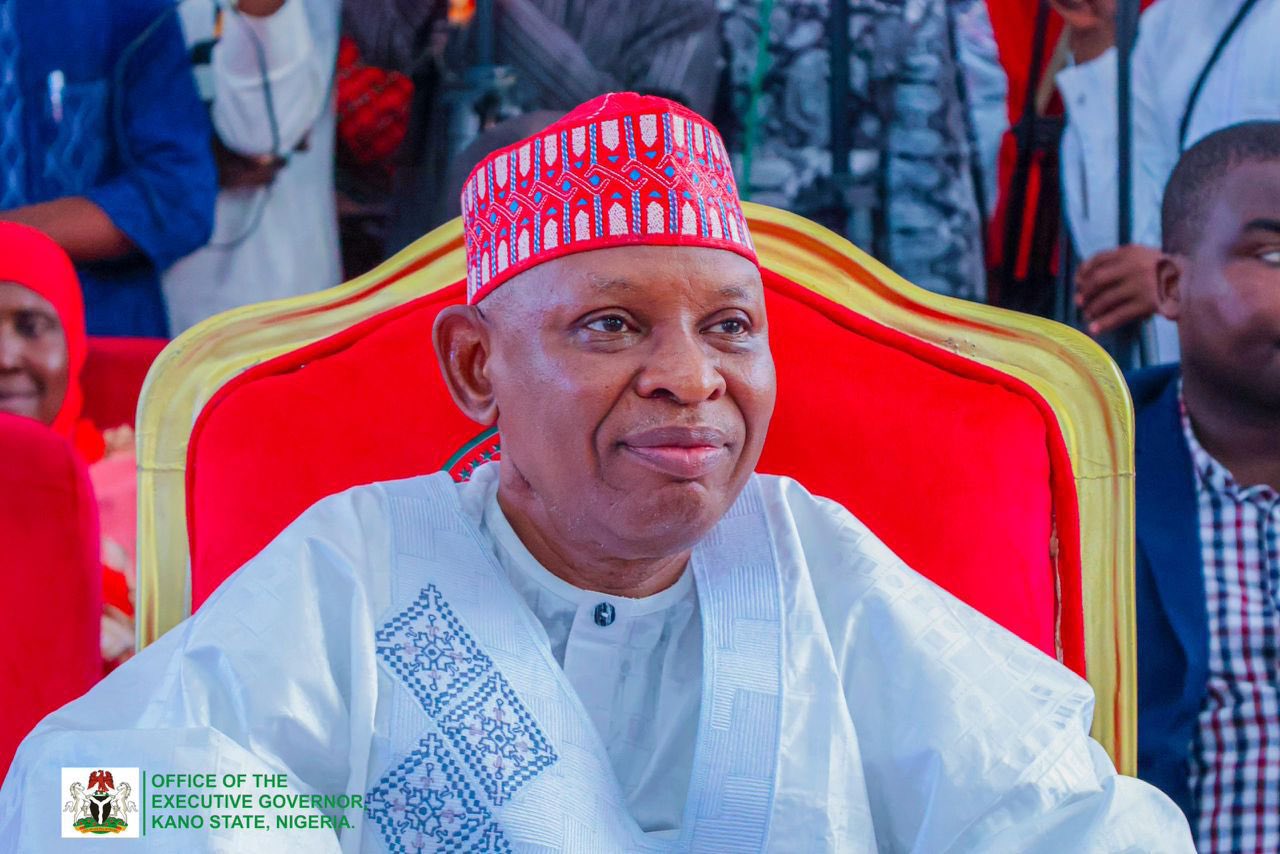
The Peoples Democratic Party, African Democratic Congress and Labour Party have strongly criticised the All Progressives Congress following the defection of the Kano State Governor, Abba Yusuf, from the New Nigeria Peoples Party to the ruling party, insisting that the development will not alter the political reality ahead of the 2027 general elections.

Reacting to the governor’s decision to join the APC on Monday, the National Publicity Secretary of the PDP, Ini Ememobong, and his ADC counterpart, Bolaji Abdullahi, said in separate interviews with The PUNCH that the defection reflects moral failure rather than political strength, stressing that moves driven by self-interest would not translate into votes for the ruling party.

Also, the Interim National Chairman of the faction, Senator Nenadi Usman, warned against confusing elite defections with widespread popular support, emphasising that opposition parties will continue to play a significant role ahead of the upcoming elections.

Meanwhile, the APC Director of Publicity, Bala Ibrahim, welcomed the Kano State governor into the party, describing the defection as a boost for the APC and a validation of its commitment to delivering democracy’s dividends to Nigerians.

Despite the support of a former Kano State governor and leader of the Kwankwasiyya Movement, Rabiu Musa Kwankwaso, Governor Yusuf announced his resignation from the NNPP on Friday, following weeks of speculation and rising political tension in the state.

In recent months,  several PDP governors have defected to the APC, including Umo Eno of Akwa Ibom, Sheriff Oborevwori of Delta, Peter Mbah of Enugu, Douye Diri of Bayelsa, Agbu Kefas of Taraba, Siminalayi Fubara of Rivers State and, most recently, Caleb Mutfwang of Plateau State.

Beyond the governors, several influential political figures—such as National Assembly members, state legislators, former governors, ex-ministers, and other party leaders have also left the PDP for the APC.

President Bola Tinubu and other APC leaders have consistently rejected claims that the ruling party aims to establish a one-party state following the defection of the governors, maintaining that the APC remains inclusive and open to all Nigerians.

Speaking on Yusuf’s resignation, the NNPP National Publicity Secretary, Oladipo Johnson, in a statement on Friday, described the move as a betrayal of the Kano electorate and a blow to the Kwankwasiyya Movement that the governor once led.

He added that history shows that those who trade loyalty for convenience and integrity for deception rarely escape the judgment of the people.

NNPP stated, “We deeply regret that Governor Abba, a man entrusted by the people of Kano State on the strength of his decades of unwavering loyalty and dedicated service to the Kwankwasiyya Movement, has now chosen to betray that sacred trust. By this action, he risks returning the state to the very forces that have long opposed its progress and the aspirations of its people.

“It is noteworthy that our party, the NNPP, had recently conducted congresses for its leadership from the ward to the national convention, held on 20th December 2025, which the governor himself was present at, and INEC had supervised. The party had also participated in and won two supplementary elections for Bagwai/Shanono and Ghari/Tsanyawa constituencies, respectively held in August 2025, about three months ago. The assertion he made of an irredeemable crisis in the party is therefore baseless and an afterthought.

See also  US sanctions eight Nigerians over links to Boko Haram, cybercrime

“This is not the first time such a betrayal has occurred in the political history of Kano. In the early 1980s, Alhaji Abubakar Rimi defected from the People’s Redemption Party to the Nigerian People’s Party, taking with him the vast majority of elected officials—including nearly all local government chairmen and councillors, 120 out of 126 members of the Kano State House of Assembly, and most Kano representatives in the National Assembly.

“Yet, the electorate delivered a resounding verdict: In the 1983 gubernatorial election, Rimi was humiliatingly defeated by Mallam Aliyu Sabo Bakin Zuwo of the PRP, finishing second. Even more telling, of the 120 state assembly members who joined Rimi’s defection, only one was re-elected—an outcome that should serve as a sobering lesson to any politician contemplating the path of disloyalty.”

The party called on its members and the people of Kano State to remain calm and avoid discord, emphasising that the loyalty of Kano’s citizens to principled leadership will ultimately triumph.

Despite objections from the NNPP, Yusuf is scheduled to officially join the APC today, marking a major shift in the political landscape of Kano State, the governor’s spokesperson, Sunusi Tofa, confirmed in a statement released on Sunday.

The statement highlighted that Governor Yusuf initially joined the APC in 2014 to contest the party’s primary for the Kano Central Senatorial seat, a position he yielded to  Kwankwaso.

The Kano State governor is set to officially register as a member of the APC in Kano, alongside 22 members of the State House of Assembly, eight members of the House of Representatives, and all 44 local government chairmen.

He is also expected to inaugurate the APC’s e-registration exercise in the state.

Speaking on the significance of the registration exercise, Yusuf stated, “This is not just a political move; it is a step to ensure that governance remains people-centred and that our developmental agenda reaches every corner of Kano State.”

On the broader implications of his return, he added, “Our focus is on building unity, strengthening political cooperation, and ensuring that the people benefit from effective governance, irrespective of party affiliations.”

Reflecting on his earlier years in the APC, the governor remarked, “I am returning to a party I know, a platform where experience meets structure, and where we can collectively pursue progress for Kano State.”

In a related development, former Kano State Governor and ex-APC National Chairman Abdullahi Ganduje, who is currently abroad, is expected to return today.

A former Chief of Staff to Ganduje, Mohammed Garba,  revealed on Sunday that he had travelled to London but would be back in Nigeria on Monday.

“He is presently in London and will return to the country tomorrow, Monday, ” Garba said.

Garba further stated that it is highly likely the former Kano State governor might head straight to Kano upon arrival to officially welcome the defecting governor.

“We are not yet certain, but there is the possibility that he may head straight to Kano to receive the governor,” he added.

Reacting, the PDP National Publicity Secretary accused Yusuf and other defecting governors of betraying their electoral mandate.

In an interview, Ememobong insisted that the APC would face defeat in 2027 despite the recent wave of defections.

He stated, “The troubling part is that this is not how the system is supposed to work. It does not address the issue of people who were elected, nor does it speak to the promises that were made. There are moral questions involved. A social contract exists between elected officials and the people, and that contract is entered into on the basis of a political party.

See also  Senate summons ex-NNPC boss Kyari over N210tn audit queries

“Once elected on that platform, it is morally wrong to abandon it midway. If you intend to contest another election, you should wait until the end of your tenure and then contest on another platform. Alternatively, you should vacate the office and allow the party on whose platform you were elected to retain the mandate, especially when the party you are joining was a fierce opponent.’’

Continuing, he noted, “It is shocking that people now suffer from selective amnesia. After going through an election that was widely described as a political war, with all that transpired known to everyone, they simply take the fruits of that victory and hand them over to the APC, which was their main contender. All of this speaks to the moral deficiency of many political leaders, despite attempts by some to justify it.

“This will not count as an advantage for the ruling party in 2027. As I have said before, this does not diminish any political party. Electoral strength is determined only during elections, not by the defection of governors. Kano, for instance, remains an NNPP state until the next election.

“A governor may defect or plan to defect, but that does not change the political complexion of the state. If you look at the 2023 electoral map, it clearly shows that elections are contests decided by voters.

“This sudden push for defections is a sign of APC cowardice, not political strength. Presidential elections are not won by forcing people to defect or by making the electorate suffer.

“The people did not defect along with these governors or others who have joined the APC. The ruling party has failed, and Nigerians who have not defected and will not defect will vote the APC out. The Kano State governor and other defecting governors, who are holding mandates belonging to other parties, cannot save the ruling party.”

The ADC publicity secretary stated that governors defecting to the APC are seeking personal protection rather than serving the people, adding that failed governors will not be able to deliver their states to the party in the 2027 elections.

Abdullahi stated, “Well, obviously, we do not doubt that he is joining for the same reason other governors have joined: to seek protection. They all know that the easiest way to secure a second term is by joining the ruling party. They believe that is where they will get a free ride into a second term.

‘’They also believe they are answering the call of the APC—that whoever joins their party, no matter how sinful he is, will have his sins forgiven. That is why they are joining. They are not joining because they believe what the ruling party is doing to their people is right, or because they care about the people. They do not care about the people; they only care about themselves. So we are not surprised.

“It is not an advantage for APC, because when governors defect, some of them have already failed their people. And joining the ruling party does not mean the people are joining them. We have evidence of this from the last election. In Delta State, the governor belonged to one party, yet another party won the election. The same thing happened in Edo, and the same in Lagos, as a matter of fact. So, the situation is not as bad as it is being portrayed. We do not see this as any real advantage for the ruling party.

See also  Adeleke no longer interested in PDP gov ticket, see why

“If elections are conducted freely and fairly in any of these states, most of these governors will realise that their approval ratings among their people are actually below 20 per cent. They know exactly why they are doing what they are doing. So even within the APC, defeat awaits them all, because of the zero performance of the governors and President Bola Tinubu.”

On her part, the LP Interim National Chairman,  Usman, said the movement of political office holders did not automatically translate to electoral dominance.

“I would reply by giving you a proverb in Hausa that says, just because all the governors have trooped to one side does not really mean that you should conclude that the opposition is not going to have any impact come 2027. I don’t really look at it like that,” she said.

She also expressed uncertainty over the motivations driving opposition governors to abandon their political platforms for the ruling party.

“Honestly, I don’t know what is making them flock to the APC. We hear a lot of news around. We hear stories of people who say that if you join the APC, your sins are forgiven. So, it could be that, I don’t know,” Usman added.

In a response, the APC Director of Publicity dismissed the opposition’s claims, while welcoming Yusuf and other returning members, noting that the defections reflect widespread acceptance of the party’s principles.

Ibrahim stated, “The party is looking forward to his arrival. After all, he was once a member of the APC before defecting to another party, the NNPP, so this move is more like a homecoming. While the party awaits his formal registration, it is expected that the national leadership will take a position once he officially joins.

“The more people who join, the better, especially when they are committed democrats, because the APC aims to continue to strengthen democracy, make it more vibrant, and deliver greater democratic dividends to the people. An increase in participation, support base, and membership reflects positively on the party, showing that its principles, policies, and programs are being welcomed by Nigerians. That is why these leaders are joining.

“As for claims from the PDP, ADC, LP and NNPP, including statements about Governor Yusuf and other defecting governors, that Nigerians will work with opposition parties to remove the APC in 2027, such wishes are simply speculation. While wishful thinking is allowed in a free society, it does not necessarily reflect the will of the majority. Given the way the APC continues to be embraced, the idea of a coalition ganging up to unseat the party remains a dream that will not come true.”

punch.ng

FOLLOW US ON:

FACEBOOK

TWITTER

PINTEREST

TIKTOK

YOUTUBE

LINKEDIN

TUMBLR

INSTAGRAM

Continue Reading
Click to comment

Leave a Reply

Your email address will not be published. Required fields are marked *

Politics

A three-horse race as Ekiti goes to poll

Published

on

Just days to the June 20 governorship election in Ekiti State, the political atmosphere is steadily reaching a crescendo as parties intensify last-minute campaigns and voter mobilisation efforts across the 16 local government areas of the state. In this report, ’YOMI AYELESO examines the factors likely to shape the outcome of the election, the strengths and challenges confronting the leading political parties.

The people of Ekiti State will on Saturday, June 20, head to the polls to elect a governor who will steer the affairs of the state for another four-year term beginning from October 16, 2026. Following months of political campaigns, consultations, grassroots engagements and strategic mobilisation, candidates and political parties are now making final efforts to consolidate support and secure victory.

Unlike previous governorship contests in the state, particularly the fiercely contested 2022 election, developments in the months preceding this year’s exercise suggest a different political reality. While the contest remains open, many political observers and analysts believe the incumbent governor enjoys a considerable advantage heading into the election.

Governor Biodun Abayomi Oyebanji of the All Progressives Congress (APC), popularly known as BAO, secured his first term in office in 2022 after defeating former Governor Segun Oni of the then Social Democratic Party (SDP) and Bisi Kolawole of the Peoples Democratic Party (PDP). Oyebanji polled 187,057 votes, representing 53 per cent of the valid votes cast. Segun Oni garnered 82,211 votes, representing 23 per cent, while Kolawole scored 67,457 votes, accounting for 19 per cent of the votes.

As the state prepares for another election cycle, the political dynamics have shifted. While the Independent National Electoral Commission (INEC) has confirmed that 15 political parties are participating in the poll, prevailing political realities indicate that the contest has largely narrowed to three parties — the APC, the PDP and the African Democratic Congress (ADC).

• APC and Oyebanji’s quest for continuity

There is little doubt that Governor Oyebanji enters the election as the candidate to beat. In the last three years and eight months, the governor, who hails from Ikogosi-Ekiti in Ekiti Central Senatorial District, has carved a reputation for inclusive governance and a leadership style that many residents describe as markedly different from those of his predecessors. His administration’s six-point Shared Prosperity Agenda has become the central pillar of his re-election campaign.

See also  No safe haven for terrorists, bandits in 2026 — Guards Brigade

Across critical sectors including education, healthcare, infrastructure, agriculture, economic development and social investment, the administration has implemented programmes aimed at improving the welfare of residents. The impact of these interventions has been felt among civil servants, pensioners, artisans, women, transport workers, youths and vulnerable groups across the state.

The governor’s achievements and consensus-building approach to governance have attracted endorsements from across political divides. Notably, four former governors of the state, Adeniyi Adebayo, Ayodele Fayose, Dr Kayode Fayemi and Chief Segun Oni, have publicly expressed support for his re-election bid. Influential figures within the state’s elite class, including legal luminaries such as Chief Afe Babalola, SAN and Chief Wole Olanipekun, SAN, have also identified with the administration.

Beyond elite endorsements, the APC enjoys significant structural advantages. The party controls all nine National Assembly seats from the state, 26 seats in the Ekiti State House of Assembly, the 16 local government councils and the 22 Local Council Development Areas (LCDAs). Over the past three years, more than 300 groups, associations, communities and traditional institutions across the state have declared support for Oyebanji’s second-term ambition. These factors have strengthened the belief among APC supporters that the party is on course for a convincing victory.

However, despite the favourable outlook, challenges remain. One factor capable of creating some internal discomfort is the outcome of the recently concluded APC State and National Assembly primaries. Of the six House of Representatives members currently serving, only three secured return tickets, while three lost out. Similarly, 20 out of the 26 members of the State House of Assembly failed to obtain tickets for another term, leaving pockets of dissatisfaction within the party.

Should Governor Oyebanji secure victory on Saturday, he would set a new political record as the first governor in Ekiti State’s history to win two consecutive terms in office.

• PDP’s Oluyede and the narrow road to victory

See also  Petrol price soars 643% in three years

For the PDP, the June 20 election presents both an opportunity and a formidable challenge. The party enters the race weakened by years of internal divisions and factional disputes that have affected its cohesion and electoral strength. Nonetheless, its candidate, Dr Wole Oluyede, remains optimistic about his chances and has continued to project confidence throughout the campaign.

Oluyede, an indigene of Ikere-Ekiti in Ekiti South Senatorial District, is no stranger to Ekiti politics. He contested the APC governorship primary in 2018, later emerged as the ADC governorship candidate in 2022, and is now flying the PDP flag in the current contest. His repeated participation in Ekiti’s electoral cycles has helped maintain his visibility among voters.

His home town of Ikere-Ekiti, one of the state’s largest voting blocs after Ado-Ekiti, could provide a significant electoral base. The argument in some quarters that the community should produce a governor rather than continue occupying the deputy governor’s office may resonate with sections of the electorate.

The broader agitation for an Ekiti South governor also remains a factor. Since the creation of the state and the return to democratic governance in 1999, no governor has emerged from the southern senatorial district. Although zoning is not dominating campaign conversations as strongly as in previous elections, many residents of the zone still believe the time has come for power to shift southward.

However, any sentiment favouring the South Senatorial District may not exclusively benefit Oluyede, as ADC candidate Ambassador Dare Bejide also comes from the same zone.

Perhaps the biggest challenge confronting the PDP is the position of former Governor Ayodele Fayose, widely regarded as the party’s most influential figure in Ekiti politics. Fayose has openly endorsed Governor Oyebanji’s re-election and has consistently mobilised support for the APC candidate. Given Fayose’s enduring influence among party faithful and sections of the PDP structure, political observers believe his stance has significantly complicated the PDP’s pathway to victory.

The party’s deputy governorship candidate, Deji Ogunsakin from Ado-Ekiti, is expected to help galvanise support in the state capital, which remains the largest voting centre in Ekiti.

See also  Ondo APC urges unity to ensure Tinubu’s re-election

• ADC battles structural limitations despite growing appeal

The ADC has also emerged as a notable contender in the election. Its candidate, Ambassador Dare Bejide, is a familiar face in Ekiti politics, having served as Secretary to the State Government and Nigeria’s Ambassador to Canada. The seasoned politician and elder statesman from Ilawe-Ekiti has positioned himself as a credible alternative to both the APC and PDP.

The ADC gained momentum following the influx of prominent opposition politicians who adopted the party as a coalition platform last year. This development generated expectations that the party could become a major force in the governorship race but happenings in recent weeks and months are suggesting the fact that the ADC might not constitute threat for the office.

Among its notable figures are former Deputy Governor Professor Kolapo Olusola-Eleka, former Commissioner for Information Akin Omole, philanthropist Funsho Ayeni and several other influential politicians. Despite these strengths, the ADC faces a significant challenge: the absence of an extensive grassroots structure comparable to those of the APC and PDP.

Political observers argue that while the party enjoys visibility among politically active groups and sections of urban voters, translating that goodwill into votes across thousands of polling units may prove difficult.

The party’s deputy governorship candidate, Ayodeji Babatola, a former APC chieftain from Ado-Ekiti, is expected to strengthen ADC’s appeal in the state capital.

• The final verdict

As Ekiti voters prepare to make their choices, the election appears, on the surface, to favour the incumbent governor and the APC, buoyed by widespread endorsements, strong grassroots structures and the advantages of incumbency, including achievements in office. Yet elections are ultimately decided by voters, and the level of turnout, voter sentiment and election-day dynamics will play crucial roles in determining the final outcome.

Beyond the contest itself, the June 20 governorship election will serve as an important test for Nigeria’s electoral process under the new Electoral Act 2026 and a major indicator of political trends ahead of the 2027 general elections.

tribuneonlineng.com

FOLLOW US ON:

FACEBOOK

TWITTER

PINTEREST

TIKTOK

YOUTUBE

LINKEDIN

INSTAGRAM

Continue Reading

Politics

APC, PDP trade words over Pantami’s political membership status

Published

on

A fresh controversy has erupted in Gombe State over the political status of former Minister of Communications and Digital Economy, Ali Pantami, as the All Progressives Congress and the Peoples Democratic Party laid conflicting claims to his party membership.

The dispute followed Pantami’s emergence as the PDP governorship candidate ahead of the 2027 general elections, after the APC primary election produced Jamilu Gwamna as its candidate.

The Gombe State chapter of the PDP insisted that Pantami had validly resigned from the APC and is now a bona fide member of the opposition party.

The APC, however, maintained that the former minister remains its member because due process was allegedly not followed in effecting his resignation.

Addressing journalists in Gombe on Tuesday, the APC Publicity Secretary, Moses Kyari, said the party’s executive committee in Pantami Ward had earlier clarified that it neither received nor deliberated on any resignation letter purportedly submitted by Pantami.

“As you may recall, 25 out of the 27 members of the ward executive committee publicly stated that they neither saw nor deliberated on any resignation letter purportedly submitted by Professor Ali Isa Pantami.

“They maintained that the claim was merely a fabrication orchestrated without the knowledge or approval of the ward executive committee,” Kyari said.

According to him, the ward chairman, Alhaji Bala Galda, disclosed that the alleged resignation letter was received on May 23, 2026, despite being dated May 19, and was delivered by one Abba Pantami.

“Despite repeated requests, members of the ward executive committee have not been provided with a copy of the said letter,” Kyari stated.

See also  How far can Obi, Kwankwaso go in 2027?

He argued that under the provisions of the APC Constitution, the Independent National Electoral Commission guidelines and the Electoral Act, Pantami remained an APC member until the prescribed procedures were completed and verified.

“It is, therefore, our position that Professor Ali Isa Pantami remains a member of the APC until all due processes are properly followed and verified,” he said.

Kyari also dismissed claims allegedly made by Pantami during a televised interview on TVC that his defection to the PDP and governorship ambition had the blessing of President Bola Tinubu.

“We categorically reject this assertion. President Bola Ahmed Tinubu is a committed leader of the APC and has consistently demonstrated loyalty to the party. It is difficult to believe that the President would endorse activities that are contrary to the interests and unity of the APC,” he said.

He called on the national leadership of the APC and the Presidency to publicly clarify the issue to prevent misinformation.

“We, therefore, call on the national leadership of the APC and the Presidency to publicly clarify and dispel these claims in order to prevent misinformation and avoid misleading the people,” Kyari added.

However, in a swift response contained in a statement signed by its state Public Relations Officer, Abdulkadir Dukku, the PDP dismissed the APC’s position, insisting that Pantami had fulfilled all constitutional and legal requirements for membership of the opposition party.

“We wish to categorically state that Professor Pantami is a bona fide member of the Peoples Democratic Party, having duly complied with all the constitutional and legal requirements for membership of our party,” the PDP said.

See also  FCT projects will sway 2027 votes for APC — Wike

The party further stated that it possessed documentary evidence confirming Pantami’s resignation from the APC.

“The PDP possesses all relevant documents confirming his resignation from his former party, acknowledged by his then ward chairman,” the statement read.

According to the PDP, the APC chairman in Pantami Ward personally acknowledged Pantami’s resignation letter on May 19, 2026.

“The chairman of APC in Pantami Ward acknowledged Pantami’s resignation letter in person on May 19, 2026, and subsequently posted it on social media, where it went viral,” the party added.

The opposition party described the APC’s repeated press briefings on the matter as unnecessary.

“It should be noted that this is the third time the APC has organised a press conference on the same issue, despite the facts being clear and well documented,” the statement said.

The PDP urged the ruling party to focus on preparations for the forthcoming elections rather than what it described as distractions.

“Consequently, we urge the APC in Gombe State to focus on preparing for the forthcoming general election instead of engaging in unnecessary distractions,” it stated.

The party also argued that the Constitution and the Electoral Act guarantee freedom of association.

“If the APC lacks confidence in its candidate, it should address its internal concerns instead of insisting that Professor Isa Ali Ibrahim Pantami must remain in the party.

“After all, the Constitution of the Federal Republic of Nigeria and the Electoral Act guarantee freedom of association,” the PDP said.

It added that the APC still had the opportunity, within the electoral process, to make decisions regarding its candidature if it believed its candidate could not effectively compete against Pantami.

See also  Adeleke no longer interested in PDP gov ticket, see why

Reaffirming its stance ahead of the elections, the PDP said it remained committed to issue-based campaigns and providing credible leadership to the people of Gombe State.

“The PDP remains committed to issue-based campaigns and to providing the people of Gombe State with credible leadership, development and good governance,” the statement concluded.

punch.ng

FOLLOW US ON:

FACEBOOK

TWITTER

PINTEREST

TIKTOK

YOUTUBE

LINKEDIN

INSTAGRAM

Continue Reading

Politics

David Mark slams FG after A’Court reverses ADC deregistration

Published

on

Following the Court of Appeal’s decision to reverse the deregistration of the African Democratic Congress and four other parties on Monday, ADC National Chairman Senator David Mark stated the judiciary is on trial and warned the Federal Government against political manipulation.

Stakeholders also called for sanctions against Justice Peter Lifu for flouting a superior court order, as the ADC assures supporters they will remain on the ballot.

Political parties and stakeholders affected by the Federal High Court’s controversial deregistration order welcomed the Court of Appeal’s decision to stay the execution of the judgment.

The Court of Appeal in Abuja had on Tuesday ordered a stay of execution of the judgment that directed the Independent National Electoral Commission to deregister the ADC, Action Peoples Party, Action Alliance, Accord Party and Zenith Labour Party, while delivering a stinging rebuke to Justice Lifu for flouting a May 22 appellate court order restraining him from delivering the ruling.

In a unanimous decision on Tuesday, a three-member panel led by Justice A. B. Mohammed condemned Justice Lifu of the Federal High Court in Abuja for flouting a May 22 order that directed him to suspend proceedings before him, describing his conduct as the gravest form of judicial misconduct.

“The decision of the lower court to proceed with the judgment despite the express order of this court is a brazen violation of the hierarchy of the court and the 1999 Constitution,” the panel held.

The appellate court went further, invoking a Supreme Court precedent to characterise Justice Lifu’s conduct in the harshest terms.

“The decision of the lower court to proceed with the judgment despite the express order of this court is the highest form of judicial impertinence,” the panel declared, adding that the Supreme Court had previously held that a judge who acted in such a manner “is unfit for the bench as it amounts to judicial rascality.”

The court said it had a duty to assert its supervisory authority over lower courts and protect the integrity of the judicial hierarchy.

“Courts are enjoined to protect their integrity. This court has supervisory authority over the trial court. This court has the duty to invoke its powers in ensuring that its orders are obeyed. The application for stay of execution is hereby granted. The enforcement of the judgment is stayed,” the panel ruled.

The Federal High Court in Abuja, presided over by Justice Lifu, had on Monday ordered INEC to deregister the ADC, Accord Party, Action Alliance, Action Peoples Party and Zenith Labour Party, ruling that the five parties failed to meet the constitutional performance thresholds under Section 225A of the 1999 Constitution, specifically, requirements related to securing at least 25 per cent of votes in certain states or winning seats in the 2023 general elections.

Earlier in Tuesday’s proceedings, INEC told the appellate court it was stunned by Justice Lifu’s decision to deliver the judgment, disclosing that the commission only learned of the ruling through media reports rather than any official notification.

INEC’s lead counsel, Mr Haliru Mohammed, told the panel that the commission had been aware of the appellate court’s May 22 order restraining the lower court from delivering the judgment, which had originally been reserved for June 5.

“We were not aware of any notice from the court regarding the delivery of the judgment. We only saw it as breaking news in the media. We therefore do not oppose the application of the appellant to stay the execution of the judgment,” Mohammed submitted.

The commission also aligned itself with the notice of appeal filed by the affected political parties.

Counsel to the ADC, Mr Shuaibu Aruwa, SAN, told the court that Justice Lifu communicated the judgment’s delivery to the party via WhatsApp, a disclosure that drew visible reactions from the bench.

See also  Ekiti 2026: Political parties lock horns after gov primaries

Aruwa described the lower court’s conduct as an invitation to anarchy and urged the appellate court to invoke its disciplinary jurisdiction under Section 6 of the 1999 Constitution to sanction the judge.

“The action of the trial judge calls for swift and extraordinary measures from this court. We have come to the stage where this court should press the reset button.

“We urge this court to take disciplinary steps by immediately suspending that judgment. This court has the power to protect its own integrity. We pray this court suspends the judgment immediately without further delay,” he added.

APC reacts

Reacting to the appellate court’s decision,  the ADC’s National Publicity Secretary, Bolaji Abdullahi, said the ruling offered a measure of hope for the judiciary’s credibility, though he was careful not to celebrate unreservedly.

“It indicates that the judiciary may still redeem itself. We are cautiously delighted but we insist that it shouldn’t have happened in the first place,” Abdullahi said in a telephone interview.

He called on the National Judicial Council to take urgent steps to rid the bench of judges whose conduct brought the institution into disrepute.

“We, therefore, hope that the judicial council will take urgent steps to purge the bench of judges who bring the judicial institution to disrepute,” he said.

The National Leader of the Action Peoples Party, Ikenga Ugochinyere, was more emphatic in his welcome of the ruling, describing it as a vindication of the party’s position from the outset and calling on the NJC to weed out what he termed controversial judges.

“There was no need to panic in the first place, and, so, this ruling is a vindication of our position from the get-go,” Ugochinyere said.

“We call on the NJC to weed out controversial justices who say one thing in the morning and another in the evening. These are the bad eggs giving the judiciary a bad name,” he added.

Ugochinyere raised broader concerns about public confidence in the justice system, warning that judicial inconsistency was eroding citizens’ respect for court pronouncements.

“Court pronouncements are supposed to be respected by citizens, particularly because they come from institutions established by law. But when people begin to hide behind technicalities, it raises concerns about the integrity of those institutions.

“How do we expect citizens to obey court judgments when many people no longer see justice as blind, but rather as something influenced by individuals and personal interests? That is the challenge before us,” the APP leader added.

He also noted that the controversy surrounding Justice Lifu’s ruling had sparked frustration across the country, with some of the anger directed at the presidency.

“This situation has generated a lot of reactions across the country. Many people are directing their frustrations at the President. Perhaps there is a need for greater clarity so that Nigerians understand exactly what is happening,” Ugochinyere said.

He nevertheless described Tuesday’s outcome as a victory for democracy and the rule of law.

“What happened today (Tuesday) is a victory, not just for democracy, but for the rule of law. We are happy because the courts have once again demonstrated their relevance in our democratic process,” he said.

Other parties speak

The Acting National Chairman of the Coalition of United Political Parties,  Peter Ameh, took a philosophical approach in welcoming the ruling, invoking the words of the philosopher Edmund Burke to frame the significance of the appellate court’s intervention.

“The only thing necessary for the triumph of evil is for good men to do nothing,” Ameh said.

He warned that what he described as hostile executive rascality and brazen judicial overreach must not be allowed to stand.

See also  Petrol price soars 643% in three years

Also, the ADC presidential candidate, Atiku Abubakar said in a statement posted on his X handle that the ruling was a positive development, noting with particular significance that INEC itself had initiated the application for the stay .

“I welcome the Court of Appeal’s decision to stay the execution of the Federal High Court judgment seeking the deregistration of our great party, the ADC, and four other political parties. It is particularly significant that INEC itself initiated the application for the stay,” he wrote.

Atiku, Mark protest

The former Vice President, Atiku Abubakar also criticised what he described as judicial contradictions in the ongoing legal dispute, warning that such developments had placed the judiciary under intense public scrutiny.

“The disturbing spectacle of judicial contradictions and politically charged rulings playing out in our courts has placed the judiciary under intense public scrutiny. As ADC National Chairman, Sen. David Mark, rightly observed, the judiciary itself is now on trial,” Atiku said.

He warned against any attempt to weaponise the courts against Nigeria’s democratic institutions.

“Any attempt to undermine Nigeria’s hard-won democracy through judicial manipulation is a grave danger to the Republic. If our democracy suffers further injury, history will demand accountability from those entrusted with dispensing justice,” he said.

Following the judgment given by Justice Lifu, the National Judicial Council has been urged to investigate Justice Peter Lifu over his decision to deliver judgment in a case that was already before the Court of Appeal.

The civil society organisation, Tap Initiative for FOR Citizens’ Development, on Tuesday in a statement called on the leadership of the judiciary to immediately investigate Justice Lifu over the judgment.

The call follows concerns over the alleged disregard for the hierarchy of courts and implications such actions could have on the judiciary and Nigeria’s democracy as the country moves closer to the 2027 general elections.

Justice Lifu had on Monday ordered the Independent National Electoral Commission to deregister five political parties over their alleged breach of Section 225(A) of the Constitution.

However, the judgment was reportedly delivered despite an order staying proceedings issued by the Abuja Division of the Court of Appeal on May 22.

The decision has since attracted criticism from several quarters, with critics accusing the judge of undermining democratic principles.

In a statement signed by its Executive Director, Mbasekei Martin Obono, the group urged the NJC to, among other things, “Determine whether the decision was delivered in disregard of pending appellate proceedings and a subsisting order of stay;

“Examine possible breaches of the judicial code of conduct; Take appropriate disciplinary action if misconduct is established; and

Reaffirm the authority of appellate courts and the supremacy of due process within the judiciary”.

The group recalled that the Chief Justice of Nigeria, Justice Kudirat Kekere-Ekun, had consistently emphasised the need for accountability, discipline and ethical conduct within the judiciary.

It disclosed that it had formally petitioned the CJN, in her capacity as Chairman of the NJC, seeking an investigation and possible disciplinary action against Justice Lifu.

According to the group, the petition presents an opportunity to reinforce the principles of accountability and demonstrate that judicial independence is not incompatible with responsibility.

“Tap Initiative expresses grave concern that at the time the said judgement was delivered, there were subsisting appellate proceedings before the Court of Appeal in respect of the same subject matter in Appeal No. CA/ABJ/CV/569/2026. Furthermore, the Court of Appeal had issued an Enrolment Order expressly granting a stay of proceedings in Suit No. FHC/ABJ/CS/2637/2025, being the very proceedings in which the Federal High Court subsequently proceeded to deliver judgment.

“This development raises profound constitutional and procedural concerns, as it appears that a valid order of stay and active appellate proceedings were in force at the material time. If established, this situation would constitute a serious affront to the doctrine of judicial hierarchy and the supervisory jurisdiction of the Court of Appeal within Nigeria’s constitutional order.

See also  VIDEO: Enugu Governor, Peter Mbah Joins APC

“Tap Initiative emphasizes that the integrity of Nigeria’s justice system depends fundamentally on strict adherence to judicial hierarchy, procedural discipline, and respect for appellate authority. Any deviation from these principles risks creating conflicting judicial outcomes, eroding legal certainty, and undermining public confidence in the courts”, he said.

The group stressed that the judiciary remains the last hope of the common citizen, arguing that its legitimacy is sustained not only by constitutional authority but also by unwavering public confidence in its fairness, discipline and respect for the rule of law.

It therefore called on the NJC to treat the matter with the urgency and seriousness it deserves in the interest of justice, democracy and national stability.

Meanwhile, the National Chairman of the African Democratic Congress, Senator David Mark, on Tuesday declared that the Nigerian judiciary, rather than the opposition party, is the institution facing scrutiny over the controversy surrounding the deregistration of the ADC and four other political parties.

Speaking at the ADC Strategic Communications Retreat in Abuja, the former Senate President accused the judiciary of actions capable of undermining public confidence in the nation’s democratic process, while questioning the conduct of Justice Peter Lifu in matters relating to the party.

According to Mark, the outcome of the controversy will test the credibility of the judiciary and the ability of the National Judicial Council to address concerns arising from the case.

“The ADC is not on trial. Rather, it is the judiciary that is on trial and the nation is waiting to see how the National Judicial Council is going to handle this precarious situation,” he said.

The ADC chairman expressed concern over what he described as unprecedented judicial actions, alleging that Justice Lifu ignored an order of the Court of Appeal directing a stay of proceedings in the matter.

He said it was difficult to comprehend how a judge could be involved in actions that appeared to contradict existing court directives.

Mark further alleged that the judge issued conflicting decisions regarding the status of the party within a short period.

“It is strange that a judge can order the Independent National Electoral Commission to pronounce a party dead and in less than 24 hours put the same party on trial,” he said.

The remarks come amid growing political tension over recent legal challenges affecting opposition parties ahead of preparations for the next electoral cycle.

Despite the legal setback, Mark urged party members not to lose confidence in the ADC, insisting that the party would emerge stronger from the dispute.

“Like I have said previously, our members should not worry about the shenanigans of the ruling party. We will go through all these turbulence because we are up to the task. By the time we are through all these, ADC will come out stronger,” he stated.

The former Senate President also accused the ruling All Progressives Congress APC of attempting to weaken opposition forces through distractions, claiming that the governing party was struggling to defend its record in office.

He alleged that the President Bola Tinubu-led government is diverting attention from its challenges by targeting opposition platforms.

Addressing party communicators at the retreat, Mark charged them to craft messages capable of expanding the ADC’s appeal across political divides, including among members of the ruling party.

He challenged the communications team to develop persuasive narratives that would attract more Nigerians to the ADC project.

punch.ng

FOLLOW US ON:

FACEBOOK

TWITTER

PINTEREST

TIKTOK

YOUTUBE

LINKEDIN

INSTAGRAM

Continue Reading

Trending