Connect with us

Business

Voltage disturbance hits Gombe substation, triggered partial grid collapse — NISO 

Published

on

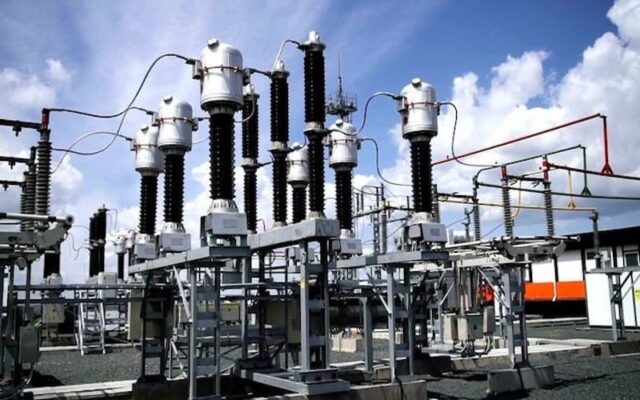
The national electricity grid experienced a voltage disturbance originating from the Gombe Transmission Substation on Tuesday morning, the Nigerian Independent System Operator has confirmed, clarifying that the event affected only part of the grid and did not result in a total collapse, contrary to some media reports.

In a statement titled “Update on Partial System Disturbance on the National Grid”, NISO said the incident occurred at approximately 10:48 a.m., rapidly propagating across the network and impacting the Jebba, Kainji and Ayede Transmission Substations.

It noted that the disturbance caused the tripping of some transmission lines and generating units, resulting in what the operator described as a partial system collapse.

Recall that PUNCH Online reported that the power grid crashed again on Tuesday, the second time in four days.

The power generation dropped to just 39 megawatts at 11 a.m., down from 3,825 MW as of 10 a.m.

Our team monitoring the situation reported that power generation had peaked at 4,762 MW as of 6 a.m. on Tuesday.

Also, EkoDisCo, in a statement on Tuesday, informed its customers of a system collapse that resulted in power loss.

This is the second grid collapse in January 2026 and the third in less than one month. The national grid previously collapsed on December 29, 2025, and more recently on Friday, January 23, 2026.

As the grid collapsed on Tuesday, load allocation to the distribution companies was 0.00 MW, indicating that no Disco was supplying electricity at the time of the incident.

Confirming the incident, the System Operator, which manages the transmission network and ensures stability across the country, attributed the prompt restoration to coordinated control room interventions and automated protection mechanisms embedded across the grid.

See also  Cash rush: ATM withdrawals jump 198% to N36tn

NISO said, “The Nigerian Independent System Operator wishes to state that at approximately 10:48 hours on January 27, 2026, the national grid experienced a voltage disturbance which originated from the Gombe Transmission Substation.

“The voltage disturbance rapidly propagated across the network, affecting Jebba, Kainji, and subsequently Ayede Transmission Substations. The event was accompanied by the tripping of some transmission lines and generating units, resulting in a partial system collapse.

“Appropriate corrective actions were immediately implemented to stabilise the system and restore normal operations. Restoration, which began at about 11:11 am, has since been completed. The incident only affected part of the grid; therefore, not a total collapse as reported by some media organisations. Additional information can be obtained from our website: www.niso.org.ng.

“The national grid has been fully restored, and electricity supply across the affected areas has since returned to normal.”

punch.ng

FOLLOW US ON:

FACEBOOK

TWITTER

PINTEREST

TIKTOK

YOUTUBE

LINKEDIN

TUMBLR

INSTAGRAM

Continue Reading
Click to comment

Leave a Reply

Your email address will not be published. Required fields are marked *

Business

Amazon to cut 16,000 jobs worldwide

Published

on

Amazon said Wednesday that it would be cutting 16,000 jobs worldwide as part of a restructuring announced in October, when the e-commerce giant had already flagged plans to cut its workforce by 14,000 posts.

The jobs cuts are aimed at “reducing layers, increasing ownership, and removing bureaucracy,” senior vice president Beth Galetti said in a statement.

Media reports from October had said the roughly 30,000 job cuts planned in total would impact nearly 10 percent of the 350,000 office jobs at Amazon, without affecting the distribution and warehouse workers that make up the bulk of its 1.5 million employees.

At the time the company refused to comment on the reports, which said they came amid increased investments in artificial intelligence.

Amazon did not give any breakdown of the latest job cuts on Wednesday, saying only that “every team will continue to evaluate the ownership, speed, and capacity to invent for customers, and make adjustments as appropriate.”

The company will release its full-year 2025 results on February 6, when it will hold a conference call that will be broadcast live.

punch.ng

FOLLOW US ON:

FACEBOOK

TWITTER

PINTEREST

TIKTOK

YOUTUBE

LINKEDIN

TUMBLR

INSTAGRAM

See also  NNPC, NUPRC, NMDPRA shut as PENGASSAN begins strike
Continue Reading

Business

Multi-Trex gets NGX nod to fix shareholding shortfall

Published

on

Multi-Trex Integrated Foods Plc has secured approval from the Nigerian Exchange to take steps aimed at increasing its public shareholding, following a recapitalisation that left its free float below the Main Board requirement.

According to a statement signed by the Company Secretary, Sogunle Adekunle, on Wednesday, NGX Regulation Company granted the company a 24-month moratorium, ending 14 January 2028, to restore its free float to at least 20 per cent of issued share capital or a market capitalisation of 20bn, whichever is lower.

This extension provides the company with additional time to comply with regulatory requirements while implementing strategic plans to increase shareholder participation.

The recapitalisation, which followed a seven-year cessation of operations, involved Messrs N-Foods Universal Concept Limited injecting capital to settle obligations to the Asset Management Corporation of Nigeria.

As a result, N-Foods Universal Concept Limited now controls 70 per cent of Multi-Trex’s issued share capital, leaving the company’s public free float at 7.23 per cent, valued at N117.46m, according to the 2024 audited financial statements.

In a statement to shareholders, the company emphasised its commitment to maintaining its listing on the NGX and assured investors that it is actively exploring strategies to increase the public free float.

The board warned that failure to meet the NGX threshold within the extension period could result in trading suspension or potential delisting of the company’s securities.

The statement read, “While this recapitalisation successfully stabilised the Company, it resulted in a contraction of the Company’s public free float. According to our 2024 Audited Financial Statements, our Company’s free float stood at 7.23% (with a value of N117,457,100.64). This is below the NGX Main Board requirement, which mandates a free float of either 20% of issued share capital or a market capitalisation of N20 billion.

See also  Trump urges Turkey to stop buying Russian oil as Erdogan chases deal on F-35s

“​In view of the above, the Company applied to the NGX for an extension of time to comply with the free float threshold. We are pleased to announce that the NGX Regulation Company (NGX RegCo) has conditionally granted the Company a 24-month moratorium, ending on January 14, 2028, to take the necessary steps to restore the free float to the required level.”

The management expressed appreciation to shareholders for their continued patience and support during the company’s recovery phase, highlighting the strategic measures undertaken to strengthen operations and compliance with market regulations.

Multi-Trex Integrated Foods’ NGX approval marks a milestone in its ongoing business recovery, giving the company a clear regulatory pathway to enhance public participation in its shareholding while ensuring compliance with market standards.

Continue Reading

Business

FG begins N4tn debt settlement, captures five GenCos

Published

on

The Federal Government has taken steps towards resolving Nigeria’s estimated N4tn power sector debt burden as five power generation companies signed settlement agreements under the Presidential Power Sector Debt Reduction Programme, following the issuance of a N501bn bond.

The bond, which reportedly recorded 100 per cent subscription, was issued in Lagos on Tuesday, attracting interest from pension funds, banks, asset managers, and other institutional investors, signalling renewed confidence in the government’s electricity market reforms and its approach to resolving legacy sector challenges.

The programme, driven by President Bola Tinubu, is designed to address payment arrears owed to power generation companies for electricity supplied over the past decade. The PUNCH reports that the legacy debts had constrained liquidity, weakened balance sheets, and discouraged investment across the Nigerian Electricity Supply Industry.

Speaking at the signing ceremony, the Managing Director of the Nigeria Bulk Electricity Trading Plc, Johnson Akinnawo, described the programme as a historic and defining moment for Nigeria’s power sector.

Nigerian Bulk Electricity Trading Company

“This historic programme received the resolute approval of President Bola Tinubu and the Federal Executive Council. Mr President’s decisive endorsement is not just a procedural step; it is the bedrock of this ambition. It signals the highest level of commitment to the total revitalisation of our nation’s power sector,” Akinnawo said.

He added that the development would strengthen market discipline while enabling growth across generations and other segments of the electricity value chain.

Akinnawo stressed the broader significance of reliable electricity for national development, saying, “Reliable electricity is not just an enabler of economic activity. It is the backbone of national development, social advancement, and global competitiveness.”

See also  Nigeria exits global money-laundering watchlist

The Special Adviser to the President on Energy, Olu Verheijen, said the bond issuance marked a decisive reset of the electricity market, combining debt resolution with broader financial and structural reforms aimed at restoring confidence and long-term financial sustainability to the sector.

She explained that the inaugural Series 1 Power Sector Bond issuance, executed by NBET Finance Company Plc, closed at N501bn, comprising N300bn raised from the capital market and N201bn allotted in bonds to participating power generation companies.

Verheijen said under the programme, verified receivables for electricity supplied between February 2015 and March 2025 were being settled through negotiated agreements with power generation companies.

She disclosed that five generation companies operating 14 power plants nationwide—First Independent Power Limited, Geregu Power Plc, Ibom Power Company Limited, Mabon Limited, and the Niger Delta Power Holding Company Limited—have executed settlement agreements with the Nigerian Bulk Electricity Trading Plc.

According to her, the total negotiated settlement value for the five companies stands at N827.16bn and will be paid in four phased instalments.

Proceeds from the Series 1 bond issuance will fund the first and second instalment payments, estimated at N421.42bn, representing about 50 per cent of the total settlement amount, with payments for the initial phase to be made through a combination of cash and notes.

Industry operators said clearing the historic arrears is expected to improve liquidity for power generation companies, strengthen their ability to meet operating and debt obligations, and unlock new investments across the electricity value chain.

The Group Managing Director of Sahara Power Group, Kola Adesina, said the resolution of legacy debts would restore confidence and enable power producers to reinvest.

See also  NNPC, NUPRC, NMDPRA shut as PENGASSAN begins strike

“Capital formation can only come when there is confidence, when you can truly see a line of sight in recovering investments previously made. Because we were owed so much, it was a bit of a problem for us to put in more money. But last year we took the bull by the horns, based on President Bola Tinubu’s commitment to resolving the legacy issues, and I can say that once this process is over, construction will commence immediately on the second phase of our Egbin Power Plant. On behalf of the generation companies, I’d like to thank the President for this resolution,” Adesina said.

Verheijen added that, when fully implemented, the programme is expected to impact 4,483.60 megawatt-hours per hour of electricity generation capacity and finalise settlement of payments for about 290,644.84 gigawatt-hours of electricity billed since February 2015.

She said the initiative would provide a strong foundation for new investments in capacity enhancement and expansion by power generation companies serving over 12.03 million active registered electricity customers nationwide, while reinforcing fiscal discipline through validated claims, negotiated settlements, and transparent capital market financing.

The Special Adviser said the Federal Government acknowledged the support of the Minister of Finance and Coordinating Minister of the Economy, Wale Edun, and the Minister of Power, Adebayo Adelabu, as well as members of the Presidential Power Sector Debt Reduction Committee.

She also acknowledged the roles played by key government institutions, including the Debt Management Office, the Central Bank of Nigeria, the National Pensions Commission, and the Nigerian Revenue Service, in facilitating the bond issuance.

See also  NNPC links cooking-gas price hike to PENGASSAN strike

CardinalStone Partners Limited acted as lead financial adviser and lead issuing house on the transaction, leading a consortium of professional parties, while the Nigerian Bulk Electricity Trading Plc served as transaction sponsor, with the Office of the Special Adviser on Energy leading settlement negotiations and engagements with the generation companies.

The Minister of Finance, Wale Edun, represented by the Director-General of the Debt Management Office, Patience Oniha, described the signing as more than a financing transaction, calling it a “critical turning point” for Nigeria’s power sector.

“I am pleased to be here today to witness and formally commemorate the signing of the N501.02bn Series 1 Bonds under the N4tn Power Sector Multi-Instrument Issuance Programme. This ceremony represents far more than a financing transaction. It marks a critical turning point in our collective efforts to address long-standing structural challenges in Nigeria’s power sector and to lay a stronger foundation for its long-term sustainability,” he said.

Edun added that the bond issuance signals the Federal Government’s commitment to honouring its obligations, deploying innovative financial solutions to resolve systemic challenges, and restoring liquidity, confidence, and discipline across the electricity market.

He emphasised that settling legacy debts in a structured manner would enable GenCos to stabilise operations, improve maintenance, and attract new investment—critical to improving power supply nationwide.

punch.ng

FOLLOW US ON:

FACEBOOK

TWITTER

PINTEREST

TIKTOK

YOUTUBE

LINKEDIN

TUMBLR

INSTAGRAM

Continue Reading

Trending