Connect with us

Business

Cash rush: ATM withdrawals jump 198% to N36tn

Published

on

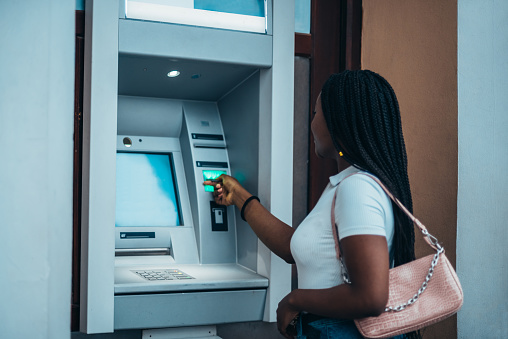
Nigerians continued to lean heavily on cash withdrawals despite higher automated teller machine charges introduced by the Central Bank of Nigeria, as the value of ATM transactions jumped to N36.34tn in the first half of 2025, reinforcing the resilience of cash usage in the economy.

Data from the CBN quarterly statistical bulletin show that ATM withdrawals between January and June 2025 amounted to N36.34tn, nearly tripling the N12.21tn recorded in the corresponding period of 2024.

This represents an increase of N24.13tn, equivalent to a 197.66 per cent year on year rise, even as regulators moved to discourage excessive cash usage through revised fees and tightening monetary policy.

According to the data on the transaction volumes, Nigerians carried out 858.80 million ATM withdrawals in the first six months of 2025, compared with 496.47 million transactions in the same period of 2024. The increase of 362.34 million transactions represents a growth rate of 72.98 per cent, indicating that higher charges did little to dampen demand for cash.

The sharp rise comes against the backdrop of the CBN’s revised ATM fee regime, which took effect in March 2025. Under the new framework, customers using another bank’s ATM now pay N100 per N20,000 withdrawn, with additional surcharges of up to N500 per N20,000 on offsite ATMs such as those located in malls, fuel stations, and airports.

The removal of the previous allowance of three free monthly withdrawals on other banks’ ATMs further increased the cost of accessing cash. The apex bank attributed the review to rising costs and the need to enhance efficiency in ATM operations.

The circular read, “In response to rising costs and the need to improve efficiency of Automated Teller Machine (ATM) services in the banking industry, the Central Bank of Nigeria has reviewed the ATM transaction fees prescribed in Section 10.7 of the extant CBN Guide to Charges by Banks, Other Financial and Non-Bank Financial Institutions, 2020 (the Guide).

“This review is expected to accelerate the deployment of ATMs and ensure that appropriate charges are applied by financial institutions to consumers of the service. Accordingly, banks and other financial institutions are advised to apply the following fees with effect from March 1, 2025.”

Despite these changes, quarterly data show that ATM usage accelerated markedly in 2025. In the first quarter, ATM withdrawals totalled N15.97tn, compared with N5.46tn in the first quarter of 2024. This reflects an increase of N10.52tn, or about 192.9 per cent.

Transaction volumes in the quarter rose from 210.66 million to 411.42 million, an increase of 200.76 million transactions, equivalent to roughly 95.3 per cent growth.

See also  Oil, gas operators urged to adopt ADR

The momentum strengthened further in the second quarter. Between April and June 2025, Nigerians withdrew N20.36tn from ATMs, more than three times the N6.75tn recorded in the second quarter of 2024. The increase of N13.61tn represents a growth of about 201.7 per cent.

Volumes also rose from 285.81 million transactions in the second quarter of 2024 to 447.39 million in the same period of 2025, an increase of 161.57 million transactions or about 56.5 per cent. A closer look at the monthly figures highlights how consistently ATM usage expanded throughout the six-month period.

In January 2025, ATM withdrawals stood at N4.81tn, compared with N2.15tn in January 2024. Transaction volumes more than doubled, rising from 69.62 million to 147.24 million, a year-on-year increase of about 111.5 per cent.

February saw withdrawals rise to N5.40tn, up from N1.72tn a year earlier, representing growth of about 215 per cent. Transaction volumes climbed from 73.16 million to 134.59 million, an increase of roughly 84 per cent.

In March, ATM withdrawals reached N5.76tn, compared with N1.60tn in March 2024, translating to a growth of about 261 per cent, while volumes increased by about 91 per cent to 129.59 million transactions.

The second quarter sustained the upward trend. In April 2025, withdrawals rose to N6.38tn from N1.81tn in April 2024, an increase of about 252 per cent, with transaction volumes growing by roughly 77 per cent.

May recorded the highest monthly withdrawal value in the period at N7.44tn, up from N2.49tn a year earlier, representing a growth of about 199 per cent. Volumes also increased from 92.97 million to 160.10 million transactions, a rise of about 72 per cent.

In June, ATM withdrawals eased slightly to N6.55tn but still far exceeded the N2.45tn recorded in June 2024. The year-on-year increase of about 167 per cent was accompanied by a rise in transaction volumes from 113.17 million to 146.27 million, representing growth of about 29 per cent.

The persistence of high ATM usage contrasts with the steady expansion of point-of-sale transactions, which continue to dominate in absolute terms. POS transaction values rose from N85.91tn in the first half of 2024 to N147.20tn in the first half of 2025, while volumes increased from 6.40 billion to 7.72 billion transactions.

However, the pace of growth in ATM withdrawals outstripped that of POS channels, highlighting the enduring role of cash in daily economic activity.

In a FAQ document published by the apex bank on its website, which provides further information on the CBN’s directive on ATM withdrawal fees, the apex bank clarified that financial institutions are not permitted to charge more than the prescribed fees, although banks may reduce charges depending on their business strategy.

See also  Oborevwori heads to Germany for better partnership with Julius Berger

Any bank found in violation of the directive, including compelling customers to withdraw less than N20,000 per transaction despite sufficient funds in their account, will be sanctioned accordingly.

To minimise transaction fees, the CBN has advised customers to prioritise withdrawals from their bank’s own ATMs. It also encouraged Nigerians to explore alternative payment methods such as mobile banking applications, POS transactions, and electronic transfers to reduce reliance on cash withdrawals.

A FinTech Executive and Techpreneur, Tope Dare, earlier warned that the CBN’s revised ATM withdrawal fees, set to take effect on March 1, 2025, will hurt low-income Nigerians while benefiting wealthier individuals.

“This policy ultimately favours those who can afford to withdraw larger sums, while the average Nigerian, who withdraws in smaller amounts, bears the brunt. For many low-income earners and small business owners, withdrawing N5,000 or N10,000 at a time is a daily necessity. Now, they face unfair charges that wealthier Nigerians can easily avoid,” he said.

Also, consumer rights group Socio-Economic Rights and Accountability Project took legal action against the CBN, calling the policy “unfair, unreasonable, and unjust.” SERAP argued that the revised fees violate sections of the Federal Competition and Consumer Protection Act, which aims to prevent exploitation and ensure fair market practices.

In a statement signed by the TUC President, Festus Osifo, and Secretary-General, Nuhu Toro, the union urged all well-meaning Nigerians to reject what it described as an exploitative policy and demand its immediate reversal.

“Our attention has been drawn to a circular from the CBN announcing an increase in ATM transaction fees, effective March 1, 2025. We say unequivocally: enough is enough. The Nigerian workers and the general public have endured relentless economic hardship under this administration.

“Every day brings a new burden—higher taxes, rising electricity tariffs, exorbitant call and data charges, and now, increased ATM fees. This government has failed to cushion the effects of its harsh economic policies, and the patience of Nigerians is wearing thin.”

However, the Chairman of the Bank Customers Association of Nigeria, Dr. Uju Ogubunka, said the increase was not such a bad idea, given the state of the economy, but expressed concerns about the rate of increase.

He said, “It should have been expected. Other places have increased their fees. The only thing one can talk about is the extent of the increase. Electricity, telephones, and even the open market have recorded increases in prices. The issue should not be the increase but the extent of it. Is it reasonable? Is it affordable at this point in time?

See also  Nigeria, UAE Ports Group Sign Landmark MoU On Maritime Development

“It is not only banking services that are increasing fees. If you ask me, I will say let’s move on. Someday, these things will adjust themselves.”

Also in October 2025, the CBN directed Deposit Money Banks and other financial institutions to refund customers for failed ATM transactions within 48 hours, in a sweeping reform aimed at protecting consumers and restoring confidence in the banking system.

According to the apex bank, these measures respond to widespread frustration over delayed refunds and poor customer service and form part of a broader effort to enhance consumer protection, improve reliability, and modernise Nigeria’s payment infrastructure in line with global standards.

The guidelines also overhauled ATM operations nationwide. Banks and card issuers are now required to deploy at least one ATM for every 5,000 active cards, with phased targets of 30 per cent compliance in 2026, 60 per cent in 2027, and full compliance by 2028. Any future deployment, relocation, or decommissioning of ATMs must receive prior approval from the CBN.

As ATMs become more efficient, The PUNCH observed an increase in cash outside banks. The PUNCH earlier reported that Nigerians withdrew a net N264.48bn from the banking system in November 2025, pushing the total cash held outside banks to N4.91tn, according to the CBN’s latest money and credit statistics data.

This represented a sharp month-on-month rise from N4.65tn recorded in October 2025, highlighting the continued preference for physical cash in daily transactions despite efforts to deepen electronic payment channels.

The data showed that currency in circulation as a whole also increased in November 2025, rising to N5.26tn from N5.06tn in October. This means the share of total currency circulating outside the banking sector climbed to about 93.34 per cent in November from 91.87 per cent in October.

The growing preference for physical cash raises several macroeconomic concerns. High out-of-bank cash weakens monetary control, reduces deposit mobilisation, creates liquidity constraints for banks, and encourages informal transactions that escape regulatory visibility.

It also complicates inflation targeting, as large cash holdings outside the banking system blunt the effectiveness of policy. The sharp rise in currency outside banks comes at a time when the CBN is focused on tightening liquidity to curb inflation.

Continue Reading
Click to comment

Leave a Reply

Your email address will not be published. Required fields are marked *

Business

FG rallies private sector to bridge broadband gap

Published

on

The Federal Government on Wednesday called on private-sector players to partner with it to close Nigeria’s last-mile broadband gap, saying that massive public investment in digital infrastructure must now be matched by device affordability, service innovation, and targeted connectivity for critical institutions.

The Minister of Communications, Innovation and Digital Economy, Dr Bosun Tijani, made the call while speaking with journalists on the sidelines of the Flagship Nigeria: Electrification + Connectivity Convening held in Abuja.

Tijani said Nigeria was currently leading Africa in deep digital infrastructure investments, stressing that improved access to quality internet would become visible over the next year as projects begin to come on stream.

“As a government, we’re very aware of our responsibility and the need to deepen access,” he said. “There is no country in Africa today that is investing in deepening its digital infrastructure as deeply as Nigeria is doing.”

According to him, Nigeria is the only African country investing in a 90,000-kilometre fibre-optic network project led by the World Bank, while also committing resources to two new communications satellites.

He added, “We’re the only country in Africa that is currently doing that, but also investing in two communication satellites. The only country that is also investing in an additional 3,700 towers for rural areas, which means we can now bring online about 20 million Nigerians that are currently unconnected at all.”

The minister recalled that when the present administration assumed office, the telecommunications sector was under strain.

He said the decision to allow a modest tariff increase had restored profitability and unlocked fresh capital inflows.

“When the telecommunication sector was struggling when we came in, we allowed for tariffs to go up a bit, which means they are now profitable. And on their own, we’ve seen that they’ve invested over $1bn into our economy as well,” he stated.

Tijani noted that infrastructure quality directly determines service quality, arguing that years of underinvestment had constrained broadband expansion.

“In the next couple of years or months, you will start to see improved access because the quality of access is dependent on the quality and investment in infrastructure, which, as a country, we’ve not done in many years in digital infrastructure. You’re about to see that change. In about a year, you start to see great changes because these infrastructures will start to come alive,” he said.

See also  Infractions - FG threatens to disconnect Gencos from power grid

Beyond infrastructure, the minister emphasised that connectivity without skills would limit impact.

He said the ministry had separated digital skills for technology professionals from basic digital literacy for everyday users.

He referenced the ongoing Three Million Technical Talent programme, which aims to train three million young Nigerians in advanced digital skills.

“This is a project that we started in 2023 that has trained over 150,000 people already. But we’re not stopping there,” he added.

For ordinary Nigerians, including traders and market women, Tijani said the government was preparing to launch a nationwide digital literacy programme delivered via mobile phones and local languages.

He disclosed that the initiative would leverage a government-backed large language model designed to understand and communicate in Nigerian languages.

On questions linking digital infrastructure to electronic transmission of election results, the minister declined to comment directly on electoral matters, insisting that his mandate was infrastructure development.

“Our role as a ministry, I will not speak to the elections, but my role is to deepen digital infrastructure. And we’ve been very clear about the fact that this is what the President has asked us to do,” he said.

He stressed that all ongoing projects had presidential backing and were aligned with the administration’s ambition to grow the economy to $1tn.

Every one of our digital infrastructure projects is a project that the President has approved. The President has a thorough understanding of the role of the digital economy in driving this agenda of the $1tn economy. And without our investment, the President knows that we can’t get there,” Tijani stated.

Speaking on the purpose of the convening, Tijani said that even with expanded fibre and satellite capacity, affordability and institutional connectivity remained major hurdles.

“If the internet is now ubiquitous and affordable, can every Nigerian also afford the right mobile phones, tablets, or laptops that they need to enjoy the internet? It’s not something you enjoy without those things,” he said.

He said bridging the last mile would require collaboration with private-sector players to connect schools, hospitals, security agencies, and other public institutions.

See also  Global markets surge on US rate hopes

“How do we ensure that when we invest in the infrastructure, it gets into schools, not only universities, but also secondary schools across the country? That’s the last mile work that we need the private sector to do,” he noted.

He added that internet service providers must also design tailored packages for critical sectors.

“How do we ensure that we can support ISPs to make sure they have the right bundles and packages for hospitals, for police stations? These are things that we have to work with the private sector to achieve,” he said.

On the planned satellites, Tijani said Nigeria had been a regional pioneer since it first procured a communications satellite under former President Olusegun Obasanjo, noting that no other West African country currently operates one.

However, he acknowledged that the existing satellite had aged and required replacement.

“Our satellite is now old, and we need to procure new ones. President Bola Tinubu has approved that we should procure new ones. Satellite is one of the ways in which you can connect difficult-to-reach locations and rural areas. Also, the security agencies use our communications satellite deeply as well. So if we don’t have modern ones that can support all these efforts, it weakens our digital economy,” Tijani explained.

Providing timelines, the minister said the deployment of the fibre project was targeted for the second or third quarter of the year, while the new satellite was expected to become operational next year.

“We’re always very clear through our strategic blueprints that a fibre project, for instance, will get to the point where we’re deploying either by Q2 to Q3 this year, which is what we’re still working towards. That project is moving forward. We’ve been able to secure the bulk part of the funding,” he said.

“The satellite in itself, we expect, should come alive. We’ve now been able to select the companies that will provide it. We expect that it should be coming alive sometime next year.”

Also speaking, the Chief Executive Officer of the Partnership for Digital Access in Africa, Ibrahima Guimba-Saidou, said the convening aligns with Africa’s broader ambition to connect one billion people to the internet by 2030.

See also  Nigerian farmers say rise in fertiliser price threatens lower food cost

He commended Nigeria for what he described as a clear policy direction and significant investments in connectivity infrastructure, digital devices and skills development.

However, he warned that electricity remains a fundamental gap in the continent’s push for meaningful digital inclusion.

Guimba-Saidou explained that the organisation’s Mission 300 initiative is designed to expand electricity access in underserved and remote communities, enabling schools, health centres, markets and households to take full advantage of digital services.

“This is about making connectivity relevant to the people who need it the most, not just those in major cities,” he said, urging deeper collaboration between government and private sector players to narrow the digital divide in a faster and more sustainable manner.

In his remarks, the World Bank Country Director for Nigeria, Mathew Verghis, noted that while Nigeria faces some of the most significant electricity access and backbone infrastructure shortfalls globally, it also possesses vast growth prospects anchored on its large and youthful population.

He stressed that digital inclusion rests on three interdependent pillars: reliable electricity, broadband infrastructure and affordable devices.

According to him, progress in one area without the others would limit impact.

He called for better coordination in the planning, construction and financing of power and fibre networks, arguing that integrated investment would lower costs and accelerate universal access.

Verghis added that the World Bank remains prepared to work with federal and state governments, alongside private sector stakeholders, to translate the vision of combined power and broadband expansion into tangible benefits for millions of Nigerians.

The PUNCH earlier in December 2025 reported that the federal government plans to bankroll the construction of 3,700 telecom towers in rural areas, a move aimed at connecting millions of citizens who currently lack reliable mobile and internet services.

Telecom operators often avoid sparsely populated rural areas due to low profit potential, focusing instead on urban centres where investment can be recouped.

The government’s intervention will extend mobile and internet services to over 23 million Nigerians who presently lack access.

punch.ng

FOLLOW US ON:

FACEBOOK

TWITTER

PINTEREST

TIKTOK

YOUTUBE

LINKEDIN

TUMBLR

INSTAGRAM

Continue Reading

Business

No directive to suspend sachet alcohol ban, says NAFDAC

Published

on

The National Agency for Food and Drug Administration and Control has refuted a media report alleging that the Federal Government directed it to suspend enforcement actions on the regulation of sachet alcohol and 200ml PET bottle alcoholic products.

In a statement on Wednesday, the agency described the publication as false and misleading, stressing that it had not received any official communication from the Federal Government ordering a halt to its regulatory activities.

A news report on Wednesday, in a statement issued in Abuja by the Special Adviser on Public Affairs to the Secretary to the Government of the Federation, Terrence Kuanum, claimed that the Federal Government had directed NAFDAC to suspend all enforcement actions relating to the proposed ban on sachet alcohol and 200ml PET bottle alcoholic products.

However, Director-General, Prof. Mojisola Adeyeye, said the agency operated strictly within its statutory mandate and in line with duly communicated Federal Government policies.

“The said publication is false, misleading, and does not reflect any official communication received by the Agency from the Federal Government.

“At no time has the Agency received any formal directive ordering the suspension of its regulatory or enforcement activities in respect of sachet alcohol products,” Adeyeye said.

She reiterated that NAFDAC remains committed to safeguarding public health, ensuring regulatory compliance, and carrying out its responsibilities transparently and in accordance with established laws and due process.

“Any decision affecting national regulatory actions will be communicated through official government channels,” she added.

Adeyeye urged members of the public, industry stakeholders, and the media to disregard the report and rely only on verified information issued through the agency’s official platforms and authorised government communication channels.

See also  Oil, gas operators urged to adopt ADR

The agency also cautioned against the dissemination of unverified information capable of causing unnecessary public anxiety, economic uncertainty, or misinterpretation of government policy.

NAFDAC stated that it remains steadfast in its commitment to public health, economic stability, and the national interest.

The regulation of sachet alcohol and small-volume alcoholic beverages has been a subject of national debate in recent years, particularly over concerns about underage access, substance abuse, and public health risks

Continue Reading

Business

States pay N455bn to service foreign loans

Published

on

States paid N455.38bn in foreign debt service in 2025, up from N362.08bn in 2024, according to Federation Accounts Allocation Committee figures released by the National Bureau of Statistics and obtained and analysed by The PUNCH.

The year-on-year comparison indicates that subnational governments’ foreign debt deductions rose by N93.30bn, representing a 25.77 per cent increase in 2025 over the prior year.

In plain terms, states collectively lost a larger share of their FAAC inflows to external loan repayments and related obligations in 2025 than in 2024, tightening the fiscal space available for salaries, capital projects, and routine governance.

The monthly pattern in 2025 also shows step-downs rather than a smooth curve. Total foreign debt service across the 36 states stood at N40.09bn in January, before easing to N39.10bn in February, a month-on-month drop of N994.96m, or 2.48 per cent.

From March through July, the national total held steady at N39.10bn each month, suggesting a stretch of largely fixed, predictable deductions. The next big shift came in August, when total deductions fell again to N36.14bn, down N2.95bn or 7.56 per cent from July.

The lower level then persisted through September, October, November, and December, each at N36.14bn. That step pattern contrasts with 2024, when the totals swung more sharply early in the year before settling into long flat runs.

States’ foreign debt service was N9.88bn in January 2024, then jumped to N24.53bn in February and peaked at N40.41bn in March. The total then dropped to N21.70bn in April and stayed flat at that level through May, June, and July.

A second step-up arrived in August 2024, when deductions rose to N40.09bn, and that figure held through the last five months of the year.

Against that backdrop, 2025 looked like a year of smaller but still significant recalibration, with two key reductions and long stretches of stable deductions.

Foreign debt service in the FAAC context refers to deductions made at source from allocations to meet states’ external loan repayment obligations. It is part of the “first line charge” culture that protects creditors and ensures repayments are prioritised, but it also means states have less discretionary cash to deploy, particularly in months where federation revenue is under pressure.

See also  Crude supply to domestic refineries hit 67.6m barrels – FG

A closer look at the states with the largest foreign debt service burdens in 2025 shows a strong concentration. The top 10 states alone accounted for about 68.57 per cent of total foreign debt service in the year, showing how external debt repayment exposure is heavily skewed toward a handful of large borrowers.

Lagos topped the table, with N92.80bn deducted in 2025, up from N72.32bn in 2024. That was an increase of N20.49bn or 28.33 per cent, meaning roughly one-fifth of the entire national total for 2025 came from Lagos alone, at 20.38 per cent of all state foreign debt service.

Rivers followed, recording N48.58bn in 2025 against N23.13bn in 2024. The year-on-year jump of N25.45bn represented a steep 110.02 per cent increase, making Rivers one of the most notable movers in the data.

Kaduna ranked third at N47.93bn in 2025, compared with N45.59bn in 2024. Its foreign debt service rose by N2.34bn, a more modest 5.13 per cent increase, but the absolute figure remained high enough to keep Kaduna among the biggest contributors nationally.

In fourth place was Ogun, with deductions totalling N25.20bn in 2025, up from N11.99bn in 2024. That translated into a N13.21bn increase or 110.22 per cent, effectively meaning Ogun’s foreign debt service more than doubled year-on-year.

Cross River ranked fifth with N21.01bn in 2025, up from N17.10bn in 2024. The N3.91bn increase represented 22.86 per cent, keeping Cross River among the higher external repayment states.

Oyo ranked sixth, posting N20.17bn in 2025, up from N17.85bn in 2024. Its foreign debt service rose by N2.32bn, a 12.98 per cent increase. Edo came seventh with N18.70bn in 2025, compared with N16.73bn in 2024. The state recorded a N1.97bn rise, translating to 11.78 per cent.

Bauchi ranked eighth at N16.85bn in 2025, up from N13.75bn in 2024. That is an increase of N3.10bn, representing 22.58 per cent. Kano placed ninth, with N10.63bn in 2025 compared with N8.53bn in 2024. The difference of N2.10bn represented 24.67 per cent growth.

Rounding out the top 10 was Ebonyi, where foreign debt service rose to N10.37bn in 2025 from N6.77bn in 2024. The increase of N3.60bn was 53.09 per cent, placing Ebonyi among the fastest growers in the top bracket.

See also  Oil, gas operators urged to adopt ADR

Beyond the top 10, the pattern across the remaining states still points to broad-based pressure. Several states posted multi-billion-naira annual totals even outside the leading group, reflecting how external debt servicing has become a routine and material component of FAAC deductions for many governments.

When the figures are viewed through the geopolitical lens, the concentration remains clear. The South-West recorded the highest foreign debt service in 2025 at N162.77bn, accounting for 35.74 per cent of the national total. This zone’s dominance was driven largely by Lagos, alongside sizeable deductions in Ogun, Oyo, Osun, Ondo, and Ekiti.

The South-South ranked second, with N100.37bn, or 22.04 per cent of total foreign debt service, in 2025. The zone’s total was supported by significant deductions in Rivers, Edo, Cross River, Delta, Akwa Ibom, and Bayelsa, showing that the external debt repayment burden is not limited to one or two standout states.

The North-West came third at N81.97bn, representing 18.00 per cent of the national total. Kaduna’s high deductions played a major role, complemented by Kano, Katsina, Kebbi, Jigawa, Sokoto, and Zamfara.

Outside the top three, the North East recorded N42.42bn, or 9.32 per cent, reflecting sizable deductions in states such as Bauchi, Adamawa, Borno, Gombe, Taraba, and Yobe. The South-East posted N40.20bn, about 8.83 per cent, excluding Edo, but the region’s total was anchored by states such as Imo, Enugu, Abia, Anambra, and Ebonyi.

The North Central recorded the lowest among the six zones at N27.65bn or 6.07 per cent, covering Benue, Kogi, Kwara, Nasarawa, Niger, and Plateau.

In a recent statement, the acting Director of Communication and Stakeholders Management at the Nigeria Extractive Industries Transparency Initiative, Mrs Obiageli Onuorah, noted that states face financial strain due to debt repayments, despite record-high disbursements from the Federation Accounts Allocation Committee.

According to the statement, a NEITI report showed that several states with high debt burdens also ranked lower in FAAC allocations, raising concerns about their fiscal sustainability and their ability to fund critical projects.

“The report noted that many states with high debt ratios were in the lower half of the FAAC allocation rankings but ranked higher for debt deductions, raising concerns about their debt-to-revenue ratios and overall fiscal health,” the statement read.

See also  Federal Govt Secures €21m German Funding For Clean Energy Transition

Also, economists have warned that without a significant increase in revenue generation, the rising debt service burden could crowd out spending on essential services and infrastructure.

The Director and Chief Economist at Proshare Nigeria LLC, Teslim Shitta-Bey, earlier warned that the rising debt burden on Nigeria’s subnational governments could challenge their fiscal stability in the coming years.

He stressed that most state governments, along with the Federal Government, had failed to manage their balance sheets effectively. Speaking to The PUNCH, Shitta-Bey said, “The challenge here is that most of the governments, including the Federal Government, are unable to manage their balance sheets properly. While borrowing might seem like an easy way to run operations, it is not necessarily the right approach.”

According to Shitta-Bey, borrowing should not be the default solution for governments. “Governments could consider longer-term debt structures that resemble equity, which might actually be more beneficial in the long run,” he explained.

He also called for a comprehensive register of national assets to help states raise capital. He used the example of the National Stadium, which had not been used for major activities for a while.

Shitta-Bey lamented the underuse of state revenue bonds, which were originally designed to generate revenue. “States need to focus on raising revenue bonds instead of general obligation bonds,” he said.

A macroeconomic analyst, Dayo Adenubi, also emphasised the need for states to take more targeted steps toward boosting internally generated revenue as they grapple with rising debt obligations and constrained federal transfers.

According to Adenubi, one key strategy is to raise consumption levels in order to increase Value Added Tax collections. He also stressed the importance of improving tax collection within state corridors, especially by enforcing taxes such as property taxes and transport-related levies, while ensuring that governments deliver on the social contract to maintain citizen trust and compliance.

punch.ng

FOLLOW US ON:

FACEBOOK

TWITTER

PINTEREST

TIKTOK

YOUTUBE

LINKEDIN

TUMBLR

INSTAGRAM

Continue Reading

Trending