Connect with us

Business

SERAP Sues NNPC Over Alleged Missing $49.7 Million, ₦22.3 Billion Oil Revenue

Published

on

The Socio‑Economic Rights and Accountability Project (SERAP) has filed a lawsuit against the Nigerian National Petroleum Company (NNPC) Limited, accusing the oil firm of failing to account for billions of naira and foreign currency revenue allegedly missing or diverted from the nation’s oil earnings.

The suit stems from findings documented in the 2022 audited report of the Auditor‑General of the Federation, which was published on September 9, 2025.

In the suit number FHC/ABJ/CS/195/2026 filed last Friday at the Federal High Court in Abuja, SERAP is seeking: “an order of mandamus to direct and compel the NNPCL to account for the alleged missing or diverted N22.3 billion, USD$49.7 million, £14.3 million, and €5.2 million oil money.”

SERAP is asking the court to “direct and compel the NNPCL to disclose the specific financial transactions carried out in respect of the alleged missing or diverted N22.3 billion, USD$49.7 million, £14.3 million and €5.2 million oil money, including details of disbursement, the contractors, and other individuals who collected the money.”

In the suit, SERAP is arguing that, “The diverted or misappropriated oil revenues reflect a failure of NNPCL accountability more generally and are directly linked to the institution’s continuing failure to uphold the principles of transparency and accountability.”

SERAP is also arguing that, “granting the reliefs sought would strike a blow against the impunity of those responsible for the missing or diverted oil money, and ensure that the money is returned for the sake of NNPCL’s victims, Nigerians.”

SERAP said, “The allegations have also undermined the economic development of the country, trapped the majority of Nigerians in poverty, and deprived them of opportunities.”

According to SERAP, “The Auditor-General has for many years documented reports of disappearance of oil money from the NNPCL. Nigerians continue to bear the brunt of this missing oil money meant to provide essential public services for Nigerians.”

SERAP is also arguing that, “Combating the corruption epidemic in the oil sector would alleviate poverty, improve access of Nigerians to basic public goods and services, and enhance the ability of the government to meet its human rights and anti-corruption obligations.”

The lawsuit filed on behalf of SERAP by its lawyers, Oluwakemi Agunbiade and Valentina Adegoke, read in part: “The diverted or misappropriated oil revenues have further damaged the already precarious economy and contributed to very high levels of deficit spending and borrowing by the government.”

See also  133-year old photography company Kodak says it might have to cease operations

“Despite the country’s enormous oil wealth, ordinary Nigerians have derived very little benefit from oil money primarily because of the widespread grand corruption, including in the NNPCL, and the entrenched culture of impunity of perpetrators.”

“The grim allegations by the Auditor-General suggest a grave violation of the public trust and the provisions of the Nigerian Constitution, national anticorruption laws, and the country’s international human rights and anticorruption obligations.”

“According to the 2022 audited report by the Auditor General of the Federation, published on 9 September 2025, the Nigerian National Petroleum Corporation Limited (NNPCL) failed to account for over ₦22.3 billion, $49.7 million, £14.3 million and €5.2 million oil money.”

“The NNPCL in 2020 reportedly paid over ₦292 million [₦292,609,972.29] ‘for a contract to construct an Accident and Emergency Facility along Airport Road, Abuja.’ But ‘the contractor has abandoned the contract, and failed to execute the job, despite collecting the fee.’”

“The Auditor-General fears the contract money may have been ‘diverted’. He wants the money ‘recovered from the contractor and remitted to the treasury.’”

“The NNPCL in 2021 also reportedly spent over GBP£14 million [£14,322,426.59] ‘to repair its London office.’ But ‘there was no evidence to show that the money was actually spent, and no documents of any spending’.”

“The NNPCL also ‘irregularly paid’ over USD$22 million [$22,842,938.28] to a contractor for lifting 9 cargoes of crude oil.’ The NNPCL ‘failed to explain why the amount due to it from crude from January to October 2019 was only $4,858,997.22 and why the contractor got over $22 million for crude for the same period.’”

“The NNPCL in 2021 ‘irregularly paid ₦2.3 billion [₦2,379,488,622.99] as car cash option to 100 staff’ but ‘without the approval of the National Salaries, Incomes and Wages Commission’, and ‘without any document to show that the 100 staff applied for the cash options and any rationale for the payments.’”

“The NNPCL in 2021 also reportedly ‘failed to deduct statutory taxes of over ₦247 million [₦247,181,597.92] from payments made to contractors and service providers.’ The NNPCL also ‘failed to deduct statutory taxes of over USD$529,000 [$529,863.24] from payments made to contractors and service providers.’”

See also  NNPC, NUPRC, NMDPRA shut as PENGASSAN begins strike

“The NNPCL ‘paid over ₦3bn [₦3,445,022,107.40] for various services’ but ‘without any documents or trace’. The Auditor-General fears ‘the money may have diverted’.”

“The NNPCL irregularly renewed a contract for over USD$1 million [$1,801,500.00] for charter hire of coastal vessel.’ The money was paid ‘before the consummation of a formal contract ratification.’”

“The NNPCL also ‘irregularly paid a contractor over N355 million [N355,436,310.42] as consultancy fees for negotiating and securing a waiver to avoid demurrage on abandoned cargoes.’”

“The NNPCL paid over ₦474 million [₦474,462,744.53] to a contractor for the connection of Kaduna Refining and Petrochemical Company Limited to the National Grid.’ The Auditor-General is concerned ‘the money may have been lost’.”

“The NNPCL ‘paid over USD$2 million [$2,006,293.20] to a contractor for the rehabilitation and upgrade of system-depot project’, but ‘without any documents’. The NNPCL also ‘paid over ₦478 million [₦478,505,300.00] to a contractor for the rehabilitation and upgrade of system-depot project’, but ‘without any documents’.”

“The NNPCL in 2019 ‘awarded a contract for over USD$8 million [$8, 211,432.00] ‘for the emergency procurement and installation of custody transfer meters on crude oil and product pipelines at eleven locations.’ The Auditor-General fears that ‘the payments may be for work not executed.’”

“The NNPCL ‘irregularly paid over €5 million [€5,165,426.26] to a contractor for the operation and maintenance of Atlas Cove Jetty Facility’ but ‘without any documents.’ The Auditor-General fears that ‘the money may have been diverted’.”

“The NNPCL ‘paid over USD$1 million [$1,035,132.81] as legacy debt for charter hire of coastal vessels to a company without power of attorney.’ The Auditor-General fears that ‘the money may have been diverted’.’”

“The NNPCL ‘inflated a contract for over USD$1 million [$1,926,497.38] to hire a Time Charter for Carriage of Petroleum Products.’ The Auditor-General fears that ‘the money may have been diverted’.”

“The NNPCL ‘paid $156,000.00 to a consultant as outstanding fee for advising on the financing of the rehabilitation of PHRC’, but ‘the payment is doubtful’’. The Auditor-General fears that ‘the money may have been diverted’.”

“The NNPCL ‘failed to deduct USD$8,355.18 as taxes from the payment of outstanding fees to a consultant for advising on the financing of the rehabilitation of PHRC.’”

“The NNPCL ‘irregularly paid over ₦82 million [₦82,647,151.00] to a consultant for geotechnical/geophysical investigations of the proposed Independent Power Plant Project site.’ But ‘there was no document showing any evidence of payment’. The Auditor-General fears that ‘the money may have been diverted.’”

See also  Yuletide: Local flights break N300,000 mark

“The NNPCL ‘paid over ₦246 million [₦246,196,566.00] for a contract for the purchase and supply of 2400 meters of seamless carbon steel pipe to Warri Refinery Petrochemicals Company Limited.’ But ‘the contract was not never executed and the items were not supplied.’”

“The NNPCL ‘failed to deduct over ₦46 million [₦46,244,033.79] as taxes from a consultancy contract in December 2020 and 2021.’ The Auditor-General wants ‘the money recovered and remitted to the treasury.’”

“The NNPCL ‘irregularly paid ₦200 million [₦200,000,000.00] as settlement for tax renegotiation.’ The Auditor-General fears that ‘the money may have been diverted.’”

“The NNPCL ‘failed to remit over ₦12 billion [₦12,721,000,000.00] into the general reserve fund its operating surplus for December 2020.’ The Auditor-General fears that ‘the money may have been diverted.’”

“The NNPCL ‘irregularly paid ₦152 million [₦152,000,000.00] to a company to execute a procurement contract requested from the Office of the Inspector-General of Police’, but ‘without any documents.’”

“The NNPCL ‘irregularly paid ₦25,000,000.00 as additional consultancy fee on a contract for accounting support.’ The Auditor-General fears that ‘the money may have been diverted.’ He wants ‘the money recovered and remitted to the treasury.’”

“The NNPCL ‘paid over USD$12 million [$12,444,313.22] to a contractor to buy and install new diesel generation set at Mosimi Depot.’ But there is no evidence that the project has been fully executed, despite the fact that the contract specified that the project awarded in 2020 should be completed within 15 months.’”

“The NNPCL irregularly paid over N145 million [N145,933,833.00] for a contract for the operation and maintenance of Electro-Mechanical Facilities in the NNPC Towers. The contract was automatically renewed on a yearly basis without creating room for a fresh contract, where other consultants would be given an opportunity to be considered. The Auditor-General wants the money accounted for.”

“The NNPCL ‘paid 13 contractors over ₦1 billion [₦1,212,192,409.97] for various works between 2020 and 2021’, but ‘there is no evidence of any work done by the contractors as there were no supporting documents.’”

No date has been fixed for the hearing of the suit.

FOLLOW US ON:

FACEBOOK

TWITTER

PINTEREST

TIKTOK

YOUTUBE

LINKEDIN

TUMBLR

INSTAGRAM

Continue Reading
Click to comment

Leave a Reply

Your email address will not be published. Required fields are marked *

Business

Bank recapitalisation: Local investors provide 72% of N4.6tn

Published

on

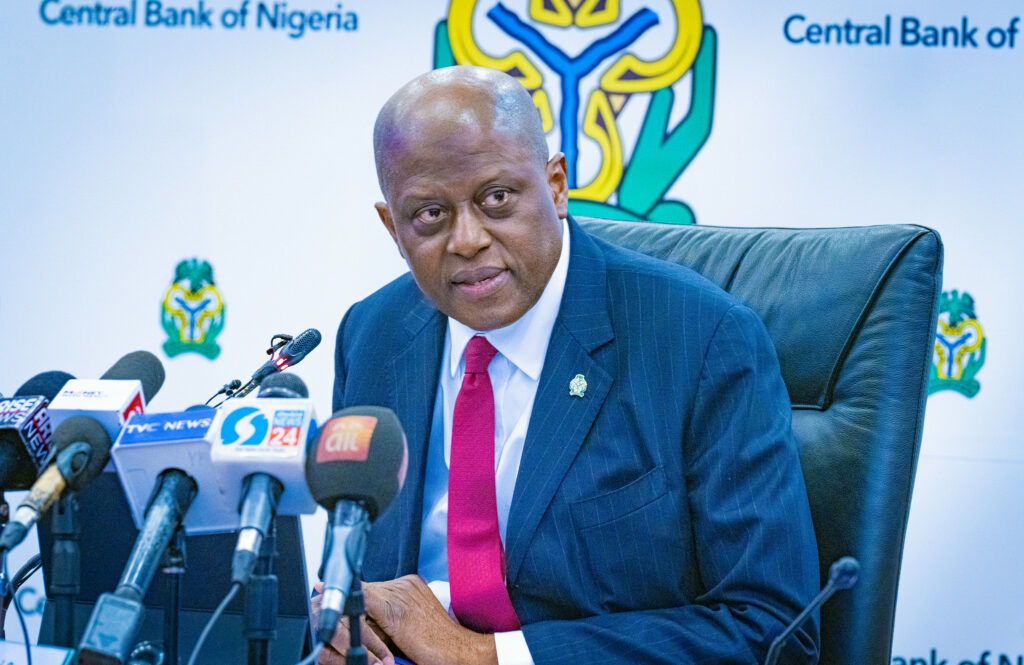
The Central Bank of Nigeria (CBN) on Wednesday said domestic investors accounted for the bulk of funds raised under its banking sector recapitalisation programme, contributing 72.55 per cent of the N4.65tn total capital secured by lenders.

The apex bank disclosed this in a statement marking the conclusion of the exercise, which began in March 2024 and saw 33 banks meet the new minimum capital requirements.

The statement was jointly signed by the Director of Banking Supervision, Olubukola Akinwunmi, and the Acting Director of Corporate Communications, Hakama Sidi-Ali.

According to the CBN, Nigerian investors provided about N3.37tn of the total capital raised, underscoring strong domestic confidence in the banking sector, while foreign investors accounted for the remaining 27.45 per cent.

“Over the 24-month period, Nigerian banks raised a total of N4.65tn in new capital, strengthening the resilience of the financial system and enhancing its capacity to support the economy,” the statement said.

Commenting on the outcome, the CBN Governor, Olayemi Cardoso, said, “The recapitalisation programme has strengthened the capital base of Nigerian banks, reinforcing the resilience of the financial system and ensuring it is well-positioned to support economic growth and withstand domestic and external shocks.”

The bank confirmed that 33 lenders had met the revised capital thresholds, while a few others were still undergoing regulatory and judicial processes.

“The CBN confirms that 33 banks have met the revised minimum capital requirements established under the programme,” it stated.

“A limited number of institutions remain subject to ongoing regulatory and judicial processes, which are being addressed through established supervisory and legal frameworks.

“All banks remain fully operational, ensuring continued access to banking services for customers.”

See also  Yuletide: Local flights break N300,000 mark

The regulator stressed that the recapitalisation exercise was completed without disrupting banking operations nationwide, noting that key prudential indicators, particularly capital adequacy ratios, had improved and remained above global Basel benchmarks.

Minimum capital adequacy ratios were pegged at 10 per cent for regional and national banks and 15 per cent for banks with international licences.

The CBN added that the exercise coincided with a gradual exit from regulatory forbearance, a move it said improved asset quality, strengthened balance sheet transparency, and enhanced overall system stability.

To sustain the gains, the apex bank said it had strengthened its risk-based supervision framework, including periodic stress tests and requirements for adequate capital buffers.

It added that supervisory and prudential guidelines would be reviewed regularly to improve governance, risk management, and resilience across the sector.

“The successful completion of the programme establishes a stronger and more resilient banking system, better positioned to support lending, mobilise savings, and withstand domestic and global shocks,” the statement added.

Meanwhile, data from the National Bureau of Statistics showed that foreign capital inflows into the banking sector rose by 93.25 per cent year-on-year to $13.53bn in 2025 from $7.00bn in 2024, reflecting strong investor interest during the recapitalisation drive.

However, the Centre for the Promotion of Private Enterprise has cautioned that despite the strengthened banking system, credit to small businesses remains weak, warning that the benefits of the reforms are yet to fully impact the real economy.

punch.ng

FOLLOW US ON:

FACEBOOK

TWITTER

PINTEREST

TIKTOK

YOUTUBE

LINKEDIN

Continue Reading

Business

Court freezes N448m assets in Keystone Bank debt recovery suit

Published

on

The Federal High Court in Lagos has ordered the freezing of funds and assets valued at N448,263,172.41 in a debt recovery suit instituted by Keystone Bank Limited against five defendants.

The order was made on March 26, 2026, by Justice Chukwujekwu Aneke following an ex parte application moved by Keystone Bank’s counsel Mofesomo Tayo-Oyetibo (SAN), against Relic Resources, Olufunmilayo Emmanuella Alabi, Uwadiale Donald Agenmonmen, The Magnificent Multi Services Limited, and Raedial Farms Limited.

In his ruling, Justice Aneke granted a Mareva injunction restraining the defendants, whether by themselves, their agents, privies, or assigns, from withdrawing, transferring, dissipating, or otherwise dealing with funds, shares, dividends, and other financial instruments standing to their credit in any bank or financial institution in Nigeria, up to the sum in dispute.

The court further directed all banks and financial institutions within the jurisdiction to forthwith preserve any funds belonging to the defendants upon being served with the order.

The said institutions were also ordered to depose to affidavits within seven days of service, disclosing the balances in all accounts maintained by the defendants, together with the relevant statements of account.

In addition, the court granted a preservative order restraining the defendants from disposing of, alienating, or otherwise encumbering any movable or immovable property, including any future or contingent interests, up to the value of the alleged indebtedness.

The court also granted leave for substituted service of the originating and other court processes on the second and third defendants by courier delivery to their last known addresses.

See also  Nigeria risks returning to FATF grey list without deep reforms – Ngwu

The matter was adjourned to April 9, 2026, for mention.

According to the originating processes before the court, the suit arises from a N500 million overdraft facility granted by the claimant to the first defendant on March 28, 2023, for a tenure of 365 days at an interest rate of 32 per cent per annum.

The claimant averred that the facility, initially secured by a $200,000 cash collateral and subsequently by a mortgaged property located at Itunu City, Epe, Lagos, expired on March 27, 2024, leaving an outstanding indebtedness of N448,263,172.41 as at October 31, 2024.

In the affidavit in support of the application, the claimant alleged that the facility was diverted for personal use by the third defendant and channelled through the fourth and fifth defendant companies.

It further contended that the first defendant is no longer a going concern and has failed, refused, and neglected to liquidate the outstanding indebtedness despite several demands made between May and October 2025.

The claimant also expressed apprehension that the defendants may dissipate or conceal their assets, thereby rendering nugatory any judgment that may be obtained in the suit, and consequently urged the court to grant the reliefs sought in the interest of justice.

After considering the application and submissions of learned silk, Justice Aneke granted all the reliefs sought and adjourned the matter to April 9, 2026, for further proceedings.

punch.ng

FOLLOW US ON:

FACEBOOK

TWITTER

PINTEREST

TIKTOK

YOUTUBE

LINKEDIN

Continue Reading

Business

Sanwo-Olu unveils Lagos 2026 economic blueprint, vows inclusive growth

Published

on

The Lagos State Governor, Babajide Sanwo-Olu, on Tuesday unveiled the 2026 edition of the Lagos Economic Development Update, reaffirming his administration’s commitment to driving inclusive growth and ensuring that economic progress translates into tangible benefits for all residents of the state.

The unveiling of this year’s outlook, held in Ikeja, provides an in-depth analysis of the state’s economic trajectory, capturing global, national, and local developments shaping Lagos’ growth outlook.

Represented by his deputy, Obafemi Hamzat, the governor described the report as more than a policy document, noting that it serves as a strategic compass for guiding economic direction and strengthening decision-making.

He added that despite global economic headwinds — including post-pandemic recovery challenges, inflationary pressures, and exchange rate fluctuations — the state has remained resilient through deliberate policies, fiscal discipline, and sustained investment in critical infrastructure.

“It is with a deep sense of responsibility and optimism that I join you today to officially launch the third edition of the Lagos Economic Development Update — LEDU 2026.

“This platform has evolved beyond a mere policy document; it has become a compass guiding our economic direction, shaping decisions, and reinforcing our commitment to building a resilient, inclusive, and prosperous Lagos,” he said.

He noted that while the global economic environment has remained unpredictable, Lagos has stayed on course through “clarity, discipline, and foresight,” anchored on the T.H.E.M.E.S+ Agenda.

According to him, the state had strengthened its fiscal framework, improved revenue generation, and invested in infrastructure critical to long-term growth.

Sanwo-Olu further highlighted progress recorded since the inception of LEDU, including the expansion of the state’s economic base driven by innovation, entrepreneurship, and digitalisation; improved efficiency in revenue systems; and sustained infrastructure development spanning roads, ports, energy, and urban planning.

See also  See how Dangote refinery and marketers fuel deal crashed

He added that continued investment in human capital remains central, as “people are the true engine of growth.”

Speaking on the theme of this year’s report, “Consolidating Resilience, Advancing Competitiveness, Delivering Shared Prosperity,” the governor said it reflects Lagos’ current economic priorities.

He explained that consolidating resilience involves strengthening institutions and fiscal discipline, while advancing competitiveness requires boosting productivity, innovation, and investment.

Delivering shared prosperity, he added, means ensuring growth translates into jobs, expanded opportunities, and improved livelihoods for residents.

Looking ahead, he reaffirmed the administration’s commitment to economic diversification, private sector-led growth, data-driven governance, sustainable urban development, and social inclusion.

He also stressed the importance of partnerships with the private sector, development institutions, civil society, and the international community in achieving the state’s development goals.

“As we launch this edition of LEDU, I urge all stakeholders to engage actively, strengthen collaboration, and align with our shared vision.

“We have built resilience; now we must translate it into sustained competitiveness and ensure that growth delivers tangible prosperity for every Lagosian,” he said.

Also speaking, the state Commissioner for Economic Planning and Budget, Ope George, said Lagos has demonstrated remarkable resilience in navigating both global and domestic economic challenges.

“Lagos is not just responding to economic shocks — we are building systems that make us stronger because of them,” he said, noting that deliberate policies, disciplined fiscal management, and strategic investments have reinforced the state’s position as a leading subnational economy in Africa.

He added that the state would continue to prioritise economic diversification, private sector growth, sustainable urban development, and social inclusion, stressing that growth must be measured not only by numbers but also by its impact on people’s lives.

See also  NNPC, NUPRC, NMDPRA shut as PENGASSAN begins strike

In his goodwill message, Chief Consultant at B. Adedipe Associates Limited, Biodun Adedipe, described the LEDU initiative as a credible framework for tracking economic performance and refining development strategies.

He noted that Lagos remains central to Nigeria’s economy, adding that its continued growth signals broader national progress.

“If Lagos works, a significant share of Nigeria’s commerce works,” he said, expressing optimism about the state’s economic future.

Meanwhile, the Chief Executive Officer of the Nigerian Economic Summit Group, Tayo Adeloju, urged the state government to prioritise affordable housing as a critical driver of shared prosperity.

He noted that high housing costs could limit upward mobility for low-income earners, stressing that making housing more accessible would enhance living standards and support inclusive growth.

Adeloju added that sustained fiscal discipline, improved service delivery, and a broader productive base would further strengthen Lagos’ position among Africa’s leading megacity economies.

punch.ng

FOLLOW US ON:

FACEBOOK

TWITTER

PINTEREST

TIKTOK

YOUTUBE

LINKEDIN

Continue Reading

Trending