Connect with us

News

Senate reconvenes today as Electoral Act triggers uproar

Published

on

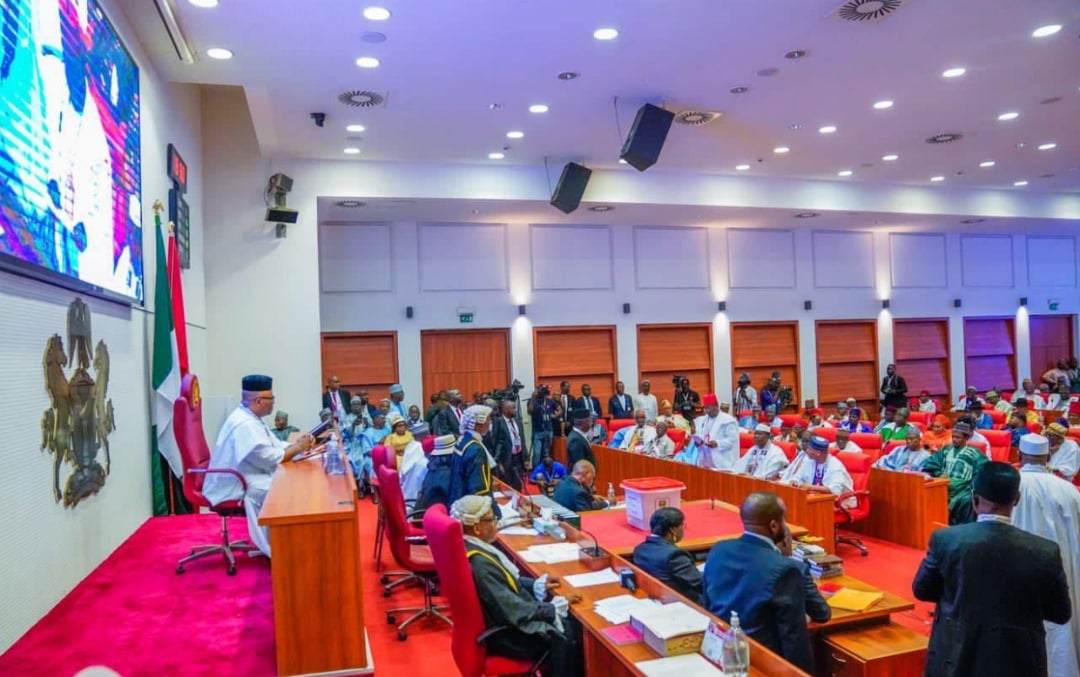
The Senate will on Tuesday (today) hold an emergency plenary session amid rising national outrage over its handling of amendments to the Electoral Act, particularly the controversial decision to drop the clause mandating real-time electronic transmission of election results.

The extraordinary sitting, convened less than a week after the passage of the Electoral Act Amendment Bill, 2026, comes as pressure mounts from civil society organisations, opposition figures, labour unions, professional bodies, regional leaders, and a swelling youth movement that has taken its anger to the gates of the National Assembly.

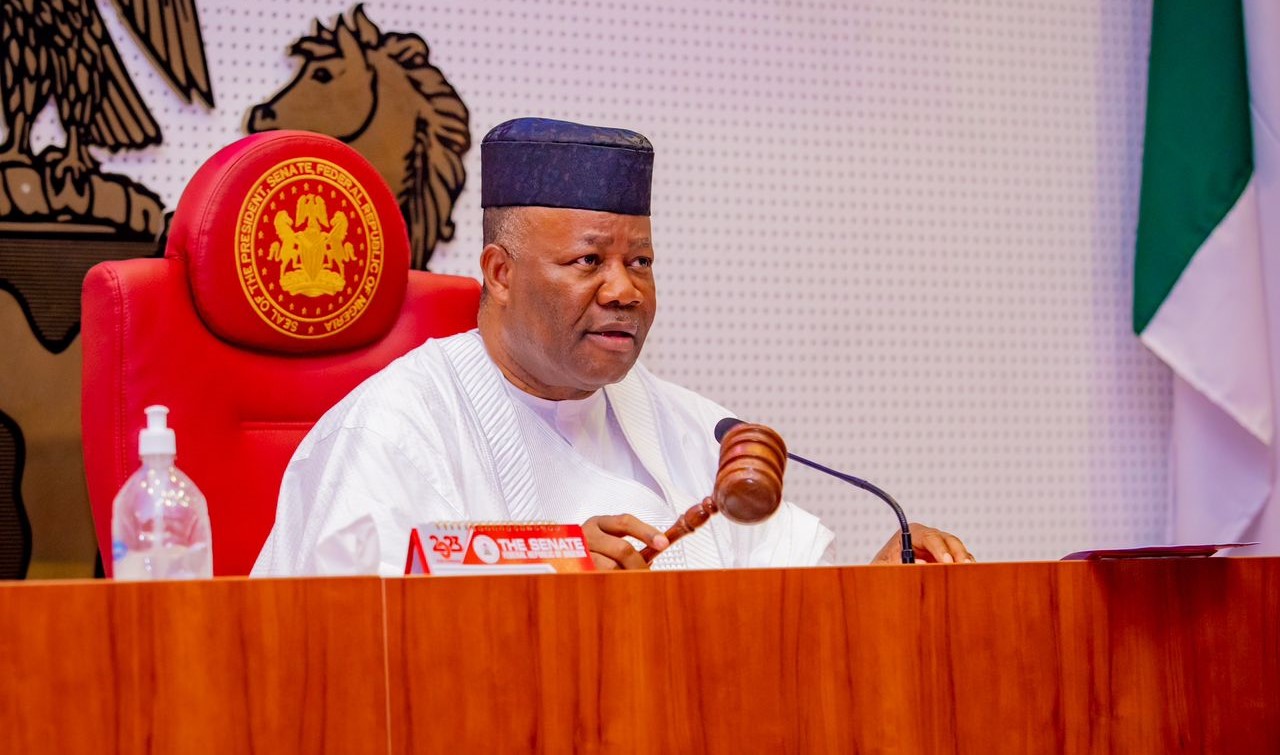
The President of the Senate, Senator Godswill Akpabio, is expected to preside over the plenary, which will be attended by the remaining 105 senators.

In the past six months, the Upper Chamber has lost two members — Senator Okechukwu Ezea of Enugu State and Senator Godiya Akwashiki of Nasarawa State — to death. A third lawmaker, Senator Jimoh Ibrahim, recently exited the chamber after being appointed an ambassador-designate by President Bola Tinubu. The development has reduced the number of senators from 109 to 106.

The emergency session was formally announced on Sunday in a statement signed by the Clerk of the Senate, Emmanuel Odo.

“The President of the Senate, Godswill Akpabio, has directed the reconvening of plenary for an emergency sitting on Tuesday, February 10, 2026,” the statement read.

Plenary is scheduled to commence at 12 noon.

Senators under siege

The decision to reconvene comes against the backdrop of intense public backlash since the Senate passed the Electoral Act 2022 (Repeal and Re-enactment) Amendment Bill, 2026, deleting the phrase “real-time” from provisions dealing with the electronic transmission of election results.

The PUNCH gathered that several senators, especially those appointed to the Harmonisation Committee, were forced into defensive mode after their personal phone numbers surfaced on social media, triggering a barrage of angry calls, threats, and verbal attacks from citizens accusing them of sabotaging democracy. Some reportedly switched off their phones altogether to avoid further harassment.

“The reactions were unpredictable. Many were laying curses and asking them, ‘how do you sleep at night after this action?’” a National Assembly source confided.

Despite repeated clarifications by Senate leaders that electronic transmission was not rejected outright, public distrust has continued to grow, with critics insisting that removing the words “real-time” creates loopholes for post-poll manipulation.

As the controversy deepened, the Nigeria Labour Congress warned of nationwide protests and possible election boycotts if the Senate failed to take a clear and unambiguous position on mandatory electronic transmission of results. The labour union accused the Senate of sowing confusion and undermining confidence in the electoral process through contradictory explanations of its actions.

See also  Trump threats: Tinubu rallies foreign allies as North rejects Sharia ban

Simultaneously, a newly formed coalition of political activists under the banner of the Movement for Credible Elections announced and executed a mass protest in Abuja on Monday, tagged “Occupy NASS.”

Obi joins protest

The protest gained fresh momentum when the former presidential candidate of the Labour Party, Mr. Peter Obi, joined hundreds of demonstrators at the National Assembly Complex.

The protesters, drawn largely from the Obidient Movement and other pro-democracy groups, accused lawmakers of deliberately weakening electoral safeguards ahead of the 2027 general elections. Chanting solidarity songs and waving placards bearing inscriptions such as “Our votes must count,” “No to electoral robbery,” and “Protect democracy now,” the protesters marched from the Federal Secretariat towards the National Assembly.

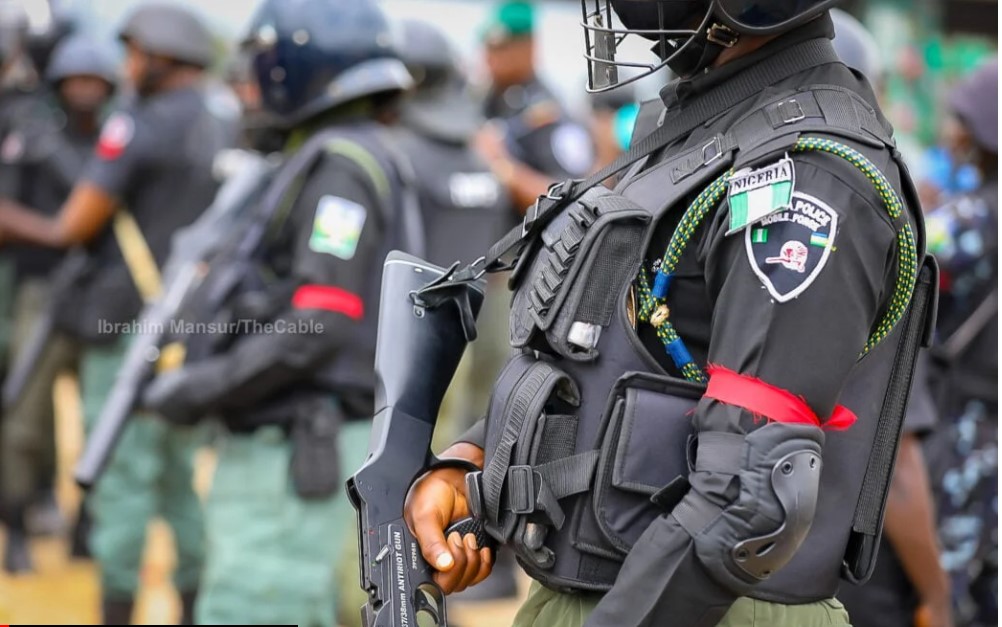
A heavy security presence, comprising personnel of the Nigeria Police Force, Nigerian Army, and the Nigeria Security and Civil Defence Corps, prevented them from entering the complex.

Addressing journalists outside the barricaded gates, Obi condemned what he described as a steady erosion of Nigeria’s democratic gains.

“We must dismantle this criminality and prove that we are now a nation that shows light in Africa,” he said.

Obi’s presence electrified the crowd, reinforcing his symbolic status among youths who see him as the face of the 2023 political awakening that challenged Nigeria’s entrenched political order.

The National Coordinator of the Obidient Movement Worldwide, Dr Yunusa Tanko, warned that protests would persist until lawmakers explicitly restored real-time electronic transmission of results.

“If there is no electronic transmission of results, there will be no election. Our elections must be credible,” Tanko said.

He argued that manual interference during result collation had long undermined elections and that electronic transmission was introduced precisely to address that problem following failures in earlier electoral cycles.

Popular activist Randy Peters also vowed sustained demonstrations.

“Tomorrow (today), we will be back here until the Senate does the right thing. The current administration supported the June 12 campaign. It was about free and fair elections,” he said.

Invoking the spirit of the June 12, 1993 election, Peters asked why elected leaders would resist reforms that guarantee credible outcomes.

“Do we have democrats who are afraid of losing elections? In 2027, our votes must count. The most important thing is that our votes must count. Tomorrow, they will meet us here again,” he added.

Two-week ultimatum

Even as protests raged outside the National Assembly, leading civil society organisations intensified pressure inside conference rooms. The Kukah Centre, Yiaga Africa, and allied groups gave the National Assembly two weeks to conclude amendments to the Electoral Act and retain mandatory real-time electronic transmission of election results. They also urged the Independent National Electoral Commission to immediately release the timetable for the 2027 general elections.

See also  FG Allocates ₦7.01 Billion For President Tinubu’s Travel In 2026 Budget

The demand was made at a press conference in Abuja organised by the International Press Centre, TAF Africa, Centre for Media and Society, Nigerian Women Trust Fund, and Elect Her.

Speaking for the coalition, TAF Africa’s Founder and CEO, Mr. Jake Epelle, urged members of the conference committee harmonising the bill to rise above partisan considerations.

“We call on the conference committee members to approach the harmonisation deliberations guided by national interest, institutional integrity, and democratic accountability rather than narrow partisan calculations,” Epelle said.

“We reiterate our recommendation that the National Assembly should expeditiously conclude the amendment process and transmit the final bill to the President within two weeks.”

He challenged lawmakers to use the emergency plenary to take a clear position.

“As key stakeholders in the electoral process, we urge all stakeholders to demand accountable representation from their legislators… by passing provisions on real-time electronic transmission of election results, curtailing the disenfranchisement of voters by introducing downloadable PVCs, and resisting any attempt to weaken established timelines,” Epelle added.

Yiaga Africa’s Director of Programmes, Ms. Cynthia Mbamalu, expressed concern over what she described as legislative backsliding.

“It is unfair that the Senate wants to take us back on an issue we had addressed in the last reform process. The commission has told us previously that it has the infrastructure to do that,” she said.

Editors, others warn

The Nigerian Guild of Editors also weighed in, warning that the controversy was already breeding mistrust.

In a statement signed by its President, Eze Anaba, the guild said the uncertainty created by the Senate’s position “is already creating room for doubt and mistrust in the electoral process among Nigerians.”

The editors warned that the Senate’s stance could discourage voter participation and undermine democratic consolidation.

“At a time when Nigerians are calling for mandatory and immediate transmission of election results, the Senate’s position leaves much to be desired. Nigerians are watching the National Assembly closely on this issue,” the statement said.

Regional leaders

The Southern and Middle Belt Leadership Forum demanded the retention of compulsory real-time electronic transmission, warning against alleged tampering with the bill.

In a statement signed by Oba Oladipo Olaitan, Dr. Bitrus Pogu, Senator John Azuta-Mbata, and Ambassador Godknows Igali, the forum described any weakening of the clause as an attack on Nigeria’s democracy.

“What later surfaced was not what the Senate approved,” the group quoted Senator Enyinnaya Abaribe as saying.

Describing the development as “unacceptable in a democratic legislature,” the forum warned Nigerians would resist any altered law.

Adegboruwa: Non-negotiable

Human rights lawyer and Senior Advocate of Nigeria, Mr. Ebun-Olu Adegboruwa, described electronic transmission as non-negotiable.

See also  FG prioritises infrastructure in N87.31bn aviation budget

“In 21st-century Nigeria, it is surprising that the National Assembly is unable to summon the courage to do what Nigerians yearn for,” he said.

“At this stage of our political development, the issue of electronic transmission of election results should not be an issue for debate or controversy.”

In a related development, the Movement for Credible Elections (MCE) has thrown its weight behind calls for electoral reforms ahead of the 2027 general election.

The group, led by political activist and civil society leader Dr. Usman Bugaje, political economist and African Democratic Congress chieftain Prof. Pat Utomi, and former President of the Nigerian Labour Congress, Ayuba Wabba, backed the move at a press conference in Lagos. A former presidential candidate of the Social Democratic Party, Adewole Adebayo, was also present.

The MCE said the protest at the National Assembly was part of a nationwide push to compel lawmakers to halt what it described as the weakening and stalling of key electoral reform bills critical to restoring public confidence in Nigeria’s democratic process.

Speaking at the briefing, Prof. Pat Utomi painted a grim picture of the state of the nation and warned of dire consequences if electoral accountability was not urgently addressed.

“Our nation is in a deep crisis. The state of our nation is unsound and pushing dangerously to the brink. It is time for citizens, true citizens, to arise and draw a line in the sand. Before us is collapse versus progress; life and death. We must choose life that we may live,” Utomi said.

The MCE steering council, which includes Wabba, Bugaje, and several labour and civil society leaders, described Monday’s protest at the National Assembly as a peaceful defence of the popular will.

What began as a routine clause-by-clause consideration quickly escalated into a national crisis. At the heart of the dispute is Section 60 of the Electoral Act Amendment Bill. The Senate rejected a proposal compelling presiding officers to upload results to INEC’s IReV portal “in real time,” opting instead to retain the discretionary framework of the 2022 Act.

The Supreme Court’s 2023 ruling—affirming that electronic transmission was not mandatory under existing law—has only heightened demands for legislative clarity.

With the House of Representatives retaining mandatory real-time transmission and a joint conference committee set to meet this week, today’s emergency plenary is widely seen as a defining moment.

For many Nigerians, the question is no longer technical—it is existential. As one placard outside the National Assembly reads: “Democracy dies when votes are stolen.”

punch.ng

FOLLOW US ON:

FACEBOOK

TWITTER

PINTEREST

TIKTOK

YOUTUBE

LINKEDIN

TUMBLR

INSTAGRAM

Continue Reading
Click to comment

Leave a Reply

Your email address will not be published. Required fields are marked *

News

Russia denies recruitment of Nigerians for Ukraine war

Published

on

Russia has denied any government-backed programme to recruit Nigerians to fight in the war in Ukraine, insisting that any such activity, if it exists, is not connected with the Russian state.

The Russian Ambassador to Nigeria, Andrey Podyolyshev, stated this on Tuesday in Abuja while responding to reports that Nigerians had been recruited to fight on the frontlines.

Reports and videos have alleged that some Nigerians and other Africans were recruited under the pretext of security jobs in Russia and later deployed to the war front after brief training.

Denying any official involvement in this, Podyolyshev said, “There is no government-supported programme to recruit Nigerians to fight in Ukraine. If there are illegal organisations or individuals trying to recruit Nigerians by unlawful means, this is not connected with the Russian state.”

He said Moscow was ready to investigate any credible information.

“If anybody has this information, we are ready to send it to Russian law enforcement authorities so they can investigate those cases,” he added.

Podyolyshev also questioned reports by Western media, including a recent CNN investigation, which alleged that some Nigerians were deceived into joining the conflict.

“You are receiving information from Western sources. Their main task is to demonise Russia. If you want to know the real situation, you should send journalists to Russia to understand what is really happening,” the Ambassador said.

While acknowledging that some Nigerians may be in the conflict zone, he maintained there was no official Russian policy behind it.

See also  FG prioritises infrastructure in N87.31bn aviation budget

“There are such Nigerians, I know, but there is no government-supported programme to recruit them. If there are agencies, including Russian agencies, violating Russian law, we are ready to transmit this information to our law enforcement authorities,” he said.

On Security and military cooperation, he said Russia and Nigeria were discussing closer defence ties, including arms supplies and training.

“We are discussing the possibilities of supplying Russian weaponry and training military personnel in Russia, maybe here in Nigeria. We are ready to develop cooperation with Nigeria in the military field to the extent the Nigerian side wishes.

“This strengthens Nigeria’s ability to fight terrorism and piracy,” he said.

The ambassador also called for stronger economic engagement between both countries, noting that the last session of the Russia–Nigeria Intergovernmental Commission on Economic Cooperation was held about 10 years ago.

“We need the support of our governments if we want to realise some big projects. Without that support, it is very difficult to move forward,” he added.

Podyolyshev also outlined Moscow’s broader foreign-policy view of Nigeria, describing the country as a strategic partner and a potential global centre of influence in a multipolar world.

“When we speak about Africa, we must speak about Nigeria. Nigeria is one of the key states on the continent and the leading link in West Africa. It has major political and economic weight in Africa and globally.

“Nigeria is the most populous country in Africa and one of the continent’s largest economies. It is a major OPEC member and a key regional energy player,” he said.

See also  Trump threats: Tinubu rallies foreign allies as North rejects Sharia ban

On politics and security, he praised Nigeria’s leadership role on the continent.

“Politically, Nigeria is a regional leader, playing a pivotal role in security in West Africa and making a significant contribution to the work of the African Union,” he said.

“For Russia, Nigeria is a partner of strategic importance. Cooperation with Nigeria largely shapes our prospects in West Africa,” he added.

Podyolyshev also highlighted Nigeria’s influence within ECOWAS and the African Union, recalling its peacekeeping roles in Liberia, Sierra Leone and The Gambia.

“Nigeria showed readiness to take responsibility for regional stability. Within ECOWAS, Nigeria is the core of the organisation in terms of population, economy and military potential,” he said.

On bilateral relations, he said Russia–Nigeria ties, which date back to Soviet times, were entering a new phase.

“On November 25, 2025, we marked the 65th anniversary of diplomatic relations. Today, bilateral cooperation is entering a new phase, driven by our mutual wish to diversify international ties,” he said.

Education, he added, remains a key pillar of the relationship.

“Thousands of Nigerians studied in the Soviet Union in engineering, medicine and other fields, and this continues today. Each year, Nigerian students enter Russian universities on state quotas. Russian diplomas are highly valued in Nigeria,” Podyolyshev said.

In the energy sector, he disclosed that both countries were working on long-term projects, including nuclear cooperation.

“An intergovernmental agreement has been signed on building a Centre for Nuclear Science and Technology in Nigeria with a research reactor and, in the longer term, a nuclear power plant,” he said.

Looking ahead, Podyolyshev described Nigeria as a future global power.

See also  PHOTOS: Burkina Faso releases Nigerian aircraft, military personnel after Tuggar meeting

“Demography, resources and regional leadership give Nigeria a real chance to become one of the global centres of power in the multipolar world.

“Russia is interested in Nigeria’s rise, and as Nigeria’s influence grows, the scope for a global Russia–Nigeria partnership will expand,” he said.

Speaking further, he linked Russia’s foreign-policy vision to a broader push for a multipolar international order.

Stating that the essence of multipolarity is to ensure development without domination.

Adding that, “An international order free from dictatorship and neo-colonialism creates conditions for stability, development and security for all.”

Continue Reading

News

Natasha: Akpabio congratulates senators over Appeal Court judgment

Published

on

Senate President Godswill Akpabio has congratulated senators following the Court of Appeal judgment upholding the six-month suspension of Senator Natasha Akpoti-Uduaghan in March 2025.

Akpabio made the remarks at the commencement of an emergency plenary session on Tuesday.

The Court of Appeal in Abuja ruled that the Senate acted within its constitutional powers in suspending Senator Akpoti-Uduaghan over alleged misconduct.

In a unanimous judgment, the three-member panel of the appellate court held that Akpoti-Uduaghan’s parliamentary privilege and constitutional rights were not breached by the suspension.

Addressing senators, Akpabio said, “Your rules derive from the Nigerian Constitution, and the Standing Orders of the Senate must always be adhered to.

“Any community without law and order will live in anarchy, and so the suspension that you handed over to one of your colleagues for unruly behaviour in the Senate was confirmed by the Court of Appeal.

“So, I will say it was judicially confirmed by the Court of Appeal as the court went forward to say that you have the powers to discipline any erring officer of government.

“So, I said I should just mention that; congratulations, and that we also applaud the judiciary for their firmness.” (NAN)

See also  You Don’t Want America To Speak On Your Terrorism Issues, But You Want Our Money – US Mayor Knocks Nigerians
Continue Reading

News

Reps urge teaching hospitals to prioritise research

Published

on

The House of Representatives has called on Nigeria’s tertiary health institutions, particularly university teaching hospitals, to urgently refocus on medical research, warning that the sector’s continued neglect of research undermines national health security and preparedness for public health emergencies

The call was made on Tuesday during the 2025 budget defence session involving federal university teaching hospitals, federal teaching hospitals and federal medical centres.

The Chairman of the House Committee on Health Institutions, Patrick Umoh, expressed concern that most teaching hospitals have drifted from their statutory mandate as centres of medical research, innovation and specialist training, and are now functioning largely as general hospitals.

Umoh criticised Chief Medical Directors for allocating less than one per cent of their annual budgets to research, describing the figure as unacceptable for institutions meant to drive evidence-based medicine and policy.

“Teaching hospitals are supposed to be centres of research. Yet you have never raised the issue of research funding during budget preparations. Instead, you focus almost entirely on infrastructure. That makes you part of the problem,” he said.

He noted that Nigeria’s health system was exposed during the COVID-19 pandemic, when the country relied heavily on external research and foreign solutions.

“The pandemic caught us all unprepared. Let me mock you a little by saying that traditional medicine practitioners appeared to be doing better. I have carried out several oversight visits, but no teaching hospital has ever taken me to a facility and said, ‘This is our research centre,’” Umoh added.

Teaching hospitals occupy a critical position in national health systems worldwide, serving as hubs for clinical research, disease surveillance, innovation and the training of health professionals.

See also  FG Allocates ₦7.01 Billion For President Tinubu’s Travel In 2026 Budget

In countries with resilient health systems, breakthroughs in diagnostics, vaccines and treatment protocols are often driven by sustained research activity within teaching hospitals.

In Nigeria, however, chronic underfunding, weak research infrastructure and limited political prioritisation have constrained the ability of teaching hospitals to fulfil this role.

As a result, the country remains heavily dependent on foreign research outputs, even for diseases prevalent within its borders.

Health experts have repeatedly warned that without deliberate investment in research, Nigeria risks being perpetually reactive to health crises, rather than proactive.

Responding on behalf of the Committee of Chief Medical Directors, the Secretary of the Committee and Chief Medical Director of the Jos University Teaching Hospital, Prof Pokop Bupwatda, acknowledged the poor funding of research but blamed systemic budgetary constraints.

According to him, although teaching hospitals make provisions for research, usually around one per cent of their budgets, these allocations are often removed during the final stages of the budgeting process.

Bupwatda appealed for increased overall funding for the health sector to enable adequate recruitment of skilled personnel and improved staff welfare, which he said are essential to curbing the growing “japa syndrome.”

He disclosed that many federal health institutions are severely understaffed, particularly with medical doctors, noting that even when recruitment approvals are granted, few doctors apply. Despite these challenges, he said existing personnel have continued to provide quality healthcare services and deserve recognition.

He also expressed concern that public discourse frequently highlights isolated failures in the sector while overlooking progress that has attracted foreign patients to Nigeria’s health facilities.

See also  Ex-US mayor, Sultan clash over alleged Christian genocide

Bupwatda further lamented that only about 30 per cent of the 2025 budget allocation has so far been released to federal tertiary health institutions, despite interventions by the House of Representatives to improve funding levels.

He identified power supply as a major operational challenge, explaining that hospitals require uninterrupted electricity to run life-saving equipment and provide effective patient care.

He noted that most federal hospitals are currently on Band A electricity tariffs, significantly increasing their operating costs, alongside heavy spending on diesel for generators.

He welcomed proposals to deploy solar mini-grids in teaching hospitals and federal medical centres, describing the initiative as a critical intervention.

He further appealed to the committee to approve take-off grants for about seven newly established federal health institutions, warning that without such support, they would struggle to commence effective operations.

punch.ng

FOLLOW US ON:

FACEBOOK

TWITTER

PINTEREST

TIKTOK

YOUTUBE

LINKEDIN

TUMBLR

INSTAGRAM

Continue Reading

Trending