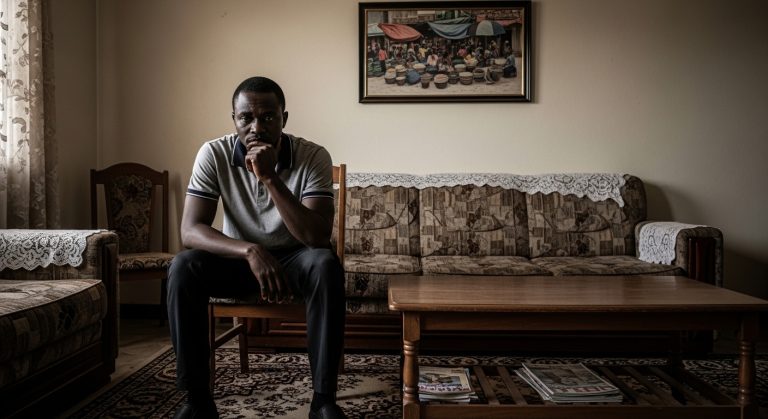
In 2019, Chukwudi* (38) firmly believed relocation would solve all his problems. So, he emptied his savings, sold everything he owned and took loans to fund a new life abroad. However, less than 24 hours after landing, immigration officers put him on a plane back to Nigeria. Seven years later, he’s still recovering from the fallout.
As Told To Boluwatife
Seven years have passed since my unfortunate attempt to leave Nigeria for a better life in a different country. Yet, I still struggle to talk about my experience. I’m not sure I’ll ever recover from the embarrassment and pain I suffered.
In 2019, I was 31 and convinced that escaping Nigeria was the only way to move my life forward. I was tired of my office job at a mid-sized logistics company in Lagos, and even more frustrated by the quality of life I could afford on my ₦60k salary.
I lived in a tiny self-contained apartment and couldn’t do anything besides go to the office and church every week. I couldn’t even dream about getting married or owning a car.
Meanwhile, everywhere I turned, someone was preparing to relocate or had already relocated. A former secondary school classmate moved to Germany and began posting pictures of snowy streets in our alumni WhatsApp group chat. A cousin left for the UK and started sending videos of his new apartment. Even someone from my office was talking about their plans to leave.
Everyone in my life was moving forward while I was stuck in one position. So, naturally, I started thinking about relocating too. Unfortunately, I had no money to fund any japa dream.
A colleague at work introduced me to a travel agent who explained a pathway that involved entering an Asian country with a short-term visa and arranging longer-term options after arrival. He spoke with confidence and gave examples of people who had successfully travelled the same route.
It sounded like a great plan, but he also quoted ₦15 million for the entire process — including visa processing, flight cost, accommodation arrangement and settlement support. The cost was too much for me to even imagine, let alone have somewhere.
Still, once the idea entered my head, I couldn’t let it go. For weeks, I thought only about how to raise the money and japa. It got to a point where I regularly daydreamed about finding dollars on the floor or someone mistakenly sending ₦15 million to my account.
I also started researching the japa process on my own. I realised I wouldn’t need up to ₦15 million if I did everything myself without a travel agent. Based on my findings, I estimated ₦10 million would finish the process, and I’d still have extra to hold for the first few months after I arrived in the new country.
So, I decided to start small and raise the money slowly. I convinced myself I’d somehow raise ₦10 million.
First, I liquidated my entire life savings of about ₦700k to start the visa application process. Next, I sold my late father’s acres of land in the village for ₦3 million. That move caused some issues between me and some extended family members. They argued I shouldn’t have made that move without their approval, but I didn’t really care what they thought. My only focus was on leaving the country.
And it seemed like things were working out in my favour. I got a six-month visa on my first try and still had an extra ₦2 million in my account. I only needed to raise about ₦6 million more to reach the ₦8 million I estimated for flight costs, accommodation and settlement budget.
For accommodation, my colleague had linked me up with someone living in the country I was planning to travel to, and he’d promised to help me get a place. I just needed to send ₦3 million to him.
For the next five months, I tried everything to raise ₦8 million.
I started by taking loans. At first, it was from people close to me: my elder brother, two cousins, and a church member who ran a small cooperative. When that money finished, I started asking friends. Then friends of friends, and even people in my office. Before long, I had borrowed money from more than 12 people.
I told everyone the same thing: once I settled in Asia, I would start paying back immediately. Everybody believed me because at that time, it felt like moving abroad was a shortcut to success. Once you entered, your life automatically changed.
When the loans didn’t fetch me the money I needed, I started selling my things. My TV, generator, wardrobe and even my bed. At some point, I was sleeping on top of my clothes on the floor. I convinced myself I would eventually need to sell everything off when I was travelling anyway.
As my visa expiry date drew near and I saw no sign of raising the full amount I needed, I grew even more desperate. I decided to sublet my apartment without my landlord’s knowledge. I collected ₦1 million for two years’ rent from a former schoolmate’s brother and told him to lie to the landlord that he was my brother who had come to stay with me from the village.
After all my fundraising efforts, I was only able to raise an additional ₦4 million, bringing my account balance to ₦6 million. By then, I had only one week left on my visa.
The delay had also made it impossible for me to buy plane tickets in advance at a lower price. I eventually spent ₦2.8 million on tickets. After I sent the ₦3 million to the guy who had promised to help me with accommodation, I had just ₦200k left. Still, I believed I could easily find work when I arrived in the new country.
I travelled with that belief. I remember my excitement that day. My siblings took me to the airport, and we took countless pictures and videos. My mum even called and sent several prayers over the phone. Everyone was happy for me.
On the plane, I was lucky enough to sit in a window seat and took even more pictures. I kept telling myself, “My life is about to start.”
I didn’t know it had already ended.
After two layovers, I finally arrived at my destination. At immigration, the officer stared at my passport for a long time. Then he started asking several questions about the duration of my visit and how much money I had.
Remember, I only had a few days left on my visa. Well, I told him I was there on a short two-day vacation to tour the country. I couldn’t tell him I didn’t plan to return.
Now that I think about it, my “vacation” story was too foolish. Who would’ve believed I was only there for two days when I travelled with three big bags?
The immigration officer called another officer, and the two spoke for a long time in a language I didn’t understand. Then they took me into a room and started asking me detailed questions. At some point, they even asked if I had paid someone to help me disappear after entry.
I kept insisting I was just visiting. But they didn’t believe me. I spent that night in an airport detention room with three strangers. Nobody explained anything or told me what would happen next.
The next morning, the immigration officers handed me a document and said I would be returned to Nigeria immediately. They said my visa timeline was suspicious and they’d prefer to remove me from the country before any overstay occurred.
Just like that, within 24 hours of “relocating,” I found myself on a plane heading back to Nigeria. It felt like a very bad dream. I didn’t even know whether to cry or laugh. Everything happened so fast.
The reality of my situation hit me fully when I landed in Lagos. I had no home and nothing to my name. I’d sold everything and taken multiple loans to raise ₦8 million to travel.
Now, I was back to square one and even worse off than before, owing almost ₦3 million with no hope of how to pay it back.
For the first few weeks, I couldn’t face anybody. When relatives called for updates on my trip, I had to tell them the truth. News of my deportation travelled fast, and creditors started calling to ask when I would start repaying their money. I stopped picking up calls and eventually had to switch the phone off completely.
I initially hid in my brother’s house, but when the shame became too much, I ran to my village. The people there also knew about my failed relocation, but at least they wouldn’t come to me every day to ask about Asia. Even in the village, gossip from Lagos got to my ears. How most people thought I had run away with their money, and were cursing and mocking me.
It was a shameful period for me. I kept imagining how everyone expected me to be doing well abroad, but I was back with absolutely nothing. I had never heard of someone who spent less than 24 hours in a country before deportation. I wanted to die. I even tried to commit suicide twice, but my relatives rescued me.
Seven years later, I’m slowly rebuilding my life. I returned to Lagos last year after spending the last few years working with a cousin who runs a small building materials shop.
I’ve managed to repay some of the people I owed. Most of them eventually forgave my debt. I also have a better job now. My pay is still not much, but I’m surviving.
The trauma of this experience still hasn’t left me. I have nightmares about it from time to time. In my dreams, I’m coming down from a plane, and big, muscled men suddenly rush at me and push me back inside. Sometimes, I wake up crying.
Now, whenever people around me start talking about japa plans, I just keep quiet. I can’t go through that suffering again.
I know Nigeria is even worse now, and I still want a better life. But for now, I’ll try my best to find that life here.
FOLLOW US ON:
FACEBOOK
TWITTER
PINTEREST
TIKTOK
YOUTUBE
LINKEDIN