Connect with us

Business

FG fixes June 12 deadline for oil bids

Published

on

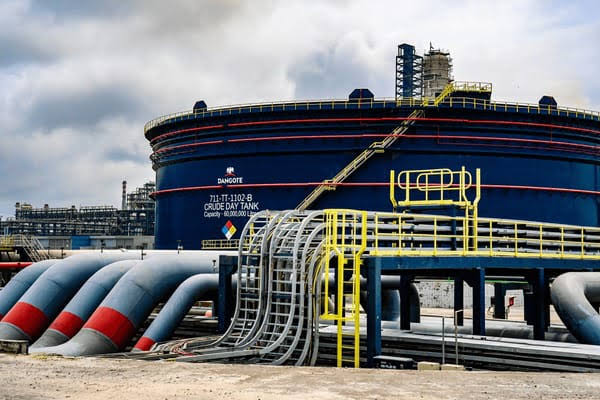
The Federal Government through its Nigerian Upstream Petroleum Regulatory Commission has fixed Friday, June 12, 2026, as the deadline for the submission of technical and commercial bids by prequalified applicants participating in the country’s ongoing 2025 Licensing Round.

The commission disclosed this in a notice posted on its official X handle on Tuesday, urging all qualified bidders to comply strictly with the timelines stipulated in the licensing guidelines.

“The NUPRC hereby notifies the general public that submission of Technical and Commercial Bids by Prequalified Applicants for the 2025 Licensing Round closes on Friday, June 12, 2026, at 16:30 hours (WAT) in line with the 2025 Licensing Round Guidelines,” the notice read.

The commission advised interested stakeholders to obtain further details through the official licensing round portal. “For more details, visit the licensing round portal: br2025.nuprc.gov.ng,” it added.

The announcement signals the transition of the exercise into one of its most critical phases, as investors compete for opportunities in Nigeria’s upstream sector amid renewed efforts by the government to attract capital and boost hydrocarbon production.

The two-stage process, qualification followed by bidding, requires shortlisted firms to lodge final proposals by the stated time.

The 2025 Licensing Round, conducted under the provisions of the Petroleum Industry Act, is part of the Federal Government’s broader strategy to unlock dormant hydrocarbon assets, deepen exploration activities, and improve the country’s reserve base.

The successful completion of the technical and commercial bid stage would pave the way for the eventual award of oil blocks to successful applicants. The 2025 round, opened in December, offered 50 oil and gas blocks intended to attract about $10bn in investment.

See also  Nigerians spend N1.54tn on beer, others in nine months

The portfolio included 15 onshore blocks, 19 shallow-water blocks, 15 frontier blocks, and one deep-water block. NUPRC projects that the round could unlock around 2 billion barrels of oil over the next decade and potentially add about 400,000 barrels per day when fully developed.

The commission completed the prequalification stage in March and said successful applicants were notified. The latest update also comes against the backdrop of preparations for another licensing exercise expected to commence later this year.

Only days ago, the Commission Chief Executive of the NUPRC, Mrs Oritsemeyiwa Eyesan, announced that the 2026 Licensing Round had secured ministerial approval and would commence no later than the third quarter of 2026.

According to the commission, preparations for the next round are already underway as authorities seek to sustain investor confidence in Nigeria’s oil and gas sector.

Eyesan had expressed satisfaction with the progress recorded in the ongoing 2025 Licensing Round, noting that the commercial bid stage would precede the launch of the 2026 exercise.

The move underscores the regulator’s determination to institutionalise annual licensing rounds in line with the Petroleum Industry Act, which provides a transparent and competitive framework for the allocation of petroleum assets.

punch.ng

FOLLOW US ON:

FACEBOOK

TWITTER

PINTEREST

TIKTOK

YOUTUBE

LINKEDIN

INSTAGRAM

Continue Reading
Click to comment

Leave a Reply

Your email address will not be published. Required fields are marked *

Business

Nigeria’s foreign debt to hit $72.6bn after 2027 polls – IMF

Published

on

Nigeria’s public external debt is projected to rise by $20.7bn by 2027, the country’s election year, according to the International Monetary Fund.

The IMF disclosed this in its 2026 Article IV Consultation report on Nigeria released on Tuesday, projecting that public external debt would increase from $51.9bn in 2025 to $72.6bn by 2027.

The projected increase represents a 39.9 per cent rise within two years and underscores growing concerns over the country’s debt burden despite recent improvements in macroeconomic stability.

The Fund noted that Nigeria’s next presidential election would take place in January 2027 and warned that spending pressures associated with rising poverty, food insecurity and the election cycle could widen fiscal deficits and increase borrowing requirements.

“Spending pressures from elevated poverty and food insecurity, including in the run-up to the elections, could widen fiscal deficit and increase financing needs,” the IMF stated.

According to the Fund’s Balance of Payments projections, public external debt is expected to rise from $51.9bn in 2025 to $66.5bn in 2026 before climbing further to $72.6bn in 2027.

The IMF’s projection broadly aligns with the latest Debt Management Office data, which showed that Nigeria’s public external debt stood at $51.86bn as of December 31, 2025.

Based on the Fund’s forecast, the debt stock would increase by about $20.74bn between the end of 2025 and 2027.

Beyond public debt, the IMF projected that Nigeria’s total external debt stock, which includes both public and private sector obligations, would rise from $109.3bn in 2025 to $119.3bn in 2026 and further to $132.0bn in 2027.

This indicates that total external debt could increase by $22.7bn between 2025 and 2027, with $12.7bn of the increase occurring in 2027 alone.

The report showed that public external debt would remain elevated relative to the size of the economy and export earnings. Public external debt is projected to increase from 17.9 per cent of GDP in 2025 to 18.7 per cent in 2027. As a share of exports of goods and services, it is expected to rise from 82.9 per cent in 2025 to 104.3 per cent by 2027.

The IMF also projected a deterioration in debt service indicators over the period.

Public external debt service due is expected to increase from 8.1 per cent of exports of goods and services in 2025 to 8.8 per cent in 2027, after easing to 5.0 per cent in 2026. The Fund further projected that interest payments on public debt would rise from $2bn in 2025 to $3bn by 2027.

At the Federal Government level, debt servicing is expected to continue consuming more than half of government revenue. The IMF estimated that interest payments absorbed 53.2 per cent of Federal Government revenue in 2025 and projected the ratio at 53.7 per cent in 2026 before easing marginally to 52.4 per cent in 2027.

See also  Nigerian workers deserve a living wage; read details

The report highlighted the growing role of external borrowing in financing government operations. According to the IMF, financing for the 2026 consolidated government deficit is expected to rely more on external than domestic sources, with plans including a proposed $5bn total return swap with an international bank and another Eurobond issuance.

The Fund expressed reservations about the proposed swap arrangement, noting that it carried borrowing costs comparable to Eurobond yields and could expose the government to margin calls if the value of the naira-denominated collateral declines.

“The arrangement exposes the government to margin calls if the FX value of the naira securities drops (naira depreciation, higher interest rates) and could thus give rise to political constraints on monetary or exchange rate policy,” the IMF said.

The PUNCH earlier reported that the IMF warned Nigeria to tread carefully in pursuing a proposed $5bn Total Return Swap financing arrangement with First Abu Dhabi Bank, describing such structures as opaque and potentially risky despite the country’s improved access to international capital markets.

The IMF Resident Representative for Nigeria, Christian Ebeke, disclosed this on Tuesday during a virtual press briefing on the Fund’s 2026 Article IV Consultation Report on Nigeria.

Speaking on the proposed transaction, Ebeke said, “We say in the report, and our view is that the transaction and these types of structures carry risks. Usually, they are opaque. So, the terms are not always very transparent when we review these instruments across countries.”

His comments come weeks after the Senate approved the Federal Government’s request to raise up to $5bn through a Total Return Swap arrangement with a Middle Eastern bank, widely reported to be First Abu Dhabi Bank.

Ebeke noted that beyond concerns over transparency, such financing arrangements could expose countries to additional financial risks if underlying assets lose value or exchange rates move adversely. “They also carry risk, as we flag in the report: the margin calls in the case of the value of the asset drops or the currency depreciates,” he said.

According to him, Nigeria currently has alternative funding options that may be less complicated and more transparent. “We think that Nigeria has market access. Nigeria can issue euro bonds to finance the deficit. And we also think that there are other avenues for Nigeria to raise funds, including on concessional terms,” Ebeke added.

While noting that the Fund did not yet have detailed information on the proposed swap structure, he urged authorities to closely monitor the transaction’s potential risks. “At this point, we don’t have any further information on the TRS. But our view is that it carries risk, and it’s important to monitor those risks very, very carefully,” he said.

The IMF’s caution formed part of a broader assessment in which the Fund acknowledged that economic reforms undertaken by the Nigerian government over the past three years had strengthened macroeconomic stability and improved the country’s ability to withstand external shocks.

See also  Nigerians spend N1.54tn on beer, others in nine months

Despite the projected increase in debt, the Fund maintained that Nigeria’s sovereign debt position remains manageable. “The risk of sovereign stress is assessed as moderate,” the IMF stated, noting that public debt fell to 36.1 per cent of GDP in 2025 from 39.3 per cent in 2024 due to stronger growth, naira appreciation and improvements in macroeconomic stability.

However, it warned that weak revenue mobilisation, expenditure slippages, contingent liabilities and election-related fiscal pressures could worsen the debt outlook if not carefully managed.

The Fund urged the government to strengthen fiscal transparency, improve budget implementation, sustain revenue mobilisation reforms and avoid spending outside the budget framework in order to contain borrowing needs and preserve debt sustainability.

At the virtual briefing, the IMF Mission Chief for Nigeria, Axel Schimmelpfennig, said recent reforms had enhanced resilience and helped the country manage the economic fallout from the ongoing conflict in the Middle East. “One of the key messages from the report is that strong reforms over the past three years have improved macroeconomic outcomes and improved resilience,” he said.

According to Schimmelpfennig, higher global oil prices resulting from the conflict could improve Nigeria’s export earnings and government revenues, but would also create inflationary pressures through increased fuel, food and fertiliser costs.

He said the IMF recommended a broadly neutral fiscal stance for 2026, with the budget deficit remaining largely unchanged relative to 2025 to support macroeconomic stability and complement the Central Bank of Nigeria’s efforts to curb inflation.

“We continue to think that the flexible exchange rate regime is serving Nigeria well, and we’ve even seen an appreciation against the US dollar since the start of the year,” he said.

The IMF also projected that Nigeria’s economy would grow by 4.1 per cent in 2026 and 4.3 per cent in 2027, although these forecasts were lower than previous projections due to the economic consequences of the conflict in the Middle East. “For 2026, we project real GDP growth to be 4.1 per cent. And for 2027, we see some acceleration to 4.3 per cent,” Schimmelpfennig stated.

He stressed that monetary policy should remain restrictive for longer than previously anticipated, given renewed inflationary pressures stemming from global developments.

The IMF chief further urged the government to continue expanding its cash transfer programme to cushion the impact of economic shocks on vulnerable households while sustaining reforms aimed at improving infrastructure, electricity supply, security, agriculture, education and healthcare.

The Fund also reiterated its support for efforts to increase government revenue, noting that Nigeria remains one of the countries with the lowest revenue-to-GDP ratios globally.

See also  Firm urges Nigerians to buy recycled products for waste control

Schimmelpfennig said strengthening tax administration and, over time, aligning some tax rates with those of peer countries would be necessary to create fiscal space for development spending, while ensuring that vulnerable citizens are protected through targeted social interventions.

Obi tackles FG

In a related development, the 2027 presidential candidate of the Nigeria Democratic Congress, Peter Obi, has criticised President Bola Tinubu’s administration over what he described as excessive borrowing and poor fiscal accountability.

Obi said Nigeria’s total public debt has risen to about N200tn, which he attributed to what he called “imprudent governance” under the current administration. He said the debt level represents an increase of over N100tn in three years, contrasting it with the approximately N49tn accumulated during the eight-year administration of former President Muhammadu Buhari.

The former Labour Party presidential flagbearer in the 2023 election stated this in a statement posted on his X handle on Tuesday, saying the situation reflected a lack of accountability and transparency in the management of borrowed funds.

“President Bola Tinubu’s administration has engaged in remarkably imprudent borrowing, escalating Nigeria’s total debt to approximately N200tn. This represents an increase of over N100tn within a mere three years, a stark contrast to the roughly N49tn accumulated during President Muhammadu Buhari’s eight-year tenure, which would have projected to around N80tn.

“As millions of Nigerians grapple with the shock of this unsustainable debt accumulation, the situation is exacerbated by the government’s reckless approach to borrowing and a profound absence of accountability and transparency in the utilisation of these funds,” he said.

However, the Presidency has dismissed claims by Obi that the administration of President Bola Tinubu has accumulated more than N100tn in debt within three years, attributing the increase in Nigeria’s debt profile largely to the impact of naira devaluation.

Special Assistant to the President on Social Media, Dada Olusegun, stated this on Tuesday while responding to Obi’s criticism of the government’s borrowing record and fiscal management.

“For the umpteenth time, Nigeria’s obvious debt portfolio increase over the past three years under the administration of President Tinubu is not a function of new borrowings rather; vast majority of them are mathematical impacts of currency devaluation which you also promised to implement during your campaigns,” Olusegun said.

Olusegun also maintained that Nigeria’s public debt figures include obligations incurred by state governments over the years and should not be attributed solely to the Federal Government.

Questioning Obi’s interpretation of the debt figures, the presidential aide said fluctuations in exchange rates significantly affect the naira value of external debt. The aide further argued that Nigeria’s debt stock in dollar terms had remained relatively stable.

punch.ng

FOLLOW US ON:

FACEBOOK

TWITTER

PINTEREST

TIKTOK

YOUTUBE

LINKEDIN

INSTAGRAM

Continue Reading

Business

Nigerians spend N50bn on US visa applications

Published

on

Nigerians spent more than N50bn on US visa applications between 2023 and 2024, despite a sharp decline in approvals as Washington tightened immigration controls and increased scrutiny of applicants.

An analysis of the Intelpoint report, using data from the US Department of State, shows that 201,200 non-immigrant visas were issued to Nigerians between 2023 and 2024. At a standard application fee of $185 per applicant, Nigerians spent approximately $37.2m, equivalent to N50.7bn at an average exchange rate of N1,360 to the dollar.

Visa issuances declined by about 23 per cent, falling to 87,300 in 2024 from 113,900 in 2023, a reduction of 26,600 visas. The PUNCH could not obtain comparable figures for 2025 at the time of reporting.

Business and tourism travel dominated approvals in 2024, with B1/B2 visas accounting for 83 per cent of total issuances, while student visas (F1) represented about seven per cent. Exchange visitor visas (J1) and other temporary categories made up the remainder.

Africa’s most populous nation remained a significant source market for the United States, accounting for about 0.8 per cent of global non-immigrant visa issuances in 2024, the data showed.

Former President of the National Association of Nigeria Travel Agencies, Susan Akporiaye, said Nigerians’ travel behaviour is driven by more than economic conditions, noting a strong cultural inclination toward mobility.

“People would say it’s because of the economy, but I share a different view. Nigerians are generally migrants; they love travelling.

We are like the Chinese of Africa,” Akporiaye told The PUNCH.

The executive argued that most Nigerians who travel abroad return home, and only a small proportion remain outside the country permanently. “There is so much noise of Nigerians staying back. The ones who travel and return are far more than those who stay back. It’s not up to 10 per cent that don’t return,” she stated.

See also  Nigeria’s blackout persists despite $3.6bn World Bank loans – Report

The decline in visa issuances comes amid a series of policy changes introduced after Donald Trump returned to the White House in January 2025, which have gradually tightened requirements for Nigerian applicants.

In July 2025, the US Department of State announced that most non-immigrant and non-diplomatic visas issued to Nigerian citizens would be restricted to single-entry permits valid for three months, with existing visas unaffected.

In August, applicants were required to disclose all social media usernames used over the previous five years on DS-160 forms, with officials warning that omissions could lead to visa denial or ineligibility.

Akporiaye also noted that travel demand cuts across income levels, from affluent individuals to ordinary citizens travelling for social events. “Nigerians like to explore. We travel for birthdays, weddings, and other ceremonies. I’m not talking about people like Dangote or Otedola, but ordinary Nigerians you don’t even know,” she said.

The expert, however, acknowledged that demand for US travel has softened relative to other destinations, citing operational and policy-related constraints.

“The demand has reduced for some destinations like the US, and it’s becoming worse now. Conditional requirements and operational changes at the US Embassy in Abuja have made access more difficult, including the consolidation of services in Lagos,” she stated.

“There are stories about visas being cancelled or Nigerians getting deported, and that makes people a bit sceptical. But other destinations are still booming.”

Further tightening followed in December 2025, when the US Mission in Nigeria said Washington expanded travel restrictions to include partial limitations on Nigeria and five other countries, effective January 1, 2026.

See also  Nigerian workers deserve a living wage; read details

An executive at Travel and Tours Limited, Maureen Chimaobi, said securing a US visa has become increasingly difficult over the past year, with many first-time applicants facing steep odds despite completing all required procedures.

“Last year, getting a US visa drastically reduced, especially if you are a first-time traveller or first-time applicant. It’s almost a no-go area,” Chimaobi told our correspondent.

She noted that applicants continue to pay visa fees, schedule appointments and attend interviews, but approvals have become far less predictable. “You pay your visa fee, book your appointment and go for submission. Most of the time, they don’t give it,” the agent said.

The trend reflects growing concerns among travel operators about declining approval rates for Nigerian applicants, even as demand for overseas travel remains strong. Chimaobi said rejection levels have remained high throughout the period under review, particularly for individuals with limited international travel history.

The tougher environment is also influencing destination choices. More Nigerians are turning to countries where visa approvals are perceived to be more attainable, provided applicants can demonstrate sufficient financial capacity and present strong documentation.

“I think most countries still offer a 70 to 80 per cent chance of getting a visa, depending on the quality of your documents and your financial status,” Chimaobi revealed.

She identified the United Kingdom as one of the destinations with relatively stronger approval prospects, although she cautioned that British authorities have also hardened their assessment processes in recent months.

France and other countries within the Schengen area, once considered more accessible to Nigerian travellers, have become increasingly selective, especially toward first-time applicants, she added.

See also  World’s largest tech expo opens in Dubai

“Before now, France used to issue visas more easily, but most Schengen countries have become difficult over time, particularly for first-time travellers,” Chimaobi said.

punch.ng

FOLLOW US ON:

FACEBOOK

TWITTER

PINTEREST

TIKTOK

YOUTUBE

LINKEDIN

INSTAGRAM

Continue Reading

Business

Petrol imports crash by N2tn to N87bn; see why

Published

on

Nigeria’s spending on the importation of Premium Motor Spirit, popularly known as petrol, plunged by over 96 per cent in the first quarter of 2026, marking a dramatic shift in the country’s fuel supply landscape and signaling the growing impact of local refining capacity.

Latest foreign trade statistics released by the National Bureau of Statistics on Monday showed that only N87.401bn was spent on the importation of Motor Spirit Ordinary, the official trade classification for petrol, between January and March 2026.

The figure represents a sharp decline of N2.184tn, or 96.15 per cent, compared to the N2.271tn spent on petrol imports during the corresponding period of 2025. The development is particularly significant as petrol, which had consistently ranked among Nigeria’s most imported commodities for years, was completely absent from the list of the country’s top traded products in the first quarter of 2026.

An analysis of the NBS data by our correspondent showed that petrol did not feature among the top 19 traded products with the rest of the world, Africa, or West Africa during the review period.

Instead, the leading traded products included crude petroleum oils and oils obtained from bituminous minerals, gas oil, durum wheat, machines for reception, conversion and transmission of data, used vehicles, motorcycles, agricultural seeders, medicaments, aircraft parts, butanes, petroleum bitumen, sugar cane, herbicides and fuel additives.

The report read, “The value of total imports stood at N13,619.33bn in the first quarter of 2026, representing a 18.17 per cent decrease from the value recorded in the corresponding quarter of 2025 (N16,644.42bn) and a 21.05 per cent decrease compared to the value recorded in Q4 2025 (N17,250.93bn).

“Analysis of Nigeria’s import trade reveals that China remained the leading source of imports in the first quarter of 2026, followed by the United States of America, India, Germany, and the United Arab Emirates. The most imported commodities during the quarter were petroleum oils and oils obtained from bituminous minerals (crude), gas oil, durum wheat, machines for the reception, conversion, and transmission of voice, images, or data, and used vehicles with diesel or semi-diesel engines.

See also  CBN introduces overnight rate to deepen money market, read details

“The value of other oil products imported in Q1 2026 stood at N748.10bn, reflecting an 85.05 per cent decrease from N5,005.22bn in Q1 2025 and an 81.38 per cent decrease from N4,018.31bn recorded in Q4 2025.”

The latest import figure is also the lowest quarterly amount spent on petrol imports since at least 2022, according to available trade records reviewed by our correspondent.

Data from previous years showed that Nigeria spent N2.694tn on petrol imports in the first quarter of 2022. The import bill declined by N661bn, or 24.5 per cent, to N2.033tn in the corresponding period of 2023.

However, petrol import spending surged by N1.780tn in 2024 to N3.813tn, representing an increase of 87.6 per cent year-on-year. The figure later dropped by N1.542tn, or 40.4 per cent, to N2.271tn in the first quarter of 2025 before plunging by a massive N2.184tn, or 96.15 per cent, to N87.401bn in the first quarter of 2026.

The latest figure means that for every N100 spent on petrol imports in the first quarter of 2025, only about N4 was spent during the same period in 2026. The NBS data also highlighted the changing structure of Nigeria’s petrol import trade profile over the years.

According to the report, the total trade value involving the petroleum product stood at N7.705tn in 2022. This declined marginally by N194bn, or 2.5 per cent, to N7.511tn in 2023.

Trade value, however, more than doubled in 2024, rising by N7.907tn, or 105.3 per cent, to N15.418tn, the highest level during the period under review. The figure subsequently fell by N5.045tn, or 32.7 per cent, to N10.373tn in 2025, reflecting changing trade dynamics in Nigeria’s downstream petroleum sector.

See also  Nigeria secures $18.2bn oil investments, 28 field plans

The PUNCH reports that the sharp reduction in petrol imports reflects the increasing contribution of domestic refining facilities to fuel supply, reducing Nigeria’s dependence on foreign suppliers and helping conserve foreign exchange.

For decades, Nigeria relied heavily on imported petrol despite being Africa’s largest crude oil producer, owing largely to the poor performance of state-owned refineries and inadequate domestic refining capacity.

The trend began to change following investments in local refining and the gradual increase in output from domestic refineries, which have reduced the need for large-scale fuel imports.

The sharp decline in petrol imports in the first quarter of 2026 comes amid growing domestic refining capacity, particularly from the operations of the Dangote Petroleum Refinery, which began supplying petrol to the Nigerian market in 2024.

For decades, Nigeria relied heavily on imported Premium Motor Spirit despite being Africa’s largest crude oil producer. The country’s state-owned refineries operated far below capacity for years, forcing marketers and the Nigerian National Petroleum Company to spend trillions of naira annually importing fuel to meet domestic demand.

The commissioning of the 650,000 barrels-per-day refinery in Lekki, Lagos, marked a turning point in the downstream petroleum sector. Since commencing petrol production, the refinery has steadily increased output, supplying marketers, industrial users and fuel distributors across the country.

In January, the Nigerian Midstream Downstream Petroleum Regulatory Authority reported that Dangote refinery supplied an average of 40.1 million litres of petrol daily, accounting for 61.78 per cent of Nigeria’s petrol supply. Imported fuel contributed 24.8 million litres per day during the month.

See also  Nigeria’s blackout persists despite $3.6bn World Bank loans – Report

It increased significantly in February as imports collapsed. The refinery supplied about 36.5 million litres per day, while imports dropped to roughly 3.1 million litres per day, meaning locally refined fuel accounted for more than 92 per cent of national supply.

According to the NMDPRA March fact sheet, Dangote remained the sole domestic supplier of petrol, supplying 34.2 million litres per day. Imports rose slightly to 5.9 million litres daily, bringing total supply to about 40.1 million litres per day.

Supply rebounded strongly in April. Dangote supplied 40.7 million litres per day to the domestic market, while imports declined further to 3.7 million litres daily. Total petrol supply stood at 44.4 million litres per day, giving the refinery a market share of approximately 92 per cent of locally consumed fuel and about 80–92 per cent of overall supply, depending on the methodology used.

The disappearance of petrol from the list of top imported products is expected to strengthen arguments that local refining is beginning to alter Nigeria’s trade patterns, lower import dependence and reshape the country’s foreign exchange requirements.

The sustained reductions in fuel imports could improve Nigeria’s trade balance, reduce pressure on the naira and retain more value within the domestic economy, provided local production continues to meet demand.

The first-quarter data therefore represents one of the clearest indications yet of a major shift in Nigeria’s downstream petroleum sector, with petrol imports falling to levels not seen in more than four years.

Continue Reading

Trending