Connect with us

Lifestyle

Dad told us ‘I’m going home’ hours before his death – Late Kola Oyewo ’s son

Published

on

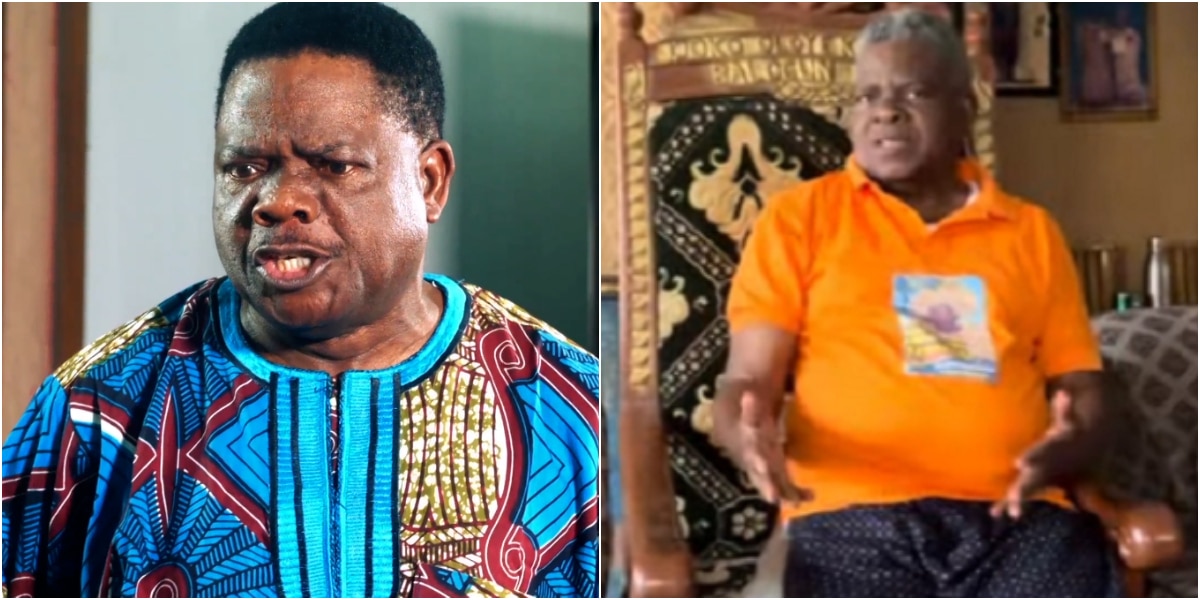
Oluwatobi Oyewo is the youngest of the five sons of legendary actor, scholar and cultural icon, Kola Oyewo, who died on Friday aged 80. In this interview with WALE AKINSELURE, Oluwatobi recounts his father’s final moments and values that defined his life and legacy

Tell us about the final moments before your dad’s death…

He passed on Friday at about 6:30pm. Two days before he died, he had been talking in a way that was mysterious. He was speaking in parables. My immediate elder brother had been in Ife for a while, taking care of him. His family stays in Ife, so he had been with them for some time. In a way, he was talking in parables as if he was ready to go. He kept telling my brother that it was sad that he would be leaving behind such good children. My eldest brother still had a video call with him on Friday morning. They joked and laughed. He was in the hospital. My brother asked Daddy if he was on his way home. He responded that, yes, he was going home. But we later realised that while my brother was talking about going back home to Ife, I think he was referring to transitioning. He was just talking in parables. Our mum is late; we lost her in 2020. There was a point when he kept mentioning her name as if she was in the vicinity. He kept saying, “Aduke, mo ti se tan o” (Aduke, I am now ready).

Your dad once disclosed that he had an enlarged prostate. Was he able to overcome it before his death on Friday?

Just as he disclosed during an interview he granted Kunle Afod, he had an enlarged prostate. He was diagnosed in 2019 and had been managing it since then. He had the first surgery, which was successful and sustained him. He was fine. In fact, he was the one who drove himself around. But we realised that towards the end of last year, his condition started deteriorating. The normal things he could do, like driving himself around, he could no longer do. Because of his age, there was no way we could have told him to undergo another surgery. The doctor even said it was a 50-50 situation, and he wasn’t convinced about having the surgery. You can’t force someone to do what he doesn’t want to do. Moreover, he acknowledged that he had fulfilled his purpose in life. There was nothing else he wanted that he hadn’t achieved. He was also happy to see all of us grow. He had been preparing. In fact, I remember when I came home in May and he couldn’t look me in the eyes. Sometimes, when our eyes met, he would just shake his head and bow it. He felt that he was leaving us and didn’t want us to be stressed. He didn’t like the fact that we had to take him to the hospital repeatedly to bring him back. My dad was a very strong person. Before this ailment and everything that followed, he had never spent a night in a hospital throughout his life. He had never been admitted. He was used to travelling from one location to another. He enjoyed driving a lot. Growing up, I remember that my dad drove almost all over the country. If you asked him how to get anywhere in Nigeria, he would tell you the route because he had travelled almost everywhere in the country. If he wasn’t driving, he was travelling around with his theatre troupe. He was used to being active and constantly on the move. It was really disheartening for him to be in that state, and he kept feeling that he was a burden to us.

See also  God instructed me not to collect offerings, says Isaac Oyedepo

You mentioned Kunle Afod’s visit. Were there other thespians that rallied around him while he was on the sick bed?

Yes, there were other people. Some called us the children to ask about how he was faring. Of course, some couldn’t come physically, but Uncle Kunle was the one who took the bold step. I think he was doing something on his channel, visiting veteran actors one after another. He was the one who even made the whole thing public. There were other people too. Toyin Adegbola visited and called. Others always came around, visited, and called us as children to check on him. They were really supportive to the best of their ability. There’s nothing anyone can do when it’s time. I’m happy that we, the children, did our best, and he was really happy about it.

What principles guided your father’s life?

He believed strongly in hard work, responsibility and humility. That’s one thing I can say I personally learnt from him. My dad was a very humble person. He was so humble that in my parish in Ife, before old age slowed him down, he used to play the konga drum in the choir. Since his death, many of his videos have resurfaced online. What gladdens you most about his legacy? I feel proud to be associated with someone who achieved so much and was genuinely loved by people. All the comments I have been reading have been heartwarming and positive. There have been so many positive comments about him. That gladdens my heart. I feel proud to say that he was my father, even though he is no longer with us. Although, I also think about the fact that the shoes he left behind are very big ones to fill.

See also  Chief Abraham Salako (Afilaka) and the Peugeot 404 in 1960s Nigeria

Is there any of his children also involved in the arts?

My eldest brother is a lecturer in Theatre Arts, so he is partly involved in acting. My second brother also acts, mostly in television series and Africa Magic productions rather than regular home videos. Those are the two people I can say are really involved in acting. The other three of us have gone into different professions.

What were his final wishes?

The major thing he preached was humility and unity among his children. He always told us to remain united and to listen to our eldest brother because he would now serve as a father figure to us. That is Dr Wale Oyewo. He also encouraged us to remain prayerful and keep the faith. As a Catholic, he was always passionate about keeping the faith alive. I remember telling him that I had become the Parish Pastoral Council Chairman of my parish. He was really surprised and happy. Things like that thrilled him. He was always glad whenever I came home to worship in our parish and saw that I was receiving Holy Communion. He was happy that I remained part of the fold because he was a very devoted Catholic. He worshipped at St. Mary’s Catholic Church, Igboya, Ife.

How would you like him to be remembered?

I would love him to be remembered as the legend that he was. Even though he was my father and someone I could call at any time, that does not diminish the fact that he was a legend. People saw him as a mentor and someone they could always look up to. I would love him to be remembered for the impact he made, especially in academics and theatre arts.

What posthumous honour would you like Nigeria to bestow on him?

I wouldn’t know exactly. There was a time during his birthday when the President released a congratulatory message. Now, the President has also condoled with the family. I don’t know what specific honours are usually given in situations like this. Maybe the MFR or something similar. It would be really nice if he received an honour like that so that his name would remain in the history books as a great achiever.

Would you say your father lived a fulfilled life?

Yes, definitely. I would say he lived a fulfilled life because there was virtually nothing he wanted to achieve that he didn’t achieve, at least to the best of his ability, considering his humble background. In fact, he had almost no chance of making it out of our village in Osun State. Yet here he is, being celebrated, with news of his passing making headlines across the country. I was really surprised yesterday when I saw so many news organisations reporting it. I was amazed and asked myself, “Is my dad really this legendary?”

See also  Video of ark built by Ghanaian Pastor who is claiming God wants to destroy the earth with flood just like the days of Noah

His command of Yoruba was exceptional. Did he deliberately pass that on to his children?

Yes, he did. That’s why, despite the growing dominance of English, our Yoruba language skills remain deeply ingrained. I usually tell people that I didn’t learn English at home; I learnt it in school. My dad would never speak English to us at home. I knew how to speak Yoruba fluently from a very young age. He only spoke Yoruba to us. I can’t imagine my dad saying things like, “Sit there” or “Don’t do this” in English. If you heard my dad speaking English, it probably meant he was angry because you had done something wrong. You hardly heard him speak English. I’m sure it was the same for all my other four brothers. We are five men in total. We learnt English in school, not at home. It’s different from what we see nowadays, where many parents speak only English to their children from infancy.

But was he tempted to speak English when his grandchildren came around?

Yes, but he still tried to instil Yoruba in them. That’s why all of us have traditional names — what Yoruba people call oríkì names. I’ve never heard him call me by my given name, Tobi, except perhaps when referring to me to someone else. He would always call me by my native name, Akano. Everyone has a native name, including our wives. Once we got married, he gave each of our wives a native name. My wife even said yesterday that she hopes her native name won’t go extinct because he’s the only person who calls her Agbeke. All the grandchildren also have native names, and that’s what he called them.Whenever they were around, he tried to speak Yoruba to them rather than English.

Did he maintain a personal library or archive at home for his many works, probably it could be set aside as a historical room of some sort?

No, he didn’t have a formal library or archive. But I know where his books are. He had a lot of books on the shelves in his room. There were many books, though not what I would describe as a formal archive or library.

punch.ng

FOLLOW US ON:

FACEBOOK

TWITTER

PINTEREST

TIKTOK

YOUTUBE

LINKEDIN

INSTAGRAM

Continue Reading
Click to comment

Leave a Reply

Your email address will not be published. Required fields are marked *

Lifestyle

Catholic bishops’ inconvenient truth

Published

on

Politics and religion often conflate into a toxic brew. So, it is with the storm over John Onaiyekan’s comments after the recent meeting between President Bola Tinubu and the Catholic Bishops’ Conference of Nigeria. As the waves billow and swell, the encounter opens a window into the tremors in government rather than the cardinal’s intentions.

Instead of treating the bishops’ observations as sincere moral feedback from a respected institution, some of the administration’s vocal defenders responded with personal attacks, accusing the cardinal of partisanship and abuse of clerical privilege.

That reaction was unfortunate and avoidable.

No elected government claiming democratic credentials should treat independent criticism as hostility.

Yet the ferocious responses from the Minister of the FCT, Nyesom Wike; the President’s Special Adviser on Policy Communication, Daniel Bwala; and the SSA on Media, Temitope Ajayi, suggested Onaiyekan had committed a grave offence by saying the bishops told the President Nigeria was “bleeding,” that poverty was worsening, and many were struggling under economic reforms.

The cardinal’s fault was not fabricating facts but speaking publicly about an uncomfortable conversation.

He said the President disagreed, insisting the economy was improving and reforms were laying the foundation for recovery.

The bishops, he said, neither expected agreement nor sought to embarrass the President; they were discharging a moral duty to tell him what many Nigerians could not.

That should have ended the matter. Instead, critics turned a healthy exchange into a public quarrel. Bwala questioned the cardinal’s neutrality, alleging the church supported Peter Obi in 2023.

Ajayi dismissed the bishops as offering only one perspective. Wike argued that having taken sides in a past election disqualified the cardinal from impartiality and faulted the bishops for questioning INEC’s neutrality ahead of 2027 without stronger proof.

These points merit consideration. Religious leaders, like journalists and civil society actors, should aim for fairness as credibility rests on intellectual honesty. Achievements by government should be acknowledged. But fairness works both ways.

The administration’s defenders owe Nigerians an honest engagement with the bishops’ substance rather than attempts to discredit the messengers.

Who the cardinal voted for is irrelevant to whether millions of Nigerians are suffering. Hunger and inflation do not check party membership before striking families.

See also  12 POWERFUL BALOGUN IN YORÙBÁ HISTÒRY.

One of the weakest responses to public criticism is to attack motives while avoiding the issues raised. That strategy failed to convince many Nigerians. Therefore, it is no surprise that support for Onaiyekan flowed from across civic space.

The Northern Youth Council said he reflected lived realities; the Middle Belt Forum called the attacks unfair; the Catholic Laity Council defended the church’s pastoral duty to speak for the vulnerable.

Former governor and minister Rotimi Amaechi, himself a Catholic, reminded the Presidency that bishops have every right to criticise governments and urged responses based on evidence, not indignation.

Even Orji Kalu, APC senator and former Abia State governor, threatened to resign from the party if the bishops were insulted, noting their similar interventions across Africa.

The public backlash appears to have prompted moderation. Secretary to the Government of the Federation, George Akume, reaffirmed the administration’s respect for the Catholic Church and promised deeper consultations.

That is the mature response expected of a confident government, and it should have been the first instinct.

The episode exposes a deeper problem.

With the 2027 elections on the horizon, there is a growing tendency in official circles to interpret every criticism through a partisan lens.

Independent institutions that refuse to sing from the government’s hymn book risk being branded hostile. Such defensiveness serves neither democracy nor good governance.

Onaiyekan’s sharper point was that too many people around the President paint an overly rosy picture of the country. Whether entirely fair, the observation highlights a real danger that administrations insulated by courtiers and loyalists risk mistaking praise for patriotism.

Presidents need more than briefings, official statistics and flattering presentations. They need uncomfortable truths from independent voices including economists, labour unions, journalists, business leaders, traditional rulers and religious organisations.

Governments that refuse to listen lose touch with the people they govern. That is why criticism is not the enemy of reform; silence is.

The Tinubu administration can rightly argue it inherited an economy in deep distress and that difficult choices were necessary. Removing the petrol subsidy and liberalising the foreign exchange market were politically costly but, many economists agree, economically inevitable.

See also  ‘I have cancer,’ Nollywood actress Cynthia Anijekwu cries, calls for support

The government has expanded fiscal space for states, created NELFUND, launched youth initiatives, and helped end the destructive cycle of prolonged ASUU strikes. These are notable achievements and deserve acknowledgement.

But governments are judged by citizens’ lived realities, not only by economic theory or improving macro indicators.

Foreign reserves have strengthened to $52 billion from about $3 billion, fiscal revenues rose to all-time highs, and the naira exchange rate has stabilised compared with the immediate post-reform shock.

Yet these gains have not delivered meaningful relief for the average Nigerian. Inflation remains punishing at over 15 per cent and above 37 per cent in at least 10 states; food and transport costs are soaring; healthcare and medication are costly; electricity tariffs and rent have escalated; small businesses struggle with high energy costs and expensive credit.

For too many families, over 70 per cent of income is spent on feeding alone. Multidimensional poverty affects 63 per cent of Nigerians, per the World Bank.

The bishops sought to communicate that reality. It cannot be dismissed by citing encouraging macro trends.

The reforms are also incomplete. A parallel foreign-exchange market persists, reflecting distortions and weak confidence.

Oil production remains below projections. Domestic refiners complain of inadequate crude supply even as the government extends Project Gazelle with a new $4.5 billion refinancing, raising concerns about future crude commitments while local refining capacity is planned to double.

External debt keeps rising, increasing exchange-rate exposure and debt-service obligations, which already consume half of revenues.

Terrorism, banditry and kidnapping continue to terrorise large swathes of the country, driving farmers from fertile lands and worsening food inflation.

Official and independent reports indicate that more than 628,000 people have been killed and over 2.2 million abducted since 2023, according to a BusinessDay report in June.

These are measurable national realities, not opposition talking points. Governments need independent voices to speak honestly about them.  No pushback can erase the fact that Nigeria is bleeding.

The Catholic Church has a long history of such moral witness. During military rule, bishops such as Olubunmi Okogie, an Emeritus Cardinal, condemned authoritarianism, corruption and human-rights abuses.

See also  Fela Ransome-Kuti & His Koola Lobitos: Highlife-Jazz and Afro-Soul (1963–1969)

Under democratic governments, the church continued to criticise administrations across the political spectrum over insecurity, governance failures and human suffering. Its loyalty has been to moral principles, not to any party.

Tinubu should not regard himself as uniquely persecuted, nor should his supporters mistake clerical witness for partisan politics.

Religious leaders are, firstly, citizens. They bury terrorism victims, counsel unemployed graduates, comfort widows and feed hungry families. If such leaders cannot speak about poverty, insecurity and governance, democracy becomes a farce.

Political parties are also inconsistent. Many who now defend petrol subsidy removal opposed it when it was proposed under President Goodluck Jonathan. Those who benefited from the freedom to criticise must not deny others the same liberty when roles reverse.

One of the most perilous governance tendencies is believing that criticism weakens government. On the contrary, governments make worse mistakes when they become prisoners of official optimism.

They need independent feedback to test whether policies yield intended outcomes. Economic models and official reports are necessary but insufficient; they must be complemented by honest input from labour, business, academia, the media, civil society and faith leaders. Without it, governments risk governing statistical abstractions rather than human realities.

It is encouraging that the administration now appears to be recalibrating. Akume’s pledge of deeper engagement deserves commendation.

Consultation, not confrontation, marks mature democratic leadership. The Presidency gains nothing by quarrelling with institutions focused on the country’s welfare.

Tinubu has often said he welcomes constructive criticism. He insisted that he sought the job and should not be pitied. This episode is a chance to prove it.

Labelling respected clerics as partisan for voicing uncomfortable truths suggests the administration may lack confidence in the transformative power of its own reforms. That is diminishing.

Nigeria’s problems are too serious for official defensiveness. Reform is a journey requiring constant feedback. The bishops fulfilled their civic and moral duty. The Presidency must perform its constitutional role by listening, not by silencing dissent.

Source: punchng.com

FOLLOW US ON:
FACEBOOK

TWITTER

PINTEREST

TIKTOK

YOUTUBE

LINKEDIN

INSTAGRAM

Continue Reading

Lifestyle

LACK OF TRUST IN MARRIAGE

Published

on

A marriage can survive difficult times, financial struggles, and disagreements—but when trust disappears, the relationship begins to lose its foundation.

When a husband no longer trusts his wife, or a wife no longer trusts her husband, even innocent actions can become suspicious. A simple phone call becomes a question. Coming home late becomes an accusation. A private conversation becomes a source of fear and jealousy.

Lack of trust creates emotional distance.

It produces constant suspicion, arguments, insecurity, resentment, and sometimes secretive behaviour. Instead of feeling safe with each other, couples begin to feel like enemies living under the same roof.

Trust is not built by controlling your spouse, checking their phone every minute, or constantly demanding explanations. Trust is built through honesty, faithfulness, transparency, consistency, and keeping your word.

If trust has been broken, don’t pretend everything is fine. Talk about it. Admit mistakes. Forgive where possible. Set healthy boundaries. And be willing to rebuild what has been damaged.

Remember: love may bring two people together, but trust helps keep them together.

💔 Don’t allow suspicion to destroy what communication and honesty can repair.

BUILD TRUST. BE FAITHFUL. BE HONEST. PROTECT YOUR MARRIAGE.

“Wherefore putting away lying, speak every man truth with his neighbour.”
— Ephesians 4:25 (KJV)

FOLLOW US ON:

FACEBOOK

TWITTER

PINTEREST

TIKTOK

YOUTUBE

LINKEDIN

INSTAGRAM

See also  Chief Abraham Salako (Afilaka) and the Peugeot 404 in 1960s Nigeria
Continue Reading

Lifestyle

LACK OF OPENNESS IN MARRIAGE

Published

on

A marriage can look beautiful on the outside and still be struggling on the inside when there is no openness between husband and wife.

When couples stop communicating honestly, keep secrets, hide their feelings, or are afraid to discuss important issues, emotional distance begins to grow. What starts as “I don’t want to cause a problem” can eventually become mistrust, resentment, loneliness, and constant misunderstanding.

Openness does not mean telling your spouse everything in a hurtful or careless way. It means creating a safe relationship where both partners can honestly talk about their feelings, concerns, mistakes, finances, expectations, struggles, and dreams without fear of unnecessary humiliation or condemnation.

A strong marriage requires:

• Honest communication — Talk about problems instead of allowing them to grow in silence.
• Trust and transparency — Avoid unnecessary secrecy that can damage confidence in the relationship.
• Active listening — Listen to understand, not simply to respond or attack.
• Emotional vulnerability — Let your spouse know when you are hurting, worried, disappointed, or afraid.
• Respect — Honesty should never become an excuse for insults, threats, or emotional abuse.
• Forgiveness — When mistakes are acknowledged, work together toward healing and restoration.

The Bible says:

“Where no counsel is, the people fall: but in the multitude of counsellors there is safety.” — Proverbs 11:14 (KJV)

And:

“Let every man be swift to hear, slow to speak, slow to wrath.” — James 1:19 (KJV)

Marriage should be a place where two people can feel safe enough to communicate, honest enough to admit their weaknesses, and humble enough to work through their differences.

See also  The 1973 Nigerian “Hides and Skins” Postage Stamp: A Window into Economic Identity

Don’t allow silence, secrets, and suspicion to build walls between you and your spouse. Talk. Listen. Understand. Forgive. Grow together.

❤️ Openness builds trust. Trust strengthens intimacy. And healthy communication helps build a stronger marriage.

FOLLOW US ON:
FACEBOOK

TWITTER

PINTEREST

TIKTOK

YOUTUBE

LINKEDIN

INSTAGRAM

Continue Reading

Trending