Connect with us

Business

FAAN’s ride-booking app triggers airport taxi row

Published

on

A viral protest by airport cab drivers has shifted attention from disputed vehicle requirements to deeper concerns over Federal Airports Authority of Nigeria’s digital taxi reform, exposing tensions between transport modernisation, stakeholder inclusion and operational realities, writes OLASUNKANMI AKINLOTAN

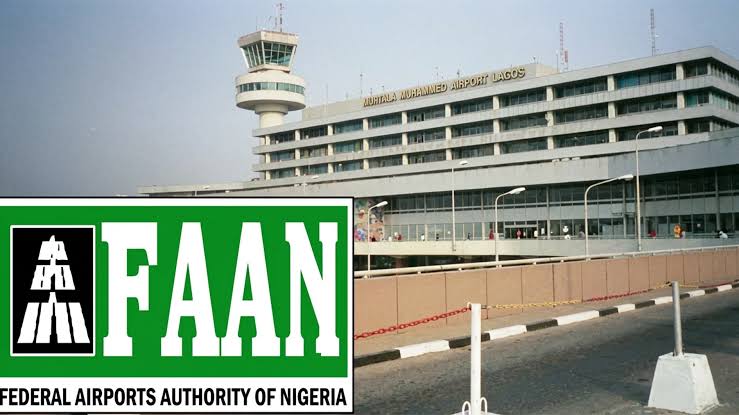
A viral video of distressed airport cab drivers appealing to President Bola Tinubu over what they believed was a directive requiring them to acquire 2020 model vehicles has sparked broader debate over FAAN’s latest push to modernise airport ground transportation.

While the appeal centred on the cost of acquiring newer vehicles in an economy weighed down by inflation and dwindling purchasing power, findings by The PUNCH showed that the controversy extends beyond vehicle specifications. At the heart of the disagreement is the implementation of the Airport Car Hire Rank Management System, a digital platform introduced by FAAN to regulate airport taxi operations, improve security and streamline passenger movement.

For FAAN, ACHRAMS represents a major step towards modernising airport ground transportation and closing longstanding security and operational gaps. For the drivers, however, the unanswered questions are less about digitisation and more about participation and practicality, among other concerns.

For many of the drivers, however, the issue is not resistance to technology but the feeling that they are being excluded from a reform that will directly affect their daily operations and livelihoods.

In the video, one of the drivers, speaking in Yoruba, appealed to Nigerians to intervene, saying, “This is what we are facing. Nigerians should help us intervene. They said we should go and buy a vehicle from 2020 above. Vehicles that cost between N18 and N30m, with the way Nigeria is now.

“There are no jobs in the country, with what we are going through. Please pity us Nigerians. Let this go viral. Nigerians pity us, help us intervene.”

The video gained traction on social media, drawing mixed reactions. While many Nigerians sympathised with the operators, arguing that surviving businesses should not be burdened with additional costs during economic hardship, others insisted that airport transport services should reflect the standards expected of international gateways.

Behind the public debate lies ACHRAMS, a technology-driven initiative FAAN says is designed to improve passenger safety, eliminate touting, regulate airport taxi services and ensure transparent fare administration.

The authority insists the initiative has been widely misunderstood.

See also  Rising fuel prices: NNPC may supply foreign crude to Dangote refinery

Responding to the controversy, FAAN’s Director of Commercial and Business Development, Ms Adebola Agunbiade, dismissed claims that the protest was triggered by any directive compelling drivers to procure 2020 model vehicles.

She said, “Regarding the video circulating online, the claim that the main cause of the drivers’ actions is not accurate. The footage shows planned resistance by car hire operators who refused to register on the ACHRAMS. Those drivers were working to prevent the soft and pilot launches of the system at the Murtala Muhammed International Airport. This incident is not related to any policy regarding vehicle model year.”

Agunbiade explained that the authority’s minimum vehicle requirement remains 2012 models and above, not 2020 as widely alleged.

She further said, “It is incorrect to say that FAAN asked drivers to change their vehicles to a minimum of the 2020 model because of the introduction of ACHRAMS. In fact, one of the conditions laid down by the Authority for registration on the app is that drivers must operate vehicles manufactured in 2012 or above.”

She also stated that the requirement was introduced as far back as 2024 and that FAAN had repeatedly extended compliance deadlines from January to June and now to 1 October 2026, to accommodate operators facing financial constraints.

The airport managers also rejected allegations that the new system was intended to reduce the number of airport cab operators.

Agunbiade stated, “It is important to note that FAAN is not planning to clear only 60 per cent of existing drivers to pave the way for ACHRAMS. The intention is to clear all drivers, provided they comply with the laid-down standards.”

She disclosed that nearly all existing airport taxi operators at the Murtala Muhammed International Airport had already been admitted into the pilot phase of the platform, except two companies whose union allegedly advised members against participating while pursuing separate digital solutions.

FAAN further revealed that discussions were ongoing with ride-hailing companies such as Bolt and Uber to integrate their operations into ACHRAMS, explaining that any temporary restriction on airport pickups was purely regulatory pending the conclusion of agreements.

FAAN says the application goes beyond regulating drivers, describing it as a platform that will reshape airport transport through digital tracking, stricter vehicle and driver screening, transparent fare systems, designated pick-up points and stronger passenger security.

The platform, which is being implemented under a ten-year concession managed by two companies, the agency said, will reduce congestion around airport terminals while introducing electronic booking and payment options for passengers.

See also  On food price crash, farmers fault FG’s order as agro-imports hit N2.2tn

FAAN maintains that consultations did not begin overnight, insisting stakeholder engagements commenced in 2024 before the project entered its pilot phase.

Despite those assurances, many airport cab operators maintain that the consultation process has not been as inclusive as it ought to have been.

The National President of the National Association of Airport Cab Drivers, Mr Adepegba Samuel, said the association’s demand is simple and not the suspension of the initiative, but genuine dialogue with them.

“You see, when you want to introduce something that you want people to align with, there should be serious briefing and enlightenment about the issue. The people introducing something are in the office, but we are the ones operating on the road. They should speak with us so that we can also tell them our views,” he said.

Samuel argued that airport drivers interact with passengers more than any other stakeholders after travellers leave the terminal buildings, making their practical experience invaluable in shaping the success of any operational reform.

He said, “We try to take the message to the public, but we need to sit together. We are the ones who will mostly speak to the public about this, but when we are not properly briefed or when you refuse to sit with us, how do we go forward from there?

“There are things they don’t know in the office that are happening, that we know because we deal with the public. We deal with the masses. We are at the finishing end of the job.

“They will bring the passenger from the plane down. We will take them to their respective areas. So we are dealing with them. If they want to ask questions about our operation, the public will not ask the government first; they will ask us. That is why we are saying let us have a round-table discussion.”

His concerns also extend to the practical application of the technology.

See also  After N2.83trn Loss, Analysts See Stock Market Staying Cautious This Week

According to him, the operational realities of Nigeria’s airports require a more flexible system than what has currently been proposed.

He reasoned, “The app they are talking about varies. The one that we work with in MM1 will not work at the international terminal. This one cannot even work for the public. The app should be made for the airport alone and be generalised.

“That is why we are seeking an audience with them, and they have refused to grant it. We are not fighting them. They are our bosses and principals, but they should please listen to us too.”

Samuel illustrated his concerns with a personal example, explaining that many airport drivers have built trusted relationships with customers over decades.

He explained, “For instance, I have a customer, an old customer of more than 25 years. Some of them have children in Babcock and other boarding schools. They don’t even come to pick their children themselves because they have confidence in me. They trust me.

“Imagine they are trying to reach me through the app from the international terminal while I am at the local airport; that will not be possible.

“They are our principals, but what we are saying is that let us come to a round table and debate the issue. That is all we seek.”

Attempts to obtain FAAN’s response on why the authority had yet to meet with the union were unsuccessful, as calls and text messages sent to its spokesperson, Henry Agbebire, went unanswered as of the time of filing this report.

Meanwhile, FAAN sources, who requested anonymity because they were not authorised to speak publicly, told our correspondent that the authority had no basis to meet directly with the drivers since it has no contractual relationship with them. They explained that FAAN had instead engaged with the concessionaires responsible for overseeing the airport cab operators.

One of the sources said, “FAAN could not have met with them because they work at the airport under different companies, yes, concessionaires, and these people are the ones FAAN met on several occasions. We couldn’t have met the drivers or unions.”

punch.ng

FOLLOW US ON:

FACEBOOK

TWITTER

PINTEREST

TIKTOK

YOUTUBE

LINKEDIN

Continue Reading
Click to comment

Leave a Reply

Your email address will not be published. Required fields are marked *

Business

Whatsapp to begin charging businesses per message from October 1

Published

on

Meta, the parent company of WhatsApp, will begin charging businesses for certain messages sent through the WhatsApp Business Platform from October 1, 2026.

This was disclosed in a WhatsApp Business Platform pricing update in July 2026.

The new charges will be applied to companies using the official WhatsApp Business Platform, formerly known as the WhatsApp Business API, to manage customer conversations at scale.

Banks, fintechs, e-commerce companies, telecoms operators, logistics firms and large retailers that rely on the platform for customer service and transactional communication are among those that could be affected.

However, the development will not affect ordinary WhatsApp users or most small businesses using the standard WhatsApp Business app on their phones.

Under the current system, when a customer sends a message to a business, a 24-hour customer service window opens. During that period, businesses can respond with free-form service messages and certain utility messages without paying Meta.

However, from October 1, Meta will begin charging businesses on a per-message basis for service messages sent during the customer service window.

Meta, in its developer documentation, said, “Effective October 1, 2026, Meta will charge on a per-message basis for all service messages, consistent with how Meta charges for template messages. These messages have not been charged since November 1, 2024.”

The company added, “Effective October 1, 2026, Meta will charge on a per-message basis for utility messages sent in response to users (within an open 24-hour customer service window). These messages have not been charged since July 1, 2025.”

Utility messages include communications such as payment confirmations, order updates and delivery notifications.

See also  Rising fuel prices: NNPC may supply foreign crude to Dangote refinery

Meta also warned businesses and Solution Providers about the need to add a payment method ahead of the new charges.

It said, “For any Solution Provider or directly-integrated businesses that does not have a payment method on file by September 30, 2026, Meta will stop delivering service messages as of when they become charged on October 1, 2026.”

For Nigerian businesses, a chargeable utility or service message is expected to cost about $0.0101 per message, equivalent to roughly ₦14 based on an exchange rate of about ₦1,340 to the dollar.

Marketing messages are considerably more expensive, at about $0.062 per message, or approximately ₦84 at the same exchange rate.

The charges are Meta’s fees and do not necessarily represent the total amount a business will pay. Companies using Business Solution Providers or third-party platforms to access the WhatsApp Business Platform may incur additional provider charges.

FOLLOW US ON:

FACEBOOK

TWITTER

PINTEREST

TIKTOK

YOUTUBE

LINKEDIN

INSTAGRAM

Continue Reading

Business

FG reaffirms partnership with Taraba to unlock economic potential

Published

on

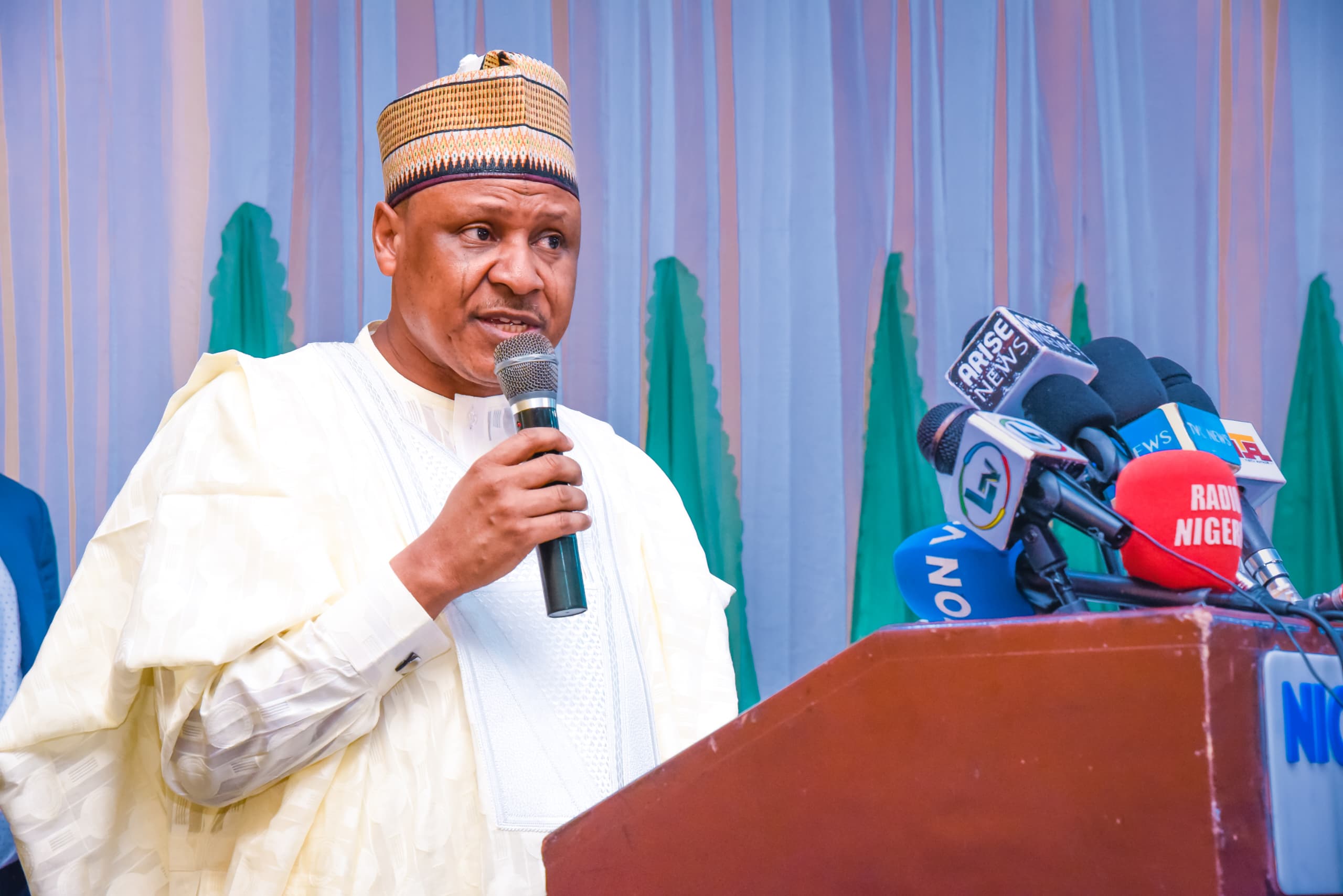
The Federal Government has reaffirmed its commitment to working with the Taraba State Government to unlock the state’s vast potential in agriculture, energy, tourism, infrastructure and mineral resources.

The Minister of Information and National Orientation, Mohammed Idris, stated this on Thursday in Jalingo at the Gala night to mark the Taraba State’s 35th anniversary and the official unveiling of the Taraba Regional Development Master Plan.

He described the newly unveiled Taraba Regional Development Master Plan as an important blueprint for sustainable growth.

Idris, who conveyed the greetings of President Bola Tinubu and the Federal Executive Council to the government and people of Taraba State, said the state’s 35th anniversary offered an opportunity not only to celebrate its progress since creation in 1991, but also to define a clear pathway for its future.

He commended Governor Agbu Kefas of Taraba for adopting a long-term development framework, saying the success of the Master Plan would ultimately depend on sustained implementation and its impact on the lives of citizens.

“The success of this Master Plan will not be measured by the ceremony at which it is unveiled, but by the roads built, businesses created, jobs generated, communities connected and lives improved,” the minister said.

Idris described Taraba as one of Nigeria’s most promising economic frontiers, with enormous opportunities in agriculture and agro-processing, livestock, hydropower, tourism, manufacturing and mineral development.

He praised the Kefas Administration for its investments in education, healthcare, infrastructure, security and economic development, particularly its policy of free and compulsory primary and secondary education.

He said the evidence was in the provision of more than N1.8 billion in 2026 to cover NECO, BECE and NABTEB examination registration for public-school students.

See also  After N2.83trn Loss, Analysts See Stock Market Staying Cautious This Week

The minister also highlighted the approximately 268 million dollars financing agreements signed between Taraba State and the ECOWAS Bank for Investment and Development for an integrated industrial park, 10,000 hectares of irrigated rice production and processing, and a 50-megawatt solar power plant in Jalingo.

He said the investments represented the kind of initiatives required to convert the state’s natural advantages into production, value addition, employment and sustainable economic growth.

Idris said Tinubu’s administration was complementing the state’s development drive through major federal infrastructure projects.

“These include the Gembu–Mbamnga–Yang (Lip) Road, the Bali–Serti–Gashaka–Gembu Road, interventions on the Jalingo–Mutum Biyu–Tella–Wukari corridor, as well as further work on the Mayo Selbe–Gembu, Mutum Biyu–Garba Chede and Jalingo–Numan roads.

“These are more than roads. They are investments in connectivity, trade, tourism, agriculture, security and the movement of people and goods,” he said.

The minister also reaffirmed the federal government’s commitment to harnessing Taraba’s agricultural, energy and mineral potential, including the strategic Mambilla Hydroelectric Power Project.

On security, Idris said the federal government was advancing reforms toward the establishment of State Police to bring policing closer to communities while ensuring professionalism, accountability and safeguards against abuse.

He said such a framework could be particularly beneficial to Taraba because of its vast terrain and dispersed border communities, where local knowledge, intelligence gathering and rapid response were critical to effective policing.

The minister also cited the establishment of the Nigerian Army’s 10 Division, headquartered in Jalingo, with operational responsibility for Taraba and Adamawa States, as evidence of the federal government’s commitment to strengthening security in the region.

“Security and development must go together. People cannot invest, farmers cannot move their produce, tourists cannot visit and businesses cannot grow where communities feel unsafe,” Idris said.

See also  Labour rejects N100,000 minimum wage proposal; see the amount NLC proposed

He said the federal government’s economic reforms were designed to create a stronger fiscal foundation for development, noting that the removal of petrol subsidy had mobilised N15.8 trillion in additional resources for the Federation between June 2023 and December 2025.

According to him, approximately N5.4 trillion accrued to the federal government while about N10.4 trillion went to states and local governments, providing additional resources for infrastructure, education, healthcare, security and human capital development.

Idris said the federal government remained opposed to a return to the previous subsidy regime, stressing that the priority was to consolidate the gains of reform, protect vulnerable Nigerians and ensure that additional public resources translated into tangible improvements in citizens’ lives.

He emphasised that development must ultimately be people-centred, creating opportunities for young people, expanding women’s economic participation, supporting farmers and small businesses, and connecting communities to markets and public services.

The minister also pledged stronger collaboration between the Federal Ministry of Information and National Orientation and the Taraba State Ministry of Information and Re-Orientation to ensure citizens understand and embrace the objectives of the Master Plan.

“The vision contained in this Master Plan must go beyond government offices. It must reach the farmer, the entrepreneur, the student, the trader and communities across Taraba.

“This is because a plan for Taraba must ultimately be a plan owned by the people of Taraba,” he said.

Idris congratulated Kefas, the government, and the people of Taraba State on the state’s 35th anniversary, describing the occasion as both a celebration of Taraba’s history and a renewed commitment to its future.

See also  Sanwo-Olu unveils Lagos 2026 economic blueprint, vows inclusive growth

“35 years of history. A new blueprint for the future. And a renewed commitment to building the Taraba we want and the Nigeria we deserve,” the minister said.

In his remarks, Kefas also called for continuity in governance, acknowledging the contributions of former military administrators and elected governors to Taraba State’s development.

He said his administration was committed to building on previous achievements, correcting what needed to be corrected, completing worthy projects and opening new frontiers for future generations.

He stressed that the development of Taraba must remain bigger than any government, political party, ethnic group or individual, urging former leaders to continue contributing their experience and institutional knowledge to the peace, unity and prosperity of the state.

“Government must be a continuum. Development must be cumulative. Taraba is bigger than any government, any administration, any political party, any ethnic group, or any individual,” Kefas said.

He added that the ultimate credit for development belongs to the people of Taraba State.

Present at the event were the former Governor of Taraba State, Rev. Jolly Nyame; Secretary to the Government of Taraba State, Chief G.T. Kataps; Director-General of the Nigerian Television Authority, Salihu Dembos; and  Director-General of the Federal Radio Corporation of Nigeria, Dr Mohammed Bulama.

Others were the Managing Director of the Nigerian Ports Authority, Dr Abubakar Dantsoho; as well as other distinguished government officials, traditional leaders, members of the diplomatic and business communities, and other dignitaries.

NAN

Source: punchng.com

FOLLOW US ON:

FACEBOOK

TWITTER

PINTEREST

TIKTOK

YOUTUBE

LINKEDIN

INSTAGRAM

Continue Reading

Business

CBN cuts T-bill rate amid N3.63tn demand

Published

on

Investors are increasingly positioning for longer-term returns in Nigeria’s fixed-income market, with the latest treasury bills auction showing an overwhelming preference for the one-year government security.

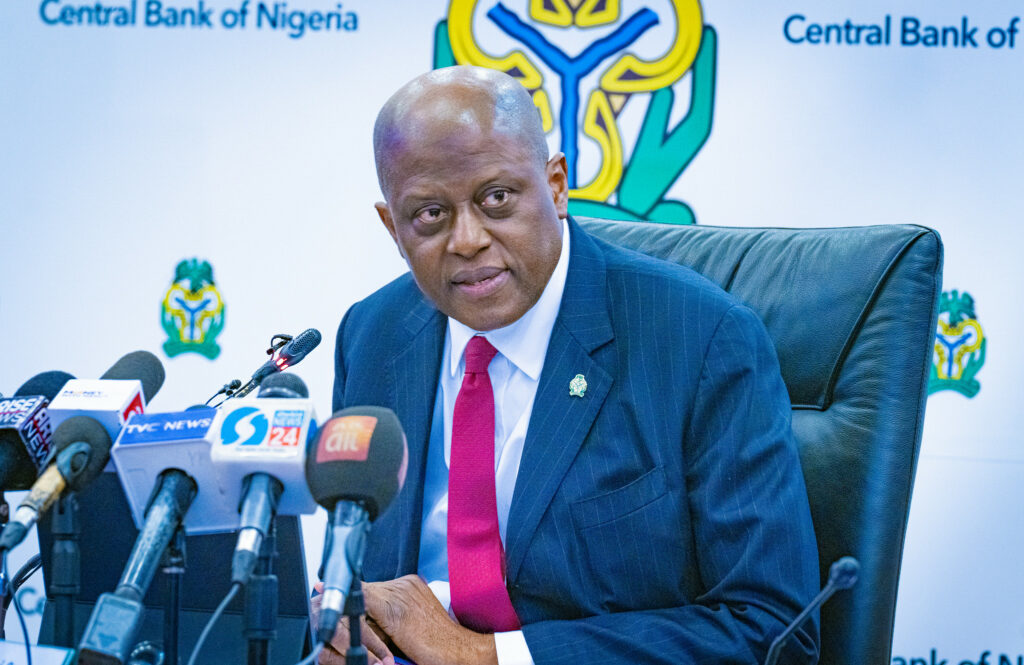
At the Central Bank of Nigeria’s (CBN) primary market auction on Wednesday, investors submitted N3.63tn for the 364-day T-bill, representing 95.9 per cent of the N3.79tn total bids received across the three maturities.

The demand came despite the CBN lowering the stop rate on the one-year instrument by 44 basis points to 17.15 per cent, from 17.59 per cent at the previous auction.

The auction results point to a significant shift in investor appetite towards longer-dated government securities, even as demand for shorter-tenor instruments remained subdued.

The CBN had offered N700bn across the three maturities, comprising N100bn each for the 91-day and 182-day bills and N500bn for the 364-day bill.

However, total subscriptions reached approximately N3.79tn, more than five times the amount offered.

The PUNCH that the 364-day instrument was the clear outlier at the auction, receiving bids equivalent to 7.26 times the amount offered.

The CBN ultimately allotted N638.19bn, exceeding the N500bn offer by N138.19bn. Despite the additional allotment, only about 17.6 per cent of total bids submitted for the instrument were accepted.

Investors quoted yields between 16.00 per cent and 19.05 per cent, but the CBN settled at 17.15 per cent, suggesting that the level of demand allowed the regulator to reject more expensive bids.

The development is significant because the CBN achieved a lower borrowing rate even after receiving exceptionally strong demand for the security.

See also  Nigerian businesses to lose billions of naira as 25-day blackout hits Lagos, Ogun

The contrast was stark at the shorter end of the curve. The 91-day bill attracted N103.32bn in subscriptions against N100bn offered. The CBN allotted N89.10bn at an unchanged stop rate of 16.30 per cent.

The 182-day bill performed even more weakly, attracting only N52.93bn against N100bn on offer. The CBN allotted N35.59bn, while the stop rate remained at 16.50 per cent.

Secondary-market yields for the three instruments stood above their respective auction stop rates, at 17.45 per cent for the 91-day bill, 17.05 per cent for the 182-day bill and 17.24 per cent for the 364-day bill.

According to a financial sector analyst, Jimbe Asalor, the concentration of bids in the one-year instrument suggests investors may be placing greater value on locking in relatively attractive yields over a longer period rather than repeatedly rolling over shorter-term securities.

He noted that the latest auction also demonstrates “the CBN’s ability to borrow more cheaply when demand is concentrated around a particular maturity.”

He added that by accepting N638.19bn on the 364-day bill at 17.15 per cent, the CBN borrowed above its initial offer while simultaneously cutting the rate by 44 basis points.

“The nine-basis-point difference between the auction stop rate and the 17.24 per cent secondary-market yield also indicates that the one-year segment is now trading relatively close to market expectations.”

A Lagos-based consultant economist, Chukwunonso Iheoma, said if the preference for longer-dated treasury bills persists, the development could provide further support for a gradual decline in government borrowing costs while strengthening expectations of eventual interest-rate cuts.

See also  Dangote Refinery stops sales to unregistered marketers

Source: punchng.com

FOLLOW US ON:

FACEBOOK

TWITTER

PINTEREST

TIKTOK

YOUTUBE

LINKEDIN

INSTAGRAM

Continue Reading

Trending