The All Progressives Congress on Wednesday inaugurated its Presidential Campaign Council for the 2027 election, expressing confidence in President Bola Tinubu’s record and reforms while rallying party leaders and politicians from other political parties to secure his re-election.
The inauguration and federation general assembly, held at the State House Conference Centre, Abuja, drew opposition figures who pledged to back his re-election bid.
They include Osun State Governor, Ademola Adeleke of the Accord Party, Minister of the Federal Capital Territory, Nyesom Wike of the Peoples Democratic Party and the Anambra Governor, Prof. Charles Soludo of the All Progressives Grand Alliance.
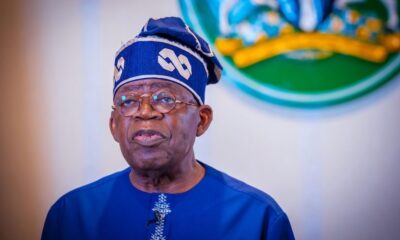
Tinubu told the council that he would not allow the campaign to distract him from governing and asked to be excused from touring the nation with the campaign team.
Vice President Kashim Shettima, the Senate President, Godswill Akpabio, the Speaker of the House of Representatives, Tajudeen Abbas, the APC National Chairman, Nentawe Yilwatda and the Chairman of the Progressive Governors’ Forum, Hope Uzodimma, were among those who attended the event themed ‘Renewed Hope, Cooperative Federalism and Shared Prosperity.’
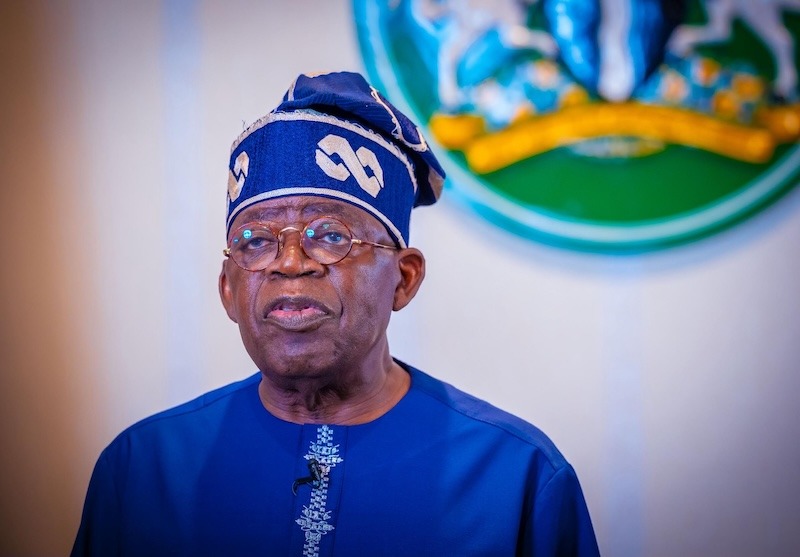
President Tinubu, who asked to be excused from touring with the campaign team, said, “You have warned me and asked me not to allow the rigour of the campaign to distract me from governance. I hear you. I am in full agreement with your decision. Nigeria needs more attention now than ever before. The responsibility of this office does not pause.
“The job must go on. However, I will still make time to speak directly with Nigerians, even as you lead the campaign in the states and local government areas, so you will excuse me from going everywhere with you. We have bills to pay. The creditors cannot wait.”
He assured the gathering that state police “will be a reality”. He also told women that the bill on reserved seats for them would come to fruition, saying the number of women in the National Assembly and at sub-national level would increase.
The President also warned the party against complacency, saying, “I thank all of you for the last election, but no one gets credit for an incomplete assignment. Until you deliver the next election, until you deliver your wards, until you deliver the votes, before we can say thank you, thank you, and I will thank you very much.”
He recalled that critics had predicted the party would implode ahead of its congresses and said it had instead emerged “strong, united and renewed.”
Describing himself as the party’s “errand man,” he promised to abide by his pledges and the manifesto.
He then declared the council inaugurated.
Speaking at the event, Prof. Yilwatda flaunted Tinubu’s administration’s achievements and asked the council to communicate the importance of the infrastructure the government had built, including “roads, power projects, gas projects, railways, ports, agricultural infrastructure and digital connectivity.”
These investments, he said, were essential to productivity, commerce, employment and national development.
“Our responsibility is to explain clearly what has been completed, what is progressing and what remains to be done.
“We must show Nigerians how these investments and reforms can translate into practical improvements in their daily lives,” he said.
“We have made so much progress but must acknowledge where we have challenges while explaining the objectives, progress and continuing work of the administration,” he added.
Shettima mocks opposition
In his earlier remarks, Shettima ridiculed the former Vice President, Atiku Abubakar, the presidential candidate of the African Democratic Congress, for shifting his economic position on his proposed petrol subsidy.
Shettima said, “This political season has become a masterclass in cinematic comedy. Vice President Atiku Abubakar, who has worn the toga of capitalism with pride throughout his political career, now sounds like the legitimate offspring of Vladimir Lenin and Milca Planinc, an ideological union that will have astonished even the most imaginative historians of communism.
“His proposal for production subsidies raises questions that ideological costume changes cannot answer: Who pays? Who benefits? And which competing priorities must surrender their funding? A change of ideological wardrobe cannot balance a national budget.
“Political ambition is not merely the desire to operate public office. It is a test of character, celebration, intellectual maturity, and responsibility. The higher the office a person seeks, the greater the discipline expected in his words, conduct, and relationship with public institutions.”
“Atiku Abubakar, who has contested for the presidency of this country for the eighth time, is not Abraham Lincoln. He is more of Odinga Odinga,” the VP added.
The Vice President also described former Anambra State governor Peter Obi as “the master of bogus statistics and incoherent economic prescriptions”, mocking his frequent comparisons of Nigeria with Bangladesh.
“Then comes my very good friend, Mr Peter Obi, the master of bogus statistics and incoherent economic prescriptions, who seems convinced that a size 36 shirt tailored for Bangladesh will somehow fit a Nigeria sized 52 large.
“His fascination with foreign comparisons often blurs the peculiarities that distinguish one nation from another. Governance is an art that demands mastery of context, whether social, economic, political, or institutional,” said Shettima.
He added that “What succeeds in Bangladesh cannot simply be transplanted to Nigeria without accounting for the differences in our populations, economic structures, institutions, and national circumstances.
“A country of over 250 million people cannot be governed through borrowed statistics and economic prescriptions detached from its peculiarities.
“I respect Peter Obi, but he has gone beyond his mastery philosophy to make bogus claims about winning the 2023 presidential elections without adducing a shred of evidence to buttress his assertion; this is called the illusion of grandeur.
APGA backs Tinubu
For his part, Anambra State Governor, Prof. Charles Soludo, said his party, the All Progressives Grand Alliance, registered in 2002, must be counted among the progressives.
He argued that no time in Nigeria’s history had seen such elite unity behind one candidate.
The former Governor of the Central Bank of Nigeria pointed to the number of governors in the hall, saying, “For the first time, you have about 33 governors seated here out of 36”
“There is no time in Nigeria’s history, to the best of my knowledge, that there is a greater consensus, political and elite consensus. Of course, consensus doesn’t mean everybody agrees 100 per cent. I’m talking about 80, 90 per cent consensus in the political arena.
“There is nowhere for changing a winning team. If it’s not broken, why mend it? Count on us in APGA 24/7. We are with you because we believe,” said Soludo.
Wike for Tinubu
Wike, who said he learnt of his appointment as the campaign director for his home state of Rivers and the Federal Capital Territory from a newspaper, pledged to deliver both regions.
He said, “For me, as an opposition party member, as the leader of the Peoples Democratic Party, there are not two leaders of the PDP. I’m the leader of the PDP, so I speak on behalf of the Peoples Democratic Party.
“Simple, not too much work for me. It’s Rivers and FCT, and let me say and pledge, by the grace of God, Rivers and FCT will vote massively for Bola Ahmed Tinubu.”
He told the coordinators that a Tinubu victory would not excuse any of them for failing to deliver their states.
He also expressed optimism that the state police would be passed “in the next few months.”
Tinubu’s re-election
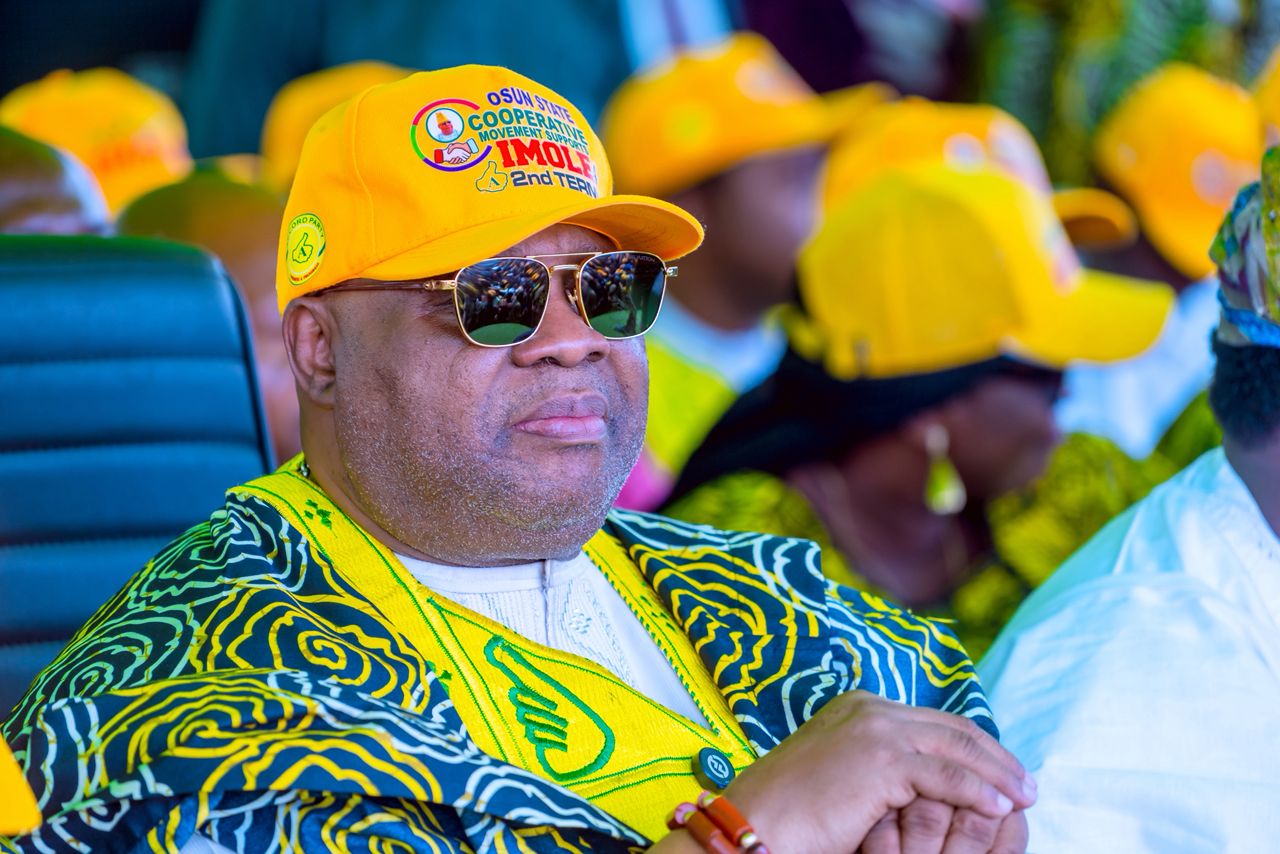
Governor Ademola Adeleke of Osun State said four years was not enough for the President’s reforms to work.
“We must give our father, the President of this nation, time for his reform to work. It’s not easy. Four years is not enough. Nobody can stop this movement. We’re going to sing, we’re going to dance all the way back to Aso Rock,” he stated.
For his part, Senate President Akpabio described Wednesday’s gathering as a coalition of the winning parties, adding that the unity on display was unprecedented.
He said, “Demonstrated here tonight is something that has not happened since 1960. All political parties have come together, except those who are losing.
“Any party that is not here tonight is a losing party, and so the progressives are all here.”
Speaker of the House, Abbas, said the 2027 election offered a clear choice between continuity and what he called confusion.
According to him, “This election presents a clear choice between consolidation and confusion, between steady progress and dangerous retreat, between completing a difficult national repair and abandoning it halfway. Nigeria has passed through the hardest phase of correction. We must not abandon the work just as stability begins to return.”
Turning to the opposition, Abbas told campaigners to answer anger with evidence.
He said, “They condemn reform but offer no credible replacement. They promise reversal without calculating its cost. They assemble familiar political actors under new arrangements and call it a new beginning.
“When opponents raise their voices, we must raise the quality of our arguments. When they insult, we must inform. When they divide, we must unite.”
In his welcome address, APC Chairman Yilwatda urged the council to be honest about the government’s shortcomings.
He said the campaign should engage Nigerians on “the cost of living, security, jobs, education, healthcare, agricultural productivity and economic opportunity”.
“We have made so much progress but must acknowledge where we have challenges while explaining the objectives, progress and continuing work of the administration.
“Confidence is not complacency. It is the determination to prepare thoroughly, work together and earn the trust of the people,” he stated.
The Special Adviser to the President on Political and Other Matters, Ibrahim Masari, speaking for the council, vowed that the group would deliver for the President.
“The votes that will be secured by all the opposition parties put together will not reach half of what this council will deliver for you. That, we promise, and by the grace of Allah we will deliver,” he stated.
Masari told the members that the government would assess everyone’s performance by results at the grassroots, “not the volume of their talks or promises.”
In his acceptance speech, the Director-General of the council, Abdulaziz Yari, accepted the appointment on behalf of members and said the campaign would be built on the President’s record.
Yari said, “We are going to do it all honestly with trust, and by God’s grace, we are going to deliver. You will be the next president of this country again for the second time.
“To my colleagues, members of the PCC, this is a challenge to each and every one of us. It’s no time for ego. We are all one in this business. We have only one agenda. What is that agenda? To ensure that Asiwaju Bola Tinubu returns as president.
Atiku slams membership
Atiku, in a statement by his campaign spokesman, Phrank Shaibu, said the enlarged council showed Tinubu’s fear of defeat.
In a statement on Wednesday, Shaibu wrote, “Only a man afraid of his record would think he could bury it under hundreds of names. Tinubu can gather every governor, minister and political defector in Nigeria. None of them can erase the hunger in people’s homes.
“The Presidential Villa belongs to the Nigerian people. It is not a campaign venue or the private property of any political party. Using it for an APC political event is a gross breach of public trust.”
The former Vice President cited the 2026 Global Multidimensional Poverty Index, which he said recorded 17.9 million more Nigerians in multidimensional poverty.
He added that, on January 16, “the ballot will contain no column for the size of a campaign council”.
Makinde derides PCC
Meanwhile, the Presidential Campaign Organisation of Oyo State Governor, Seyi Makinde, has described the All Progressives Congress Presidential Campaign Council as a “coalition of failed politicians,” adding that it cannot prevent President Bola Tinubu from suffering imminent defeat in the 2027 general election.
Makinde’s Allied Peoples Movement Council, in a statement on Wednesday by its Director of Strategic Communications, Richard Ihediwa, described the council as a “Nebuchadnezzar Coalition” heading for political humiliation, citing worsening insecurity, economic hardship and declining public confidence in the Tinubu administration.
The Council stated, “This Nebuchadnezzar Coalition is headed for the rocks as it cannot whitewash the failures of the Tinubu administration, nor rewrite the painful realities confronting citizens. It cannot manufacture public acceptance through a parade of “political predators” and power-drunk elites who are mistaking political dominance for public acceptance.
“With the high confidence that President Tinubu reposes in this alliance of failed governors, yes-along legislators, and discredited politicians, some of whom are fleeing from corruption investigations, even as his administration presides over an unprecedented economic crisis, worsening insecurity and a devastating collapse of public confidence, we see in the APC Presidential Campaign Council imminent political humiliation.”
The organisation questioned how the APC campaign council would explain the growing hardship faced by millions of Nigerian families and the rising unemployment among youths, which it blamed on Tinubu’s policies. It also cited a Federal Government disclosure that 70 per cent of Nigerian children under the age of 10 could not read and understand a simple sentence.
The Makinde Campaign said the figures reflected the country’s deepening socio-economic challenges and declining human capital, arguing that the APC campaign council could not replace accountability and measurable results amid widespread hunger, homelessness and illiteracy.
Tinubu emerged as the APC candidate on May 24, winning the ticket by 10.9 million votes in the party’s first direct primary across 8,809 wards.
On July 10, he retained Shettima as his running mate. The council was constituted on August 22, with Tinubu as chairman, Shettima as vice chairman, Yari as Director-General and Uzodimma as Secretary. A revised list released on Tuesday added Wike, Soludo and Adeleke.
Source: punchng.com
FOLLOW US ON:
FACEBOOK
TWITTER
PINTEREST
TIKTOK
YOUTUBE
LINKEDIN
INSTAGRAM