Connect with us

Politics

Zoning splits coalition, Obidients demand southern candidate

Published

on

Loyalists of former Anambra State Governor Peter Obi and ex-Kano State Governor Rabiu Musa Kwankwaso have called on the opposition to adopt a Southern presidential candidate, intensifying conversations about coalition-building ahead of the 2027 general elections.

However, opposition parties, including the African Democratic Congress, the New Nigeria People’s Party, and the Social Democratic Party, differed on whether the presidential ticket should be zoned to the North or the South.

The National Publicity Secretary of the ADC, Bolaji Abdullahi, said the party was not committed to zoning, but to the electoral viability of the contestants.

The push for a southern consensus candidate follows a high-profile political gathering in Ibadan, where opposition figures across multiple platforms reportedly explored the possibility of forming a united front to challenge the ruling All Progressives Congress in 2027.

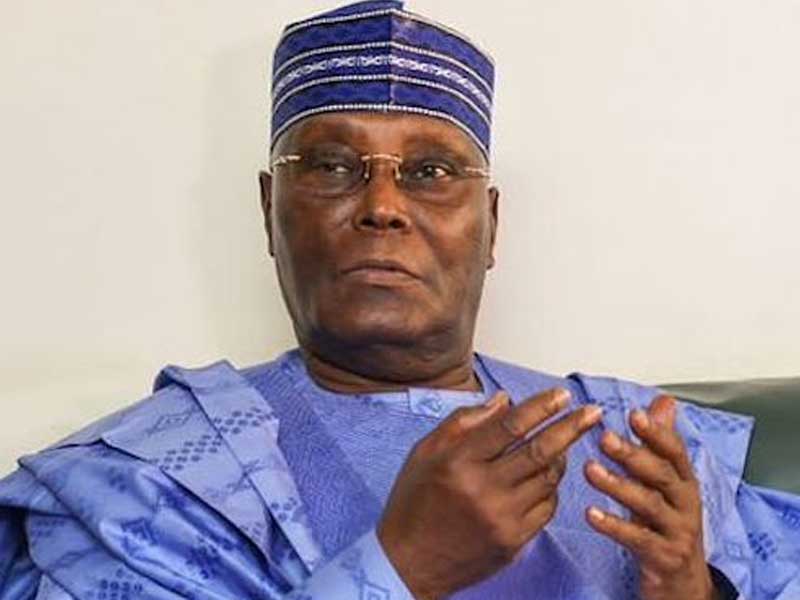
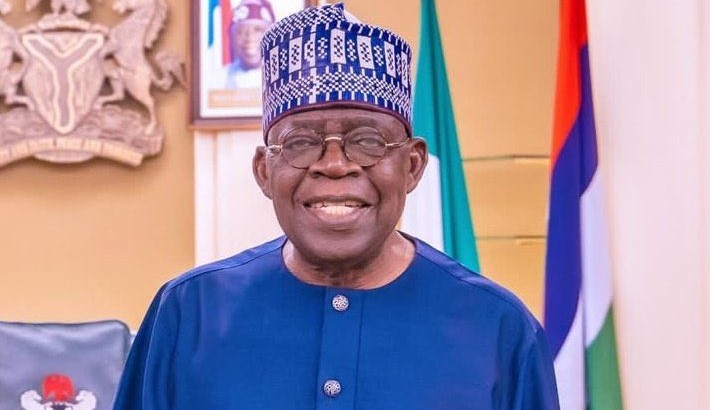
The meeting, attended by prominent political figures, including former Vice President Atiku Abubakar, Obi, Kwankwaso and former Rivers State Governor Rotimi Amaechi, among others, resolved to work toward presenting a single presidential candidate against President Bola Tinubu.

The decision has since sparked debate within political circles, with growing calls for opposition cohesion countered by claims from the ruling party that such moves may be premature, citing internal divisions among the opposition parties.

Speaking with The PUNCH on Tuesday, the National Coordinator of the Obidient Movement Worldwide, Dr Yunusa Tanko, and the National Publicity Secretary of the Obi–Kwankwaso Movement, Justin Ijeh, stressed the need to respect Nigeria’s informal zoning arrangement in the interest of fairness and national balance.

Tanko said the demand for a southern presidential ticket is rooted in equity and continuity, noting that the current presidency is already zoned to the South.

He added that Obi had aligned with this position by indicating a willingness to serve only a single four-year term.

See also  Labour Party Chairman attacked at Abuja airport

He said, “Yes, we are concerned about the zoning. That was why we’ve been asking the ADC to zone the presidency to the southern part of this country, considering the simple fact that the Presidency has been zoned to the south.

“As you speak right now, what we have is a southern presidency. So, once you have a southern president, it simply means that even if there is going to be a replacement for the existing president, it should come from the South for them to complete their tenure.

“I think it is only fair to do that. And that was why Mr Peter Obi has also agreed that he’s going to do only four years.”

Continuing, Tanko expressed confidence that Obi would emerge as the consensus candidate if the opposition settles for a unified ticket, citing widespread public support, particularly among young Nigerians.

“That is because he’s the most popular candidate in the country at the moment. I’m being humble about it, and I thank God for it. He’s the most popular, especially among the youth. Anywhere he goes, he is adored.

“Let me give you an instance. We were on our way to Ibadan the other day, and we passed through the international and local airports. You need to see the kind of love and euphoria people showered on him. It was amazing.

“The whole hall was agog with Nigerians shouting ‘Obi, Obi, Obi.’ It was so emotional for him and for some of us who are following him. So that is to tell you the kind of love and support Nigerians are ready to give this man,” he noted.

Echoing a similar sentiment, Ijeh argued that while zoning is not constitutionally mandated, it remains a practical mechanism for ensuring inclusion in Nigeria’s diverse political landscape.

See also  PDP remains most united party in Nigeria – Jonah Jang

The spokesman for the Obi–Kwankwaso Movement emphasised that allowing the single presidential candidate to emerge from the South is the right thing to do.

He said, “While it is not embedded in the Nigerian constitution, and while competence and character are the gold standard for leadership ideally, zoning is a pragmatic approach to balanced representation and equity in a multipolar society like Nigeria.

“It has been practised as a convention since the return of democratic rule. Certain politicians, however, may choose to play to the gallery about it when their personal interests and ambitions are not favoured by it.

“In the current calculus for Nigeria, given our very recent political trajectory, it only makes sense for the zoning principle to be applied and for the presidency to remain in the South, in keeping with that convention.

“Anything else sets the country up for divisive complications in the near-term future, and nobody needs that.”

Speaking on the demand that the presidential ticket should be zoned to the South, the ADC spokesman, Abdullahi, said the party would rather prioritise electoral viability.

“ADC never announced a position on zoning. This is why the current alliance is workable. We will identify and support the best candidate to win the election,” he said.

Abdullahi’s position suggests that the ADC may favour an open contest in which political strength, popularity, and strategic advantage outweigh regional power-sharing considerations.

In contrast, the NNPP insisted that zoning remained an important political factor even within any consensus arrangement.

The NNPP National Publicity Secretary, Ladipo Johnson, said opposition leaders must balance national acceptability with broader political sensitivities.

See also  Yobe youths urge Buni to back young successor

“A joint candidate does not mean we cannot retain zoning. What matters is having a candidate acceptable to Nigerians across the South and North of the divide.

“If we agree to work together, it means certain things need to be taken into consideration. Getting to beat Tinubu is the task before us at this material time,” he said.

He added that discussions remain preliminary and that consultations among coalition partners are still ongoing.

“It’s just a proposal for now. Nothing is certain yet, but I am sure that consultation on this issue will continue.

“If a consensus candidate emerges, the party can still uphold zoning as long as it aligns with national unity. The consensus arrangement doesn’t necessarily override zoning principles,” he added.

Similarly, the Social Democratic Party acknowledged that zoning remained a legitimate constitutional and political consideration, though final decisions would depend on broader strategic calculations.

The National Chairman of the SDP, Shehu Gabam, noted, “Zoning is about the collective decisions of political parties and is constitutional. National political interest takes centre stage after that. It’s purely a political party’s decision to zone or not to zone.”

When asked whether the SDP would formally join the coalition backing a single opposition candidate, Gabam declined to commit. “It’s too early to tell,” he said.

The opposition’s renewed push for unity is widely seen as a response to lessons from the 2023 presidential race, where multiple opposition candidates divided anti-APC votes across regional and party lines.

Analysts say that while a consensus candidate could significantly reshape the 2027 contest, disagreements over zoning, party structure, candidate selection, and ideological differences remain major hurdles.

punch.ng

FOLLOW US ON:

FACEBOOK

TWITTER

PINTEREST

TIKTOK

YOUTUBE

LINKEDIN

INSTAGRAM

Continue Reading
Click to comment

Leave a Reply

Your email address will not be published. Required fields are marked *

Politics

Disagreement will make ADC stronger – Chieftain

Published

on

A chieftain of the Edo State chapter of the African Democratic Congress (ADC), Fawaz Muhammad, who is also gunning for House of Assembly seat, has said disagreement in the party will make it stronger.

He told PUNCH correspondent that what is being experienced now is typical in a growing family, noting that what is being experienced at the national level and Edo State chapter of the party were issues of coordination, communication, inclusion, and infiltration.

He said, “The African Democratic Congress is a party I believe in deeply, and like any growing family, we have our moments of disagreement. What we are seeing, both at the national level and in Edo State, are largely issues of coordination, communication, inclusion, and infiltration. These are challenges we must address with sincerity and unity both from the ward level to the national level.

“However, beyond internal matters, we must also be honest about the broader political environment. The role of the ruling party, the All Progressives Congress, is very critical in shaping the democratic space.

“As the party in power, there is a responsibility to promote fairness, avoid actions that may overheat the polity, and allow opposition parties to operate freely without undue pressure or interference. Democracy thrives where there is healthy opposition, not suppression.

“In the same vein, the Independent National Electoral Commission must continue to uphold its constitutional responsibility as an independent and impartial umpire. Nigerians must have confidence that electoral processes—from party administration to general elections are conducted with transparency, credibility, and fairness. Strengthening that trust is essential for the stability of our democracy.

See also  ADC crisis: Govs, lawmakers shelve defections

Muhammad, a former Speaker of the Edo State Youth Parliament, noted that the present moment calls for reflection, unity and responsibility in the ADC.

Continue Reading

Politics

ADC, PDP await crucial Supreme Court verdict today ahead of 2027 election

Published

on

The Supreme Court is set to deliver judgment today on the leadership disputes in the African Democratic Congress and the Peoples Democratic Party, a decision that could redefine both opposition parties ahead of the 2027 general elections.

Ahead of the verdict, the party leaders reportedly held an emergency strategic meeting on Wednesday night where they reviewed possible outcomes of the judgment and charted the next line of action for the opposition coalition.

A political commentator, Imran Wakili, confirmed the meeting on his X handle.

“ADC leaders are currently in an emergency strategic meeting ahead of tomorrow’s Supreme Court ruling on the party’s leadership tussle. The closed door meeting is expected to review possible outcomes of the judgment and chart the next line of action for the opposition coalition which has adopted the ADC as its major political platform ahead of 2027. Notably absent from the ongoing high level consultation are Mr. Peter Obi and Senator Rabiu Musa Kwankwaso,” he tweeted.

But in a new development that could further complicate the ADC crisis, a Federal High Court on Wednesday restrained the Independent National Electoral Commission from recognising the ADC congresses conducted by the David Marl leadership pending the resolution of the internal disputes in the party.

Reacting to the judgment, the National Chairman, David Mark, in a statement posted on X (formerly Twitter) by the National Publicity Secretary, Bolaji Abdullahi, assured party members that ADC would be on the ballot for all elections in 2027, despite ongoing legal challenges.

Speaking on Wednesday night after receiving a briefing from the party’s legal team on the Federal High Court judgment, Mark dismissed concerns over the litigations involving the party and expressed confidence in a favourable outcome.

“You do not have anything to be afraid of regarding all the litigations before the party.

“I want to assure you that we shall triumph in all the cases, and we shall be on the ballot for every election.

“We are more than prepared and ready for these cases, and we shall do everything within the ambits of the law to surmount every situation.

“In this legal battle, though I am not a lawyer, I will lead from the front, and we shall surely triumph.”

He said the ADC legal team had set in motion the process of appealing the judgment and applied for stay of execution.

Reacting to the verdict, the 2023 ADC Presidential candidate,  Dumebi Kachikwu, along with state chairmen of the ADC, expressed their support for the ruling, stating they would not allow the hijacking of the party.

On April 22, the Supreme Court concluded hearings on the leadership disputes involving the ADC and PDP.

The five-member panel of the apex court, headed by Justice Mohammed Garba, did not announce a date for judgment after hearing arguments in separate appeals challenging earlier rulings of lower courts on the issue.

Checks by our correspondents on the official website of the apex court on Wednesday indicated that the matters listed under ‘Political Appeals’ have been added to the cause list for Thursday, April 30, 2026.

The PUNCH also confirmed that judgment in the case of the PDP, with appeal number SC/CV/166/2026, and the ADC matter, marked SC/CV/180/2026, has been fixed for 2pm.

The electoral commission earlier set May 10 as the deadline for political parties to submit their membership registers.

It also scheduled the Presidential and National Assembly elections for Saturday, January 16, 2027, while Governorship and State Assembly elections are fixed for Saturday, February 6, 2027.

According to the timetable, party primaries and the resolution of related disputes will run from April 23, 2026, to May 30, 2026.

Campaigns for the Presidential and National Assembly elections are expected to commence on August 19, 2026, while campaigns for Governorship and State Assembly elections are slated to begin on September 9, 2026.

The scheduled rulings come amid mounting political tension and legal manoeuvres over control of party structures ahead of the 2027 general elections.

The PUNCH reports that the dispute in the ADC centres on a protracted leadership crisis involving Mark, and a rival faction led by Nafiu Gombe.

Mark is challenging the March 12 decision of the Court of Appeal, which directed parties to maintain the status quo in the leadership tussle.

He contended that the appellate court overstepped its bounds, arguing that the dispute is an internal party affair beyond judicial intervention.

The respondents—including the ADC, its National Secretary, Rauf Aregbesola, the INEC and former National Chairman Ralph Nwosu—urged the apex court to dismiss the appeal, insisting the lower court acted within its jurisdiction.

See also  Yobe youths urge Buni to back young successor

The case was heard on April 22 by a five-member panel led by Justice Mohammed Garba, which subsequently reserved judgment.

In a move that underscored the stakes, counsel for the ADC had earlier written to the Chief Justice of Nigeria, urging the court to deliver judgment within three days.

In the letter dated April 28, 2026, the law firm of S.E. Aruwa (SAN) & Co. warned that any delay could jeopardise the party’s participation in the 2027 polls.

They raised concerns over actions by INEC, alleging that the commission had acted on a lower court ruling to “remove or de-recognise the leadership” of the party.

According to them, the development has left the ADC “without leadership at the moment, even though the ADC remains a recognised registered political party in Nigeria.”

The lawyers further linked the urgency to the electoral timetable already released by INEC, stressing that compliance with statutory requirements for the 2027 elections depends on the outcome of the appeal.

“The ADC’s ability to comply with these statutory requirements to participate in the 2027 general elections is wholly dependent on the timely delivery of the judgment in the instant Appeal,” they said.

They warned that failure to deliver judgment promptly could expose the party to “grave and irreversible risk” of exclusion from the polls, adding that such a scenario would disenfranchise millions of its supporters.

“Justice delayed, in this particular circumstance, would amount to justice denied,” the counsel added, noting that the “entire political future” of the party hangs in the balance.

Expected at the Supreme Court today are Mark, Abdullahi, and other ADC bigwigs.

Also expected are members of the Oyo State Governor, Seyi Makinde’s camp of the PDP, led by Tanimu Turaki (SAN), National Secretary, Taofeek Arapaja, former Niger State Governor, Babangida Aliyu, Publicity Secretary, Ini Ememobong, and others, are also expected to witness the proceedings

From the camp of the Minister of the Federal Capital Territory, Nyesom Wike, those expected at the apex court include the National Chairman, Abdulrahman Mohammed; National Secretary, Senator Samuel Anyanwu; National Organising Secretary, Umaru Bature; and former Jigawa State Governor, Sule Lamido.

Earlier, the Federal High Court in Abuja on Wednesday restrained INEC from recognising or participating in any congress organised by a disputed caretaker leadership of the ADC.

The FHC, in a judgment delivered by Justice Joyce Abdulmalik, also barred former Senate President, Mark, and other prominent figures in the party from interfering with the functions and tenure of the elected state executives.

The ruling is the latest development in the festering leadership dispute within the ADC, with clear implications for the control of party structures ahead of future political activities.

The case arose from an originating summons filed by Norman Obinna and six others on behalf of state chairpersons and executive committees of the party.

The plaintiffs challenged the legality of actions taken by a caretaker or interim national leadership, particularly the move to organise state congresses through an appointed committee.

They argued that the caretaker body lacked the constitutional authority to organise such congresses or to appoint any committee for that purpose.

According to them, only duly elected party organs recognised under the party’s constitution possess the power to conduct congresses.

The plaintiffs, therefore, asked the court to affirm the tenure of the state executive committees and restrain any parallel processes that could undermine their authority.

In resolving the dispute, Justice Abdulmalik held that the claims brought before the court were valid and deserving of judicial consideration, especially in view of alleged breaches of constitutional and statutory provisions.

She stated that she found “the issue in the originating summons meritorious.”

The judge framed the central issue as whether the second to sixth defendants, including Mark, had the constitutional or statutory authority to assume the powers of elected state organs of the ADC, whose tenure is guaranteed under the party’s constitution.

She relied on section 223 of the 1999 Constitution, which mandates political parties to conduct periodic elections based on democratic principles, as well as Article 23 of the ADC Constitution, which provides that national and state officers shall hold office for a maximum of two terms spanning eight years.

According to her, “the question is whether there is any infraction committed by Mr Mark and co-defendants when they convened meetings and appointed a body known as a congress committee to organise state congresses.”

See also  GO TO HELL! —Trump tells Democratic senate leader Schumer

On the defence raised by the defendants that the matter was an internal affair of a political party and therefore outside the jurisdiction of the court, the judge acknowledged the settled legal position but clarified its limits.

She held that while courts are generally reluctant to interfere in internal party matters, they will intervene where there is a clear allegation of violation of constitutional or statutory provisions.

“The law is settled that courts will not interfere. However, where there is an allegation of breach of constitutional or statutory provisions, the court has a duty to intervene,” she ruled.

“Where a party alleges that its constitution has been violated, the court is bound to adjudicate. Any argument that this court lacks jurisdiction on that basis fails,” she added.

Abdulmalik stressed that political parties must operate strictly within the confines of their constitutions, noting that any deviation from prescribed procedures, particularly in leadership matters, cannot be justified under the guise of internal autonomy.

She found that the procedure adopted by the defendants, including the appointment of a “congress committee,” was not recognised by the ADC constitution and therefore invalid.

Consequently, the court held that the tenure of the state executive committees remains valid and must be allowed to run its full course without interference.

The judge further ruled that only those elected structures have the authority to organise state congresses, effectively nullifying any process initiated by the caretaker leadership.

In a set of far-reaching orders, the court set aside the appointment of the congress committee and restrained INEC from recognising any congress organised by it.

The court also restrained Mark and the other defendants from organising congresses or conventions outside the provisions of the party’s constitution.

Additionally, they were barred from taking any steps capable of undermining or disrupting the authority of the state executive committees.

The PUNCH reports that the plaintiffs, led by Obinna, instituted the suit in a representative capacity on behalf of ADC state chairmen and executive committees across the country.

The defendants in the matter include the ADC, David Mark, Patricia Akwashiki, Malam Bolaji Abdullahi, Ogbeni Rauf Aregbesola, Oserheimen Osunbor, and INEC.

In their submissions, the plaintiffs challenged the legality of the caretaker or interim national working committees and urged the court to restrain INEC from recognising or participating in any congress conducted under such arrangements.

They maintained that under both the ADC constitution and the 1999 Constitution (as amended), the tenure of state executive committees subsists until valid congresses are conducted in accordance with laid-down procedures.

They further argued that any attempt to bypass the elected structures undermines internal party democracy and erodes the rule of law within the party.

However, the defendants opposed the suit through preliminary objections, counter-affidavits and written addresses.

Reacting, Kachikwu backed the judgment, saying it was long overdue.

He said, “I had long warned that the ADC is not for sale and that these political buccaneers would be shown the way out through the same back door they came in from.

“With this judgment, it has become clear that these desperados who attempted to hijack our party have failed woefully. We are aware that they are shopping for other parties to destroy and wish them bon voyage.

“To our party faithful, I urge you to remain vigilant. The battle is not over till it is over. The ADC will be on next year’s ballot, and any Nigerian who genuinely desires to salvage Nigeria should see the ADC as a ready home. We shall overcome.”

Also speaking, the Chairman of the ADC state chairmen, Kingsley Oggah, described the judgment as a relief and a validation of their position.

“We see today’s court judgment as a blessing because what we have been fighting for has been resolved. We don’t want this party to die because we have laboured so much and spent time that can’t be quantified building it.

“But a few people, because of their selfish interest, are trying so hard to destroy the ADC. That is what we will not accept. It is also the main reason we are fighting to keep the party together.

“We don’t want to lose this party. If we cannot get our acts together, we can’t field candidates in the next election, and INEC has threatened that if we cannot win elections, the party will be deregistered. So, should we fold our arms and watch helplessly?”

See also  Ex-Kano Gov Shekarau Resigns From PDP

But Bolaji Abdullahi, in a statement on Wednesday, said Mark’s leadership has ordered its legal team to review the judgment.

The statement read, “The attention of the African Democratic Congress has been drawn to media reports that the Federal High Court, presided over by Hon. Justice Joyce O. Abdulmalik, has sacked the elected, but yet to be inaugurated, state chairmen of our party.

“It will be recalled that we issued a statement shortly after the congresses stating that the congresses have not truncated the tenure of the current State Executive, which would run its full course before the newly elected State Executives are inaugurated.

“Nevertheless, the leadership of ADC has instructed its legal team to review the said judgment and advise the party appropriately.”

The founding National Chairman of the ADC, Ralph Nwosu, insisted that the 2027 general elections cannot be conducted by the INEC Chairman, Prof Joash Amupitan, if his party is not included on the ballot.

Speaking on Wednesday in Abuja at the party’s National Secretariat during the ADC Youths Champion and Prospective Legislative Summit, Nwosu said the opposition party had already gathered the figures and support needed to unseat President Bola Ahmed Tinubu in 2027.

The ex-chair affirmed that the coalition had delivered remarkable gains for the party, adding that as of Tuesday evening, some serving senators from the ruling APC and other parties were still in talks with ADC leaders about joining the party.

He further maintained that the coalition followed due process in taking over the ADC and did nothing wrong, blaming the party’s current challenges on the culture of impunity in Nigerian politics.

“The culture in place is dirty. It’s very difficult to change the culture, but we will continue working very hard to do so once we are determined. You don’t need a million people to do it; you just need a few determined minds.

“With the number we have today in ADC, what we have achieved by the coalition is phenomenal, and no matter how anybody thinks they can knock this down, they cannot. To knock this down will be almost like knocking our democracy down, and God will not allow that. We have put enough strategies in place to ensure that it doesn’t happen.

“But what you may hear happening and see happening now is that when people in power, especially in third world countries, people who love impunity and feel that they can play God, are in power, they would try everything, especially when it’s clear to them that their time is over. The time is over for Tinubu politically, and he must go. The time is over for Akpabio (Senate President), and they must go.”

Nwosu claimed the ADC has 5 million members and would use its strength to end President Tinubu’s rule in 2027.

He continued, “The statistics are already there on our portal. I think we’re already recording over 5 million people who are desirous of paying money to become members of ADC. By the time the registration closes, if it has not closed by today, we will have a minimum of 11 million people who are ready to contribute money.

“Despite the challenges the government in place is deliberately throwing at us, yesterday, some senators decided they are joining the ADC. All I know is that Tinubu and Amupitan cannot conduct any election in this country if ADC is not on the ballot.”

Earlier in his remarks, the ADC National Youth Leader, Balarabe Rufai, said the 35 per cent affirmative action for youths and women must move beyond mere declarations.

Rufai stated that the ADC leadership under David Mark should not advocate inclusion while excluding members, particularly the youth constituency.

“As we approach our party primaries, let it be stated without hesitation or ambiguity: The Constitution of the African Democratic Congress has already settled the question of inclusion, and its provisions are sacrosanct and non-negotiable.’’

“About 10–15 State Houses of Assembly slots per state are designated for young people. These are not promises, they are not political conveniences, they are enforceable commitments.”

punch.ng

FOLLOW US ON:

FACEBOOK

TWITTER

PINTEREST

TIKTOK

YOUTUBE

LINKEDIN

INSTAGRAM

Continue Reading

Politics

Peter Obi reveals details of his meeting with Former President Goodluck Jonathan

Published

on

Former Labour Party presidential candidate, Peter Obi has described his recent closed-door meeting with former President Goodluck Jonathan as a productive session focused on the future of Nigeria.

Leading a delegation of South-East leaders and political associates to Jonathan’s residence, Obi noted that the engagement is part of an ongoing consultation process with key stakeholders ahead of the 2027 general elections.

Following the meeting, Obi shared on X that “Our discussions were frank, thoughtful, and anchored on the urgent need to reposition Nigeria on the path of unity, security, stability, productivity, and inclusive governance.”

He emphasized that the nation’s current economic hardships and security challenges necessitate a unified approach from leaders across all regional lines.

Addressing the leadership qualities he believes the country needs, Obi stated, “Nigeria today requires leadership that is guided not by personal ambition, but by competence, character, capacity, and compassion. Governance is not about sharing what is left, but about creating what is needed.”

He further advocated for a systemic shift in the national economic model, moving away from consumption toward a focus on production by leveraging Nigeria’s human and natural resources.

Looking toward the next election cycle, Obi characterized the upcoming 2027 polls as a pivotal moment for the country’s trajectory. “The 2027 elections must not just be seen as another political exercise, but as a critical opportunity to reset the trajectory of our country,” he said.

“It must be about the Nigerian child who deserves quality education, the struggling entrepreneur who needs a conducive environment to thrive, and the millions of citizens who simply desire a secure and functional nation.”

See also  Abure, Otti LP factions at war over Obi-ADC pact ahead of 2027

FOLLOW US ON:

FACEBOOK

TWITTER

PINTEREST

TIKTOK

YOUTUBE

LINKEDIN

INSTAGRAM

Continue Reading

Trending