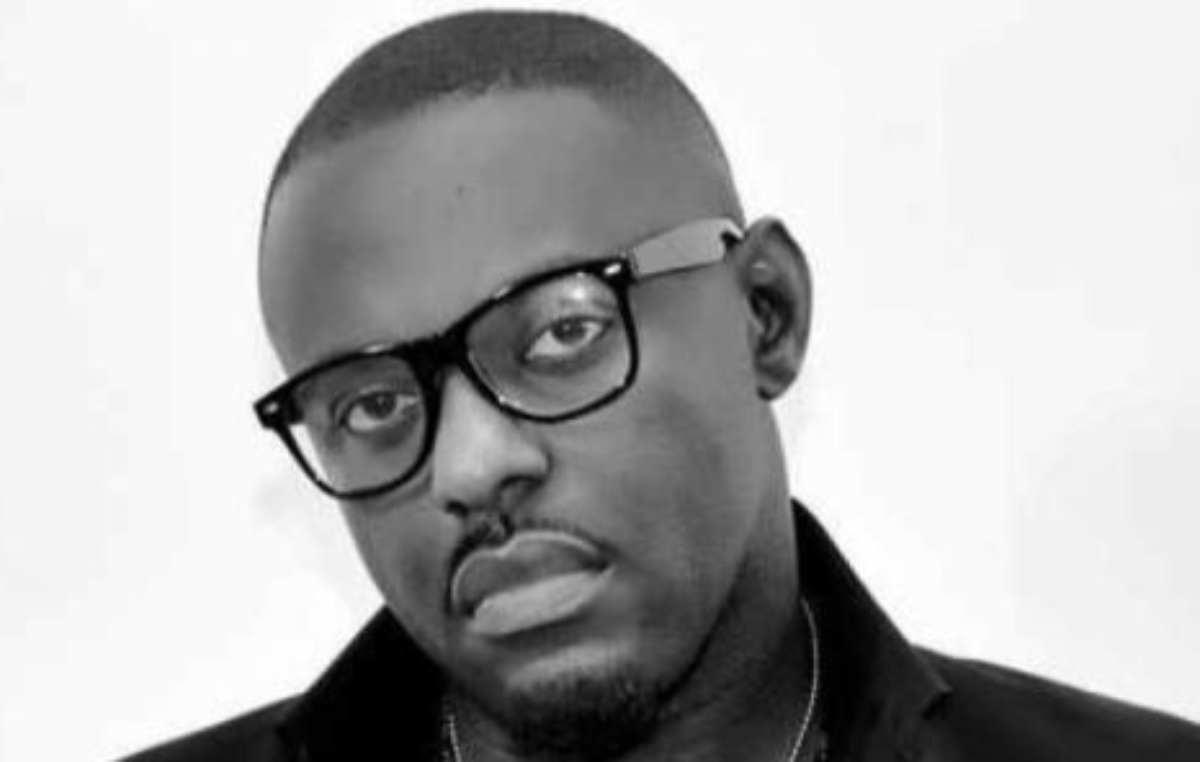
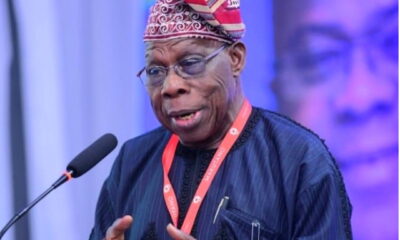
Actor James Ikechukwu, popularly known as Jim Iyke, talks to NAOMI CHIMA about his career, family and other issues
Tell us a bit about your background.
To start with, about 70 per cent of what you read online about me is false, and mostly from unreliable sources. My academic background is in Banking and Finance, and Psychology. I studied at the University of Jos, and before that, Federal Government College, Kwali, Abuja. Over the years, I have broadened my path. I am deeply invested in personal development, and my greatest education has come from unveiling myself as a student of the world.
How did you end up as an actor?
For most people, their field of study doesn’t usually align with their eventual career. Life is really a journey of self-discovery. Along the way, you find your true passion, as opposed to your parents’ dreams for you. For those of us from Eastern Nigeria, parents usually set the course of our journies right from childhood. By the time you’re three or four years old, they’ve already decided who will be a lawyer, doctor, or businessman.
Somewhere along the line, you realise that you’ve been living your parents’ dreams, not yours. Those who follow that path to the end are often not the happiest, because they discover too late that their true calling lies elsewhere. You could even be financially successful, but still feel a deep emptiness that no amount of money can fill.
For me, things shifted unexpectedly. One day, a friend and I were broke and looking for money to buy a few bottles of beer. Then, we heard about an audition. We decided to go, thinking we’d just get cameo roles and head to the lounge. But in the middle of it, I had a moment of epiphany. I thought: “this is what I want to do for the rest of my life”.
I didn’t come from an entertainment background. My family members were traders, businessmen, scientists and politicians; but never entertainers. Choosing acting was seen as a taboo— a waste of life. But I stuck to my guns. At that point, rebellion was necessary. I had done everything they wanted, including graduating early. I told them (parents) to give me a year or two to explore acting, then return for my Master’s and PhD.
Suffice it to say, I never went back. What was supposed to be a quick look became a lifelong pursuit.
How has acting influenced the course of your life?
People often warned that acting was a hopeless pursuit, because there was no financial stability, or job security. Their logic was sound, but I couldn’t let it go. My counter-argument was simple: Give me a chance.
My father instilled in me survival skills, including a pursuit of knowledge, self-confidence and accountability, which are foundations for success in any field. I believed acting would not be different. But, when our relationship deteriorated over my choice, I was kicked out (of the house). That became fuel for me to prove them wrong.
Eventually, when things began to turn around, we revisited the conversation. I told him my agenda was clear: I just needed his blessing. Reluctantly, he gave it, and taught me the importance of financial literacy and delayed gratification. He said if I mastered those, it wouldn’t matter what career I chose, I’d already be 50 per cent ahead.
What about your mum, how much support did you get from her?
My mum was the anchor of my dreams. Sadly, she’s no longer with us. Nothing rivals a mother’s intuition; she is irreplaceable.
When conflict arose between the two men she loved most—her husband and her only son—she took a remarkable approach. Instead of taking sides, she let things play out, trusting each of us to do the right thing. I will always be grateful to her for believing in me when I had nothing to show for it, and for giving me the emotional support I needed.
Later, when I became successful, she was also the one who kept me grounded. She reminded me: It’s the decisions you take now that will shape the next generation. Choose carefully. Her influence on me is immeasurable.
As the only son of your family, how did growing up among sisters shape you?
Growing up with women can shape you in two ways—you either become extremely tough or extremely soft. You can probably tell which side I fall on. I fought many battles, often defending my sisters, until one day my father’s boss warned him: “Train this boy; he’ll get badly hurt one day. He must learn the principle of standing alone.”
That advice led me into early boxing and taekwondo, which taught me discipline, emotional control, and self-defense. At home, I wasn’t even allowed in the kitchen. That was part of the Eastern cultural belief system. My biggest regret today is not learning to cook.
When I left home, that became a real problem. I had to rely on others, sometimes even begging women to cook for me. Who knows what was put in my food (laughs) So, I always advise people to teach their sons how to cook. It’s a vital life skill every man should have.
You’ve played a range of characters over the years. What influences the choice of roles you take on?
I believe an actor should be open to interpreting a wide range of characters. In early Hollywood, typecasting was a thing, but thankfully, that era has passed. Interestingly, 90 per cent of the laurels and trophies I’ve received came from “nice guy” roles; not violent ones. People often assume we (actors) are the roles we play, but they rarely see the sensitive side— the deep person who can hold conversations on any subject under the sun.
My choices are influenced by my belief system, which is deeply rooted in God and fortified by my upbringing. When you play a character so well that people believe there’s a piece of you in it, that’s when you’ve truly succeeded as an actor.
What influenced the title of your latest movie, ‘Sin’?
The title is deliberate. Sin reflects the current global state of affairs. If anyone has ever wondered what “Sodom and Gomorrah” looked like, look around; we’re living in it. Everything described in that era is happening again.
We often sweep these things under the rug because we’re busy chasing dreams, watching football, or binging Netflix. But right before our eyes, there are drug epidemics, social experiments like lockdowns, and moral chaos.
Sin is a satire, a mirror to the life we live but refuse to confront. I don’t want to make slapstick films that only release dopamine. I want to create films that make you think, shift paradigms, and spark conversations about the order of life we exist in. It is an eye-opener. It hasn’t left the top three spot on Amazon Prime, and I’m very proud of that. It was a three-month production shot across three countries.
What advice do you have for young men who admire your craft?
Don’t look at Jim Iyke; look at yourself. To replicate another man’s journey is the wrong road to take. Everyone’s path is different. My successes, failures, and discoveries are not yours.
When I emulate, I don’t look at the person; I look at the substance of their life. Some pursue acting to feed their families, some see it as a divine calling, others as a stepping stone. Whatever it is, find your truth. Do it for the right reasons, because when everything else fails, it’s that truth that will sustain you.
Do you have any plans to revive your music career?
Doing music was a regrettable experience; not in a bitter way, but in a humbling one. At that point in my life, it was just fun. 2Baba and I had a great time with it. For me, it was a dare, a phase when I thought I could do anything.
God allowed it, but He also humbled me. I could have built a career from it, but I would have ended up as one of those mediocre acts still stumbling along because their early hits were just good enough to keep them afloat. That’s not me. I know my limits.
I don’t live with regrets though; only lessons and triumphs. Music gave me a glimpse into another world, and I enjoyed it. But when the fever calmed, I knew it was time to return to what I díd best.
Will I ever be a music executive? Absolutely. No experience is wasted. I can sign an act today, and no one would tell me I don’t understand the business.
You’ve often spoken about your experience at the Synagogue where you seemingly fell into a trance. Looking back now, how does that experience make you feel?
I don’t want to dwell on that, and I’ll tell you why. It came with so much pain and disappointment. I only went there for my mother, and she has since passed.
Life gives us highs and lows. When you pass through your lows, you take the lesson, put it in a box, and tuck it away in your mental archive as a path never to walk again. Bringing it up now only stirs despair and bitterness. And my mother— the reason I went there— would never want me to live in that space.
Even the person I once felt antagonism toward is gone as well. So, what’s the point of holding on? I’ve let it go.
How would you describe your relationship with Gideon Okeke, who has constantly called you out online?
I don’t acknowledge it as a problem. If I ever recognise it as one, I’ll solve it. I don’t waste energy on things that don’t concern me. If anyone wants resolution in a place of logic and manhood, I’ll be there. I’ll state my grievances; listen, and resolve it. But I will never meet anyone in the court of public opinion. That space is a circus. It’s for entertainment, and I am not wired to be entertainment. I leave that to clowns.
Your message to Kate Henshaw on her birthday recently caused a buzz on social media. Why did you write it?
I have never looked at life the “normal” way. I live and express myself intensely; whether in laughter, friendship, love, or even hate. My ode to Kate was exactly that: an honest expression to someone I’ve known for over half my life. As a teenager, when I was hungry, she gave me money for food, made sure I got home safely, and guided me. She’s more than a friend; she’s a big sister and someone very special. Why would I not celebrate her?
Two hundred people read that poem. One hundred and seventy found it offensive or disrespectful. But the one person it was written for came online, hugged me electronically, blessed me, then called me for an hour-long conversation. I also sent her a beautiful gift; one many of my critics may never receive in their lifetime. So tell me, why should those 170 people matter? Too many people waste energy trying to be liked by strangers who don’t count. I don’t. I’ve been misunderstood all my life; why should it bother me now? I’ll keep doing what I want, whether it’s writing for Kate or penning a similar piece to the president tomorrow. Those who matter will understand; the rest need to upgrade their brain cells.
How long did it take to pen that “ode”?
Fifteen minutes. Writing is one of my strongest skills, perhaps even greater than my acting. It’s always been a deep passion, though acting took the spotlight. Yes, people often misunderstand my writing, but I no longer care. In the past, maybe it bothered me. Now, if anyone misinterprets my expression, I don’t owe them clarification.
How has your role as a father affected your life, career and relationships?
I am what you’d call an unorthodox father. I stand between the strictness of our fathers’ generation and the overly soft style of today. My children are not afraid of me in a way that prevents them from being open. I’m their father, friend, and sometimes big brother; but they also know that parenting is not a democracy. Leadership sometimes requires dictatorship.
Our parents were dictators, and we turned out resilient, able to face hardship. On the flip side, this modern overindulgent style has raised a generation that crumbles at the slightest adversity. My duty is to instill independence, resilience, and survival instincts. But, also compassion, emotional intelligence, and respect. That balance cannot come from one parent alone. That’s why I believe neither single mothers nor single fathers are fully equipped to raise complete men. Both masculine and feminine energies are needed for balance.
As a divorcee, how do you ensure that your children get that balance?
Divorce doesn’t change my role. Children don’t listen to words; they copy actions. My son mirrors me— how I dress, sit and even speak. That’s why I’m deliberate about the life I live. I avoid unnecessary drama in the media because I know he will soon access everything I’ve ever done. I want him to see a man of restraint, not a man consumed by battles.
Sure, I could respond to insults online or match words with words; even break bones if I wanted to. But I don’t. I’m accountable to someone greater now— my son. He must look at me and see a man who won the war, not someone distracted by petty fights. My parenting order is simple: presence, example, sacrifice, and resilience without excuses.
Do you have plans to remarry?
No. I’m very clear about this: I took full responsibility for that union. She’s a great person, and I’m a great guy. But marriage and fame together are tough, so you must be intentional. Sadly, ours happened at my lowest point; just after I lost the most important person in my life (my mother). There were cultural differences and racial tensions; not just from strangers but sometimes even within the family structure. It drained me.
Eventually, the marriage ended, but we stayed friends. Today, we’ve built something rare— a great post-divorce family. My ex still picks me up from the airport sometimes, even with her new partner, and comes to me for advice. That’s intentional, because our child didn’t choose to be born. He deserves stability.
Don’t you get jealous or bitter seeing her with someone else?
No. Bitterness is useless. If I cut her off completely, she could end up with someone who mistreats my son, and that would haunt me forever. But her partner is a good man. Instead of jealousy, I see my son as blessed with two fathers.
We have different parenting styles. Her partner is a pleaser; the easy-going liberal type. I’m the disciplinarian; the one who teaches resilience and perspective as a successful black man navigating the world. Together, my son gets balance. He’s one of the happiest, most grounded kids I know.
What’s your favourite food?
My taste is global. I have lived in four countries and picked favourites everywhere. It changes constantly, so I can’t pin down just one.
How do you ease stress and relax?
God. Worship is my sanctuary. While others party on weekends, I play gospel music and roll on the floor asking for mercy. That’s my happy place— giving thanks to the One who brought me out of tunnels and defended me when I couldn’t defend myself.
After that, I love travelling. At the age of 26, I backpacked across 15 countries in Europe with a Swedish-German partner.
Having travelled widely, what changes do you think Nollywood needs at this stage of its evolution?
Consensus. Right now, the YouTube culture has everyone chasing their own corner with mixed-quality content. It’s chaotic. Worse, Netflix and Amazon have pulled back because of our missteps, and that should alarm us. Every five years, Nollywood finds itself back at square one.
What we need is government support. Look at California (United States): they invested in talent, created protective laws, and now, their creative industry is one of the richest in the world. Nigeria must invest in human resources, not just oil. Entertainment already contributes massively to GDP, so why ignore it? With AI, green energy, and alternative tech rising, we can’t afford to lag behind. What we need is structure, policy and vision.
What are you most grateful for?
Life itself. I don’t question where the wind blows me, because I trust my Maker. Place me anywhere, I will excel; not because of humans, but because of God.
What influences your fashion choice?
My fashion is drip, sense, swag; whatever you want to call it. However, style is different; you’re born with it. I got mine from my dad and his Lebanese business partner. Both were sharp dressers. Fashion can be bought with money, but style is innate.