

Connect with us

Lifestyle

Oyo gears up for historic Olubadan coronation event

Published

on

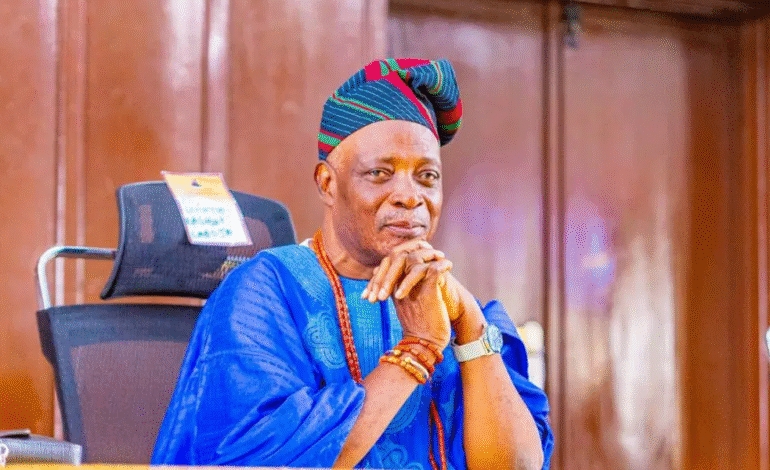
Ahead of the coronation of the 44th Olubadan of Ibadanland, Oba Rashidi Ladoja, on Friday, September 26, 2025, the Oyo State Government has expressed readiness to host the historic event.

Also, security in the town had been strengthened ahead of the expected arrival of President Bola Tinubu and other important dignitaries.

On Wednesday, the advance team of the President arrived in Ibadan from the Federal Capital Territory, Abuja, in preparation for the event.

A senior security personnel, who did not want his name in print, told The PUNCH in Ibadan, “We are not here to play. We want decorum.

“If you are not invited, why can’t you look for somewhere else to enjoy the programme through available television or radio stations.

“Even if you are my friend or friends, stay clear of Mapo if you don’t have anything to do there.”

Ahead of his installation, Oba Ladoja, on Tuesday night, began traditional rites and remained in seclusion.

He will mark his 81st birthday today in seclusion, though activities were lined up across the town to celebrate the monarch.

Ladoja, who would receive both the staff of office and instrument of office on Friday, September 26, succeeds Oba Owolabi Olakulehin, who joined his ancestors on Monday, July 7, 2025, at the age of 90 years.

Mapo wears new look

The venue of the coronation, the historic Mapo Hall, started wearing a new look on Wednesday, as painting and cleaning up of the environment were ongoing.

The venue is the ceremonial coronation venue for Ibadan monarchs through the ages.

Successive Olubadans in history have been presented with the staff of office amid pomps at the Mapo Hall, after their crowning and traditional rites at the Oluwo palace in Oja’ba.

A visit to the Obafemi Awolowo Stadium, Ring Road, revealed ongoing preparations to receive and entertain important guests.

The venue is now fully set to host dignitaries arriving in Ibadan to celebrate the new monarch.

See also  Akume quietly marries Ooni’s ex-queen Zaynab

Ibadan airport opens

The Samuel Ladoke Akintola Airport, Ibadan, which was shut down for an upgrade to international standards in March 2025, reopened for two weeks in honour of the new Olubadan.

The remodelled airport received its first aircraft at 9:14 am on Wednesday, when the presidential advance team arrived for the Olubadan coronation..

A statement by the Oyo State Government, signed by the Special Adviser to the Governor on Media and Communication, Sulaimon Olanrewaju, said the successful landing underscored the readiness and capabilities of the airport’s infrastructure to handle high-profile flights safely and efficiently.

With the presidential flight scheduled to follow soon, the inaugural flight set a positive precedent for future arrivals and departures at the remodelled airport.

Hotels fully booked

Hotels across Ibadan witnessed a surge in patronage on Wednesday, as visitors trooped into the city ahead of Friday’s historic coronation.

Many facilities around the venue of the event, particularly in Ring Road, Mokola, Sango, Secretariat, Ikolaba, and Bodija, were fully booked, with guests arriving from within and outside the state.

The influx of dignitaries, traditional rulers, government officials, and tourists has turned the city into a beehive of activity.

Falola urges balance between tradition, modernity

Renowned Ibadan-born historian, Prof Toyin Falola, on Wednesday, urged Ibadan leaders to carefully balance their cherished traditions with the pressing demands of modern development.

He gave the advice in his coronation lecture delivered ahead of the coronation.

The lecture, titled “Ibadan in History: Issues in Tradition and Modernity,” was held at the International Conference Centre, University of Ibadan.

The programme was part of a week-long activity preceding the main coronation ceremony on Friday.

In his presentation, Falola highlighted Ibadan’s central role in Nigeria and Africa’s history.

He said, “Ibadan has always been a cultural epicentre. In the 19th century, it was the largest city in sub-Saharan Africa and a hub for politics, trade, and military power. It was also the center of palm oil production, exported to Europe.”

See also  Alaafin, Soun absent as Makinde kicks off Oyo 50th anniversary

Falola said Ibadan’s traditions remained visible in everyday life.

“The past is still with us in the amala we eat, the language we speak, the clothes we wear, and our performances. These remind us that Ibadan is not only a city of history but also a city of the future,” he said.

On the significance of Ladoja ascending the throne, the historian stressed that Ibadan would benefit greatly from the monarch’s political and administrative experience.

“Having a former governor and senator as Olubadan is significant. His exposure as a politician, statesman, and administrator will guide Ibadan toward modernisation.

“The city must tackle issues like garbage collection, street cleaning, tree planting, and environmental upliftment. These are part of the responsibilities of modern leadership,” Falola said.

He further argued that kingship in Ibadan had never been static but had always adapted to new realities.

“The Olubadan, out of necessity, must balance tradition with the evolving demands of democracy, globalisation, and urban expansion,” he said.

Instead of monetary contributions, Falola revealed that his gift to the Olubadan would be intellectual.

“Today, I will not donate money to the series of events. Not that I do not have the money to give. Instead, I will give him a book to read. Just one book, spanning over 400 pages. I wrote it for this momentous occasion,” he said.

He emphasised that Ibadan should not only be seen as a historical city but also as an active contributor to African and global thought.

“The coronation is not a casual ceremony. It is part of how Ibadan negotiates authority, legitimacy, and the preservation of its culture in an ever-evolving world.

“This book connects the throne and the classroom, the palace and the archive.

“This publication understands that the book, ‘Ibadan in History: Issues in Tradition and Modernity,’ weaves together themes of politics, culture, literature, and urban development.

See also  Maintain status quo, avoid provocative acts, Okpebholo warns over Okpella stool

“It draws on Prof Falola’s decades-long scholarship, including earlier works such as ‘The Political Economy of a Pre-Colonial African State.’ ‘Ibadan, 1830–1900’ (1984) and Ibadan: Foundation, Growth and Change, 1830–1960 (2012).”

The historian also highlighted Ibadan’s intellectual and cultural powerhouses, including the University of Ibadan and generations of artists, writers, and scholars who have shaped Yoruba and African identities.

He, therefore, called for reflection on how Ibadan can embrace modernity without abandoning its heritage.

“This book ensures that Ibadan is remembered not just as a city of the past but as one of the future.

“It honours both a city and its monarch and situates Oba Rashidi Ladoja as a modern leader who must balance tradition with democracy, globalisation, and urban expansion,” he said.

Obasanjo warns Ladoja against political conflicts

Former President, Chief Olusegun Obasanjo, has congratulated Oba Ladoja on his formal ascension to the throne of Olubadan.

He also advised the new monarch to separate tradition and politics, noting that the new position requires humility and tolerance, among others.

In a statement by his Special Assistant on Media,  Kehinde Akinyemi, made available to newsmen on Wednesday, Obasanjo, in Yoruba royalty salutation, prays “Ade a pe lori, bata a pe lese.”

The former president, who, according to the statement, is presently in New York, United States, for the 80th United Nations General Assembly session, said, “I take this opportunity to congratulate you in advance of the formal announcement. Ade a pe lori, bata a pe lese.”

He added, “It is an exalted and responsible position to be the traditional ruler of all Ibadan people. It requires humility, patience, divine wisdom, tolerance, and advice from wide and varied quarters to succeed.

“Traditional rulership does not compete or conflict with political rulership. I wish you all the best and the grace, guide, and direction of Almighty God.”

punch.ng

FOLLOW US ON:

FACEBOOK

TWITTER

PINTEREST

TIKTOK

YOUTUBE

LINKEDIN

TUMBLR

INSTAGRAM

Continue Reading
Click to comment

Leave a Reply

Your email address will not be published. Required fields are marked *

Lifestyle

Women Who Love and Listen to Their Pastors More Than Their Husbands Should Be the Pastor’s Second Wife

Published

on

This statement may sound funny, provocative, or even offensive, but it raises an important question about priorities in marriage and religion.

A pastor is a spiritual leader, but he is not supposed to replace a woman’s husband. If a married woman consistently values her pastor’s opinions above her husband’s, obeys her pastor while dismissing her husband, or shows greater loyalty and admiration toward her pastor than toward her spouse, then something may be seriously wrong with the balance in that marriage.

Marriage requires communication, mutual respect, trust, and understanding. A pastor can provide spiritual guidance, but that guidance should not become a reason for a husband and wife to lose respect for each other.

At the same time, husbands should not expect their wives to obey them blindly. Both husband and wife should seek God’s wisdom, communicate openly, and make decisions with love and respect.

So perhaps the real question is not whether such a woman should become the pastor’s “second wife,” but why has the pastor become more important in her marriage than her own husband?

Put God first. Respect your spouse. And never allow a spiritual leader to become a substitute for your marriage partner.

FOLLOW US ON:

FACEBOOK

TWITTER

PINTEREST

TIKTOK

YOUTUBE

LINKEDIN

INSTAGRAM

See also  VIDEO: He didn’t do the right thing – Tope Alabi finally speaks over alleged first marriage
Continue Reading

Lifestyle

Why is it only in Africa that we hear so much about “generational curses”?

Published

on

This is a question worth asking—not to insult African traditions or dismiss anyone’s beliefs, but to encourage honest reflection.

Across Africa, it is common to hear people explain repeated family problems as a “generational curse.” When poverty, broken relationships, addiction, failure, sickness, family conflict or misfortune appears to repeat from one generation to another, some people immediately conclude that an ancestor, spiritual force or past wrongdoing is responsible.

But is every repeated family problem truly a curse?

If a child grows up in poverty, has limited access to quality education, receives little financial support and then struggles as an adult, is that necessarily a spiritual curse—or could it be the result of circumstances that have been passed from one generation to another?

If children grow up watching violence, substance abuse, unhealthy relationships or constant conflict, they may unknowingly repeat those patterns. That does not necessarily mean they are cursed. Sometimes behaviour is inherited through environment, not through supernatural forces.

And Africa is certainly not the only place where people believe in supernatural explanations for suffering or misfortune. Different societies around the world have their own concepts of inherited wrongdoing, family misfortune, ancestral consequences, fate and spiritual punishment.

So perhaps the more important question is not:

“Who cursed my family?”

But:

“What pattern has been passed down to me, and what can I do to stop passing it to the next generation?”

We should be careful not to use the idea of a curse to discourage people from taking action. A family facing poverty may need education, opportunity and financial planning. A family experiencing repeated conflict may need healthier communication. A person struggling with addiction may need professional support and a strong recovery environment. Communities facing injustice may need better institutions, accountability and opportunity.

See also  Maintain status quo, avoid provocative acts, Okpebholo warns over Okpella stool

Faith and spirituality are deeply meaningful to many people, and everyone has the right to hold their beliefs. But faith should not prevent us from examining the practical causes of our problems.

We cannot change the past, but we can change what we pass forward.

Instead of teaching our children that they are victims of an unavoidable family curse, let us also teach them knowledge, discipline, emotional strength, financial responsibility, education, healthy relationships and the courage to break destructive patterns.

Maybe the greatest “curse” is not something mysterious placed upon a family.

Maybe sometimes it is simply a problem that nobody stopped long enough to understand and change.

And the greatest inheritance we can give the next generation is not fear of a curse—but the knowledge and courage to build a better future.

FOLLOW US ON:

FACEBOOK

TWITTER

PINTEREST

TIKTOK

YOUTUBE

LINKEDIN

INSTAGRAM

Continue Reading

Lifestyle

You are very proud to speak big English, but yet you cannot speak your own language?

Published

on

There is nothing wrong with speaking English fluently. In fact, being able to communicate confidently in different languages is a valuable skill. But we should ask ourselves a deeper question: while learning to speak the language of another culture, are we slowly losing the language that connects us to our own roots?

Your mother tongue is more than just words. It carries the stories of your ancestors, the wisdom of your grandparents, the jokes that only your people understand, the traditional greetings, the names, the songs, the history and the identity of your community.

Imagine being able to speak perfect English, but struggling to have a simple conversation with your own grandmother because you do not understand the language she grew up speaking. Imagine your children knowing foreign languages but being unable to understand the language of their own heritage.

That should make us pause.

Speaking English does not make you more intelligent, and speaking your indigenous language does not make you less educated. One is a communication skill; the other can be a connection to your heritage. We should not have to choose between being educated and preserving our identity.

Learn English. Speak it confidently. Learn French, Dutch, Spanish or any other language that opens doors for you.

But don’t let the pursuit of foreign languages close the door to your own.

Teach your children your language. Speak it at home. Ask your parents and grandparents to teach you the words you never learned. If you have forgotten it, it is never too late to start again.

See also  Akume quietly marries Ooni’s ex-queen Zaynab

Because when a language disappears from a family, something precious disappears with it.

Be proud of your education. Be proud of your ability to speak English. But also be proud of where you come from.

Your language is not something to be ashamed of. It is a part of your story. Preserve it before the next generation only knows it as something their ancestors once spoke.

FOLLOW US ON:

FACEBOOK

TWITTER

PINTEREST

TIKTOK

YOUTUBE

LINKEDIN

INSTAGRAM

Continue Reading

Trending