Connect with us

News

Over 3.7 million battling food crisis in northeast Nigeria – ICRC

Published

on

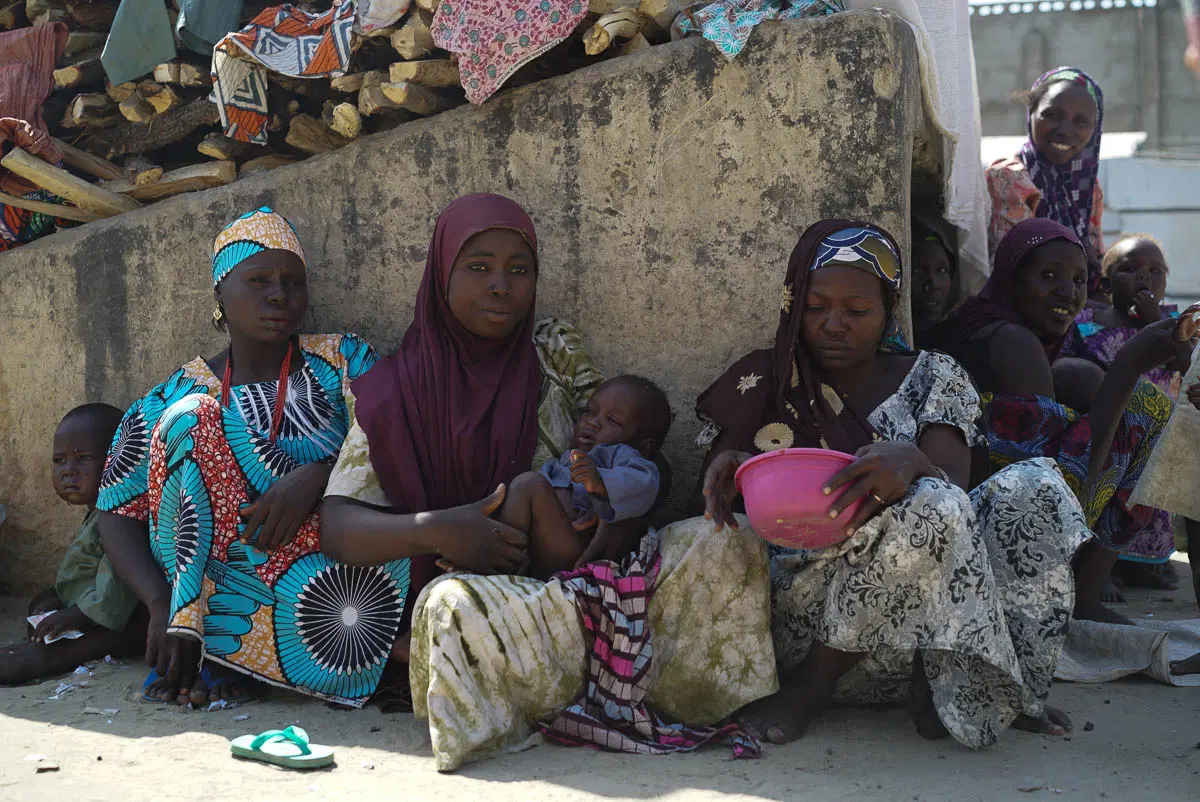
The International Committee of the Red Cross (ICRC) has raised concerns about a deepening food crisis in Nigeria’s northeast, revealing that more than 3.7 million people across the conflict-affected region are currently grappling with food scarcity.

Aliyu Dawobe, who serves as the ICRC’s spokesperson, disclosed this development in a press statement shared on Monday in Abuja, according to the News Agency of Nigeria (NAN).

He explained that a significant number of those facing hunger were once self-reliant farmers who lost access to their lands due to the protracted violence in the region.

The statement detailed how the ongoing conflict has displaced thousands of families, hindered access to arable land, and disrupted traditional food supply networks, leaving communities extremely vulnerable.

As the annual lean season takes hold, households are coming under growing pressure, said Diana Japaridze, Head of ICRC’s Maiduguri sub-delegation.

“This is the period when families must begin buying food, but many conflict-affected households simply can’t afford it.

They’re forced to drastically limit their intake,” she said.

She warned that the lack of food is driving a spike in malnutrition, especially among children under five, pregnant women, and nursing mothers.

“In response, the ICRC is supporting malnutrition stabilisation centres and offering community education programmes to help families care for vulnerable children.”

To combat the structural roots of food insecurity, the ICRC has introduced an agricultural support project designed to strengthen resilience and boost local food production. The program spans both rainy and dry seasons.

“The initiative supports both rainy and dry season farming and targets thousands of farming households.

See also  FBI Submits Tinubu’s Records To US Judge

This year alone, more than 21,000 farming households have received seeds adapted to local conditions, along with planting tools to ease labour and improve efficiency,” Japaridze added.

As part of the aid, farmers received varieties of staple and vegetable seeds including rice, maize, tomato, and okra — aimed at enhancing food variety and nutritional quality in meals.

Additionally, training in sustainable agriculture is being provided to ensure that farmers continue to thrive independently even after ICRC’s direct intervention ends.

“At a systemic level, and in collaboration with the National Agricultural Seed Council (NASC), we recently repaired a vital water source to ensure continuous access for the council’s seed testing and greenhouse facilities,” Japaridze said.

Despite these interventions, she acknowledged that the lean season still poses a significant hardship for many farming families who are unable to meet their food needs.

FOLLOW US ON:

FACEBOOK

TWITTER

PINTEREST

TIKTOK

YOUTUBE

LINKEDIN

TUMBLR

INSTAGRAM

Continue Reading
Click to comment

Leave a Reply

Your email address will not be published. Required fields are marked *

News

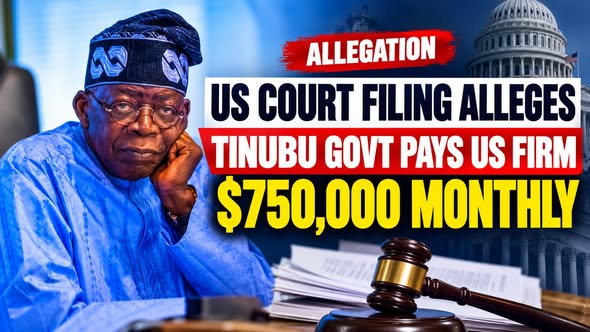
FBI Submits Tinubu’s Records To US Judge

Published

on

The United States Federal Bureau of Investigation (FBI) has submitted records relating to President Bola Tinubu’s 1993 drug-trafficking and money-laundering case directly to a federal judge in Washington, D.C., court documents have shown.

According to Peoples Gazette, the materials were delivered to Judge Beryl Howell of the US District Court for the District of Columbia under seal, meaning they are currently accessible only to the court as it considers whether to make the records public.

The submission followed a prolonged legal battle over a Freedom of Information Act request filed by American transparency campaigner Aaron Greenspan, who has been seeking access to Tinubu’s records from the FBI.

Court filings indicated that the bureau delivered the documents on Friday, August 28, after Howell ordered it to explain its continued refusal to release the records.

The documents were submitted without notifying Greenspan of their contents.

According to the filing, the records were “hand delivered to the Court on August 28, 2026 in compliance with this Court’s Minute Order dated August 20, 2026.”

Greenspan had originally sought the records through a FOIA application submitted in 2023. He worked with Nigerian journalist David Hundeyin in pursuing the request.

The case later became a dispute over how quickly the FBI was processing the request, with the agency repeatedly asking for more time.

Howell reportedly gave the FBI several opportunities to explain why it was withholding the records but grew increasingly dissatisfied with the delays.

The judge eventually set August 28 as the deadline for the bureau to comply with her directive.

See also  Oyo school attack: Senate, Yoruba leaders demand action as distress videos emerge

The bureau had argued earlier that releasing the records could infringe on Tinubu’s privacy rights.

It also maintained that the Freedom of Information Act was primarily intended to promote transparency concerning government operations and records, rather than provide unrestricted access to information about private individuals.

The controversy surrounding the records dates back several years and is linked to allegations concerning Tinubu’s activities in the United States in the early 1990s.

FOLLOW US ON:

FACEBOOK

TWITTER

PINTEREST

TIKTOK

YOUTUBE

LINKEDIN

INSTAGRAM

Continue Reading

News

Why My FBI, DEA Records Should Remain Secret – Tinubu Tells US Court

Published

on

President Bola Tinubu has given the United States District Court for the District of Columbia four reasons why his records with the Federal Bureau of Investigation (FBI) and Drug Enforcement Agency (DEA) should not be released.

It was reports that the president gave his reasons in filings by his lawyers, Christopher Carmichael, Victor Henderson and Oluwole Afolabi.

He argued that the US Freedom of Information Act (FOIA) and Privacy Act precluded disclosure and there was no public interest in the matter.

Tinubu also said there was no public interest to balance and the plaintiff had ulterior motives for demanding documents with his name on them.

The President’s submission was in response to a request by American transparency activist Aaron Greenspan, which sought disclosure of the records under the US Freedom of Information Act.

Greenspan had argued that his requests concerned the “sitting President of Nigeria…” and “a nation of over 230 million people whose daily lives are directly affected by President Tinubu’s decisions”.

Tinubu, according to filings by his lawyer, urged the US District Court to reject the bid because it amounted to an attempt to obtain private information for political purposes in Nigeria.

The President’s lawyers noted that the request sought access to information about government activities.

They specifically rejected the argument that Nigerians’ interest in Tinubu’s background constituted a public interest recognised by US law.

The team also rejected an argument on the President’s fitness for office, stating that “the asserted ‘public interest in Tinubu’s own fitness for office’ is not an interest FOIA recognises or one that needs to be balanced.”

See also  ISIS moves operations to West Africa, US warns

The lawyers further argued that the records sought were protected by privacy provisions under FOIA and the US Privacy Act.

“The redacted information sought by the plaintiff is exempt from disclosure,” they stated, citing Exemption 7(C), which protects personal information contained in law-enforcement records.

The President’s legal team relied on a 1989 US Supreme Court decision, Department of Justice v Reporters Committee for Freedom of the Press, to argue that FOIA was designed to allow the public to know “what the government is up to” rather than provide access to information about private citizens.

They argued that Greenspan was seeking “disclosure of information about private citizens that is accumulated in various governmental files,” which, they said, “reveals little or nothing about an agency’s own conduct.”

FOLLOW US ON:

FACEBOOK

TWITTER

PINTEREST

TIKTOK

YOUTUBE

LINKEDIN

INSTAGRAM

Continue Reading

News

Tinubu’s FBI Records: ADC, NDC Demand Release, Say Nigerians Deserve Truth

Published

on

President Bola Ahmed Tinubu’s records with United States law enforcement agencies has taken another turn with opposition parties demanding that the documents be made public.

The African Democratic Congress (ADC) and the Nigeria Democratic Congress (NDC) have questioned the President’s decision to oppose the release of the records, insisting that Nigerians deserve to know the truth about his past.

Naija News reports that the fresh controversy comes as details of submissions made by Tinubu’s lawyers before the United States District Court for the District of Columbia emerged.

In the filings, the President’s legal team, led by Christopher Carmichael, Victor Henderson and Oluwole Afolabi, gave reasons why his unredacted records with the Federal Bureau of Investigation (FBI) and Drug Enforcement Administration (DEA) should not be released to the public.

Tinubu’s lawyers argued that the records were protected under the US Freedom of Information Act and the Privacy Act.

The legal team maintained that the information being sought contained private details from law enforcement files and therefore fell under provisions that exempt such records from public disclosure.

The lawyers also argued that there was no recognized public interest under US law strong enough to justify releasing the records.

According to them, the argument that Nigerians have an interest in knowing about Tinubu’s background does not amount to the kind of public interest recognized under the Freedom of Information Act.

They further rejected the argument that the documents could be necessary to determine the President’s fitness for public office, saying such an interest was not one that the US law was designed to address.

See also  Oyo school attack: Senate, Yoruba leaders demand action as distress videos emerge

Tinubu’s legal team also questioned the motive behind the request, arguing that the documents were being sought largely for political purposes in Nigeria.

The lawyers said the filings by the American transparency activist, Aaron Greenspan, showed that his main interest was obtaining government documents bearing Tinubu’s name.

They urged the court not to allow the FOIA process to be used as a means of accessing private information about an individual simply because he is the President of Nigeria.

The legal team also dismissed suggestions that the records could expose a secret prosecution or an agreement by US authorities not to prosecute Tinubu, describing such claims as speculative and unsupported by evidence.

The lawyers further argued that the fact that some information about Tinubu’s past had previously entered the public domain did not automatically remove his right to privacy over other details contained in government files.

The President Should Come Out Clean – ADC

Reacting to the development, ADC spokesperson, Bolaji Abdullahi, described the President’s opposition to the release of the records as suspicious.

Abdullahi, who spoke with a correspondent on Saturday, said Tinubu should allow the records to be released if he wanted to put the controversy surrounding his past to rest.

“Why is the President opposing the release of his past records? That is suspicious. The President should allow them (records) to be released to clear himself.

“The President should come out clean. He should be the one calling for the records to be released if he has nothing to hide because this is not good for him and the image of the country,” he said.

See also  Nigeria’s Inflation rate falls to 21.8% — NBS

Nigerians Deserve To Know – Says NDC

The National Publicity Secretary of the NDC, Osa Director, also called on the President to allow the records to be made public.

Speaking with The PUNCH on Saturday, Director rejected the argument that the request for Tinubu’s records was simply a political move by the opposition.

According to him, the President should use the opportunity to clear the air over an issue that has remained in the public domain for more than two decades.

“When a man commits an offence and he says, please, don’t blame me because it is the devil, does that mean he should not face the consequence of his action because it is the devil? That is the question the President should answer.

“Whether it is the opposition or not, if the issue wasn’t there, the opposition would not capitalise on it. Why did the opposition not ask the FBI to release records on our presidential candidate, Peter Obi, or Atiku? That is not an excuse,” Director said.

He argued that the controversy would continue to resurface as long as the matter remained unresolved.

“Nigerians deserve to know and in the interest of the President. He deserves to clear the air. This case has been hanging on since his time as a governor. It is over 20 years.

“Even me, as an opposition, am getting bored. It is time, once and for all, that he should clear the air to allow the issue to be buried,” he added.

Naija News reports that the controversy over Tinubu’s US records dates back several years and became a major political issue during the build-up to the 2023 presidential election.

See also  ISIS moves operations to West Africa, US warns

At the centre of the matter are records relating to a 1993 US civil forfeiture proceeding involving $460,000 held in an account linked to Tinubu.

US authorities had alleged that the funds represented proceeds of narcotics trafficking or were connected to prohibited financial transactions.

Meanwhile, the ruling All Progressives Congress (APC) had maintained during the presidential election litigation that the case was a civil forfeiture proceeding and did not amount to a criminal conviction.

FOLLOW US ON:

FACEBOOK

TWITTER

PINTEREST

TIKTOK

YOUTUBE

LINKEDIN

INSTAGRAM
Continue Reading

Trending