
Connect with us

News

Hundreds feared dead in devastating Sudan landslide

Published

on

Sudanese authorities, the United Nations and aid groups scrambled Tuesday to respond to a devastating landslide in Sudan’s Darfur region that buried an entire mountain village, killing hundreds of people.

Heavy rain triggered the disaster on Sunday, flattening the village of Tarasin in the remote Jebel Marra range, the rebel Sudan Liberation Movement/Army faction which controls the area said.

UN humanitarian coordinator in Sudan Luca Renda said in a statement that “the United Nations and our humanitarian partners are mobilising to provide support to the affected population”.

Citing sources on the ground, Renda said the death toll from the landslide was believed to be between 300 and 1,000.

UN spokesperson Stephane Dujarric said the full scale of the disaster remains unclear “as the impacted area is extremely hard to reach”.

The SLM faction, led by Abdulwahid al-Nur, had earlier estimated the death toll at more than 1,000 people, with only one survivor.

That survivor, according to his nephew Fath al-Rahman Ali Abdelnour, suffered multiple fractures to both legs and a serious head injury.

“He is in a coma and unable to speak,” Abdelnour told AFP from the Ugandan capital of Kampala where he lives.

Abdelnour, whose father had founded Tarasin in the 1980s, said that in addition to longtime residents, the village has also hosted around 450 people displaced by Sudan’s ongoing war between the army and rival paramilitaries.

The war, which began in April 2023, has ravaged Sudan, killing tens of thousands of people and driving millions from their homes, according to UN figures.

See also  Court orders six banks to submit Sowore’s account details to IG

-‘Masses of mud’ –

SLM leader Nur told AFP via a messaging app that “masses of mud fell onto the village.”

“Our humanitarian teams and local residents are trying to retrieve the bodies, but the scale of the disaster is far greater than the resources available to us,” he said.

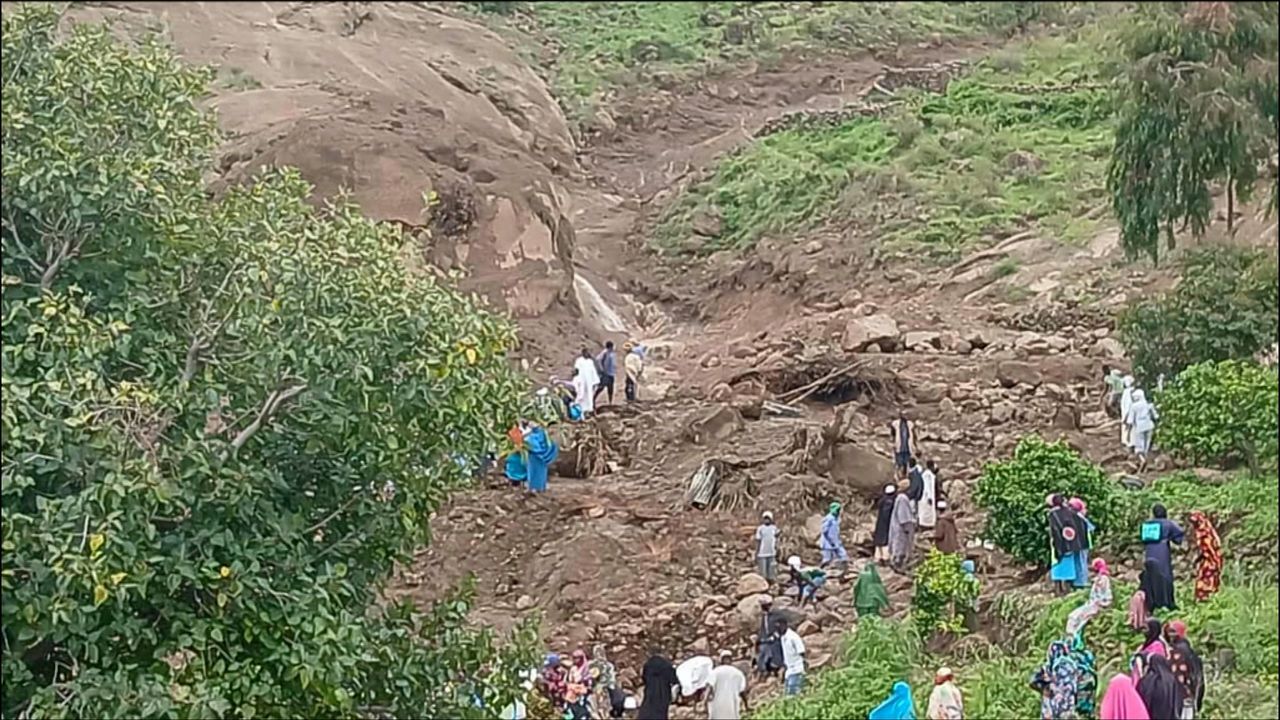
Images the SLM published on its website appeared to show vast swathes of the mountainside sheared away, with the village below buried under thick mud and uprooted trees.

The African Union called on “all Sudanese stakeholders to silence the guns and unite in facilitating the swift and effective delivery of emergency humanitarian assistance.”

On Monday, both the army-aligned government and the paramilitary Rapid Support Forces called for humanitarian mobilisation in response to the disaster, but neither mentioned any potential ceasefire.

The SLM controls parts of the Jebel Marra range and has mostly stayed out of the war.

Hundreds of thousands of people have fled into SLM-held territory to escape the violence.

Jebel Marra is a rugged volcanic range stretching about 160 kilometres (100 miles) southwest from North Darfur’s besieged state capital El-Fasher, which the RSF is pushing to capture after besieging it for more than a year.

The area, known for citrus production, is prone to landslides, particularly during the rainy season which peaks in August. A 2018 landslide in nearby Toukoli killed at least 20 people.

-‘Painful disaster’ –

The Transitional Sovereignty Council of army chief Abdel Fattah al-Burhan pledged to mobilise all available resources to support those affected by what it described as a “painful disaster”.

See also  Katsina unveils hybrid buses to boost eco-friendly transport

The paramilitary-backed rival government based in South Darfur state capital Nyala has issued a statement announcing aid efforts.

Mohamed Hassan al-Taayshi, the prime minister recently sworn in by RSF commander Mohamed Hamdan Daglo, expressed deep sorrow, saying he had spoken directly with SLM leader Nur to assess needs on the ground.

“The lives and safety of Sudanese citizens are above any political or military considerations,” Taayshi said.

Much of Darfur — including the area where the landslide occurred — remains inaccessible to international aid organisations due to ongoing fighting, severely limiting the delivery of emergency relief.

The disaster also comes during Sudan’s rainy season, which often renders mountain roads impassable.

In Sudan’s main war zones like Darfur, infrastructure was already fragile after more than two years of fighting.

On Tuesday the army-aligned government, based in Port Sudan on the Rea Sea, announced that it would extend through the end of the year a decision to open the Adre border crossing with Chad — a critical lifeline for humanitarian aid.

The move “coincides with the disaster in Tarasin”, the Sudanese foreign ministry said in a statement.

FOLLOW US ON:

FACEBOOK

TWITTER

PINTEREST

TIKTOK

YOUTUBE

LINKEDIN

TUMBLR

INSTAGRAM

Continue Reading
Click to comment

Leave a Reply

Your email address will not be published. Required fields are marked *

News

Russia threatens to use nuclear weapons on NATO as tensions rise in the Baltic

Published

on

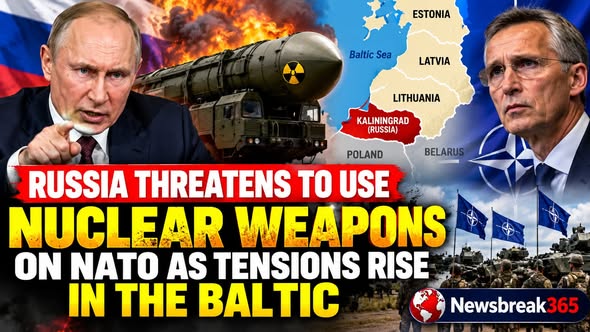
Russia has issued a stern warning to NATO, stating it is fully prepared to use nuclear weapons if the Western alliance attempts to isolate or cut off Kaliningrad, the heavily militarized Russian exclave bordered by Poland and Lithuania.

In a formal diplomatic document transmitted to NATO, Moscow condemned the alliance’s actions as a “dangerous and reckless course” carrying “high risks of the outbreak of a direct armed conflict.” The communication explicitly warned that escalation could trigger “Russian strikes against decision-making centers in the alliance’s member states right from the outset.”

“Russia will be ready to use the entire arsenal of forces and capabilities at its disposal, including nuclear weapons, in order to defend its territory should NATO countries undertake any attempt aimed at isolating the Kaliningrad Region from the rest of the country,” the note stated.

Russia threatens to use nuclear weapons on NATO as tensions rise in the Baltic
The warning underscores mounting friction over Kaliningrad, a strategic territory slightly larger than Connecticut that serves as a vital Russian military outpost on the Baltic Sea.

Russian Foreign Ministry spokeswoman Maria Zakharova echoed the sentiment online, condemning statements from Western officials which she characterized as manifestations of “Russophobia” and a readiness for war.

“If Europe attacks Russia, it will be a completely different sort of war – a very short war,” Zakharova wrote, adding a call for European leaders to heed Moscow’s warnings. Kremlin spokesman Dmitry Peskov described the series of diplomatic notes issued across European embassies as necessary reminders directed at “hotheads in Europe.”

See also  Okonjo-Iweala unveils $50m fund to empower women in digital trade


NATO Secretary General Mark Rutte firmly rejected the threats during a defense conference hosted by Euronews in Brussels, reiterating the alliance’s defensive posture and urging Moscow to cease its rhetoric.

“We are a defensive alliance. And stop the nuclear threats. This is absolutely not called for and not helpful,” Rutte said, noting that alliance activities pose no threat to Russian territorial integrity.

When asked if the threat of nuclear deployment in the Baltic region was imminent, Rutte dismissed the prospect: “No, it’s not. Putin knows that he can never win against NATO, so I don’t take this that seriously.”

Security analysts warn that the situation highlights a dangerous trajectory of mutual miscalculation. Nikolai Sokov, a Vienna-based nuclear analyst and former Russian diplomat, noted that escalating Western support for Ukraine risks pushing both sides past diplomatic thresholds.

“They expect more action, including a blockade of the Baltic Sea—just below the level of war in European calculation, but for them this will be open war. I see a risk of mutual miscalculation,” Sokov observed.

While Western governments continue to accuse Moscow of orchestrating a broader “hybrid war” across Europe through acts of sabotage and cyber interference, allegations that the Kremlin strongly denies, senior defense officials view the latest nuclear posturing as an unprecedented escalation unseen since the Cold War.

FOLLOW US ON:

FACEBOOK

TWITTER

PINTEREST

TIKTOK

YOUTUBE

LINKEDIN

INSTAGRAM

Continue Reading

News

SEE FULL LIST: Five EU nations plan deportation centres in Africa

Published

on

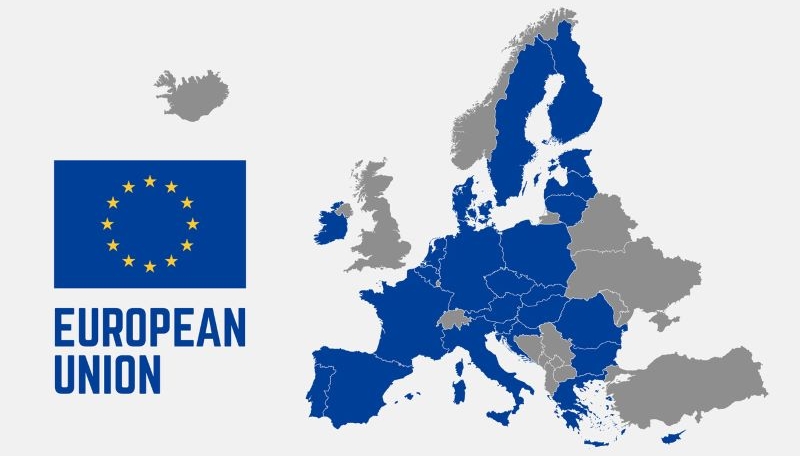
Five European Union countries are moving ahead with plans to establish centres outside the bloc for migrants whose asylum applications have been rejected, with the first facility expected to begin operations in Africa in 2027.

German broadcaster DW reports on Thursday that the five countries are working on what they describe as “return hubs” for people who have been ordered to leave the EU.

Rwanda and Uganda have repeatedly been mentioned by diplomatic sources and European media as possible locations, but neither country has been confirmed as the host.

The five countries involved:

1. Greece

Greece is leading the initiative and has indicated that the first return hub could become operational in the second half of 2027.

Its Migration Minister, Thanos Plevris, said an African country had already been selected, although its identity had not been disclosed.

Greece is also expected to assume the rotating presidency of the EU Council in the second half of 2027.

2. Germany

Germany is part of the five-country group pushing for agreements with countries outside the EU to establish return hubs.

German Interior Minister Alexander Dobrindt previously said the group wanted to reach an agreement with third countries that would enable the establishment of the facilities.

Germany has also participated in discussions on the legal framework governing transfers of migrants who have no legal right to remain in the EU.

3. Austria

Austria is the third member of the group pursuing the return-hub arrangement.

Its Interior Minister, Gerhard Karner, has argued that the project could help reduce irregular migration and dangerous journeys to Europe.

See also  Okonjo-Iweala unveils $50m fund to empower women in digital trade

Austria has separately reached a migration and readmission agreement with Uzbekistan, although that agreement does not itself establish a return hub.

4. Denmark

Denmark has previously explored the possibility of transferring asylum seekers to a third country.

In 2021, Copenhagen passed legislation allowing such arrangements and held negotiations with Rwanda over a reception centre. The talks were suspended in 2023 after legal and logistical difficulties emerged.

Denmark has since shifted towards pursuing third-country arrangements together with other European countries.

5. Netherlands

The Netherlands is the fifth member of the group.

Dutch Migration Minister Bart van den Brink has said the proposed facilities should not be viewed as detention camps, but as places offering migrants who cannot remain in Europe another option while return arrangements are made.

The five countries agreed in September to step up discussions with potential partner countries and work towards establishing the hubs.

Plevris said Greece had selected an African country to host the facility but did not name it publicly.

The five countries, known as the “Group of Five”, have been working on a model under which migrants whose asylum applications have been finally rejected would be transferred to facilities outside the EU while arrangements for their return to their countries of origin are made.

The countries have stressed that the facilities would be open centres rather than detention camps.

Responsibility for people transferred to the hubs would remain with the participating European countries, rather than being handed over to the African host country.

The project is also expected to be financed by the five European countries, while organisations including the United Nations High Commissioner for Refugees and the International Organisation for Migration could monitor operations.

See also  FBI asks US court to keep records on Tinubu drug trafficking probe secret

The plan follows several unsuccessful efforts by European countries to outsource asylum processing or deportation arrangements.

The most prominent was Britain’s Rwanda scheme, under which the Conservative government sought to send asylum seekers arriving irregularly in the UK to Rwanda.

The British Supreme Court ultimately ruled the policy unlawful, citing concerns that people sent to Rwanda faced a real risk of being returned to countries where they could face persecution or inhumane treatment.

Italy has also operated migrant centres in Albania since 2024. Italian courts initially blocked transfers to the centres, while one facility has subsequently been used as a deportation centre for men whose asylum applications were definitively rejected.

The Italian scheme has involved significant costs, with DW reporting that the expenditure is expected to exceed €670m by 2028.

A Reuters report published on September 30 said Rwanda had held preliminary discussions with some EU member states about potentially hosting transferred migrants, but that no agreement had been reached.

Source: punchng.com

FOLLOW US ON:

FACEBOOK

TWITTER

PINTEREST

TIKTOK

YOUTUBE

LINKEDIN

INSTAGRAM

Continue Reading

News

Elon Musk returns to US govt for Pentagon war study

Published

on

Tech billionaire Elon Musk will make a return to officially advising US President Donald Trump’s government by co-leading what the Pentagon called a study on the future of war.

Musk served as the head of the Department of Government Efficiency (DOGE) before departing in May 2025, having publicly fallen out with Trump.

In a speech at the Quantico military base, Pentagon chief Pete Hegseth said “Project Meridian” will be “an effort led by America’s best minds to study the future of warfare”.

“We are leveraging a unique source of American advantage, one our adversaries do not have: our innovators, our senior leaders and our technologists,” Hegseth said.

Musk will be a co-leader of Project Meridian alongside Palmer Luckey, the 34-year-old co-founder of defense technology company Anduril Industries, and Newt Gingrich, the 83-year-old Republican former House speaker.

Musk threw his support behind Trump and helped his return to the White House, but the men later had a high-profile blow-up over the president’s spending legislation.

He later resumed giving to Republican causes, including multimillion-dollar donations to individual candidates and conservative political groups.

Hegseth said the project’s purpose is to “creatively look to the future and identify the domains that we must conquer and capabilities we must master”.

Project members will include hand-picked private sector leaders and subject matter experts from across the innovation, academic and policy ecosystems.

Hegseth said he has directed Project Meridian’s findings to be completed and submitted within 120 days.

AFP

Source: punchng.com

FOLLOW US ON:

FACEBOOK

TWITTER

PINTEREST

TIKTOK

YOUTUBE

LINKEDIN

INSTAGRAM

See also  FCT infrastructure boom reflects Tinubu’s vision for Abuja – Wike
Continue Reading

Trending