
Connect with us

Education

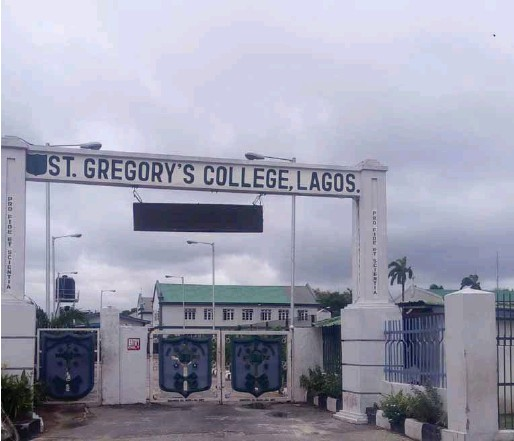
St. Gregory’s College, Lagos: A Legacy of Catholic Education in Nigeria

Published

on

St. Gregory’s College, Lagos, is one of Nigeria’s oldest and most prestigious Catholic boys’ secondary schools. Since its establishment in 1928, the school has maintained a reputation for academic rigor, discipline, and moral formation, nurturing generations of leaders and professionals who have shaped Nigeria’s social, political, and cultural landscape.

Founding and Early History

St. Gregory’s College was founded in 1928 by the Catholic Mission in Lagos, under the leadership of Archbishop Leo Hale Taylor, SMA, and Rev. Fr. Francis Xavier O’Rourke, SMA, both members of the Society of African Missions (SMA). The school was established during a period of rapid missionary expansion in colonial Lagos, where education was becoming a powerful tool for social advancement and Christian formation.

Named after Pope Gregory the Great (540–604 AD)—a reformer of the early Church and a champion of education—the school embodied the Catholic mission’s dual commitment to faith and learning. Its foundation reflected the Catholic Church’s determination to provide quality education in a colonial setting dominated by Protestant and government schools.

Location and Facilities

The college is located in Ikoyi–Obalende, Lagos State, less than a kilometer from Tafawa Balewa Square, one of Nigeria’s most symbolic colonial and post-independence landmarks. Designed as a boarding and day school, St. Gregory’s attracted students from across Nigeria and neighboring countries, offering a holistic education that combined intellectual development, moral training, and Catholic spirituality.

Catholic Identity and Mission

At the heart of St. Gregory’s lies its Catholic ethos. The daily life of students traditionally included Mass, catechism, and regular prayer, alongside classroom learning and sports. This integration of faith and academics is captured in its motto:

See also  PHOTOS: School collapse in Indonesia leaves three de@d, 38 missing

Pro Fide et Scientia — For Faith and Knowledge.

This motto remains a guiding principle, reminding students that their pursuit of excellence must always be grounded in moral values and service.

Academic and Extracurricular Life

Since its inception, St. Gregory’s College has been known for rigorous academics, excelling in sciences, arts, and humanities. Many graduates pursued higher education both in Nigeria and abroad, becoming pioneers in law, medicine, engineering, politics, business, and the clergy.

The school is also celebrated for its sporting tradition, particularly in football and athletics, producing athletes who represented Nigeria at national and international levels. Music, debate, and drama thrived in the school, nurturing talents that later contributed to Nigeria’s cultural renaissance.

Notable Alumni

Over nearly a century, St. Gregory’s College has produced an impressive list of alumni across diverse fields. Among them are:

Chief Anthony Enahoro – nationalist, politician, and journalist who moved the first motion for Nigeria’s independence in 1953.

Chief Ernest Shonekan – interim Head of State of Nigeria in 1993 and business leader.

Cardinal Anthony Olubunmi Okogie – Archbishop of Lagos and one of the most influential Catholic leaders in Nigeria.

Chris Okotie – pastor, lawyer, and former pop musician.

King Sunny Adé – world-renowned juju musician and cultural icon.

Justice Augustine Nnamani – former Justice of the Supreme Court of Nigeria.

Numerous prominent business executives, judges, academics, and public servants.

Legacy and Continuing Influence

As St. Gregory’s approaches its centenary in 2028, it stands as a living testament to the enduring role of Catholic missionary education in Nigeria. Its alumni network spans the globe, and its legacy of discipline, intellectual achievement, and Catholic values continues to inspire new generations.

See also  Why my family started school for traditional worshippers – Coordinator

The school’s impact extends far beyond its classrooms. It has been integral to Nigeria’s educational history, shaping the country’s leadership class and preserving a tradition of excellence that blends faith, culture, and modern education.

Sources
Fafunwa, A. Babs. History of Education in Nigeria. George Allen & Unwin, 1974.

FOLLOW US ON:

FACEBOOK

TWITTER

PINTEREST

TIKTOK

YOUTUBE

LINKEDIN

TUMBLR

INSTAGRAM

Continue Reading
Click to comment

Leave a Reply

Your email address will not be published. Required fields are marked *

Education

Tinubu Makes Fresh Appointment In Education Sector (Full List)

Published

on

President Bola Tinubu has appointed Prof. Modupe Adeola Adelabu as Chairman of the Governing Board for the National Examination Council (NECO) and retained the current registrar, Professor Ibrahim Dantani Wushishi.

It was reports that the Special Adviser to the President on Information and Strategy, Bayo Onanuga, in a statement on Wednesday, disclosed that Tinubu made new appointments in the National Board of Technical Education (NBTE), the Federal Polytechnic in N’yak Shendam, Plateau State, and the National Library of Nigeria, all institutions under the Federal Ministry of Education.

According to the statement, Dr Bongfa Binfa was appointed as Rector of the Federal Polytechnic, N’yak-Shendam, Plateau State, while the tenure of Prof. Chinwe Veronica Anunobi was renewed as Director/Chief Executive of the National Library of Nigeria.

Tinubu approved the appointment of Binfa to succeed the pioneer Rector of the Federal Polytechnic, N’yak-Shendam, Dr Mukaila Zakari Ya’u, whose tenure expired on March 16, 2026.

Binfa’s appointment will be for a single term of five years, following the conclusion of the process for appointing a new Rector through a public advertisement in national dailies in September 2025.

Tinubu also appointed Professor Babatunde Salako as the NBTE chairman and reappointed the incumbent executive secretary, Prof Idris M Bugaje, for a second and final five-year term.

The statement stressed, “Professor Adelabu, who chairs NECO, is a retired Professor of educational administration who rose through the ranks to full professorship at the Obafemi Awolowo University. She was a former Deputy Governor of Ekiti State (2013- 2014) and the Chairman of the National Board for Technical Education (NBTE) between 2018 and 2021.

See also  Why my family started school for traditional worshippers – Coordinator

“Prof. Babatunde Salako, the new chair of NBTE, is a globally respected researcher with decades of experience in higher education, institutional governance and national policy leadership.

“He previously served as the Director General of the Nigerian Institute of Medical Research (NIMR) from 2016 to 2024, a period during which the institute experienced significant revitalisation, enhanced research governance, expanded international collaborations, and improved infrastructure and research outputs.

“Dr Binfa holds a Doctor of Philosophy (PhD) in Mechanical Engineering from Universiti Teknologi Malaysia. Before this appointment, Dr Binfa was Deputy Rector (Academic) at the Federal Polytechnic of Oil and Gas, Bonny. He was also a Lecturer in the Mechanical Engineering Department at the Federal Polytechnic, Idah.”

President Tinubu also approved the renewal of the tenure of Prof. Chinwe Veronica Anunobi as CEO of the National Library of Nigeria for a final term of five years.

Anunobi was first appointed on September 2, 2021, and since assuming office, has led several institutional reforms aimed at repositioning the National Library as a modern technology-driven knowledge institution, including the development and operationalisation of the National Repository of Nigeria, the Newspaper and Magazine Locator, the Index and Abstract to Nigerian Newspapers, and the National Virtual Library of Nigeria.

The statement added, “She has also played a strategic role in advancing the long-awaited completion of the National Library Headquarters project and in initiating plans to migrate heritage collections from the 34 state branches to the new headquarters in Abuja.

“The President expects that the renewal of her tenure would ensure continuity in the implementation of ongoing reforms, completion of the National Library Headquarters project, and execution of the 2025-2030 Strategic Plan of the institution.”

See also  FG makes fresh clarification on English, Mathematics requirement

FOLLOW US ON:

FACEBOOK

TWITTER

PINTEREST

TIKTOK

YOUTUBE

LINKEDIN

INSTAGRAM

Continue Reading

Education

Tinubu appoints NECO, NBTE chairmen, names poly rector, renews library DG tenure

Published

on

President Bola Tinubu has approved new appointments across key education agencies, including the National Examinations Council and the National Board for Technical Education.

According to a statement on Wednesday by the President’s Special Adviser on Information and Strategy, Bayo Onanuga, the appointments are part of efforts to strengthen institutions under the Federal Ministry of Education.

The President appointed Prof. Modupe Adeola Adelabu as Chairman of the Governing Board of the National Examinations Council, while retaining the Registrar, Prof. Ibrahim Dantani Wushishi.

He also named Prof. Babatunde Salako as Chairman of the National Board for Technical Education, while earlier reappointing the Executive Secretary, Prof. Idris Bugaje, for a second and final term of five years.

In the polytechnic sector, Tinubu appointed Dr Bongfa Binfa as Rector of the Federal Polytechnic, N’yak-Shendam, Plateau State, for a single term of five years. Binfa succeeds the pioneer rector, Dr Mukaila Zakari Ya’u, whose tenure ended in March 2026.

Until his appointment, Binfa was the Deputy Rector (Academic) at the Federal Polytechnic of Oil and Gas, Bonny, and previously lectured at the Federal Polytechnic, Idah.

The President also renewed the tenure of Prof. Chinwe Veronica Anunobi as Director-General of the National Library of Nigeria for a final term of five years.

Anunobi, who was first appointed in September 2021, has led “several institutional reforms aimed at repositioning the National Library as a modern technology-driven knowledge institution” including the development of digital platforms such as the National Repository of Nigeria and the National Virtual Library.

The statement noted that Adelabu, a former Deputy Governor of Ekiti State and ex-chairman of the NBTE, brings extensive experience in educational administration, while Salako is a former Director-General of the Nigerian Institute of Medical Research.

See also  See the ‘billionaire’ scheme driving students into debt, prostitution

It added that the renewal of Anunobi’s tenure is expected to ensure continuity in ongoing reforms and the completion of the National Library headquarters project in Abuja.

punch.ng

FOLLOW US ON:

FACEBOOK

TWITTER

PINTEREST

TIKTOK

YOUTUBE

LINKEDIN

INSTAGRAM

Continue Reading

Education

JAMB releases Monday’s UTME results

Published

on

The Joint Admissions and Matriculation Board (JAMB) has released the results of candidates who sat the 2026 Unified Tertiary Matriculation Examination on Monday, April 20.

Its spokesperson, Fabian Benjamin, disclosed this in a statement released on Tuesday, directing affected candidates to the board’s standard result-checking channels.

“The results for Monday, 20th, have been released. Candidates can view their results using the usual process,” the statement read.

Candidates can access their scores by sending “UTMERESULT” to 55019 or 66019 via SMS, using the phone number with which they registered for the examination.

Monday’s release is the latest in a series of daily result announcements that JAMB has been making since the 2026 UTME commenced on Thursday, April 16.

The exercise, which involves over two million candidates sitting computer-based tests at centres across the country, has seen the board publish results in batches corresponding to each examination day.

The board started the process by releasing results for Thursday’s candidates, followed by a combined batch covering Friday, April 17, and Saturday, April 18.

The Friday-Saturday release, however, came later than candidates had expected. JAMB had initially indicated the results would be available on Saturday but failed to meet that timeline, drawing frustration from candidates who waited through the night.

The board subsequently apologised, attributing the delay to the absence of its chief executive, who was occupied with an official engagement.

The results were eventually published on Sunday, April 19, before the board moved on to process and release the Monday batch.

See also  UNILORIN to graduate 11,886 students, marks 50th anniversary

punch.ng

FOLLOW US ON:

FACEBOOK

TWITTER

PINTEREST

TIKTOK

YOUTUBE

LINKEDIN

INSTAGRAM

Continue Reading

Trending