Connect with us

Lifestyle

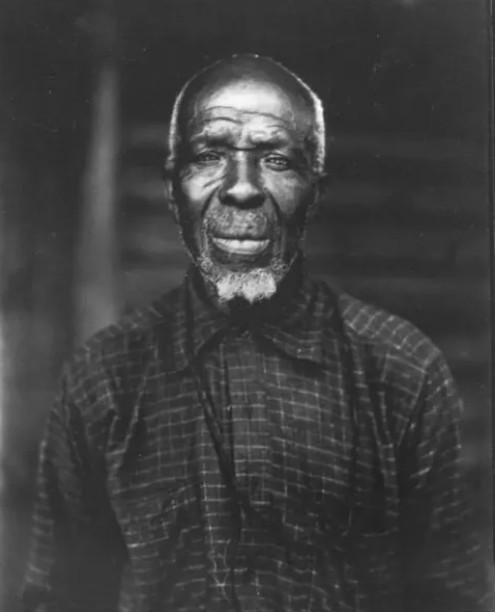
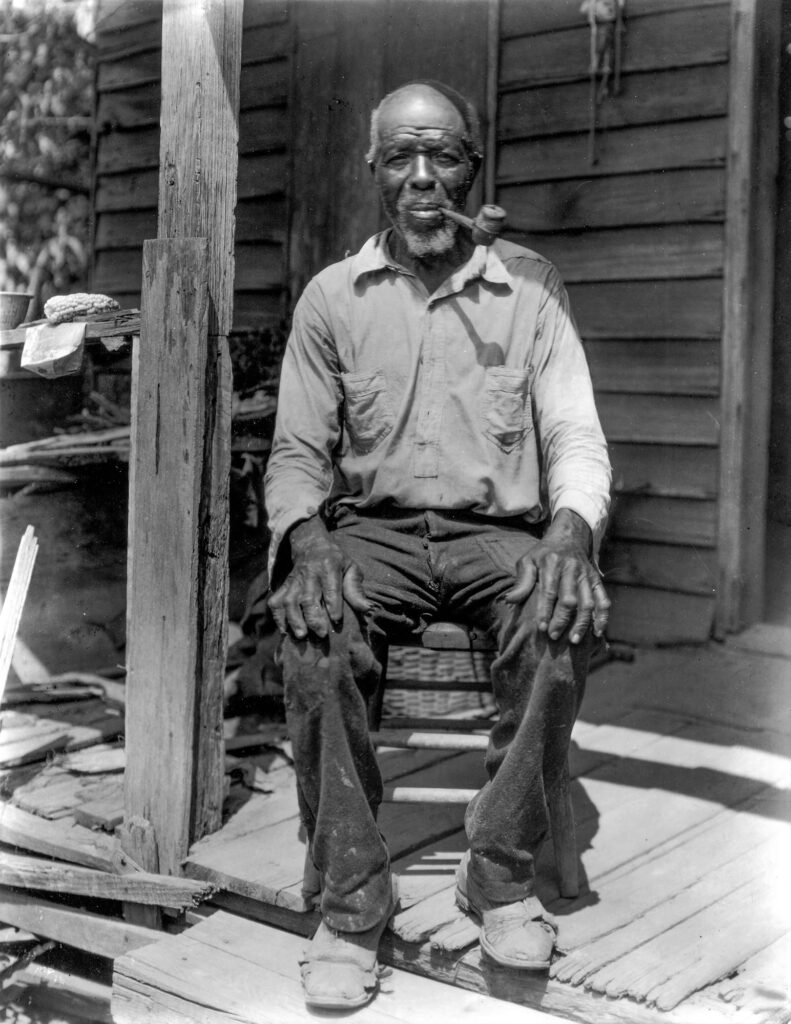
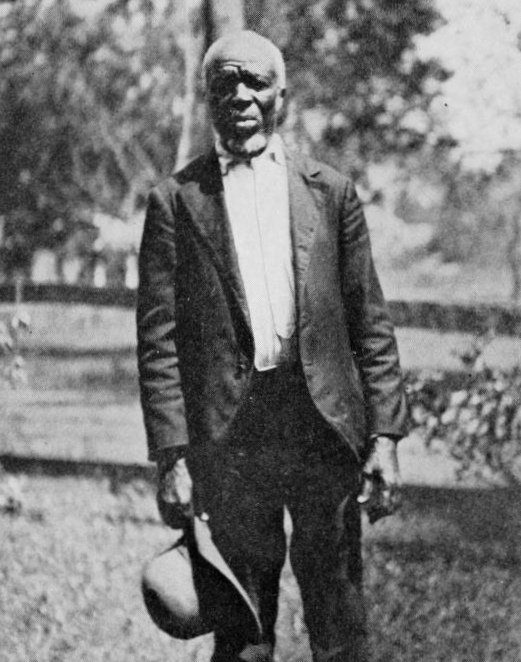
Cudjoe Lewis (Oluale Kossola): The Last Survivor of the Clotilda and Co-Founder of Africatown (PHOTOS)

Published

on

Cudjoe Lewis—born Oluale Kossola around 1841 in Bantè, in the kingdom of Dahomey (present-day Benin)—stands as a powerful witness to two intertwined histories: the rich traditions of the Yoruba people of West Africa and the enduring scars of the transatlantic slave trade. Remembered as the last known survivor of the Clotilda, the final recorded slave ship to bring enslaved Africans to the United States, Lewis’s life illuminates both the brutality of enslavement and the resilience of African culture in the Americas.

Early Life and Capture

Kossola was born into the Yoruba ethnic group, whose communities at the time were part of the sophisticated Oyo cultural sphere. His youth was shaped by the rhythms of Yoruba village life until circa 1860, when soldiers of the kingdom of Dahomey—under King Ghezo—conducted one of their frequent slave-raiding expeditions. During this raid Kossola and hundreds of others were seized and marched to the coastal slave port of Ouidah, a key hub in the transatlantic slave trade.

Although the United States had banned the international slave trade in 1808, American slave traders still financed clandestine voyages. In Ouidah, Kossola was sold to American traffickers and forced aboard the schooner Clotilda, along with roughly 110 other captives.

The Illegal Voyage of the Clotilda

The Clotilda’s voyage was organized in secret by Timothy Meaher, a wealthy shipper from Mobile, Alabama, who aimed to defy federal law and profit from human trafficking. In mid-1860 the Clotilda crossed the Atlantic and slipped into Mobile Bay. To destroy evidence of their crime, the crew burned and sank the ship in the Mobile–Tensaw Delta—its remains would not be positively identified until 2019, when maritime archaeologists confirmed the wreck.

See also  Ned Never Slept Outside Because I Held Him Well In The Other Room – Regina Daniels

Enslavement and Emancipation

On arrival, Kossola was renamed Cudjoe Lewis, a common practice meant to erase African identity. He was enslaved on Alabama plantations until the end of the American Civil War in 1865, when the Thirteenth Amendment formally ended slavery. Freedom, however, brought daunting challenges: Lewis and his fellow Clotilda survivors had to build livelihoods in a society still marked by racism and economic exclusion.

Founding of Africatown

Determined to preserve their heritage, about thirty Clotilda survivors—including Lewis—pooled their resources and purchased land in 1870 from the Meaher family itself, the very family that had financed their illegal capture. They established a settlement they called Africatown (also known as Africa Town) on the outskirts of Mobile.

The founders organized their community using social and political traditions from their West African homelands, maintained Yoruba and other African languages for decades, and celebrated their ancestral customs. Lewis emerged as a respected elder and community leader, helping to keep the group’s cultural memory alive.

Later Life and Zora Neale Hurston’s Interviews

In the early twentieth century, Lewis shared his memories with journalists, historians, and notably with Zora Neale Hurston, the Harlem Renaissance writer and anthropologist. Hurston interviewed him in the late 1920s, capturing his vivid recollections of capture, the Middle Passage, and the founding of Africatown. Publishers of the time rejected the manuscript for its unflinching portrayal of slavery; it remained unpublished until 2018, when it appeared as Barracoon: The Story of the Last “Black Cargo”.
Lewis died on July 26, 1935, in Africatown, by then recognized as the last known survivor of the transatlantic slave trade.

See also  Balaraba Ramat Yakubu: The Voice of Northern Nigerian Women Through Hausa Literature

Legacy and Historical Significance

Cudjoe Lewis’s life underscores the persistence of the illegal slave trade more than fifty years after it was outlawed in the United States. His testimony preserves an authentic African perspective on capture, enslavement, and cultural survival. Africatown—today a U.S. National Register of Historic Places site—remains a living symbol of resilience, where descendants and preservationists continue to honor the memory of Lewis and his fellow founders.

The 2019 confirmation of the Clotilda wreck renewed international attention to Africatown’s history and to the broader story of the Atlantic slave trade’s last chapter. Lewis’s journey—from Yoruba village child to elder of an African American community—remains a powerful narrative of endurance, identity, and the unbreakable ties between Africa and its diaspora.

Sources
Hurston, Zora Neale. Barracoon: The Story of the Last “Black Cargo.” Amistad, 2018.

FOLLOW US ON:

FACEBOOK

TWITTER

PINTEREST

TIKTOK

YOUTUBE

LINKEDIN

TUMBLR

INSTAGRAM

Continue Reading
Click to comment

Leave a Reply

Your email address will not be published. Required fields are marked *

Lifestyle

Declare Your Lineage – Royal Family Tells Musician KWAM 1 Over His Interest In Becoming Next Awujale Of Ijebuland

Published

on

KWAM 1, in a letter dated December 3, 2025, addressed to the chairman of the Fusengbuwa Ruling House in Agunsebi Quarters, Ijebu-Ode, announced his interest in the stool, describing himself as a “bonafide son” of the ruling house.

The Fusengbuwa ruling house of Ijebu-Ode, next in line to produce the new Awujale of Ijebuland, Ogun State, has instructed Fuji musician Wasiu Ayinde, popularly known as KWAM 1, to confirm his family’s royal lineage to validate his membership in the ruling house.

KWAM 1, in a letter dated December 3, 2025, addressed to the chairman of the Fusengbuwa Ruling House in Agunsebi Quarters, Ijebu-Ode, announced his interest in the stool, describing himself as a “bonafide son” of the ruling house.

KWAM 1 also stated that his candidacy aligns with Ijebu customary law and the Ogun State Chieftaincy Laws.

In an interview with Punch, the Chairman of the ruling house and former National President of the Institute of Chartered Accountants of Nigeria, Abdulateef Owoyemi, said only bonafide members of the family would be allowed to participate in the selection process.

Owoyemi explained that KWAM 1, Olori Omooba of Ijebu land and others interested in the stool have been directed to complete the Fusengbuwa ruling house royal lineage data form.

According to him, the form, which requires contenders to trace their genealogy back seven generations, ensures that only genuine princes from the family can participate, thereby blocking “strangers” from claiming the throne.

He said, “The first step for anyone interested in contesting for the Awujale throne is to declare their lineage by filling the standard Fusengbuwa ruling house royal lineage data form. Once confirmed as a legitimate member of the ruling house, they can then apply for the expression of interest form.

See also  Adebiyi Adegboye Adesida Afunbiowo II: The 46th Deji of Akure Kingdom

“We have told him, just like everyone else interested in the Awujale throne, that the first step is to declare his lineage. He will do this by completing the royal lineage data form, showing his full name, which parent and grandparent he descends from, and continuing up to seven generations.

“The completed form will be signed and submitted to the head of the ruling house unit of the Fusengbuwa ruling house, who will affirm that he is a genuine member. Only then will the process move forward.”

Owoyemi emphasised that although the application window for the throne officially closed on December 5, KWAM 1 had been given a five-day extension, which would lapse on December 10.

He noted, “We won’t shut anybody out of picking the next Awujale, but we must ensure that you are a legitimate member of Fusengbuwa. Every right comes with responsibilities. For a royal family, everyone must prove their legitimacy by completing the royal lineage data form.

“When we receive the form, we will review it meticulously. If clarification is needed, we will contact the applicant. We welcome men of influence who will use their influence to enhance the throne, not to claim it, ensuring that what truly belongs to our family is preserved.”

Owoyemi explained that the local government has given them 14 days to select candidates, and the ruling house hopes to have a new Awujale by the second or third week of January 2026.

He added, “The local government has given us 14 days to select candidates, which expires on December 18. After that, the kingmakers have seven days to deliberate and choose one candidate, whose name will be forwarded to the governor.

See also  Balaraba Ramat Yakubu: The Voice of Northern Nigerian Women Through Hausa Literature

“Legally, the government then has 21 days to conduct background checks and security clearance, allowing for objections or protests. After this period, the State Executive Council will ratify the nominee, and the governor will announce the next Awujale, after which coronation rites will commence.

“So, combining the candidate selection, kingmakers’ deliberation, and legal objection period, we are looking at around 42 days. Therefore, we expect the next Awujale to emerge between the second and third week of January.”

FOLLOW US ON:

FACEBOOK

TWITTER

PINTEREST

TIKTOK

YOUTUBE

LINKEDIN

TUMBLR

INSTAGRAM

Continue Reading

Lifestyle

VIDEO: I’m Married But Not In My Husband’s House; I Didn’t Have The Experience Of Living Happily Ever After – Singer Shola Allyson Reveals

Published

on

While speaking about her love life, the 54-year-old who came into limelight with a love album ‘Eji Owuro’, revealed that she is married but not living with her husband.

Sola Allyson, the popular Nigerian gospel singer, has revealed that she is not currently living with her husband.

The musician made this known in her latest interview on Oyinmomo TV.

While speaking about her love life, the 54-year-old who came into limelight with a love album ‘Eji Owuro’, revealed that she is married but not living with her husband.

Sharing her marital experience, the singer said she has never enjoyed the kind of happiness many people describe.

“I’m married, but I’m not in my husband’s house. We live separately. He in his house and I in mine.”

The interviewer asked: “You sang ‘Eji Owuro’, did you experience genuine love from your husband?

She replied, “We lied before. Those older than us didn’t inform us that it’s tough. They made us believe that so long as you both love each other, you will live happily ever after, but it’s a lie.

“That’s not the experience I have. I didn’t have the experience of living happily ever after. I did all I could to make it work.

“Marriage has been a big challenge. I hear people talk about joy in marriage, but I have never experienced it.”

CLICK TO WATCH THE VIDEO

FOLLOW US ON:

FACEBOOK

TWITTER

PINTEREST

TIKTOK

YOUTUBE

LINKEDIN

TUMBLR

INSTAGRAM

See also  Nigercem: Nigeria’s First Indigenous Cement Company (PHOTOS)
Continue Reading

Lifestyle

VIDEO: Shola Allyson Finally Opens Up, Reveals Why She Does Not Reference Jesus In Her Songs

Published

on

Recall that Allyson, who is regarded as a gospel singer, was dragged on social media in March 2025 for not directly referencing ‘Jesus’ in all her songs.

Shola Allyson, the renowned Nigerian songstress, has opened up on the real reason she avoids mentioning the name of Jesus in all her songs.

Recall that Allyson, who is regarded as a gospel singer, was dragged on social media in March 2025 for not directly referencing ‘Jesus’ in all her songs.

Reacting to her critics in a post on X, the songstress stated that “No one can bully me into joining their darkness that looks like light because indolent souls find comfort in it”.

Finally revealing her reason for not mentioning Jesus in her songs, Shola Allyson on Saturday during her latest interview on Oyinmomo TV, stated that Jesus did not ask her to do PR for him.

She said “I’m not a religious singer. As I am, I have never introduced myself as a gospel singer. My name is Shola Allyson. I’m a singer”.

Interviewer; “Some people said you don’t mention ‘Jesus’ name’ in all your songs”.

She quickly responded “Jesus did not instruct us to mention his name in songs nor did Jesus ask us to do PR for Him”.

CLICK TO WATCH THE VIDEO

FOLLOW US ON:

FACEBOOK

TWITTER

PINTEREST

TIKTOK

YOUTUBE

LINKEDIN

TUMBLR

INSTAGRAM

See also  Saheed Osupa thanks Burna Boy for calling him ‘GOAT’ singer
Continue Reading

Trending