Connect with us

News

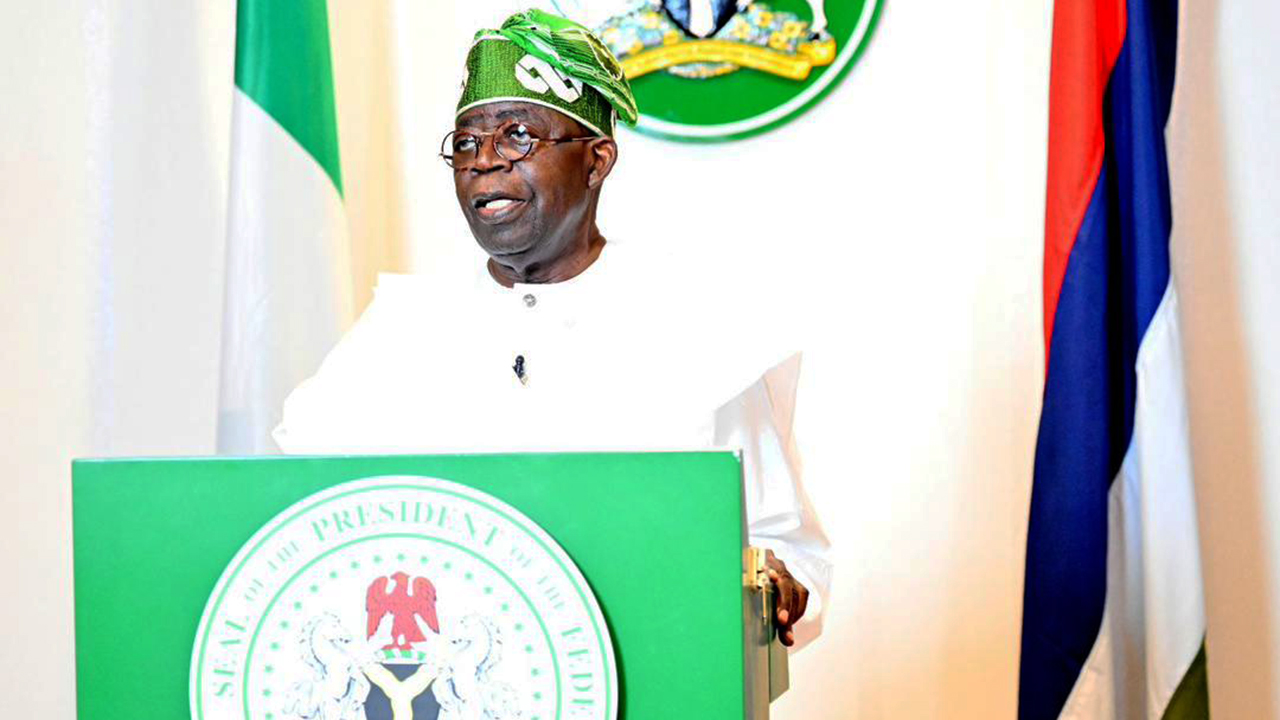
FULL TEXT – Tinubu’s 65th Independence Day address to Nigerians

Published

on

Fellow Nigerians,

Today marks the 65th anniversary of our great nation’s Independence. As we reflect on the significance of this day and our journey of nationhood since October 1, 1960, when our founding fathers accepted the instruments of self-government from colonial rule, let us remember their sacrifice, devotion, and grand dream of a strong, prosperous, and united Nigeria that will lead Africa and be the beacon of light to the rest of the world.

Our founding heroes and heroines—Herbert Macaulay, Dr Nnamdi Azikiwe, Sir Abubakar Tafawa Balewa, Chief Obafemi Awolowo, Sir Ahmadu Bello, Margaret Ekpo, Anthony Enahoro, Ladoke Akintola, Michael Okpara, Aminu Kano, Funmilayo Ransome-Kuti, and other nationalists—believed it was Nigeria’s manifest destiny to lead the entire black race as the largest black nation on earth.

For decades, the promise of our Independence has been tested by profound social, economic, and political challenges, and we have survived. While we may not have achieved all the lofty dreams of our forebearers, we have not strayed too far from them. In 65 years since our Independence, we have made tremendous progress in economic growth, social cohesion, and physical development. Our economy has experienced significant growth since 1960.

Although it is much easier for those whose vocation is to focus solely on what ought to be, we must recognise and celebrate our significant progress. Nigerians today have access to better education and healthcare than iin 1960. At Independence, Nigeria had 120 secondary schools with a student population of about 130,000. Available data indicate that, as of year 2024, there were more than 23,000 secondary schools in our country. At Independence, we had only the University of Ibadan and Yaba College of Technology as the two tertiary institutions in Nigeria. By the end of last year, there were 274 universities, 183 Polytechnics, and 236 Colleges of Education in Nigeria, comprising Federal, State, and private institutions. We have experienced a significant surge in growth across every sector of our national life since Independence – in healthcare, infrastructure, financial services, manufacturing, telecommunications, information technology, aviation and defence, among others.

Our country has experienced both the good and the bad times in its 65 years of nationhood, as is normal for every nation and its people. We fought a bitter and avoidable civil war, experienced military dictatorships, and lived through major political crises. In all these, we weathered every storm and overcame every challenge with courage, grit, and uncommon determination. While our system and ties that bind us are sometimes stretched by insidious forces opposed to our values and ways of life, we continue to strive to build a more perfect union where every Nigerian can find better accommodation and find purpose and fulfilment.

Fellow Compatriots, this is the third time I will address you on our independence anniversary since I assumed office as your President on May 29, 2023. In the last 28 months of my administration, like our founding fathers and leaders who came before me, I have committed myself irrevocably to the unfinished nation-building business.

Upon assuming office, our administration inherited a near-collapsed economy caused by decades of fiscal policy distortions and misalignment that had impaired real growth. As a new administration, we faced a simple choice: continue business as usual and watch our nation drift, or embark on a courageous, fundamental reform path. We chose the path of reform. We chose the path of tomorrow over the comfort of today. Less than three years later, the seeds of those difficult but necessary decisions are bearing fruit.

In resetting our country for sustainable growth, we ended the corrupt fuel subsidies and multiple foreign exchange rates that created massive incentives for a rentier economy, benefiting only a tiny minority. At the same time, the masses received little or nothing from our Commonwealth. Our administration has redirected the economy towards a more inclusive path, channelling money to fund education, healthcare, national security, agriculture, and critical economic infrastructure, such as roads, power, broadband, and social investment programmes. These initiatives will generally improve Nigerians’ quality of life. As a result of the tough decisions we made, the Federal and State governments, including Local Governments, now have more resources to take care of the people at the lower level of the ladder, to address our development challenges.

See also  Real reasons Tinubu sacked ex-IG Egbetokun revealed

Fellow Nigerians, we are racing against time. We must build the roads we need, repair the ones that have become decrepit, and construct the schools our children will attend and the hospitals that will care for our people. We have to plan for the generations that will come after us. We do not have enough electricity to power our industries and homes today, or the resources to repair our deteriorating roads, build seaports, railroads, and international airports comparable to the best in the world, because we failed to make the necessary investments decades ago. Our administration is setting things right.

I am pleased to report that we have finally turned the corner. The worst is over, I say. Yesterday’s pains are giving way to relief. I salute your endurance, support, and understanding. I will continue to work for you and justify the confidence you reposed in me to steer the ship of our nation to a safe harbour.

Under our leadership, our economy is recovering fast, and the reforms we started over two years ago are delivering tangible results. The second quarter 2025 Gross Domestic Product grew by 4.23%—Nigeria’s fastest pace in four years—and outpaced the 3.4 per cent projected by the International Monetary Fund. Inflation declined to 20.12% in August 2025, the lowest level in three years. The administration is working diligently to boost agricultural production and ensure food security, reducing food costs.

In the last two years of our administration, we have achieved 12 remarkable economic milestones as a result of the implementation of our sound fiscal and monetary policies:

We have attained a record-breaking increase in non-oil revenue, achieving the 2025 target by August with over N20 trillion. In September 2025 alone, we raised N3.65 trillion, 411% higher than the amount raised in May 2023.

We have restored Fiscal Health: Our debt service-to-revenue ratio has been significantly reduced from 97% to below 50%. We have paid down the infamous “Ways and Means” advances that threatened our economic stability and triggered inflation. Following the removal of the corrupt petroleum subsidy, we have freed up trillions of Naira for targeted investment in the real economy and social programmes for the most vulnerable, as well as all tiers of government.

We have a stronger foreign Reserve position than three years ago. Our external reserves increased to $42.03 billion this September—the highest since 2019.

Our tax-to-GDP ratio has risen to 13.5 per cent from less than 10 per cent. The ratio is expected to increase further when the new tax law takes effect in January. The tax law is not about increasing the burden on existing taxpayers but about expanding the base to build the Nigeria we deserve and providing tax relief to low-income earners.

We are now a Net Exporter: Nigeria has recorded a trade surplus for five consecutive quarters. We are now selling more to the world than we are buying, a fundamental shift that strengthens our currency and creates jobs at home. Nigeria’s trade surplus increased by 44.3% in Q2 2025 to ₦7.46 trillion ($4.74 billion), the largest in about three years. Goods manufactured in Nigeria and exported jumped by 173%. Non-oil exports, as a component of our export trade, now represent 48 per cent, compared to oil exports, which account for 52 per cent. This signals that we are diversifying our economy and foreign exchange sources outside oil and gas.

See also  NOA condemns indecent acts at students’ sign-out parties

Oil production rebounded to 1.68 million barrels per day from barely one million in May 2023. The increase occurred due to improved security, new investments, and better stakeholder management in the Niger Delta. Furthermore, the country has made notable advancements by refining PMS domestically for the first time in four decades. It has also established itself as the continent’s leading exporter of aviation fuel.

The Naira has stabilised from the turbulence and volatility witnessed in 2023 and 2024. The gap between the official rate and the unofficial market has reduced substantially, following FX reforms and fresh capital and remittance inflows. The multiple exchange rates, which fostered corruption and arbitrage, are now part of history. Additionally, our currency rate against the dollar is no longer determined by fluctuations in crude oil prices.

Under the social investment programme to support poor households and vulnerable Nigerians, N330 billion has been disbursed to eight million households, many of whom have received either one or two out of the three tranches of the N25,000 each.

Coal mining recovered dramatically from a 22% decline in Q1 to 57.5% growth in Q2, becoming one of Nigeria’s fastest-growing sectors. The solid mineral sector is now pivotal in our economy, encouraging value-added production of minerals extracted from our soil.

The administration is expanding transport infrastructure across the country, covering rail, roads, airports, and seaports. Rail and water transport grew by over 40% and 27%, respectively. The 284-kilometre Kano-Kastina-Maradi Standard Gauge rail project and the Kaduna-Kano rail line are nearing completion. Work is progressing well on the legacy Lagos-Calabar Coastal Highway and Sokoto-Badagry Highway. The Federal Executive Council recently approved $3 billion to complete the Eastern Rail Project.

The world is taking notice of our efforts. Sovereign credit rating agencies have upgraded their outlook for Nigeria, recognising our improved economic fundamentals. Our stock market is experiencing an unprecedented boom, rising from an all-share index of 55,000 points in May 2003 to 142,000 points as of September 26, 2025.

At its last MPC meeting, the Central Bank slashed interest rates for the first time in five years, expressing confidence in our country’s macroeconomic stability.

SECURITY:

We are working diligently to enhance national security, ensuring our economy experiences improved growth and performance. The officers and men of our armed forces and other security agencies are working tirelessly and making significant sacrifices to keep us safe. They are winning the war against terrorism, banditry and other violent crimes. We see their victories in their blood and sweat to stamp out Boko Haram Terror in North-East, IPOB/ESN terror in South East and banditry and kidnapping. We must continue to celebrate their gallantry and salute their courage on behalf of a grateful nation. Peace has returned to hundreds of our liberated communities in North-West and North-East, and thousands of our people have returned safely to their homes.

YOUTH:

I have a message for our young people. You are the future and the greatest assets of this blessed country. You must continue to dream big, innovate, and conquer more territories in your various fields of science, technology, sports, and the art and creative sector. Our administration, through policies and funding, will continue to give you wings to fly sky-high. We created NELFUND to support students with loans for their educational pursuits. Approximately 510,000 students across 36 states and the FCT have benefited from this initiative, covering 228 higher institutions. As of September 10, the total loan disbursed was N99.5 billion, while the upkeep allowance stood at N44.7 billion.

See also  Suspected bandits nabbed near Akure airport

Credicorp, another initiative of our administration, has granted 153,000 Nigerians N30 billion affordable loans for vehicles, solar energy, home upgrades, digital devices, and more.

YouthCred, which I promised last June, is a reality, with tens of thousands of NYSC members now active beneficiaries of consumer credit for resettlement.

Under our Renewed Hope Agenda, we promised to build a Nigeria where every young person, regardless of background, has an equitable opportunity to access a better future—thus, the Investment in Digital and Creative Enterprises (iDICE) programme. The Bank of Industry is driving the programme, in collaboration with the African Development Bank, the French Development Agency, and the Islamic Development Bank. This initiative is at the cusp of implementation. Over the last two years, we have collaborated with our partners to launch the programme, supporting our young builders and dreamers in the technology and creative sectors.

A MESSAGE OF HOPE

Fellow Nigerians, I have always candidly acknowledged that these reforms have come with some temporary pains. The biting effects of inflation and the rising cost of living remain a significant concern to our government. However, the alternative of allowing our country to descend into economic chaos or bankruptcy was not an option. Our macro-economic progress has proven that our sacrifices have not been in vain. Together, we are laying a new foundation cast in concrete, not on quicksand.

The accurate measure of our success will not be limited to economic statistics alone, but rather in the food on our families’ tables, the quality of education our children receive, the electricity in our homes, and the security in our communities. Let me assure you of our administration’s determination to ensure that the resources we have saved and the stability we have built are channelled into these critical areas. Today, the governors at the state level, and the local government autonomy are yielding more developments.

Therefore, on this 65th Anniversary of Our Independence, my message is hope and a call to action. The federal government will continue to do its part to fix the plumbing in our economy. Now, we must all turn on the taps of productivity, innovation, and enterprise, just like the Ministry of Interior has done with our travel passports, by quickening the processing. In this regard, I urge the sub-national entities to join us in nation-building. Let us be a nation of producers, not just consumers. Let us farm our land and build factories to process our produce. Let us patronise ‘Made-in-Nigeria’ goods. I say Nigeria first. Let us pay our taxes.

Finally, let all hands be on deck. Let us believe, once more, in the boundless potential of our great nation.

With Almighty God on our side, I can assure you that the dawn of a new, prosperous, self-reliant Nigeria is here.

Happy 65th Independence Anniversary, and may God continue to bless the Federal Republic of Nigeria.

Amen.

punch.ng

FOLLOW US ON:

FACEBOOK

TWITTER

PINTEREST

TIKTOK

YOUTUBE

LINKEDIN

TUMBLR

INSTAGRAM

Continue Reading
Click to comment

Leave a Reply

Your email address will not be published. Required fields are marked *

News

Police comb forest after terrorists abduct NECO students in Borno

Published

on

The Borno State Police Command has deployed security operatives to Lassa community in Askira/Uba Local Government Area following the abduction of an unspecified number of students writing the National Examinations Council examinations by suspected terrorists.

PUNCH Online had earlier reported that the attackers stormed the school at about 9 a.m. on Monday, shooting sporadically before abducting students and women selling food items within the school premises.

Confirming the deployment to PUNCH Online, the spokesperson for the Borno State Police Command, Nahum Daso, said security operatives confronted the attackers, preventing a larger-scale abduction.

“Around 9 a.m. in the morning, ISWAP attacked Lassa Day Secondary School. They shot sporadically. An unspecified number of students have been abducted.

“Security forces confronted them. For now, we have an unspecified number of students who were abducted. The CP deployed the Area Commander in Askira/Uba. They are currently combing the bush,” Daso said.

The Special Adviser to Adamawa State Governor, Ahmadu Fintiri, on Media and Strategy, Mr Solomon Kwamagar, a resident of Lassa, also confirmed the incident to PUNCH Online on Monday morning.

He disclosed that the attackers arrived on motorcycles and invaded the school.

“Today is Lassa market day. I was informed that they came through the market on motorcycles and went to Government Day Secondary School, Lassa. They shot and killed one teacher and took away all the students who were in their classrooms,” he said.

Kwamagar added, “Lassa in Borno State is predominantly inhabited by my people, the Margi. We are in both Adamawa and Borno states. I am from Lassa, but I chose to reside in Madagali Local Government Area of Adamawa State.”

See also  Demolition notice: Ogun communities cry out, call for Gov Abiodun’s intervention

He further said, “I’m still making contacts to ascertain the total number of students and teachers who were kidnapped from the school.”

Earlier, the President of the Borno South Youth Alliance, Samaila Kaigama, told PUNCH Online that the attackers wore military and forest guard uniforms.

“Yes. There was an attack on students writing NECO exams. The terrorists came around past nine. They passed the military checkpoint. They wore military and forest guard attire. They shot sporadically,” he said.

Kaigama said one teacher was killed while another sustained gunshot injuries.

“They killed one teacher from Chibok. They shot another, but not dead yet. They also kidnapped some students and women selling on the school premises. The numbers are not yet out,” he said.

When contacted, the Chairman of Askira/Uba Local Government Area, Mada Saidu, declined to comment.

“I am very busy now. We are in a situation,” he said.

Efforts to obtain comments from the state Commissioner for Information and Internal Security, Usman Tar, were unsuccessful as he neither answered calls nor responded to messages.

However, residents who spoke to PUNCH Online claimed that two teachers and one student were killed during the attack.

“They killed two teachers and one female student. The student was shot in her mouth,” a resident who requested anonymity said.

On May 16, PUNCH Online reported that 42 students and pupils were abducted after suspected Boko Haram terrorists attacked Mussa Primary and Junior Secondary School in Askira/Uba Local Government Area.

The senator representing Borno South, Ali Ndume, had said the abductees comprised four students of Government Day Secondary School, 28 primary school pupils and 10 children abducted from their homes.

See also  Suspected bandits nabbed near Akure airport

punch.ng

FOLLOW US ON:

FACEBOOK

TWITTER

PINTEREST

TIKTOK

YOUTUBE

LINKEDIN

Continue Reading

News

NASS sends state police bill to 36 states’ assemblies

Published

on

The National Assembly is set to transmit the Constitution Alteration Bill seeking the establishment of state police to the 36 state Houses of Assembly this week, marking the next critical stage of one of Nigeria’s most far-reaching security reforms.

The development comes days after the Senate passed the landmark constitutional amendment, with lawmakers now racing to secure the approval of at least 24 state legislatures before the bill can be transmitted to President Bola Tinubu for assent.

Chairman of the Senate Committee on Media and Publicity, Yemi Adaramodu, disclosed the development in an exclusive interview with The PUNCH on Sunday, saying all the necessary arrangements had been concluded for the transmission.

According to him, the state legislatures and governors were already awaiting the bill following consultations held ahead of its passage by the National Assembly.

“The bill for the creation of state police will get to the states this week. The states’ speakers have met and are awaiting the bill from the National Assembly.

“The state governors are expecting it too, even with their presence in the Senate chamber when the bill was being considered and passed,” Adaramodu said.

The planned transmission signals the beginning of the final constitutional hurdle for the proposed amendment, which requires endorsement by not less than two-thirds of the 36 state Houses of Assembly in line with Section 9 of the 1999 Constitution before it can become law.

Momentum has continued to build behind the proposal since the Senate approved the amendment after a clause-by-clause consideration of the report presented by the Senate Committee on the Review of the Constitution, chaired by Deputy Senate President Barau Jibrin.

The legislation seeks to establish a dual policing structure that will empower state governments to establish and maintain police services within their jurisdictions while preserving the constitutional responsibilities of the Nigeria Police Force over national security matters such as terrorism, border security, cybercrime, arms trafficking and other federal offences.

To address longstanding concerns over possible abuse by state governments, lawmakers incorporated several safeguards into the bill, including provisions prohibiting state police authorities from targeting individuals or groups for criticising governments and empowering the Federal Government to intervene in cases involving threats to national security, breakdown of public order or violations of fundamental human rights.

See also  Real reasons Tinubu sacked ex-IG Egbetokun revealed

The proposed reform has received unprecedented backing from governors, speakers of state legislatures and major political stakeholders across the country.

The Conference of Speakers of State Legislatures in Nigeria had earlier endorsed the bill, with its Chairman and Speaker of the Delta State House of Assembly, Emomotimi Guwor, assuring Nigerians that all state houses of assembly would give the proposal diligent consideration.

Several governors have also welcomed the amendment, describing it as a timely response to worsening insecurity across the federation.

Among them, Benue State Governor, Hyacinth Alia, described the Senate’s passage of the bill as a landmark step towards strengthening Nigeria’s security architecture, arguing that state police would possess a better understanding of local terrain and community dynamics, thereby improving intelligence gathering and response to criminal activities.

Similarly, the Forum of Progressive Speakers of State Legislatures under the All Progressives Congress pledged to facilitate speedy ratification in APC-controlled houses of assembly while promising robust oversight mechanisms to ensure professionalism and respect for human rights.

The Labour Party also threw its weight behind the proposal, describing the Senate’s action as a significant milestone in the quest to strengthen internal security through community-based policing.

Though it acknowledged concerns over possible abuse by governors, the party expressed confidence in the constitutional safeguards embedded in the amendment.

The proposal also attracted opposition from the Peoples Redemption Party, which questioned the timing of the initiative and urged Nigerians to reject it, arguing that the current administration lacks the credibility to oversee such a fundamental restructuring of the country’s policing system.

Despite the reservations expressed by critics, the planned transmission of the bill to the states this week is expected to trigger deliberations across the 36 Houses of Assembly, where lawmakers will conduct public hearings, stakeholder engagements and legislative scrutiny before voting on the constitutional amendment.

If at least 24 state assemblies endorse the proposal, it will pave the way for President Bola Tinubu’s assent, potentially ending decades of debate over the decentralisation of policing and ushering in what many stakeholders believe could be the most significant reform of Nigeria’s internal security architecture since the return to democratic rule in 1999.

See also  Autonomy battle: Local Governments demand direct funds as states receive N7.43tn

Meanwhile, the Senate on Sunday defended the passage of the state police bill, insisting that its passage, which 84 senators supported, is a response to Nigeria’s worsening security challenges.

The upper chamber said the bill emerged from years of consultations, public engagements, and broad national consensus, stressing that it would be wrong to delay the proposal for political calculations ahead of the 2027 general election.

The position comes amid growing debate over the constitutional amendment bill, with supporters arguing that decentralising policing will improve security at the grassroots, while critics fear that state police could be abused by governors to intimidate political opponents.

Defending the Senate’s decision in a statement issued by his media office on Sunday, the Leader of the Senate, Opeyemi Bamidele, said the proposal was “purely a child of necessity and not of political expediency as well as a product of national consensus and not of cynicism.”

He maintained that the establishment of state police had become a matter of urgent national importance that should not be sacrificed because of anyone’s political ambition.

According to him, the process leading to the passage of the bill did not begin recently but evolved through extensive constitutional review engagements involving key stakeholders across the country.

Despite some dissenting views, Bamidele said observations had shown that Nigerians largely welcomed the passage of the bill with the belief that it would significantly improve security at the sub-national level.

He said, “The state police proposal was part of memoranda submitted to the Senate Ad hoc Committee on the Review of the 1999 Constitution. The memorandum had been subjected to a rigorous process and multi-tiered consultation across the federation due to its sensitive nature.

“During this process, the National Assembly broadly consulted the executive, the Nigeria Governors’ Forum, the Conference of Speakers of the State Legislatures of Nigeria and the leadership of the Nigeria Police, among others.

“In July 2025, the National Assembly conducted public hearings in all geopolitical zones, and the participants overwhelmingly approved it.

“At each level of our consultation, nearly all stakeholders embraced the State Police Bill in the light of stark realities we are facing today.”

The Senate Leader said the Nigerian Police actively contributed to the drafting of the constitutional amendment by offering recommendations that helped lawmakers build safeguards against potential abuse of state police by political actors.

See also  37 kidnap victims regain freedom in Katsina after peace deal with bandits

According to him, those recommendations formed part of accountability and oversight mechanisms embedded in the legislation to ensure that state police operate within constitutional limits.

He added that the willingness of the Nigerian Police to support the proposal underscored its strategic importance in addressing insecurity at the local and state levels.

Beyond the contributions of the police hierarchy, Bamidele said the bill was subjected to extensive debates in both chambers of the National Assembly before its eventual passage.

He noted that support for the legislation cut across party lines.

He said: “Even though the APC is the majority, there are members of opposition parties – PDP, ADC, NDC and Labour Party – that exercised their discretion in favour of the Bill, mainly in the national interest and not on a parochial basis.

“In the Senate, for instance, 84 out of 109 members voted clause by clause in support of the Bill. This accounted for 77.06 per cent approval at the Senate alone.”

Bamidele argued that security should transcend political affiliations, noting that countries facing security threats often unite behind reforms aimed at strengthening national safety.

Globally, he said, security “is a collective public good that benefits citizenry across ethnic, political and religious divides.

“Political actors elsewhere always throw off their togas of partisanship and parochialism to support initiatives that will boost and reinforce national security.”

He, therefore, urged opposition parties to contribute constructive ideas that would strengthen peace and stability across the federation rather than oppose initiatives solely on political grounds.

Bamidele also challenged opposition parties and leaders to come forward with ideas that would deepen the peace and stability of the federation.

“Even when they disagree on some grounds, they are under obligations to provide credible and useful ideas that can make our nation better and greater. Unfortunately, they have not passed this critical test of opposition democracy,” Bamidele said.

punch.ng

FOLLOW US ON:

FACEBOOK

TWITTER

PINTEREST

TIKTOK

YOUTUBE

LINKEDIN

Continue Reading

News

Chaos as flooding shuts Lagos airport temporary terminal

Published

on

There was chaos at the temporary terminal of the Murtala Muhammed International Airport, Lagos, on Sunday after heavy rainfall caused severe flooding at the facility.

The departure hall, boarding gates, airline temporary offices, and other sections of the makeshift terminal were submerged. The situation forced the Federal Airports Authority of Nigeria to shut the terminal abruptly, as airlines operating from the facility could no longer process passengers.

As a result of the flooding, airlines, including Air France-KLM, Ethiopian Airlines, and Fly Gabon, were relocated from the terminal. According to officials, the terminal’s powerhouse was also flooded, forcing the authorities to switch off electricity.

Consequently, all airlines operating from the facility were moved to Terminal Two of the MMIA. FAAN officials alleged that the flooding was caused by blocked drainage channels, which they attributed to the Chinese company currently reconstructing the old international terminal.The incident came just months after FAAN shut the old MMIA terminal for a major reconstruction project estimated to cost more than N600bn. A few months ago, a fire also broke out at the old terminal, damaging parts of the facility.

Sources said the ongoing reconstruction of the old terminal by the Chinese contractor has caused several disruptions at the airport.

Reacting to Sunday’s flooding, FAAN spokesperson Henry Agbebire confirmed the incident, attributing it to the ongoing construction work at the airport.

According to Agbebire, the construction temporarily affected the drainage system, resulting in flooding. He said, “It was the construction works that affected the drainage. And for operational reasons, we have moved airlines operating from that terminal to Terminal 2, and the development has not really affected their operations.

See also  Real reasons Tinubu sacked ex-IG Egbetokun revealed

“There were no cancellations at all. We have taken immediate action to fix that problem to the extent that it doesn’t happen again. You can rest assured of that.”

punch.ng

FOLLOW US ON:

FACEBOOK

TWITTER

PINTEREST

TIKTOK

YOUTUBE

LINKEDIN

Continue Reading

Trending