Connect with us

News

Was government’s hyper reaction to Sowore’s protest necessary?

Published

on

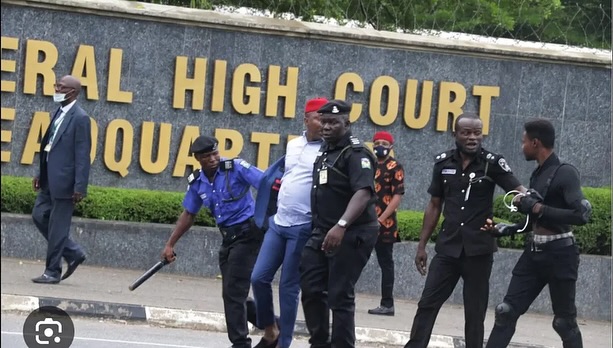
When Omoyele Sowore, the publisher of Sahara Reporters and activist, announced a protest in Abuja for the release of Nnamdi Kanu, few expected it to draw such a heavy-handed response from the Nigerian government. Yet, on October 20, when the protest was scheduled to be held, the police descended on the protesters as if they were enemies of the state. The sight of armed officers arresting citizens who were simply exercising their constitutional right to peaceful protest sent a disturbing message: Nigeria’s space for free expression is shrinking fast.

That this happened under President Bola Ahmed Tinubu’s watch makes the event even more disappointing. For decades, Tinubu stood as one of Nigeria’s most vocal opposition figures. He fought military dictatorship, demanded democracy, and benefited immensely from the freedoms that civil society and the media struggled to secure. Even as a governor, he opposed the presidency of Olusegun Obasanjo and gained the sympathy of most Nigerians. As an opposition leader of the APC, he led protests against the presidency of Goodluck Jonathan. To see his government now turning against those who dare to speak or march peacefully is both ironic and painful.

The use of excessive force against peaceful protesters is not new in Nigeria. From the #EndSARS movement in 2020 to other smaller demonstrations, the APC administration has increasingly treated dissent as a crime. In the case of Muhammadu Buhari, his background as a military person and a dictator made it easier to understand. But for Tinubu, who has never been a military person and was a vocal opposition leader for decades, it has been disappointing.

What stands out in this case is the hypocrisy of those in power. The ruling All Progressives Congress rode to power on promises of freedom, reform, and respect for citizens’ rights. Many of its leaders, like Tinubu, Senator Adams Oshiomhole, and Hon. Femi Gbajabiamila, participated in protests and spoke passionately about the importance of free speech and accountability.

See also  Trump’s Christmas missiles strike fear in northern Nigeria

Now, when ordinary citizens use the same democratic tools, the state responds with intimidation and arrests. This is not the democracy Nigerians were promised.

Every democracy recognises the right to protest as a key pillar of freedom. It is not a favour granted by the government. In Nigeria’s 1999 Constitution, freedom of expression, association, and peaceful assembly are clearly protected. Citizens do not need permission to voice their concerns.

I don’t need to agree with Sowore’s views. But it is his right to organise a protest. It is the right of Nigerians to choose whether to join the protest or not. The duty of the police is to be present to monitor the protest and ensure that hoodlums don’t hijack it.

When people like Sowore and others gather to demand justice or call attention to issues, they are not committing a crime. They are simply practising democracy by holding leaders accountable. A confident government that truly believes in its legitimacy should not feel uncomfortable with peaceful protests. Instead, it should listen, engage and respond with maturity. Using threats and excessive force against unarmed, peaceful protesters is the hallmark of a dictatorship. If a government spokesperson had addressed the protesters, that would have taken the wind out of the sails of the protest.

Tinubu’s rise to prominence came through his activism and opposition to military rule. As a member of the National Democratic Coalition in the 1990s, he fought for democracy and free expression. Those were noble struggles, and history rightly remembers Tinubu and his colleagues as heroes of democracy.

But history also judges what leaders do when they gain power. The measure of a true democrat is not how loudly he demands freedom when he is out of power, but how much of that freedom he protects when he is in power. By that measure, the Tinubu government’s record so far is worrying.

It is noteworthy that Sowore’s protest went beyond Nnamdi Kanu; it also highlighted the government’s double standards. On one hand, the government negotiates with bandits who come to meetings with guns and rocket launchers; on the other hand, the government arrests and detains those who protest with no weapons.

See also  Truck crushes Lagos tricyclist to death, injures two

Kanu, the leader of the Indigenous People of Biafra, has been detained since June 2021. He is facing trial on charges of treasonable felony and terrorism-related offences. Many Nigerians disagree with his methods and his vitriol. However, they believe he deserves a fair and speedy trial. Keeping him in detention indefinitely and refusing to obey court orders on him only deepens resentment and fuels division.

Sowore has positioned himself as a symbol of resistance against government excesses. The government has played into his hands by displaying intolerance. He has been arrested multiple times since 2019 for leading protests, yet he continues to speak up. Whether one agrees with his politics or not, his courage in the face of repression reflects the stubborn spirit of Nigerians who refuse to be silenced.

A government that hates dissent or crushes it loses moral authority. It portrays the government as insecure. The strength of any democracy does not lie in how it treats those who agree with it, but in how it treats those who disagree. When the government sees every critic as an enemy, it creates fear rather than loyalty.

Nigeria is already facing enormous challenges, which include economic hardship, insecurity, youth unemployment, and declining trust in public institutions. Silencing dissent will not solve these problems. On the contrary, it will worsen them. Citizens who cannot speak will find other, less peaceful ways to express their anger.

When the APC came to power in 2015, many Nigerians hoped for a new era of accountability and freedom. The party’s leaders criticised the previous government for corruption and intolerance. Yet, after over a decade in power, the APC has become worse than what it once opposed.

See also  Pregnant woman, children, others feared kidnapped in fresh Kwara attack

Under Tinubu, there was hope for renewal, given his history as a pro-democracy activist. But the early signs suggest a continuation of the same authoritarian tendencies that marked the Buhari years. The clampdown on protests, the arrests of journalists, the disregard for the Constitution in the declaration of a state of emergency in Rivers State, and the rising fear among citizens to speak freely point to a democracy that is losing its soul. Today, the separation of powers that should exist among the legislature, executive and judiciary has vanished.

Although President Tinubu seems focused on securing a second term by all means necessary, there is still time to change his attitude toward dissent. Nigerians are easy to satisfy. Saying the right words and carrying out the right actions will easily see millions of opponents move to his side. Umaru Yar’Adua achieved it by acknowledging that the election that brought him in was faulty and showing the people that he was on their side. Tinubu can start by instructing security agencies to respect the rights of protesters and journalists. It is also crucial to release those detained for peaceful demonstrations and allow citizens to express themselves without fear.

Nigeria suffered for decades under a dictatorship. In 1999, it celebrated its return to civilian rule. This is not the type of democracy Nigerians fought for. Nigeria deserves a government that listens and not one that fears its people. True democracy is not about silencing the crowd and pressuring every opponent to become a supporter. It is about hearing the cry of the people and taking steps to stop the cry.

X: @BrandAzuka

Continue Reading
Click to comment

Leave a Reply

Your email address will not be published. Required fields are marked *

News

Tinubu holds security meeting with service chiefs, IG

Published

on

President Bola Tinubu on Thursday convened a nearly two-hour security meeting with service chiefs at the Presidential Villa, Abuja, marking the first of such gathering since Tunji Disu assumed office as Inspector-General of Police.

Our correspondent observed that the security chiefs, who arrived at the Villa without their usual official vehicles, making identification difficult, departed the premises at approximately 5:10pm after extensive deliberations with the President.

The service chiefs and the IG were identified by our correspondent as they left the forecourt following the closed-door meeting.

The session comes amid heightened security concerns across the country, particularly the recent killings of military commanding officers in various theatres of operation.

In the past week alone, the military lost at least three commanding officers in charge of forward operating bases following a surge in attacks on security formations and personnel, especially in the North-East where Boko Haram and Islamic State West Africa Province insurgents have intensified assaults on military positions.

Notable among recent incidents was the attack on Ngoshe in Borno State, which resulted in abductions, as well as separate assaults on Konduga, Marte, Jakana, and Mainok, all in Borno State.

The attacks prompted responses from both President Tinubu and Vice President Kashim Shettima, who vowed to deploy overwhelming force to end the insurgency.

During an Iftar dinner with service chiefs on March 6, President Tinubu had assured the military of his administration’s commitment to defeating terrorism despite the Borno attacks.

“Nigeria will defeat terrorism despite these attacks. We will not bow to insurgents,” the President had stated.

See also  US mulls visa bans over alleged Christian killings in Nigeria

Vice President Shettima, in a statement signed by his spokesman Stanley Nkwocha, declared that the administration would end the insurgency with overwhelming force.

The Thursday security meeting is Disu’s first formal engagement with the President and service chiefs since his appointment as IGP on February 28, 2026, following the resignation of his predecessor.

As of the time of filing this report, details of the discussions at the security meeting had not been disclosed to the media.

However, PUNCH Online understands the meeting likely addressed the recent spike in attacks on security personnel, vulnerable communities in the North-East, and coordination among security agencies.

In a separate development, President Tinubu on Thursday summoned the Director-General of the Federal Airports Authority of Nigeria, Dr Olubunmi Kuku, for the second time in one week.

Our correspondent spotted the FAAN DG entering the Villa premises while the security meeting with service chiefs was still in session on Thursday afternoon.

The summons comes barely a week after the President suspended the cashless payment system at airport toll gates nationwide following widespread gridlock that caused passengers to miss flights.

On Wednesday, March 5, Kuku had met with the President hours after the suspension was announced, arriving at the Villa at approximately 5:45pm in the company of the Minister of Education, Tunji Alausa.

The Minister of Aviation and Aerospace Development, Festus Keyamo, had announced after the Federal Executive Council meeting that President Tinubu directed the immediate suspension of the cashless system following complaints about traffic congestion at Lagos and Abuja airports.

See also  Jonathan revealed why Niger Delta suffered

“Mr. President was very concerned about the welfare of Nigerians and the fact that most Nigerians were losing their flights, missing their flights.

“So Mr. President, out of empathy, directed today that we should suspend the present system because it creates a lot of gridlock,” Keyamo had stated.

The President directed the ministry to engage private sector participants to develop a more efficient payment system that eliminates cash without causing gridlock.

Thursday’s meeting with the FAAN DG may be connected to progress on implementing the hybrid system that allows both cash payments and prepaid cards while a permanent solution is developed.

FAAN, as the operator of toll gates and collection points at airports nationwide, is central to implementing any revised payment system.

The cashless system was designed to replace a cash collection practice of over 50 years that had been prone to fraud and under-remittance of revenues to the federal government.

As of the time of filing this report, the FAAN DG was still at the President’s office.

punch.ng

FOLLOW US ON:

FACEBOOK

TWITTER

PINTEREST

TIKTOK

YOUTUBE

LINKEDIN

Continue Reading

News

NiMet lists Sokoto, Zamfara, Kebbi as high-risk states for meningitis

Published

on

The Nigeria Meteorological Agency has issued a public health alert warning residents of several northern states about the heightened risk of Cerebrospinal Meningitis.

NiMET issued the warning in a statement on its official X account on Thursday, highlighting the need for vigilance and prompt action to prevent the spread of the potentially life-threatening infection.

According to NiMET, Cerebrospinal Meningitis is a serious infection affecting the brain and spinal cord, commonly caused by the bacterium Neisseria meningitidis.

It spreads through respiratory droplets, especially in crowded or poorly ventilated places.

The agency further noted that the disease can progress rapidly and may become life-threatening within hours if untreated.

However, early diagnosis and prompt antibiotic treatment greatly improve survival and reduce complications.

The alert categorised states by risk levels, with the highest risk observed in Sokoto, Zamfara, Kebbi, Katsina, Kano, Jigawa, Adamawa, Gombe, Bauchi, Yobe, and Borno.

Residents of central states were advised to exercise moderate vigilance, while Plateau, Oyo, Cross River, Edo, Ekiti, and Enugu were considered low vigilance areas.

NiMET also highlighted the groups most vulnerable to the infection, explaining that “children and young adults, people living in overcrowded settings, individuals exposed to dry, dusty environments, and persons with weakened immune systems are at higher risk.”

The agency emphasised early recognition of symptoms as key to preventing fatalities, listing sudden high fever, severe headache, neck stiffness, nausea or vomiting, and sensitivity to light as warning signs.

To reduce the risk of infection, NiMET encouraged the public to “Get vaccinated, practice good hygiene, avoid overcrowding, and seek early medical care. Vaccination, it said, is one of the most effective ways to prevent meningitis.

See also  Jonathan revealed why Niger Delta suffered

“Good hygiene, such as regular handwashing and avoiding the sharing of personal items, can also help reduce transmission, while ensuring good ventilation in homes, schools, and public spaces is important to limit exposure.”

Residents were urged to “Watch for symptoms such as high fever, severe headache, neck stiffness, vomiting, and sensitivity to light, and seek prompt medical attention if any occur.”

The agency concluded with a call for community participation in health awareness campaigns, stating that following public health guidance and staying informed can protect both individuals and the wider community.

“Protect yourself and your community. Early awareness, vaccination, and prompt treatment save lives,” NiMET added.

punch.ng

FOLLOW US ON:

FACEBOOK

TWITTER

PINTEREST

TIKTOK

YOUTUBE

LINKEDIN

Continue Reading

News

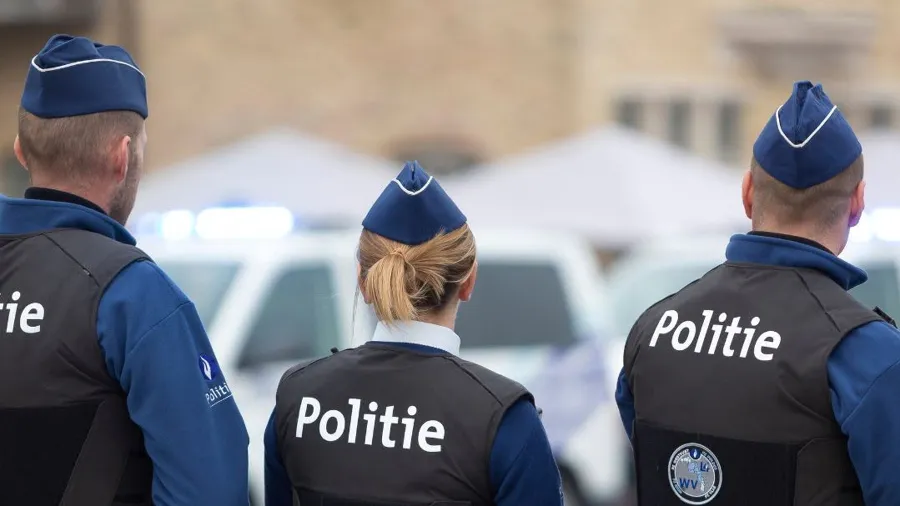
UK announces road closures, no-fly zones for Tinubu’s state visit

Published

on

Britain will impose airspace restrictions and deploy armed police officers in Windsor next week as President Bola Tinubu arrives for a state visit hosted by King Charles III.

Tinubu is expected to begin the visit in the company of his wife Oluremi Tinubu on Wednesday, March 18, with a reception at Windsor Castle.

Thames Valley Police in a statement on its website on Wednesday, said it is working with the Royal Borough of Windsor and Maidenhead, the Royal Household and other security partners.

The force said airspace restrictions over Windsor Castle, which are in place permanently throughout the year, would be extended on Wednesday, March 18, to cover the period from 7am to 11.59pm.

Chief Superintendent Adrian Hall of Thames Valley Police’s Joint Operations Unit said the air restrictions formed part of a broader security operation for the visit.

“The air restrictions are just one part of our robust security operation for the state visit of Nigerian President Tinubu next week, with many measures you will see and others you will not..

“As a force, we have a vast amount of experience in policing Royal events in Windsor and significant planning, and preparation has gone into this event,” Hall said.

He said the force would take a strong stance in enforcing the restrictions, warning that any breach would constitute a criminal offence under the Air Navigation Order and could lead to arrest.

“We will be taking a strong stance in enforcing the restrictions; anyone who breaches them will be committing a criminal offence under the Air Navigation Order and could be arrested.”

The police chief said officers with specialist capabilities, including search teams, the Mounted Section, road policing, and armed units, would be deployed across Windsor, alongside neighbourhood policing and Project Servator resources.

See also  Delta reviews dress code for civil servants, bans bushy beards, artificial nails

“We will also be deploying numerous police officers to Windsor with specialist capabilities, including our search teams, Mounted Section, Roads Policing and armed units, while our neighbourhood and Project Servator resources will also be on the ground engaging with the public,” he said.

The authorities will also deploy an extensive closed-circuit television network, hostile vehicle mitigation barriers, and other undisclosed security measures for the event.

Hall said, “We will also be using the extensive CCTV network in Windsor, Hostile Vehicle Mitigation barriers, and many other security measures that you may not be able to see to make sure the event runs safely.”

He urged members of the public to support the security operation by remaining vigilant.

“The public plays a critical role to support us so we encourage them to report any suspicious activity or anything that does not seem quite right by calling 101 or speaking to one of our officers. If there is an immediate threat or emergency, then call 999,” Hall added.

Road closures and parking restrictions will take effect from Tuesday, March 17, with possible temporary disruption to roads in and around Windsor during the visit.

Thames Valley Police said it was being supported by the Civil Aviation Authority and National Air Traffic Services to enforce the flight restrictions. Persons with legitimate reasons for drone flying were directed to email TVPAirspaceRequests@thamesvalley.police.uk.

punch.ng

FOLLOW US ON:

FACEBOOK

TWITTER

PINTEREST

TIKTOK

YOUTUBE

LINKEDIN

Continue Reading

Trending