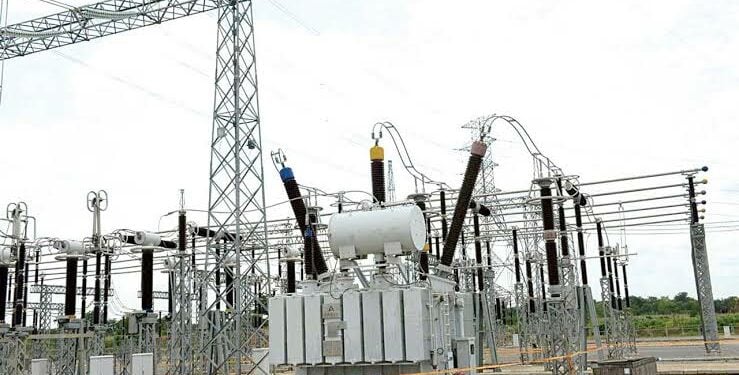
Apparently overwhelmed by the country’s power woes, the Federal Government is pushing this challenge to the 36 states, asking them to take over power generation, transmission, and distribution.
The Federal Government said this was the only solution to the power crisis in the country.
The Minister of Power, Adebayo Adelabu, said this in Lagos on Tuesday at the Nigeria Energy Leadership Summit.
Despite a series of efforts to make power available to Nigerians, the power sector seems to have defied all solutions by successive governments to sanitise the industry.
Speaking at the conference, Adelabu said the Federal Government was aware that power centralisation could never work for Nigeria, and that was why President Bola Tinubu’s administration signed the Electricity Act in 2023.
“On legislation, the enactment of the Electricity Act 2023 remains a major milestone. Sincerely, it is the pathfinder.
It provides a robust governance and regulatory framework for the Nigerian electricity supply industry.
The Act devolves regulatory powers to the states, enables subnational markets, promotes competition, and empowers private participation across the value chain.
“The impact of this legislation includes decentralisation and liberalisation. A country as big as Nigeria, with almost a million square kilometres of landmass, over 200 million people, millions of businesses, thousands of institutions (health and educational institutions), 36 states plus the Federal Capital Territory, and 774 local governments—centralisation cannot work for us.
The responsibility of providing stable electricity can never be left in the hands of the Federal Government.
“At the centre, you cannot, from Abuja, guarantee stable power across the country. So this is one thing that the Act has achieved—decentralisation. That has now allowed all the states or the subnationals to play in all segments of the power sector value chain—generation, transmission, distribution, and even service industries supporting the power sector,” he stated.
Presently, Adelabu said the Federal Government was pursuing a comprehensive agenda to reposition the power sector for sustainability, efficiency, and growth.
“This approach spans critical pillars, which include legislation, policy reforms, infrastructure development, energy transition, asset expansion, local content, and capacity development. each designed to address structural challenges, unlock private capital, and enhance service delivery across the electricity value chain, to achieve functional, reliable, affordable electricity throughout Nigeria to power our households, our businesses, our offices, our institutions, and our industries, thereby improving the economic prosperity of our people,” he noted.
The minister maintained that the private sector must get involved if the nation is serious about having a reliable power sector.
“The investment required can never be made available by the government. There are too many competing sectors—education, health, defence, works, aviation, and so on. They all compete for the limited funds from the Federal Government. So, given the level of investment required in this sector, we need private capital infusion, both local and foreign. The developed nations have done their bit, and they are still supporting us, but it can never be enough if private sector investors are not involved. That’s one advantage of this legislation, and I believe the states and private sector investors are up to the task.
“The Act devolves regulatory powers to the states, enables supply chain markets, promotes competition, and empowers private participation across the value chain. This represents a clear shift towards a liberalised and investment-friendly electricity market,” he stressed.
15 states get regulatory autonomy
Since the passage of the Electricity Act, Adelabu said 15 states have received regulatory autonomy and established subnational electricity markets, with one, Enugu, fully operationalised through the Enugu Electricity Regulatory Commission.
“I believe other states will follow suit in operationalising the autonomy granted, with full collaboration of the national regulator. We are working actively with these states to ensure strong alignment between the wholesale market and the retail market.
“In this regard, we believe the active involvement of the state governments, particularly in the off-grid segment, is critical, given the series of roundtable engagements held with governors by the Rural Electrification Agency, as well as ongoing efforts to closely track the distribution companies’ performances within their respective jurisdictions. The Managing Director of REA, Abba Aliyu, has held meetings with almost 20 states regarding the national electrification programme across the country, and this is an opportunity and a platform for the subnationals to leverage and start to activate the autonomy they have been granted,” Adelabu emphasised.
He charged the states to raise the bar.
“The states must raise the bar. I know Lagos State said it is ready to lead the pack. Let that not end on our lips. We must take the necessary steps to achieve this. They say that cows don’t make milk; we milk the cows. You need to take steps to ensure you activate this autonomy. We must take that step to milk the cow and make it up.
“Beyond that, we need to start engaging local and foreign investors at the state level. We have the autonomy. There are lots of investors interested in establishing generation outfits in your states. It could be thermal, small hydro, solar, or a wind farm to generate power in your states. It guarantees the energy security of your state. A lot of our states are bigger than some West African countries, and they’re running as countries. Who says we cannot run our states the way these people run their countries?
“We have the autonomy; we have the platform legally now. So, I believe we need to take the right step and get more involved, especially when it comes to the rural areas, the unserved communities, the underserved communities, and the semi-urban areas. You can start from that, not just providing electricity to households or lighting up households with solar systems and all that. You can do that, but it must include productive use of equipment that can boost the prosperity of your people at the rural level.
“There is a rural economy with huge potential, not just in agriculture alone. There are some small-scale enterprises in the local environment that can be boosted by supplying reliable electricity,” he added.
States told to challenge DisCos, TCN
The minister charged state governors to start challenging power distribution companies and the Transmission Company of Nigeria.
“You need to start challenging the TCN when it comes to grid supply. The transmission company has been broken into two, now the Transmission Service Provider and the Nigerian Independent System Operator. Challenge them: ‘Take light to my state, drop light for me,’ then you take up the decision from there.
“Now you need to get closer to the DisCos. You have to drive the DisCos. You have to track their performance. You have to monitor their performance because the provision of electricity is an electoral promise of every state governor. Challenge DisCos, get closer to them, and monitor their performance. NERC or the Ministry of Power cannot effectively track these DisCos from Abuja. You are closer to them. Challenge them, and they will provide power for your people,” Adelabu said.
States are ready – Enugu commission
Speaking with our correspondent at the conference, the Chairman and Chief Executive Officer of the Enugu Electricity Regulatory Commission, Chijioke Okonkwo, said states are ready to provide a stable power supply to residents.
Okonkwo maintained that the minister was right when he said states had to take over power generation, transmission, and distribution, saying, “That is the way to go.”
He said Enugu took the lead by establishing its regulatory commission.
He invited investors to come and build mini-grids in Enugu, saying the state and its policies are investor-friendly.
The Governor of Lagos State, Babajide Sanwo-Olu, who was represented at the event by the Commissioner for Energy and Mineral Resources, Biodun Ogunleye, also invited investors to the state.
Sanwo-Olu said the state was ready to collaborate with anyone or organisation willing to invest in the state’s electricity market.
The Governor of Katsina State, Dikko Radda, represented by his deputy, Faruk Lawal-Jobe, also disclosed the state’s readiness to invest in the power sector, collaborate with investors, and light up the state.
Speaking on power commercialisation, Adelabu noted that the government was deepening this to strengthen revenue, liquidity, and investor confidence.
According to him, through tariff policy reforms that enable cost-reflective tariffs for select consumers, supply reliability has improved while reducing energy costs for industries.
Industry revenue, he added, had increased by 70 per cent to N1.7tn in 2024 compared with the previous year, and revenue is expected to exceed N2tn in 2025.
At the Nigeria Energy Conference, Adelabu told stakeholders, investors, financiers, and innovators that Nigeria’s power sector remains open and ready for business more than ever before.
“We recognise that achieving the scale of investment required to transform the sector demands greater private sector participation across the entire value chain, particularly in the transmission segment. A useful reference is South Africa’s ambitious $25bn transmission grid expansion initiative, which seeks private developers to deliver 14,000 kilometres of new power lines and connect over 59 gigawatts of new capacity within the next 14 years. This is remarkable when compared with Nigeria’s Presidential Power Initiative (the Siemens project) valued at $2.3bn,” he said.
The minister regretted that Nigeria currently has over 10GW of stranded generation capacity—energy that could power industries, create jobs, and even support electricity exports to neighbouring countries through the regional power pool.
“We are therefore open to strategic partnerships to mobilise the necessary investments and unlock this potential. Our market fundamentals are improving, our policy environment is clear, and the national leadership is committed to creating the enabling conditions for long-term investment and innovation,” he submitted.
Since the Electricity Act was signed in 2023, 21 states have yet to set up their electricity markets. The 15 that have autonomy have not invested in the value chains as they look up to investors.
Adelabu’s charge might be a wake-up call to states to recognise the enormity of the power they now possess under the current legislation. If the states heed his call and invest in the value chains, experts believe this will disrupt the sector, boost power accessibility, reduce reliance on the national grid.
punch.ng
FOLLOW US ON: