Connect with us

News

Insecurity: Nigerians urge swift action amid Trump’s threat

Published

on

Reactions have continued to trail President Donald Trump of the United States’s threat of military action, with a cross section of Nigerians urging the administration of President Bola Tinubu to take immediate decisive action against terrorists.

This appeal comes after President Trump’s designation of Nigeria as a Country of Particular Concern, CPC, and his accompanying threat to deploy American military forces over alleged large-scale persecution and killings of Christians.

It was reports that President Trump declared Nigeria as a Country of Particular Concern, CPC, in response to allegations of widespread persecution and genocide against Christians.

Trump further threatened that he had asked the Defence Department to prepare for possible military action in Nigeria if the Nigerian government “continues to allow the killing of Christians”.

President Bola Tinubu, in response, stated that the characterisation of Nigeria as religiously intolerant did not reflect the country’s national reality.

Tinubu equally stated that the characterisation failed to account for the government’s “consistent and sincere efforts to safeguard freedom of religion and beliefs for all Nigerians”.

The Ministry of Foreign Affairs also vowed that Nigeria would continue to fight violent extremism, while expressing hope that the US would remain a close ally in the fight.

Other countries and world leaders have risen in defence of Nigeria and cautioned Trump against any direct or indirect military action capable of destabilising the entire West African subregion.

ECOWAS strongly rejected what it called “these false and dangerous claims” that a “Christian genocide” is taking place in Nigeria and the West African region.

It also said terrorist-related violence did not discriminate based on gender, religion, ethnicity, or age.

In the same vein, The Chinese government has pledged its firm support to the President Bola Tinubu administration amid threats of military action by United States President Donald Trump.

Spokesperson of China’s foreign ministry, Mao Ning, said China firmly opposes any country using religion and human rights as an excuse to interfere in other countries’ internal affairs, and threatening other countries with sanctions and force.

“As Nigeria’s strategic partner, China opposes any attempt by foreign powers to use religion or human rights as a pretext to meddle in another country’s internal affairs or impose sanctions and military threats,” Ning said.

The EU Spokesperson for Foreign Affairs and Security Policy, Anouar El Anouni, stated that the union had “taken note” of the statements by the US administration but remained focused on supporting Nigeria’s stability through cooperation.

“We respect Nigeria’s sovereignty and constitutional commitment to religious neutrality. Our position is one of solidarity with Nigeria.

“Solidarity with the victims of violence, with the authorities working to protect citizens, and with the Nigerian people, who overwhelmingly desire peaceful coexistence beyond ethnic and religious divides,” he said.

See also  Russian Jet Reportedly Shot Down As Terrorists Capture Malian Soldiers

While some Nigerians hailed Trump’s warning, saying it was the reflection of the longstanding realities in the country, others alleged that commentators were misrepresenting his message.

Speaking , Mr Anyebe Ekainu said too many innocent lives have been wasted in Nigeria, stressing that if President Trump intends to act, he should act now without further delay before no one is left anymore.

“We have had more than our fair share of bloodletting in this country. A lot of Christians have been killed, especially in Benue, Kaduna, Plateau, Adamawa and Taraba States. What about those killed in the church attack in Owo? The list is endless,” he said.

A social critic, Mike Divine, blasted analysts who according to him were taking President Trump’s statement out of context.

“Those arguing against Trump’s position should explain why Leah Sharibu of the Chibok schoolgirls’ abduction is still missing till date.

“They should also explain the presence of the mass grave displayed by Plateau pastor Rev. Ezekiel Dachomo, where scores of victims were buried. We are told that facts are sacred while comments are free,” he said.

Programme Director of CLEEN Foundation, Salaudeen Hashim, who also said, decried that it was the second time Nigeria is coming under the designation of ‘Country of Particular Concern’, describing it as an unfortunate stigmatization.

Hashim said that terrorism and insecurity do not select their victims, stating that It is very important to have people who can have strategic communication and offer the realities on ground.

He also lamented that Nigeria has not had diplomatic representation in most countries across the globe in the last two years, stressing that Nigeria’s diplomatic relationship has to be strengthened.

“Our diplomatic relationships need to be strengthened and we need to look at our foreign policy. It has not been getting us anywhere and we need to look into that.

“Also, we need to define our international interest, every country has what we call strategic national interest and sometimes it is not negotiable. What is our strategic national interest and I think it’s important for foreign affairs to make this clear.

“Finally, we have had terrorism charges going on, those who have been called perpetrators will need to deal with that very quickly and lastly, we need to step up our intelligence in target counter terrorism and prevent the occurrence of what is currently on ground,” he said.

Michael Akor stated that Donald Trump’s recent statement to intervene in the ceaseless insecurity in Nigeria, with specific reference to Christians genocide is a welcome development.

“As a concerned citizen of Nigeria whose major passion is to witness a country devoid of acrimonies, restiveness, banditry and extremism, I deem it as an answered prayer.

See also  ‘If You’re Here Illegally, You’ll Be Deported’ – Kemi Badenoch Declares In Fresh UK Border Plan

“Nigeria is of course , a sovereign nation, but sovereignty doesn’t mean total absence of interference by a more sovereign Nation. When the sovereignty of a nation becomes shaky, concerned nations can help in restoring solidity and balance to her sovereignty,” he said.

Ibrahim Mohammed also welcomed the idea so as to nip insecurity in the bud permanently from Nigeria.

“It’s really denigrating that a supposed giant of Africa (Nigeria) has continued to remain trapped in the fangs of religious genocide, banditry, tribal unrest, kidnapping and other forms of maimings.

“It’s even heart-aching that these grievous mishaps inflicted on innocent citizens are usually trivialized and politicized, hence successive governments have continued to allow them to look like normal fates or deserved happenings in Nigeria.

“The sighs of the average citizens who are victims of these heinous crimes against humanity are always given cold shoulders by Nigerian leaders, since they are well armed with security agents that shield them and their family members from falling as victims like the common citizens,” he lamented.

In the same vein, Abdul Rahman said since Nigerian leaders have failed to curb the menace, the intervention of external bodies becomes pertinent, adding that this makes the planned intervention of the US President, Donald Trump a good step in the right direction.

“Donald Trump’s statement which tagged Nigeria as a nation of concern, is a big slap on the faces of our leaders. This exposes them as weak and sterile leaders. If I were them, I would bury my head in shame.

“This genocide has continued unabated for donkey years, yet no proactive and decisive steps from our leaders to truncate it. The best our leaders always do is to release press statements condemning a genocide, then they go and sleep and wait for another attack to release another toothless press statement condemning the attacks.

“The obvious lackadaisical and careless attitudes our leaders have continued to display in the face of such grievous crimes against humanity, are enough to stair the intervention of external bodies, lest Nigerians wake up one day and realize that more than half of the citizens have been wiped out by the pampered marauders,” he said.

According to Anthony Ameh, “Since Donald Trump issued this important warning, a lot of people in the political circles have been fidgeting and devising defensive tactics to condemn Trump.

“Appallingly worrisome is the recent protest by some groups in the Northern part of the country, as a resistance to any possible intervention of the US.

“The likes of Sheik Gumi have continued to speak against the planned intervention, insisting that Trump shouldn’t intervene.

“Why are they this desperate? It is of course due to the fact that their hands are not clean. If the government is serious, the likes of Sheik Gumi, the protesters and other suspected supporters of these extremisms ought to be arrested.

See also  PHOTOS: Remains Of Nasir El-Rufai’s Mother Arrive Abuja For Burial

“The intervention of Trump is good. Anybody opposing the idea is probably a suspect, because I see no reason why a sane Nigerian would resist assistance to solve a problem that has lingered for donkey years without any sign of solution from our government.

“Some of them claim that Nigeria is a sovereign nation, hence another nation is not supposed to interfere in her issue, but the same Nigeria receives aid from US China, and other nations during economic quagmires and other emergencies such as disease outbreak. We should stop playing hanky panky games with serious national issues.”

On his part, Joseph Adah welcomed the threat of the US president, saying Nigeria’s poor masses are helpless at this point.

“Donald Trump’s “invasion of Nigeria” is a welcome idea that thousands of Nigerians will be happy about and of course, are eagerly waiting to see the reality of it,” he said.

Speaking, Emmanuel Ucha said the killing of innocent Nigerians has been going on for years.

He said, “Truth be told, the terrorism activities in Nigeria seem to have overpowered the Nigerian Government; therefore, the need for Trump to intervene and end the criminal activities against humanity a permanent end will be most cherished.”

Also speaking, Felix Sunday said the activities of the assailants are connected to those in authority, hence, the lingering nature of crises.

“The criminal activities of terrorism in Nigeria are perceived to have a deep connection with some leaders and that’s why some terrorists’ activities are carried out openly.

“The government of the day unfortunately is giving deaf ears to such serious cases, either for political reasons or reasons that are known to them at the detriment of helpless Nigerians and the activities keep going on unquestioned.

“An example of such a scenario is where a fellow Nigerian will be advising the Nigerian Government to ‘allow the terrorists to guard Nigerian forest in order for peace to reign’.

“This means the individual knows the terrorists and has serious business with the terrorists. Still, such fellows walk freely without being questioned. Therefore, foreign intervention is highly required,” he stated.

Chibueze Obi also welcomed the proposed invasion by President Donald J Trump, stressing that it’s a welcome development that will put an end to the criminal activities of terrorism in Nigeria, as well as their sponsors.

“Let’s not be deceived that Trump wants to wage war against Nigeria.

“It’s not a war against Nigeria as a country but against the terrorists and their sponsors in Nigeria,” he stated.

FOLLOW US ON:

FACEBOOK

TWITTER

PINTEREST

TIKTOK

YOUTUBE

LINKEDIN

TUMBLR

INSTAGRAM

Continue Reading
Click to comment

Leave a Reply

Your email address will not be published. Required fields are marked *

News

State Police Update: National Assembly collates reports from 30 state assemblies

Published

on

The National Assembly has commenced collation of reports from state Houses of Assembly on the proposed establishment of state police, with the Senate Leader, Opeyemi Bamidele, saying the constitutional requirement for the reform had been met.

Bamidele disclosed this on Thursday while delivering a lecture to participants of Senior Executive Course 48 at the National Institute for Policy and Strategic Studies, Kuru, Plateau State.

He said at least 30 state legislatures had approved the State Police Constitution Alteration Bill, 2026, surpassing the constitutional requirement of two-thirds of the 36 State Houses of Assembly.

According to him, the National Assembly will collate the reports, consider the positions of the state legislatures and pass a resolution by a simple majority in both chambers before transmitting the bill to President Bola Tinubu for assent.

The Senate Leader, who is also Vice Chairman of the Senate Committee on the Review of the 1999 Constitution, said the National Assembly intended to complete the remaining legislative processes by December 2026.

He said, “We are pleased to inform our constituents across the federation that state police has moved from rhetoric to reality. We have already received formal reports from the state Houses of Assembly and, as of today, no fewer than 30 states have approved the State Police Constitution Alteration Bill, 2026.

“By the provision of Section 9(2) of the 1999 Constitution (as amended), which requires the concurrence of not less than two-thirds of all state Houses of Assembly, the constitutional requirement for the alteration has been duly met. This is a historic milestone in our collective quest to re-engineer our security architecture and make it more responsive, more local, and more effective.

See also  Guard democracy, curb misinformation, Tinubu urges editors

“What happens next is procedural, but critical. The National Assembly is now constitutionally obligated to consider the reports transmitted by the state Houses of Assembly, collate those reports, and pass a resolution by simple majority of members in both chambers. Once this resolution is passed, the Alteration Bill will be transmitted to the President and Commander-in-Chief for assent.

“We have set a clear timeline for ourselves. We intend to conclude all these legislative stages — consideration of reports, passage of resolution, and transmission for presidential assent — on or before December 2026,” the Senate Leader emphasised.

The proposed state police system is part of wider efforts to decentralise Nigeria’s security architecture amid persistent killings, kidnappings and other violent crimes across the country.

Under the existing policing structure, the Nigeria Police Force operates primarily as a centrally administered institution.

Proponents of state police argue that allowing states to establish their own police services would improve local intelligence gathering, response times and accountability.

However, concerns have been raised about the potential abuse of state police by governors and other political office holders, particularly against political opponents.

Bamidele said the proposed reform would operate within constitutional safeguards, oversight mechanisms and human rights protections.

He described the development as a significant breakthrough after more than 15 years of unsuccessful attempts to establish state police through constitutional reform.

“What this means is that state police is no longer a campaign promise or a subject of endless debate. It is now a constitutional reality. It means that the security of lives, private property and public assets occupies a prime place in the legislative agenda of the 10th National Assembly,” he said.

Bamidele said the proposed system would enable states to develop policing structures better suited to their local conditions.

See also  Camilla Alhassan, Ghanaian TikToker jailed for claiming President Mahama sacrificed 32 cows

He added that the reform was not intended to weaken the Federal Government but to strengthen Nigeria’s federal system by making security more responsive to local communities.

According to him, the objective was not to create state armies but state-led, community-anchored policing arrangements operating under clearly defined constitutional and operational standards.

The Ekiti lawmaker also credited the leadership of the Senate President, Godswill Akpabio, with supporting the reform, assuring Nigerians that the National Assembly would see the process through.

He said the National Assembly, under the leadership of Akpabio, “remains committed to delivering on the establishment of state police. We will not falter until every Nigerian, whether in Kuru, in Iyin-Ekiti, in Gusau or in Yenagoa, can sleep with both eyes closed.”

Beyond state police, Bamidele said the 10th National Assembly had prioritised legislation intended to address citizens’ welfare, economic development and institutional reforms.

He argued that the performance of the legislature should be assessed by the practical effects of its laws and interventions rather than the number of bills passed.

Bamidele listed the Student Loans (Access to Higher Education) Act, 2024; the Minimum Wage (Amendment) Act, 2024; the four Tax Reform Acts of 2025; and the National Social Investment Programme Act among the measures passed by the current Assembly.

The Senate Leader also cited the Electoral Act, 2026, the Cybercrimes (Amendment) Act, the Investments and Securities Act, 2025, the Nigerian Insurance Industry Reform Act, 2024, and the Regional Development Commissions Acts.

He said the laws reflected a deliberate effort to use legislation to anticipate emerging challenges, strengthen public institutions and improve governance.

See also  Xenophobia: 111 more Nigerians return from South Africa

Bamidele said the impact of proactive lawmaking extended to national security, economic transformation, public financial management, electoral credibility, education, healthcare, technological innovation, environmental sustainability and relations among the different tiers of government.

On the relationship between the National Assembly and NIPSS, he called for stronger institutional collaboration to improve legislative foresight and policy development.

He maintained that the passage of laws alone was insufficient to guarantee good governance, stressing the need for effective implementation, funding and monitoring.

The senator said good laws must be relevant to citizens’ needs and capable of producing measurable improvements in their lives.

He, thus, observed that good governance “requires good laws. But good laws alone do not guarantee good governance.

“We require laws that are relevant, evidence-based, implementable, adequately funded, properly administered, effectively monitored, periodically reviewed and ultimately measured by their impact on citizens,” Bamidele stated.

Source: punchng.com

FOLLOW US ON:
FACEBOOK

WHATSAPP CHANNEL

TWITTER

PINTEREST

TIKTOK

YOUTUBE

LINKEDIN

INSTAGRAM

Continue Reading

News

FG pumps N5tn into military operations, read details

Published

on

The Federal Government has disbursed N5.15tn in special intervention funds to the Nigerian military and related security agencies between November 2023 and September 2026, amid persistent insecurity, including terrorism, banditry, kidnapping and other violent crimes across the country.

An analysis by The PUNCH of documents from the Federation Account Allocation Committee, obtained on Thursday, revealed that the government received N5.65tn into a dedicated special intervention account over the period, out of which N5.15tn had been disbursed, representing 91.15 per cent of the total funds.

The records showed that the intervention was financed through allocations from the Federation Account and other government revenue sources, including non-oil revenue and funds transferred from a FAAC withholding account.

The document, titled ‘Ledger of Special Intervention Programme for Nigerian Military September, 2026”, was prepared by the Federation Account Department of the Office of the Accountant-General of the Federation and formed part of the records presented to the Technical Sub-Committee of FAAC at its meeting in Abuja on October 14, 2026.

According to the ledger, the N5.15tn was released through 30 payment transactions between November 8, 2023, and September 23, 2026, while the total receipts were recorded across 33 funding transactions.

The disbursements were separate from the regular annual budgetary allocations to the Ministry of Defence and other security institutions, indicating the scale of additional financial resources channelled towards security operations.

However, the records did not provide a breakdown of the specific military operations, equipment purchases, personnel costs or security projects financed with the money.

A breakdown of the transactions showed that the intervention programme commenced with a N100bn transfer on October 19, 2023, described as the September 2023 allocation.

The first payment of N100bn was made to the military on November 8, 2023, while another N100bn was received on November 20, 2023, and subsequently disbursed on December 20.

By the end of December 2023, the account had received N300bn and disbursed N300bn, leaving no outstanding balance.

The funding arrangement continued throughout 2024, with regular transfers of N100bn and corresponding payments to military and paramilitary agencies.

Between January and December 2024, the account received N1.2tn and disbursed the same amount, bringing cumulative receipts and payments to N1.5tn.

See also  Iran Warns UK That Allowing US To Use British Bases Is Participation In Aggression

The transactions were largely recorded as monthly allocations under the special intervention programme, although the payment dates did not always correspond with the months for which the funds were allocated.

For instance, the January 2024 allocation was transferred on February 27, while the corresponding payment was made on March 1.

Similarly, the ledger showed that the programme entered a second phase in July 2024, beginning with a N100bn transfer on July 27.

The second phase continued into 2025, with the government maintaining the N100bn monthly funding pattern.

During the first nine months of 2025, the account received N900bn and disbursed N900bn, bringing cumulative payments to N2.4tn by September 1, 2025.

An analysis of the transactions, therefore, showed that N2.4tn was disbursed between November 2023 and September 2025, before the government significantly increased the scale of the intervention in 2026.

The records indicated that the funding arrangement changed considerably in 2026, with individual transfers rising from the previous N100bn monthly pattern to between N200bn and N500bn.

On March 18, 2026, the government transferred N200bn from the FAAC Withheld Account, described in the ledger as savings for March 2026.

The amount was followed by a N100bn payment to security agencies on March 16, although the payment preceded the recorded transfer by two days.

Another N250bn was transferred from non-oil revenue on May 18, 2026, while N130bn was paid to security agencies from the FAAC Withheld Account on May 25.

The ledger also recorded a N120bn payment to the Consolidated Pool Account II TSA on June 3, 2026.

This particular transaction differed from the other payments because it was not expressly described as a transfer to military or paramilitary agencies.

On June 16, 2026, the government transferred N400bn from non-oil revenue for May, which was reversed the same day.

The reversal was followed by a fresh transfer of N500bn from non-oil revenue, indicating that the earlier transaction was cancelled and replaced.

The same day, N500bn was paid to military and paramilitary agencies, marking one of the largest individual disbursements recorded under the programme.

See also  Guard democracy, curb misinformation, Tinubu urges editors

Another N500bn was transferred from non-oil revenue on July 15, followed by a corresponding payment to military and paramilitary agencies on July 22.

The pattern continued in August, when N500bn was transferred on August 19 and paid out on the same date.

On September 16, another N500bn was transferred from non-oil revenue, while the corresponding payment was recorded on September 23.

The final entry in the ledger showed a further N500bn transfer from non-oil revenue on October 14, 2026, described as the September 2026 allocation.

Although the ledger was titled September 2026, the inclusion of the October 14 transaction indicated that its financial position incorporated the latest transfer recorded at the FAAC technical meeting.

The figures showed that the intervention account received N3.25tn in 2026 up to October 14, compared with N1.2tn throughout 2024.

This represented an increase of about 170.83 per cent over the entire amount received in 2024, despite the 2026 records covering only part of the year.

Payments recorded in 2026 amounted to N2.75tn, compared with N1.2tn in 2024, representing an increase of approximately 129.17 per cent.

The N2.75tn disbursed in 2026 also accounted for 53.40 per cent of the N5.15tn paid out under the programme since its commencement.

The analysis further showed that the government disbursed more under the special intervention programme in 2026 than the combined N2.4tn released between November 2023 and September 2025.

It also revealed that the programme had an outstanding balance of N500bn as of October 14, 2026, representing 8.85 per cent of the total N5.65tn received.

The balance arose after the latest N500bn transfer was recorded without a corresponding payment in the ledger.

Consequently, the outstanding amount represented funds available in the intervention account rather than money already disbursed to security agencies.

Despite the significant increase in funding, the country continues to grapple with security challenges across several regions.

In the North-East, the military has continued operations against Boko Haram and the Islamic State West Africa Province, while banditry and mass kidnappings remain major security concerns in parts of the North-West and North-Central regions.

Communities in several states have also experienced attacks by armed groups, resulting in deaths, displacement and disruption of farming and other economic activities.

See also  PHOTOS: Remains Of Nasir El-Rufai’s Mother Arrive Abuja For Burial

The security challenges have placed pressure on government finances, as authorities continue to allocate substantial resources to military operations, intelligence gathering, logistics and the protection of vulnerable communities.

FG reviews strategy

Ina related development, the Federal Government has begun a review of the 2019 National Security Strategy to develop a new framework that addresses emerging threats, including terrorism, banditry, kidnapping, cybercrime, food insecurity and climate change.

The National Security Adviser, Nuhu Ribadu, disclosed this on Thursday during the inauguration of a committee to review the existing strategy and formulate the National Security Strategy 2026.

Ribadu, who was represented by Major General Sarkin Bello (retd.), said Nigeria’s security environment had changed significantly since the last review in 2019, requiring a comprehensive reassessment of the country’s security priorities.

“Our national security landscape is undergoing rapid and profound transformations. Since the last review of our strategy in 2019, the domestic, regional and global security environments have changed dramatically, with intensity,” he said.

He noted that the country was confronted with multiple security challenges that required a broader strategic response.

“As you are aware, these problems range from terrorism, banditry and kidnapping to sophisticated cyber threats, misinformation, economic problems, food insecurity and environmental challenges, among others,” Ribadu said.

He said the new strategy would serve as a framework for coordinating national security, resilience and sustainable development, adding that it must reflect current realities while anticipating future threats.

Also, the Deputy Chairman of the committee, Major General Evi Onumajuru (retd.), said the changing nature of security threats made a strategic realignment imperative.

He said traditional security challenges, including terrorism, insurgency and banditry, had become intertwined with non-kinetic threats such as cybercrime, economic vulnerabilities, food insecurity and climate change.

He added that the strategy must integrate the priorities of the Renewed Hope Agenda by linking economic prosperity and good governance with human security and national defence.

Source: punchng.com

FOLLOW US ON:

FACEBOOK

WHATSAPP CHANNEL

TWITTER

PINTEREST

TIKTOK

YOUTUBE

LINKEDIN

INSTAGRAM

Continue Reading

News

10 things to know about applying for 2027 SAN rank

Published

on

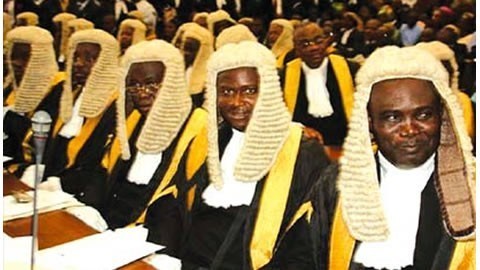
The Legal Practitioners’ Privileges Committee has invited applications for the 2027 award of the rank of Senior Advocate of Nigeria, with private legal practitioners required to pay a non-refundable processing fee of N5m and government-employed lawyers N2.5m.

The committee said the application portal would open on November 1, 2026, directing all candidates to complete the application process online and comply with its document submission requirements and deadlines.

PUNCH Online had reported Wednesday that Legal Practitioners’ Privileges Committee invited applications for the 2027 conferment of the rank of Senior Advocate of Nigeria.

Here are 10 things prospective applicants need to know about the exercise.

1. Applications open on November 11

The LPPC said its application portal would open to the public at 12am on November 1, 2026.

Applications are to be processed through its official portal, www.lppconline.com.

2. Private legal practitioners will pay N5m

The committee fixed the non-refundable processing fee for private legal practitioners at N5m.

3. Government-employed lawyers will pay N2.5m

Legal practitioners employed by the government are required to pay a non-refundable fee of N2.5m.

4. Payment must be made into designated bank accounts

Applicants are required to pay directly into either of the committee’s designated accounts:

– Zenith Bank: 1014103141

– Guaranty Trust Bank: 0213662834

5. Proof of payment must be uploaded

Candidates must upload evidence of payment to the online portal for verification.

According to the notice, the LPPC Secretariat will send a confirmation email after verification, allowing applicants to continue with the process.

See also  Iran Warns UK That Allowing US To Use British Bases Is Participation In Aggression

6. All supporting documents must be uploaded online

Applicants seeking the rank through advocacy or academia must upload clear and legible scanned copies of all mandatory and supporting documents through the portal.

7. Academic applicants have additional requirements

Candidates applying through the academic category must submit seven physical photocopies each of their curriculum vitae and impact statement, in addition to the required flash drives.

8. Every applicant must submit five flash drives

The committee directed all applicants to provide five flash drives containing copies of their completed application forms downloaded from the portal and all mandatory and supporting documents uploaded during the application process.

9. Online applications close on January 31, 2027

The deadline for completing online applications is midnight on January 31, 2027. Applicants are advised to complete their submissions before the deadline to avoid technical or procedural complications.

10. Flash drives must arrive by February 1, 2027

The five flash drives must be delivered to the LPPC Secretariat before 4pm on February 1, 2027.

The committee warned that applications that do not comply with its guidelines or are submitted after the prescribed deadlines will be rejected and treated as non-submissions.

The notice was signed by the Chief Registrar of the Supreme Court of Nigeria and Secretary of the LPPC, Kabir Eniola Akanbi.

Applicants seeking clarification may contact the secretariat through lppcsecretariat@courts.gov.ng.

Source: punchng.com

FOLLOW US ON:

FACEBOOK

WHATSAPP CHANNEL

TWITTER

PINTEREST

TIKTOK

YOUTUBE

LINKEDIN

INSTAGRAM

Continue Reading

Trending