Connect with us

Lifestyle

Three nights Nigeria will not forget

Published

on

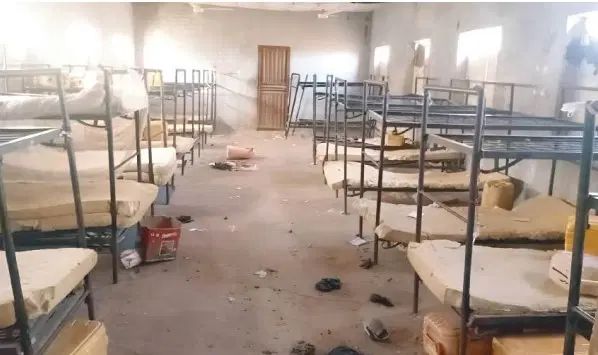
A hostel at Government Girls Comprehensive Senior Secondary School, Maga, Kebbi State, where bandits kidnapped 25 students, killing the vice-principal in the process.

ON three different days across three different states, Nigeria was pulled into the same widening circle of sorrow. A candlelit church was attacked in Eruku, Kwara State, on Tuesday.

Twenty-five schoolgirls were abducted from Maga, Kebbi State, before sunrise on Monday.

Brigadier General Musa Uba was ambushed and killed on the penultimate Friday in Borno.

Separate tragedies, yet bound by a single grim echo, the reminder that the country still walks through shadows long after midnight should have passed.

The night Eruku held its breath

Tuesday evening in Eruku began like a gentle hymn. Inside Christ Apostolic Church, candles flickered, voices blended in prayer, and worshippers leaned into the soft comfort of faith. The warm glow, the lifted hands, the familiar rhythm; all of it felt like a small pocket of peace. Then the doors burst open.

The first gunshot tore the hymn in half. Panic rippled through the sanctuary. Mothers threw themselves over their children. Candles toppled, casting frantic shapes across the walls. Screams clashed with the thunder of gunfire. Two worshippers fell dead where they stood. The pastor and several congregants were dragged into the night.

Eruku has lived on edge ever since. People speak in lowered tones now, as though the night itself leans in to listen. Some recall the sting of shattered glass against their skin; others cannot shake the memory of the ratatat of gunfire blending with the wails of women and children. The church remains suspended in its trauma; pews overturned, hymnals abandoned, dust settling softly on memories too heavy for anyone to lift.

See also  Air Commodore Usman Jibrin: The Fighter Pilot Who Became Kaduna’s Military Governor

Yet as dusk falls each evening, Saturday Vanguard learnt that villagers still gather near the church, candles cupped carefully in their hands. They form gentle circles of prayer, their flames trembling but refusing to die.

A day earlier, in the early hours of Monday, another darkness was unfolding hundreds of kilometres away.

At Government Girls Comprehensive Secondary School in Maga, the girls slept in their hostel, unaware that their world was about to break open. They dreamed simple teenage dreams: assignments, parents, school gossip, futures that still felt close enough to touch.

Then came the motorcycles. The gunmen slipped through the fence with ruthless confidence. They stormed the hostel, jolting the girls awake with shouting, torchlight, and the cold bite of fear. Twenty-five were seized and dragged into the night. A vice-principal who tried to stop the attackers paid with his life.

Now the school carries an eerie silence. Beds remain rough and unmade. Notebooks sit untouched. Slippers rest beside bunks that should belong to giggling, restless teenager girls. The air itself feels held in place, waiting for footsteps that do not return.

Parents sit outside their homes long past midnight, whispering their daughters’ names into the wind. Some clutch photographs until the edges fray. Others rock gently in silence, trapped in the slow ache of suspended time. In Maga, every second feels like an eternity stretched thin by hope and fear.

The fall of a soldier

And then there was the tragedy of the penultimate Friday, the loss of Brigadier General Musa Uba in Borno.

See also  Ogun monarch slams Fayose for insulting Obasanjo

He was a soldier who believed leadership meant stepping into danger, not standing behind it. He carried the burdens of his men with quiet dignity, moving through each mission with the calm resolve of someone who understood both the cost and necessity of courage.

But the ambush that claimed him was swift and merciless. He was taken alive. Days later, the country learned that he had been killed.

In his home, his uniforms still hang where he left them. His boots sit by the doorway, their silence almost accusatory. His family moves through the house like people navigating sacred ground, touching his belongings with careful, trembling hands.

Among the ranks, his name is spoken with reverence, a reminder of the sacrifices that rarely make headlines but shape the fragile space between safety and chaos.

A nation holding its breath

Nigeria feels like a nation holding its breath. Three days, three states, and one sorrow that stretches across the map like a single unbroken thread. In Eruku, a farmer startles at every slamming door, his nerves still raw from Tuesday’s terror.

In Maga, a mother has not slept since Monday, her thoughts circling endlessly around the daughter who never came home. In Borno, a widow moves quietly through her house, her gaze lingering on medals she cannot yet bear to hold.

Across the country, nights have grown heavier. Parents walk their children to school with wary eyes fixed on distant horizons. Communities stay awake longer than they used to, listening for rustles in the dark that might signal danger. Even soldiers move differently; tighter, more deliberate, as though the air itself has changed.

See also  Ned Nwoko opens up on Regina Daniels’ alleged drug addiction struggles, says ‘I’ve accepted nonsense’

And yet, beneath all the fear, something stubbornly human refuses to fade.

The heart that refuses to stop beating

In Eruku, neighbours now escort each other home from evening errands, their footsteps forming a quiet shield. In Maga, young volunteers sweep through bushes and backroads, driven by nothing but determination and the aching need to bring the girls home. In Borno, soldiers straighten their backs in honour of the commander they lost, carrying his courage like a torch through the shadows.

Grief is here, heavy and undeniable, but resilience has arrived with it, rising from the belief that sorrow cannot be the final sentence in Nigeria’s story.

When the sun returns

One day, Eruku’s congregation will sing again without checking the doors. One day, the daughters of Maga will return, perhaps; older, changed, but home. One day, Brigadier Uba’s family will speak his name with steady voices instead of trembling ones.

For now, the night stretches on; long, uncertain, thick with memory. But dawn is already on its way. Slow, deliberate, unyielding. And when it breaks, Nigeria will rise once more, scarred but unbroken, carrying both the weight of these three days and the quiet, stubborn hope that simply refuses to die.

Source: Vanguard News

Continue Reading
Click to comment

Leave a Reply

Your email address will not be published. Required fields are marked *

Lifestyle

PHOTOS: A Biafran Armoured Vehicle at the National War Museum, Umuahia: Ingenuity in a Time of Siege

Published

on

Displayed at the National War Museum in Umuahia, Abia State, this armoured vehicle stands as a striking material reminder of the technological improvisation that characterised the Biafran side during the Nigerian Civil War (1967–1970). The vehicle is commonly identified as an up-armoured T16 Universal Carrier, adapted and deployed by Biafran forces in the face of severe resource constraints.

The Nigerian Civil War in Context

The Nigerian Civil War, often called the Biafran War, erupted in July 1967 following the secession of the Eastern Region of Nigeria as the Republic of Biafra under the leadership of Lt. Col. Chukwuemeka Odumegwu Ojukwu. The conflict was rooted in a complex mix of political instability, ethnic tensions, economic disputes, and the fallout from the 1966 military coups.
The federal government imposed a land, sea, and air blockade on Biafra, drastically limiting access to weapons, fuel, spare parts, and food. This blockade forced Biafran engineers, mechanics, and technicians to rely heavily on local innovation and adaptation to sustain their war effort.

The Up-Armoured Universal Carrier

The vehicle shown in the museum is believed to be based on the T16 Universal Carrier, a light tracked armoured vehicle originally designed during the Second World War. Universal Carriers were widely used by Allied forces and were present in Nigeria during the colonial era.
During the war, Biafran forces modified available carriers by:

Reinforcing them with improvised armour plating

Adapting engines and mechanical components using locally available materials

Reconfiguring them for reconnaissance, troop movement, or limited combat roles

See also  Air Commodore Usman Jibrin: The Fighter Pilot Who Became Kaduna’s Military Governor

Although such vehicles could not match the firepower or durability of modern armoured tanks, they represented a pragmatic response to isolation, allowing Biafra to maintain some level of mechanised capability.

Ingenuity Under Pressure

The armoured carrier exemplifies what many historians describe as Biafran wartime ingenuity. Alongside makeshift armoured vehicles, Biafra also produced:

Locally assembled rockets and mortars (such as the Ogbunigwe)

Modified civilian vehicles for military use

Small-scale refineries and workshops to support logistics

These efforts were driven by necessity rather than abundance, highlighting the role of technical skill and improvisation in asymmetric warfare.

Human Cost and Global Attention

The war resulted in devastating human losses. Scholarly estimates suggest around 100,000 military deaths, while civilian deaths range from approximately 500,000 to over 2 million, largely due to famine and disease exacerbated by the blockade. These figures vary widely among historians and humanitarian organisations, reflecting the difficulty of precise wartime accounting.
Notably, the Nigerian Civil War was among the first conflicts to receive extensive global television coverage. Images of starving Biafran children broadcast internationally shaped global humanitarian awareness and influenced the development of modern relief organisations.

Preservation and Historical Memory

Today, the presence of this armoured vehicle at the National War Museum, Umuahia serves an educational purpose rather than a celebratory one. It invites reflection on:

The realities of civil conflict

The limits and possibilities of local technological innovation

The enduring human and social consequences of war

As an artefact, it underscores how material culture can help future generations understand both the creativity and tragedy that emerge under extreme historical conditions.

See also  PHOTOS: Christina Eyimofe Stallings Nigeria’s First Air Hostess

Sources

National War Museum, Umuahia (museum displays and archival descriptions)

Nigerianland, Nigeria History Makers – Pictures

Falola, T. & Heaton, M., A History of Nigeria (Cambridge University Press)

FOLLOW US ON:

FACEBOOK

TWITTER

PINTEREST

TIKTOK

YOUTUBE

LINKEDIN

TUMBLR

INSTAGRAM

Continue Reading

Lifestyle

A Woman of Elegance, Resilience, and Impact: Alhaja Simbiat Atinuke Abiola

Published

on

This seldom-seen image from 1991 gently captures the serene presence of Alhaja Simbiat Atinuke Abiola (née Shoaga), pictured alongside her daughter, Wuraola Abiola, at her husband’s birthday celebration in Lagos—just a year before her passing. A prominent member of the renowned Abiola lineage, her life was rooted in service and generosity.

Alhaja Simbiat was not only the cherished spouse of the late Chief Moshood Kashimawo Olawale Abiola, she was also a formidable figure in her own right. In the early 1980s, she shattered glass ceilings by launching and directing Wonder Bakery, an innovative enterprise that provided employment to over 140 Nigerians—at a time when female business leaders were a rarity in the country.

Yet, her brilliance extended well beyond commerce.

In 1992, while waging a brave battle against cancer in a hospital in the United Kingdom, Alhaja Simbiat watched the heart-wrenching news of the Cairo (Dahshur) earthquake. Touched by the plight of the children affected, she selflessly donated $100,000 to support the reconstruction of a school that had been reduced to rubble. Even as her health declined, her compassion remained boundless—reaching across nations and touching lives.

That same year, Nigeria mourned the loss of a quiet luminary. Alhaja Simbiat passed away at age 51 in a British hospital, leaving behind a legacy defined by kindness, tenacity, and quiet leadership.

She was far more than a devoted wife and loving mother—she stood as a beacon of humanity, vision, and unwavering dignity.

May her soul continue to rest in perfect peace.

Source: historylovers

Photo: theelitesng

FOLLOW US ON:

FACEBOOK

TWITTER

PINTEREST

TIKTOK

YOUTUBE

LINKEDIN

TUMBLR

INSTAGRAM

See also  Ogun monarch slams Fayose for insulting Obasanjo
Continue Reading

Lifestyle

VIDEO: Seyi Tinubu arrives Alaafin’s palace for installation as ‘Okanlomo of Yorubaland’

Published

on

The city of Oyo is currently witnessing an influx of political figures and traditional rulers for the installation of new high-ranking chiefs by the Alaafin of Oyo, Oba Abimbola Owoade.

Seyi Tinubu, accompanied by his wife, Layal, arrived at the palace of the Alaafin on Sunday.


Alaafin confers chieftancy titles on Seyi Tinubu. Credit: X|adejare_stephen


Alaafin confers chieftancy titles on Seyi Tinubu. Credit: X|adejare_stephen

PUNCH reports that Seyi, the son of President Bola Tinubu, will be installed as the “Okanlomo of Yorubaland,” a title which translates to “the beloved child” or “the one dear to the hearts of all Yoruba people.”

The title is said to symbolise a custodian of Yoruba values, unity, and cultural heritage.

The Senator representing Zamfara West and a former Governor of Zamfara State, Abdul’Aziz Yari, has also reportedly arrived in Oyo, accompanied by a delegation of northern senators and political figures.


Alaafin confers chieftancy titles on Seyi Tinubu, Senator Yari. Credit: X|adejare_stephen

Yari will also be installed as the “Obaloyin of Yorubaland” on the same occasion by the Alaafin.

The Director of Media and Publicity to the Alaafin, Bode Durojaiye, in a recent statement, reportedly stated that the ‘Obaloyin of Yorubaland’ title represents love, compassion, justice, and a bridge between physical and spiritual realms.

Both titles are said to come with responsibilities that include promoting Yoruba culture, advising the Alaafin, fostering unity, and advancing education and social welfare.


Alaafin confers chieftancy titles on Seyi Tinubu, Senator Yari. Credit: X|adejare_stephen

Videos circulating on social media reveal that the venue of the event is set, capturing the presence of several notable figures, including former Governor of Kano State, Abdullahi Ganduje, lawmakers, and a diverse assembly of traditional rulers and chiefs.

See also  Prince Tajudeen Olusi: The Lagos Political Elder Who Shaped Tinubu’s Rise

Watch videos below:

CLICK TO WATCH THE VIDEO

Credits: PUNCHNG

FOLLOW US ON:

FACEBOOK

TWITTER

PINTEREST

TIKTOK

YOUTUBE

LINKEDIN

TUMBLR

INSTAGRAM

Continue Reading

Trending