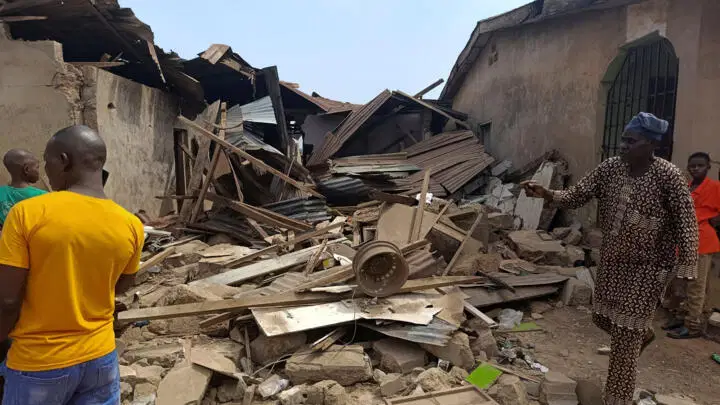
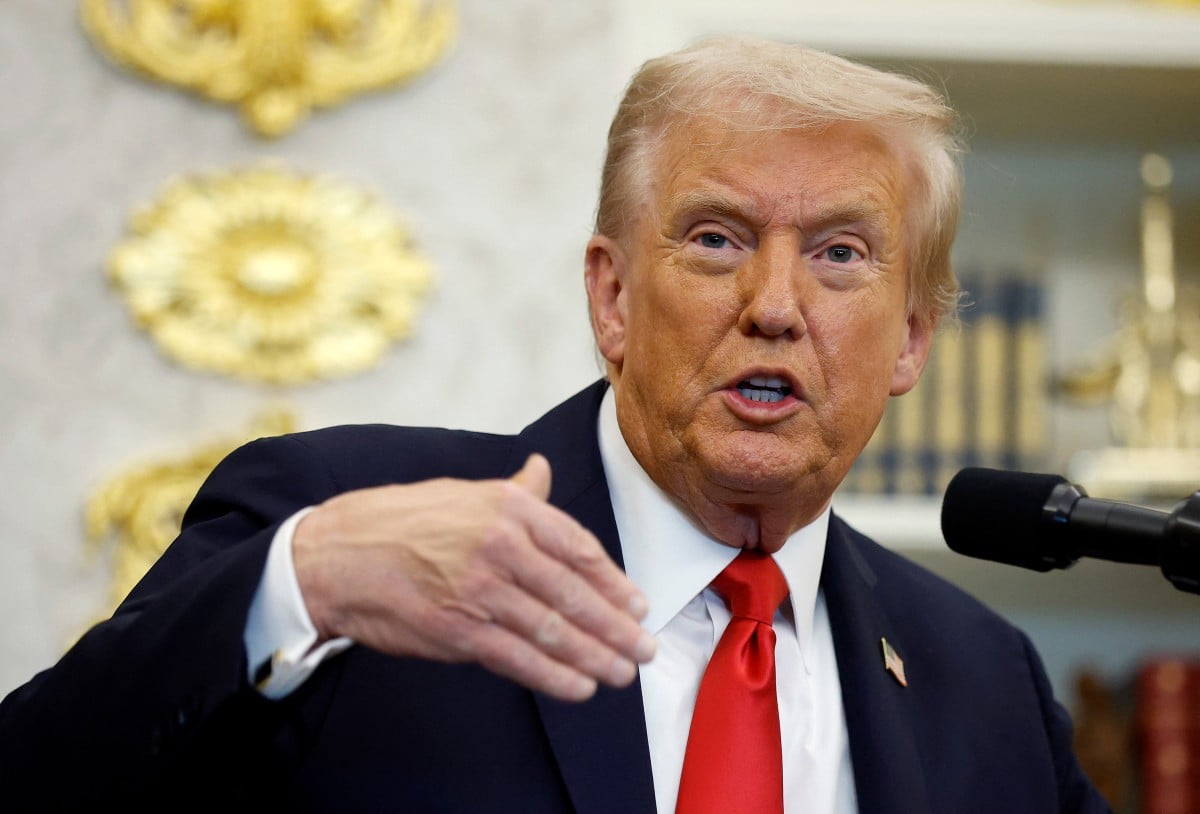
WHEN American warplanes struck suspected terrorist enclaves in Sokoto State on Christmas Day, December 25, 2025, the Federal Government welcomed the intervention, which it said has its imprimatur as a boost to its war against terror.
But less than four weeks after the foreign bombs landed, Nigeria has descended into a more complex nightmare.
From Kaduna to Zamfara, Niger to Sokoto, Borno to Plateau, etc, armed groups have unleashed a wave of killings and mass abductions that have arguably exposed a frightening reality: The strike did not end terror, it rearranged it.
Today, the world’s largest black nation is confronting not just Boko Haram, bandits or emerging groups like Lakurawa but also a dangerous fusion of terrorism and organised crime, spreading faster than her capacity to contain it.
Tellingly, the U.S strikes appear to have become a catalyst for domestic chaos.
The strike that shook Northern Nigeria
On December 25, U.S. forces launched rare airstrikes on alleged Islamic State-linked targets in Sokoto state, North-Western Nigeria.
Washington described the operation as a decisive blow against jihadist networks operating beyond the traditional Boko Haram theatre.
From the beginning, the operation raised troubling questions. Who exactly were the targets? How many terrorists or bandits were killed? Were civilians affected? Did the strike degrade terrorist capacity or provoke retaliation?
Official answers were scarce but events on the ground began to speak louder than statements.
Within 24 hours of the strike, armed attacks intensified across multiple states on a daily basis as if the terrorists are daring the U.S to launch more airstrikes.
From airstrikes to anarchy
The North-West, already Nigeria’s most volatile region, became the epicentre of renewed bloodshed. States in North-Central and North-East zones were not spared as well.
Between December 26, 2025 and January 21, 2026, villages were raided in Kaduna, Katsina, Zamfara, Sokoto and Niger states.
Dozens were killed in coordinated attacks on rural communities, and hundreds were abducted in mass kidnapping operations.
Kaduna emerged as ground zero
In one of the most shocking incidents, armed gangs stormed three churches during worship on January 18 and abducted 177 worshippers in a single operation. And on January 21, five soldiers were killed and scores were injured when a Boko Haram suicide bomber rammed into a military convoy in Timbuktu Triangle in Borno State.
Security analysts believe bandits exploited the post-strike confusion to expand operations, seize territory and increase ransom revenue.
“The strike disrupted some jihadist cells, but it also created a power vacuum,” a security source told Saturday Vanguard.
“Bandits moved quickly to fill that space.”
Boko Haram, ISWAP refuse to retreat in N-East
Contrary to expectations, jihadist groups in the North-East did not retreat after the U.S. intervention. Instead attacks on military positions continued, rural communities remained under threat, and insurgents maintained mobility across Borno and neighbouring states. As it panned out, foreign bombs did not dismantle local insurgency. Rather, Boko Haram and its splinter factions adapted as they have done for over a decade.
Rise of Lakurawa in Sokoto
Perhaps, the most disturbing development since December 25 is the expansion of Lakurawa, an emerging armed group operating along Nigeria’s north-western border.
Unlike traditional bandits driven purely by profit, Lakurawa combines ideology with criminality.
It imposes taxes on communities, recruits local youths, launches coordinated raids, and establishes territorial influence. Security officials fear that Lakurawa represents a bridge between Sahelian jihadist networks and Nigeria’s bandit economy. If unchecked, it could transform the North-West into a new insurgency theatre similar to the North-East.
The shocking numbers
Although official statistics remain fragmented, data compiled from security reports, humanitarian organisations and media reports reveal a grim picture: Between December 25, 2025 and January 21, 2026, no fewer than 183 people have been killed and 366 people were abducted.
The worst-hit states are Kaduna, Niger, Zamfara, Katsina, Sokoto, Borno and Plateau. These figures are conservative because
many rural attacks go unreported or under-reported. Some accounts are denied or suppressed by the authorities like the latest Kaduna abductions.
In some communities, survivors bury their dead in silence.
Before U.S. airstrikes
Before foreign bombs landed Nigeria has been a killing field for over two decades with the situation assuming a dangerous dimension since 2014.
According to the National Bureau of Statistics, NBS, 614,937 people were killed between May 2023 and April 2024 and 2,236,954 people were kidnapped within the period Nigeria.
Although, kidnapping incidents reportedly decreased by 16.3 per cent in 2024, the terrorists upped their deadly game in 2025 as no fewer than an estimated 6,800 deaths were recorded in the first half of 2025
Specifically, April 2025 witnessed 570 deaths and 278 abductions, and in August 2025, there were 545 violent incidents, 732 deaths and 435 abductions.
Timeline of violence after U.S. strikes
A day after the U.S. airstrikes, armed militia on December 26, attacked Bokkos/ Barking Ladies in Plateau State and killed 16 persons.
On the same day, bandits attacked rural communities in Nigeria State, murdered persons and kidnapped 12.
On December 27, bandits attacked communities in Anka LGA, killed five persons and abducted 20.
December 28: Three persons were killed and 15 kidnapped by bandits I Giwa LGA, Kaduna State
December 29: Boko Haram/ISWAP terrorists killed four persons in Gwoza, Borno State.
December 30: Bandits killed two person and abducted 10 at Faskari LGA, Katsina.
December 31: Lakurawa terrorists killed six persons at Tangaza LGA, Sokoto State
January 1: Bandits attacked a market village in Niger State, killed 30 persons and kidnapped 15
January 2: One died and eight were kidnapped by bandits at Chukun LGA, Kaduna State.
January 3: Bandits killed seven persons at Maru LGA, Zamfara State.
January 4: Bandits raided a village in Niger State, killed 30 and kidnapped many people estimated at 40
January 5: Boko Haram killed three persons in Maiduguri, Borno State.
January 6: Bandits attacked rural communities in Kaduna killed two persons and kidnapped 24.
January 7: Bandits killed four persons and abducted nine at Kankara LGA, Katsina State.
January 8: Six persons lost their lives to Bandits’ onslaught at Tsafe LGA, Zamfara State
January 9: Lakurawa attacks left 10 persons dead at Gwadabawa LGA, Sokoto State.
January 10: Five persons were killed and 18 kidnapped by bandits at Shiroro LGA, Niger State.
January 11: Bandits killed three persons and abducted 12 at Birnin Gwari, Kaduna State.
January 12: ISWAP attack left six dead at Marte LGA, Borno State.
January 13: Bandits ginned down two and abducted seven at Danmusa LGA, Katsina State.
January 14: Armed militia killed killed nine persons at Mangu LGA, Plateau State.
January 15: Bandits killed two and abducted six at Kagarko LGA, Kaduna State
January 17&18: Bandits attacked three churches in Kajuru LGA, Kaduna State and abducted 177 worshippers. In a follow-up raid three persons died and 10 were kidnapped.
January 19: Bandits attacked a community in Rafi LGA, Niger State killed four and kidnapped nine
January 21: Five soldiers were killed and scores were injured when a Boko Haram suicide bomber rammed into a military convoy in Timbuktu Triangle in Borno State.
War without frontlines
Currently, Nigeria’s security crisis has mutated into something more complex than the Boko Haram insurgency of the 2010s. The conflict has morphed into three overlapping layers:
•Terrorists
Boko Haram, ISWAP and jihadist networks pursuing ideological goals.
•Bandits
Criminal gangs driven by ransom, arms trafficking and territorial control.
•Hybrid Groups
Emerging actors like Lakurawa, blending ideology with organised crime. The result is a multi-front war without clear battle lines. Bombing one group often strengthens another.
A senior military officer admitted in confidence: “We are fighting shadows. When you hit one camp, three new groups emerge elsewhere.”
Kidnapping as an Industry
Perhaps, the most dangerous trend since December 25 is the industrialisation of kidnapping. Bandits now operate like corporations: Intelligence units identify targets; Strike teams execute abductions.
Negotiators handle ransom talks; Logistics networks transport victims across forests; and Ransom payments fund weapons, recruit fighters and sustain criminal economies.
The end result: Nigeria has become one of the world’s leading kidnapping hotspots leading observers to wonder if the U.S. strike was not a mistake
Opinions among experts are divided.
While some argue that the strike was necessary to curb transnational jihadist expansion, others warn that it exposed Nigeria to the risks of becoming a new battlefield in global counterterrorism wars.
Clearly, the strike may have weakened specific militant cells but it also accelerated the fragmentation of armed groups, making Nigeria’s conflict more diffuse and harder to defeat.
Dangerous crossroads
Beyond the bombs and bullets lies a deeper crisis. Nigeria’s insecurity is fuelled by weak state presence in rural areas, unemployment and poverty, ethnic/religious tensions, land disputes, porous borders, arms proliferation, corruption and governance deficits.
Until these structural drivers are addressed, military victories may remain temporary and pyrrhic, and the country risks sliding into a prolonged era of decentralised violence, where bandits, terrorists and militias compete for territory, influence and blood.
FOLLOW US ON:
FACEBOOK
TWITTER
PINTEREST
TIKTOK
YOUTUBE
LINKEDIN
TUMBLR
INSTAGRAM