Connect with us

Business

NUPRC opens 50 oil blocks for bidding

Published

on

The Nigerian Upstream Petroleum Regulatory Commission (NUPRC) has opened 50 oil and gas blocks across five sedimentary basins for bidding and exploration in the 2025 licensing round, warning that only technically competent and financially strong firms will be allowed to scale through the process.

The commission said the exercise is designed to eliminate speculative participation and reposition Nigeria’s upstream sector as a transparent, rules-based destination for long-term investment.

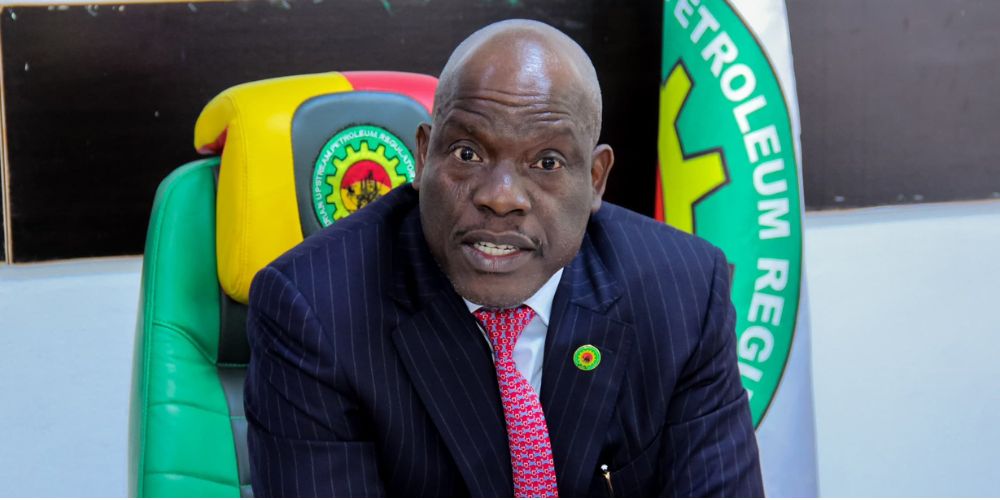
The Chief Executive of the NUPRC, Oritsemeyiwa Eyesan, made this known on Wednesday during the 2025 licensing round pre-bid webinar, where the regulator outlined the framework, evaluation criteria, and commercial terms guiding the bid process.

Eyesan said the licensing round should be viewed as a strategic intervention to grow reserves, improve production, and strengthen Nigeria’s energy security in a rapidly evolving global energy landscape.

“This upstream sector is serious business. It is for long-term investment, and it is an open invitation to partnership, transparency, and shared responsibility as we work together to shape the next phase of Nigeria’s upstream oil and gas industry,” she said.

According to her, the commission has adopted a strictly merit-based approach that places technical competence and financial capacity at the centre of the selection process.

“Only candidates with strong technical and financial credentials, professionalism, and credible plans will move forward. Winners will be chosen through a transparent, merit-based process that takes you from award to exploration, appraisal, and ultimately full production,” Eyesan stated.

She disclosed that the 50 oil and gas blocks on offer are spread across five of Nigeria’s seven sedimentary basins, giving investors access to both frontier and mature terrains.

“In this licensing round, 50 oil and gas blocks across Nigeria are available, allowing investors to access the country’s key basins and create long-term value,” she said.

See also  PHOTOS: FAAN Launches Nigeria’s First Fully Electric Airport Shuttle

Eyesan added that, with the approval of President Bola Tinubu, the Commission had reviewed the commercial structure of the bid round to lower entry barriers while discouraging unserious bidders.

She revealed that signature bonuses for the 2025 licensing round have been set within a $3m–$7m range, with greater emphasis placed on work programmes and speed to production.

The CCE said the new structure places greater emphasis on technical capability, credible work programmes, and speed to production, rather than aggressive cash bids, as Nigeria competes for mobile global capital amid tightening energy security and supply.

“With the approval of His Excellency, President Bola Tinubu, signature bonuses for the 2025 licensing round are now set within a value range of $3m–$7m that reduces entry barriers and places greater weight on what truly matters, technical capability, credible work programmes, financial strength, and the ability to deliver production within the shortest possible time,” she said.

According to her, the decision was informed by global capital mobility and the need to make Nigeria competitive in attracting serious, long-term upstream investors.

“This has been done deliberately to increase competitiveness and in response to capital mobility. The upstream sector is serious business. It is for long-term investment, and it is an open invitation to partnership, transparency, and shared responsibility,” Eyesan stated.

The NUPRC boss said the licensing round follows a five-stage process comprising registration and pre-qualification, data acquisition, technical bid submission, evaluation, and a commercial bid conference.

She stressed that the entire exercise would comply strictly with the Petroleum Industry Act 2021, with digital tools deployed to ensure transparency and public accountability.

“Let me emphasise clearly that the bid process will comply with the Petroleum Industry Act, promote the use of digital tools for smooth data access and remain open to public and institutional scrutiny through NEITI and other oversight agencies,” Eyesan said.

See also  PHOTOS: History of Money in Nigeria

She added that all licensing materials had been uploaded on the commission’s portal since December 1, 2025, with dedicated support channels created to respond promptly to investor enquiries.

Eyesan reaffirmed that the entire process would comply fully with the PIA 2021, with extensive use of digital tools to ensure transparency and public scrutiny.

“The bid process will comply strictly with the PIA, promote the use of digital tools for smooth data access, and remain open to public, international, and institutional scrutiny through NEITI and other oversight agencies,” she said.

The NUPRC boss concluded that the 2025 licensing round represents a strategic signal to global investors that Nigeria’s upstream sector has been re-engineered for long-term value creation.

“Let me emphasise clearly that the Nigeria 2025 Licensing Round is not merely a bidding exercise. It is a clear signal of a re-imagined upstream sector, anchored on the rule of law, driven by data, aligned with global investment realities, and focused on long-term value creation,” Eyesan said.

In a technical presentation to participants, the Director of Lease Administration, Exploration and Acreage Management at NUPRC, Amber Ndoma-Egba, said the 2025 licensing round cuts across the Chad Basin, Benue Trough, Anambra Basin, Bida Basin, and the Niger Delta Basin.

He explained that the technical evaluation would focus on subsurface understanding, exploration work programmes, development concepts, sustainability, host community plans, and lifecycle management.

“We look at your understanding of the block, your subsurface evaluation, your exploration work programme, your development and production concept, sustainability, decarbonisation objectives, and host community development. Technically weak firms will not scale through this process.

See also  Recapitalisation hurdle: Pension firms hunt for N277bn lifeline

“We have seven sedimentary basins in Nigeria. We have the Sokoto Basin, the Chad Basin. We have the Benin trough, Bida Basin, Anambra Basin, Benin Basin, and, of course, the mature Niger Delta Basin. This licensing round will take place across five of the seven sedimentary basins,” Ndoma-Egba said.

On commercial terms, Ndoma-Egba disclosed that the Commission, in a bid to support investment, had approved a minimum work performance security of one per cent, although bidders could voluntarily increase it to improve their technical score.

“The Commission Chief Executive, in the spirit of enablement and support for investment, has approved that the minimum work performance security should be one per cent. However, bidders may boost this if they want a higher weighting in their score,” he said.

He said bidders must clearly outline their exploration plans within the initial exploration period, three years for onshore assets and five years for deepwater and frontier blocks.

“We look at your understanding of the block, your subsurface evaluation, your exploration work programme, your development and production concept, evacuation and facilities planning, sustainability, decarbonisation objectives, and host community development

He also confirmed that final winners would emerge based on a weighted combination of technical and commercial scores, in line with the Petroleum Industry Act.

On December 1, 2025, the NUPRC announced the official commencement of the 2025 petroleum licensing round, targeting about $10 billion in new investments.

punch.ng

FOLLOW US ON:

FACEBOOK

TWITTER

PINTEREST

TIKTOK

YOUTUBE

LINKEDIN

TUMBLR

INSTAGRAM

Continue Reading
Click to comment

Leave a Reply

Your email address will not be published. Required fields are marked *

Business

GenCos deny NLC’s ‘extortion’ claims, warn of looming power crisis

Published

on

Power generation companies in Nigeria have dismissed allegations by the Nigeria Labour Congress that electricity firms were engaged in “institutionalised extortion,” describing the claims as misleading and damaging to efforts aimed at stabilising the country’s fragile power sector.

The reaction was contained in a statement issued on Wednesday by the Chief Executive Officer of the Association of Power Generation Companies, Joy Ogaji.

Ogaji faulted recent remarks by the President of the NLC, Joe Ajaero, saying they did not reflect the realities of the Nigerian Electricity Supply Industry.

Ogaji stated, “While we acknowledge the frustrations of Nigerians regarding unstable electricity supply, we must firmly reject the characterisation of the sector’s challenges as robbery and a grand deception. Such allegations are a misrepresentation of the facts and a disservice to ongoing efforts to stabilise the power sector.”

According to the association, power generation companies remain the most financially exposed segment of the electricity value chain because they generate electricity that is not fully paid for due to revenue shortfalls across the market.

She added, “GenCos face the greatest risk in the electricity value chain, with outstanding unpaid invoices now exceeding N6tn. Rather than castigate operators, attention should be focused on addressing the liquidity crisis that threatens the sustainability of electricity supply.”

The association also rejected claims that proposed government financial support for the sector amounted to a political arrangement, insisting that intervention funds were necessary to prevent further deterioration.

“We strongly refute the insinuation that proposed government support for the sector is a clandestine plan to settle the boys. Such claims are baseless and undermine the critical liquidity interventions required to keep the lights on,” the statement added.

See also  CBN warns that naira abuse is driving up printing costs

The GenCos said they were open to scrutiny and willing to subject their financial records to independent forensic examination if required.

“If the NLC or any other institution considers it necessary, our books are available for any form of investigation. What is important is to identify the real causes of the sector’s challenges and work collaboratively toward sustainable solutions,” Ogaji said.

The development follows recent comments by the NLC accusing electricity firms of exploiting Nigerians through tariff adjustments and alleged hidden subsidies.

The power generators urged organised labour to engage constructively with stakeholders, warning that inflammatory rhetoric could discourage investment and worsen electricity shortages.

punch.ng

FOLLOW US ON:

FACEBOOK

TWITTER

PINTEREST

TIKTOK

YOUTUBE

LINKEDIN

TUMBLR

INSTAGRAM

Continue Reading

Business

No power, no growth, Dangote warns govt

Published

on

The President and Chairman of Dangote Industries Limited, Aliko Dangote, on Tuesday called on the Federal Government to urgently convene a national retreat to resolve Nigeria’s persistent electricity crisis, warning that widespread power outages could undermine the country’s industrialisation drive and economic growth.

Dangote made the appeal at the official national launch of the National Industrial Policy 2025 in Abuja, themed “From Policy to Productivity: Implementing Nigeria’s Industrial Future.”

The policy emerged against the backdrop of a weak manufacturing sector, which, due to poor electricity supply, high production costs, limited access to finance, infrastructure deficits, and heavy reliance on imports, has been constrained.

The event was attended by top government officials, captains of industry, and development partners, with President Bola Tinubu represented by Vice President Kashim Shettima.

In his goodwill message, Dangote stressed that without stable electricity, Nigeria would struggle to create jobs, drive industrial productivity, or achieve sustainable economic growth.

“One of the things that I want to advise Your Excellency, Mr Vice President, is to call a national forum where we will have a one- or two-day retreat and resolve the issues of power. Because without power, Mr Vice President, there is no way in any country you can create growth or create jobs. So, power means growth. No power, no growth. So we must make sure that we tackle this issue,” he said.

His comments were greeted with applause from participants, including the Vice President. Dangote noted that while government policies to support industrialisation were commendable, the electricity challenge remained the single most critical constraint to manufacturing and job creation.

“We know what you call industrial policy; it is actually very, very important because the government cannot create jobs. They can only facilitate. And I think they have already given us whatever we need to create jobs. The policies that they have put in place are very good. Nigeria is a very big market. Not only that, this is a market where we are supposed to be serving other African nations,” he added.

See also  Recapitalisation hurdle: Pension firms hunt for N277bn lifeline

However, he stressed that policy incentives alone were insufficient without strong infrastructure and protection of domestic industries.

“But one thing that we need is not only the policy. The policy is there. If you look at the incentives that we have for people to invest in Nigeria, actually, they are even more than what we need. The only thing that is remaining is the protection of industries.”

According to him, excessive importation remained a major threat to local manufacturing. “Even if you give us zero-interest loans, free land and power, if there is no protection, there is no way any industry will thrive here. Importation of anything is importation of poverty and exportation of jobs,” Dangote stated.

The billionaire industrialist lamented that many manufacturers now spend more on power generation than on production due to erratic electricity supply.

“So, people who are buying diesel, I would have loved to sell more diesel, but that is not the right way. The right way is to make sure there is power. Some factories spend more money generating electricity than producing goods. You have to set up your own power plant and also a standby. That does not make sense. There is nowhere you can get prosperity that way,” he added.

Dangote’s remarks came amid a recent five-day power supply disruption linked to gas maintenance activities, which triggered widespread blackouts across several parts of the country and heightened concerns among manufacturers and businesses.

Seven power plants across Nigeria experienced gas supply constraints between February 12 and 15, 2026, as Seplat Energy shut down a major facility for scheduled maintenance, leading to nationwide generation shortfalls.

See also  Togo, Niger, Benin owe Nigeria N25bn for electricity – NERC

His comments reflected ongoing concerns in the organised private sector following the recent gas supply maintenance shutdown that affected power generation and led to load shedding across the country.

Stakeholders have repeatedly warned that frequent outages are forcing companies to rely on diesel and alternative energy sources, significantly raising production costs and contributing to inflation.

Dangote also highlighted the dominance of the private sector in Nigeria’s economy, urging stronger collaboration between government and businesses. “Nigeria is the only country in Africa where the private sector is bigger than the government. When you look at GDP, the private sector contributes almost 90 per cent, compared to the government’s 10 per cent,” he said. “We have what it takes to create massive consumption, massive industry, and disposable income.”

He added that entrepreneurs must also support national development by paying taxes and complying with regulations. “When we do our business, we must pay our taxes. It is a joint venture. The government is the major shareholder in every business. Today, the government makes more money in our cement business than anybody. But that is okay, so far they allow us to expand and prosper.”

Dangote further said recent economic reforms had improved investor confidence and currency stability. “With the policies that this government has implemented, people are beginning to see the results. Manufacturers are happy. The stability of the currency is encouraging investors to come into Nigeria,” he said.

He projected that the naira could strengthen further if import dependence is reduced. “We should manufacture what we consume. That is the only way to create jobs. If we block unnecessary imports and support local production, the naira will get stronger,” he said.

See also  Price Of Rice Reduces In Market

He further urged the government to strengthen policies protecting domestic manufacturers from dumping and unfair competition. “If you allow imports, take into consideration our own constraints — high interest rates, infrastructure deficits, and electricity challenges. If dumping is allowed, nobody will survive,” he said.

Dangote added that the current policy direction was already attracting investors and boosting confidence in the Nigerian economy.

“The trajectory that we are on now is very high. Many people are trying to invest in Nigeria. The only thing that the government must emphasise is the protection of local industries. Once we do that, we will create jobs and reduce the burden on the government.”

He concluded by reiterating the need for urgent reforms in the power sector. “It takes a truly patriotic person to say, I love to produce diesel, but if I have my way, I would rather there is constant power, and I will not produce diesel again,” he said.

Nigeria has continued to grapple with electricity supply challenges, with power generation frequently disrupted by gas shortages, infrastructure vandalism, and maintenance shutdowns. The recent gas maintenance exercise led to a temporary drop in generation capacity and widespread outages, affecting households, manufacturers, and businesses.

Experts say a stable power supply remains critical to the success of the National Industrial Policy 2025, which seeks to boost local production, reduce imports, and position Nigeria as a manufacturing hub in Africa.

Continue Reading

Business

Naira could hit N1,100 to $1 in 2026, says Dangote

Published

on

The Aliko Dangote, Chairman of the Dangote Group, has predicted a significant strengthening of the naira, saying the currency could reach N1,100 to a dollar this year.

According to Channels TV, Dangote made the remarks on Tuesday during the launch of the Nigeria Industrial Policy in Abuja, an event attended by Vice President Kashim Shettima and other dignitaries.

While the naira currently trades around ₦1,300 to a dollar, Dangote said government reforms signal better days ahead.

“I mean, today, if you look at it, Your Excellency, I believe with the policies that you have implemented in government, people now have started seeing the result, and manufacturers are very, very happy,” he said.

He added, “Today, the dollar is N1,340. Mr Vice-President, I can assure you that, with what I know, by blocking all this importation, the currency this year will be as low as N1,100 if we are lucky.

“The only thing is for, maybe, the government to stop the naira from getting stronger so that they will keep collecting more naira.

“But it’s a catch-22 situation where, now, if the naira gets stronger, it means that everything will go down. Everything will go down because we are an import-based country, which we shouldn’t be. What we should be doing is manufacturing all the things that we need.”

Dangote also called for stronger protection for local investors through incentives and infrastructure, highlighting power supply as a persistent challenge.

“While the policy is in order, it must be backed with full protection for industrialists to drive the nation’s goal for industrialisation, job creation, and economic growth,” he said.

See also  Togo, Niger, Benin owe Nigeria N25bn for electricity – NERC

The remarks come as Nigerian stocks continue to perform strongly.

Bloomberg reported that Nigerian equities delivered the world’s second-best dollar returns in 2026, climbing 31% and recovering $21 billion in market value lost after the naira’s sharp devaluation in 2024.

Total market capitalisation on the Lagos Exchange now stands at about $84 billion, roughly 58% higher than before the naira’s collapse.

Otedola had previously predicted that the naira could trade below ₦1,000 to the US dollar before the end of 2026, following the Dangote Petroleum Refinery reaching its full production capacity of 650,000 barrels per day.

He described the refinery’s output as “transformational for Nigeria and Africa” and said its ability to supply up to 75 million litres of Premium Motor Spirit daily would shift the country’s energy narrative and conserve foreign exchange.

“I am optimistic that the naira will strengthen meaningfully, and trading below ₦1,000/$1 before year-end is increasingly within reach,” Otedola had said.

The naira has recently strengthened, trading around ₦1,354 to the dollar at the official foreign exchange market and about ₦1,430–₦1,440 on the parallel market — its strongest levels in more than two years, according to market sources.

punch.ng

FOLLOW US ON:

FACEBOOK

TWITTER

PINTEREST

TIKTOK

YOUTUBE

LINKEDIN

TUMBLR

INSTAGRAM

Continue Reading

Trending