Connect with us

News

“We Cannot Sacrifice Our Children On The Altar Of Trade” – NAFDAC Defends Ban On Sachet Alcohol

Published

on

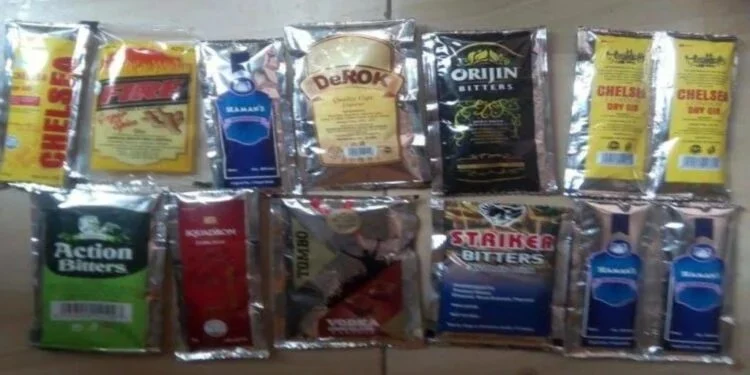
The National Agency for Food and Drug Administration and Control (NAFDAC) has again justified its decision to ban and enforce the ban on the production and sale of sachet alcohol.

Speaking on Friday during an interview on Arise News, the NAFDAC Director General, Professor Mojisola Adeyeye, said the health and safety of children must be prioritized over commercial gains.

She added that the future of children must be protected by avoiding future alcohol addiction. Adeyeye stressed that the action is about protecting the health of citizens.

“So it is on their side that they are all about money, not about health. We are about health and good investments… But we cannot sacrifice our children on the altar of trade,” she said.

Adeyeye explained that alcohol falls under NAFDAC’s regulatory mandate as a food product, noting that the agency was not banning alcohol entirely.

“We are not banning alcohol. We approve alcohol in different packages. It is only in small packages that we are banning.”

No Court Order Against Ban

During the interview, the NAFDAC boss also denied claims that a court order has stopped the enforcement of the ban on sachet alcohol.

Adeyeye maintained that NAFDAC has not received any court order to that effect

“NAFDAC has not been served. If we have been served, I have not been given that,” she said.

She added that the agency resumed enforcement based on legislative backing.

“The Senate gave us the order to resume enforcement,” Adeyeye noted.

Tracing the policy to 2018, she said NAFDAC raised the alarm over sachet alcohol with concentrations of between 43 and 45 per cent.

See also  Nigeria condemns Israeli airstrike in Qatar targeting Hamas leadership

According to her, an agreement was reached with manufacturers under the supervision of the Federal Ministry of Health, giving them five years to reorganise.

“That can be easily squeezed into the pocket of a primary school, secondary school child.”

“We all signed that by, after five years, they will not sell alcohol in sachets,” she said.

According to her, when the agreed time expired, on January 31, 2024, an extension was granted following interventions by lawmakers and certain industry stakeholders.

She added that the extended moratorium expired in December 2025.

“The Minister called me and said there had been some discussion, we should give one year moratorium, an extra one year above the five years that we have given before. And that one year expired December 2025.”

Adeyeye said that despite opposition from manufacturers seeking further extensions, enforcement resumed based on the order given by the Senate.

She dismissed claims that warning labels could curb underage drinking.

She also said the policy aligns with Nigeria’s international obligations.

“Do not use under 18. Do not use in Nigeria, are we kidding ourselves? Are we really kidding ourselves? In Nigeria? Who is going to enforce?”

“In 2010, Nigeria signed an agreement, World Health Assembly, 2010, 193 countries signed it that we will not make alcohol to be easily accessible to vulnerable populations,” Adeyeye added.

On criticisms that NAFDAC continued to register sachet alcohol products during the moratorium, Adeyeye said the agency was acting based on legislative directives.

“We were honouring the moratorium, the extended moratorium that was given by registering within a period.

See also  Sack of service chiefs has sent mixed feelings to North – HRC Director, Adamu

“I think we are learning our lessons now that we shouldn’t have even listened or register products, a product at that particular period,” the NAFDAC boss stated.

Responding to suggestions that alcohol concentration should be reduced instead of banning sachets, she said the issue was accessibility and concealment.

She disclosed that some schoolchildren are already getting addicted and there is the urgent need for intervention to correct the trend.

“Actually, it is scientifically possible. It is not just the volume. It is the pack size.

“The principal said that in his school, a student said that he cannot study for exam without a sachet alcohol.

“We are making our children addicts. Addicts.”

“Because you are frying your liver slowly with alcohol over time,” Adeyeye clarified.

She added that NAFDAC is shutting down production lines used for sachet production, and not entire companies.

According to her, manufacturers have always been carried along in the developments leading to the current enforcement.

“Lines have been shut down… We are shutting down lines.

“We were having regular meetings, quarterly meetings with MAN.”

FOLLOW US ON:

FACEBOOK

TWITTER

PINTEREST

TIKTOK

YOUTUBE

LINKEDIN

TUMBLR

INSTAGRAM

Continue Reading
Click to comment

Leave a Reply

Your email address will not be published. Required fields are marked *

News

FBI Submits Tinubu’s Records To US Judge

Published

on

The United States Federal Bureau of Investigation (FBI) has submitted records relating to President Bola Tinubu’s 1993 drug-trafficking and money-laundering case directly to a federal judge in Washington, D.C., court documents have shown.

According to Peoples Gazette, the materials were delivered to Judge Beryl Howell of the US District Court for the District of Columbia under seal, meaning they are currently accessible only to the court as it considers whether to make the records public.

The submission followed a prolonged legal battle over a Freedom of Information Act request filed by American transparency campaigner Aaron Greenspan, who has been seeking access to Tinubu’s records from the FBI.

Court filings indicated that the bureau delivered the documents on Friday, August 28, after Howell ordered it to explain its continued refusal to release the records.

The documents were submitted without notifying Greenspan of their contents.

According to the filing, the records were “hand delivered to the Court on August 28, 2026 in compliance with this Court’s Minute Order dated August 20, 2026.”

Greenspan had originally sought the records through a FOIA application submitted in 2023. He worked with Nigerian journalist David Hundeyin in pursuing the request.

The case later became a dispute over how quickly the FBI was processing the request, with the agency repeatedly asking for more time.

Howell reportedly gave the FBI several opportunities to explain why it was withholding the records but grew increasingly dissatisfied with the delays.

The judge eventually set August 28 as the deadline for the bureau to comply with her directive.

See also  Veteran Yoruba Actor Lere Paimo is alive, ANTP dismisses viral death report

The bureau had argued earlier that releasing the records could infringe on Tinubu’s privacy rights.

It also maintained that the Freedom of Information Act was primarily intended to promote transparency concerning government operations and records, rather than provide unrestricted access to information about private individuals.

The controversy surrounding the records dates back several years and is linked to allegations concerning Tinubu’s activities in the United States in the early 1990s.

FOLLOW US ON:

FACEBOOK

TWITTER

PINTEREST

TIKTOK

YOUTUBE

LINKEDIN

INSTAGRAM

Continue Reading

News

Why My FBI, DEA Records Should Remain Secret – Tinubu Tells US Court

Published

on

President Bola Tinubu has given the United States District Court for the District of Columbia four reasons why his records with the Federal Bureau of Investigation (FBI) and Drug Enforcement Agency (DEA) should not be released.

It was reports that the president gave his reasons in filings by his lawyers, Christopher Carmichael, Victor Henderson and Oluwole Afolabi.

He argued that the US Freedom of Information Act (FOIA) and Privacy Act precluded disclosure and there was no public interest in the matter.

Tinubu also said there was no public interest to balance and the plaintiff had ulterior motives for demanding documents with his name on them.

The President’s submission was in response to a request by American transparency activist Aaron Greenspan, which sought disclosure of the records under the US Freedom of Information Act.

Greenspan had argued that his requests concerned the “sitting President of Nigeria…” and “a nation of over 230 million people whose daily lives are directly affected by President Tinubu’s decisions”.

Tinubu, according to filings by his lawyer, urged the US District Court to reject the bid because it amounted to an attempt to obtain private information for political purposes in Nigeria.

The President’s lawyers noted that the request sought access to information about government activities.

They specifically rejected the argument that Nigerians’ interest in Tinubu’s background constituted a public interest recognised by US law.

The team also rejected an argument on the President’s fitness for office, stating that “the asserted ‘public interest in Tinubu’s own fitness for office’ is not an interest FOIA recognises or one that needs to be balanced.”

See also  Transparency, implementation crucial for tax reforms’ success — Dogara

The lawyers further argued that the records sought were protected by privacy provisions under FOIA and the US Privacy Act.

“The redacted information sought by the plaintiff is exempt from disclosure,” they stated, citing Exemption 7(C), which protects personal information contained in law-enforcement records.

The President’s legal team relied on a 1989 US Supreme Court decision, Department of Justice v Reporters Committee for Freedom of the Press, to argue that FOIA was designed to allow the public to know “what the government is up to” rather than provide access to information about private citizens.

They argued that Greenspan was seeking “disclosure of information about private citizens that is accumulated in various governmental files,” which, they said, “reveals little or nothing about an agency’s own conduct.”

FOLLOW US ON:

FACEBOOK

TWITTER

PINTEREST

TIKTOK

YOUTUBE

LINKEDIN

INSTAGRAM

Continue Reading

News

Tinubu’s FBI Records: ADC, NDC Demand Release, Say Nigerians Deserve Truth

Published

on

President Bola Ahmed Tinubu’s records with United States law enforcement agencies has taken another turn with opposition parties demanding that the documents be made public.

The African Democratic Congress (ADC) and the Nigeria Democratic Congress (NDC) have questioned the President’s decision to oppose the release of the records, insisting that Nigerians deserve to know the truth about his past.

Naija News reports that the fresh controversy comes as details of submissions made by Tinubu’s lawyers before the United States District Court for the District of Columbia emerged.

In the filings, the President’s legal team, led by Christopher Carmichael, Victor Henderson and Oluwole Afolabi, gave reasons why his unredacted records with the Federal Bureau of Investigation (FBI) and Drug Enforcement Administration (DEA) should not be released to the public.

Tinubu’s lawyers argued that the records were protected under the US Freedom of Information Act and the Privacy Act.

The legal team maintained that the information being sought contained private details from law enforcement files and therefore fell under provisions that exempt such records from public disclosure.

The lawyers also argued that there was no recognized public interest under US law strong enough to justify releasing the records.

According to them, the argument that Nigerians have an interest in knowing about Tinubu’s background does not amount to the kind of public interest recognized under the Freedom of Information Act.

They further rejected the argument that the documents could be necessary to determine the President’s fitness for public office, saying such an interest was not one that the US law was designed to address.

See also  North Feeling Marginalised Under Tinubu — Arewa Group Cries Out

Tinubu’s legal team also questioned the motive behind the request, arguing that the documents were being sought largely for political purposes in Nigeria.

The lawyers said the filings by the American transparency activist, Aaron Greenspan, showed that his main interest was obtaining government documents bearing Tinubu’s name.

They urged the court not to allow the FOIA process to be used as a means of accessing private information about an individual simply because he is the President of Nigeria.

The legal team also dismissed suggestions that the records could expose a secret prosecution or an agreement by US authorities not to prosecute Tinubu, describing such claims as speculative and unsupported by evidence.

The lawyers further argued that the fact that some information about Tinubu’s past had previously entered the public domain did not automatically remove his right to privacy over other details contained in government files.

The President Should Come Out Clean – ADC

Reacting to the development, ADC spokesperson, Bolaji Abdullahi, described the President’s opposition to the release of the records as suspicious.

Abdullahi, who spoke with a correspondent on Saturday, said Tinubu should allow the records to be released if he wanted to put the controversy surrounding his past to rest.

“Why is the President opposing the release of his past records? That is suspicious. The President should allow them (records) to be released to clear himself.

“The President should come out clean. He should be the one calling for the records to be released if he has nothing to hide because this is not good for him and the image of the country,” he said.

See also  Trump says Israel, Lebanon agree to 10-day ceasefire

Nigerians Deserve To Know – Says NDC

The National Publicity Secretary of the NDC, Osa Director, also called on the President to allow the records to be made public.

Speaking with The PUNCH on Saturday, Director rejected the argument that the request for Tinubu’s records was simply a political move by the opposition.

According to him, the President should use the opportunity to clear the air over an issue that has remained in the public domain for more than two decades.

“When a man commits an offence and he says, please, don’t blame me because it is the devil, does that mean he should not face the consequence of his action because it is the devil? That is the question the President should answer.

“Whether it is the opposition or not, if the issue wasn’t there, the opposition would not capitalise on it. Why did the opposition not ask the FBI to release records on our presidential candidate, Peter Obi, or Atiku? That is not an excuse,” Director said.

He argued that the controversy would continue to resurface as long as the matter remained unresolved.

“Nigerians deserve to know and in the interest of the President. He deserves to clear the air. This case has been hanging on since his time as a governor. It is over 20 years.

“Even me, as an opposition, am getting bored. It is time, once and for all, that he should clear the air to allow the issue to be buried,” he added.

Naija News reports that the controversy over Tinubu’s US records dates back several years and became a major political issue during the build-up to the 2023 presidential election.

See also  Sack of service chiefs has sent mixed feelings to North – HRC Director, Adamu

At the centre of the matter are records relating to a 1993 US civil forfeiture proceeding involving $460,000 held in an account linked to Tinubu.

US authorities had alleged that the funds represented proceeds of narcotics trafficking or were connected to prohibited financial transactions.

Meanwhile, the ruling All Progressives Congress (APC) had maintained during the presidential election litigation that the case was a civil forfeiture proceeding and did not amount to a criminal conviction.

FOLLOW US ON:

FACEBOOK

TWITTER

PINTEREST

TIKTOK

YOUTUBE

LINKEDIN

INSTAGRAM
Continue Reading

Trending