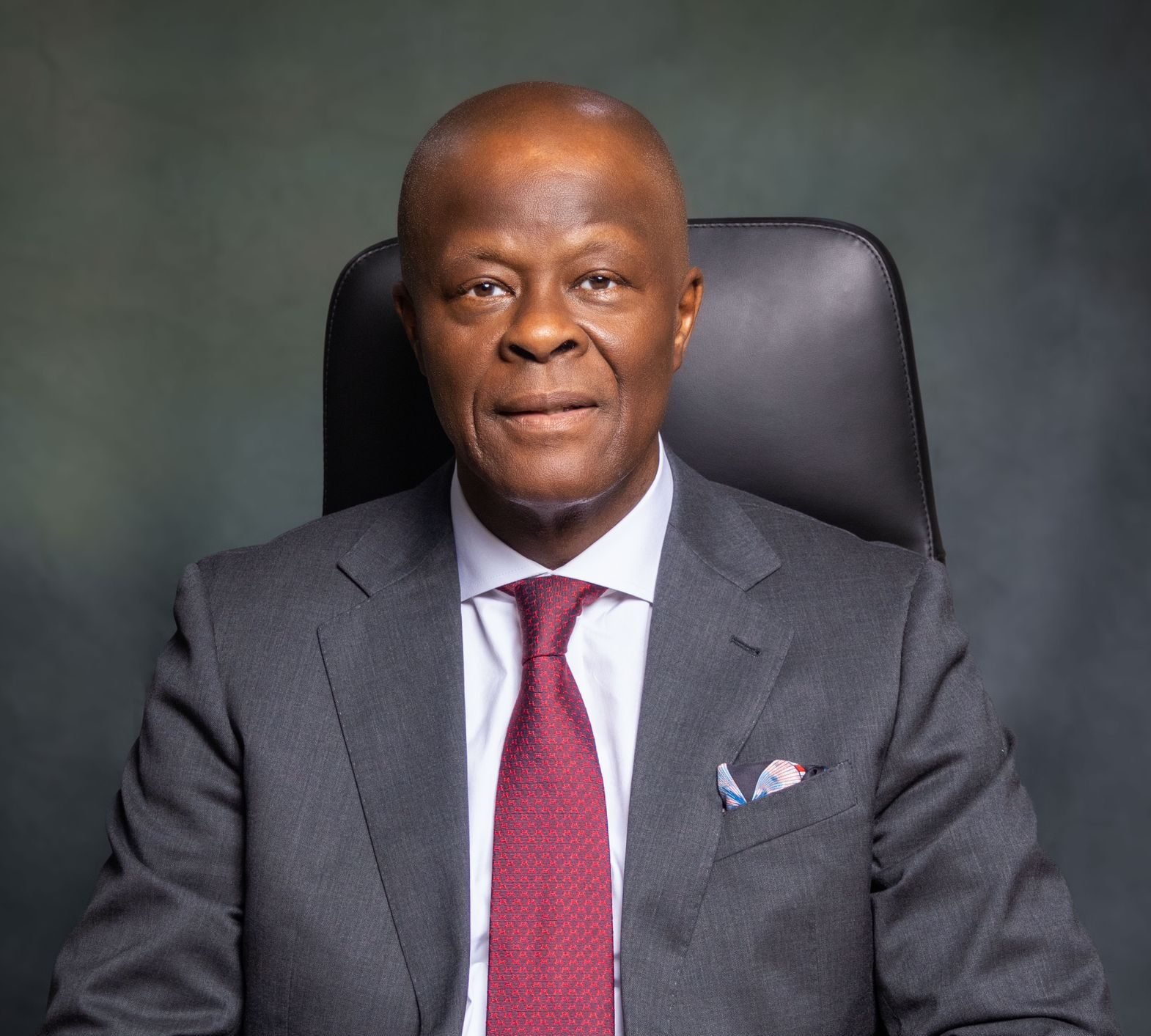
The Minister of Finance and Coordinating Minister of the Economy, Wale Edun, has said Nigeria must reduce its dependence on borrowing and build a stronger, more reliable domestic revenue base if it is to stabilise its finances and fund development sustainably.
Edun spoke on Tuesday at the management retreat of the Nigerian Revenue Service in Abuja, where he warned that the global financial environment had become increasingly hostile to developing economies, making debt-driven financing more costly and less viable.
“And of course, we need to reduce our dependence on debt. And so, revenue mobilisation within this context is a developmental imperative,” Edun said.
He said the world was retreating from multilateral cooperation, with countries prioritising domestic interests and scaling back cross-border financial support.
According to him, this shift had left poorer and developing countries facing an unfavourable balance between what they receive from abroad and what they pay out in debt service.
Edun said available data for 2024 showed that developing countries paid about $163bn in debt service, compared with $42bn in overseas development assistance and $97bn in foreign direct investment, underlining the extent to which external funding flows had turned negative.
He said this reality meant Nigeria had to anchor its fiscal sustainability on its own revenue-generating capacity, rather than continuing to rely on borrowing in an era of high global interest rates and tighter financial conditions.
“The primary anchor of our fiscal sustainability… is going to be our own fiscal efforts, our own ability to generate savings, which then can be used for investment,” Edun said. “And before you can generate savings, you have to have the revenue.”
The minister linked Nigeria’s rising debt pressures to a series of global shocks, including the COVID-19 pandemic, geopolitical conflicts and trade tensions, which have forced many developing countries to borrow more while paying higher debt service.
He said these pressures had squeezed fiscal space and made it more difficult for governments to fund essential services, further reinforcing the need for sustainable domestic revenue.
“That is why it is critical at this time that we move to an era of sustainable revenues so that we can invest meaningfully in infrastructure, strengthen education and healthcare, and help the poorest and the most vulnerable,” Edun said.
Edun’s call for Nigeria to rein in borrowing comes amid remarks by the Senate indicating that fresh loans remain inevitable to plug the country’s large budget deficit.
At a public hearing on the 2026 Appropriation Bill, the Chairman of the Senate Committee on Appropriations, Olamilekan Adeola, said continued borrowing had become unavoidable, given weak revenue inflows and Nigeria’s large infrastructure and development gaps.
Adeola said that despite sustained public opposition to new loans, the scale of the country’s funding needs left the government with limited alternatives, arguing that the central concern should not be borrowing itself, but the structure and sustainability of deficit financing.
“Nigeria cannot help but keep borrowing because revenue inflows are unpredictable and development needs are enormous. What matters is how we borrow and how we fund our deficits,’’ Adeola said.
Edun further described Nigeria’s tax reforms as a central pillar of this shift away from debt, saying they were designed to improve fairness, equity and efficiency in the system while increasing resources available for social and capital spending.
However, Edun stressed that policy reforms alone would not be sufficient without strong execution and improved compliance, noting that enforcement by itself could not deliver lasting results.
“No fiscal reform can deliver results if compliance is weak or uneven,” he said. “Yet compliance cannot be achieved through enforcement alone. It is carrot and stick.”
According to him, trust in the tax system was essential to improving compliance and reducing reliance on debt, as citizens needed to understand their obligations, see fairness in administration and observe tangible benefits from their contributions.
“People must see the benefits of their contributions in infrastructure and in services,” he said, adding that revenue reform was both a technical and governance challenge.
Edun said the Nigerian Revenue Service sat at the centre of the fiscal reform agenda and would play an indispensable role in translating policy intent into real-world outcomes.
He said the success of the reforms should ultimately be measured by higher, more predictable revenues, reduced fiscal vulnerability, and stronger public service delivery.
“The connection between macroeconomic conditions and revenue performance is direct and unavoidable,” he said. “Economic growth expands the tax base. Exchange rate dynamics affect customs revenue. Inflation influences compliance behaviour and affects the real value of collections.”
He warned that Nigeria must build a revenue system that was resilient to volatility and less cyclical, rather than one that rises sharply when oil prices are high and weakens when prices fall.
Speaking earlier, the Executive Chairman of the Nigerian Revenue Service, Zacch Adedeji, said the establishment of the NRS marked a decisive break from the past and placed a heavy responsibility on the new institution to deliver on Nigeria’s fiscal reform objectives.
Adedeji said the transition represented a new era that demanded a different approach to leadership, accountability and execution, warning that legacy habits and assumptions could undermine reform if left unchallenged.
He said leadership, rather than structure or technology alone, would determine whether the new institution succeeded, stressing that internal beliefs and behaviours often shaped outcomes more than formal strategies.
“What brought us here will not be sufficient for where we are going,” Adedeji said, urging senior managers to examine how their leadership styles, assumptions and decision-making processes could either unlock or constrain performance.
He said the credibility of Nigeria’s revenue architecture and confidence in the wider economy now rested on the NRS’s ability to deliver results with integrity, discipline and clarity of purpose.
According to Adedeji, the service would not be judged by speeches or reform documents, but by measurable outcomes that strengthened public trust and supported national development.
punch.ng
FOLLOW US ON: