Connect with us

Lifestyle

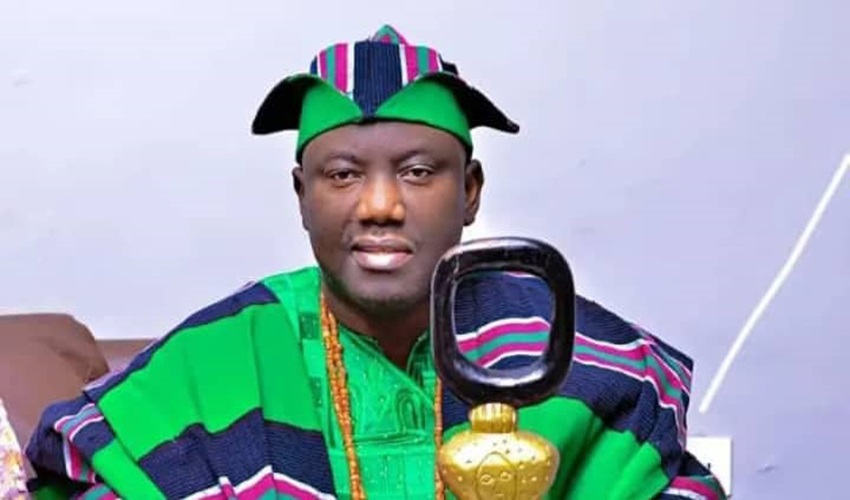
Oyo princes launch court fight to preserve Alaafin’s supremacy

Published

on

The Alaafin of Oyo, Oba Akeem Owoade, has been summoned to appear in person or through legal representation in a suit instituted against him by some princes of Oyo at the Oyo State High Court sitting in Oyo town.

The claimants, Ladigbolu Adegboyega, Owoade Tesleem, Adeyemi Adesina and Adeyemi Adebayo, filed the suit marked HOY/18/2026, seeking several declaratory and injunctive reliefs against the monarch.

In the suit, the princes are asking the court to grant an order of perpetual injunction restraining the Alaafin, “either by himself, his servants, privies or any other person or persons whosoever,” from appearing at, attending, or continuing to attend occasions and functions which they claim are not befitting the status of a symbolic traditional head of the Yoruba race.

They also seek an order restraining the defendant from acting in any traditional or official capacity that would make him “subservient or inferior to any Oba in Yorubaland.”

The claimants further asked the court to declare that the office of the Alaafin of Oyo, currently occupied by the defendant, is of immense historical importance not only in Yorubaland but also in Nigeria, West Africa and beyond.

They are also seeking a declaration that “the Alaafin of Oyo is the symbol of unity, togetherness and the pivotal custodian of the cultural, customary and traditional heritage of the Yoruba people.”

In addition, the suit requests a declaration that the Alaafin of Oyo is the paramount ruler and appointing authority over all chieftaincies in Oyo town, as well as Oyo North and Oyo South.

See also  FULL LIST: Nigerian artists with most Grammy nominations (PHOTOS)

According to the writ of summons, the defendant is required to enter an appearance either personally or through a legal practitioner by filing the appropriate forms at the registry of the High Court of the relevant judicial division or by forwarding the documents to the registry by registered post.

According to the suit, the appellants asked the court to prevent Alaafin from acting under the authority of any other Oba or participating in council matters in a manner that could undermine his status.

The claimants argue that the Alaafin, as the paramount traditional ruler, should not appear subservient to any other traditional leader, noting that the office holds historical, cultural, and symbolic significance not just in Oyo but across Yorubaland, Nigeria, and West Africa.

The Princes are asking the court to issue a perpetual injunction restraining the Alaafin from attending functions or engaging in official duties that may compromise his dignity or the stature of the Alaafinate.

No date has been fixed for the hearing of the suit.

Attempts to reach the palace spokesman, Bode Durojaiye, were unsuccessful, as he did not respond to calls.

The legal action against the Alaafin is rooted in a longstanding dispute over hierarchy and authority within the Oyo State Council of Obas and Chiefs, a body established to advise the state government on traditional matters.

Tensions escalated in recent years following the reconstitution and grading of traditional rulers by successive Oyo State governments, particularly the elevation of some monarchs and the creation of parallel traditional structures. Central to the controversy is the recognition of Alaafin, Olubadan of Ibadanland and Soun of Ogbomoso as co-chairmen of the Oyo State Council of Obas and Chiefs.

See also  The Tragic Death of “Africa” — A Life Cut Short by Cult Violence at OAU

The Alaafin, who was expected at the inauguration of the council by Governor Seyi Makinde on January 16, 2026, was,  however, conspicuously absent.

Oba Owoade has also been at odds with the Ooni of Ife, Oba Adeyeye Ogunwusi, over supremacy claims.

punch.ng

FOLLOW US ON:

FACEBOOK

TWITTER

PINTEREST

TIKTOK

YOUTUBE

LINKEDIN

TUMBLR

INSTAGRAM

Continue Reading
Click to comment

Leave a Reply

Your email address will not be published. Required fields are marked *

Lifestyle

Niger laments inadequate data for women’s health research

Published

on

The Niger State Government has decried the paucity of data to aid research in health conditions affecting women.

It urged health-related agencies and the federal government to deploy resources as well as funds to build up a database to enhance research into the health conditions of the black woman.

The Niger State Commissioner for Health, Murtala Bagana, made this known during a stakeholders’ engagement and media interaction on the need to prioritise women’s menstrual and reproductive health through evidence-based research and policy leadership put together by Youterus Health in collaboration with White Ribbon Alliance Nigeria

In a chat with newsmen, Bagana lamented what he termed “years of inadequate attention to women’s health by policymakers and government institutions”, and stressed that the research conducted by White Ribbon Alliance Nigeria would help policymakers better understand and address long-standing health challenges faced by women.

“Niger State will be part of the entire exercise of the White Ribbon Alliance Nigeria. As a commissioner and with my team, we want to be involved in field research because we are the ones who will ultimately implement the findings.

“The state will advocate for the adoption of the research findings at the National Council on Health meeting scheduled for November 2026. I hope to champion discussions on the outcome of the study,” he said

The Commissioner commended Youterus Health and White Ribbon for their engagement with the state and for raising awareness on women’s reproductive health challenges.

The Chief Executive Officer of Youtherus Health, Dr Fatou Wurie and the Executive Director of White Ribbon Alliance Nigeria, Chief Tonte Ibraye, in their remarks, noted that issues related to African Women’s health are being shrouded in secrecy due to inadequate data.

See also  Nollywood veteran, Chiwetalu Agu, debunks death rumours

“Because of the inadequate data on African Women’s Uterine health burden, issues related to African Women’s health have been shrouded in secrecy,

“However, an African-led company, Youterus Health and civil society White Ribbon Alliance Nigeria are calling for tailored research on African women’s womb health. It is past time to unmute the womb, they said.

The Youtherus Health boss added that women’s health should be given priority as it concerns developing data to aid research

“Nigerian women tend to develop fibroids at a younger age compared to women in Western countries. While the average age range in Western populations is between 40 and 46 years, Nigerian women develop fibroids much earlier, between 35 and 37 years.

“57.4 per cent of Nigerian adolescent girls experience heavy menstrual bleeding, and the average delay between the onset of symptoms and seeking medical care exceeds 20 years.

“The absence of a national screening programme, patient registries to track outcomes, and dedicated research funding for uterine health in Nigeria, women’s health remains under-prioritised, under-researched and under-measured,” Wurie stressed.

Continue Reading

Lifestyle

Popular Nigerian biker dies in lone Lagos crash

Published

on

Popular Nigerian photographer and biker, Orowole Kolapoz, widely known as Kola Onifoto, has died following a lone motorcycle accident in Lagos.

The 32-year-old travel enthusiast and brand influencer was reportedly involved in the crash on Sunday during what he described as his first solo motorcycle trip outside Lagos.

Just hours before the accident, Kola had shared on his official Facebook page that he was heading to Akure on his bike. “Big shout out to those who have ridden their bikes to every state in this country, to Africa, and across the world, especially women. My eye see wheeen,” he wrote on Sunday, March 1, 2026.

Friends later disclosed online that he had been involved in the accident and was initially rushed to the emergency unit of the Federal Road Safety Corps at 7UP, Ojota. He was subsequently transferred to the Lagos University Teaching Hospital, Idi-Araba, where well-wishers continued to pray for his recovery on social media.

Tragically, Kola succumbed to his injuries in the early hours of Monday, March 2.

News of his death sparked an outpouring of tributes and emotional reactions from friends, colleagues, and followers. Facebook user Georgiana Onyinye wrote, “We prayed, we cried, and hoped to hear better news, but unfortunately, death had other plans. Kola fought so hard. You tried to stay alive, but death had other plans. You will be greatly remembered. Rest easy, K.”

Details surrounding the exact cause of the crash remain sketchy. In January, Kola had celebrated achieving his dream of becoming a biker, sharing a photo of himself posing beside his new motorcycle.

See also  1990 Nigerian coup attempt : A photo captures the 1990 coup plotters during their trial

Victoria Ayagwu also mourned his passing while reacting to the news of his death on Facebook.

“All the posts was just me keeping my hopes up and hoping on miracle..oooooooo because I heard from his closest friend yesterday night that he’s gone, he died on the spot. I don’t know why we are here at all. Kola spoilt my night and my whole day,” she wrote.

“Hot tears rolled down my cheeks. Haven’t had any encounter with him, but the way he fights for people drew me closer to his page. Goodnight Mr Kola,” Emmanuel Collins wrote.

Naomi Balogun, who claimed to have just started showing interest in his write-up, also wrote: “I have never felt so bad about a stranger’s death like I felt for you. I hope it’s not true. I just started having an interest in your writeups. This breaks my heart. I’m not a close relation, and I am already physically down, how much more people close to you. Oh! What is life?”

The spokesperson for the Lagos Sector Command of the Federal Road Safety Corps, Oluwadamilola Jayeola, did not respond to calls made to her telephone line.  A text message sent to her had yet to be replied to as of the time this report was filed.

Continue Reading

Lifestyle

Who Is Ayatollah Arafi? 10 Key Things To Know About Iranian Supreme Leader

Published

on

Iran’s interim leadership council has appointed Ayatollah Alireza Arafi as the clerical member of the body now exercising the powers of the late Supreme Leader, Ayatollah Ali Khamenei.

Arafi officially assumed the role on March 1, 2026, in accordance with Article 111 of the Iranian Constitution, which provides for a temporary leadership structure pending the selection of a new Supreme Leader by the Assembly of Experts.

Article 111 stipulates that in the event of the death or incapacitation of a Supreme Leader, a temporary leadership council assumes the responsibilities of the office until a permanent successor is chosen.

With Khamenei’s death, the interim council has now begun overseeing the functions traditionally exercised by Iran’s highest political and religious authority.

Arafi’s appointment places him at the centre of this sensitive transition, as the country navigates a period of political uncertainty.

As a senior Shi’a cleric, Arafi is widely regarded as a figure with influence across Iran’s major institutions, including the military establishment, the judiciary and the religious seminaries.

Until the Assembly of Experts concludes its deliberations and selects a permanent Supreme Leader, Arafi and other members of the interim council will collectively exercise the constitutional powers attached to the office.

Ten key facts about the acting Iranian leader:

1. Born in 1959 in Meybod, Yazd Province, Arafi rose through Iran’s clerical ranks over several decades.

2. Ayatollah Alireza Arafi practices Islam, follows the Twelver Shi’a denomination, adheres to Ja‘fari jurisprudence, and upholds the Usuli creed.

3. In Qom, he completed his primary school education. At the same time, he began his seminary courses and preliminary courses. Later, he also attended seminary courses and learned Arabic and English. Furthermore, he studied mathematics and philosophy. (Qom is widely regarded as Iran’s religious capital and a major centre of Shi’a scholarship).

See also  I’m an arrogant Nigerian, I don’t have dual citizenship — Fashola

4. Arafi has attained the rank of mujtahid because of his expertise in Islamic jurisprudence and philosophy, and he has authored and co‑authored numerous works on these subjects — including the book Education Jurisprudence (Al‑Fiqh Al‑Tarbawi). Some of his academic articles, published in Iranian journals, cover topics such as Islamic jurisprudence, educational law, and social issues.

5. Between 2008 and 2018, he was President of Al-Mustafa International University, an institution that trains clerics and religious scholars from Iran and abroad.

6. He has served as the Friday Prayer Imam of Qom since 2015.

7. Since 2016, Arafi has headed Iran’s nationwide seminary system, overseeing religious education nationwide.

8. Arafi holds the religious title of Ayatollah, a rank accorded to high-level Shi’a clerics with advanced theological scholarship.

9. He has served as a member of the Guardian Council since 2019, a powerful constitutional body responsible for vetting legislation and supervising elections in Iran.

10. He has also been a member of the Assembly of Experts since 2022, a clerical institution constitutionally mandated to appoint and oversee the Supreme Leader.

FOLLOW US ON:

FACEBOOK

TWITTER

PINTEREST

TIKTOK

YOUTUBE

LINKEDIN

TUMBLR

INSTAGRAM

Continue Reading

Trending