Connect with us

News

Reps slam poor funding of Auditor-General’s office

Published

on

The House of Representatives on Wednesday raised concerns over what it described as chronic underfunding of the Office of the Auditor-General for the Federation, warning that the trend could undermine Nigeria’s anti-corruption architecture and weaken public accountability.

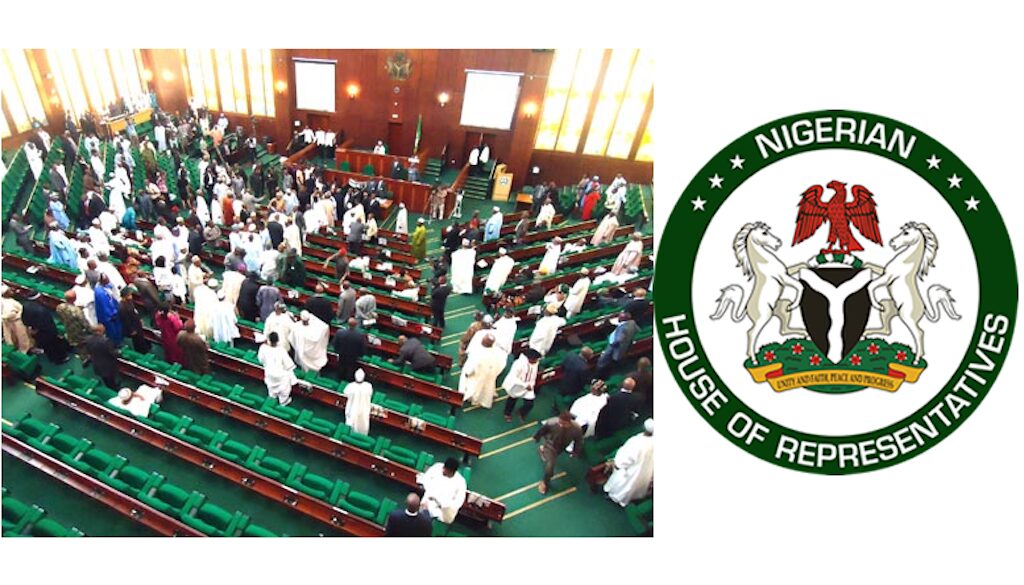
The concern was raised during the 2026 budget defence session of the Office at the National Assembly Complex, Abuja, before the House Public Accounts Committee, chaired by Mr Bamidele Salam.

While reviewing the proposed N15.88bn allocation to the OAuGF for the 2026 fiscal year, the committee noted that the figure represents approximately 0.027 per cent of the N58.47tn Federal Government budget.

Members described the allocation as grossly inadequate when weighed against the constitutional responsibilities of the Office, which is mandated to audit over 1,000 Ministries, Departments and Agencies, as well as government-funded institutions across the country.

Salam said it is unrealistic to expect the Auditor-General’s Office to effectively scrutinise a proposed expenditure of N58.47tn with such minimal funding.

He disclosed that due to budgetary constraints in previous years, the Office was only able to audit five foreign missions out of about 100 Nigerian missions abroad.

The Osun lawmaker further lamented that in the 2025 fiscal year, only four per cent of the capital allocation to the Office was released, a development he said significantly impaired its operational capacity.

A breakdown of the 2026 budget estimate shows that N5.3bn is earmarked for personnel costs, N5.6bn for overheads, and N4.8bn for capital expenditure.

The lawmakers referenced international best practices as guided by the International Organisation of Supreme Audit Institutions, which emphasise that supreme audit institutions must enjoy sufficient, independent, and secure funding to carry out their mandates without interference.

See also  INEC assures Nigerians of readiness for 2027 polls

They also underscored the importance of budgetary autonomy, noting that audit institutions are ideally expected to submit their budget proposals directly to the legislature or a designated parliamentary committee to safeguard their independence.

“This is associated with weak institutions, which have contributed to the corruption ravaging our country,” Salam stated.

The House Committee therefore urged the Federal Government and relevant stakeholders to “prioritise adequate appropriation and full release of funds to the Office of the Auditor-General for the Federation to enhance its capacity to perform its constitutional mandate effectively and proactively prevent corruption, waste, and mismanagement of public resources.”

The Office of the Auditor-General for the Federation is constitutionally empowered under Section 85 of the 1999 Constitution (as amended) to audit and report on the public accounts of the Federation and all offices and courts of the Federal Government.

Over the years, however, concerns have persisted over the Office’s limited financial and operational independence. Despite its central role in safeguarding public funds, the OAuGF has repeatedly faced budget cuts, delayed releases, and inadequate capital funding, constraining its ability to conduct timely audits, deploy modern audit technology, and build professional capacity.

Stakeholders in the accountability sector have long argued that weak funding for the nation’s supreme audit institution undermines oversight of government spending, particularly at a time when public expenditure continues to rise sharply.

The proposed N58.47tn 2026 Federal Government budget represents one of the largest in Nigeria’s history, further amplifying concerns about the capacity of the Auditor-General’s Office to effectively track and audit public spending without commensurate financial support.

See also  FG withdraws criminal complaint against Ibom Air passenger, reduces KWAM 1’s ban

Analysts say that unless funding and institutional autonomy for the Office are strengthened, efforts to combat corruption and ensure fiscal discipline may remain constrained.

punch.ng

FOLLOW US ON:

FACEBOOK

TWITTER

PINTEREST

TIKTOK

YOUTUBE

LINKEDIN

TUMBLR

INSTAGRAM

Continue Reading
Click to comment

Leave a Reply

Your email address will not be published. Required fields are marked *

News

Nigeria, Switzerland deepen ties, agree on return of Benin artefacts

Published

on

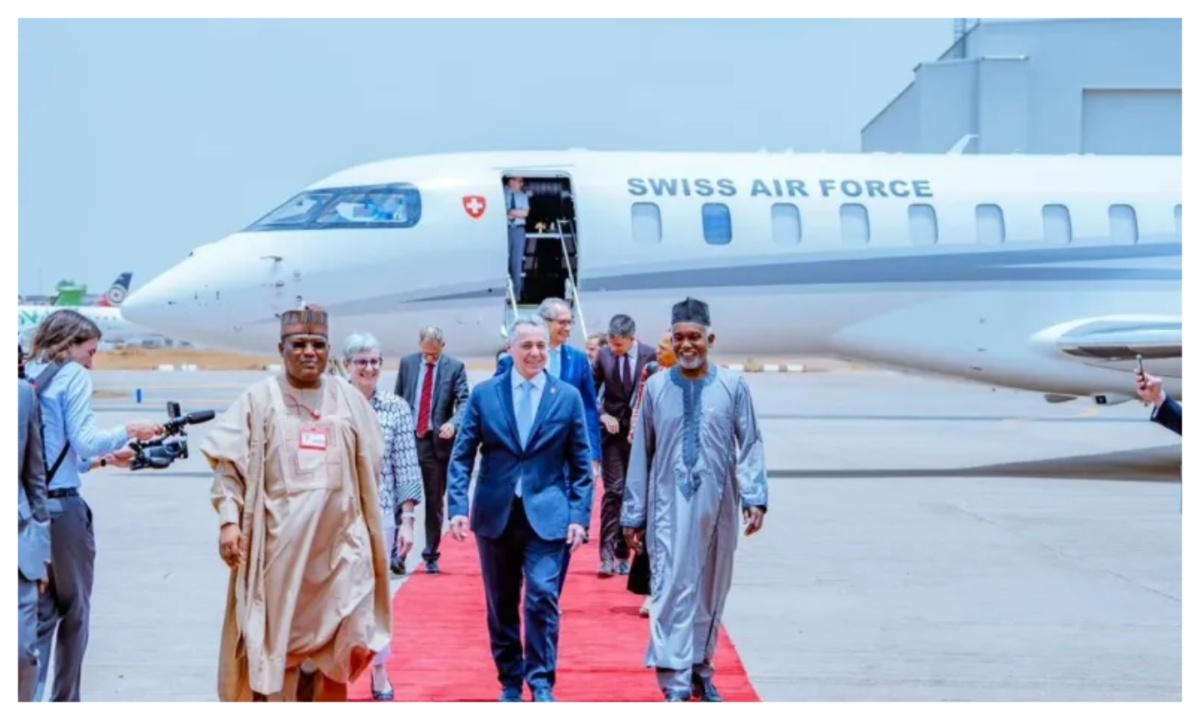
Nigeria and Switzerland have strengthened bilateral relations with renewed commitments on trade, security, immigration and cultural cooperation, alongside concrete steps toward the return of looted Benin artefacts.

The agreement was reached during a high level meeting in Abuja, where Nigeria’s Minister of Foreign Affairs, Mr Yusuf Tuggar, hosted Switzerland’s Foreign Minister, Ignazio Cassis.

Speaking after the meeting, Tuggar said the renewed partnership reflects a shared commitment to mutual growth and respect.

“Nigeria and Switzerland enjoy long standing relations, and today’s engagement has opened new pathways for cooperation in trade, security, migration and cultural exchange,” he said.

On the planned return of artefacts, Mr Tuggar described it as a significant step toward justice and cultural restoration.

“The return of Benin artefacts taken during the Benin Expedition of 1897 is not just symbolic but a recognition of our history and identity,” he added.

Also speaking, Cassis reaffirmed Switzerland’s commitment to strengthening ties with Nigeria across multiple sectors.

The foreign minister said “We are deepening our collaboration with Nigeria, particularly in economic development, security cooperation and migration management,”

Both countries agreed to boost trade and investment by encouraging private sector partnerships, while enhancing cooperation to tackle transnational crimes and promote safe, orderly migration.

The engagement is expected to further strengthen diplomatic relations between Nigeria and Switzerland, while advancing cultural restitution efforts.

FOLLOW US ON:

FACEBOOK

TWITTER

PINTEREST

TIKTOK

YOUTUBE

LINKEDIN

See also  Strike: Court decides today as FCT workers demand Wike’s removal
Continue Reading

News

Police IG redeploys AIGs, CPs, See details

Published

on

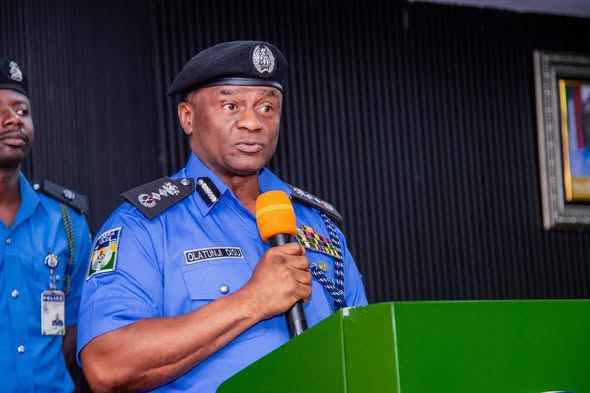
The Inspector General of Police, Olatunji Disu, has ordered the posting of senior officers to various strategic positions across the Nigeria Police Force as part of efforts to strengthen operational efficiency, enhance leadership capacity and improve service delivery nationwide.

The postings, according to a statement on Tuesday by the  Force spokesman, DCP Anthony Placid, are in line with the police commitment to an effective command structure and strategic deployment of personnel across commands, formations and departments.

Under the new arrangement, he said AIG Ado Emmanuel was posted to Research and Planning, Force Headquarters, Abuja; AIG Joseph Eribo to the Department of Armament; AIG Miller Dantawaye to the Department of Operations; AIG Henry Ifeanyi Uche to the Department of Training and Development; AIG Olanrewaju Peter Ogunlowo to Police Accounts and Budget; while AIG Dahiru Mohammed was deployed to Zone 15, Maiduguri.

“Similarly, AIG Dankombo F. Morris was posted to Zone 4, Makurdi; AIG Bello Shehu to Zone 14, Katsina; AIG Ibrahim Balarabe Maikaba to the Department of Legal Services; AIG Ahmed Musa to Community Policing; AIG Olohundare Moshood Jimoh to Zone 2, Lagos; AIG Simeon U. Akpanudom to FCID Annex, Lagos; and AIG Haruna Olufemi to the Special Protection Unit, Force Headquarters, Abuja,” the statement added.

The IG also redeployed several Commissioners of Police to state commands and other formations.

CP Haruna Yahaya was posted to Jigawa State Command; CP Betty  Otimenyin to Welfare, Force Headquarters; CP Olugbenga Abimbola to Oyo State Command; CP Yemi John Oyeniyi to Delta State Command; CP Olubode Ojajuni to Ogun State Command; CP Michael  Falade to Ekiti State Command; and CP Yakubu Dankaro to Adamawa State Command.

Others include CP Muhammed Ahmed to the Federal Capital Territory Command; CP Olatunji  Fatai to Lagos State Command; CP Morkwap  Dongshal to Taraba State Command; CP Ahmed  Bello to Zamfara State Command; CP Umar Fagge to Katsina State Command; and CP Hayatu Shaffa Hassan to Sokoto State Command.

See also  NAF redeploys key leaders to rejig operational efficiency

In further postings, CP Akan Ezima was named Director, NPF-NCCC, Abuja; CP Abbas Sule to the Special Protection Unit; CP Ajo Geoffrey Ordue to INTERPOL, Abuja; CP Mnwadiogbu Cletus as Deputy Commandant, POLAC; CP Danjuma I. Yahaya to General Investigation, FCID Annex, Kaduna; CP Sheikh M. Danko to FCID Annex, Lagos; and CP Moses Ashu Otta to SWAT, Abuja.

Additional redeployments include CP Abdulrahim A. Shuaibu to Eastern Ports Authority; CP Sarah Ehindero to Administration, FCID Abuja; CP Edwin Ogbegbghagha to Provost, Force Headquarters; CP Preye R. Egbe to INEC, Abuja; CP Adebisi Bola Lateef to Master Printing, Lagos; CP Bolou O. Etete to Community Policing, Research and Planning; and CP Ojugbele E. Adebola to General Investigation, FCID Alagbon, Lagos.

Also affected are CP Fidelis N. Ogarabe, posted to INTERPOL Annex, Lagos; CP Theodore C. Obasi as Deputy Commandant, Police College, Ikeja; CP Eloho E. Okpoziakpo to Special Fraud Unit, Ikoyi; CP Kayode Uthman Magaji to K9, Dei-Dei; CP Markus Ishaku Basiran to Courses, POLAC; CP Mohammed Babakura to Administration, Department of Operations; CP Silas Bamidele Aremu to Safer Highway, Department of Operations; CP Magaji Ismaila to Community Safety and Crime Prevention; and CP Rebecca Uchenna Okereke as Director of Music, Force Headquarters, Abuja.

“Tunji Disu charges the officers to bring their wealth of experience to bear in their respective assignments and to uphold the highest standards of professionalism, discipline, and service in the discharge of their duties,” he said

punch.ng

FOLLOW US ON:

FACEBOOK

TWITTER

PINTEREST

TIKTOK

YOUTUBE

LINKEDIN

Continue Reading

News

Afenifere Diaspora faults APC over security, election concerns

Published

on

The Afenifere Diaspora USA has criticised the All Progressives Congress over what it described as worsening insecurity in the country and alleged attempts to weaken Nigeria’s electoral framework ahead of the 2027 general election.

The group, in a statement made available to The PUNCH, dated March 20, 2026, warned that the continued escalation of violent attacks across parts of the country could lead to deeper national crises if urgent measures were not taken.

The statement, jointly signed by the Chairman, Prof Sikiru Fadairo, and the Secretary, David Adenekan, stressed that national security remained a constitutional obligation of the government, noting that failure to adequately address the situation could threaten the unity of the country.

The group said, “The current escalation of insecurity across the country is a dangerous trend that may plunge the nation into a sectarian war if not properly managed and nipped in the bud.”

It emphasised that the protection of lives and property remained a core responsibility of the government, as clearly stated in Section 14(2)(b) of the 1999 Constitution of the Federal Republic of Nigeria.

The section provides that “The security and welfare of the people shall be the primary purpose of government.”

It further referenced provisions contained in Chapter IV, Sections 33 to 46 of the Constitution, which guarantee fundamental human rights, including the rights to life, dignity, personal liberty, and privacy.

Afenifere Diaspora USA also condemned the activities of armed groups operating in parts of the country, alleging that recent attacks in the North-East had resulted in significant casualties and displacement of residents.

See also  Outdated, embarrassing, group knocks NCAA over ban on airplane mode

The group said, “The recent violent attacks by terrorist groups degrade the status of Nigeria as a sovereign nation. It was widely reported that in March 2026, militants linked to the Islamic State West African Province launched coordinated attacks in the North-East, overrunning several military formations in Borno State, including communities such as Delwa, Goniri, Kukawa and Mainok.”

It added, “An intolerably high figure of 65 military officers were reportedly killed in the attacks, while about 300 persons were said to have been kidnapped. Are acts of killing people in thousands and sacking those fleeing from their villages not tantamount to genocide or ethnic cleansing?”

The group also questioned what it described as attempts to influence international narratives regarding the security situation in Nigeria, alleging that public funds were used to engage foreign lobbyists.

It stated, “Is the current administration not always quick to change the narrative that the killings in Nigeria are merely ‘normal’ incidents that occur in any society, including the unjustifiable expenditure of a whopping sum of nine million dollars from taxpayers’ funds to hire lobbyists in Washington DC to promote the position that there is no genocide or ethnic cleansing in Nigeria?”

On electoral matters, the group criticised the reported removal of the requirement for a candidate to possess a secondary school certificate as part of the eligibility criteria in the Electoral Act, describing the move as detrimental to democratic development.

The statement read, “The decision by members of the National Assembly to expunge from our electoral law the requirement to possess a secondary school certificate is seen as a political charade capable of undermining democratic values and lowering leadership standards in the country.”

See also  Strike: Court decides today as FCT workers demand Wike’s removal

Citing Section 131 of the 1999 Constitution, the group noted that one of the requirements to contest for the office of the President is that a candidate must be educated to at least secondary school certificate level or its equivalent.

“In a digital age driven by information technology, Nigeria must not slide backwards into the abyss of ignorance where leadership competence is compromised. Leadership capacity and skilled knowledge are critical in managing the affairs of a modern state,” the statement added.

The group also called for mandatory electronic transmission of election results, insisting that credible elections remained vital to strengthening democracy and ensuring good governance.

It said, “Every lover of democracy, including the international community, must support a system that guarantees mandatory electronic transmission of election results in real time without optional conditions.

“A free and fair general election in 2027 is sacrosanct and must not be negotiated if Nigeria is to deepen its hard-won democracy and ensure accountable leadership.”

punch.ng

FOLLOW US ON:
FACEBOOK

TWITTER

PINTEREST

TIKTOK

YOUTUBE

LINKEDIN

Continue Reading

Trending