Connect with us

News

Conference committee must retain electronic transmission – Dickson

Published

on

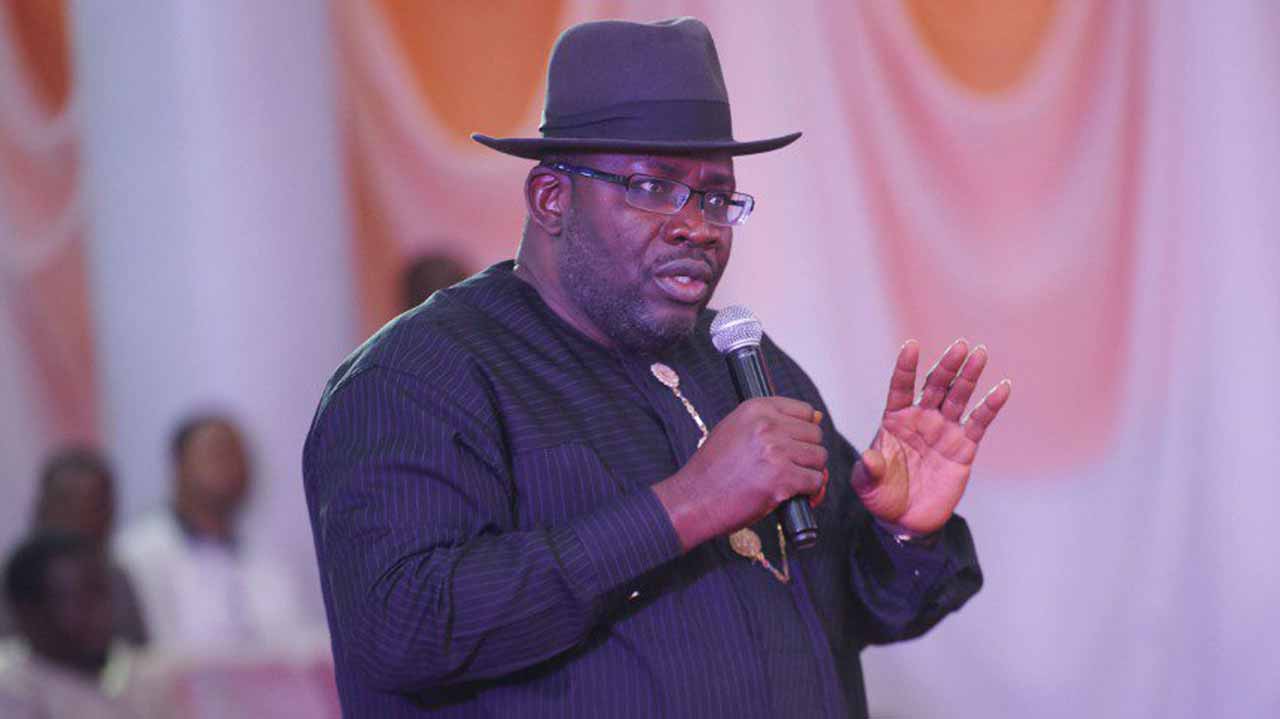
The lawmaker representing Bayelsa West Senatorial District, Seriake Dickson, on Wednesday urged members of the Senate-House of Representatives conference committee on the Electoral Amendment Bill to adopt in full the version passed by the House, warning that any dilution of the electronic transmission provision could undermine electoral integrity.

Dickson disclosed this while addressing journalists in Abuja on Wednesday, barely 48 hours after the Senate ratified the electronic transmission of election results to the Independent National Electoral Commission’s Result Viewing Portal, while permitting manual collation as a backup where technology fails.

The lawmaker, who is a member of the Senate Committee on Electoral Matters, said extensive work had already been done by lawmakers and stakeholders to strengthen the nation’s electoral framework before recent alterations by the Senate.

“For almost two years, as a member of the Senate Committee on Electoral Matters, we worked extensively on amendments to the electoral laws.

“We held workshops, joint sessions with the House of Representatives, meetings with INEC, the technical committee, consultants, and other stakeholders, as well as public hearings in Abuja and Lagos.

“We all agreed, crucially with INEC, on a framework that would regulate the conduct of elections in this country moving forward.

“But we could not conclude the process before tragedy struck. The deputy governor of my state collapsed suddenly and died, throwing the entire state and my family into mourning,” he said.

Dickson noted that Tuesday marked his first appearance at plenary since the burial of the deputy governor.

“Yesterday (Tuesday) was the first time I attended a Senate sitting since his burial. Despite my personal state, I attended the emergency session because of its importance,” he said.

See also  Nigeria to spend N3.6tn on 3rd Mainland Bridge Lagos rehabilitation – Umahi

The former Bayelsa State governor expressed shock that while the House of Representatives passed the harmonised document without alteration, the Senate initially removed what he described as a crucial clause agreed upon at the joint committee level.

“While I was still in Bayelsa, I was shocked to learn that the House of Representatives, which received the same document, passed it without any alteration. But the Senate delayed and later removed a very crucial clause that had been unanimously agreed upon at the joint committee level, replacing it with a weaker provision from the previous law.

“That development shocked me, though I was not surprised when civil society organisations raised an alarm, and Nigerians expressed outrage. This was why the Senate leadership convened the emergency session.

“The clause was brought back, but with a proviso stating that where electronic transmission fails, manual results would serve as the primary evidence. That proviso is what many Nigerians are rightly concerned about,” he stated.

Dickson maintained that the House version faithfully reflected the consensus reached with INEC and other stakeholders.

The senator urged the conference committee to adopt the House of Representatives’ version of the Electoral Amendment Bill in full, saying it reflects the consensus earlier reached by the joint committees, consultants, and INEC.

He noted that INEC had assured lawmakers of its capacity to transmit election results electronically and stressed that once the law made it mandatory, the commission must deploy the necessary technology nationwide.

“My message to Nigerians is clear: I call on the members of the conference committee to adopt the House version in its entirety. That version reflects what the joint committees, consultants, and INEC agreed upon.

See also  LASG Addresses Makoko Demolition Concerns, Unveils $2m Redevelopment Initiative

“INEC assured us at the committee level of its capacity to transmit results electronically. If the law makes it compulsory, then it is INEC’s duty to acquire and deploy the necessary technology across the country.

“The issue of electronic transmission has become central to electoral integrity because manipulation often occurs at collation centres, not just at polling units. Once results are transmitted immediately after polling, it becomes difficult to alter them,” he stated.

Although the Senate version uses mandatory language, Dickson warned that the proviso allowing manual results where electronic transmission fails could be abused, insisting that exceptions must not become the norm.

He, however, called on Nigerians to remain vigilant and committed to the democratic process by participating actively in elections and demanding compliance with electronic transmission rules.

“Even though the Senate version uses the word ‘shall’, the concern remains that the proviso could be abused. Exceptions should never become the norm.

“I call on Nigerians not to give up on democracy. The fight for free, fair, and credible elections is ongoing. The price for liberty is eternal vigilance.

“Citizens must continue to mobilise, sensitise, and participate fully in elections. Go to your polling stations, cast your votes, and insist that presiding officers comply with the law by transmitting results electronically.

“I also urge INEC, through its guidelines and manuals, to ensure that electronic transmission remains the general rule, and not a cover for subverting the democratic wishes of the Nigerian people,” he noted.

The former governor’s appeal comes amid heightened public scrutiny of the Electoral Amendment Bill.

See also  Many feared killed in Oyo gas explosion

Following widespread criticism from civil society groups and political stakeholders over the Senate’s earlier decision to weaken the electronic transmission clause, the Red Chamber convened an emergency plenary on Tuesday.

At the session, Senate President Godswill Akpabio announced the expansion of the conference committee from nine to 12 members to harmonise differences between the Senate and House versions of the bill.

The committee is chaired by Simon Lalong, with members including Orji Uzor Kalu, Tahir Monguno, Adamu Aliero, Abba Moro, Asuquo Ekpenyong, Aminu Iya Abbas, Tokunbo Abiru, Niyi Adegbonmire (SAN), Jibrin Isah, Ipalibo Banigo and Onyekachi Nwebonyi.

Akpabio added that the harmonised bill would be transmitted to President Bola Tinubu for assent before the end of the month.

punch.ng

FOLLOW US ON:

FACEBOOK

TWITTER

PINTEREST

TIKTOK

YOUTUBE

LINKEDIN

TUMBLR

INSTAGRAM

Continue Reading
Click to comment

Leave a Reply

Your email address will not be published. Required fields are marked *

News

Starmer slams Man United’s co-owner Ratcliffe over immigration comments

Published

on

British Prime Minister Keir Starmer has described comments about immigration made by Manchester United co-owner Sir Jim Ratcliffe as “offensive and wrong”, after the billionaire businessman said the UK had been “colonised by immigrants”.

Sir Jim, founder of chemicals giant Ineos, made the remarks during an interview with Sky News at the European Industry Summit in Antwerp, Belgium.

He argued that high immigration and rising welfare costs were placing pressure on the country’s economy.

“You can’t have an economy with nine million people on benefits and huge levels of immigrants coming in,” he said. “The UK has been colonised by immigrants, really, hasn’t it?”

He also claimed the UK population had risen from 58 million in 2020 to 70 million today.

However, the Office for National Statistics estimates show the population was 66.7 million in mid-2020 and 69.4 million in mid-2025 — an increase of about 2.7 million.

As reported by the BBC, responding on Wednesday evening, the prime minister said Britain was “a proud, tolerant and diverse country” and called on Sir Jim to apologise.

A Downing Street spokesperson said the comments “play into the hands of those who want to divide our country”.

Sir Jim also suggested that political leaders would need to be prepared to take unpopular decisions to address immigration and welfare.

“If you really want to deal with the major issues of immigration… you’re going to have to do some things which are unpopular, and show some courage,” he said, adding that the prime minister faced a “tough job”.

The remarks prompted criticism from across the political spectrum. Liberal Democrat leader Sir Ed Davey described them as “totally wrong” and “out of step with British values”. Labour MP Stella Creasy said Sir Jim did “not seem to understand the contribution” immigrants make to the country.

See also  PHOTOS: Osun hospital detains newborn, over mother’s N700k debt

Reform UK leader Nigel Farage said Britain had undergone “unprecedented mass immigration” that had changed many communities, adding that while Labour may “try to ignore that”, Reform would not.

Fan groups linked to Manchester United also condemned the comments. The Manchester United Supporters Trust said no supporter should feel excluded because of their race, religion, or background, adding that senior leadership should unite fans rather than marginalise them.

The Manchester United Muslim Supporters Club said it was “deeply concerned”, arguing that the term “colonised” echoed language used in far-right narratives that portray migrants as invaders.

Anti-racism organisations Kick It Out and Show Racism the Red Card described the remarks as divisive. At the same time, The 1958 Group of supporters called them “very ill-advised” and criticised Sir Jim for commenting on UK affairs while living in Monaco.

Sir Jim, 73, acquired a 27.7% stake in Manchester United in 2024 and has overseen significant restructuring at the club, including hundreds of redundancies and managerial changes.

He acknowledged some of his decisions had been unpopular but said they were necessary to “get the big issues sorted out”.

According to the Sunday Times Rich List, Sir Jim is the seventh richest person in the UK, with an estimated net worth of £17bn. He reportedly moved to Monaco in 2020.

The BBC has approached Ineos and Manchester United for comment.

punch.ng

FOLLOW US ON:

FACEBOOK

TWITTER

PINTEREST

TIKTOK

YOUTUBE

LINKEDIN

TUMBLR

INSTAGRAM

Continue Reading

News

Sweden raises income requirement for citizenship applicants

Published

on

Sweden has announced plans to tighten its citizenship requirements, including raising the income threshold for applicants as part of a broader overhaul of its naturalisation rules.

As reported by Economic Times and sighted by PUNCH Online on Thursday, under the proposed changes, people seeking Swedish citizenship would be required to have lived in the country for at least eight years, up from the current five-year requirement.

In addition, applicants would need to demonstrate a stable monthly income of more than 20,000 Swedish crowns (about $2,225).

“These requirements are much tougher than the situation as it is today because currently there are basically no requirements (to become a citizen).

“Anyone with a criminal record, either in Sweden or abroad, ‍will have to wait longer before they can apply.

“Someone who had served a four-year prison sentence, ‍for example, ⁠would have to ⁠wait 15 years before being able to apply for citizenship,” Migration Minister Johan Forssell said.

The government also said candidates would have to pass a language and culture test designed to assess their knowledge of Swedish society and their ability to communicate in the national language.

Officials say the measures are intended to strengthen integration and ensure that new citizens are financially self-sufficient and familiar with Sweden’s social and civic norms.

Supporters argue that stricter standards will promote long-term stability and shared values.

Critics, however, warn that the tougher requirements could make it harder for immigrants to fully integrate and may disproportionately affect lower-income workers and families.

The proposals are expected to be debated in parliament before any changes take effect.

Continue Reading

News

Cybercrime Act being used to suppress free speech — NBA president

Published

on

The President of the Nigerian Bar Association, Afam Osigwe, SAN, has raised concerns over the alleged misuse of the Cybercrimes Act to suppress free speech in Nigeria, describing it as a deliberate muzzling of expression under the pretext of combating cybercrime and defamation.

In an interview on ARISE Television’s Prime Time programme on Wednesday, Osigwe criticised what he described as the weaponisation of the law against critics, journalists, activists and ordinary citizens who voice dissent online or offline.

He said individuals are being charged, investigated and detained for alleged cybercrimes or criminal defamation, even in cases where such offences are ordinarily bailable.

According to Osigwe, the judiciary is complicit in this trend.

“Free speech is being muzzled in Nigeria under the guise of charging people to court and investigating them for cyber crime and criminal defamation.

“Even when the matters are ordinarily bailable, judges and magistrates are increasingly appearing to be tools in the hands of politicians and ‘big men’ and refuse bail even where there is no basis for not granting bail,” he said.

The NBA president warned that such actions transform the courts into “an oppressive tool.”

“This is a violation of the right to freedom of expression and an abuse of the democratic space.

“Because these public office holders should be held to a higher standard of accountability, and if they deprive people of the ability to criticise and hold them to account, then democracy dies.

“If our judges become willing tools in giving them that which they desire, which is to put those people out of circulation, then there’s something wrong and the judiciary becomes a willing tool in the hands of the oppressors and thereby becomes an oppressor itself,” he said.

See also  Many feared killed in Oyo gas explosion

Osigwe’s remarks come amid ongoing debates about the Cybercrimes (Prohibition, Prevention, etc.) Act.

Originally enacted in 2015 and amended in 2024, the law seeks to address online fraud, cyberterrorism and related offences.

However, critics argue that provisions of the Act criminalising “cyberstalking” remain vaguely worded and are frequently misused to target journalists, activists and other citizens for sharing opinions or exposing corruption.

Continue Reading

Trending