Connect with us

News

INEC seeks nearly N1tn for 2027 elections

Published

on

The Independent National Electoral Commission on Thursday informed the National Assembly that it requires N873.78bn to conduct the 2027 general elections.

The agency also demanded N171bn to fund its operations in the 2026 fiscal year.

The N873.78bn proposed for the 2027 elections represents a significant increase from the N313.4bn released by the Federal Government for the conduct of the 2023 general election.

The country will hold general elections in 2027, while Ekiti and Osun states will conduct governorship elections this year, alongside the Federal Capital Territory election and by-elections.

INEC Chairman, Prof Joash Amupitan, disclosed this while presenting the commission’s 2026 budget proposal and the projected cost for the 2027 general elections before the National Assembly Joint Committee on Electoral Matters in Abuja.

According to Amupitan, the N873.78bn election budget covers the full conduct of the 2027 general elections, while the N171bn proposal for 2026 is to support routine activities, including by-elections and off-season polls.

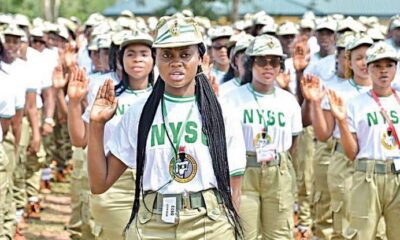
The Senior Advocate of Nigeria noted that the proposed election budget did not include a fresh request from the National Youth Service Corps seeking increased allowances for corps members engaged as ad hoc staff during elections.

He explained that although details of specific line items were not exhaustively presented, the nearly N1tn election budget was structured across five major components.

“N379.75bn is for operational costs, N92.32bn for administrative costs, N209.21bn for technological costs, N154.91bn for election capital costs and N42.61bn for miscellaneous expenses,” Amupitan said.

He stated that the budget was prepared “in line with Section 3(3) of the Electoral Act 2022, which mandates the commission to prepare its election budget at least one year before the general election.”

See also  Slain husband’s family slams Tinubu’s pardon for Maryam Sanda

On the 2026 fiscal year, Amupitan disclosed that the Ministry of Finance provided a budget envelope of N140bn, but added that “INEC is proposing a total expenditure of N171bn.”

The breakdown includes N109bn for personnel costs, N18.7bn for overheads, N42.63bn for election-related activities and N1.4bn for capital expenditure.

Yakubu argued that the envelope budgeting system was not suitable for the commission’s operations, noting that INEC’s activities often required urgent and flexible funding.

He also identified the absence of a dedicated communications network as a major operational challenge, adding that if the commission develops its own network infrastructure, Nigerians would be better positioned to hold it accountable for any technical disruptions.

Speaking at the session, Adams Oshiomhole (APC, Edo North) said external agencies should not dictate the budgeting framework for INEC, given the sensitive nature of its mandate. He advocated setting aside the envelope budgeting model.

He urged the National Assembly to align with INEC’s financial proposal to avoid possible underfunding.

Similarly, a member of the House of Representatives from Edo State, Billy Osawaru, called for INEC’s budget to be placed on first-line charge as provided in the Constitution, with funds released in full and on time to enable early planning for the 2027 general elections.

The joint committee approved a motion recommending the one-time release of the commission’s annual budget.

The committee also said it would consider the NYSC’s request for about N32bn to increase allowances for corps members to N125,000 each when engaged for election duties.

The Chairman of the Senate Committee on INEC, Simon Lalong, assured that the National Assembly would work closely with the commission to ensure it received the necessary support for the successful conduct of the 2027 general elections.

See also  ‘Nigeria Must Go’ protest retaliation for ‘Ghana Must Go’ – SOG Precious

Similarly, the Chairman of the House Committee on Electoral Matters, Bayo Balogun, pledged legislative support but cautioned the commission against making commitments it might not fulfil.

He recalled that during the 2023 general election, INEC made assurances about uploading results to the INEC Result Viewing portal, creating the impression that results could be monitored in real time.

“IReV was not even in the Electoral Act; it was only in INEC regulations. So, be careful how you make promises,” Balogun warned.

punch.ng

FOLLOW US ON:

FACEBOOK

TWITTER

PINTEREST

TIKTOK

YOUTUBE

LINKEDIN

TUMBLR

INSTAGRAM

Continue Reading
Click to comment

Leave a Reply

Your email address will not be published. Required fields are marked *

News

Averting pandemic amid global funding crisis

Published

on

Far away from another pandemic, it seems. Earlier this month, the World Health Organisation issued its latest alarm about the deteriorating state of global health financing – a stark new reality as the world stands on the brink of a renewed pandemic threat.

At the opening of the WHO Executive Board in Geneva on February 2, the Director-General Tedros Ghebreyesus, told health ministers and diplomats that sudden and severe cuts to bilateral aid “have also caused huge disruptions to health systems and services in many countries,” describing 2025 as “one of the most difficult years” in the agency’s history.

Indeed, the recent tragic death of renowned soprano singer, Ifunanya Nwangene, following a snake bite in her Abuja apartment—reportedly worsened by the unavailability of snake antivenom—has reignited concerns about the far-reaching consequences of inadequate healthcare funding in Nigeria.

According to WHO data, an estimated 4.6 billion people worldwide still lack access to essential health services, and 2.1 billion face financial hardship because of health costs.

Pandemics have repeatedly reshaped human history, exposing the strengths and weaknesses of societies while testing public health systems, economies, and governance structures.

They are not only medical emergencies but also social and economic crises that disrupt daily life, strain institutions, and deepen existing inequalities.

The rapid spread of infectious diseases across borders highlights how interconnected the modern world has become, making preparedness, surveillance, and timely response essential.

The COVID-19 pandemic is a recent and striking example of how devastating a global health crisis can be. It exposed gaps in healthcare funding, particularly in low- and middle-income countries where access to testing, vaccines, and treatment was limited.

See also  Presidency rejects World Bank’s poverty report

Outbreaks such as Ebola in West Africa between 2014 and 2016 demonstrated how fragile health systems, misinformation, and delayed responses can worsen the toll of a pandemic.

Together, these examples underscore the importance of sustained investment in healthcare, public trust, and international cooperation to reduce the impact of future pandemics.

Meanwhile, a projected shortage of 11 million health workers by 2030 — more than half of them nurses — threatens the very backbone of pandemic prevention, detection and response.

These unsettling projections come amid a backdrop of dramatic shifts in international health financing. In January, the United States formally withdrew from the WHO, ending a role it has played for decades.

The US had previously been one of the largest contributors to the WHO’s budget, covering nearly a fifth of its funding. Its exit forced the agency to revise its finances, including planning for a 21 per cent budget reduction in the 2026–27 cycle, and to make staff and programme cuts across regions.

The ripple effects are already visible. WHO surveys conducted in 2025 across 108 low- and middle-income countries showed that funding cuts reduced key services, including maternal care, vaccination, emergency preparedness and disease surveillance, by up to 70 per cent in some settings. This is alarming.

Even more troubling, 70 per cent of countries reported disruptions to health emergency preparedness and response, and 66 per cent to public health surveillance, during the same period, according to WHO rapid assessments.

These disruptions translate directly into lives at risk. On the malaria front, recent WHO reports show that investments which once helped prevent more than 2 billion cases and nearly 13 million deaths are now jeopardised as planned preventive campaigns and distributions of insecticide-treated nets are delayed or derailed.

See also  Christmas: ECWA President, Bagat charges Nigerians to keep hope alive

These dips in global health aid, especially from major donors, could lead to millions of additional cases and deaths from tuberculosis and other infectious diseases over the next decade.

The lessons COVID-19 vividly echoed to the world are that pathogens do not respect borders. The Nigerian government needs to turn this funding crisis into an opportunity for investment in research and development to develop local production and standardisation of life-saving medicine.

In Nigeria, the federal and state governments need to invest in resilient health systems, from community clinics to national laboratories. There should be cuts in wasteful government spending, tackling the entrenched culture of corruption and developing the country’s healthcare system.

punch.ng

FOLLOW US ON:
FACEBOOK

TWITTER

PINTEREST

TIKTOK

YOUTUBE

LINKEDIN

TUMBLR

INSTAGRAM

Continue Reading

News

El-Rufai sparks controversy after airport ‘arrest’ drama

Published

on

Former Kaduna State Governor, Malam Nasir El-Rufai, has described the attempt by security operatives to arrest him at Nnamdi Azikiwe International Airport, Abuja, as executive overreach and a deliberate disregard for the rule of law.

The former governor arrived at the airport to a waiting crowd of supporters who had gathered to welcome him.

In an interview with BBC Hausa on Wednesday, he stated that security agencies might arrest him soon, noting that four of his former aides had already been detained.

On Wednesday evening, he hinted in a post on X (formerly Twitter) that he would be returning to Nigeria soon.

However, a tense atmosphere prevailed at the Abuja airport on Thursday following a reported attempt by security operatives to detain El-Rufai upon his arrival from Cairo.

An aide of the former governor, Muyiwa Adekeye, reported on his X page that armed personnel approached El-Rufai shortly after he landed, attempting to escort him away.

He added that some individuals present intervened, insisting that the former governor would not comply without proper documentation. “The officers walked straight up to him and told him to follow them. But some people around insisted that he would not accompany them like that,” Adekeye said.

El-Rufai was said to have requested to see an official invitation, which could not be provided. “Mallam Nasir had asked them to show him any form of invitation before he joined them at their office, but they couldn’t provide any,” Adekeye added.

Supporters had thronged the airport to welcome the former governor and chieftain of the African Democratic Congress and were seen in a video pushing him and his wife into a Sport Utility Vehicle to exit the airport.

Condemning the development in a post on his X account, El-Rufai accused the authorities of exceeding their powers and flouting the rule of law.

See also  Slain husband’s family slams Tinubu’s pardon for Maryam Sanda

He stated, “My lawyers have issued a statement that condemns the illegal attempt to arrest me today at the Abuja airport upon my arrival from Cairo.

“Our country must outgrow executive overreach.”

El-Rufai defected from the All Progressives Congress to the African Democratic Congress after serving eight years as governor.

His counsel also accused security operatives of attempting to unlawfully arrest his client on Thursday.

In a statement by Ubong Akpan of the Chambers of Ubong Akpan, the lawyer said operatives moved against El-Rufai shortly after he landed aboard Egypt Air flight MS 877 from Cairo.

Akpan said, “We unequivocally condemn the attempted illegal arrest of our client by security operatives this afternoon upon his arrival in Abuja. This is a flagrant violation of constitutional rights, executive overreach, and a deliberate disregard for the rule of law.”

The lawyer stated that the Economic and Financial Crimes Commission had previously issued an invitation to El-Rufai while he was abroad, calling the action unreasonable and impractical.

“The invitation from the EFCC was delivered to Malam El-Rufai’s residence while he was already abroad, rendering it inherently illogical to demand immediate attendance.

“We formally communicated with the EFCC since December 2025, assuring compliance upon his return,” he said.

He added that the commission had been notified that El-Rufai would appear voluntarily.

“Yesterday, we explicitly informed them that he would appear at their office by 10:00 am on Monday, February 16, 2026. Resorting to arrest despite this clear commitment exemplifies arbitrary conduct and undermines procedural integrity,” he stated.

Akpan claimed that Department of State Services operatives tried to detain El-Rufai without showing a warrant or an official invitation.

“Upon his arrival, security operatives moved to arrest Malam El-Rufai without presenting any warrant or letter. When he demanded to see the invitation, none could be produced — no document, no signed directive, no lawful process,” the lawyer said.

See also  ‘Nigeria Must Go’ protest retaliation for ‘Ghana Must Go’ – SOG Precious

He also alleged that the security operatives confiscated El-Rufai’s passport, noting that passengers and other airport users stepped in during the incident.

“In the same unlawful manner, operatives physically snatched his international passport. This act is nothing short of stealing, the unlawful taking of private property by agents of the state acting without colour of authority.

“Ordinary Nigerians present at the airport, incensed by this display, surrounded the scene and insisted loudly that he could only be arrested upon a legitimate process.

“That citizens had to remind security operatives of the constitution is both shameful and instructive,” he added.

Akpan contended that the attempted arrest breached multiple constitutional rights, including the rights to personal freedom, a fair trial, human dignity, freedom of movement, and ownership of property.

“There exists no justifiable basis for this attempted arrest or the accompanying mistreatment,” he said, adding that El-Rufai returned to Nigeria despite alleged intelligence of plans to intercept him.

“This premeditated interception at the airport exemplifies lawlessness and an abuse of state power,” the statement read.

The lawyer called for a prompt cessation of any attempts to arrest El-Rufai and for his passport to be returned without delay.

“We demand the immediate and unconditional cessation of all unlawful efforts to detain Malam El-Rufai, the immediate return of his stolen passport, and a formal apology for this egregious infringement on his dignity and rights,” Akpan said.

The lawyer also stressed that El-Rufai will honour, without preconditions, all legitimate law-enforcement summons.

“Let it be publicly clear: Malam Nasir Ahmad El-Rufai will never take the cowardly route of running away from law enforcement. He will honour, without preconditions, all legitimate law-enforcement summons,” he stated.

See also  Senate didn’t reject e-transmission of results, Abaribe clarifies

Security sources disclosed that operatives of the DSS were responsible for the drama at the airport, not officials of the EFCC.

A security source, who spoke to our correspondent on condition of anonymity, said that although El-Rufai had earlier been invited by the EFCC, the anti-graft agency was not involved in the airport encounter.

“Yes, he was invited by the EFCC, but it was not the anti-graft agency that approached him at the airport. There was an agreement that he would report to the EFCC on Monday, so they had no reason to look for him at the airport,” the source said.

According to the source, the operatives involved were from the DSS, adding that their action did not amount to an arrest.

“Those men are from the DSS. I don’t think they were out to arrest him. If that was the case, nothing would have prevented them from taking him away,” it added.

The source further noted that the DSS had already obtained what it required from him during the encounter.

“What they wanted from him, they already have,” the source added.

Neither the DSS nor the EFCC had officially commented on the incident as of the time of filing this report.

Efforts to also get their reactions failed as of the time of filing this report.

punch.ng

FOLLOW US ON:
FACEBOOK

TWITTER

PINTEREST

TIKTOK

YOUTUBE

LINKEDIN

TUMBLR

INSTAGRAM

Continue Reading

News

Fubara fires commissioners, Assembly awaits new list

Published

on

Rivers State Governor, Siminalayi Fubara, has dissolved the State Executive Council and relieved all Special Advisers of their appointments.

In addition, the governor has appointed a new Chief Press Secretary, Mr Onwuka Nzeshi, while his former Chief Press Coordinator, Nelson Chukwudi, was relieved of his duties.

No reason was provided for Chukwudi’s dismissal.

The cabinet dissolution was contained in a Government Special Announcement issued in Port Harcourt on Thursday and sent to newsmen by the new Chief Press Secretary.

Governor Fubara directed all commissioners and special advisers to hand over to the permanent secretaries or the most senior officers in their ministries with immediate effect.

The statement read: “His Excellency, Sir Siminalayi Fubara, GSSRS, Governor of Rivers State, has dissolved the State Executive Council.

“His Excellency has therefore directed all commissioners and special advisers to hand over to the permanent secretaries or the most senior officers in their ministries with immediate effect.

“His Excellency further expresses his deepest appreciation to the outgoing members of the executive council, wishing them the best in their future endeavours.”

Our correspondent reports that the development is connected to a recent peace deal brokered by President Bola Tinubu between Fubara and the Minister of the Federal Capital Territory, Nyesom Wike, in Abuja.

This marks the third time Tinubu has intervened in political tensions involving the governor, his estranged political godfather and Minister of the Federal Capital Territory, Nyesom Wike and members of the state House of Assembly.

Following the dissolution, Fubara is expected to submit a fresh list of commissioner-nominees to the Martin Amaewhule-led House of Assembly for screening and confirmation.

See also  Senate didn’t reject e-transmission of results, Abaribe clarifies

It is understood that, as part of the agreement with Wike, Fubara will include some loyalists of the former administration in his new cabinet, while certain former commissioners may be reinstated.

Continue Reading

Trending