Connect with us

News

Umahi reveals the cause for flooding on Lagos-Calabar Coastal Highway

Published

on

The Federal Government on Thursday raised concerns over a disturbing surge in vandalism of critical public infrastructure, particularly along the Lagos–Calabar Coastal Highway corridor and major bridges in Lagos.

It warned that the trend threatened the durability of newly constructed roads and bridges nationwide.

The government also attributed recent flooding along the coastal highway to blocked drainage channels caused by improper waste disposal.

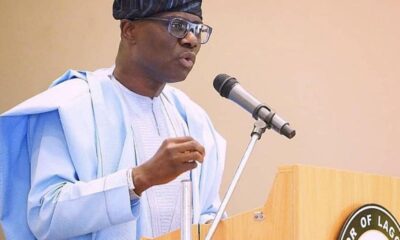
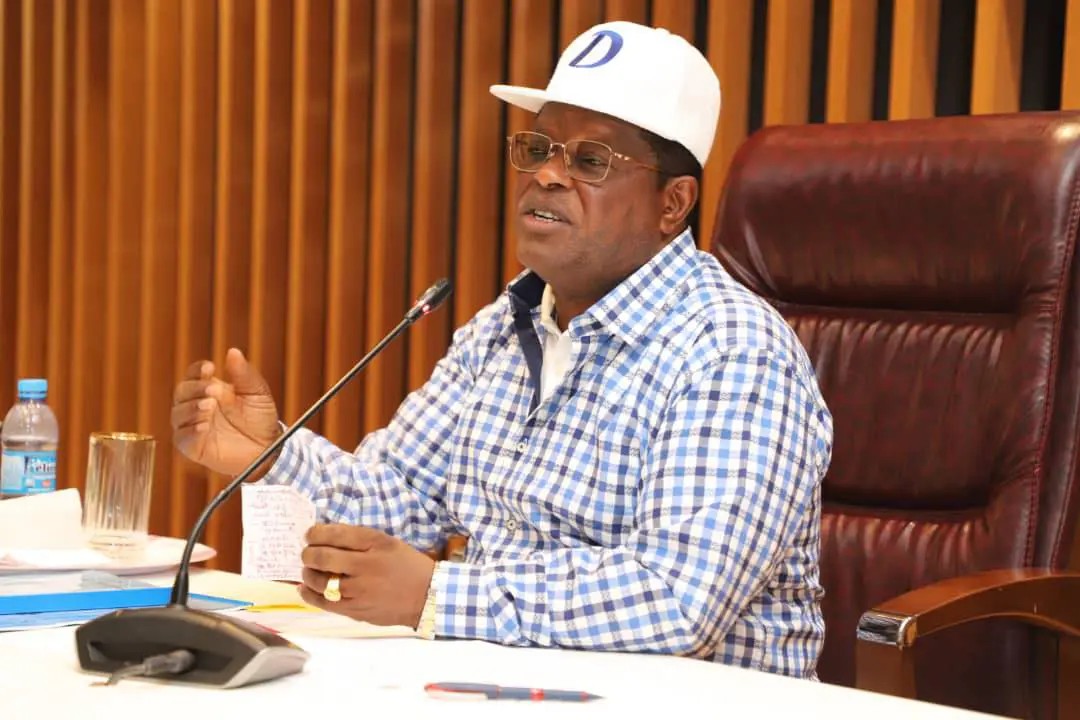
The Minister of Works, David Umahi, who spoke at a press briefing in Abuja, described the situation as “alarming and unsustainable,” saying the ministry was engaged in a “daily fight” to protect federal assets from deliberate sabotage.

According to him, the Lagos coastal highway had become a major hotspot for vandalism despite intensified security measures.

“This press briefing is to bring to the attention of the public the massive vandalism of our critical infrastructure all over the country. Within the coastal route that is being circulated, you can see massive break-ins. It is a daily fight,” he said.

Umahi said he personally visited Lagos two weeks ago to assess the destruction and commended the Lagos State Government and the police for deploying operatives along the highway.

“I thank the governor and the people of Lagos State, as well as the Commissioner of Police.

“There has been a massive deployment within the coastal route to check vandalism. But as we speak now, the things we have done to protect the coastal route are being destroyed by people,” he said.

The minister disclosed that protective installations, including green barbed wires and other security fittings along sections of the highway, had been repeatedly cut and stolen.

See also  Presidency downplays Tinubu’s stumble, says Türkiye visit on course

“They have cut wires that were put there to protect the beauty of the coastal roads. In several sections, these have been cut and taken away,” he said, adding that ongoing construction works were being disrupted by illegal access to restricted areas.

“The width of our road is 12 metres, and nine metres have been completed. There are connecting wire bars and protective coverings. Yet people go there, cross into the restricted areas and damage the work,” he explained.

The Lagos–Calabar Coastal Highway, one of the Federal Government’s flagship road projects, is designed to run approximately 700 kilometres from Lagos through several coastal states to Calabar, Cross River State, boosting trade, tourism, and regional connectivity.

The first phase in Lagos has faced controversies ranging from right-of-way disputes to environmental concerns.

Umahi linked the recent flooding along the coastal highway to blocked drainage channels caused by indiscriminate waste disposal.

“The flooding of the coastal highway was because our underground drainage channels were blocked. People dump refuse inside the manholes and underground channels. When those channels are blocked, water has nowhere to go. That is the basic reason for flooding seen on the coastal road, and I think for most places in Lagos.

“The public has a duty to protect public assets. We are doing everything possible to ensure the coastal highway is free and functional, but citizens must also play their part,” he said.

Beyond the coastal road, Umahi expressed concern over the condition of major bridges in Lagos, including the Third Mainland Bridge and Carter Bridge.

See also  Rivers Assembly attacks Fubara over infrastructure collapse, N600bn savings

He disclosed that serious structural issues had been identified, with experts recommending eventual demolition of Carter Bridge.

Temporary measures are being implemented to keep it functional for about three years pending reconstruction.

Umahi attributed much of the damage to illegal sand mining around bridge foundations, explaining that many bridge piles depend on sand for stability.

“To the extent that by investigations and stakeholders’ meetings, experts have said Carter Bridge has to be demolished.

“But we are doing everything possible to strengthen it so that we can use it for the next three years pending reconstruction,” he said.

He cited an incident in which an illegal miner struck and removed a bridge pile, adding: “We have directed that the company involved be prosecuted. These illegalities have serious consequences on our infrastructure.”

The minister also listed other acts of vandalism nationwide, including the theft of expansion joints on bridges, reinforced concrete barriers on the Abuja–Kaduna–Zaria–Kano highway, and electrical installations on flyovers and bridges.

“Just about two weeks back, we caught people removing expansion joints on Carter Bridge in Lagos.

“This is the second time we are catching people there,” he said, noting that expansion joints were often sold as scrap, weakening structural integrity.

Umahi highlighted the role of security technology, noting that the installation of Closed-Circuit Television cameras on the Third Mainland Bridge, as directed by President Bola Tinubu, had helped track and arrest vandals.

“It was very easy for the police to catch the vandals because of the CCTV installed there,” he said.

See also  US defence chief asks FG to be decisive on Insecurity

The minister warned against the practice of parking heavy trucks on bridges, stressing that bridges are not designed to withstand prolonged static loads.

“Roads and bridges are never designed for static loads. When you allow heavy trucks and vehicles to be parked on bridges, you are asking for trouble,” he cautioned.

He reiterated that the Federal Government had adopted reinforced concrete technology in road construction to enhance durability.

“The President inherited a very terrible state of roads and bridges. That is why he introduced reinforced concrete technology.

“The roads we are building now will last between 50 and 100 years, unlike many older roads that failed within 10 years,” he said.

While acknowledging that no project execution was perfect, Umahi insisted that the ministry remained committed to transparency and value for money.

“No one is God. No human being does anything in perfect order. But we are doing everything within the limit of our ability and conscience to ensure there is value for money and that we address the needs of our people,” he said.

He urged Nigerians to take collective responsibility for safeguarding public infrastructure, warning that repeated vandalism would drain public resources and slow national development.

“If we do not protect this infrastructure, repairs will have to be repeated. That is not good for our society.

“The President is working tirelessly to deliver these projects, and we must all help to protect them,” he concluded.

punch.ng

FOLLOW US ON:

FACEBOOK

TWITTER

PINTEREST

TIKTOK

YOUTUBE

LINKEDIN

TUMBLR

INSTAGRAM

Continue Reading
Click to comment

Leave a Reply

Your email address will not be published. Required fields are marked *

News

ICPC disowns viral ₦50bn bribe video, warns of legal action

Published

on

The Independent Corrupt Practices and Other Related Offences Commission (ICPC) has dismissed as false a viral video alleging a ₦50 billion bribery scandal, describing the content as fabricated and, in parts, artificially generated to mislead the public.

In a statement issued on Monday, the commission said the video, which has been widely circulated online, has no connection whatsoever to the agency and does not reflect any ongoing investigation.

“The images, names, and content in the video are fabricated and, in some instances, AI-generated, designed solely to mislead unsuspecting members of the public,” said ICPC spokesperson J. Okor Odey.

The anti-corruption body stressed that it has not issued any report or statement backing the claims in the video, including the alleged involvement of any individual, Senior Advocate of Nigeria, group of lawyers, or judicial officer.

“For the avoidance of doubt, the ICPC is not investigating any individual, SAN, group of lawyers, or judicial officer in connection with the fictitious ₦50 billion bribe referenced in the video. No such case, transaction, or investigation exists within the records of the commission,” the statement added.

The commission warned those behind the production and circulation of the video to cease immediately, vowing to take decisive legal action against perpetrators.

“The ICPC will not tolerate the misuse of its name and institutional credibility to spread disinformation in the name of ‘content creation”, Odey said, adding that those responsible “will face serious legal consequences.”

The agency urged members of the public to disregard the video and rely only on its official communication channels for verified information, reiterating its commitment to “credible, evidence-based investigations in line with the law.”

See also  Presidency downplays Tinubu’s stumble, says Türkiye visit on course

punch.ng

FOLLOW US ON:
FACEBOOK

TWITTER

PINTEREST

TIKTOK

YOUTUBE

LINKEDIN

INSTAGRAM

Continue Reading

News

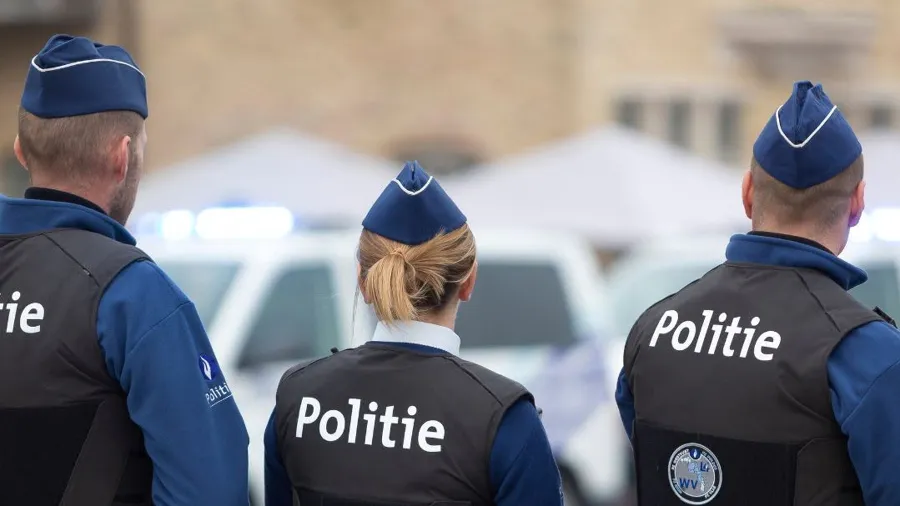
IG restructures Police Monitoring Unit, appoints new head

Published

on

The Inspector-General of Police, Olatunji Disu, has approved the restructuring of the Police Monitoring Unit as part of efforts to strengthen discipline and improve operational efficiency within the Nigeria Police Force.

The Force Public Relations Officer, Anthony Placid, disclosed this in a statement on Monday in Abuja.

He said the move was part of ongoing reforms aimed at refocusing the unit on its core mandate and enhancing oversight across commands and formations.

“As part of the reorganisation, the unit has been streamlined and strengthened to enhance proactive monitoring, intelligence-driven inspections, and real-time oversight of police personnel and operations across Commands, Formations, and Departments.

“The restructured framework also harmonises key investigative and monitoring functions in line with the force’s reform agenda,” he said.

He said the initiative was targeted at promoting professionalism, discipline and accountability within the force.

He added that the Monitoring Unit would play a central role in identifying operational lapses, enforcing standards, and ensuring accountability at all levels.

As part of the changes, the IG approved a leadership transition, appointing Aliyu Abubakar, a Deputy Commissioner of Police, as head of the restructured unit.

Abubakar previously served as Deputy Commissioner of Police in charge of the State Criminal Investigation Department in both the Federal Capital Territory and Rivers State.

He said Abubakar played critical roles in high-profile investigations where he worked closely with state leadership to modernise investigative techniques and strengthen operational effectiveness.

NAN

punch.ng

FOLLOW US ON:

FACEBOOK

TWITTER

PINTEREST

TIKTOK

YOUTUBE

LINKEDIN

INSTAGRAM

See also  FG unveils ‘fly now, pay later’ credit scheme for domestic flights
Continue Reading

News

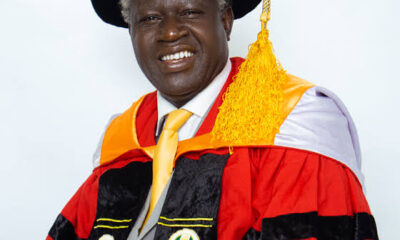
Forensic report reveals Amupitan has no X account, says INEC

Published

on

All the alleged posts, replies, or statements attributed to Prof. Joash Amupitan, Chairman of the Independent National Electoral Commission (INEC), on X (Twitter) are fraudulent, forensically unverifiable, technically impossible, and part of a coordinated disinformation campaign, an independent forensic investigation report has revealed.

The report conclusively established that he does not operate any personal X (Twitter) account.

In a detailed forensic report released on Monday by INEC, investigators identified several anomalies. According to the report, one of the most critical pieces of evidence was a timestamp anomaly.

The alleged reply credited to the fake account was posted 13 minutes before the original tweet it supposedly responded to, a scenario described as technically impossible on any digital platform. This finding strongly indicates digital manipulation.

Investigators carried out extensive verification using platform recovery tools, email linkage checks, and phone number analysis.

The findings confirmed that there is no connection between the fake X account and Prof. Amupitan’s verified email or phone number. Claims based on BVN and OPay data were described as misleading and logically flawed. Data breach records circulated online were also found to be unrelated and lacked any direct link to the alleged account.

Further checks using the Wayback Machine showed no record of the account or its posts before April 2026, contradicting claims that it had been active since 2022. In addition, the alleged reply does not exist on the live X platform, reinforcing the conclusion that it was never posted.

INEC also disclosed that on the same day the screenshots went viral, the account was renamed from @joashamupitan to @sundayvibe00, set to private, and labelled a “Parody Account.” This sequence of actions was identified as a deliberate attempt to erase digital traces and evade detection.

See also  Electricity Act (Amendment) Bill: FG may sell 11 Discos to new investors

The investigation uncovered a broader impersonation network, including multiple fake Facebook and Instagram accounts using Prof. Amupitan’s identity, recycled profile images across platforms, and systematic misuse of publicly available personal data. INEC concluded that the incident is part of a coordinated effort to manipulate public perception.

The Commission urged Nigerians and media organisations to verify social media content before sharing, emphasising that viral content is not necessarily authentic. It also highlighted the growing risks posed by artificial intelligence and digital manipulation.

The case has been referred to law enforcement agencies for further investigation and possible prosecution under Nigeria’s Cybercrimes Act. Authorities are expected to trace those responsible for creating and circulating the fake content.

INEC reiterated that all official communications are issued only through its verified platforms, adding that any account claiming to represent Prof. Amupitan in a personal capacity should be treated as fraudulent unless officially confirmed.

Providing background to the report, Adedayo Oketola, Chief Press Secretary/Media Adviser to the INEC Chairman, recalled that on 10 April 2026, Prof. Amupitan’s attention was drawn to posts and screenshots on social media claiming he operated an X (Twitter) account (@joashamupitan) and made a partisan post (“Victory is sure”) in reply to @dayoisreal.

He said shortly after, more screenshots appeared online showing emails, phone numbers, OPay, and BVN verification data, and data breach records linking Prof. Amupitan to the X (Twitter) account. These records were widely shared across traditional and online media as corroborating proof.

Oketola said after discovering the disinformation, Prof. Amupitan, through him, issued an official statement to debunk the falsehood and clearly stated that he had never owned or operated an X (Twitter) account.

See also  US defence chief asks FG to be decisive on Insecurity

Thereafter, he said INEC committed to a full forensic investigation and commissioned an independent forensic cybersecurity expert, who conducted a multi-layered forensic and digital investigation using X platform data, internet archive records, OSINT tools, identity forensics, and cross-platform analysis.

“A combination of INEC’s internal review and the independent investigations by digital forensic and cybersecurity experts have reached the same conclusion with high confidence. The forensic evidence is comprehensive, multi-sourced, and unambiguous. The posts attributed to Prof. Amupitan on X are fabricated. The account is a clear case of impersonation, and the surrounding activity points to a coordinated disinformation effort intended to manipulate public perception. One of the independent investigators described it as ‘a coordinated digital impersonation and disinformation campaign,” the statement read in part.

tribuneonline.ng

FOLLOW US ON:

FACEBOOK

TWITTER

PINTEREST

TIKTOK

YOUTUBE

LINKEDIN

INSTAGRAM

Continue Reading

Trending