Connect with us

News

US sanctions eight Nigerians over links to Boko Haram, cybercrime

Published

on

The United States has frozen the assets and properties of eight Nigerians accused of having links to the Islamic sect, Boko Haram, and the Islamic State of Iraq and the Levant.

This was contained in a 3,000-page document dated February 10, released by the United States Treasury’s Office of Foreign Assets Control and sighted by the correspondent on Monday.

The document also identified individuals sanctioned for cybercrime-related offences and other security threats.

The pronouncement comes on the heels of recent recommendations by the US Congress for visa bans and asset freezes on persons and groups accused of violations of religious freedom and persecution of Christians in Nigeria.

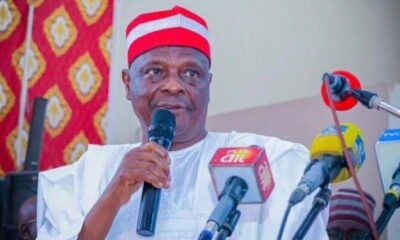
The former Governor of Kano State, Rabiu Kwankwaso; the Miyetti Allah Cattle Breeders Association of Nigeria; and Miyetti Allah Kautal were recommended by United States lawmakers for visa bans and asset freezes.

The OFAC document, titled “Specially Designated Nationals and Blocked Persons List,” detailed individuals of other nationalities and entities whose assets had been frozen, serving as a reference tool.

It also provided notice of actions taken against Specially Designated Nationals, whose property and interests were blocked as part of counter-terrorism efforts.

According to OFAC, the move forms part of its broader efforts to block the property and interests of Specially Designated Nationals and prevent financial dealings with them.

“This publication of Treasury’s Office of Foreign Assets Control is designed as a reference tool providing actual notice of actions by OFAC with respect to Specially Designated Nationals and other persons (which term includes both individuals and entities) whose property is blocked, to assist the public in complying with the various sanctions programmes administered by OFAC,” the agency said.

See also  Kebbi schoolgirls’ abduction: DHQ summons, grills soldiers in Abuja

Among those listed is Salih Yusuf Adamu, also known as Salihu Yusuf, born on August 23, 1990, in Nigeria. Yusuf was identified as having ties to Boko Haram and was reported to hold a Nigerian passport.

Yusuf was among six Nigerians convicted in 2022 for setting up a Boko Haram cell in the United Arab Emirates to raise funds for insurgents in Nigeria. The six men were convicted in the UAE for attempting to send $782,000 from Dubai to Nigeria.

Another individual, Babestan Oluwole Ademulero, born on March 4, 1953, in Nigeria, was designated under SDNTK sanctions. He appeared under several aliases, including Wole A. Babestan and Olatunde Irewole Shofeso.

Also designated was Abu Abdullah ibn Umar Al-Barnawi, also known as Ba Idrisa. He was reportedly born between 1989 and 1994 in Maiduguri, Borno State, and was flagged under terrorism-related sanctions.

Abu Musab Al-Barnawi, also referred to as Habib Yusuf, was listed with varying birth years between 1990 and 1995. He was identified as a Boko Haram leader and sanctioned under terrorism provisions.

Khaled (or Khalid) Al-Barnawi, whose name appeared twice in the publication, was born in 1976 in Maiduguri, Nigeria. He was linked to Boko Haram and listed under several aliases, including Abu Hafsat and Mohammed Usman.

Ibrahim Ali Alhassan, born January 31, 1981, in Nigeria, was listed with a Nigerian passport. He was reported to reside in Abu Dhabi, United Arab Emirates, and was linked to Boko Haram.

Abu Bakr ibn Muhammad ibn Ali Al-Mainuki, also known as Abu-Bilal Al-Minuki, was born in 1982 in Mainok, Borno State. He was identified as having ties to ISIL.

See also  Strike: FG, ASUU in high-stakes talks

Nnamdi Orson Benson, born March 21, 1987, in Nigeria, was listed under CYBER2 sanctions and was reported to hold a Nigerian passport.

The inclusion of these names in the OFAC list highlights Washington’s continued focus on countering terrorism financing and cyber threats.

The sanctions mean that all property and interests of these individuals within US jurisdiction are blocked, and US persons are generally prohibited from engaging in transactions with them.

Nigerians listed under the US Treasury sanctions face asset freezes under Executive Order 13224.

The United States officially designated Boko Haram a foreign terrorist organisation in 2013. According to the US State Department, the group is responsible for numerous attacks in the northern and northeastern regions of the country, as well as in the Lake Chad Basin in Cameroon, Chad, and Niger, that have killed thousands of people since 2009.

The US Secretary of State determines countries that have repeatedly provided support for acts of international terrorism.

Such countries are designated under three laws: Section 1754(c) of the National Defense Authorization Act for Fiscal Year 2019, Section 40 of the Arms Export Control Act, and Section 620A of the Foreign Assistance Act of 1961.

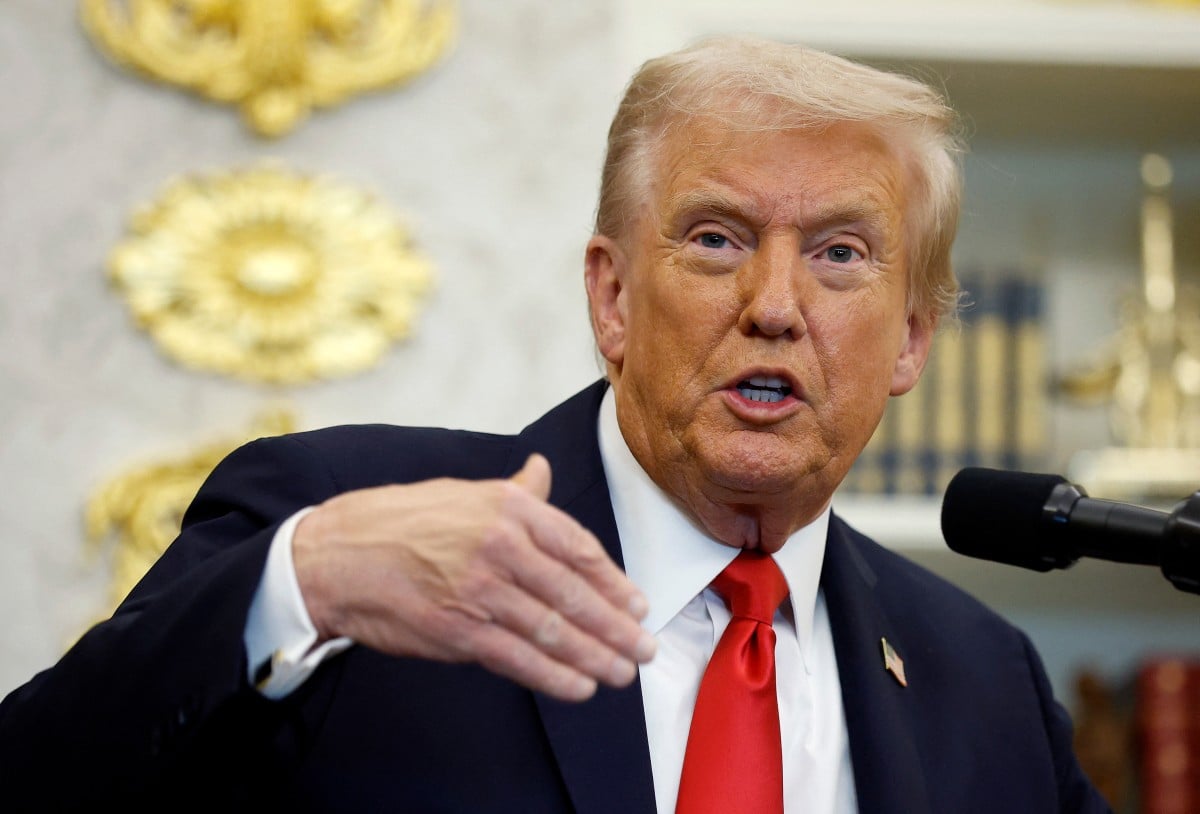
In October 2025, for the second time, US President Donald Trump announced that Nigeria would be added to the US Department of State’s list of “Countries of Particular Concern.”

Trump, in a post on X, explained that Nigeria would be placed on a religious freedom watchlist, alleging that Christians were facing persecution and being killed by Muslims.

Nigeria was first designated as a Country of Particular Concern in 2020 under President Trump, but former President Joe Biden removed Nigeria from the list shortly after assuming office.

Continue Reading
Click to comment

Leave a Reply

Your email address will not be published. Required fields are marked *

News

Pope warns of regional spillover from Israel-Iran war

Published

on

The head of the Catholic Church, Pope Leo XIV, on Sunday expressed deep concern over the escalating conflict involving Iran, warning that the violence could spread further across the Middle East and urging an immediate halt to hostilities.

Speaking during the traditional Angelus prayer at St. Peter’s Square, the pontiff said disturbing reports continued to emerge from Iran and the wider region as fighting entered its ninth day following the United States–Israeli assault on Iranian targets.

The Pope cautioned that the ongoing conflict was fuelling fear and hatred and risked drawing in more countries, including Lebanon, which he said could once again face instability, Reuters reported.

“Alongside the episodes of violence and devastation and the widespread climate of hatred and fear, there is also growing concern that the conflict could spread and that other countries in the region, including dear Lebanon, could once again sink into instability,” Leo said.

He called for urgent efforts to end the violence and open channels for peaceful dialogue.

“Let us raise our humble prayer to the Lord that the roar of bombs may cease, that weapons may fall silent, and that space may be opened for dialogue in which the voices of peoples can be heard,” the pope added.

The remarks come amid intensifying international concern over the military campaign by the United States and Israel against Iran.

Earlier in the week, the Vatican’s top diplomat also criticised the strikes, warning that such actions undermined international law.

The conflict between Israel and Iran reflects decades of tension rooted in ideological, geopolitical and security disagreements.

See also  Two-year refining milestone: Fuel import spending crashes 54% to $6.7bn

After the 1979 Iranian Revolution, Tehran shifted from a cooperative relationship with Israel to one defined by hostility.

The Islamic Republic’s leaders have frequently condemned Israel’s existence and supported armed groups opposed to it, including Hezbollah in Lebanon and Hamas in Gaza.

Israel, for its part, views Iran’s nuclear ambitions and regional influence as existential threats and has taken military, covert and cyber measures to counter them.

The recent conflict escalated when Israel and the United States conducted coordinated airstrikes against Iranian military and government targets, including the killing of Iran’s Supreme Leader, a move that plunged the region into a broader conflict.

Iran retaliated with missile and drone strikes against Israeli targets and US bases, while clashes have spread to neighbouring states and drawn in allied groups.

Continue Reading

News

BREAKING: NDLEA Arrests Ex-Lagos Councillor, Intercepts Drugs In Diapers, Explosives (PHOTOS)

Published

on

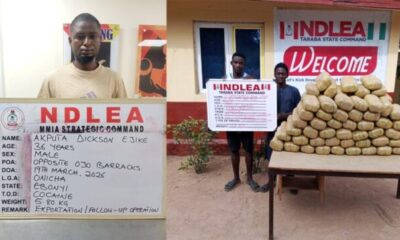
Operatives of the National Drug Law Enforcement Agency have arrested a former councillor in Ibeju-Lekki Local Government Area of Lagos State, Sheleru Olalekan, over alleged involvement in illicit drug trafficking.

The 45-year-old, who previously served two terms representing Orimedu community and currently works as a legislative aide, was arrested on March 2, 2026, at his residence in Ilado, Ibeju-Lekki.

According to a statement released on Sunday by the NDLEA spokesman, Femi Babafemi, operatives recovered 40 kilograms of skunk, a strain of cannabis, from one of the rooms in the suspect’s house during a search.

“In his statement, Sheleru admitted ownership of the exhibit and the property where it was recovered.

So This Happened (EP 378) reviews: US–Iran conflict may push Nigeria’s fuel price higher0:04 / 1:01

“He said he had previously served two terms as a Councilor representing Orimedu community in Ibeju-Lekki local government council,” Babafemi said.

In a separate operation in the Federal Capital Territory, NDLEA officers on March 3 intercepted a 32-year-old businessman, Emeka Hyginus Okwor, travelling from Obollo-Afor in Enugu State to Zuba, Abuja.

A search of his luggage led to the discovery of 1,000 pills of tapentadol 250mg concealed inside baby diapers. The suspect reportedly confessed that he was transporting the consignment to Guduwa village in Gurara Local Government Area of Niger State, where he operates a provision store.

“On same day, 3rd of March, NDLEA operatives on patrol along Kabba/Obajana highway, Kogi state, intercepted a consignment of Colorado, a synthetic strain of cannabis weighing 1.550kg concealed inside a standing fan carton belonging to 36-year-old Cameroonian, Mey Ali Muhamat who hails from Maroua, Republic of Cameroon. The suspect was travelling in a commercial bus from Lagos to Cameroon enroute Lokoja, Kano and Maiduguri,” the statement added.

See also  PHOTOS: Ex-president Shehu Shagari’s last surviving widow d!es at 89

In Niger State, NDLEA operatives on March 4 intercepted a commercial bus along the Mokwa–Jebba road coming from Ibadan in Oyo State with 500 pieces of improvised explosive device components concealed in a sack.

A follow-up operation led to the arrest of the intended recipient, Osama Abdullahi, 21, in Pelegi, Mashegu Local Government Area.

In Adamawa State, NDLEA operatives in Yola on the same day recovered 122,000 pills of tramadol and 700 grams of methamphetamine from the false bottom of a truck conveying 2,000 cartons of local drinks.

Similarly, officers arrested Muhammed Ali, 20, at Gadar Tamburawa in Kano State on March 3 with 11,283 pills of tramadol.

In Ogun State, operatives conducting a raid in Ogere arrested two suspects, Nazifi Mudansir and Kabiru Musa, with 46 kilograms of skunk.

In Delta State, two suspects — Joy Chukwuma, 25, and Eugene Felix, 22 — were arrested on March 7 in Ogwashi-Uku with 18.63kg of skunk, 10.8 litres of codeine-based syrup and 4,268 pills of tramadol and swinol.

NDLEA operatives also destroyed 1,910.25kg of skunk on two farms in Egbisi forest in Uhumwonde Local Government Area of Edo State, where two suspects, Eke London, 48, and Austin Isusi, 49, were arrested. Another suspect, Alaba Adeboye, 47, was apprehended in Ikhin town, Owan East Local Government Area, with 176.50kg of skunk.

The agency said its commands across the country also continued the War Against Drug Abuse enlightenment campaign in schools and communities, including sensitisation programmes in secondary schools in Oyo, Niger, Zamfara, Lagos, Sokoto, Ebonyi and Anambra states.

The NDLEA Chairman and Chief Executive Officer, Mohamed Buba Marwa, commended officers of the Lagos, FCT, Kano, Niger, Kogi, Edo, Ogun, Delta and Adamawa commands for the arrests and seizures, urging them to sustain the agency’s balanced approach to drug control efforts nationwide.

See also  US Lawmaker Slams China Over Remarks About Nigeria

FOLLOW US ON:

FACEBOOK

TWITTER

PINTEREST

TIKTOK

YOUTUBE

LINKEDIN

TUMBLR

INSTAGRAM

Continue Reading

News

IGP Disu Removes Akin Fakorede As Head Of Police Monitoring Unit

Published

on

The Inspector General of Police, Olatunji Disu, has removed Commissioner of Police Akin Fakorede from his position as head of the IGP Monitoring Unit at the Force Headquarters in Abuja.

It was reports that Fakorede was appointed to lead the unit in December 2024 by former Inspector General of Police, Kayode Egbetokun.

According to Sahara Reporters, Deputy Commissioner of Police Aliyu Abubakar has now been posted to replace Fakorede.

According to the publication, Fakorede’s appointment had earlier attracted criticism due to allegations linked to his time as head of the Special Anti-Robbery Squad.

The report added that civil society organisations had raised concerns over past accusations of brutality, extrajudicial killings and election interference connected to his tenure in the unit.

Sahara Reporters also linked Fakorede to a dispute involving investors at River Park Estate in Abuja.

The monitoring unit under his leadership was accused of confronting journalists and workers during protests at the estate in January 2026.

The report added that in September 2025, the Minister of the Federal Capital Territory, Nyesom Wike, publicly criticised Fakorede over alleged brutality and claims of election interference.
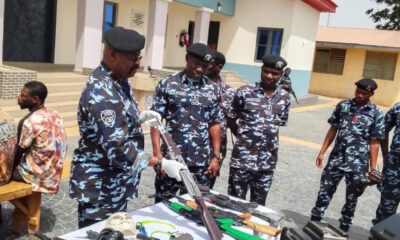
Fakorede’s removal is coming as the newly appointed Inspector General of Police, Olatunji Disu, continues internal changes within the Nigeria Police Force.

FOLLOW US ON:

FACEBOOK

TWITTER

PINTEREST

TIKTOK

YOUTUBE

LINKEDIN

TUMBLR

INSTAGRAM


See also  US Lawmaker Slams China Over Remarks About Nigeria
Continue Reading

Trending