Connect with us

Politics

Bayelsa’s next Deputy Gov: Behind-the-scenes moves, political calculations, intrigues

Published

on

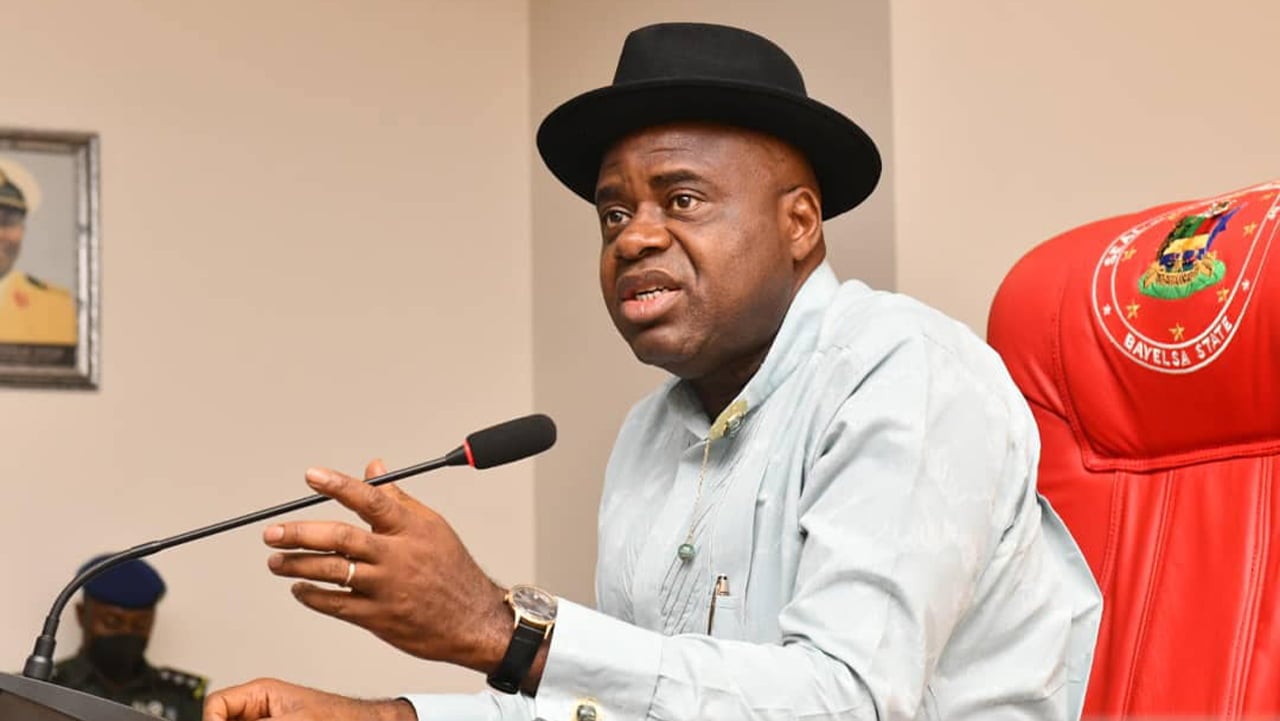
The sudden death of Bayelsa State Deputy Governor, Lawrence Ewhrudjakpo, has triggered an intense political scramble across the state, with power brokers, party leaders and interest. With Governor Diri holding the ace, stakeholders are divided over whether Sagbama LG should retain the position — or whether broader political considerations, including 2027 permutations, will ultimately shape the decision, LINUS EFFIONG reports

Just weeks after surviving a bitter political storm, Bayelsa State Deputy Governor, Lawrence Ewhrudjakpo, was gone.

The 60-year-old politician, who stood his ground when the state’s political landscape shifted beneath his feet, died on Thursday, December 11, 2025, bringing to a sudden end a career defined — in his final months — by loyalty, defiance and quiet resilience.

When Governor Douye Diri defected from the Peoples Democratic Party to the All Progressives Congress on November 3, Ewhrudjakpo refused to follow. While several state officials crossed over with the governor, he chose to remain in the PDP, the party he had long identified with.

That decision set off months of unease within the state’s political establishment. Rumours swirled of a plot to replace him with a more compliant ally. In response, the deputy governor took the extraordinary step of suing the Bayelsa State House of Assembly to forestall any move against him — a suit he later withdrew after Diri’s intervention paved the way for an out-of-court settlement.

Then came the shock.

Ewhrudjakpo slumped in his office in Yenagoa and was rushed to the Federal Medical Centre, where doctors pronounced him dead. The suddenness of it all stunned the state.

Only hours earlier, at exactly 11:48am, he had posted photographs on his Facebook page showing him in a meeting at Government House with UNICEF Country Representative in Nigeria, Wafaa Saeed. There were no outward signs that it would be his final public engagement.

Tributes poured in from across Nigeria, many describing him as a “gentleman” and an unrelenting workaholic. Former President Goodluck Jonathan called him “a devoted steward of Bayelsa, a patriot, and a loyal servant of our state and nation.”

“Throughout his years in public service, he demonstrated an unwavering passion for the welfare of our people and earned the respect and admiration of many across the country,” Jonathan said.

But even as tributes continued, political calculations quietly resumed.

Behind the scenes, lobbying intensified as attention shifted to who would fill the vacant office. His death has now ignited a fresh debate over zoning and equity, with many insisting that fairness demands the next deputy governor emerge from Sagbama Local Government Area, the late Ewhrudjakpo’s home base.

For Bayelsa, the mourning is real. But so too is the power struggle that has already begun.

See also  INEC derecognises Mark, Aregbesola, parties revolt

The power play

If the battle for Bayelsa’s deputy governorship has a silent command centre, many believe it lies with Seriake Dickson.

The former governor and now senator is widely regarded as the most formidable force capable of shaping the succession conversation. Yet, in public, he has struck a careful tone — insisting he has not been consulted by Governor Douye Diri and stressing that the choice of a new deputy is solely the governor’s constitutional prerogative.

Few in Yenagoa take that at face value.

Observers of Bayelsa’s intricate political chessboard argue that such restraint is typical Dickson — measured words masking strategic patience. His relationship with Diri has remained outwardly cordial, even warm. He has openly supported the governor’s administration and pointed would-be aspirants away from his doorstep, advising them instead to lobby the man who holds the final pen.

But beneath that public posture, whispers persist.

Many believe Dickson is quietly rooting for his former deputy chief of staff, Hon. Ebizi Rosemary Brown Ndiomu, now representing Sagbama III in the state House of Assembly. Her emergence, should it happen, would not only preserve Sagbama’s hold on the office but also reinforce Dickson’s enduring relevance in Bayelsa’s evolving power matrix.

In Bayelsa politics, influence is rarely declared. It is inferred.

The Goodluck Jonathan factor

Then there is the shadow — calm but unmistakable — of Goodluck Jonathan.

No major political decision in Bayelsa is ever discussed without invoking the former President’s name. His influence in the state remains profound, particularly in his relationship with Diri.

Jonathan’s endorsement was pivotal to Diri’s re-election in 2023. At the time, the governor described that backing as “worth more than billions of naira,” a remark that underscored just how decisive it was. Diri has repeatedly acknowledged Jonathan’s role in shaping his political ascent — from the National Assembly to Creek Haven.

Now, as the deputy governorship hangs in the balance, stakeholders believe Jonathan’s voice — whether spoken publicly or whispered privately — could tilt the scales.

The uncertainty, however, lies in where that influence will fall. Will he align with Dickson’s perceived preference? Or does the former President have a different calculation altogether?

For now, Jonathan remains silent — and in Bayelsa, silence can be more powerful than speech.

Lokpobiri’s calculated presence

Hovering on the edges of the unfolding drama is Heineken Lokpobiri, whose growing visibility has not gone unnoticed.

A seasoned political operator, former Minister of State for Agriculture and Rural Development, two-term senator for Bayelsa West, and now Minister of State for Petroleum, Lokpobiri possesses both federal leverage and deep-rooted local networks.

His long-standing governorship ambition is no secret. Having openly expressed interest in succeeding Diri, his stake in the deputy governorship calculation is clear: whoever emerges could either strengthen or complicate his 2027 pathway.

See also  Labour Party Chairman attacked at Abuja airport

Political watchers are therefore studying his movements carefully. An endorsement here, a meeting there — each gesture is dissected for meaning.

In a contest shaped by loyalty, zoning, defections and future ambitions, Lokpobiri represents not just a participant, but a strategist with eyes firmly set beyond the immediate vacancy.

And as Bayelsa mourns, the manoeuvring intensifies.

Diri at the centre of the storm

At the eye of the gathering storm is Governor Douye Diri himself.

His measured silence — and the careful, almost clinical way he chooses his words at public events — has only deepened the suspense. In a state where every handshake is analysed and every smile decoded, Diri’s refusal to drop the slightest hint about his preferred successor has left Bayelsans guessing.

Behind closed doors, however, the permutations are thick.

A source close to the governor confided that Diri may be considering his Chief of Staff, Pastor Peter Akpe — not just a trusted aide, but also his maternal cousin. Akpe’s proximity to power, administrative grip and daily access to the governor make him a natural contender. Yet, for some, that closeness raises questions about optics and political messaging at a time when zoning and inclusivity dominate the conversation.

But Akpe is not the only name on the chessboard.

Prince Ebitimi Amgbare, Managing Director and Chief Executive Officer of the Niger Delta Basin Development Authority, is said to be leveraging federal goodwill. Widely perceived to enjoy a cordial relationship with President Bola Tinubu, Amgbare’s growing praise of Diri’s infrastructural strides has not gone unnoticed.

With Diri now firmly aligned with the APC and publicly backing Tinubu’s 2027 re-election bid, some insiders speculate that a subtle nod from Abuja could influence the governor’s calculus. Amgbare’s credentials — foundation member of the old Action Congress of Nigeria, loyal APC stalwart, 2023 presidential campaign council member and former Youth and Sports Commissioner — position him as a bridge between Bayelsa’s old APC structure and the governor’s new political home.

Whether that bridge is one Diri is willing to cross remains the unanswered question.

Casting the net wider

Beyond loyalty and federal connections lies another powerful argument: zoning.

Many political leaders insist that Sagbama, the home base of the late Ewhrudjakpo, should retain the office in the spirit of balance and continuity. To abandon that unwritten arrangement, they warn, could unsettle delicate political understandings in the state.

If Sagbama remains the anchor, one prominent figure is the Speaker of the Bayelsa State House of Assembly, Rt. Hon. Abraham Ingobere. Though representing Brass Constituency III, Ingobere has maintained a close and cooperative relationship with Diri. The governor has repeatedly praised him as “a stabiliser of the polity,” crediting him with fostering a rancour-free executive-legislative partnership since his re-election as Speaker in June 2023.

See also  Coalition: ‘Nigerians Are Aware That Their Politicians Are Fraudsters’ – Farotimi

Yet, the field remains crowded.

Dr. Peter Akpe’s name resurfaces here too — hardworking, administratively savvy and deeply entrenched within the corridors of Government House. His connections to former Vice President Yemi Osinbajo and First Lady Oluremi Tinubu add another layer to his political capital.

Then there is Dr. Dennis Otiotio, Bayelsa APC chairman from Nembe. A lawyer with a PhD and a history of fierce criticism of Diri — once describing his administration as “a punishment to Bayelsa State” — Otiotio’s political journey took a dramatic turn when he welcomed Diri into the APC fold in November 2025. Whether that reconciliation translates into consideration is another matter entirely.

In a quieter corner of the conversation is Christopher Ewhrudjakpo, elder brother of the late deputy governor and a serving aide to Diri. His possible emergence would carry emotional weight — a gesture of continuity and consolation — but whether sentiment aligns with political pragmatism remains uncertain.

Stakeholders weigh in

As lobbying intensifies, party chieftains are no longer shy about projecting their preferences.

PDP stalwart Christopher Abarowe argues that the governor must balance what he describes as a “political marriage” between the APC and PDP in the state. According to him, certain APC factions have already secured benefits, including commissioner slots tied to the David Lyon and Lokpobiri blocs.

“The foundational APC members — the old guard — should now be considered,” he said, listing figures such as Prince Ebitimi Amgbare and Briya Aganaba as worthy of attention.

On the other side of the divide, APC chieftain John Asawana insists the moral argument outweighs political arithmetic.

“To me, Sagbama should retain the position,” he said. “The state is now APC. What we should be considering is integrity. Whoever the governor appoints must be credible and not someone already compensated with political office.”

And so, the lines are drawn.

Loyalty versus zoning. Federal whispers versus local equilibrium. Sentiment versus strategy.

In the end, only one signature will settle the contest — that of Governor Douye Diri. But until the announcement is made, Bayelsa remains suspended between mourning and manoeuvring, waiting for the next move in a political drama that shows no sign of slowing.

punch.ng

FOLLOW US ON:

FACEBOOK

TWITTER

PINTEREST

TIKTOK

YOUTUBE

LINKEDIN

TUMBLR

INSTAGRAM

Continue Reading
Click to comment

Leave a Reply

Your email address will not be published. Required fields are marked *

Politics

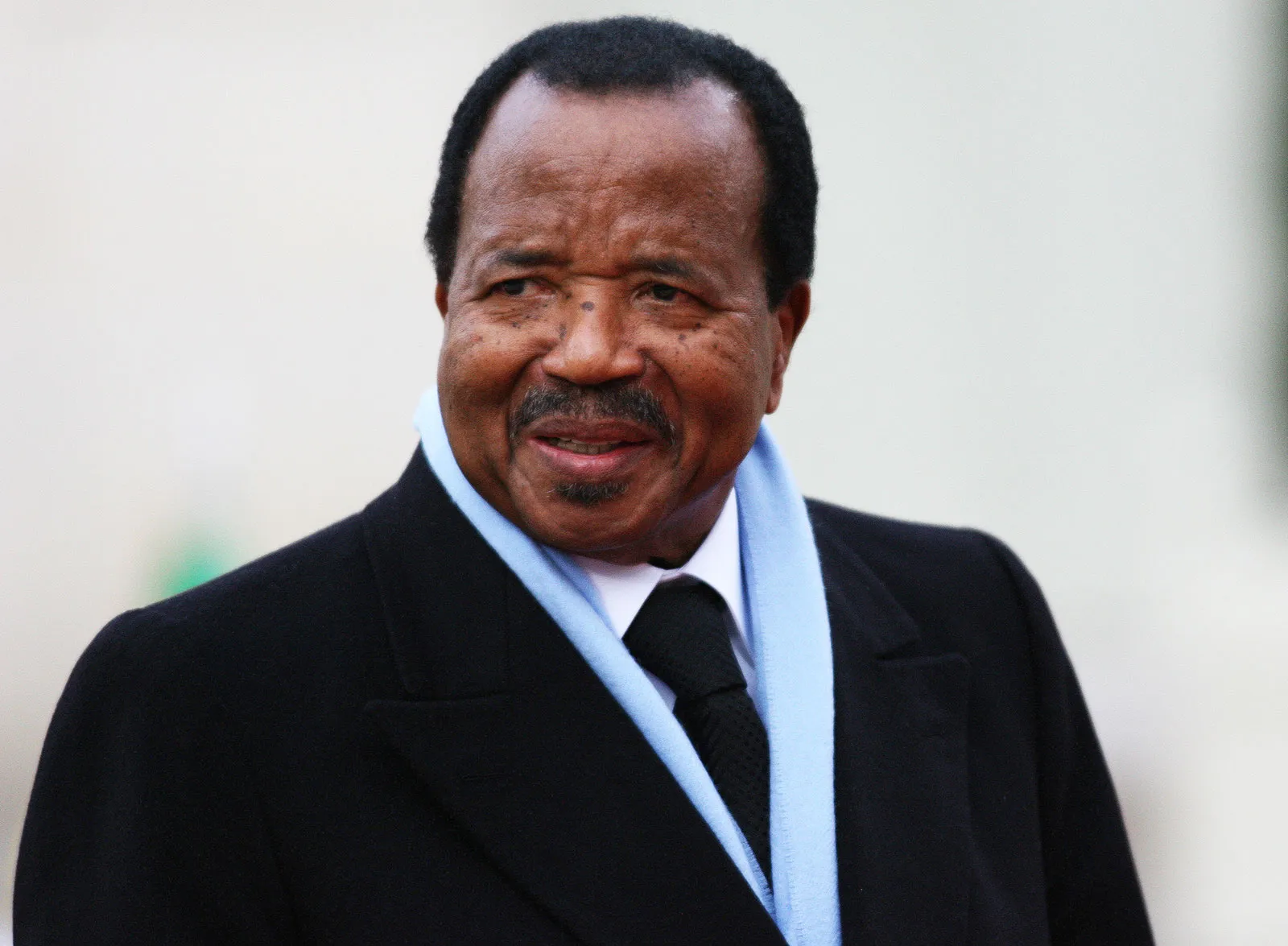
Cameroon’s president Paul Biya set to get a vice president for the first time in his 43-year rule

Published

on

Cameroon’s president, Paul Biya, is set to get a vice president for the first time in his four-decade rule, following controversial constitutional changes backed by the parliament.

In a ‌joint session of the ruling party-dominated National Assembly and Senate, lawmakers voted 200 to 18 in favour, with four abstentions, to pass the bill.

The bill stipulates that the vice president will ​automatically assume the presidency if President Paul Biya dies, resigns, or becomes incapacitated.

Biya, ​93, has led the Central African country since 1982 and is the world’s oldest serving head of state. Public discussion about ​his health is banned.

According to the legislation, a copy of which was seen by ​Reuters, the vice president will be appointed and dismissed by the president, serving for the remainder of the president’s seven-year term.

However, the interim leader would be prohibited from initiating constitutional changes or ​running in a subsequent election.

Prior to the amendment, the constitution designated the leader of the Senate to briefly take over in case the sitting president d!es or is incapacitated. An election would then be held.

The Social Democratic Front (SDF) party, which has six representatives in parliament, boycotted the vote. It had pushed for a revision in favour of the vice-president being jointly elected with the president, rather than appointed.

The party also sought a constitutional provision that reflects the linguistic split between English and French-speaking regions. The SDF wanted the nation’s top two posts to be shared between Cameroon’s two communities, which was the position before 1972.

See also  Lamido gives PDP 10-day ultimatum, demands caretaker committee to end crisis

“This constitutional reform could have been a moment of political courage, but it is nothing less than a missed historic opportunity,” SDF chairman Joshua Osih said.

FOLLOW US ON:

FACEBOOK

TWITTER

PINTEREST

TIKTOK

YOUTUBE

LINKEDIN

Continue Reading

Politics

Opposition parties weigh election boycott ahead of 2027

Published

on

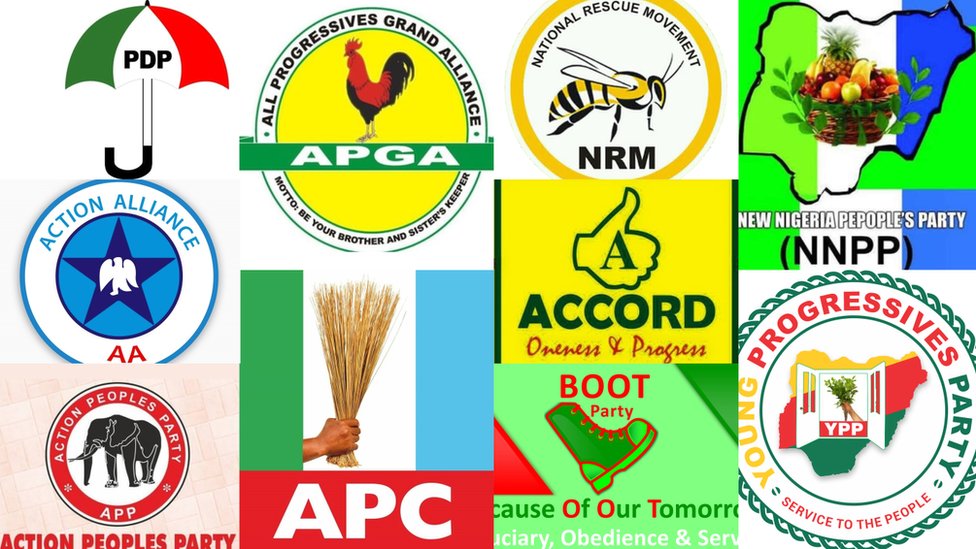
Opposition parties have started pushing for boycott of the 2027 general elections over alleged bias by the Independent National Electoral Commission and purported moves to make President Bola Tinubu the sole contender at the polls.

The Taminu Turaki-led faction of the Peoples Democratic Party and the National Chairman of the African Action Congress, Omoyele Sowore, urged political parties to boycott the elections.

The spokesperson for the African Democratic Congress, Bolaji Abdullahi, said the option would be considered by the party leadership.

In an interview with Sunday PUNCH, the National Publicity Secretary of the Turaki faction, Ini Ememobong, said the boycott was necessary to prevent opposition parties from legitimising a “compromised and predetermined” process.

He accused INEC and the All Progressives Congress of deliberately undermining opposition parties to pave the way for an uncontested victory.

INEC had derecognised the Senator David Mark-led National Working Committee of the ADC, a development that intensified leadership disputes and deepened divisions within opposition ranks.

Ememobong questioned the timing of INEC’s planned activities, including the clean-up of the voter register and monitoring of party records, warning that such measures could be used to deregister opposition parties.

He said, “All opposition parties are in a precarious situation. It is either we find a platform or collectively pull out and allow them to have their fun.

“The only thing that can be gleaned from INEC’s disposition is that it wants to foist a coronation, an uncontested election in 2027. The opposition must think outside the box. This regime is determined to impose itself on Nigerians whether they want it or not. We must adopt unconventional but legal strategies to apply pressure. If they don’t yield, we boycott early to save the nation unnecessary costs.

“Let us not allow them to embezzle over N800bn in the name of an election. If the President does not want to stand, we don’t need to spend the money. Let them organise a coronation, but we will not legitimise an illegitimate process. The faster we decide our course, the better. If PDP, ADC, and all critical politicians boycott, the President may rethink, or the election will proceed and the international community will respond.”

See also  ‘You Can’t Silence Me’ – Isaac Fayose Accuses Wike, Ayo Fayose Of Plotting To Arrest Him

Speaking on the boycott, Sowore said participation in an election lacking fairness would be pointless.

“Political parties met with INEC, and the position of every political party is that these guys are not planning an election. They are doing things so there is no room for any other party to compete,” he said.

He noted that opposition parties should start discussing a collective withdrawal if the situation did not improve.

“If we can’t have an atmosphere for a free, fair and credible election, why are we wasting time participating? If all the political parties are serious, we should be discussing a boycott now,” Sowore said.

Speaking with Sunday PUNCH, the ADC National Publicity Secretary, Abdullahi, said the party understood the reasons for the call.

“Boycotting the election is a position that will have to be considered by our party leadership, but we understand why they (Turaki faction) are making that demand. We are going to vacate the space for APC, but we are convinced that we will win this election regardless of what they (APC) do,” Abdullahi said.

Opposition in crisis

Major opposition parties are battling internal crises that critics say could weaken them ahead of the 2027 elections.

The PDP crisis, rooted in unresolved disputes from the 2023 presidential elections, has left the party split into two factions: one led by Taminu Turaki, backed by governors Seyi Makinde (Oyo) and Bala Mohammed (Bauchi), and another led by Abdulrahman Mohammed, who is loyal to the Minister of the Federal Capital Territory, Nyesom Wike.

The ADC has also been embroiled in a leadership dispute since 2025, after Senator David Mark assumed leadership of a new National Working Committee in July that year.

The conflict stems from disagreements over the tenure of former National Chairman Ralph Nwosu, which ended in August 2022.

While Nwosu participated in the 2025 transition, his deputy, Nafiu Gombe, insisted he should serve as acting National Chairman.

Rival factions subsequently laid claim to the party’s leadership, triggering multiple court cases before the Appeal Court and the Supreme Court, raising doubts about the party’s readiness for 2027.

The Labour Party is also caught in a protracted leadership crisis, marked by conflicting court rulings and rival petitions.

The situation reached a turning point when a Federal High Court in Abuja ordered INEC to recognise the Nenadi Usman-led caretaker committee as the legitimate leadership.

See also  PHOTOS: Tsunami hits APC, PDP as over 10,000 members defect to ADC in Benue

Justice Peter Lifu, delivering the judgment, ruled that the tenure of the Julius Abure-led National Working Committee had expired, declaring the Usman-led committee “the only valid authority” pending a national convention.

While the Usman-led committee anchored its legitimacy on the ruling and prior judicial pronouncements, the Abure faction rejected the decision and has filed an appeal, arguing that “no court has the power to appoint leadership for any political party.”

The internal crisis in the NNPP has also deepened, with rival factions at the national and Kano State levels trading accusations of external interference.

At the federal level, the party is split between supporters of former presidential candidate and ex-Kano governor, Senator Rabiu Kwankwaso, and a faction led by founding member Boniface Aniebonam.

APC slams opposition parties

Reacting, the National Secretary of the APC, Senator Basiru Ajibola, questioned the credibility of the opposition.

He said, “Which opposition? Is it people who cannot even organise their party affairs creditably and within the law and acceptable democratic ethos? It is part of the democratic rights of any political party to participate or boycott elections. APC and our president cannot be gaslighted by baseless and mischievous allegations.”

Ajibola further described allegations against INEC as unfounded, saying they reflected lack of seriousness and preparedness for democratic contest within the ambit of existing laws.

He took a swipe at the opposition’s electoral performance, and noted that they had fared poorly in elections conducted since 2023, including the FCT election and recent bye-elections in Kano and Rivers.

NNPP rejects boycott, CSOs worry over calls

Meanwhile, the New Nigeria Peoples Party and civil society organisations have warned that a move to boycott elections could undermine the democratic process and push the country towards a one-party system.

The NNPP Publicity Secretary, Dipo Johnson, said despite growing concerns over INEC’s recent decisions, the party would not support withdrawing from the polls.

“The NNPP shares stronger views because it is becoming clear that what was whispered is now beginning to look like the truth—that INEC is trying to ensure that only the APC will stand for the elections. But we will advise them to try to win through democratic means. Already, a non-democratic method has started.

See also  Suswam quits PDP, cites unresolved internal crises

“I don’t subscribe to boycotting the election, but I support something much harder than that because Tinubu and his party don’t even care if you boycott the election,” Johnson added.

A board member of Yiaga Africa, Professor Nnamdi Aduba, said concerns over the electoral process should be addressed, but the threat of a boycott may be exaggerated.

He criticised what he described as excessive judicial interference in political party affairs, noting that parties were voluntary organisations that should be allowed to operate independently.

“While the threat should be taken seriously and the government should keep its hands off, I think there is some grandstanding. It would be unhealthy if we begin to have a system dominated by a single candidate, and I don’t think that will happen.

He added, “The judiciary is handling issues in a way that risks giving the impression that the government is trying to weaken opposition parties. Political parties are voluntary organisations and the courts should only intervene in rare cases.”

Also speaking, the National President of the Centre for Anti-Corruption and Open Leadership, Debo Adeniran, said it was inaccurate to place the blame solely on the ruling party for the challenges facing opposition groups.

Adeniran noted that while a one-party state would be detrimental to Nigeria, there is no clear evidence that the country is heading in that direction.

“It is fashionable to say that the ruling party wants to frustrate the opposition, but even within parties like ADC, they know they made fundamental mistakes. It is not healthy for a country like Nigeria to gravitate towards a one-party state, but there is no sign that this is actually happening,” he said.

Adeniran attributed current difficulties largely to internal weaknesses within opposition parties and rejected calls for an election boycott.

“I don’t think anybody is undermining our democratic experiment, and there is no justification for any party to boycott the election,” he added.

punch.ng

FOLLOW US ON:

FACEBOOK

TWITTER

PINTEREST

TIKTOK

YOUTUBE

LINKEDIN

Continue Reading

Politics

ADC crisis: Govs, lawmakers shelve defections

Published

on

There are indications that Oyo State Governor, Seyi Makinde, and his counterpart from Bauchi State, Governor Bala Mohammed, may no longer join the African Democratic Congress (ADC).

Credible sources close to Makinde and the ADC told Sunday PUNCH that the two governors had slowed down their consultations to move to the ADC following the de-recognition of the party’s leadership by the Independent National Electoral Commission.

Sunday PUNCH also gathered that INEC’s decision had cast doubt on the intentions of National Assembly members planning to join the party.

INEC on Wednesday removed the names of the NWC of ADC led by Mark from its official portal, citing a Court of Appeal order.

The electoral commission said it would maintain the status quo ante bellum pending the determination of a substantive suit before the Federal High Court in Abuja.

The decision followed a protracted leadership crisis within the ADC, with rival factions led by Nafiu Gombe and Mark laying claim to the party’s national structure.

According to the commission, the appellate court, in a judgment delivered on March 12, 2026, directed all parties to maintain the existing situation before the dispute arose and refrain from actions that could prejudice the outcome of the case.

But the Mark-led NWC rejected INEC’s decision and called for the dissolution of the electoral commission.

It also vowed to proceed with preparations for the proposed National Convention scheduled for Abuja, the Federal Capital Territory, on April 14.

There were reports that Makinde and Bala would join the ADC following the prolonged crisis in the Peoples Democratic Party.

See also  ‘You Can’t Silence Me’ – Isaac Fayose Accuses Wike, Ayo Fayose Of Plotting To Arrest Him

Bala, who is Chairman of the PDP Governors’ Forum, on Tuesday indicated plans to defect to the ADC.

The governor gave the hint after a closed-door meeting with a delegation of the ADC, led by a former Secretary to the Government of the Federation, Babachir Lawal, at the Presidential Lodge, Bauchi.

Bala stated that despite exhausting all avenues for reconciliation within the PDP at both national and state levels, no meaningful progress had been made.

The Bauchi governor described the ADC as a “preferred destination,” noting, however, that consultations and negotiations were ongoing to ensure a well-informed decision.

Ditto for Makinde, who had been meeting with chieftains of the party.

Speaking with Sunday PUNCH on condition of anonymity, an ally of Makinde, who is knowledgeable about the political activities of the governor, said he might not join the ADC again.

The source said, “I’m not sure Makinde will join the ADC again because ever since INEC’s derecognition of the ADC leadership, he has not been showing interest in further engagements with the ADC leaders.”

Reacting, the Special Adviser to Makinde on Media, Sulaimon Olanrewaju, dismissed claims that the governor was planning to dump the PDP.

Olanrenwaju, in an interview with Sunday PUNCH, equally denied claims that he was delaying his move to ADC due to uncertainty surrounding the party’s national leadership.

He said, “The information is mere rumors, nothing like that.”

Also, the Bauchi State chapter of the PDP said Bala had yet to join the ADC.

Responding to questions on why he had yet to defect to the ADC despite earlier indicating Thursday as a possible timeline, the state PDP Publicity Secretary, Dayyabu Chiroma, said, “All I can tell you is that we are still in the PDP, and we are stronger together.”

See also  Opposition behind SDP crisis, says ex-secretary

He noted that although a committee had been set up to assess the party’s political future, no decision had been taken to leave the party.

“Yes, we have established a committee to make findings on our political future, but we are still in the PDP and have not moved to any other platform,” Chiroma said.

Uncertainty over lawmakers’ defection

Findings by Sunday PUNCH indicate growing uncertainty over the planned defection of some lawmakers, with several still undecided on their next move.

Originally expected to dump the PDP for the ADC, the lawmaker representing Darazo/Ganjuwa Federal Constituency of Bauchi State, Mansur Soro, told Sunday PUNCH that consultations were ongoing.

“We are still consulting and we’ll decide in the next one week,” he stated, when asked if his movement to the ADC remained sacrosanct despite INEC’s decision not to recognise the Mark-led NWC.

Similarly, Lagos lawmaker, Jesse Onuakalusi, whose defection from the Labour Party to the ADC was recently announced on the floor of the House, declined to state his next move if the crisis persists.

Asked what options he would explore, he responded tersely, “What do you mean by if the controversy is not resolved? I don’t want to talk about this issue for now.”

On his part, the lawmaker representing Idemili North/Idemili South Federal Constituency of Anambra State, Uchenna Okonkwo, downplayed the significance of INEC’s action, expressing confidence in a legal resolution.

“The Court of Appeal did not ask INEC to yank off anybody’s name. The court said the status quo should be maintained but the umpire chose to interpret it the way it deemed it.

See also  PHOTOS: Tsunami hits APC, PDP as over 10,000 members defect to ADC in Benue

“As far as we are concerned, this is not cause for alarm as we are optimistic that the issue would be resolved.”

He added that regardless of the outcome, a former presidential candidate of the Labour Party, Mr Peter Obi, would lead the way for many LP defectors.

Okonkwo said, “It is unfortunate that people are not being allowed to exercise their democratic choice to decide where they want to be. Those who are celebrating today are reminded that the challenges we face as a people are party neutral. Poor power supply, cost of fuel and high living conditions affect all.”

punch.ng

FOLLOW US ON:
FACEBOOK

TWITTER

PINTEREST

TIKTOK

YOUTUBE

LINKEDIN

Continue Reading

Trending