Connect with us

News

Oil revenue shakeup: States back Tinubu’s Executive Order

Published

on

The Chairman of the Forum of State Commissioners of Finance, Akintunde Oyebode, has said President Bola Tinubu’s Executive Order 9 on direct remittance of oil and gas revenues would add only about N1.5tn to the Federation Account, arguing that the bigger issue is enforcing constitutional custody of federation revenues and fixing leakages created by the Petroleum Industry Act framework.

Oyebode, who spoke on Arise News on Tuesday, is also the Commissioner for Finance for the Ekiti State Government.

He said, “In monetary terms, this is not even a significant increase to the federation account. In total, from the management fee, frontier exploration fee and the gas flaring penalties, we estimate approximately N1.5tn will be added to the federation account.”

He added that even that figure must be seen against the scale of inflows into the Federation Account, saying, “If you assume that’s an account that gets upwards of N30tn per annum, you can do the math. It’s a single-digit impact in terms of growth on the federation account. But that’s not the point.”

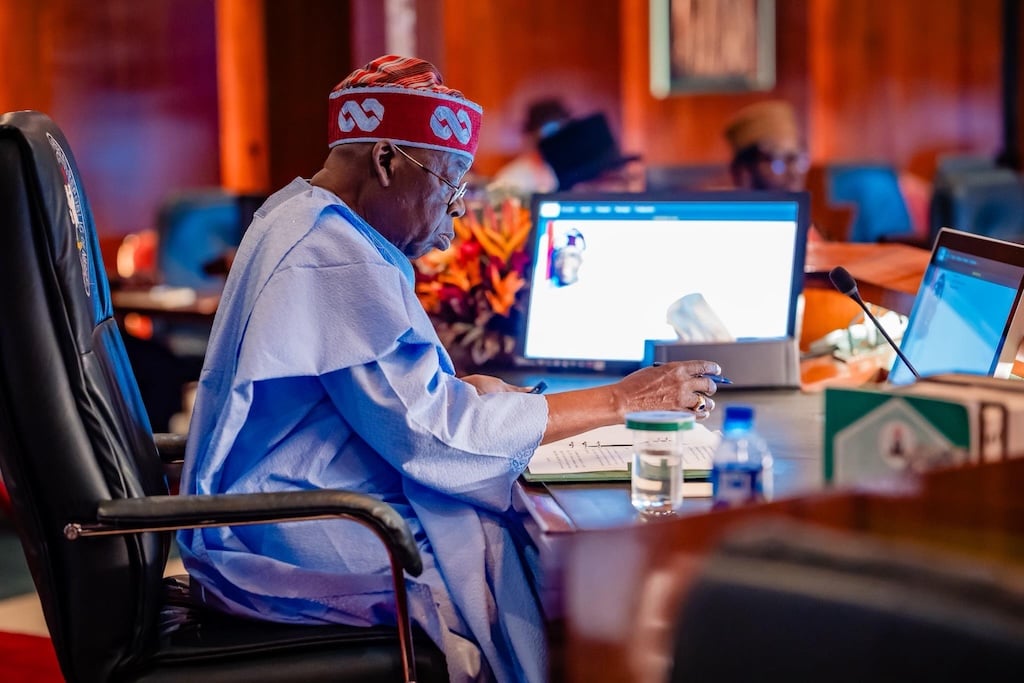
Tinubu’s Executive Order 9, signed in February 2026, mandates that oil and gas revenues due to the Federation be remitted directly into the Federation Account, limiting deductions and retentions by agencies and directing that key statutory inflows be paid in full before any spending or appropriation.

The order has triggered pushback from labour unions and wider debate across the petroleum sector, with the Petroleum and Natural Gas Senior Staff Association of Nigeria warning that the directive could harm the industry and send negative signals to investors, while urging the President to withdraw it.

See also  NSCDC boss distributes equipment to states, warns against indiscipline

On the Arise programme, one of the presenters suggested states would “get more money” from the new remittance structure, but Oyebode rejected that framing and insisted it was about constitutional compliance rather than a windfall.

“It’s not about states getting more revenue. It’s about adherence to the Constitution. It’s about doing what is proper,” he said, adding that public debate should focus on “safeguarding federation revenues”.

He argued that the most consequential leakages may sit outside the specific items targeted by EO9, pointing to what he described as a sharp fall in joint venture inflows after the Petroleum Industry Act.

“If you look at the impact of PIA on JVs, pre-PIA, JVs contributed circa $12bn to the federation. Post-PIA, that number has come down to about $2bn,” he said. “That’s an area that no one is even talking about, the transfer of the JV assets without proper valuation, without proper governance.”

Oyebode also tried to downplay fears that the executive order could destabilise NNPC Limited’s operations, arguing that the sums involved were small relative to the company’s reported scale.

“NNPC, if we go by its audited financial statements, made a profit of N4.5tn in 2024,” he said, adding that in a company with revenues he put at about N45tn, “what we’re talking about here is a small amount”.

The Presidency has defended EO9 as a constitutional enforcement action rather than executive lawmaking.

Pressed on whether the directive amounts to executive overreach and whether it could rattle lenders and investors, Oyebode said he was not a lawyer and would not give a legal opinion, but argued that any disputes should be tested in court.

See also  A tweet, a threat and reset

“At the heart of the matter, if there are any legal concerns, the best thing to do is for the relevant parties to approach the courts for an interpretation,” he said.

He added that investor concerns would depend on implementation details, noting the government had set up an implementation committee and urging stakeholders to wait for its guidelines.

“If there are valid agreements, contracts in place, it will not affect the repayment of those contracts,” he said, adding, “We should wait for their guidelines before coming to a conclusion.”

Oyebode also insisted the oil and gas investment climate had improved, claiming the sector had recorded “$10bn of new investments” and citing major projects and final investment decisions as signs of momentum.

Beyond EO9, the Arise interview also shifted to the recurring criticism of state finances, debt and spending patterns.

Oyebode rejected the claim that states were being “given” money by the Federal Government, saying revenues in the Federation Account belonged to the federation and must be shared under the constitutionally prescribed distributable pool.

He also claimed that states’ domestic debt levels had improved, saying, “Over the last two years… many states have seen at least 15 per cent to 20 per cent reduction in domestic debt,” while explaining that increases in the naira value of foreign debt were largely exchange-rate driven.

On concerns that states borrow for recurrent spending, he said, “Before you take a loan, there’s a borrowing plan… I struggle to see any state that’s really borrowing to fund its recurrent expenditure,” adding that multilateral loans typically fund water, agriculture, environmental programmes and other public infrastructure.

See also  Satguru Maharaj Ji promises to help free Nnamdi Kanu if Biafra can do the following...

In the same exchange, Oyebode pointed to transparency reforms linked to the World Bank-supported State Fiscal Transparency, Accountability and Sustainability programme, saying states were publishing budgets, procurement records, quarterly budget implementation reports and audited financial statements, and urging analysts and civil society to scrutinise and hold governments accountable.

punch.ng

FOLLOW US ON:

FACEBOOK

TWITTER

PINTEREST

TIKTOK

YOUTUBE

LINKEDIN

TUMBLR

INSTAGRAM

Continue Reading
Click to comment

Leave a Reply

Your email address will not be published. Required fields are marked *

News

White House denies considering nuclear strikes on Iran

Published

on

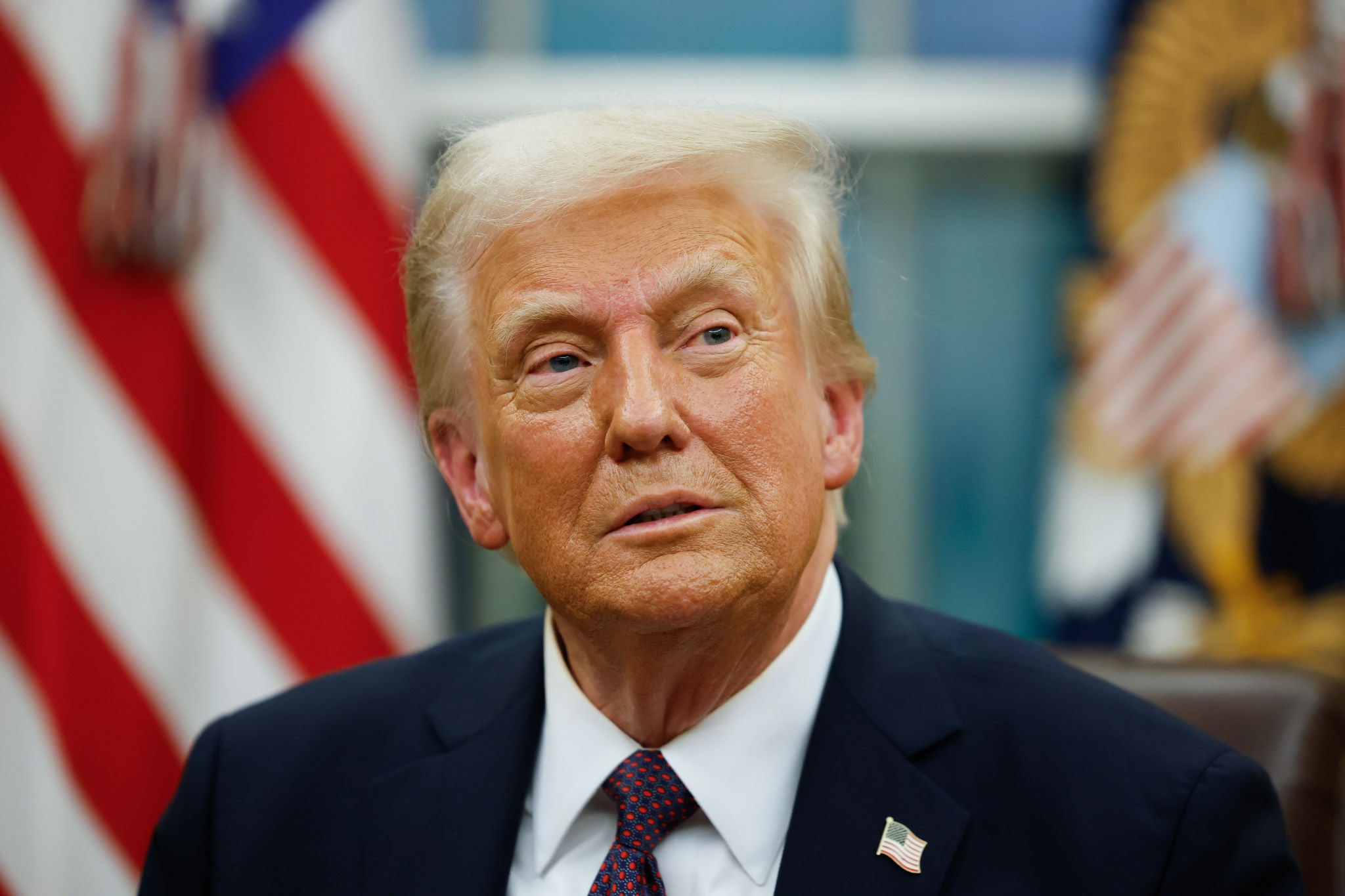
The White House denied Tuesday that remarks by Vice President JD Vance about military operations in Iran had contained any suggestion of a US nuclear strike against the Islamic republic.

After Vance said US forces have tools they “so far haven’t decided to use” to enforce a dramatic ultimatum from President Donald Trump, the White House said on X: “Literally nothing @VP said here ‘implies’ this, you absolute buffoons.”

The post was in response to one from an account associated with former vice president Kamala Harris that said Vance implied Trump “might use nuclear weapons.”

AFP

punch.ng

FOLLOW US ON:

FACEBOOK

TWITTER

PINTEREST

TIKTOK

YOUTUBE

LINKEDIN

See also  IG denies favouritism in police promotion
Continue Reading

News

Soldiers do not buy uniforms or bulletproof vests – Army

Published

on

The Nigerian Army has dismissed allegations by a former soldier, Rotimi Olamilekan, that personnel purchase their uniforms and protective equipment with personal funds.

In a statement issued on Tuesday by its Acting Director of Army Public Relations, Appolonia Anele, the Army described the claims as false and misleading, insisting that troops are adequately equipped and catered for.

The statement was in response to a viral interview in which Olamilekan, popularly known as Soja Boi, alleged that soldiers buy items such as uniforms, boots and bulletproof vests despite earning modest salaries.

On remuneration, the Army maintained that it operates a structured and transparent salary system, with additional benefits for personnel.

“In addition to consolidated monthly salaries, personnel are entitled to uniform allowances and other allowances, which are periodically paid directly into their accounts,” it said.

The Army also noted that troops deployed for operations receive extra support.

“Personnel serving in operational theatres… are also paid operational allowances and other mission-specific entitlements designed to support their welfare and enhance operational effectiveness,” the statement added.

Addressing the core allegation, the Army rejected claims that soldiers procure their own kits and protective gear.

“The claim that soldiers are required to purchase uniforms and protective equipment, including bulletproof vests and helmets, is entirely false. The provision of uniforms, kits, arms, ammunition, and operational gear is an institutional responsibility executed through established logistics systems,” it stated.

It acknowledged that some personnel may choose to supplement issued kits for personal comfort but stressed that such decisions are voluntary.

“While some personnel may choose to supplement issued kits based on personal preference and comfort, such actions are voluntary and do not indicate any systemic failure,” the Army said.

See also  UN General Assembly votes for Hamas-free Palestinian state

The statement further emphasised that no soldier is deployed without adequate protection.

“For the avoidance of doubt, no soldier is deployed to an operational theatre without the necessary protective equipment,” it added.

The Army urged the public to disregard the allegations, warning that such claims could undermine morale and national security.

“The public is requested to disregard these baseless allegations… Citizens are urged to refrain from amplifying unverified claims that may undermine these institutions,” the statement said.

Reacting, the Army said the former lance corporal was dismissed over disciplinary breaches and not for expressing his views.

“The Nigerian Army categorically states that Mr Olamilekan was not dismissed for ‘speaking the truth’ or expressing opinions on political leadership. He was dismissed following persistent and grave acts of indiscipline, including violations of the Armed Forces Social Media Policy,” the statement read.

It added that his actions, including unauthorised media appearances and misuse of military identity, contravened established regulations.

Olamilekan had earlier claimed in an interview that soldiers earned between N51,000 and N111,000 and were responsible for purchasing essential gear, sparking widespread reactions online.

punch.ng

FOLLOW US ON:
FACEBOOK

TWITTER

PINTEREST

TIKTOK

YOUTUBE

LINKEDIN

Continue Reading

News

Nigeria, Jamaica, others at risk of UK visa restrictions – Official

Published

on

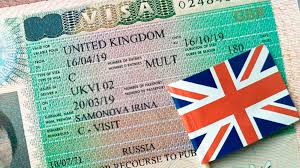
Several African and Caribbean countries, including Nigeria and Jamaica, could face visa restrictions to the UK if Reform UK wins the next general election.

The proposed policy targets nations that formally demand reparations for slavery.

As reported by the Daily Mail on Monday, the party’s home affairs spokesperson, Zia Yusuf, defended the plan, saying: “A growing number of countries are demanding reparations from Britain. They ignore the fact that Britain made huge sacrifices to be the first major power to outlaw slavery and enforce this prohibition.

“Astonishingly, these countries have received 3.8 million visas and £6.6 billion in foreign aid over the past 20 years. Enough is enough.”

Several African and Caribbean countries, such as Nigeria and Jamaica, have made requests, raising the prospect that their nationals could be barred from entering the UK.

Other nations mentioned by Reform UK include Kenya, Haiti, Guyana, Barbados, and The Bahamas.

The announcement comes weeks after a United Nations vote calling on former colonial powers to pay reparations for slavery.

The resolution described the forced displacement of Africans as one of the “gravest crimes against humanity.” Britain abstained from the vote.

Reform UK leader Nigel Farage criticised the UN, saying: “It is now the UN telling us we should go bankrupt, to apologise for what people did in 1775 or whatever it might have been. Forget it. The UN has no legitimacy over this country whatsoever.”

The party also vowed to cap foreign aid spending at £1 billion annually, a 90% reduction from current levels.

A Foreign Office spokesman said the UK acknowledges the horrors of the slave trade but reiterated that its position on reparations remains unchanged. Opposition leader Keir Starmer has similarly ruled out an apology or payments, saying: “I want to look at the future rather than spend a lot of time on the past.”

See also  IG denies favouritism in police promotion

Reparations: History and Modern Politics

Centuries ago, millions of Africans were torn from their homes, forced onto ships, and sold into slavery across the Americas and Europe.

Families were destroyed, communities uprooted, and entire cultures disrupted. The scars of these atrocities have endured across generations, shaping nations and peoples long after slavery ended.

In modern times, countries directly affected by this history have begun formally asking for reparations. Ghana has taken a leading role, advocating at the United Nations for recognition of the transatlantic slave trade as one of the “gravest crimes against humanity.” The African nation calls for formal apologies, restitution of stolen cultural items, and reparatory justice to address the lasting impact of slavery.

According to the United Nations, it has been increasingly involved in discussions and declarations regarding reparations, especially for slavery and its consequences.

In March and April 2026, the UN General Assembly adopted a resolution declaring the trafficking of enslaved Africans and racialised chattel slavery as the “gravest crime against humanity.”

This resolution, pushed by Ghana and supported by many African and Caribbean states, called for reparations to remedy historical wrongs, including apologies, restitution of cultural items, and dialogue on justice.

The vote was 123 in favour, with 3 (the United States, Israel, and Argentina) against and 52 abstentions.

The UN added that the following countries and groups asking for reparations are Ghana, Caribbean Community (CARICOM) Nations, African Union, Antigua and Barbuda, Guyana and Haiti

punch.ng

FOLLOW US ON:

FACEBOOK

TWITTER

PINTEREST

TIKTOK

YOUTUBE

LINKEDIN

Continue Reading

Trending