Connect with us

Business

Electricity tariff hike imminent as Gencos step up pressure

Published

on

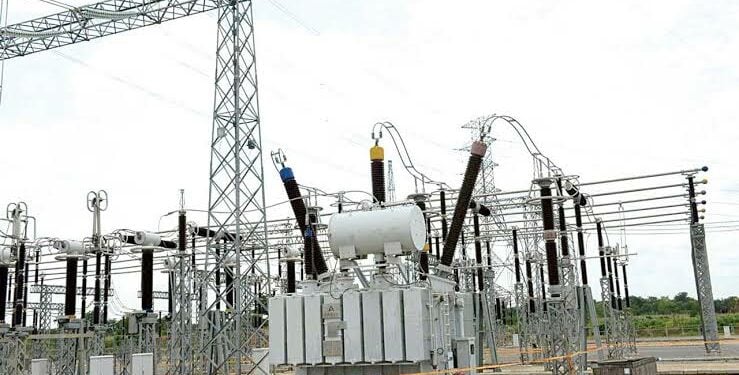
Electricity generation companies have called on the Nigerian Electricity Regulatory Commission to urgently review electricity tariffs following the Federal Government’s recent increase in the domestic base price of gas, warning that delays could worsen liquidity challenges and distortions across the power sector.

The Chief Executive Officer of the Association of Power Generation Companies, Joy Ogaji, said operators were less concerned about the increase in gas prices itself, but more worried about regulatory delays in adjusting tariffs to accommodate the new cost reality.

Ogaji, speaking in an interview with our correspondent on Monday, described gas as a “pass-through cost” that must be captured transparently in tariff computations.

She said, “Gas price, whether it is raised to $10, is not really our problem. Gas is a feedstock and a pass-through cost. So if the regulator in the power sector is comfortable with the increase, it is not a problem for us because whatever we are charged, we pass it down to consumers.

“All we want is for NERC to acknowledge the new base price and input it into tariff calculations. There is now a clear difference between what we used to pay and the new price, and that gap must be recognised.”

Despite the push for tariff adjustment, Ogaji stressed that the core challenge in the sector remained poor payment discipline rather than pricing. “For us, whether the price is high or low is not the issue. What matters is whether payments are made for what is supplied.

Even when the price was low, what percentage of invoices were settled? If you increase the price and payments are still not made, what difference does it make?” she queried.

She further called for the establishment of what she described as “bankable demand” in the electricity market, arguing that the absence of a clear and reliable payment structure continues to deter investment. “We need to define bankable demand in the market. Until we do that, we cannot determine whether investor confidence will improve or whether new investors can come in.

See also  Nigeria, UAE Ports Group Sign Landmark MoU On Maritime Development

“Nigeria has over 200 million people, but how many are actually paying for electricity? And even among those who are paying, do we have transparency to verify those payments? There is no transparency anywhere,” she added.

Ogaji warned that without structural reforms, including stronger political will and enforcement, the sector risks stagnation. “If we are not careful and do not change the dynamics, we will still be discussing the same issues in two years. The President needs to take decisive action, possibly declare a state of emergency in the sector and give clear marching orders on what must be achieved,” she said.

Also speaking, the Executive Director of PowerUp Nigeria, Adetayo Adegbenle, said the increase in gas prices would inevitably translate to higher electricity tariffs and rising subsidy obligations. “Since the price of gas, which is the major fuel for Gencos, has increased, it is expected that electricity tariffs will also increase,” he said.

Adegbenle added that regardless of whether tariffs are immediately adjusted, the financial implications would still manifest in higher invoices from generation companies. “Whether electricity tariffs are reviewed or not, it is bound to affect invoices from Gencos. What we need to understand, however, is what the government’s plan is to absorb the shock of these expected changes.

“Subsidies, or market shortfalls, are expected to increase since invoice values will increase. I have no idea yet, but this is the point. I hope the government will encourage full market deregulation and implement a fully contract-based electricity market. I had planned to make this a national discourse at some point, because we cannot continue to pretend that the electricity market is not optimal,” he explained.

See also  FG to borrow N800bn via February bonds

He, however, questioned the Federal Government’s preparedness to absorb the fiscal impact of the changes. “We cannot continue to pretend that the electricity market is optimal. This situation also raises concerns about the sustainability of plans to raise bonds to offset debts owed to gas suppliers and Gencos. This is also another major argument against the bond being raised to pay off market exposure in terms of debt to gas suppliers and generating companies,” he added.

On his part, the President of the Nigeria Consumer Protection Network, Kunle Olubiyo, criticised the methodology behind the new gas pricing framework, describing it as inconsistent and lacking transparency. “The new base price is a bit confusing. The Nigerian Midstream and Downstream Petroleum Regulatory Authority had, from July last year, approved $1.13 as transport cost. So how do you now arrive at a figure that does not reflect the full pricing model?” he asked.

Olubiyo noted that when previous base prices are combined with transportation costs, the effective gas price should already be above $3 per unit. “It was around $2.15 last year, and when you add the $1.13 transport cost, it should be about $3.63. So whatever figure is being quoted now does not reflect the true cost,” he said.

He added that Nigeria’s power sector currently enjoys one of the lowest gas pricing regimes due to domestic supply obligations, despite global market pressures. “Gas is a commodity, just like petrol. In the international market, buyers are willing to pay up to $12 due to geopolitical tensions, especially in the Middle East. So why would any producer prefer to sell to Gencos locally, where they are often asked to be patriotic and even sell on credit?” he queried.

Olubiyo, however, argued that tariff increases alone would not resolve the sector’s deep-rooted inefficiencies. “Even before privatisation, we warned that tariff increases are not a silver bullet. There are fundamental issues affecting efficiency across the value chain,” he said.

See also  Stocks drop, oil rises after Trump Iran threat

He pointed to widespread technical and commercial losses, particularly in metering and energy accounting, as major drivers of inflated costs. “There are significant leakages in how electricity is measured and billed. Many meters are obsolete and lack integrity. If we fix these issues and ensure accurate measurement, most of the claims by Gencos could drop by 40 to 50 per cent. What consumers are paying for today includes inefficiency and systemic leakages,” he added.

The Federal Government, through the Nigerian Midstream and Downstream Petroleum Regulatory Authority, last week reviewed the domestic base price of natural gas, a benchmark used in pricing gas supplied to power plants under the Domestic Gas Delivery Obligation framework.

The domestic gas pricing regime was originally designed to ensure an affordable and reliable gas supply to the power sector, with prices historically set below international market rates to support electricity generation. However, persistent payment shortfalls, mounting debts to gas suppliers, and rising global gas prices have triggered calls for a cost-reflective pricing model.

Industry data shows that gas accounts for over 70 per cent of Nigeria’s electricity generation mix, making it the single largest cost component in power production. Under the current structure, any increase in gas prices directly impacts the cost of generation, which is expected to be reflected in electricity tariffs unless subsidised by the government.

The latest price adjustment is aimed at incentivising gas producers to prioritise domestic supply, but warns that without corresponding reforms in tariff setting, payment assurance, and market transparency, the policy may further strain an already fragile electricity market.

punch.ng

FOLLOW US ON:

FACEBOOK

TWITTER

PINTEREST

TIKTOK

YOUTUBE

LINKEDIN

Continue Reading
Click to comment

Leave a Reply

Your email address will not be published. Required fields are marked *

Business

Dangote refinery expansion to create 95,000 jobs

Published

on

The President of the Dangote Group, Aliko Dangote, has announced that the expansion of the Dangote Petroleum Refinery to a production capacity of 1.4 million barrels per day will generate employment for no fewer than 95,000 skilled workers at peak construction.

According to a statement by the firm, Dangote disclosed this on Saturday in Lagos during his induction as an honorary fellow of the Nigerian Academy of Engineering, describing the project as a major milestone in Nigeria’s industrial transformation.

According to him, the expansion underscores the group’s continued commitment to engineering excellence, job creation, and sustainable economic growth.

“This award is particularly meaningful because it recognises what we are doing in the industry, especially our commitment to employing engineers and skilled professionals. At the peak of construction for this expansion, we expect to have about 95,000 skilled workers on site, and we will continue to grow,” Dangote said.

Upon completion, Dangote said the expanded refinery will surpass the Jamnagar refinery in India to become the largest refinery in the world, significantly strengthening Nigeria’s refining capacity.

Dangote noted that the project would rely heavily on Nigerian expertise, creating substantial opportunities for engineers, technicians, artisans, and other skilled professionals. He added that the expansion reflects the group’s long-term vision for industrialisation in Nigeria and across Africa.

Beyond employment generation, the refinery said the expansion is expected to stimulate local manufacturing, enhance technology transfer, and deepen Nigeria’s oil and gas value chain.

It will also improve fuel security, reduce dependence on imported petroleum products, and deliver significant foreign exchange savings for the Nigerian economy.

See also  N20bn Sukuk: TAJBank records 185.5% oversubscription

“The scale of this expansion reflects our confidence in Nigerian capacity and our belief that Africa has the ability to build world-class infrastructure that meets global standards,” Dangote stated.

In his remarks, the President of the Nigerian Academy of Engineering, Prof Rahamon Bello, described the honour as well-deserved, noting that Dangote’s impact transcends physical infrastructure.

“What makes this recognition fitting is not only what has been built but also what has been inspired. Alhaji Aliko Dangote’s journey continues to motivate a new generation of engineers, entrepreneurs, and innovators to think boldly, act decisively, and believe in the immense possibilities within our continent,” Bello said.

From the current 650,000 bpd, Dangote plans to scale up the refinery in three years.

Continue Reading

Business

Airlines plan Thursday shut down; see why

Published

on

There are strong indications that domestic airlines in Nigeria may halt operations from Thursday, April 30, 2026, over what operators described as unbearable and unsustainable aviation fuel prices, raising fresh fears of widespread travel disruption across the country.

Industry insiders say the airlines, having engaged both the Federal Government and oil marketers without a breakthrough, may be left with no option but to ground flights by Thursday.

The looming shutdown comes after several complaints by operators, who have watched the price of Jet A1 surge by over 300 per cent compared to February levels, pushing operating costs to the brink.

Passengers, many of whom rely on domestic flights for business and urgent travel, now face uncertainty.

In a bid to avert the crisis, the Minister of Aviation and Aerospace Development, Festus Keyamo, convened a meeting with airline operators and fuel marketers in Abuja last week. However, findings indicate that the tripartite talks ended in a deadlock, with operators unwilling to shift their stance unless decisive action is taken.

At the end of the two-day meeting, the minister announced a 30 per cent reduction in aviation-related taxes as part of efforts to ease the burden on airlines. While the gesture was acknowledged, operators insist it falls short of addressing the root problem.

Speaking on the first day of the meeting, Vice President of the Airline Operators of Nigeria, Allen Onyema, welcomed the government’s intervention but maintained that fuel marketers must account for the sharp rise in prices.

Onyema said, “This government has helped the industry more than anyone since 1999, and the President is even willing to waive 30 per cent of the debts airlines are owing.

See also  FG suspends planned 15% import duty on PMS, diesel

“But the truth is that the marketers must be brought to book to explain how they came about the 300 per cent increase when even Dangote is surprised because what he is selling to us is still the cheapest.”

At the end of the second day, Onyema issued a stark warning, giving a seven-day ultimatum from midnight last Thursday for action to be taken. “Since the advent of the US-Iran war, there has been a spike in aviation fuel in Nigeria, which we, the Airline Operators of Nigeria, feel is not proportionate to the hike internationally.

“We expect that in the next 48 hours something drastic should be done because no airline will fly in this country in the next seven days if nothing is done, not because they don’t want to fly, but because fuel may not be available to us at sustainable pricing.”

Providing further insight into the financial strain, Onyema disclosed that fuel prices have skyrocketed from about N900 per litre before the crisis to between N2,700 and N2,900, with some marketers selling as high as N3,500.

“Before the crisis, we were buying fuel at about N900 per litre. Now it has risen to between N2,700 and N2,900, with some selling as high as N3,300 to N3,500,” he said.

According to him, airlines are now operating primarily to service fuel costs. “All the airlines in Nigeria have been flying to pay fuel marketers only, and you don’t want to compromise safety,” he added.

Despite speculations about indebtedness, senior airline officials who spoke to our correspondent in confidence on Sunday, due to the sensitive nature of the matter, insisted that operators are up to date with payments to key aviation agencies, including the Federal Airports Authority of Nigeria and the Nigerian Airspace Management Agency.

See also  FG to borrow N800bn via February bonds

The PUNCH further gathered that in a document, the Airline Operators of Nigeria have formally requested additional relief measures from the government. In the letter dated April 21 and signed by AON President Abdulmunaf Sarina, the group called for the immediate suspension of aviation taxes, fees, and charges for at least six months.

The operators argued that the unprecedented rise in fuel costs threatens not only airline operations but also jobs and the stability of the aviation sector. Among other demands, the AON proposed the introduction of a non-taxable fuel surcharge, a standard practice in international aviation to help airlines manage rising costs.

They also urged the government to direct oil marketers to issue credit notes to airlines affected by what they described as excessive and arbitrary price hikes. In addition, the group called for the establishment of an industry tax reform committee to review existing charges, assess their relevance, and align them with global standards.

As the deadline approaches, uncertainty hangs over Nigeria’s aviation sector. Another airline executive, who spoke anonymously on Sunday because he was not authorised to comment publicly, warned that the shutdown threat remains real. “If nothing is done, no airline will be flying by Thursday,” he said.

punch.ng

FOLLOW US ON:

FACEBOOK

TWITTER

PINTEREST

TIKTOK

YOUTUBE

LINKEDIN

INSTAGRAM

Continue Reading

Business

Obasanjo reveals why NNPC refineries will never work again; read details

Published

on

As the Nigerian National Petroleum Company Limited continues its search for technical partners to operate the Port Harcourt, Warri, and Kaduna refineries, former President Olusegun Obasanjo has once again insisted that the facilities will never work.

Obasanjo spoke during a television interview aired on Saturday night by Sony Irabor Live, which was monitored by our correspondent.

He said, “One of the lessons that I learnt is that PPP (public-private partnership) works. Look, one project that has not been destroyed by the government in Nigeria is the NLNG (Nigeria Liquefied Natural Gas), where the private sector has 51 per cent, and the Nigerian government has 49 per cent.

“See what we did with Nigerian railways. See what we did with the national shipping company. See what we are doing now, even with the NNPC. The NNPC has refineries, and I said to people that it will never work. And a man had the audacity to say, ‘Am I a chemical engineer?”

Obasanjo spoke about his failed efforts to woo Shell, a global energy firm, into running the refineries. “Look, when I was there, I called Shell. I said, ‘Look, please, I beg you, come and take 10 per cent equity and run the refinery for us.’ They said no. I said, ‘Okay, if you don’t want to take equity, don’t take equity. Come and run the refineries. They said no,” he stated.

The former president narrated how he invited a top official of Shell for a one-on-one conversation to know why his offers were turned down.

“So, I called him, and I said, ‘Tell me, be honest with me. Why don’t you want to handle this?’ He said first, they want to let me know that they make most of their profits on the upstream, not the downstream.

See also  FG to borrow N800bn via February bonds

He said they run their downstream without making a loss, but they don’t make a lot of profit from it. It’s more of a service than a major profit-making. So that’s number one.

“Number two: he said our refineries are too small. This was when I was an elected President. He said our refineries are too small. One is 60,000 barrels, and another is 100,000 barrels. He said refineries at that time were in the range of 250,000 barrels to 300,000 barrels. Number three: he said our refineries are not well-maintained. We call quacks and amateurs to come and maintain our refineries. The refineries are not in good order. He said, ‘Number four, there’s too much corruption around our refineries, and they don’t want to be part of that,” Obansanjo explained.

He recalled that he counted the country lucky then when the President of the Dangote Group, Alhaji Aliko Dangote, told him of the willingness to offer $750m to take 51 per cent of two of the facilities.

“Until one day, Aliko (Dangote) came and offered $750m to take two of the refineries; that will be 51 per cent. I said, ‘Wow, God, you are really a God of miracles.’ I told Aliko to bring the money quickly. They brought the money, and they paid,” he said.

However, the Balogun Owu explained further that his successor, the late Umar Yar’adua, reversed the deal after he left office, claiming he was under too much pressure from the NNPC.

He mentioned that only the current NNPC Group Chief Executive Officer, Bayo Ojulari, has said the truth about the state of the refineries so far.

See also  FG suspends planned 15% import duty on PMS, diesel

“When I left office, NNPC went to my successor and convinced him. So I got up. I went to Umar. I said, ‘Look, Umar, maybe you don’t know; this is why we did what we did.’ He said, ‘Well, NNPC came to me.’ I said, ‘But you know that NNPC cannot run this thing. He said he knew. I asked, ‘Then why did you give in? He said because of pressure. And I said, ‘Look, when you sell these refineries, you will not get 200 million (dollars) for them, because you will sell them as scrap.’

“Only the present NNPC head has told the country the truth. But in the meantime, I was told that they have spent about $16bn, which is only $4bn short of what Aliko used to build Africa’s largest refinery,” Obasanjo said.

In November 2025, the NNPC announced a fresh target of June 2026 to finalise the selection of technical partners for the refineries.

Ojulari said that despite the rehabilitation and reopening of the Port Harcourt and Warri refineries in 2024 before they were later reclosed, the facilities were operating “well below international standards”, making their products commercially uncompetitive, especially compared to the privately owned Dangote refinery.

Dangote said he built his refinery after the Yar’Adua administration reversed the sale of the NNPC refineries to him and his other associates. He is also of the opinion that the NNPC refineries may never work again.

The NNPC communications office has yet to respond to messages seeking reactions to the former president’s claims.

punch.ng

FOLLOW US ON:

FACEBOOK

TWITTER

PINTEREST

TIKTOK

YOUTUBE

LINKEDIN

INSTAGRAM

Continue Reading

Trending