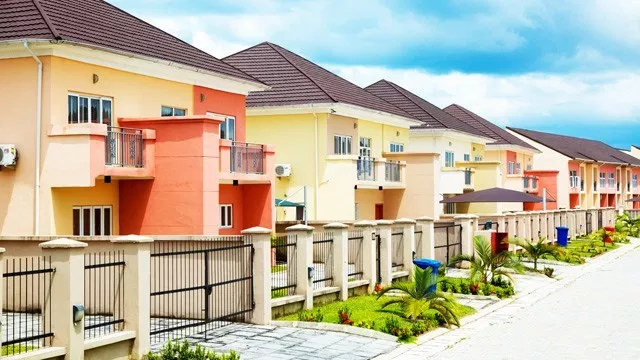
Residents of Lagos State are grappling with what many describe as an unprecedented surge in house rents, as accommodation costs across the metropolis continue to skyrocket amid worsening living conditions.
Findings across several neighbourhoods revealed that tenants now pay between ₦1.5 million and ₦2.5 million annually for single rooms and self-contained apartments, many of which lack potable water, proper sanitation, stable electricity and effective waste disposal systems.
The rising cost of housing has compounded hardship for low and middle-income earners already burdened by inflation, high transport fares and stagnant wages.
For many residents, shelter, once considered a basic necessity, has become a daily struggle defined by uncertainty, displacement and financial strain.
High Cost, Poor Quality
From mainland communities to emerging suburbs, complaints of arbitrary rent increases and deteriorating housing standards have become widespread.
In expanding residential corridors such as Ikorodu, Ajah and parts of the mainland, accommodation prices have surged far beyond the reach of the average worker. Single rooms in crowded compounds now command prices previously reserved for full apartments.
Many tenants rely on water vendors, share toilets with multiple households and endure erratic electricity supply. In some cases, residents walk long distances to access water, while drainage failures leave compounds flooded during the rainy season.
Despite these realities, landlords continue to impose rent reviews without consultation or visible improvements.
Housing analysts say the imbalance has worsened as demand continues to outstrip supply, particularly in areas where affordable housing development remains slow.
I Pay ₦900,000 Every Year
Funke Olamide, a trader residing in Ikorodu, told Daily Post that her annual rent no longer reflects basic human dignity.
“I pay ₦900,000 every year for just one room, not even a self-contained apartment, and there is absolutely nothing to justify that amount,” she said.
“There is no running water in this compound, so every morning, before I even think of going to my shop, I must buy water. During the rainy season, the place floods, mosquitoes are everywhere, and nobody cares.
“If you complain, they will tell you to pack out. At times, I ask myself whether we are paying rent for a house or just paying because we have no other option,” she lamented.
Another resident, Adeyemi, a commercial driver, described the situation as degrading.
“The painful part is not even the money alone; it is what you are forced to endure after paying. We share one toilet among many tenants, and most times it is broken.
“The roof leaks when it rains, and when we complain, the landlord says repairs are expensive. Yet, every year, they add more money to the rent. It feels like tenants are suffering in silence because Lagos does not give you alternatives,” he said.
80% Rent Hikes, No Renovation
Tenants also decried the frequency and scale of rent increases, alleging hikes of between 60 and 80 per cent within a single year.
According to residents, these increments are often announced abruptly as tenancy agreements expire, with no corresponding repairs or upgrades.
A 51-year-old private school teacher, Tunde Babalola, said rent has become a lifelong burden.
“I earn ₦120,000 monthly, but my annual rent is ₦750,000. If you calculate it properly, you will see that I work almost the whole year just to pay rent.
“After transport, feeding, and helping my family, there is nothing left. Sometimes, I delay hospital visits because I cannot afford it. This is not how life should be,” he told journalists.
A single mother, Funmilayo Bidemi, said the pressure of rent renewal takes a toll on her mental health.
“Each time my rent is about to expire, I lose sleep. I start calculating how to borrow, who to beg, and what to sell. The landlord does not care whether your salary has increased or not.
“They will just inform you of the new amount. Even my children feel the pressure because sometimes we have to reduce food or school expenses just to meet rent demands,” she said.
Traders, Shop Owners Also Hit
The crisis extends beyond residential tenants. Shop owners and small-scale business operators across Lagos say spiralling rent costs are squeezing their livelihoods.
In commercial hubs such as Yaba and densely populated areas like Mushin, traders report sudden increases without prior notice or improvement to business premises.
A tailor in Yaba, Sola Ibrahim, recounted his experience. He said, “My rent was ₦200,000 but suddenly, they increased it to ₦550,000 without any explanation. Nothing changed in the shop. When we asked why, the answer was that ‘things are expensive.’
“But tenants are also affected by the same economy. It feels like landlords are passing all the hardship to us.”
Michael Abiodun, a phone accessories dealer, criticised the short notice often given to tenants.
“They gave us barely two weeks’ notice. How do you raise such money in two weeks? When we begged for time, they said if we can’t pay, we should leave.
“I have lived here for years, but sometimes you are treated as if you don’t matter. There is no protection for tenants,” he added.
The rent surge has been attributed to multiple factors, including rising construction costs, population growth and inadequate housing supply.
The removal of fuel subsidy has pushed up transportation and logistics expenses, impacting building materials and maintenance costs. Prices of cement, iron rods, roofing sheets, sand and land have also increased sharply in recent years.
Urban planners note that Lagos’ rapidly expanding population, coupled with slow delivery of affordable housing projects, has created a market where landlords wield significant power.
The continued practice of demanding one or two years’ rent upfront, despite previous opposition by the Lagos State Government, remains widespread, deepening tenants’ financial vulnerability.
Residents Eye Ogun Relocation
It was reports that as pressure mounts, many residents are considering relocation to neighbouring states such as Ogun State, where rents are comparatively lower.
A 25-year-old hairstylist, Blessing Nwankwo, said Lagos is gradually becoming hostile to low-income earners.
“What I pay for a single room in Lagos can get me a two-bedroom flat in Ogun State. I love Lagos because it is where my customers are, but the cost of living is choking.
“I’m now planning to leave, not because I want to, but because I am being forced out. Lagos is becoming a city only for the rich,” she said.
A technician, Agada Peter, who recently relocated his family outside Lagos, said daily commuting has become his survival strategy.
“I work in Lagos, but I can no longer afford to live here with my family. So I moved them out and now travel long distances every day.
“It is stressful, but at least my rent is affordable. Lagos has turned housing into a luxury instead of a basic need,” he said.
Naija News reports that the Lagos State Government has repeatedly warned against exploitative rent practices and illegal demands, including compulsory two-year advance payments.
However, tenants argue that enforcement remains weak, allowing landlords and agents to operate with little restraint.
Efforts to obtain an updated response from state officials on rent control measures were unsuccessful as of the time of filing this report.
As the crisis deepens, residents say urgent intervention is required to prevent further displacement and restore housing to its rightful place as a fundamental human need rather than a privilege reserved for the wealthy.
FOLLOW US ON:
FACEBOOK
TWITTER
PINTEREST
TIKTOK
YOUTUBE
LINKEDIN
TUMBLR
INSTAGRAM