Connect with us

Business

Tax law: VAT hits record N1tn as new sharing era begins

Published

on

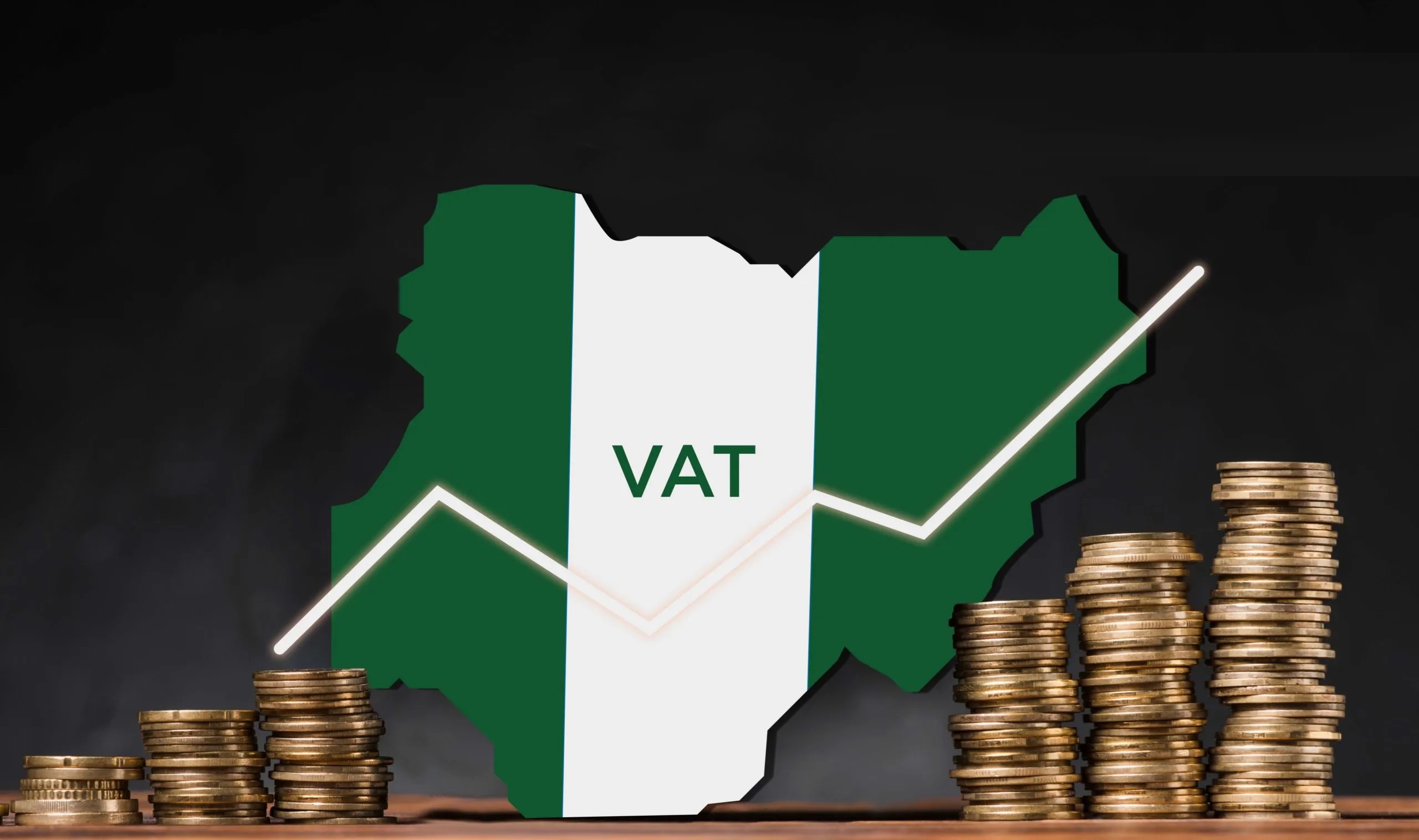
Total Value Added Tax earnings rose to N1.08tn in January as a new sharing formula commenced, altering how the proceeds are split among the Federal Government, states, and Local Governments, findings by The PUNCH have shown.

Documents presented at the February meeting of the Federation Account Allocation Committee and obtained by The PUNCH on Tuesday showed that total VAT collections by the Nigeria Revenue Service stood at N1.08tn in January 2026, compared with N913.96bn in December 2025.

The increase of N169.20bn represents an 18.5 per cent rise month-on-month. However, the full N1.08tn was not available for sharing. VAT deductions at source amounted to N79.94bn in January, up from N67.45bn in December, leaving a net VAT of N1.00tn for distribution.

In December, the net VAT shared stood at N846.51bn. The month-on-month increase in the net distributable VAT was N156.72bn, also representing an 18.5 per cent increase.

January marked the first full month under the revised VAT sharing formula. Under the new structure, 10 per cent of net VAT goes to the Federal Government, 55 per cent to state governments, and 35 per cent to Local Governments.

Previously, the Federal Government received 15 per cent, states 50 per cent, and Local Governments 35 per cent. If the previous 15 per cent formula had been retained, the Federal Government would have received about N150.48bn from the N1.00tn net VAT shared in January, instead of the N100.32bn it got under the new 10 per cent structure, implying a shortfall of roughly N50.16bn.

Conversely, states, which now receive 55 per cent, shared about N551.77bn, meaning their allocation increased by approximately N50.16bn compared to the N501.61bn they would have received under the former 50 per cent formula.

Based on the new sharing formula, from the N1.00tn net VAT shared in January, the Federal Government received N100.32bn, states received N551.77bn, while Local Governments were allocated N351.13bn.

In December, under the old 15 per cent formula, the Federal Government’s VAT share stood at N126.98bn. The January allocation of N100.32bn, therefore, represents a decline of N26.65bn, or about 21 per cent, compared with what the Federal Government received in December.

For states, the impact of the new formula was positive. Their collective share rose to N551.77bn in January from N423.25bn in December, an increase of N128.52bn, equivalent to 30.4 per cent.

Local Governments received N351.13bn in January, up from N296.28bn in December, an increase of N54.85bn or 18.5 per cent.

The cost of collection rose alongside the higher VAT pool. The NRS VAT cost of collection, calculated at 4 per cent, increased to N43.33bn in January from N32.72bn in December, a rise of N10.61bn or 32.4 per cent.

The Nigeria Customs Service import VAT cost of collection, which stood at N3.84bn in December, was nil in January, which may be due to the tax reforms, which made NRS the main agency in charge of collecting government revenue.

See also  Tinubu revokes pardon for Sanda, 140 high-profile inmates

Other statutory deductions included 3 per cent to the North East Development Commission Project Account, which rose to N31.20bn from N26.32bn, an increase of N4.87bn. The 0.5 per cent deduction to the Revenue Mobilisation Allocation and Fiscal Commission increased to N5.42bn from N4.57bn, up by N846.02m.

Combined, the NEDC and RMAFC deductions totalled N36.61bn in January compared with N30.89bn in December, reflecting a month-on-month increase of N5.72bn. The broader FAAC summary showed that total funds available for distribution in January across revenue lines stood at N3.04tn.

Total deductions amounted to N1.14tn, leaving a total net distributable revenue of N1.90tn. Of this amount, N896.78bn came from statutory revenue, while N1.00tn was net VAT. When VAT and statutory revenue were combined, the Federal Government’s total allocation stood at N525.23bn.

State governments received N767.29bn, local governments got N517.28bn, while the 13 per cent derivation share amounted to N90.19bn.

A breakdown of VAT distribution among states showed that Lagos remained the dominant beneficiary. The state’s gross VAT allocation for January stood at N111.22bn. After a deduction of N9.89bn, Lagos retained N101.34bn as state net VAT. Its local governments collectively received N70.57bn.

Oyo ranked second with N24.04bn in gross VAT allocation, while Rivers followed with N23.57bn. Kano received N17.37bn, and the FCT-Abuja was allocated N15.76bn. Bayelsa received N15.07bn. Other top beneficiaries included Katsina with N13.82bn, Jigawa with N12.92bn, Delta with N12.89bn, and Kaduna with N12.73bn.

At the lower end of the allocation scale, Ebonyi received N9.45bn, Ekiti N9.83bn, Taraba N9.37bn, and Nasarawa N9.77bn.

Although the equality component accounts for 50 per cent of the states’ distribution formula, the 30 per cent population and 20 per cent derivation factors continue to create wide disparities between high-activity and lower-activity states.

The non-import local VAT collection table shows the concentration of VAT generation. Total non-import VAT collections for January stood at N913.47bn, compared with N721.83bn in December, representing an increase of N191.65bn or 26.5 per cent.

Lagos alone generated N533.40bn in non-import VAT in January, accounting for 58.39 per cent of the total. Oyo generated N67.18bn, Rivers N66.35bn, FCT-Abuja N39.73bn, and Bayelsa N34.62bn.

For local governments, Lagos councils received N70.57bn in net VAT, Oyo councils got N18.04bn, Kano councils received N16.29bn, Rivers councils got N15.47bn, and Katsina councils received N11.76bn.

A VAT income comparison sheet showed that against a benchmark of N625.13bn, the January VAT collection of N913.96bn exceeded the benchmark by N288.82bn.

The N1.08tn total VAT earnings figure exceeded the same benchmark by N458.03bn, producing a cumulative difference of N746.85bn over the period reflected.

The PUNCH earlier reported that the 36 states of the federation would likely receive an estimated N5.07tn as their share of Value Added Tax in 2026, following the commencement of a new VAT sharing formula introduced under the National Tax Acts.

This development was contained in the 2026–2028 Medium-Term Expenditure Framework and Fiscal Strategy Paper approved by the Federal Executive Council.

See also  Minority caucus, House clash over tax law probe

However, with VAT earnings exceeding projections in January and February, states may earn higher than N5.07tn if the current actual earning pattern persists throughout the year.

The PUNCH earlier reported that the Nigeria Economic Summit Group warned that the Federal Government could face revenue shortfalls if it does not increase the value-added tax rate as part of the ongoing tax reform process.

The Chief Executive Officer of NESG, Dr Tayo Aduloju, made this statement during an interactive media session in Abuja. He emphasised that while reforms to the VAT system are essential, maintaining the current VAT rate without an increase could result in a significant loss of revenue for the government.

Speaking on the issue, Aduloju said, “Without those rate hikes, it means that the government might lose some revenue.” Aduloju explained that the current tax reform process must strike a balance between simplifying the tax system and increasing the VAT rate to maintain revenue stability.

According to him, simply reducing the number of taxes without adjusting the VAT rate could weaken the government’s revenue base.

Also, in its most recent Article IV Consultation Report on Nigeria, the International Monetary Fund noted that although the recent tax reforms approved by the National Assembly and President Bola Tinubu represent a major step forward in modernising the VAT and Company Income Tax regimes, the choice to maintain the current VAT rate would lead to an immediate revenue shortfall.

It stated that the Federal Government may lose as much as 0.5 per cent of the country’s Gross Domestic Product in revenue following its decision not to raise the VAT rate.

“The decision not to raise the VAT rate now is reasonable, given high poverty and food insecurity, and with the cash transfer system to support the most vulnerable households not yet fully rolled out. However, this will reduce consolidated government revenue by up to ½ per cent of GDP in the authorities’ estimates,” the report noted.

According to the Fund, unless alternative financing options are found, subnational governments may be forced to either scale back spending or ramp up their own revenue efforts. The IMF, however, acknowledged the government’s justification for delaying a VAT hike, particularly at a time of worsening poverty and food insecurity.

Speaking recently at the launch of the BudgIT State of States 2025 Report in Abuja, where he delivered the keynote address, the Chairman of the Presidential Fiscal Policy and Tax Reforms Committee, Mr Taiwo Oyedele, projected that states could earn more than N4tn annually from 2026 when new Value Added Tax reforms take effect.

He said, “With VAT reforms kicking in from 2026, states’ share will rise to 55 per cent. That could amount to over N4tn in 2026. The question is: will this money be spent, or will it be invested?”

See also  Airlines face uneven fuel costs as currencies weaken — IATA

States IGR boost

Economic analysts called on state governments to intensify efforts to unlock internal revenue as their allocations under the revised sharing formula increase. In separate interviews with The PUNCH, they noted that Value Added Tax has never been a major revenue pillar for the Federal Government.

A former Chairman of the Chartered Institute of Bankers of Nigeria, Prof Segun Ajibola, said the Federal Government had always focused on other revenue sources. “The federal government has never emphasised VAT as a major revenue source. When the law was amended, the government made it clear that it would benefit the state and the local government more,” Ajibola explained.

The economist added that the Federal Government was strengthening alternative revenue streams, stating, “There are so many revenue sources the federal government is looking at to beef up its own revenue, like capital gains tax and other federally collected revenue, excess duties, and so on. In fact, an increase in VAT is to benefit states and local governments. The pertinent question is what happens to it upon getting there.”

Ajibola expressed concern about living conditions across states. “The states are bleeding. And when I say the states are bleeding, I mean the masses. Schools are dilapidated, roads are bad, people are hungry, health care facilities are nowhere,” he lamented.

He called for transparency in the use of the increased allocations, adding, “If a state government wants to be accountable, each state government should set up a desk to account for the increase in the VAT allocation and make the report known to the public. There is so much to spend on agriculture and other public utilities.”

Also, the Chief Executive Officer of Economic Associates, Dr Ayo Teriba, said VAT historically replaced state sales tax and originally belonged to states. “The tax belonged to the states. It is for ease of collection that the federal government decides to collect on behalf of the states,” Teriba noted.

He, however, argued that the Federal Government could justifiably retain a stronger share. “There’s no reason why the federal government should collect cross-border VAT payments and surrender them to states. The Federal Government should retain it since it also has responsibilities,” Teriba said.

The analyst cautioned states against overdependence on statutory allocations, advising, “Not to make a mountain out of a molehill (as) these are smaller amounts for the states.”

He pointed to Enugu State as a model, noting, “States that can do better than just wait for VAT or FAAC, like Enugu State, will be better models. If they repeat what they have done, their internally generated revenue will be bigger than FAAC and VAT combined. Other states should emulate that. They are unlocking revenue not by taxing people,” Teriba remarked.


Continue Reading
Click to comment

Leave a Reply

Your email address will not be published. Required fields are marked *

Business

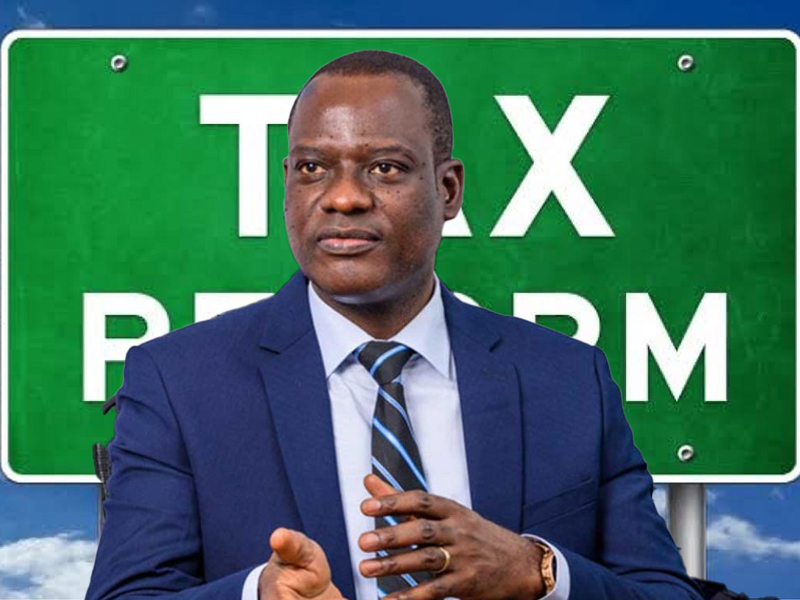
Tax reform to create opportunities, promote fairness – Minister

Published

on

The Federal Government has maintained that Nigeria’s tax reform will ultimately be judged not by how much revenue it generates, but by how fairly it distributes opportunities across society.

The Minister of State for Finance and Chairman of the Presidential Fiscal Policy and Tax Reform Committee, Taiwo Oyedele, said this at the unveiling of a book on policy guide aimed at advancing gender equity and social inclusion in Abuja recently.

The presentation organised by the Policy Innovation Centre brought together policymakers, development partners, private sector leaders, and civil society representatives.

Attendees engaged in high-level discussions on the 2026 tax reforms, addressing how the ongoing tax reforms can expand economic opportunities for women, youth, and persons with disabilities.

punch.ng

FOLLOW US ON:

FACEBOOK

TWITTER

PINTEREST

TIKTOK

YOUTUBE

LINKEDIN

See also  Amupitan faces tough test as new INEC chair
Continue Reading

Business

Lagos-Calabar coastal road will raise GDP to $14tn — Expert

Published

on

The Development Agenda for Western Nigeria and the BRACED Commission, comprising Bayelsa, Rivers, Akwa Ibom, Cross River and Edo states, alongside other stakeholders, have agreed to explore investment opportunities along the 750-kilometre Lagos-Calabar Coastal Road.

The programme, held at the corporate head office of the DAWN Commission at Cocoa House, Dugbe, Ibadan, on Tuesday, was attended by representatives of governments from the South-West states and other relevant stakeholders.

Participants noted that if the opportunities presented by the road are properly harnessed, the project could serve as a game changer capable of increasing Nigeria’s Gross Domestic Product to between $1.4tn and $14tn over the next 50 years.

In his welcome address, the Director-General of the DAWN Commission, Seye Oyeleye, said the commission convened stakeholders from the South-West and South-South regions to plan how to maximise the economic benefits of the road.

He said, “The biggest infrastructure programme in the last 65 years in Nigeria, which is the 750-kilometre Lagos-Calabar Coastal Road, requires structured development to avoid the mistakes of the past.”

Oyeleye stressed the need for collaboration among states to create industrial, green and tourism zones to maximise the economic potential of the project.

“We at the DAWN Commission, which is the think tank for the South-West states, decided to bring in the critical states along what we have described as a game changer for southern Nigeria. The biggest infrastructure programme in the last 65 years in Nigeria is the 750-kilometre Lagos-Calabar Coastal Road.

“What we planned to do was bring in the three South-West states—Lagos, Ogun and Ondo. We also invited the BRACED Commission, which covers the South-South states, because the road runs parallel to those states. The idea is that for the South-West region to harness the benefits of that road, there has to be structured development,” he said.

See also  PHOTOS: Gov. Abiodun meets investors in China, seeks expansion of Ogun economic frontiers

The DG warned against repeating past mistakes associated with uncoordinated development.

“We must ensure that the mistakes of the past, where states worked in silos and pursued individual interests, are not repeated on this infrastructure. We have seen examples in different parts of the world where a coastal road becomes a major catalyst for development.

“It is important not to wait until the completion of the road before planning begins. From the discussions so far, we are already considering collaborative efforts on how Lagos, Ogun and Ondo can work together. We are looking at creating industrial zones, green zones and tourism zones.

“One of the outcomes we expect from this meeting is an agreement to establish a joint body that will supervise development along this corridor. There has to be a team dedicated solely to development along the coastal corridor, and this must happen as soon as possible,” Oyeleye added.

In a lecture titled Unlocking Economic Potentials of the Lagos-Calabar Coastal Highway: Land Governance and Regional Alignment for the South-West Corridor, the Managing Director and Chief Executive Officer of Makaya Consult, Eko Atlantic City, Olawale Opayinka, projected that the coastal road could significantly increase Nigeria’s GDP over the next five decades.

He emphasised the importance of preserving the integrity of the corridor and ensuring coordinated development to prevent haphazard growth.

“There is a major opportunity in this coastal highway of over 700 kilometres, with the possibility of maintaining the integrity of that corridor. We have about 700 square kilometres of potential development.

“With our population expected to grow significantly over the next 50 years and our GDP currently at about $400bn, developments along that corridor could create enterprise value ranging from $1.4tn at the lower end to about $14tn at the upper end.

See also  Tinubu revokes pardon for Sanda, 140 high-profile inmates

“The values we have projected can only be realised if the states work together. If they fail to collaborate, the projected value may not be achieved. It does not stop with Lagos, Ogun and Ondo; it also involves Edo, Delta, Bayelsa, Rivers, Akwa Ibom and Cross River. If they fail to do the right thing on their side, it could undermine the entire project,” he said.

He added that the project could significantly transform Nigeria’s economic outlook.

“We are talking about moving the Nigerian economy from under $400bn today to between $1.4tn and $14tn over the next 50 years. This provides an opportunity to build a multi-trillion-dollar economy and position Nigeria among the leading economies in the world,” Opayinka stated.

In his remarks, the Director-General of the BRACED Commission, Joe Keshi, also stressed the need for coordinated planning, citing examples of well-planned coastal roads in other parts of the world.

“This is the beginning of a conversation to ensure that we plan adequately and avoid the haphazard developments that have affected many roads in Nigeria.

“It would be unfortunate if a major infrastructure project like the coastal road eventually reflects the same pattern of unplanned development seen in some parts of the country,” he said.

Keshi emphasised the importance of political will among state governments.

“We are encouraging governors to develop the political will to understand that this road could be a game-changer for the southern states if the right steps are taken. The road itself is only the beginning; what comes after the road is what we are discussing here—how to ensure that it strengthens the Nigerian economy and does not become another example of unplanned development,” he added.

See also  Rising fuel prices: NNPC may supply foreign crude to Dangote refinery

Other speakers, including Commissioners for Physical Planning and Urban Development in Ogun, Ondo and Lagos states—Tunji Odunlami, Sunday Olajide and Olayinka Abiodun—as well as the Ogun State Commissioner for Culture and Tourism, Oluwasesan Fagbayi, emphasised the need for collaboration to ensure effective economic planning.

Similarly, stakeholders, including Muyiwa Ige; the Nigerian Investment Promotion Commission South-West Zonal Head, Ololade Okeowo; Executive Director of Odu’a Investment Company Limited, Yemi Ajao; retired Director of Federal Highways, Folorunso Esan; and Permanent Secretary, Lagos State Ministry of Environment, Tajudeen Gaji, stressed the importance of proper zoning, security and governance structures.

They noted that synergy among states, the Federal Government and relevant agencies would be critical to unlocking the full economic potential of the Lagos-Calabar Coastal Highway.

punch.ng

FOLLOW US ON:

FACEBOOK

TWITTER

PINTEREST

TIKTOK

YOUTUBE

LINKEDIN

Continue Reading

Business

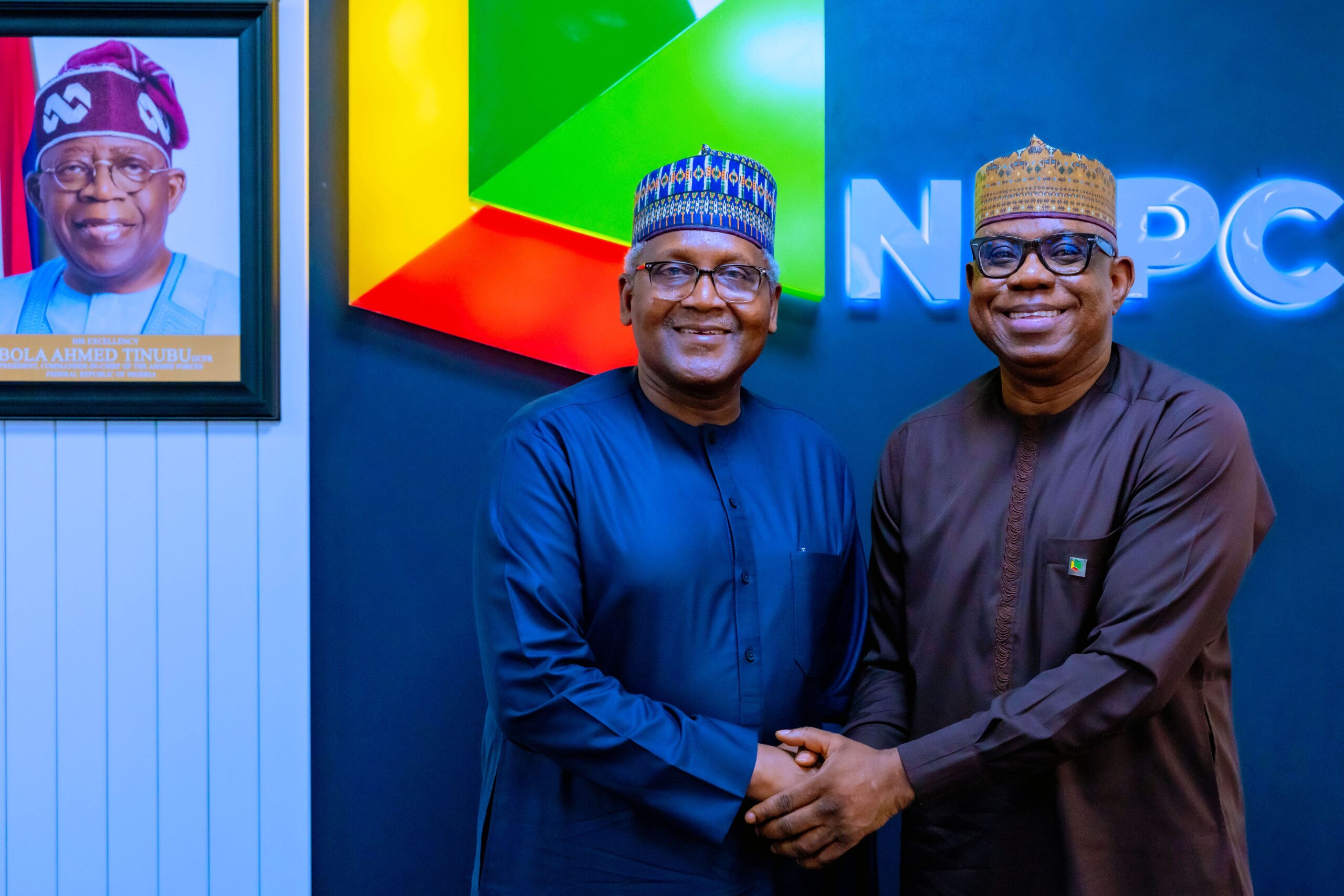
Dangote-NNPC deal hits great turbulence, see details

Published

on

The ambitious deal between the Dangote Petroleum Refinery and Nigerian National Petroleum Company Limited is facing challenges, as the refinery experienced a crude oil supply shortfall of approximately 79.53 million barrels between October 2025 and mid-March 2026, according to findings by The PUNCH.

Data obtained from an impeccable senior management source within the refinery indicated that the facility, which requires approximately 19.77 million barrels of crude monthly to operate at full capacity, received significantly lower volumes during the review month.

The official argued that, under the Petroleum Industries Act, the export of crude before meeting local demand was clearly prohibited, stressing that the $20bn Lekki-based plant had been grappling with inadequate crude volumes, while the country, through NNPC, continued to export some of its oil.

A breakdown of the figures shows that the refinery is supposed to get about 19.77 million barrels of crude monthly, but it got 4.55 million barrels in October, 6.45 million barrels in November, 4.30 million barrels in December, 5.65 million barrels in January, and 4.66 million barrels in February. For March, only 3.6 million barrels were delivered between the 1st and 15th.

In total, crude supplied within the five-and-a-half-month period stood at 29.21 million barrels, compared to an estimated 108.74 million barrels required for the same duration. This translates to a supply performance of about 26.9 per cent, indicating that more than three-quarters of the refinery’s crude needs were not met.

At best, supply hovered below one-third of required volumes, leaving a shortfall of approximately 79.53 million barrels. Using the average market price of Bonny Light crude, supplied by the Central Bank of Nigeria, the financial impact of this shortfall is significant. Bonny Light sold for $66.15 per barrel in October 2025, $65.22 in November, $68.05 in January 2026, and $72.33 in February. Taking the average of these four months, the crude price stood at approximately $67.94 per barrel.

At this price, the 29.21 million barrels supplied to the refinery were worth about $1.98bn. Meanwhile, the 79.53 million barrels not supplied represented an estimated $5.40bn in crude value that Dangote refinery could not access. In total, the refinery’s crude requirement for the five-and-a-half-month period would have amounted to roughly $7.39bn at average market prices.

Further analysis showed that monthly deliveries consistently lagged behind demand. Even in November, the highest supply month, what was delivered was 6.45 million barrels, representing about 32.6 per cent of the refinery’s monthly requirement.

In October, the supply of 4.55 million barrels accounted for roughly 23 per cent of demand, while December’s 4.30 million barrels represented about 21.7 per cent. January’s 5.65 million barrels translated to approximately 28.6 per cent, and February’s 4.66 million barrels stood at about 23.6 per cent of required volumes.

See also  Turkish Airlines reiterates commitment to workers’ welfare

The March 1 to 15 supply of 3.60 million barrels, when compared with half-month requirements, also showed that deliveries remained below expected levels. In all, the data indicated that monthly supply ranged between about one-fifth and one-third of the refinery’s needs, underscoring a persistent gap in feedstock availability.

The development highlights ongoing challenges surrounding crude supply to domestic refiners, particularly as Nigeria seeks to scale up local refining capacity and reduce dependence on imported petroleum products.

In October 2024, the naira-for-crude deal between the Dangote refinery and NNPC was introduced as a policy initiative that allows the refinery to purchase crude oil in naira rather than in US dollars. The arrangement was designed to ease pressure on Nigeria’s foreign exchange reserves, stabilise the local currency, and support domestic refining by ensuring a steady supply of crude to local processors.

Under the agreement, NNPC supplies crude oil to the Dangote refinery, which in turn sells refined petroleum products in naira within the domestic market, helping to retain value within the local economy and potentially reducing fuel prices. The deal initially covered a six-month period and has since been extended through new supply agreements, although challenges such as crude supply shortfalls and pricing dynamics have continued to test its effectiveness.

Earlier, the Dangote refinery had repeatedly lamented that it was not getting enough crude locally for its operations. As the Iran-US war continues to disrupt global oil supply, the Dangote refinery has effected multiple fuel price increases, raising petrol pump prices above N1,300 per litre at the moment.

Defending these price hikes, the Dangote refinery said in a statement that local crude producers were refusing to supply feedstock to its facility, forcing it to rely more on imported crude.

According to the company, the refinery also received just five cargoes every month from the national oil company instead of 13 cargoes, adding that the cargoes were paid for at international market prices.

“While we receive about five cargoes a month from NNPC, which we pay for in naira, these cargoes are priced at international market prices plus premium and fall short of the 13 cargoes which we require to support sales into Nigeria.

“The high crude cost is compounded by the fact that Nigeria’s upstream producers have failed to supply crude oil to the refinery as required under the Petroleum Industry Act, forcing us to source a substantial portion through international traders who charge an additional premium,” it stated.

But the NNPC said it had intensified efforts to ensure a steady crude oil supply to the Dangote refinery as part of moves to stabilise fuel availability across the country. This came amid heightened global oil market volatility occasioned by the tension in the Middle East and growing reliance on local refining to meet Nigeria’s petroleum product demand.

See also  FG’s N9tn domestic loans surge drains lifeline from businesses

Speaking during a recent webinar, the Managing Director of NNPC Retail Limited, Hubb Stokman, said the national oil company remains central to ensuring supply security through its statutory role.

“NNPC remains committed to its statutory role, of course, as a supplier of last resort, making sure of the stability and continuity of supply of petroleum products across the country,” he said.

Stokman explained that the company is working closely with the Nigerian Midstream and Downstream Petroleum Regulatory Authority and other stakeholders to guarantee an uninterrupted supply of crude and refined products nationwide.

He noted that with established supply channels, including domestic production and imports where necessary, the NNPC is positioned to maintain stable product availability.

“We’re confident that with established supply channels, both with the production and imports functioning effectively in line with the Petroleum Industry Act, we can take all the necessary measures to guarantee adequate crude supply and uninterrupted availability of products nationwide,” he stated.

The PUNCH reports that amid the surge in fuel prices occasioned by the tension in the Middle East, the NNPC planned to source third-party crude for the Dangote refinery.

Reliable sources at the NNPC, who pleaded anonymity due to the sensitivity of the matter, had confirmed to our correspondent that the company is leveraging its global crude trading network to source third-party crude for the 650,000-barrel Lekki refinery.

According to the source, the NNPC would sell the crude to the refinery at prices that are competitive with prevailing international market rates, ruling out calls by some stakeholders that the Federal Government should sell feedstock to local refineries at rates designed locally to shield Nigeria from the global price rise.

“Leveraging our global crude trading network, we are sourcing third-party crude for the refinery at prices that are competitive with prevailing international market rates,” an official said.

Another source told The PUNCH that the NNPC is fully committed to supporting domestic refining, especially the Dangote refinery. He added that, going by the existing agreements between the NNPC and Dangote, the NNPC will continue to facilitate crude supply to the facility, even in the face of temporary constraints.

“As the national oil company entrusted with safeguarding Nigeria’s energy security, NNPC Limited remains fully committed to supporting domestic refining, including the Dangote Petroleum Refinery. Within the framework of our existing agreements, we continue to facilitate crude supply to the refinery in the face of temporary availability constraints,” he explained.

See also  Tinubu approves commercial oil drilling in Ogun

Our correspondent gathered from other sources within the national oil company that there was truly a shortfall because some volume of NNPC’s daily crude output had been front-sold in the past.

“Indeed, there’s a shortfall, but it wasn’t deliberate. You know that some volumes have been front-sold in the past. That is causing some form of distortion, but that doesn’t mean the NNPC will not meet up. The company is looking at other alternative sources,” it was said.

The push to strengthen crude supply to local refineries comes as Nigeria increasingly depends on domestic refining capacity, particularly from the Dangote refinery, to reduce reliance on imports and improve energy security.

As local oil refiners in Nigeria complain of persistent crude shortages, the country exported an estimated 306 million barrels of crude oil between January and October 2025, according to figures from the Central Bank of Nigeria.

The data reveal that while Nigeria produces substantial volumes of crude, the bulk of it is earmarked for export, leaving domestic refineries struggling to obtain adequate feedstock.

Between January and October, the CBN data shows that Nigeria’s crude production amounted to roughly 443.5 million barrels, averaging about 1.45 million barrels per day over the period.

Cumulatively, total exports over the 10 months reached approximately 306.7 million barrels, accounting for nearly 69 per cent of total production. This left roughly 137 million barrels available for the domestic market.

Speaking in an interview with The PUNCH, the National Publicity Secretary of the Crude Oil Refiners Association of Nigeria, Eche Idoko, decried the inability of local refineries to secure crude for production. Idoko said a modular refinery like Opac couldn’t get crude, and it stopped production for months.

According to Idoko, local refineries have the capacity to produce more than their current output, blaming the lack of enough feedstock for the current output. “We have the capacity to produce far more than what we are producing now. The challenge has always been inadequate feedstock,” he stated.

Idoko stated that some modular refineries like OPAC produce about 10 per cent of their capacities, while some shut down due to a lack of crude oil.

Meanwhile, fuel marketers like the Petroleum Products Retail Outlet Owners Association of Nigeria and the Independent Petroleum Marketers Association of Nigeria have called on the Federal Government to supply enough crude to Dangote and other local refineries to boost domestic refining.

The marketers said petrol would have jumped to N2,000 per litre if not for the Dangote refinery.

punch.ng

FOLLOW US ON:

FACEBOOK

TWITTER

PINTEREST

TIKTOK

YOUTUBE

LINKEDIN

Continue Reading

Trending